Canopy Introduces ‘Progressive Autonomy’: A New Framework That Makes Launching a Blockchain Easy

TheNewsCryptoPubblicato 2025-12-15Pubblicato ultima volta 2025-12-15

Introduzione

Canopy has introduced "Progressive Autonomy," a new framework designed to simplify blockchain deployment while preserving long-term sovereignty and value capture. This model allows developers to launch a sub-chain secured by Canopy’s validator network, customize it as it grows, and eventually graduate to a fully independent Layer 1 (L1) without rewriting core infrastructure or assembling a costly security budget. The framework addresses the limitations of both L2 rollups, which often sacrifice decentralization and value retention, and traditional L1s, which require significant time, capital, and engineering effort. With shared restaked security from a network of professional validators, projects can launch quickly without relying on token inflation or external security markets. Canopy’s VM-less architecture also supports development in any language and allows execution environment customization. When ready, projects can transition to a sovereign L1, retaining their history, state, and economics while gaining full control over governance and performance. The Betanet is already live with support from leading validators, and mainnet launch is planned for 2026.

Florida, USA, [15 December 2025] Canopy, the company building a next-gen Layer 1 (L1) framework with the simplicity of a Layer 2 (L2), introduces Progressive Autonomy, a new deployment model built to make launching a blockchain dramatically easier while preserving full long-term sovereignty and value capture. The framework provides developers with a complete lifecycle: teams can launch as a sub-chain secured by Canopy’s validator network, customize their chain as it matures, and graduate to an independent L1 without rewriting core infrastructure or assembling a costly security budget.

Progressive Autonomy debuts at a time when the limitations of both L2 rollups and traditional L1 development increasingly constrain teams. Rollups have made deployment simple, but at the cost of centralized sequencers, governance-only tokens, fragmentation, and ecosystems that struggle to retain value.

Sovereign L1s remain the only architecture that consistently captures long-term economics, but building one typically requires over a year of engineering, substantial upfront capital, and custom consensus development. Overall, this clunky and expensive process forces builders to make early trade-offs: either prioritize ease and sacrifice ownership, or pursue sovereignty at prohibitive cost.

Adam Liposky, CEO of Canopy, said:

“Teams were forced into a false choice between simplicity and sovereignty, so we built Canopy to remove that trade off. Sovereignty should mean developers control their network economics and capture value on their own rails. Progressive Autonomy lets teams launch fast, retain long term ownership of their chain, and build toward a future of hundreds of specialized sovereign sub chains owned by the communities behind them.”

The Progressive Autonomy model eliminates the compromises, ensuring that all chains launched on Canopy inherit shared restaked security from a growing network of professional validators, including more than 20 top-tier operators who already joined the platform’s Betanet. This gives new chains protection from day one, without relying on token inflation or external security markets.

Validator sharing removes the need for early-stage projects to assemble and incentivize their own validator sets. This reduces both the time it takes to launch and the operational complexity that’s associated with the process. Canopy’s VM-less architecture enables developers to build in any language and tailor their execution environment as their application scales, without touching consensus or modifying the underlying network.
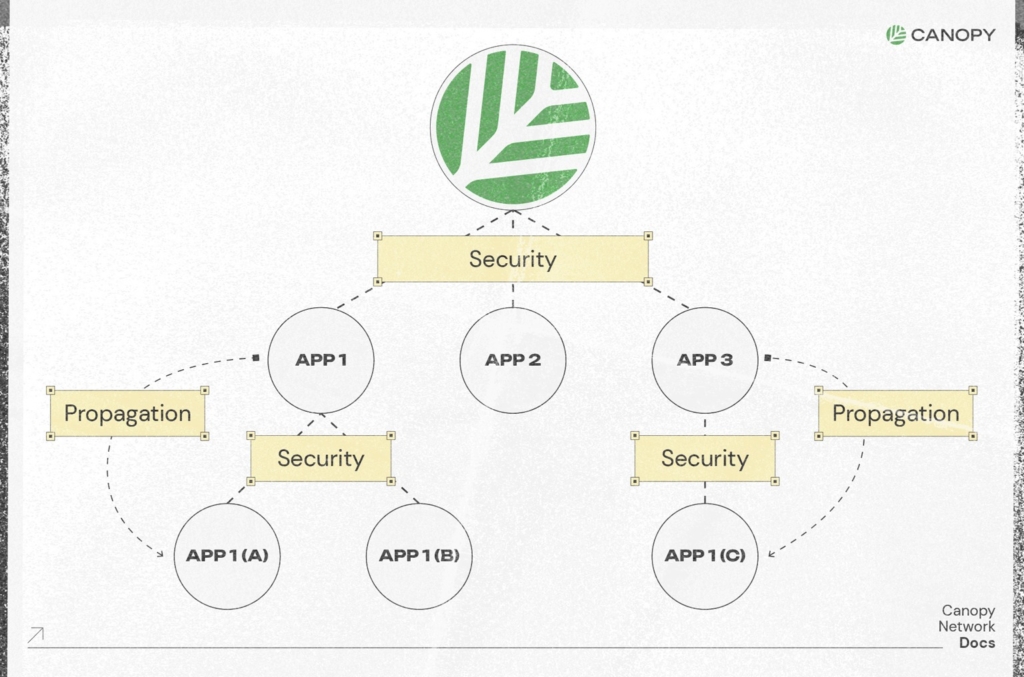
When a project is ready, it can detach from Canopy’s shared security and transition into a full sovereign L1, carrying its history, state, community, and economics with it. The upgrade path preserves continuity for users and developers while granting teams complete control over governance, performance, and value capture. Canopy positions this as a structural shift for the industry. Rather than choosing between an L1 or an L2 at the start, teams can now naturally evolve from incubation to independence as their needs grow.

Andrew Nguyen, Co-Founder and CTO of Canopy, said:

“Progressive Autonomy allows developers to focus entirely on building useful, high-performing applications instead of wrestling with infrastructure. Our goal was to take the security and operational burdens away from the traditional L1 creation and make them completely invisible. When sovereignty becomes accessible, the entire ecosystem will expand and benefit mutually.”

Canopy’s Betanet is already live and supported by leading validators including PierTwo, Stakely, Rhino, Lavender Five, Nodes.Guru, Kingnode, Easy2Stake, and others, signalling early momentum for the shared security approach. The full mainnet launch is planned for 2026, following more than 18 months of development across the core protocol and supporting infrastructure.

About Canopy Network

Canopy makes launching a sovereign blockchain as simple as spinning up an app. Teams can deploy in days, own their network economics, and connect across chains without bridges or wrapped assets. Powered by NestBFT and layerless mesh security, Canopy provides shared protection and built in atomic swaps for every chain on the network. Developers get predictable costs, fast deployment templates, and interoperability from day one.
Website | Twitter/X | Discord | Github


Crypto di tendenza

Letture associate

You Use Claude and Codex Every Day, but Meta Has Restricted Internal Use

In May, Meta imposed internal restrictions on its engineers regarding the use of Claude Code and Codex, two widely used AI programming tools. Despite being a major client, Meta's guidelines, still in effect, prohibit these external models from being used for specific tasks to prevent potential "escalations with partners." The core concern is "distillation"—the risk that outputs from Claude or Codex could inadvertently contaminate the training data and evaluation processes for Meta's in-house AI coding assistant, MetaCode. If MetaCode is trained or evaluated using data generated by these external models, it risks learning their capabilities rather than developing its own, blurring the line of intellectual origin. The restrictions are precise: engineers cannot use the external models to generate test questions, debug source code, or suggest test cases. AI-generated content is also barred from environments accessible to MetaCode. However, AI can still assist with peripheral tasks like workflow setup and code organization, provided all outputs are manually reviewed. This caution reflects a broader industry dilemma. While distillation is a common technique, using a competitor's model output for training raises legal and ethical questions about the ownership of derived capabilities. Contractual terms from companies like OpenAI and Anthropic explicitly forbid using their outputs to build competing products, putting enforcement power in the hands of rivals. The move is also financially motivated, as Meta seeks to reduce its hefty internal AI spending, estimated in the billions this year. Meta's policy illustrates the delicate balance companies must strike: leveraging powerful external AI tools while safeguarding the integrity and independence of their own AI development. As AI systems increasingly help build other AIs, distinguishing the origin of capabilities becomes a fundamental challenge for the entire industry.

marsbit2 h fa

You Use Claude and Codex Every Day, but Meta Has Restricted Internal Use

marsbit2 h fa

Why Do We Need an AI Content Perspective Today?

The article "Why Do We Need an AI Content Perspective Today?" explores the complex and often contentious integration of AI into the cultural and creative industries, particularly film and television. It begins with the cancellation of Amazon's AI-generated animation "Punky Duck," highlighting the ethical debates surrounding AI content. AI's rapid advancement is transforming video production, enabling cost-effective, full-length AI films (e.g., "RAPHAEL," "Dreams of Violets") while sparking industry resistance over issues like "synthetic actors." The core debate has shifted from whether to use AI to how to use it responsibly. The article analyzes why AI's entry into film is uniquely unsettling. It distinguishes between "cultural fast food" (short-form, fast-paced content like micro-dramas) and "cultural main courses" (traditional, long-form film/TV). AI currently excels at the former, matching its fragmented narratives, shallow emotional needs, and free-to-consumer models. However, venturing into the latter challenges the human-centric essence of storytelling—creativity, emotional depth, and the unique value of human labor and experience. While AI can generate massive volumes of content and lower costs, it risks devaluing human creativity, leading to homogenized output, and creating unfair competition through potential intellectual property infringement. Its efficiency also amplifies content safety risks, making preemptive governance crucial. To counter these risks, the article proposes establishing clear boundaries guided by a human-centered AI content perspective. It outlines four principles: 1) Amplify, rather than displace, human creative space; 2) Respect and protect human creative output; 3) Ensure human creative control and responsibility remain paramount; and 4) Guarantee transparency and traceability in AI creation. The conclusion emphasizes that humans must act as the "helmsmen" of technology, steering AI development to enhance, not replace, the core human values at the heart of cultural expression.

marsbit2 h fa

Why Do We Need an AI Content Perspective Today?

marsbit2 h fa

Trading

Spot

Articoli Popolari

Come comprare NASDAQ100

Benvenuto in HTX.com! Abbiamo reso l'acquisto di Nasdaq-100 Index (NASDAQ100) semplice e conveniente. Segui la nostra guida passo passo per intraprendere il tuo viaggio nel mondo delle criptovalute.Step 1: Crea il tuo Account HTXUsa la tua email o numero di telefono per registrarti il tuo account gratuito su HTX. Vivi un'esperienza facile e sblocca tutte le funzionalità,Crea il mio accountStep 2: Vai in Acquista crypto e seleziona il tuo metodo di pagamentoCarta di credito/debito: utilizza la tua Visa o Mastercard per acquistare immediatamente Nasdaq-100 IndexNASDAQ100.Bilancio: Usa i fondi dal bilancio del tuo account HTX per fare trading senza problemi.Terze parti: abbiamo aggiunto metodi di pagamento molto utilizzati come Google Pay e Apple Pay per maggiore comodità.P2P: Fai trading direttamente con altri utenti HTX.Over-the-Counter (OTC): Offriamo servizi su misura e tassi di cambio competitivi per i trader.Step 3: Conserva Nasdaq-100 Index (NASDAQ100)Dopo aver acquistato Nasdaq-100 Index (NASDAQ100), conserva nel tuo account HTX. In alternativa, puoi inviare tramite trasferimento blockchain o scambiare per altre criptovalute.Step 4: Scambia Nasdaq-100 Index (NASDAQ100)Scambia facilmente Nasdaq-100 Index (NASDAQ100) nel mercato spot di HTX. Accedi al tuo account, seleziona la tua coppia di trading, esegui le tue operazioni e monitora in tempo reale. Offriamo un'esperienza user-friendly sia per chi ha appena iniziato che per i trader più esperti.

17 Totale visualizzazioniPubblicato il 2026.06.18Aggiornato il 2026.06.18

Come comprare NASDAQ100

Cosa è RE

I. Introduzione al Progetto1. Che cos'è il Re Protocol?Il Re Protocol è un protocollo di riassicurazione decentralizzato che collega il capitale in stablecoin ai mercati di riassicurazione regolamentati del mondo reale. Gli utenti depositano stablecoin nel contratto intelligente dell'Insurance Capital Layer (ICL). I fondi depositati vengono utilizzati per supportare contratti di riassicurazione completamente collateralizzati, e i depositanti guadagnano ricompense in cambio. Il rendimento deriva sia da fonti on-chain che off-chain, oltre a spread specifici per token. Il protocollo opera su più catene, tra cui Ethereum, Avalanche e Arbitrum.2. Come funziona il Re Protocol?Gli utenti depositano asset approvati (come USDC, USDe, sUSDe) nei contratti intelligenti ICL per coniare uno dei due token che generano rendimento. I fondi vengono aggregati quotidianamente in una cassaforte di custodia Fireblocks, detenuta sotto controllo multi-firma, con i saldi pubblicati quotidianamente agli oracoli di Chainlink. Quando i riassicuratori autorizzati prelevano fondi ai sensi di una Surplus Note, una parte del capitale viene trasferita ai conti fiduciari di riassicurazione §114 domiciliati negli Stati Uniti, fungendo da garanzia conforme per le polizze del riassicuratore. Man mano che i contratti di riassicurazione maturano e il team attuariale rilascia capitale, la liquidità torna al protocollo, supportando i rimborsi di reUSD e accumulando rendimento per entrambi i token.Il protocollo offre due token corrispondenti a diverse tranche nella struttura del capitale:reUSD (Basis-Plus, Tranche Senior): Il rendimento è un tasso misto (media ponderata del SOFR e del tasso sUSDe degli ultimi 7 giorni) più uno spread di 250 punti base. Offre maggiore liquidità e supporta il rimborso istantaneo quando è disponibile capacità.reUSDe (Insurance Alpha, Tranche Junior): Il rendimento è lo stesso tasso misto più uno spread di 850 punti base, in cambio dell'assorbimento delle perdite prima della tranche senior. I rimborsi sono trimestrali. reUSDe ha un periodo minimo di detenzione di almeno 40 giorni.Stratificazione della Protezione del Capitale: Il capitale proprio del riassicuratore assorbe prima le perdite, seguito da reUSDe, con reUSD come tranche più senior protetta dalle due tranche sottostanti.3. Chi ha fondato il Re Protocol?Karn Saroya, Co-fondatore e CEO, si è laureato al MIT. In precedenza ha fondato la piattaforma insurtech supportata da venture capital Cover (una brokerage autorizzata, successivamente cessata) e ha fondato in precedenza l'app di moda Stylekick (acquisita da Shopify nel 2015). Ha anche lavorato in precedenza nella consulenza per i servizi finanziari.Dettagli sul finanziamento:Settembre 2022: Re ha completato un round di Seed da 14 milioni di dollari guidato da Tribe Capital (incubato attraverso i suoi Tribe Crypto Labs), con la partecipazione di Framework Ventures, Morgan Creek Digital, Defy VC, Stratos, Exor, SiriusPoint e altri.Maggio 2024: Completato un round di finanziamento da 7 milioni di dollari guidato da Electric Capital.4. Tokenomics del Re ProtocolRE è il token di governance del Re Protocol con un'offerta totale fissa di 1 miliardo di token, senza meccanismo inflazionistico e senza piano di conio continuo. Il token viene utilizzato per la governance tramite un modello di stake-to-vote, coprendo accesso al mercato, budget di incentivazione, staking e delega, comitati, aggiornamenti del protocollo e capitale di resilienza condiviso.Distribuzione dei token:Ecosistema (50%): Utilizzato per ricompense di staking, partecipazione alla governance, liquidità, integrazioni, sovvenzioni, espansione del mercato e crescita dell'ecosistema. 159,6 milioni di token sono in circolazione al TGE, con il resto soggetto a vesting lineare su 48 mesi.Contributori Core (20%): Include i contributori core e i consulenti che costruiscono il protocollo, i sistemi di governance, le integrazioni, i framework di rischio e le infrastrutture di mercato; cliff di 12 mesi più vesting lineare di 36 mesi.Investitori (17%): Sostenitori strategici; cliff di 12 mesi più vesting lineare di 36 mesi.Riserva per lo Sviluppo dell'Ecosistema (13%): Riserva a lungo termine per future contribuzioni e contributori.5. Cronologia delle Pietre Miliari ChiaveSettembre 2022: Re ha completato un round di Seed da 14 milioni di dollari, ha debuttato pubblicamente e si è posizionato come il primo protocollo di riassicurazione alimentato dalla blockchain, inizialmente costruito su Avalanche.Maggio 2024: Completato un round di finanziamento da 7 milioni di dollari guidato da Electric Capital.18 Giugno 2026: Il token $RE è stato ufficialmente lanciato.​II. Informazioni sul TokenNome del token: RE(Re)III. Link CorrelatiSito web:https://re.xyz/Esploratori:https://etherscan.io/token/0x526526528f35ac738177003b8773b402b8df8143Twitter:https://twitter.com/reNota: L'introduzione al progetto proviene dai materiali pubblicati o forniti dal team ufficiale del progetto, che è solo a scopo di riferimento e non costituisce consulenza per investimenti. HTX non si assume responsabilità per eventuali perdite dirette o indirette risultanti.

272 Totale visualizzazioniPubblicato il 2026.06.18Aggiornato il 2026.06.29

Cosa è RE

Come comprare RE

Benvenuto in HTX.com! Abbiamo reso l'acquisto di Re (RE) semplice e conveniente. Segui la nostra guida passo passo per intraprendere il tuo viaggio nel mondo delle criptovalute.Step 1: Crea il tuo Account HTXUsa la tua email o numero di telefono per registrarti il tuo account gratuito su HTX. Vivi un'esperienza facile e sblocca tutte le funzionalità,Crea il mio accountStep 2: Vai in Acquista crypto e seleziona il tuo metodo di pagamentoCarta di credito/debito: utilizza la tua Visa o Mastercard per acquistare immediatamente ReRE.Bilancio: Usa i fondi dal bilancio del tuo account HTX per fare trading senza problemi.Terze parti: abbiamo aggiunto metodi di pagamento molto utilizzati come Google Pay e Apple Pay per maggiore comodità.P2P: Fai trading direttamente con altri utenti HTX.Over-the-Counter (OTC): Offriamo servizi su misura e tassi di cambio competitivi per i trader.Step 3: Conserva Re (RE)Dopo aver acquistato Re (RE), conserva nel tuo account HTX. In alternativa, puoi inviare tramite trasferimento blockchain o scambiare per altre criptovalute.Step 4: Scambia Re (RE)Scambia facilmente Re (RE) nel mercato spot di HTX. Accedi al tuo account, seleziona la tua coppia di trading, esegui le tue operazioni e monitora in tempo reale. Offriamo un'esperienza user-friendly sia per chi ha appena iniziato che per i trader più esperti.

50 Totale visualizzazioniPubblicato il 2026.06.18Aggiornato il 2026.06.29

Come comprare RE

Discussioni

Benvenuto nella Community HTX. Qui puoi rimanere informato sugli ultimi sviluppi della piattaforma e accedere ad approfondimenti esperti sul mercato. Le opinioni degli utenti sul prezzo di A A sono presentate come di seguito.

活动图片