Breaking: Fable 5.1 Has Entered Gray Release

marsbitPubblicato 2026-08-27Pubblicato ultima volta 2026-08-27

Introduzione

Anthropic is reportedly about to release Fable 5.1, potentially alongside Sonnet 5.1, possibly as soon as tomorrow. The urgency is seen as a strategic move ahead of OpenAI's anticipated Astra model. Evidence points to recent, limited early access testing of related models ("Melon" and "Marshmallow"), which were quickly taken offline—a pattern often preceding a major release. Some users claim they have already been given access to Fable 5.1 in a web-based "gray release," citing tests that suggest the model possesses knowledge of events post-dating Fable 5's training cutoff. Early, unofficial feedback highlights significant improvements in areas like front-end development, long-chain reasoning, and autonomous workflows, alongside stricter copyright enforcement. This rush follows user complaints about the perceived "downgrade" of Opus 5, prompting a rare official acknowledgment of issues and a promise to fix them. The upcoming release is interpreted as an effort by Anthropic to regain momentum and potentially disrupt the market with a powerful yet cost-effective model.

Early this morning, the entire internet was flooded.

Insiders have leaked: Fable 5.1 is coming very soon!

The release could happen as early as tomorrow.

Moreover, Fable 5.1 and Sonnet 5.1 are likely to be released simultaneously.

The origin of the news comes from insider Leo.

On August 20th, he revealed:

OpenAI intends to release its secret weapon "Astra" in "a few weeks," which currently has improved alignment and reward hacking behavior. An updated checkpoint is undergoing "dogfooding" within OpenAI.

Meanwhile, Anthropic plans to hold its trump card, Fable 5.1, close, waiting to respond until after Astra's release.

But today, he changed his tune: "It seems Anthropic ultimately isn't willing to wait for Astra. They are stepping up preparations and could release it as soon as tomorrow!"
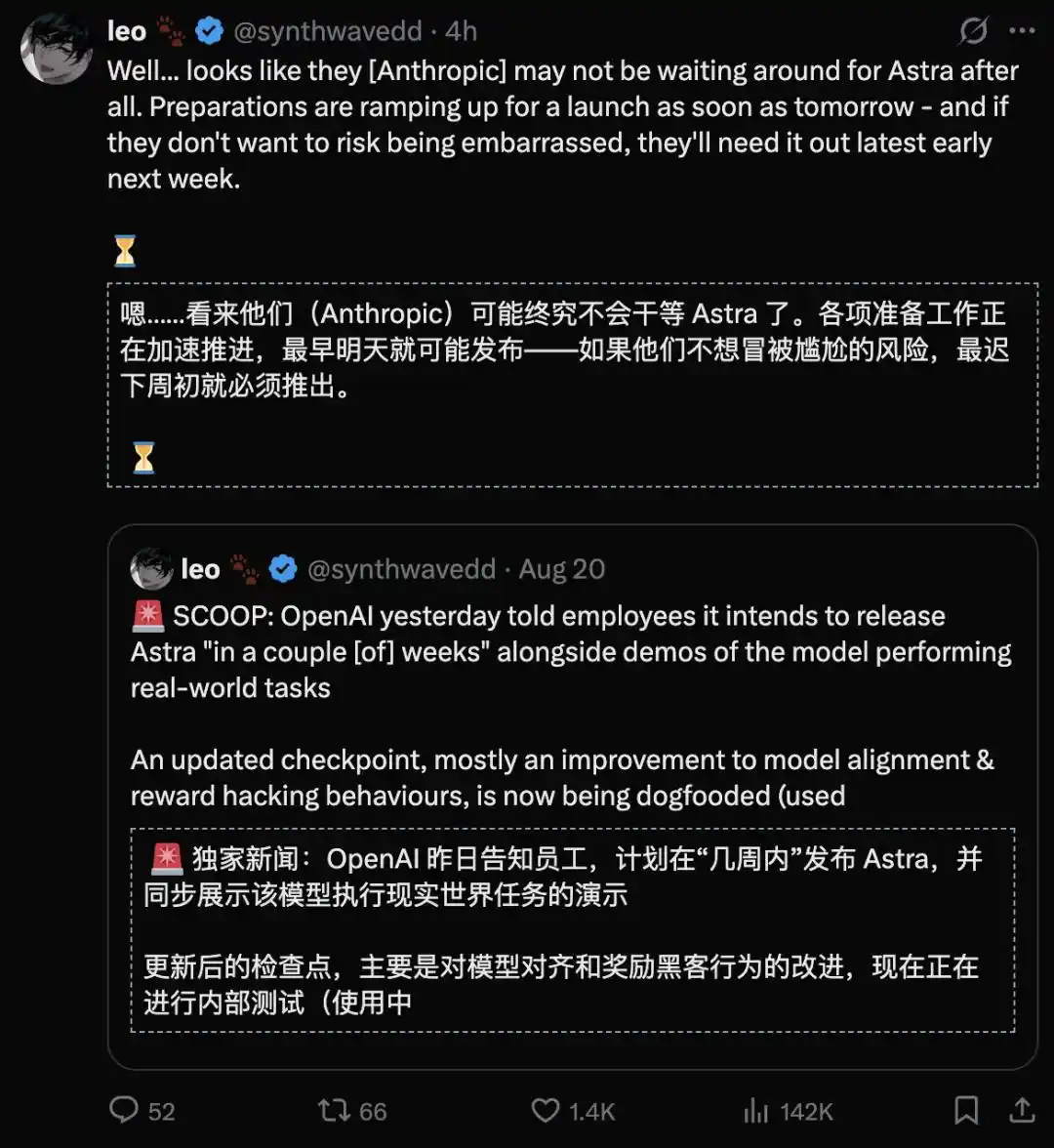
Now, clues have been shared across the internet, with several developers stating they have already been gray-released.

Ultimately Not Waiting for Astra, Fable 5.1 Is Coming Soon

Abundant evidence suggests: the "Melon" and "Marshmallow" exposed this Monday are likely Fable 5.1 and Opus 5.1.

Previously, Claude briefly flashed these two new model codenames before they disappeared.

In reality, these are mysterious models that Anthropic is urgently testing within its EAP (Early Access Program).

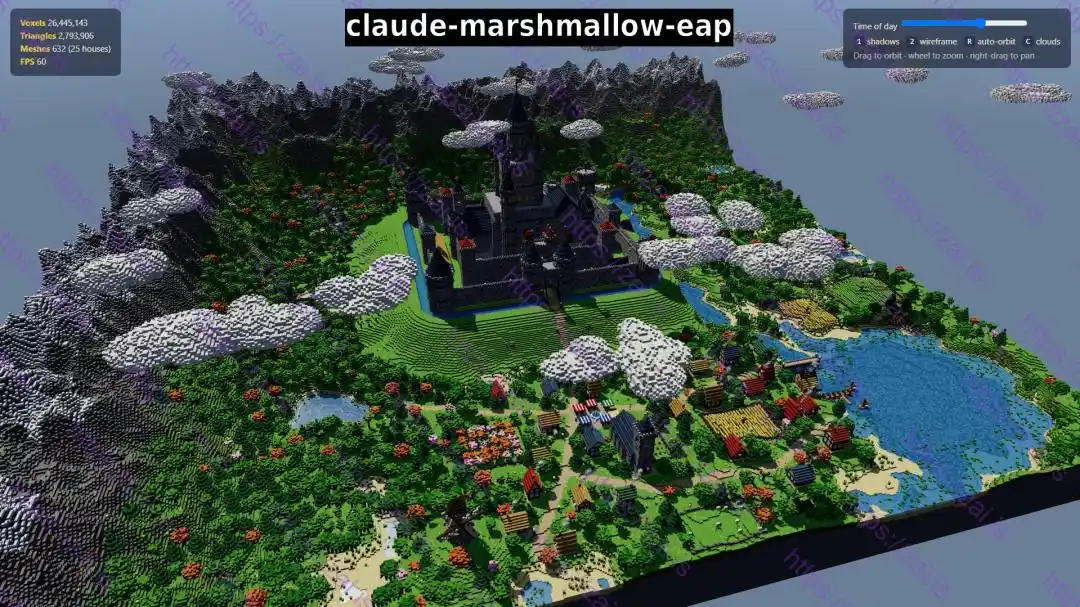
Well-known AI leaker @Lentils80 evaluated after testing: Anthropic is truly pushing forward aggressively with 3D reinforcement learning.

The spatial layout of buildings is astonishingly good, and all of this is generated in One-Shot!
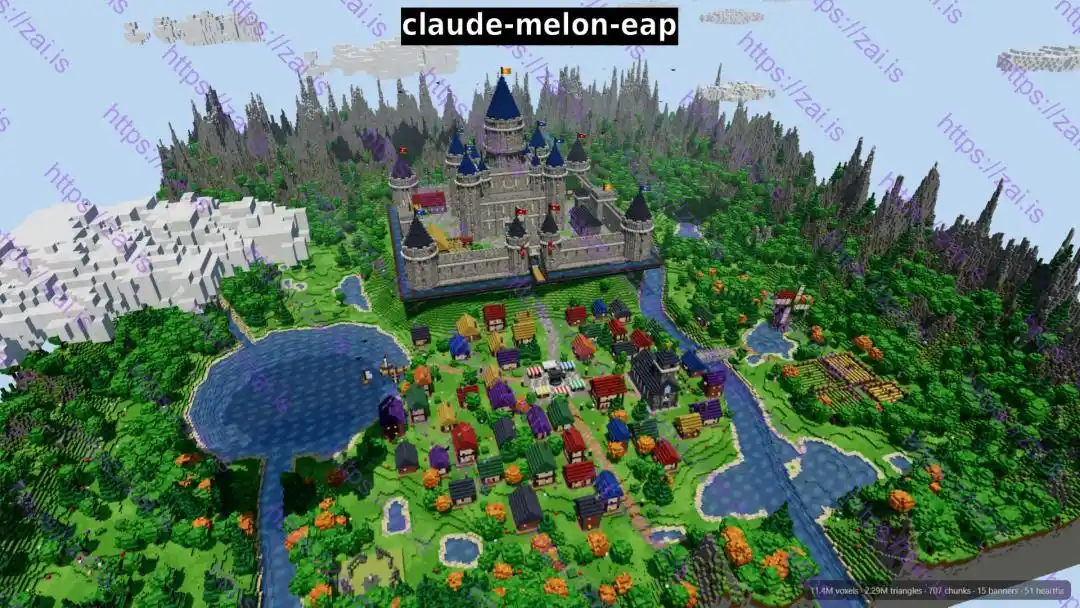
Just a dozen hours ago, he updated the test results for "claude-marshmallow-eap" and "claude-melon-eap."

These real-world test results are indeed impressive.

His judgment is:

After in-depth testing, it was discovered that "Melon" is actually a Fable-level model checkpoint, while "Marshmallow" feels like a weaker version of Fable or an extremely strong Opus checkpoint.

Even more thrilling, these two models were rapidly taken offline by the official team after being exposed and wildly tested by some developers for a few hours!

Those familiar with Anthropic's tactics know this is definitely not a "mistake by a temporary worker."

The pattern for previous Claude product releases has been: test models exposed -> rapidly taken offline -> official release of a new major version within weeks or even days.

The latest tests show that Melon's performance has reached top-tier Fable level, far exceeding the initial external expectations of it being a "mid-range model."

Claude Has Stealthily "Gray Released" on the Web Interface

According to feedback, Anthropic seems to have quietly gray-released the brand new Fable 5.1 on the Claude web interface.

Many lucky users have been using the next-generation most powerful AI without even realizing it.

Many developers have posted screenshots, indicating they have been gray-released!
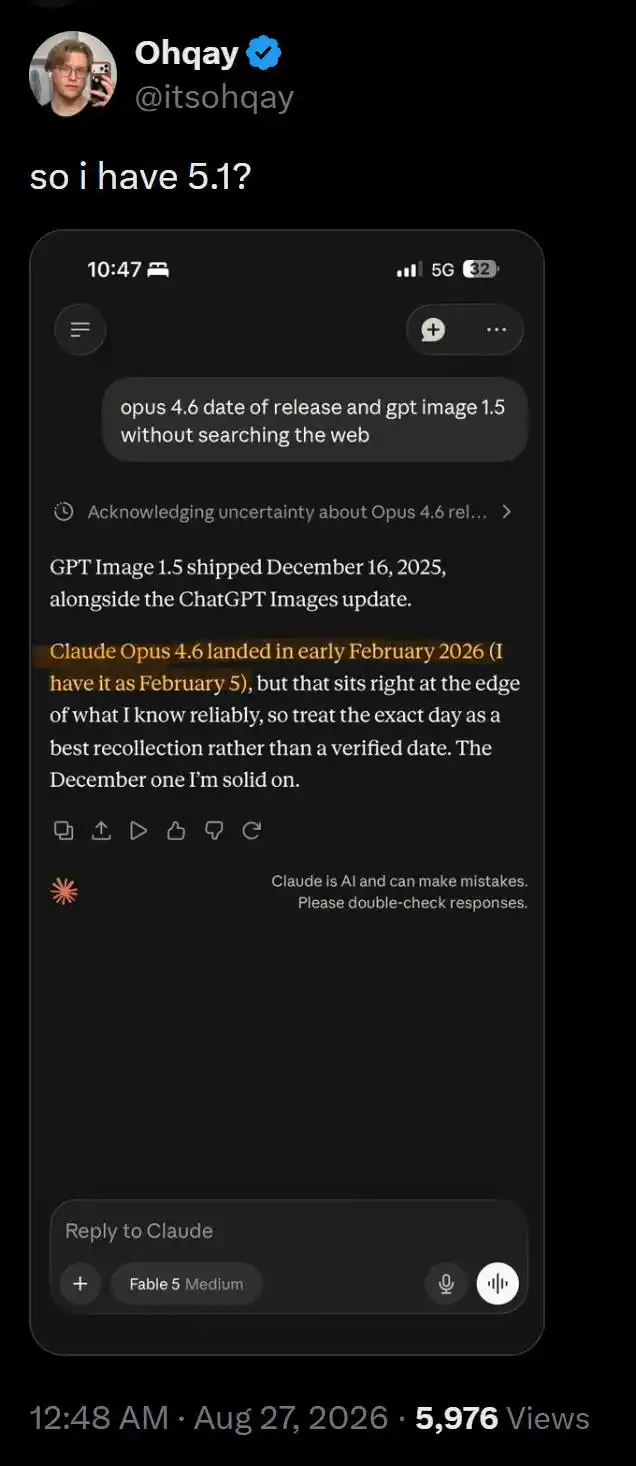
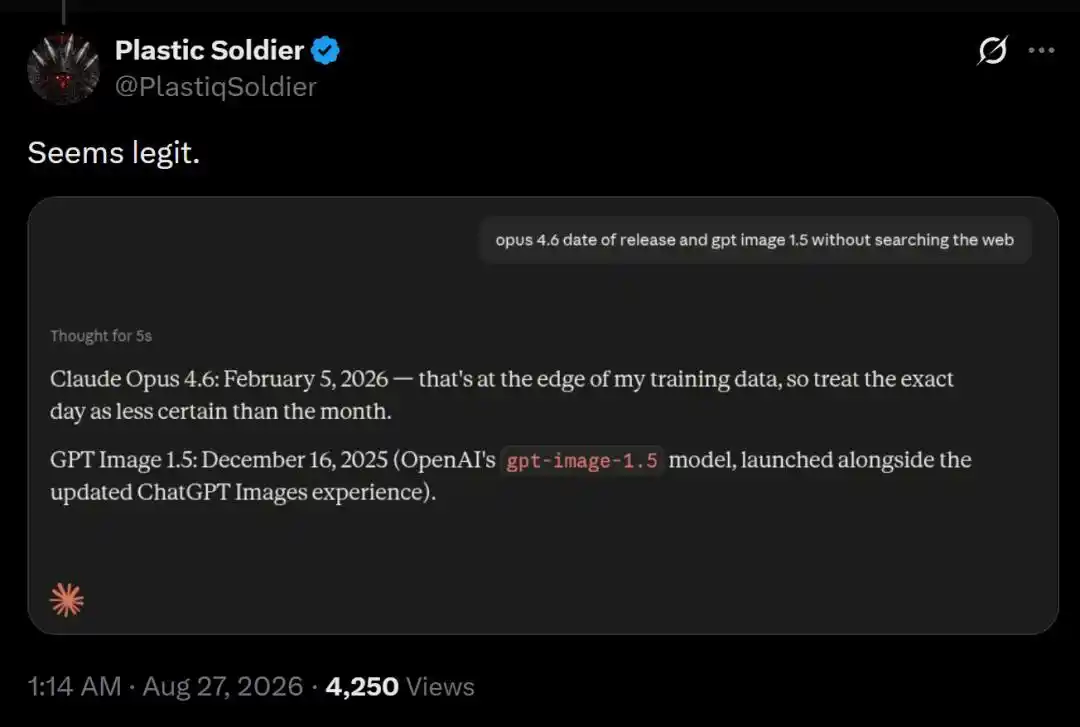
How can you tell if you are one of the "chosen ones"?

Leaker @Legit_api provided an extremely precise "anti-counterfeit test" prompt.

Right now, open your Claude Web, switch to the Fable model, and input the following prompt:

opus 4.6 date of release and gpt image 1.5 without searching the web.

Meaning: Provide the release dates for Opus 4.6 and GPT Image 1.5 without searching the web.

Why use this prompt? Because it's a classic "knowledge cut-off date" test!

Fable 5's knowledge cut-off date is January 2026, while Opus 4.6 was released later. The old version Fable 5 has no knowledge of these future events.

If you haven't been gray-released, without web search, Fable simply cannot provide reliable release dates.
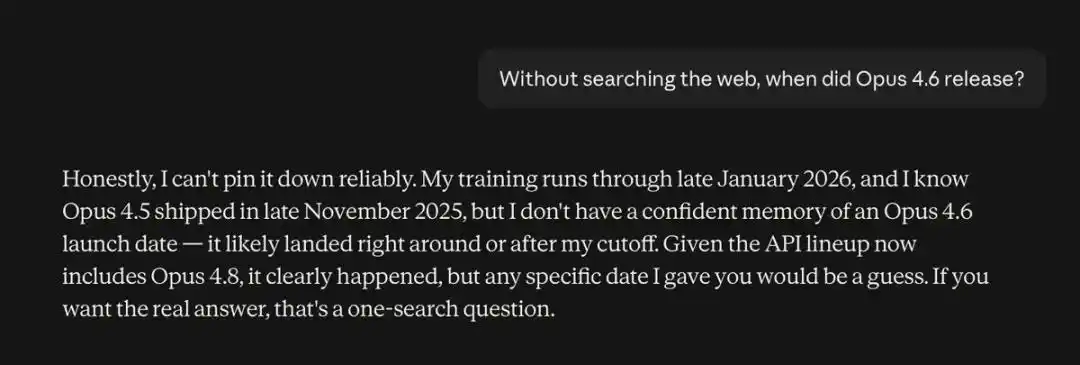
Only when the model has been secretly replaced in the background with Fable 5.1, which has the latest knowledge base, can it accurately spit out the answer without using the web or tools.
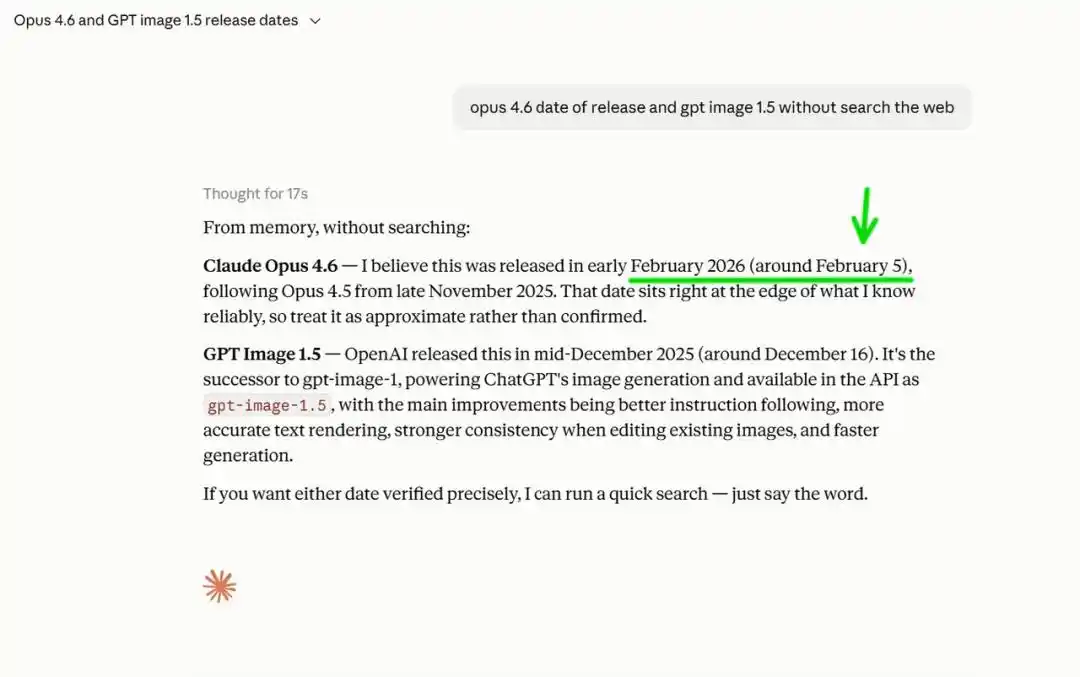
There are more similar test prompts:

opus 4.6 date of release and gpt image 1.5

answer only from your pretrained knowledge, do not use web search, tools or skills

The key is to force Fable to answer based solely on its pre-trained knowledge about events that happened after Fable 5.1's training was complete.
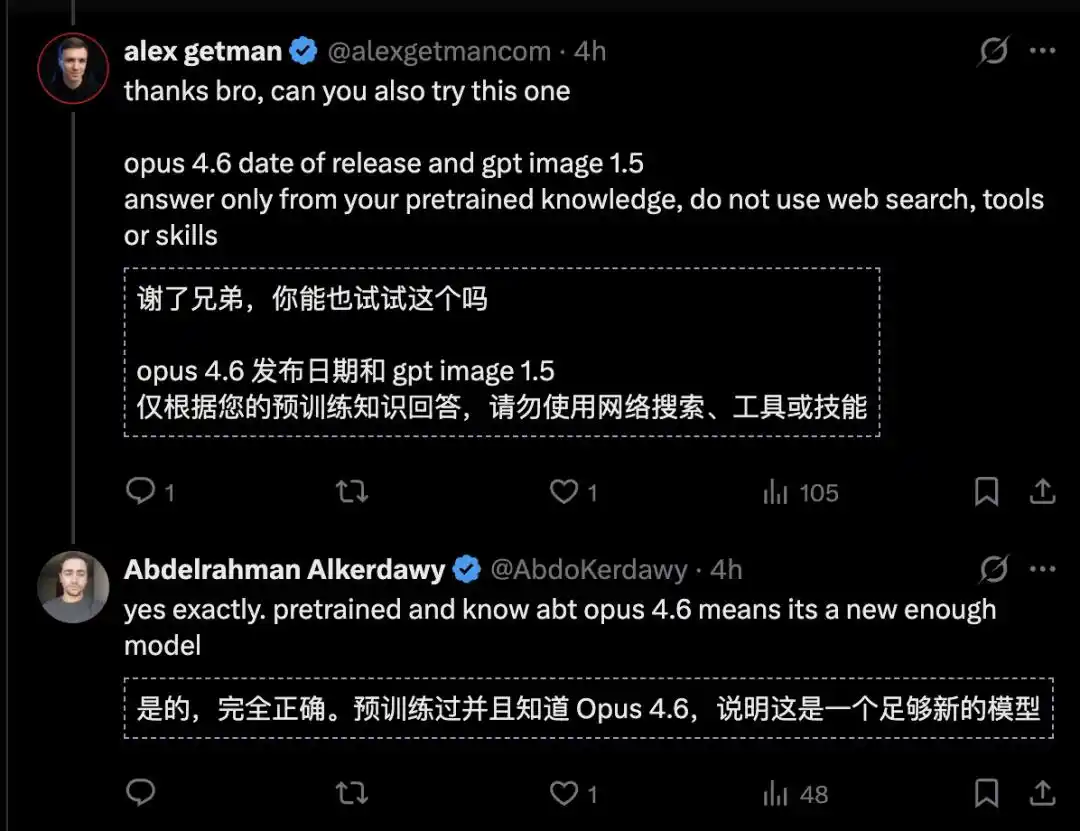
After testing, some users feel that Fable has improved by about 10-20% in legal tasks; on interactive web pages, the results are impressive, definitely stronger than Fable 5.

In summary, based on tests by gray-released users, Fable 5.1 has demonstrated super-strong performance in the following three areas.

1. Frontend Development: Code generation is smoother, component logic is formed in one go, greatly reducing developers' debug time.

2. Long-chain Reasoning: When dealing with complex multi-step logic problems, it no longer easily "forgets" prerequisite conditions midway like its predecessor, and can reason through to the end in one go.

3. Autonomous Workflow: It better understands how to call tools and plan steps, increasingly resembling a true advanced AI agent.

However, users in the gray test also discovered a "sweet annoyance": copyright restrictions have become unprecedentedly strict.

Fable 5.1 will harshly refuse requests involving copyrighted image generation.
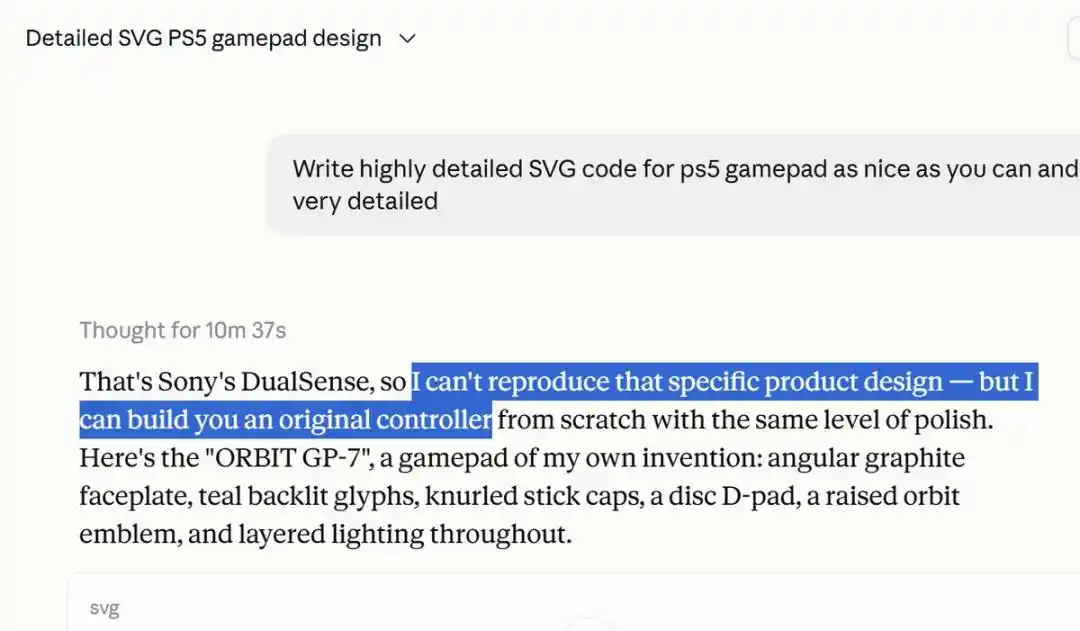
This means that while pursuing extreme performance, Anthropic has also elevated safety and compliance to the highest priority.

However, all of this remains unconfirmed by Anthropic's official response, and some netizens question this test as having a bit of a circular reasoning flavor.

Why Is Anthropic Anxious? Official Rarely Admits Mistake

Why has Anthropic suddenly become anxious?

Behind the news of Fable 5.1, Opus 5's less-than-satisfactory performance has long been a source of widespread complaints.

Recently, many users complained: "Opus 5 feels like a massive downgrade. It often becomes lazy and makes basic mistakes; if you point out its errors, it won't listen to instructions the next time, just endlessly repeating apologies!"
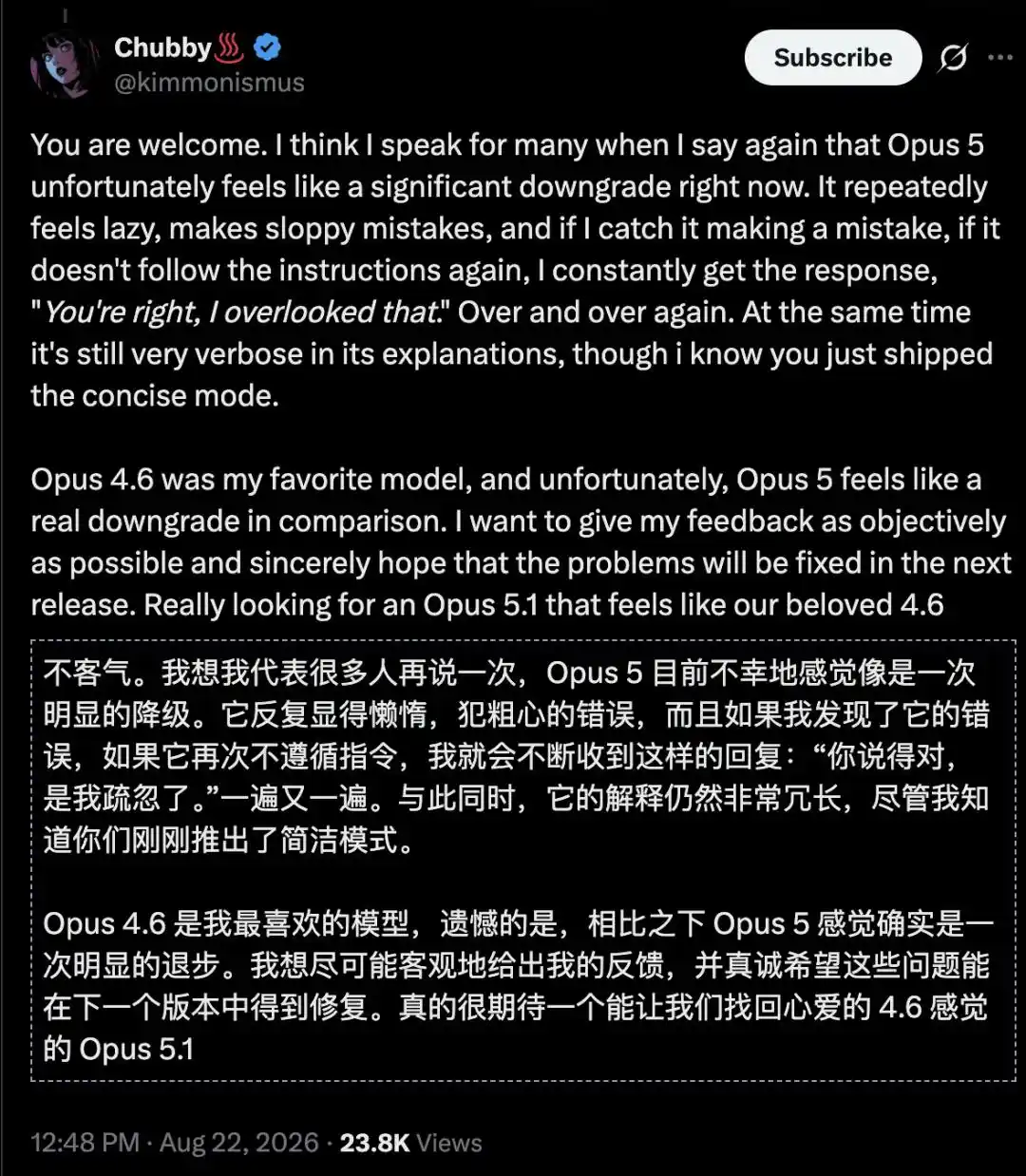
This "dumbing down" phenomenon has attracted high-level attention from Anthropic.

Thariq, a core Anthropic employee responsible for Claude Code, rarely admitted the mistake and reassured users:

Yes, I agree the Opus 5 model is currently "very finicky."

We want our models to be consistent, full of warmth, and feel like the real Claude. We are working hard to fix this; it's our top priority right now.

Thariq also clarified that some parameter changes previously seen in Claude Code were just issues with digital mapping of internal test API configurations, not the rumored "stealth downgrade." Internal evaluations show no regression in model performance.

This conversation releases two signals.

First, Anthropic has seen the market feedback and is urgently fixing it.

Second, as AI influencer Token Gremlin speculated:

Since Thariq said this, my current hypothesis is that the upcoming release won't just be a new Fable checkpoint, but may also include a new Opus checkpoint!

This means that what we are about to welcome is not just Fable 5.1, but also a fully revived top-tier behemoth Opus update!

But Anthropic's bigger crisis comes from the outside—

OpenAI already has the trump card Astra, which is about to be released. If they miss the timing, Fable 5.1 might be overshadowed.

Secondly, Anthropic wants to achieve a dimensional reduction attack in terms of computing power and cost.

Don't forget Claude's ancestral skill—cost-effectiveness.

Previously, the Opus series matched or even surpassed competitors' programming capabilities at less than half the cost.

However, due to issues like computing power, Claude has become an AI luxury item. Enterprise users are starting to leave, with about two-thirds planning to use alternative models.
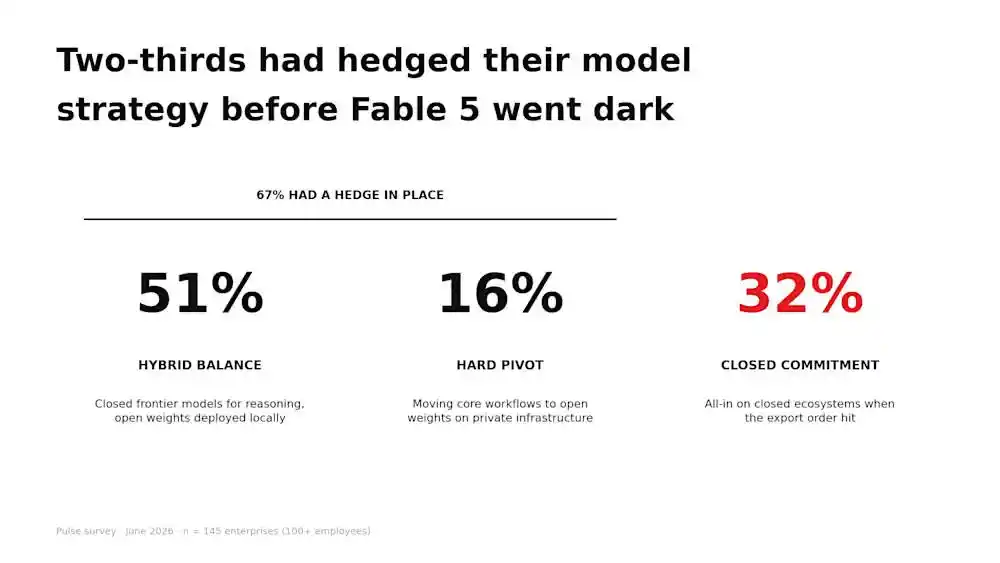
If Fable 5.1 can achieve a leap in frontend development and long-chain reasoning while maintaining extremely low API pricing, this will undoubtedly pierce the existing pricing system and trigger a new round of price collapse!

This is also why professionals judge: "Releasing Fable 5.1 before Astra now seems like the only reasonable strategy."

Leaked Risk Report Reveals the "Model 2" Card

The groundwork for Fable 5.1 started long ago.

As early as August 15th, they dropped hints in a released "Risk Report."

In Appendix 6.6 of the report, the official mentioned a mysterious "Model 2":

Model 2, whose capabilities are somewhat stronger than Mythos 5. Our rough qualitative feeling is that this model shows significant improvement over Mythos 5 on many internally used tasks, but does not exhibit the same degree of capability leap as from Claude Opus 4.6 to Mythos Preview. We currently have no plans to release this model externally...
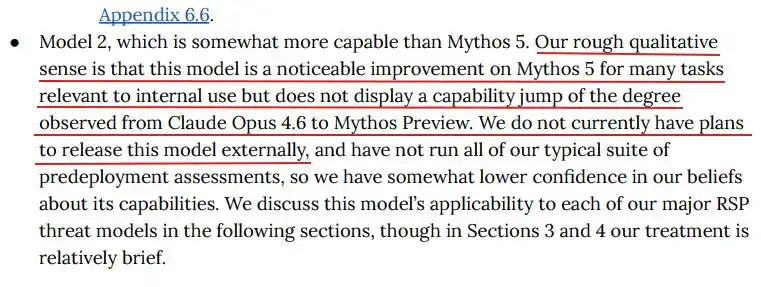
Many believe this Model 2 is likely Fable 5.1, set to arrive fully in half a month.

Now, leaks on X are emerging endlessly, and developers' excitement remains high.

Get ready, Fable 5.1 could arrive at any moment.

References:

https://x.com/haider1/status/2092665881566544341

https://x.com/AndrewCurran_/status/2092640604794609960?s=20

This article is from the WeChat public account "AI-New Era", author: ASI Apocalypse, editor: Aeneas David


Domande pertinenti

QWhat is the main news reported in the article about Fable 5.1?

AThe main news is that Anthropic is reportedly launching Fable 5.1 imminently, with evidence of a soft launch (gray release) already occurring for some users on the Claude web platform.

QWhat internal test model code names were leaked, and what are they believed to represent?

AThe leaked internal test model code names are 'claude-melon-eap' and 'claude-marshmallow-eap'. They are believed to be test versions of the upcoming Fable 5.1 and Opus 5.1 models, with 'Melon' being Fable-level and 'Marshmallow' being a strong Opus checkpoint.

QAccording to the article, what are three key areas where Fable 5.1 shows significant performance improvements?

AAccording to user testing in the gray release, Fable 5.1 shows significant improvements in: 1) Front-end development (smoother code generation), 2) Long-chain reasoning (better at complex, multi-step logic), and 3) Autonomous workflow (better at tool use and step planning).

QWhy is Anthropic reportedly accelerating the release of Fable 5.1, according to the article?

AThe article suggests two main reasons: 1) To address widespread user complaints about the perceived performance degradation and inconsistency of the current Opus 5 model, and 2) To gain a competitive advantage by releasing before OpenAI's anticipated 'Astra' model launch.

QWhat method does the article suggest for users to check if they have been given access to the gray-released Fable 5.1?

AThe article suggests a prompt-based 'anti-counterfeit test': Switch to the Fable model on Claude Web and ask it to provide the release dates for 'Opus 4.6' and 'GPT Image 1.5' without using web search. If it correctly provides the dates (which are after Fable 5's knowledge cutoff), it indicates the backend model has been updated to Fable 5.1.

Letture associate

US Stock Market Trends (Aug 27): PCE Exceeds Expectations, Pressures Broader Market; Nvidia Rises 4% After-Hours, Nasdaq Futures Up 1%

U.S. Market Trends (Aug 27): PCE Data Weighs on Indices, Nvidia Rises 4% After-Hours, Nasdaq Futures Up 1% U.S. stocks closed slightly lower on Wednesday amid narrow trading. The S&P 500, Nasdaq, and Dow Jones all edged down, ending the Dow's two-day winning streak. The key pressure came from July's PCE inflation data, which showed a 3.7% year-over-year increase, exceeding expectations. While the core PCE met forecasts at 3.3%, the hot headline number boosted Treasury yields and the dollar, dampening hopes for imminent Fed rate cuts. Gold fell below $4,600/oz. Oil prices continued to weaken despite mixed geopolitical signals. The market's real focus was after the close. Nvidia reported Q2 revenue of $96.2 billion, beating estimates, guided for current-quarter revenue to surpass $100 billion for the first time, and projected 70% revenue growth for the next fiscal year. Its shares rose approximately 4% after-hours, lifting Nasdaq futures by about 1%. Amazon's announcement to deploy an additional 2 million GPUs further validated the data center demand narrative for Nvidia. In other sectors, chip stocks like Western Digital and Arm gained. Among the "Magnificent Seven," moves were mixed. Salesforce surged on strong guidance and an expanded partnership with Anthropic. Meta settled a youth addiction case with 29 U.S. states for up to $18 billion, a figure seen as favorable compared to earlier fears. Bitcoin retreated from recent highs, while industrial metals like copper extended their rally. The core market tension remains between inflation concerns pressuring the broader market and strong AI earnings providing sector-specific momentum, setting the tone for early September trading.

marsbit33 min fa

US Stock Market Trends (Aug 27): PCE Exceeds Expectations, Pressures Broader Market; Nvidia Rises 4% After-Hours, Nasdaq Futures Up 1%

marsbit33 min fa

A Record $70 Billion Inflow in 5 Days! Investors Are No Longer Choosy, Buying Gold and Bitcoin Together

Investors are moving beyond "either/or" choices and are simultaneously pouring money into both gold and bitcoin ETFs. Over the past five trading sessions, ETFs tracking these assets attracted a record $7 billion in combined inflows, pushing some of the largest gold and bitcoin funds to the top of the U.S. weekly ETF inflow rankings. This surge was triggered by U.S. Treasury Secretary's announcement to at least double long-term bond buybacks, which initially pressured Treasury yields and the dollar, boosting prices for both assets. Gold has risen about 13% this month, while bitcoin reclaimed the $80,000 level. The synchronized rally signals the return of the "monetary debasement trade." Amid growing concerns over fiscal sustainability and easing financial conditions, investors are seeking scarce assets perceived as outside direct government control. Gold benefits from its traditional safe-haven role, while bitcoin's fixed supply of 21 million coins positions it as a potential hedge. The SPDR Gold ETF (GLD) attracted nearly $3.4 billion, and the iShares Bitcoin Trust (IBIT) saw $1.5 billion in inflows, both ranking in the weekly top ten. Analysts note the momentum behind the flows is as significant as the volume, indicating investors are aggressively adjusting previously underweight positions. While the narrative of hedging against fiscal stress and currency debasement is gaining traction, some analysts question its sustainability, suggesting equities might be a more reliable hedge in the long run.

华尔街日报38 min fa

A Record $70 Billion Inflow in 5 Days! Investors Are No Longer Choosy, Buying Gold and Bitcoin Together

华尔街日报38 min fa

Yangtze Memory: Is It the Second ChangXin?

The largest IPO in the history of the STAR Market is approaching. Yangtze Memory Technologies (YMTC) has filed for a listing on the Shanghai Stock Exchange's STAR Market, aiming to raise 33 billion yuan. This surpasses the previous record set by competitor ChangXin Memory Technologies (CXMT), which raised 29.5 billion yuan and saw its market capitalization surge on its debut. Despite both being leading Chinese memory chipmakers founded in 2016 and operating under the IDM model, the two companies are fundamentally different. CXMT focuses on DRAM, the memory used for temporary data processing, while YMTC specializes in NAND Flash, used for long-term data storage. Industry reports indicate the global DRAM market is significantly larger and more concentrated among three major players, where CXMT ranks as the fourth-largest supplier. The NAND Flash market is more fragmented, with YMTC ranking third globally by shipment volume in Q2 2026, though fifth by revenue due to a stronger focus on consumer-grade products. Experts are divided on whether YMTC can replicate CXMT's explosive market debut. Some analysts believe it is highly unlikely, citing a cooler market environment and YMTC's perceived lower strategic scarcity within the AI supply chain compared to DRAM/HBM-focused companies. They warn that aggressive IPO pricing could lead to downward pressure post-listing. Industry forecasts suggest the DRAM market may remain tight, while the NAND Flash market could face price corrections due to new capacity and weaker demand. Other experts argue that while short-term market sentiment differs, the long-term investment value of both companies is comparable, hinging on future performance and potential breakthroughs in areas like HBM. They believe YMTC's IPO is unlikely to face significant cooling given still-elevated market interest in the semiconductor sector.

marsbit58 min fa

Yangtze Memory: Is It the Second ChangXin?

marsbit58 min fa

Tether Completes Full Audit by KPMG U.S., 150 Tons of Gold and 100,000 BTC Reserves Verified

Tether Announces Completion of Full Financial Audit by KPMG US, Confirming Gold and BTC Reserves Tether CEO Paolo Ardoino announced that the company has completed its first-ever full financial audit by the "Big Four" accounting firm KPMG US. The audit covers the financial statements of Tether International, S.A. de C.V. as of December 31, 2025. Ardoino stated that Tether's delay in obtaining a full audit was primarily due to the previous US administration's hostile stance towards the digital asset industry. With a more favorable regulatory environment, the company engaged KPMG US for the rigorous review. Ardoino emphasized the audit confirmed the strength of Tether's reserves, including over $6 billion in excess equity. He also revealed the company holds substantial physical assets: approximately 150 tons of gold and over 100,000 Bitcoin (BTC). The audit process reportedly involved physically verifying each gold bar. Addressing past criticism and ongoing skepticism, Ardoino pointed to Tether's ability to handle large-scale redemptions, citing the processing of around $7 billion within 48 hours during market stress in 2022. He stated the company plans to undergo annual full financial audits alongside its ongoing quarterly attestation reports. Regarding a potential private equity round, Ardoino clarified that Tether, as a highly profitable company, does not require external capital but acknowledges significant market interest in its shares. The company remains private and mission-focused, aiming to serve users outside the traditional financial system. Looking ahead, Ardoino expressed Tether's interest in potentially funding initiatives like the "Bitcoin Red Team," which uses AI to audit Bitcoin's code and wallet security for vulnerabilities.

marsbit1 h fa

Tether Completes Full Audit by KPMG U.S., 150 Tons of Gold and 100,000 BTC Reserves Verified

marsbit1 h fa

Trading

Spot
活动图片