BlackRock vs. Strategy: Who Will Win the Bitcoin Accumulation Battle?

marsbitPubblicato 2026-03-20Pubblicato ultima volta 2026-03-20

Introduzione

BlackRock and Strategy (formerly MicroStrategy) are engaged in an unprecedented race to accumulate Bitcoin. As of March 16, 2026, BlackRock’s iShares Bitcoin Trust (IBIT) holds 784,062 BTC, while Strategy holds 761,068 BTC—a gap of 22,994 coins that could close within days given Strategy’s aggressive purchasing pace. BlackRock accumulates Bitcoin indirectly through its IBIT ETF, where investor inflows drive purchases. In contrast, Strategy actively raises capital via debt, equity, and preferred stock offerings to buy and hold Bitcoin directly, with no intention of selling. This competition highlights two distinct models: BlackRock offers a regulated, low-complexity vehicle for institutional exposure, while Strategy employs leverage and corporate strategy for accelerated accumulation. Both are rapidly reducing Bitcoin’s available supply, intensifying market scarcity. Strategy faces higher risks, including significant debt and sensitivity to Bitcoin’s declines, whereas BlackRock’s model is more resilient to sentiment shifts. The outcome symbolizes broader institutional adoption, fueled by regulatory clarity and new accounting rules. Ultimately, both entities reinforce Bitcoin’s growing legitimacy and supply squeeze, impacting all market participants.

Author: Jawad Hussain

Compiled by: Plain Language Blockchain
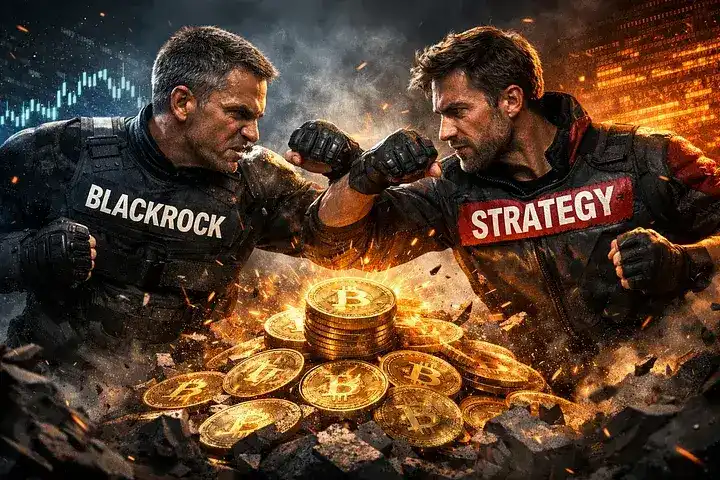
The world's largest asset manager and a 37-year-old software company that has pivoted its entire balance sheet to digital assets are locked in an unprecedented race to accumulate Bitcoin on a massive scale in the crypto market.

As of March 16, 2026, BlackRock's iShares Bitcoin Trust (IBIT) held 784,062 Bitcoin. Meanwhile, Strategy (formerly MicroStrategy) held 761,068 Bitcoin.

The gap between them is approximately 22,994 coins. At Strategy's current purchasing rate, this gap could disappear within days.

This is more than just a footnote in digital asset history. It is one of the most influential financial stories of 2026.

Two entities with different structures, motivations, and risk profiles are competing for the same finite asset. Bitcoin has a fixed supply cap of 21 million coins.

Every coin purchased by these institutions is one coin no longer available for sale. The race between BlackRock and Strategy is accelerating the supply squeeze long predicted by Bitcoin traders.

BlackRock vs. Strategy: Who Will Win the Bitcoin Accumulation War?

Here, we will break down how each participant accumulates Bitcoin, what drives their purchasing speed, the risks for both sides, and what the outcome of this race means for off-exchange investors. Whether you hold IBIT shares, MSTR stock, Bitcoin directly, or none of the above, this race directly impacts the market you participate in.

Two Entities, Two Completely Different Models

Both BlackRock and Strategy hold massive amounts of Bitcoin. But their reasons for holding, the mechanisms, and the associated obligations are completely different.

How BlackRock Accumulates Bitcoin

BlackRock does not buy Bitcoin for itself. The company launched the iShares Bitcoin Trust (ticker: IBIT) on Nasdaq in January 2024, providing investors with a regulated instrument to gain Bitcoin exposure by directly holding the asset. When investors buy IBIT shares, Authorized Participants (large financial institutions) buy Bitcoin on the open market and deliver it to the fund. When investors sell IBIT, the process occurs: the fund sells Bitcoin back into the market.

This means BlackRock's Bitcoin holdings are a function of investor demand. IBIT's holdings grow when institutional and retail buyers want Bitcoin exposure purely through traditional accounts. When sentiment turns bearish and investors redeem, the holdings shrink. BlackRock has no strategic mandate to accumulate Bitcoin; it is a custodian. The Bitcoin it holds economically belongs to IBIT shareholders, not BlackRock itself.

According to SoSoValue data, since its launch, IBIT has attracted cumulative net inflows of $63.21 billion. In the week of March 9 to March 13 alone, IBIT garnered net inflows of $600.1 million, accounting for 78% of the net Bitcoin inflows into ETFs that week. The fund has maintained positive inflows every day since March 9, momentum highlighting the institutional demand driving BlackRock's Bitcoin accumulation.

How Strategy Accumulates Bitcoin

Strategy's model is the complete opposite. The company does not wait for investor funds; it proactively raises capital specifically for buying Bitcoin. This capital primarily comes from three sources: convertible notes (debt instruments convertible into MSTR common stock); at-the-market (ATM) equity offerings (selling new shares directly to the market); and preferred stock instruments, recently the STRC Preferred Shares with an 11.5% annual yield, sold to investors who provide funds directly for Bitcoin purchases in exchange for monthly payments.

Once Strategy secures cash, it purchases Bitcoin through institutional trading desks (primarily Coinbase Prime), storing the coins in secure cold wallets. The company does not trade these coins or hedge. There is a simple directive: buy and hold. This means Strategy's Bitcoin holdings only move in one direction. Unlike IBIT, which can shrink due to redemptions, Strategy's Bitcoin inventory grows with every capital raise, regardless of market conditions.

According to Michael Saylor, in the first week of March 2026, Strategy acquired 40,332 Bitcoin, increasing its holdings by 3.0%. As of mid-March 2026, the company had accumulated 88,568 Bitcoin year-to-date, a 3.4% increase. These numbers reflect an accumulation speed never before attempted by a public company.

The Current Numbers: A Race That Could Conclude in Days

The current gap is the smallest since BlackRock briefly surpassed Strategy's holdings in July 2025. As of March 16, 2026, BlackRock held 784,062, Strategy held 761,068, a gap of 22,994.

At Strategy's recent weekly purchase rate of 22,337 coins, the company could almost erase the entire gap in one week. At its daily rate of approximately 2,881 coins, it would take about 7 to 8 days to surpass BlackRock's current holdings *if IBIT inflows completely stopped*. This last condition is key: IBIT is not standing still; the fund takes in money daily, meaning the target is constantly moving upward as Strategy closes the gap.

The race became a true nail-biter in mid-March because MSTR's purchase speed coincided precisely with a weekly slowdown in BlackRock's growth. This contraction narrowed the gap faster than most analysts expected. Bitcoin Magazine reported on March 17 that MSTR's stock price was approaching $1,500, suggesting market participants are watching the race and betting on Strategy's thesis.

The more core issue is not just who crosses the holding threshold first, but the impact these two entities' continuous purchasing has on the available supply in the open market. According to Checkonchain data, by the end of February 2026, U.S. spot ETFs held a combined reserve of 1.29 million Bitcoin. Adding Strategy's 761,000, these institutional vehicles have absorbed over 2 million Bitcoin. Exchange inventories are declining. The supply shock driving long-term price appreciation is not a theoretical future event; it is happening.

The Financial Architecture Behind Each Model

BlackRock's Structural Advantages

BlackRock operates the world's most liquid Bitcoin investment product. According to its own disclosures, IBIT is the highest-volume Bitcoin exchange-traded product since issuance. The fund manages over $55 billion in Bitcoin assets, offers daily liquidity to investors, and charges a 0.25% annual management fee. It leverages the credibility of a company managing over $14 trillion in assets.

For institutional investors, IBIT eliminates the operational complexity of Bitcoin custody. Bitcoin is held by Coinbase Custody Trust Company, a qualified custodian regulated under New York banking law. Investors access it through existing accounts, without managing wallets, private keys, or operational processes. This simplicity is invaluable for the pension funds, sovereign wealth funds, and family offices driving IBIT's inflows.

BlackRock also benefits from a structural isolation that Strategy lacks. Since IBIT's holdings are tied to investor demand rather than the company's balance sheet, a collapse in investor sentiment triggers redemptions, not bankruptcy. BlackRock the company does not face solvency risk from a Bitcoin price crash. Its IBIT fee income would shrink, but its own financial health is isolated from the assets it holds on behalf of others.

Strategy's Structural Advantages

Strategy's advantage over BlackRock is its ability to act without waiting for market permission. IBIT's purchases depend on the sentiment of millions of investors, while Strategy can buy whenever it successfully raises capital.

VanEck research highlighted Strategy's debt structure as its "silent engine." By early 2026, the company held significant zero-coupon convertible notes issued at near-zero interest rates. These instruments gave Strategy access to nearly a billion dollars at virtually zero cost, all used to buy Bitcoin. The company also noted that IBIT shareholders pay a 0.25% annual fee, making MSTR a cheaper vehicle for leveraged exposure than paying ongoing ETF fees.

Strategy's model also benefits from what analysts call the mNAV premium. When its market capitalization exceeds the market value of its Bitcoin holdings, the premium allows the company to raise equity capital at a price that supplements the Bitcoin value, meaning each new share issued adds more Bitcoin value than it dilutes. This flywheel can accelerate accumulation rapidly when the premium is high and sentiment is bullish. The company leveraged this dynamic to raise $25.3 billion in 2025, almost entirely for Bitcoin purchases.
Risks Borne by Each Party

Strategy's Risks

Strategy's risks are real and well-documented. The company carries total debt exceeding $8.2 billion, and preferred stock obligations add significant annual cash requirements. The STRC Preferred Shares alone carry an 11.5% annualized yield. Although the company has built a relief reserve covering approximately 23 months, this reserve is not infinite, and the burden increases with each new issuance.

mNAV compression is the most visible near-term risk indicator. Strategy's market-to-net-asset-value (mNAV) ratio peaked at 3.4x in 2024 and had compressed to 1.20x by mid-March 2026. This compression is critical because the premium is key to its value-accretive equity financing. When the premium trends towards 1.0x or below, its "raise funds to buy coins" flywheel fails.

Furthermore, Strategy's strategic breakeven point warrants attention. According to research, if the Bitcoin price falls and sustains below approximately $40,000, its ability to credit or refinance debt would be challenged; if it falls below approximately $20,000, the risk of forced asset sales gradually increases. Strategy's rating is designated as "non-investment grade (junk)" by major agencies, meaning its borrowing costs are higher and it lacks access to investment-grade institutional capital.

IBIT's Risks

BlackRock's risks are smaller in absolute terms but not non-existent. IBIT's inflows are driven by market sentiment, and sentiment can reverse. During the downturn in early 2026, IBIT recorded outflow weeks.

IBIT's structural risk comes from competitive pressure from other Bitcoin ETFs. Fidelity's FBTC, Grayscale's GBTC, and new entrants are all vying for the same capital. If a competitor offers lower fees or more attractive features, IBIT could lose market share. Additionally, while highly unlikely, a regulatory reversal would impact IBIT, a regulated product, more severely than a direct holder like Strategy.

Implications for Bitcoin Market Structure

The race between BlackRock and Strategy is more than a story about two companies; it is altering the structural dynamics of the Bitcoin market.

Both entities are removing Bitcoin from circulation. Coins purchased by Strategy and stored in cold wallets are permanently off the market barring a corporate collapse. Bitcoin absorbed by IBIT is also typically held long-term in custody. Currently, U.S. spot ETFs plus Strategy control approximately 2 million Bitcoin, nearly 10% of the total supply.

Bernstein analysts described Strategy as the "central bank and lender of last resort for Bitcoin." This is not an exaggeration; it provides a foundation of institutional confidence that prevents disorderly market crashes. BlackRock's IBIT plays a different role: it is the gateway and on-ramp, converting institutional interest into actual demand.

The Investor's Choice: IBIT, MSTR, or Direct Holding?

Reasons to Choose IBIT

IBIT suits investors who want Bitcoin exposure but wish to avoid operational complexity, corporate risk, or leverage volatility. It provides a 1:1 relationship with the Bitcoin price (minus the 0.25% fee) and can be held in retirement accounts, brokerage portfolios.

Reasons to Choose MSTR

MSTR is for investors seeking leveraged exposure and willing to accept additional corporate risk for potentially higher returns. When Bitcoin rallies sharply, MSTR has historically significantly outperformed IBIT due to the leverage embedded in its capital structure. But note, in a sustained bear market, MSTR's risk factors amplify losses.

Reasons to Hold Bitcoin Directly

Direct holding eliminates annual fees and corporate risk, giving investors complete sovereignty. For investors seeking pure, unleveraged exposure and who are comfortable with self-custody, this remains the structurally cleanest option.

What Happens After Strategy Surpasses BlackRock?

When Strategy's holdings surpass BlackRock's, it will be a significant symbolic milestone. It will be the first time a corporate treasury holds more Bitcoin than the world's largest institutionalized ETF product. Based on current trends, this could happen within the next few weeks.

But this event, while publicly notable, changes no fundamental dynamics. The race does not end. More importantly, in less than three years, the scale of institutional commitment to Bitcoin has become one of the fastest institutionalizations of any asset class in finance.

The Bigger Picture: Corporate Adoption Beyond

Beyond this, the corporate Bitcoin treasury model is spreading. Japanese investment firm Metaplanet held over 10,000 coins in early 2026; Tesla holds approximately 11,509; Block holds about 8,883; SpaceX holds about 8,285.

New FASB fair value accounting rules effective in 2025 removed the biggest financial hurdle for corporate Bitcoin holdings, allowing companies to reflect fair value gains quarterly. Furthermore, the U.S. political environment is strongly supportive, with the SEC officially classifying Bitcoin as a digital commodity on March 17, providing clear regulatory guidance.

Conclusion: Two Models, One Asset, One Direction

The core of the race between BlackRock and Strategy is two different answers to the same investment thesis: Bitcoin's supply is fixed, demand is growing, and the best time to accumulate is before the next cycle peaks.

BlackRock answers through distribution: it built a democratized product for millions to participate.

Strategy answers through conviction: it leverages every financial tool to keep buying, without waiting for market sentiment.

Who holds more on any given day is less important than the collective long-term impact these two entities are having on the market structure. This force is massive, accelerating, and shows no signs of abating.


Domande pertinenti

QWhat are the key differences between BlackRock's and Strategy's models for accumulating Bitcoin?

ABlackRock's iShares Bitcoin Trust (IBIT) acts as a custodian, accumulating Bitcoin based on investor demand through its ETF, with holdings potentially decreasing due to redemptions. Strategy (formerly MicroStrategy) actively raises capital through debt and equity to purchase and hold Bitcoin indefinitely, with its holdings only increasing and never being sold or hedged.

QAs of March 16, 2026, what was the gap in Bitcoin holdings between BlackRock and Strategy, and how quickly could it close?

AAs of March 16, 2026, BlackRock held 784,062 BTC and Strategy held 761,068 BTC, a gap of 22,994 coins. At Strategy's then-current weekly purchase rate of approximately 22,337 BTC, it could close the gap in just over a week, assuming IBIT's inflows stopped.

QWhat are the primary financial risks associated with Strategy's Bitcoin accumulation strategy?

AStrategy's primary risks include its significant debt burden of over $8.2 billion, high annual cash requirements from preferred stock obligations (e.g., an 11.5% annual yield on STRC preferred shares), the potential failure of its funding 'flywheel' if its market-to-NAV premium compresses to 1.0x or below, and the risk of forced asset sales if Bitcoin's price falls significantly below $40,000.

QHow does the article describe the broader impact of BlackRock's and Strategy's accumulation on the Bitcoin market?

AThe article states that both entities are removing Bitcoin from circulation, accelerating a long-predicted supply squeeze. Combined, U.S. spot ETFs and Strategy control approximately 2 million BTC, nearly 10% of the total supply, significantly impacting market structure and reducing available liquidity.

QWhat was a key regulatory and accounting development in 2025 that supported corporate Bitcoin adoption?

AA key development was the生效 (effective) FASB fair value accounting rules, which allowed companies to mark their Bitcoin holdings to market value each quarter, eliminating a major financial reporting obstacle for corporate treasuries holding Bitcoin.

Letture associate

First Batch of Keynote Speakers and Partners Announced! Web2+3 Summit: Defining the Next Generation of Digital Economy

Web2+3 Summit: Defining the Next Generation of Digital Economy The 6th BEYOND International Technology Innovation Expo (BEYOND Expo 2026), Asia's largest tech and ecosystem exhibition, is launching a dedicated Web2+3 stage for the first time. Co-hosted by BEYOND Expo and ChainNeXT Group, the Web3 Summit will take place from May 28–30, 2026. Against the backdrop of accelerating global tech integration, the boundaries between Web2 and Web3 are rapidly blurring. With clearer global regulations for blockchain-driven internet (Web3) and the special issuance of a Hong Kong dollar stable币 license by the Hong Kong SAR government on April 10, 2026, Web3's decentralized principles are quickly merging with traditional industries (Web2) such as e-commerce, finance, and artificial intelligence. Focused on blockchain-driven digital economy elements, the summit will center on three core principles—implementability, commercial viability, and compliance. It will bring together top Web3 experts to discuss key integration areas like stablecoin payment finance (PayFi), real-world asset tokenization (RWA), and decentralized AI (DeAI), unveiling new opportunities for industrial innovation. The first wave of confirmed speakers includes Jack Kong (Director of Hong Kong Cyberport, Chairman of Nano Labs), Yat Siu (Chairman of Animoca Brands), Michael Wu (Co-founder & CEO of Amber Group), Michael Heinrich (Co-founder & CEO of 0G), and Art Abal (Co-founder of Vana). More Web3 ecosystem pioneers, AI, and fintech experts will be announced soon. Core forum topics include: - Web2+DeAI: New AI Paradigms Driven by Decentralized Infrastructure - Web2+RWA: Real-World Asset Tokenization and Global Liquidity - Web2+PayFi: Cross-Border Payments and Financial Innovation Powered by Crypto Infrastructure - Web2+3 AI: Autonomous Agents and the Crypto Economy - Web2+3 Wealth: On-Chain and Off-Chain Integrated Investment Ecosystems - Web2+3 Commerce: A New Landscape for Global Trade Driven by Stablecoins Additional agenda details will be released in the near future.

marsbit1 h fa

First Batch of Keynote Speakers and Partners Announced! Web2+3 Summit: Defining the Next Generation of Digital Economy

marsbit1 h fa

Trading

Spot
Futures

Articoli Popolari

Cosa è BITCOIN

Comprendere HarryPotterObamaSonic10Inu (ERC-20) e la sua posizione nel mondo delle criptovalute Negli ultimi anni, il mercato delle criptovalute ha assistito a un aumento della popolarità delle meme coin, catturando l'interesse non solo dei trader, ma anche di coloro che cercano coinvolgimento comunitario e valore di intrattenimento. Tra questi token unici c'è HarryPotterObamaSonic10Inu (ERC-20), un progetto intrigante che mescola riferimenti culturali nel tessuto delle criptovalute. Questo articolo esplora gli aspetti chiave di HarryPotterObamaSonic10Inu, analizzando i suoi meccanismi, l'etica guidata dalla comunità e il suo coinvolgimento con il panorama crittografico più ampio. Che cos'è HarryPotterObamaSonic10Inu (ERC-20)? Come suggerisce il suo nome, HarryPotterObamaSonic10Inu è una meme coin costruita sulla blockchain di Ethereum, classificata secondo lo standard ERC-20. A differenza delle criptovalute tradizionali che possono enfatizzare l'utilità pratica o il potenziale investimento, questo token prospera grazie al valore di intrattenimento e alla forza della sua comunità. Il progetto mira a creare un ambiente in cui gli utenti coinvolti possono riunirsi, condividere idee e partecipare ad attività ispirate a diversi fenomeni culturali. Una caratteristica notevole di HarryPotterObamaSonic10Inu è la zero tassa sulle transazioni. Questo elemento allettante tende a incoraggiare il trading e il coinvolgimento della comunità, privo di costi aggiuntivi che possono scoraggiare i trader di piccole dimensioni. L'offerta totale della moneta è fissata a un miliardo di token, un numero che segna la sua intenzione di mantenere una circolazione sostanziale all'interno della comunità. Creatore di HarryPotterObamaSonic10Inu (ERC-20) Le origini di HarryPotterObamaSonic10Inu sono avvolte in un certo mistero; i dettagli sul creatore rimangono sconosciuti. Lo sviluppo di questo token non presenta un team identificabile o un piano esplicito, cosa non rara nel settore delle meme coin. Invece, il progetto è emerso organicamente, con il suo progresso fortemente dipendente dall'entusiasmo e dalla partecipazione della sua comunità. Investitori di HarryPotterObamaSonic10Inu (ERC-20) Per quanto riguarda investimenti esterni e finanziamenti, HarryPotterObamaSonic10Inu rimane ambiguo. Il token non elenca alcuna fondazione di investimento conosciuta o un sostegno organizzativo significativo. Invece, la linfa vitale del progetto è la sua comunità di base, che informa la sua crescita e sostenibilità attraverso azioni collettive e coinvolgimento nello spazio crittografico. Come funziona HarryPotterObamaSonic10Inu (ERC-20)? In quanto meme coin, HarryPotterObamaSonic10Inu opera principalmente al di fuori delle strutture tradizionali che governano spesso il valore degli asset. Ci sono diversi aspetti distintivi che definiscono il funzionamento del progetto: Transazioni senza tasse: Senza costi fiscali sulle transazioni, gli utenti possono comprare e vendere liberamente il token senza preoccuparsi di costi nascosti. Coinvolgimento della comunità: Il progetto prospera sull'interazione della comunità, sfruttando le piattaforme social per creare entusiasmo e facilitare il coinvolgimento. Discussioni, condivisione di contenuti e coinvolgimento sono elementi cruciali che aiutano ad espandere la sua portata e a favorire la lealtà tra i sostenitori. Nessuna utilità pratica: Va notato che HarryPotterObamaSonic10Inu non offre un'utilità concreta all'interno dell'ecosistema finanziario. Piuttosto, è classificato come un token principalmente per attività di intrattenimento e comunitarie. Riferimento culturale: Il token incorpora astutamente elementi della cultura pop per attirare interesse, collegandosi a appassionati di meme e seguaci delle criptovalute. HarryPotterObamaSonic10Inu esemplifica come le meme coin operino in modo diverso rispetto ai progetti di criptovalute più tradizionali, entrando nel mercato come costrutti sociali innovativi piuttosto che come asset utilitari. Cronologia di HarryPotterObamaSonic10Inu (ERC-20) La storia di HarryPotterObamaSonic10Inu è segnata da diversi traguardi notevoli: Creazione: Il token è emerso da un meme virale, catturando l'immaginazione di molti appassionati di criptovalute. Le date di creazione specifiche non sono disponibili, sottolineando la sua crescita organica. Inserimento negli scambi: HarryPotterObamaSonic10Inu ha fatto il suo ingresso in vari scambi, consentendo un accesso e un trading più facili da parte della comunità. Iniziative di coinvolgimento della comunità: Attività in corso volte a migliorare l'interazione della comunità, comprese gare, campagne sui social media e generazione di contenuti da parte di fan e sostenitori. Piani di espansione futura: La tabella di marcia del progetto include il lancio di una collezione NFT, merchandising e un sito di eCommerce relativo ai suoi temi culturali, coinvolgendo ulteriormente la comunità e cercando di aggiungere più dimensioni al suo ecosistema. Punti chiave su HarryPotterObamaSonic10Inu (ERC-20) Natura guidata dalla comunità: Il progetto dà priorità al contributo collettivo e alla creatività, garantendo che il coinvolgimento degli utenti sia al centro del suo sviluppo. Classificazione come meme coin: Rappresenta l'epitome delle criptovalute basate sull'intrattenimento, distinguendosi dai veicoli d'investimento tradizionali. Nessuna affiliazione diretta con Bitcoin: Nonostante la somiglianza nel nome del ticker, HarryPotterObamaSonic10Inu è distintivo e non ha alcuna relazione con Bitcoin o altre criptovalute consolidate. Focus sulla collaborazione: HarryPotterObamaSonic10Inu è progettato per creare uno spazio per la collaborazione e la condivisione di storie tra i suoi detentori, fornendo un canale per la creatività e il legame comunitario. Prospettive future: L'ambizione di espandersi oltre il suo presupposto iniziale verso NFT e merchandising delinea un percorso per il progetto per potenzialmente entrare in strade più mainstream all'interno della cultura digitale. Poiché le meme coin continuano a catturare l'immaginazione della comunità crittografica, HarryPotterObamaSonic10Inu (ERC-20) si distingue per i suoi legami culturali e il suo approccio centrato sulla comunità. Anche se potrebbe non adattarsi al modello tipico di un token orientato all'utilità, la sua essenza risiede nella gioia e nella camaraderia coltivate tra i suoi sostenitori, evidenziando la natura in evoluzione delle criptovalute in un'epoca sempre più digitale. Con la continuazione dello sviluppo del progetto, sarà importante osservare come le dinamiche della comunità influenzano la sua traiettoria nel panorama in continuo cambiamento della tecnologia blockchain.

1.1k Totale visualizzazioniPubblicato il 2024.04.01Aggiornato il 2024.12.03

Cosa è BITCOIN

Come comprare BTC

Benvenuto in HTX.com! Abbiamo reso l'acquisto di Bitcoin (BTC) semplice e conveniente. Segui la nostra guida passo passo per intraprendere il tuo viaggio nel mondo delle criptovalute.Step 1: Crea il tuo Account HTXUsa la tua email o numero di telefono per registrarti il tuo account gratuito su HTX. Vivi un'esperienza facile e sblocca tutte le funzionalità,Crea il mio accountStep 2: Vai in Acquista crypto e seleziona il tuo metodo di pagamentoCarta di credito/debito: utilizza la tua Visa o Mastercard per acquistare immediatamente BitcoinBTC.Bilancio: Usa i fondi dal bilancio del tuo account HTX per fare trading senza problemi.Terze parti: abbiamo aggiunto metodi di pagamento molto utilizzati come Google Pay e Apple Pay per maggiore comodità.P2P: Fai trading direttamente con altri utenti HTX.Over-the-Counter (OTC): Offriamo servizi su misura e tassi di cambio competitivi per i trader.Step 3: Conserva Bitcoin (BTC)Dopo aver acquistato Bitcoin (BTC), conserva nel tuo account HTX. In alternativa, puoi inviare tramite trasferimento blockchain o scambiare per altre criptovalute.Step 4: Scambia Bitcoin (BTC)Scambia facilmente Bitcoin (BTC) nel mercato spot di HTX. Accedi al tuo account, seleziona la tua coppia di trading, esegui le tue operazioni e monitora in tempo reale. Offriamo un'esperienza user-friendly sia per chi ha appena iniziato che per i trader più esperti.

3.5k Totale visualizzazioniPubblicato il 2024.12.12Aggiornato il 2025.03.21

Come comprare BTC

Cosa è $BITCOIN

ORO DIGITALE ($BITCOIN): Un'Analisi Completa Introduzione all'ORO DIGITALE ($BITCOIN) L'ORO DIGITALE ($BITCOIN) è un progetto basato su blockchain che opera sulla rete Solana, con l'obiettivo di combinare le caratteristiche dei metalli preziosi tradizionali con l'innovazione delle tecnologie decentralizzate. Sebbene condivida un nome con Bitcoin, spesso definito “oro digitale” a causa della sua percezione come riserva di valore, l'ORO DIGITALE è un token separato progettato per creare un ecosistema unico all'interno del panorama Web3. Il suo obiettivo è posizionarsi come un asset digitale alternativo valido, anche se i dettagli riguardanti le sue applicazioni e funzionalità sono ancora in fase di sviluppo. Cos'è l'ORO DIGITALE ($BITCOIN)? L'ORO DIGITALE ($BITCOIN) è un token di criptovaluta esplicitamente progettato per l'uso sulla blockchain di Solana. A differenza di Bitcoin, che fornisce un ruolo di stoccaggio di valore ampiamente riconosciuto, questo token sembra concentrarsi su applicazioni e caratteristiche più ampie. Aspetti notevoli includono: Infrastruttura Blockchain: Il token è costruito sulla blockchain di Solana, nota per la sua capacità di gestire transazioni ad alta velocità e a basso costo. Dinamiche di Offerta: L'ORO DIGITALE ha un'offerta massima fissata a 100 quadrilioni di token (100P $BITCOIN), sebbene i dettagli riguardanti la sua offerta circolante siano attualmente non divulgati. Utilità: Sebbene le funzionalità precise non siano esplicitamente delineate, ci sono indicazioni che il token potrebbe essere utilizzato per varie applicazioni, potenzialmente coinvolgendo applicazioni decentralizzate (dApp) o strategie di tokenizzazione degli asset. Chi è il Creatore dell'ORO DIGITALE ($BITCOIN)? Attualmente, l'identità dei creatori e del team di sviluppo dietro l'ORO DIGITALE ($BITCOIN) rimane sconosciuta. Questa situazione è tipica tra molti progetti innovativi nel settore blockchain, in particolare quelli allineati con la finanza decentralizzata e i fenomeni delle meme coin. Sebbene tale anonimato possa favorire una cultura guidata dalla comunità, intensifica le preoccupazioni riguardo alla governance e alla responsabilità. Chi sono gli Investitori dell'ORO DIGITALE ($BITCOIN)? Le informazioni disponibili indicano che l'ORO DIGITALE ($BITCOIN) non ha alcun sostenitore istituzionale noto o investimenti di venture capital prominenti. Il progetto sembra operare su un modello peer-to-peer incentrato sul supporto e sull'adozione della comunità piuttosto che su percorsi di finanziamento tradizionali. La sua attività e liquidità si trovano principalmente su exchange decentralizzati (DEX), come PumpSwap, piuttosto che su piattaforme di trading centralizzate consolidate, evidenziando ulteriormente il suo approccio di base. Come Funziona l'ORO DIGITALE ($BITCOIN) Le meccaniche operative dell'ORO DIGITALE ($BITCOIN) possono essere elaborate in base al suo design blockchain e alle caratteristiche della rete: Meccanismo di Consenso: Sfruttando il proof-of-history (PoH) unico di Solana combinato con un modello di proof-of-stake (PoS), il progetto garantisce una validazione efficiente delle transazioni contribuendo all'alta performance della rete. Tokenomics: Sebbene meccanismi deflazionistici specifici non siano stati dettagliati ampiamente, l'ampia offerta massima di token implica che potrebbe soddisfare microtransazioni o casi d'uso di nicchia che devono ancora essere definiti. Interoperabilità: Esiste il potenziale per l'integrazione con l'ecosistema più ampio di Solana, inclusi vari piattaforme di finanza decentralizzata (DeFi). Tuttavia, i dettagli riguardanti integrazioni specifiche rimangono non specificati. Cronologia degli Eventi Chiave Ecco una cronologia che evidenzia traguardi significativi riguardanti l'ORO DIGITALE ($BITCOIN): 2023: Il dispiegamento iniziale del token avviene sulla blockchain di Solana, contrassegnato dal suo indirizzo di contratto. 2024: L'ORO DIGITALE guadagna visibilità poiché diventa disponibile per il trading su exchange decentralizzati come PumpSwap, consentendo agli utenti di scambiarlo contro SOL. 2025: Il progetto assiste a un'attività di trading sporadica e a un potenziale interesse per impegni guidati dalla comunità, sebbene non siano state documentate partnership significative o avanzamenti tecnici fino ad ora. Analisi Critica Punti di Forza Scalabilità: L'infrastruttura sottostante di Solana supporta alti volumi di transazioni, il che potrebbe migliorare l'utilità di $BITCOIN in vari scenari di transazione. Accessibilità: Il potenziale basso prezzo di trading per token potrebbe attrarre investitori al dettaglio, facilitando una partecipazione più ampia grazie a opportunità di proprietà frazionata. Rischi Mancanza di Trasparenza: L'assenza di sostenitori, sviluppatori o di un processo di audit pubblicamente noti potrebbe generare scetticismo riguardo alla sostenibilità e all'affidabilità del progetto. Volatilità del Mercato: L'attività di trading è fortemente dipendente dal comportamento speculativo, il che può comportare una significativa volatilità dei prezzi e incertezze per gli investitori. Conclusione L'ORO DIGITALE ($BITCOIN) emerge come un progetto intrigante ma ambiguo all'interno dell'evolvente ecosistema di Solana. Sebbene tenti di sfruttare la narrativa dell'“oro digitale”, la sua partenza dal ruolo consolidato di Bitcoin come riserva di valore sottolinea la necessità di una chiara differenziazione della sua utilità e struttura di governance. L'accettazione e l'adozione future dipenderanno probabilmente dall'affrontare l'attuale opacità e dalla definizione più esplicita delle sue strategie operative ed economiche. Nota: Questo rapporto comprende informazioni sintetizzate disponibili a ottobre 2023, e potrebbero essersi verificati sviluppi oltre il periodo di ricerca.

99 Totale visualizzazioniPubblicato il 2025.05.13Aggiornato il 2025.05.13

Cosa è $BITCOIN

Discussioni

Benvenuto nella Community HTX. Qui puoi rimanere informato sugli ultimi sviluppi della piattaforma e accedere ad approfondimenti esperti sul mercato. Le opinioni degli utenti sul prezzo di BTC BTC sono presentate come di seguito.

活动图片