Original | Odaily Planet Daily (@OdailyChina)
Author | Qin Xiaofeng (@QinXiaofeng 888 )
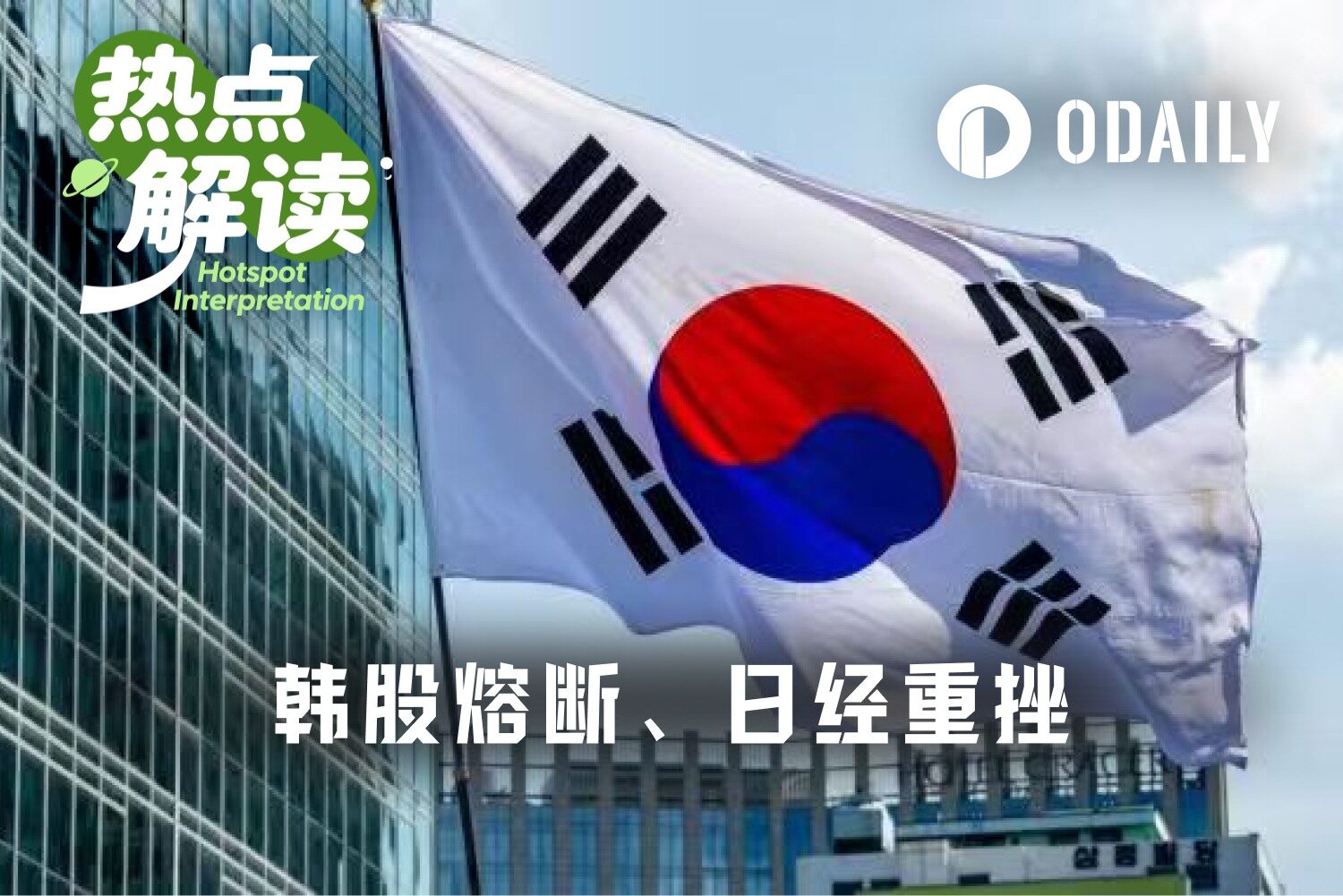
Today, Asian stock markets experienced severe turbulence.
The Korea Composite Stock Price Index (KOSPI) plummeted over 8% during the session, triggering the market circuit breaker mechanism and suspending trading for 20 minutes; it ultimately closed down nearly 10% at 8,203.84 points, marking the third-largest single-day decline of the year. The Japanese stock market was also under pressure, with the Nikkei 225 index falling about 3.5% to close near 69,788 points, ending its previous eight-session winning streak; the TOPIX (Tokyo Stock Price Index) fell about 2.6%.
This adjustment hit the technology sector, especially semiconductors, the hardest. Heavyweights like Samsung Electronics and SK Hynix led the decline, dragging down the entire market. Foreign capital accelerated selling, trading volume increased significantly, and market panic sentiment noticeably intensified.
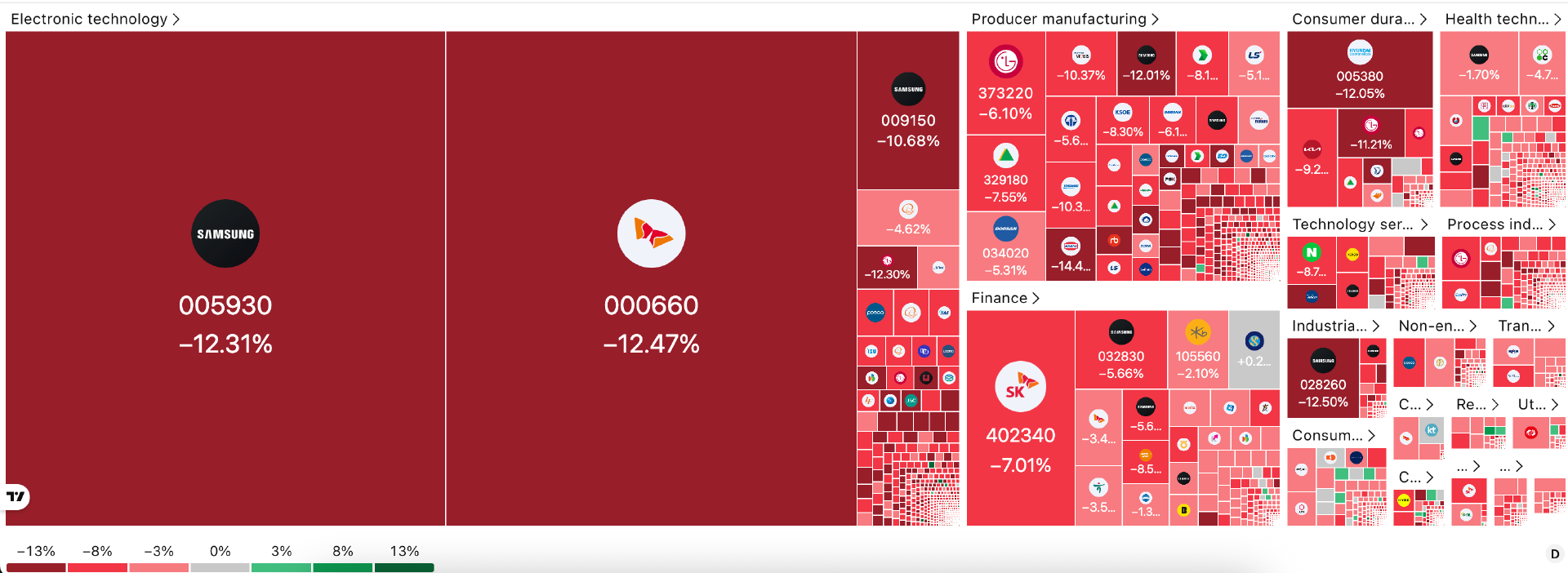
Since June, Japanese and Korean stock markets have experienced violent fluctuations multiple times, with the Korean market triggering the circuit breaker four times this year. Previously driven by the AI and semiconductor frenzy, the KOSPI had approached the all-time high of 9,385 points; the Nikkei 225 had also briefly surpassed 70,000 points. Within just a few weeks, the rapid decline from historical highs to a significant correction highlights market fragility and profit-taking pressure. Odaily Planet Daily will analyze from three aspects: market performance, underlying causes, and future trends.
1. Market Plunge: From Historical Highs to Circuit Breaker Alarms
On June 23, the KOSPI opened higher at 9,083.54 points and briefly surged to 9,175.45 points. However, driven by foreign selling and follow-up selling pressure, the index quickly plummeted. Around 14:33 in the afternoon, the decline exceeded 8%, triggering the Korea Exchange (KRX) circuit breaker mechanism, suspending all KOSPI component stock trading for 20 minutes. Similar mechanisms had been activated on multiple days such as June 5th and 8th, indicating volatility has become the norm.
At the close, the KOSPI stood at 8,203.84 points, down 9.99% for the day, with trading volume surging to 4.8371 billion shares. Semiconductor giants like SK Hynix and Samsung Electronics led the losses, each falling over 12%. The KOSDAQ (Korean Securities Dealers Automated Quotations) index was even more fragile, falling over 6% in sync, with small-cap tech stocks collectively declining. Net selling by foreign investors was significant, becoming the main source of selling pressure.
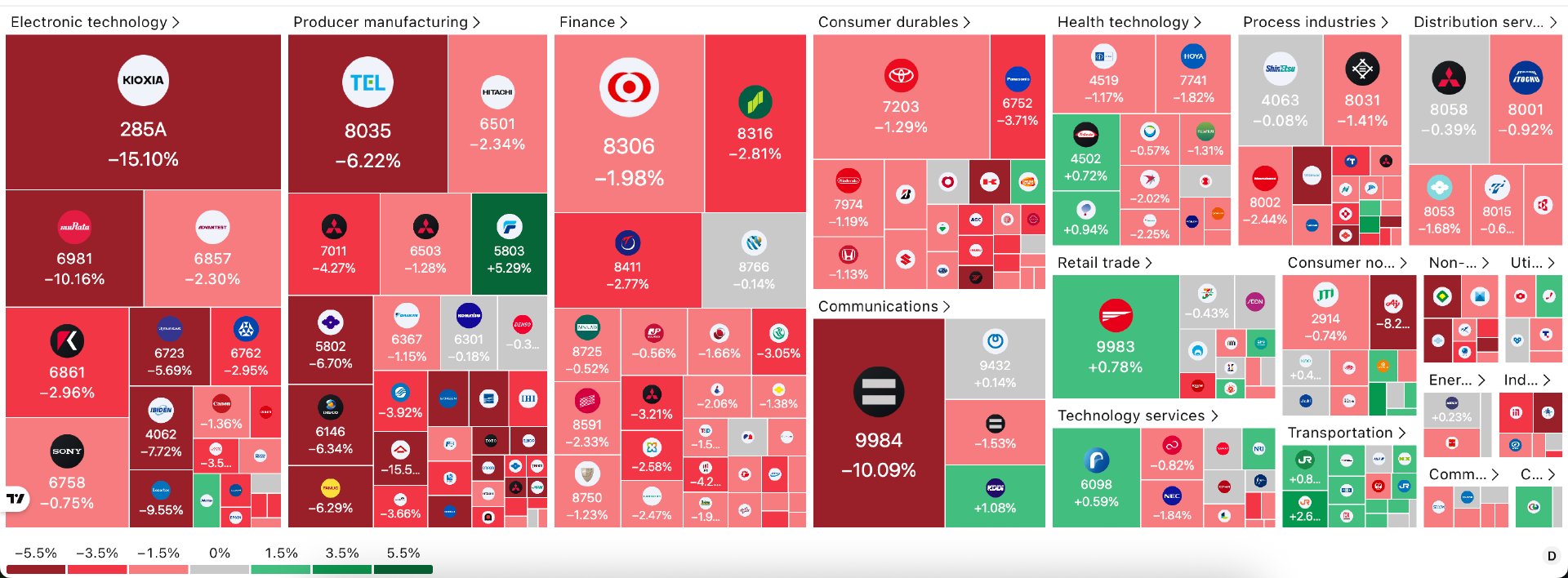
The Japanese market reaction was relatively moderate but still noteworthy. The Nikkei 225 index fell over 3% during the session, closing at approximately 69,788 points, down about 3.47% for the day; the TOPIX fell in sync. Tech and semiconductor-related stocks performed the worst: SoftBank Group dropped over 10%, chip maker Kioxia plunged 15.1%, and Tokyo Electron fell 6.2%. The AI and semiconductor sectors, which had previously driven the Nikkei's rally, underwent a comprehensive correction, ending the eight consecutive trading days of gains.
Compared to recent highs, this correction is remarkable. The KOSPI has retreated more than 12% from its mid-June peak, and the Nikkei 225 has significantly corrected from above 70,000 points.
Global market linkage was evident. U.S. tech stocks were under collective pressure overnight, with the Nasdaq index down over 1% and the S&P 500 slightly lower; rotation occurred within the "Magnificent Seven," with stocks like Amazon and Meta leading the decline. Other Asian markets like Taiwan were also affected, forming a regional tech stock selling wave.
Overall, this was a rapid and intense adjustment led by the tech sector, with the Korean market suffering far greater losses than Japan's due to its high concentration.
2. Cause Analysis: A Phased Burst of the AI Bubble Under Multiple Overlapping Factors
The sharp decline in Japanese and Korean stock markets is the result of multiple factors working together, which can be analyzed from dimensions such as direct triggers, macroeconomic policy pressure, and structural risks.
1. Direct Trigger: Overnight Weakness in U.S. Tech Stocks and Profit-Taking Pressure
A clear correction in the U.S. tech sector the previous trading day was directly transmitted to Asian markets. The Nasdaq index fell over 1.2%, and significant rotation occurred within the Magnificent Seven, with some stocks under clear pressure.
Lisa Shalett, Chief Investment Officer (CIO) of Morgan Stanley Wealth Management, pointed out: "Rotation within the Magnificent Seven is evident. News of resignations by some executives or researchers has intensified market concerns about the pace of AI commercialization. Investors are starting to demand more evidence that massive AI capital expenditures can translate into sustainable profitability."
This concern quickly spread to the Japanese and Korean markets, which heavily rely on the global AI supply chain. Korea's semiconductor exports account for over 20% of total exports long-term, with Samsung Electronics and SK Hynix together accounting for about 40% of the KOSPI weighting. On June 23, the two giants fell about 8%-12%, directly dragging down the index.
Furthermore, Japanese and Korean stocks had accumulated substantial gains since June, leaving ample profit-taking opportunities. The KOSPI surged from around 5,000 points at the beginning of the year to above 9,000 points in mid-June, with a maximum gain of over 80% year-to-date; the Nikkei 225 also rose from around 40,000 points at the beginning of the year to above 70,000 points, hitting a historical high. With valuations at high levels (the KOSPI's forward P/E once approached historical highs), any negative catalyst could easily trigger profit-taking. The concentrated selling on June 23rd was a natural correction following the excessively rapid gains earlier.
2. Macroeconomic and Policy Factors: Rising Fed Rate Hike Expectations and Economic Data Impact
Continuously strong U.S. employment data further raised market expectations for the Fed maintaining high interest rates or even hiking. According to Reuters, non-farm payrolls increased by 172,000 in May, far exceeding economists' expectations of 85,000, with the unemployment rate stable at 4.3%. This data prompted some institutions (like Goldman Sachs) to postpone their first rate cut expectation to 2027. More crucially, the Fed's FOMC meeting on June 16-17 decided to keep the federal funds rate unchanged in the 3.5%-3.75% range. The statement emphasized solid economic activity expansion, but rising uncertainties from Middle East conflicts and inflation remaining above the 2% target.
The Fed's latest dot plot released a clearly hawkish signal: the median projection for the federal funds rate at the end of 2026 was raised to 3.8% (a significant 0.4 percentage point increase from the March projection of 3.4%), hinting at at least one rate hike within the year. Simultaneously, the FOMC raised its 2026 inflation projections: the core PCE inflation median rose to 3.3%, and the overall PCE rose to 3.6% (both were around 2.7% previously); the GDP growth forecast was slightly lowered to 2.2%.
Interest-rate-sensitive growth stocks (especially tech and semiconductors) bore the brunt. Korean stocks, previously seen as typical "high-beta" assets due to the AI frenzy, are extremely sensitive to global liquidity changes. Japanese stocks are also constrained by global liquidity expectations, although improved domestic wage growth data provided some support.
A series of macroeconomic signals significantly pushed up U.S. Treasury yields, suppressing global risk assets and directly exacerbating selling pressure on Japanese and Korean tech stocks.
3. Structural Risks: Excessive Market Concentration and Foreign Capital Outflow
The structural fragility of the Korean stock market is particularly prominent. The KOSPI heavily relies on the two semiconductor giants, Samsung Electronics and SK Hynix. Once the semiconductor cycle or global AI demand fluctuates, the index experiences violent swings.
Sustained foreign capital outflow is another key factor. Foreign investors reaped substantial profits during the earlier rally. Since June, there have been multiple instances of net selling, especially in Korean stocks, with some funds potentially shifting to U.S. IPOs (like SpaceX) or other assets. On June 23, the scale of foreign net selling significantly amplified, becoming the main selling pressure source.
In contrast, although the Japanese market was also dragged down by tech stocks, its sector dispersion is relatively higher, limiting the Nikkei 225's decline to around 3.5%.
Additionally, specific company dynamics intensified market pressure. According to market sources, SK Hynix recently adjusted its AI chip (particularly HBM) memory capacity allocation, shifting some production lines to higher-margin traditional DRAM to optimize short-term profitability. This move raised investor concerns about short-term HBM supply-demand balance, triggering selling.
3. Future Outlook: Short-Term Volatility Inevitable, Long-Term AI Narrative Remains Resilient
Looking ahead, Japanese and Korean stock markets will exhibit characteristics of "volatile bottoming + structural differentiation." Short-term market volatility will remain high, while medium-to-long-term fundamental support persists. Corrections may instead provide a window for positioning in quality assets.
Short-term volatility dominates; recovery depends on U.S. stocks and Fed signals. In the short term, the market remains in a high-volatility adjustment period. The trend of U.S. tech stocks is a key indicator. If the Nasdaq index stabilizes or shows a technical rebound, Japanese and Korean markets are expected to follow with a recovery; conversely, if the Fed releases more hawkish signals or Q2 earnings reports from Japanese and Korean companies fall short, the correction may continue or even deepen. Key events to watch include:
- U.S. June-July inflation (CPI/PCE) and employment data;
- The Fed's next FOMC meeting (July);
- Q2 earnings of heavyweights like Samsung Electronics, SK Hynix, and Tokyo Electron.
Medium-to-long-term fundamental support is strong; corrections present opportunities. Global AI capital expenditure continues to grow rapidly, and the underlying logic of the semiconductor super-cycle remains unchanged. According to predictions from institutions like Goldman Sachs, global AI-related capital expenditures (computing, data centers, power) will total approximately $7.6 trillion from 2026-2031. In 2026 alone, AI CapEx will be close to $765 billion, rising year by year to $1.6 trillion in 2031; new data center capacity is expected to increase by nearly 100GW from 2026-2030, with a total investment scale potentially reaching the $3 trillion level.
Korea's leading position in HBM (High Bandwidth Memory) and advanced process technology remains solid. SK Hynix's HBM market share has long been maintained at 50%-62%, and its supply share for the NVIDIA Rubin platform in the HBM4 era is expected to reach around 70%; Samsung Electronics is also accelerating capacity expansion, planning to increase HBM production capacity by about 50% in 2026. Long-term orders for both giants are basically locked in until 2027, and the AI memory demand super-cycle is still in its early stages.
From a long-term perspective, AI remains a productivity tool that will change the world's structure, and phased adjustments are unlikely to reverse the major trend of technological progress. As with corrections after every past technological bubble, they ultimately left rich returns for the true infrastructure builders and innovators. This "Black Tuesday" might just be the turning point for AI investment moving from frenzy to rationality, from concept to reality. The resilience and potential of Japanese and Korean stock markets remain worthy of expectation.