BIS Warns Crypto Self-Custody Could Become New AML Loophole

bitcoinistPubblicato 2026-03-11Pubblicato ultima volta 2026-03-11

Introduzione

A new BIS paper warns that self-custodied crypto wallets could become a significant loophole in anti-money laundering (AML) enforcement if regulatory gaps are not addressed. The report highlights that as regulated payment channels face stricter rules, illicit financial flows may shift towards self-hosted wallets, which operate without intermediaries and thus avoid customer due diligence, transaction monitoring, and suspicious activity reporting. The paper argues that these wallets may be more attractive for illegal activities than cash due to their digital ease of transfer, cross-border efficiency, and lack of physical constraints. This creates a “waterbed effect,” where tightening one area of regulation simply displaces risk to another. Using the EU as a case study, the authors note that while hosted crypto services are now integrated into AML frameworks, self-custody wallets remain largely outside direct oversight. The absence of transaction limits, unlike the €10,000 cap on cash, could incentivize malicious actors to migrate to self-hosted crypto assets, thereby undermining overall AML efforts.

A new Bank of International Settlement (BIS) paper argues that self-custodied crypto could become the next weak point in anti-money laundering enforcement if regulators tighten rules around other payment rails without closing the gap around user-controlled wallets. The core concern is straightforward: when one channel becomes harder to use, illicit flows do not disappear. They move.

BIS Warns About Self-Hosted Crypto Wallets

Using the EU as its main case study, the paper says self-hosted wallets occupy a particularly sensitive position because they do not rely on an identifiable intermediary to perform customer due diligence, monitor transactions or file suspicious activity reports. That is the design distinction the authors keep returning to.

“Self-hosted wallets are a type of wallet that is entirely controlled by the user, without reliance on an intermediary. Validation of self-hosted cryptoasset transactions takes place on a permissionless public blockchain, with no individual intermediary being accountable for updating accounts.” On that basis, the paper says self-hosted crypto payments, absent additional measures, present one of the lowest probabilities of detection and enforcement.

The paper goes a step further. It says self-hosted wallets may, in practice, be even more attractive for illicit use than cash. Cash still offers the lowest level of oversight by design, the authors argue, but physical constraints matter: it is bulky, harder to move at scale and riskier to store or transport. Self-custodied crypto does not have those same frictions, which means the portability and cross-border speed of digital assets can amplify the compliance gap once intermediaries drop out of the picture.

That framing feeds into what the paper calls the “waterbed effect.” “Differences in the probability of detection ... can lead to arbitrage between payment instruments. This could be called a waterbed effect: if the water is pressed down in one area, it pops up in another. Over time, this dynamic weakens the overall effectiveness of AML/CFT frameworks and necessitates regulatory and supervisory intervention.” In the crypto context, the point is not simply that self-custody carries risk, but that uneven regulation can actively redirect bad actors toward it.

The EU example is central to that argument. Hosted crypto wallets are now much more tightly folded into the bloc’s AML architecture through the broader cryptoasset service provider, or CASP, framework, updated monitoring obligations and the Travel Rule regime. The paper notes that wallets and services enabling anonymisation are being pushed out of the regulated perimeter.

Self-hosted wallets, by contrast, are treated more indirectly: transactions involving them are not subject to due diligence and transaction monitoring unless a CASP is on one side of the transfer. In those cases, CASPs must assess money laundering and terrorist financing risk and apply mitigating measures.

What makes that asymmetry notable, the authors say, is that cash has a hard backstop the self-custody segment does not. Their comparison table states it plainly: cash in the EU is subject to a €10,000 transaction limit, while self-hosted crypto assets face “no transaction or holding limits.” The paper’s conclusion is that this difference “may provide an incentive for malicious actors to shift from cash to self-hosted crypto asset wallets.”

At press time, the total crypto market cap stood at $2.37 trillion.
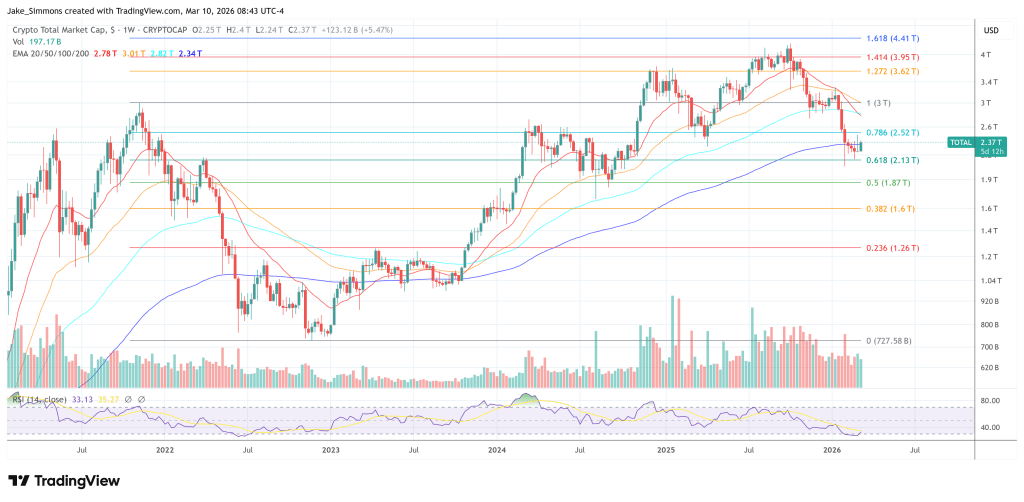
Total crypto market cap, 1-week chart | Source: TOTAL on TradingView.com

Domande pertinenti

QWhat is the main concern raised by the BIS paper regarding self-custodied crypto?

AThe main concern is that self-custodied crypto could become a new weak point in anti-money laundering enforcement if regulators tighten rules around other payment methods without addressing the regulatory gap around user-controlled wallets, potentially redirecting illicit financial flows to this channel.

QAccording to the paper, why are self-hosted wallets particularly attractive for illicit use compared to cash?

ASelf-hosted wallets are more attractive than cash for illicit use because, while cash has the lowest oversight by design, it has physical constraints like bulkiness and transportation risks. Self-custodied crypto lacks these frictions and offers greater portability and cross-border speed, amplifying the compliance gap.

QWhat is the 'waterbed effect' as described in the BIS paper?

AThe 'waterbed effect' refers to the phenomenon where differences in detection probabilities between payment instruments lead to arbitrage: when one channel becomes harder to use for illicit activities (pressed down), the activity moves to another, less regulated channel (pops up), weakening overall AML/CFT framework effectiveness.

QHow does the EU regulate self-hosted crypto wallets differently from hosted wallets?

AIn the EU, hosted wallets are tightly regulated under the CASP framework with updated monitoring obligations and Travel Rule requirements. Self-hosted wallets are treated indirectly: transactions involving them are only subject to due diligence and monitoring if a Cryptoasset Service Provider (CASP) is involved on one side of the transfer.

QWhat specific regulatory asymmetry between cash and self-hosted crypto does the paper highlight in the EU?

AThe paper highlights that cash transactions in the EU are subject to a €10,000 limit, while self-hosted crypto assets face no transaction or holding limits, creating an incentive for malicious actors to shift from cash to self-hosted crypto wallets to avoid detection.

Letture associate

Will the Fed Still Cut Interest Rates? Tonight's Data Is Crucial

The core debate surrounding the Federal Reserve's potential interest rate cuts is intensifying amid geopolitical conflict and rebounding inflation. The key question is whether high energy prices will cause persistent inflation or weaken consumer demand enough to force the Fed to cut rates. Citigroup presents a bullish case for cuts, arguing that oil supply disruptions from the Strait of Hormuz are temporary and will not lead to lasting inflationary pressure. They point to receding bond yields and oil prices as evidence the market is pricing in a short-lived shock. Citi's data also shows tightening financial conditions, a stabilizing labor market, and healthy tax returns, supporting their view that the path to lower rates remains open. Conversely, Deutsche Bank offers a starkly contrasting, more hawkish outlook. They argue the Fed's current policy is already neutral and expect rates to remain unchanged indefinitely. Their view is based on stalled disinflation progress and a shift toward more hawkish rhetoric from key Fed officials like Waller, who cited risks from prolonged Middle East conflict and tariffs. Other officials, including Williams and Hammack, signaled rates would likely stay on hold for a "considerable time." The market pricing has shifted dramatically, now forecasting zero cuts in 2026. The imminent release of the March retail sales "control group" data is highlighted as a critical test. This metric, which excludes gas station sales, will reveal if high gasoline prices are eroding consumer spending in other areas. A weak reading could support the case for imminent rate cuts, while a strong one would bolster the argument for the Fed to hold steady. This data is pivotal for determining the near-term policy path.

marsbit21 min fa

Will the Fed Still Cut Interest Rates? Tonight's Data Is Crucial

marsbit21 min fa

The Second Half of Macro Influencer Fu Peng's Career

Fu Peng, a prominent Chinese macroeconomist and former chief economist of Northeast Securities, has joined Hong Kong-based digital asset management firm Bitfire Group (formerly New Huo Group) as its chief economist. This move, announced in April 2026, triggered an 11% surge in Bitfire's stock price. Fu, known for his accessible macroeconomic commentary and large social media following, will focus on integrating digital assets into global asset allocation frameworks, particularly combining FICC (fixed income, currencies, and commodities) with cryptocurrencies for institutional clients. His career includes roles at Lehman Brothers and Solomon International, with significant influence gained through public communication. However, in late 2024, Fu faced temporary social media bans after a controversial private speech at HSBC on China's economic challenges, though he denied regulatory sanctions. He later left Northeast Securities citing health reasons. Bitfire, a licensed virtual asset manager serving high-net-worth clients, seeks to build trust and attract traditional capital through Fu’s expertise and credibility. The partnership represents a strategic shift for both: Fu enters the crypto sector after a traditional finance peak, while Bitfire aims to leverage his macro framework for institutional adoption. Outcomes remain uncertain regarding capital inflows and compatibility within corporate structure.

marsbit1 h fa

The Second Half of Macro Influencer Fu Peng's Career

marsbit1 h fa

Trading

Spot
Futures

Articoli Popolari

Cosa è $BANK

Banca AI: Un Passo Rivoluzionario nel Futuro della Banca Introduzione In un'era caratterizzata da rapidi progressi tecnologici, Banca AI si trova all'incrocio tra intelligenza artificiale (AI) e servizi bancari. Questo progetto innovativo mira a ridefinire il panorama finanziario, migliorando l'efficienza operativa, le misure di sicurezza e le esperienze dei clienti attraverso il potere dell'AI. Mentre ci impegniamo in questa esplorazione di Banca AI, esamineremo cosa comporta il progetto, le sue dinamiche operative, il suo contesto storico e i traguardi significativi. Cos'è Banca AI? Alla sua essenza, Banca AI rappresenta un'iniziativa trasformativa volta a integrare l'intelligenza artificiale in varie operazioni bancarie. Questo progetto sfrutta le capacità dell'AI per automatizzare processi, migliorare i protocolli di gestione del rischio e potenziare l'interazione con i clienti attraverso servizi personalizzati. Gli obiettivi principali di Banca AI includono: Automazione delle Funzioni Bancarie: Sfruttando le tecnologie AI, Banca AI mira ad automatizzare compiti di routine, riducendo il carico sulle risorse umane e aumentando l'efficienza. Miglioramento della Gestione del Rischio: Il progetto utilizza algoritmi AI per prevedere e identificare i rischi, rafforzando così le misure di sicurezza contro le frodi e altre minacce. Personalizzazione dei Servizi Bancari: Banca AI si concentra sull'offrire prodotti e servizi finanziari su misura analizzando i dati e i comportamenti dei clienti. Miglioramento dell'Esperienza del Cliente: L'implementazione di soluzioni guidate dall'AI, come chatbot e assistenti virtuali, mira a fornire agli utenti interazioni più umane, rivoluzionando il modo in cui i clienti si relazionano con le banche. Con questi obiettivi, Banca AI si posiziona come un attore cruciale nel rendere la banca più efficiente, sicura e centrata sull'utente. Chi è il Creatore di Banca AI? I dettagli riguardanti il creatore di Banca AI rimangono sconosciuti. Pertanto, non è stata identificata alcuna persona o organizzazione specifica nelle informazioni disponibili. L'anonimato che circonda la nascita del progetto solleva domande, ma non sminuisce la sua ambiziosa visione e obiettivi. Chi sono gli Investitori di Banca AI? Simile al creatore del progetto, informazioni specifiche riguardo gli investitori o le organizzazioni di supporto di Banca AI non sono state divulgate. Senza queste informazioni, è difficile delineare il sostegno finanziario e istituzionale che potrebbe spingere il progetto in avanti. Tuttavia, l'importanza di avere una solida base di investimento è fondamentale per sostenere lo sviluppo in un campo così innovativo. Come Funziona Banca AI? Banca AI opera su più fronti innovativi, concentrandosi su fattori unici che la differenziano dai framework bancari tradizionali. Di seguito sono riportate le caratteristiche operative chiave: Automazione: Applicando algoritmi di machine learning, Banca AI automatizza vari processi manuali all'interno delle banche. Ciò si traduce in una riduzione dei costi operativi e consente ai lavoratori umani di reindirizzare i propri sforzi verso attività più strategiche. Gestione Avanzata del Rischio: L'integrazione dell'AI nelle pratiche di gestione del rischio fornisce alle banche strumenti per prevedere con precisione potenziali minacce come le frodi, garantendo che le informazioni e i beni dei clienti rimangano al sicuro. Raccomandazioni Finanziarie Personalizzate: Attraverso l'apprendimento continuo dalle interazioni con i clienti, i sistemi AI sviluppano una comprensione sfumata delle esigenze degli utenti, consentendo loro di offrire consigli su misura per le decisioni finanziarie. Interazioni Migliorate con i Clienti: Utilizzando chatbot e assistenti virtuali alimentati dall'AI, Banca AI consente un'esperienza cliente più coinvolgente, permettendo agli utenti di risolvere rapidamente le loro richieste, riducendo così i tempi di attesa e migliorando i livelli di soddisfazione. Tutte queste caratteristiche operative posizionano Banca AI come un pioniere nel settore bancario, stabilendo nuovi standard per la fornitura di servizi e l'eccellenza operativa. Timeline di Banca AI Comprendere la traiettoria di Banca AI richiede uno sguardo al suo contesto storico. Di seguito è riportata una timeline che evidenzia traguardi e sviluppi importanti: Inizio 2010: La concettualizzazione dell'integrazione dell'AI nei servizi bancari ha cominciato a guadagnare attenzione mentre le istituzioni bancarie riconoscevano i potenziali benefici. 2018: Si è verificato un aumento significativo nell'implementazione delle tecnologie AI quando le banche hanno iniziato a utilizzare strumenti AI come i chatbot per servizi clienti di base e sistemi di gestione del rischio per migliorare la sicurezza. 2023: La sofisticazione dell'AI ha continuato ad avanzare, con l'introduzione dell'AI generativa per compiti più complessi come l'elaborazione di documenti e l'analisi degli investimenti in tempo reale. Quest'anno ha segnato un significativo salto nelle capacità offerte alle banche dalla tecnologia AI. 2024-Stato Attuale: A partire da quest'anno, Banca AI è su una traiettoria ascendente, con ricerche e sviluppi in corso pronti a migliorare ulteriormente le capacità nelle operazioni bancarie. L'esplorazione continua delle applicazioni AI suggerisce sviluppi entusiasmanti in arrivo. Punti Chiave su Banca AI Integrazione dell'AI nella Banca: Banca AI si concentra sull'adozione dell'intelligenza artificiale per snellire i processi bancari e migliorare le esperienze degli utenti. Focus su Automazione e Gestione del Rischio: Il progetto enfatizza fortemente queste aree, mirando a spostare il carico di compiti di routine mentre migliora le strutture di sicurezza attraverso analisi predittive. Soluzioni Bancarie Personalizzate: Sfruttando i dati dei clienti, Banca AI consente servizi bancari su misura che si adattano alle esigenze individuali degli utenti. Impegno per lo Sviluppo: Banca AI rimane impegnata in sforzi di ricerca e sviluppo continuativi, garantendo la sua adattabilità e rilevanza continua man mano che la tecnologia continua a evolversi. Conclusione In sintesi, Banca AI rappresenta un passo cruciale in avanti nell'industria bancaria, sfruttando l'intelligenza artificiale per rimodellare i paradigmi operativi, migliorare la sicurezza e promuovere la soddisfazione del cliente. Nonostante le lacune nelle informazioni riguardo il creatore e gli investitori, gli obiettivi chiari e i meccanismi funzionali di Banca AI forniscono una solida base per la sua continua evoluzione. Mentre la tecnologia AI continua ad avanzare e fondersi con il settore bancario, Banca AI è ben posizionata per avere un impatto significativo sul futuro dei servizi finanziari, migliorando il modo in cui comprendiamo e interagiamo con la banca.

107 Totale visualizzazioniPubblicato il 2024.04.06Aggiornato il 2024.12.03

Cosa è $BANK

Come comprare BANK

Benvenuto in HTX.com! Abbiamo reso l'acquisto di Lorenzo Protocol (BANK) semplice e conveniente. Segui la nostra guida passo passo per intraprendere il tuo viaggio nel mondo delle criptovalute.Step 1: Crea il tuo Account HTXUsa la tua email o numero di telefono per registrarti il tuo account gratuito su HTX. Vivi un'esperienza facile e sblocca tutte le funzionalità,Crea il mio accountStep 2: Vai in Acquista crypto e seleziona il tuo metodo di pagamentoCarta di credito/debito: utilizza la tua Visa o Mastercard per acquistare immediatamente Lorenzo ProtocolBANK.Bilancio: Usa i fondi dal bilancio del tuo account HTX per fare trading senza problemi.Terze parti: abbiamo aggiunto metodi di pagamento molto utilizzati come Google Pay e Apple Pay per maggiore comodità.P2P: Fai trading direttamente con altri utenti HTX.Over-the-Counter (OTC): Offriamo servizi su misura e tassi di cambio competitivi per i trader.Step 3: Conserva Lorenzo Protocol (BANK)Dopo aver acquistato Lorenzo Protocol (BANK), conserva nel tuo account HTX. In alternativa, puoi inviare tramite trasferimento blockchain o scambiare per altre criptovalute.Step 4: Scambia Lorenzo Protocol (BANK)Scambia facilmente Lorenzo Protocol (BANK) nel mercato spot di HTX. Accedi al tuo account, seleziona la tua coppia di trading, esegui le tue operazioni e monitora in tempo reale. Offriamo un'esperienza user-friendly sia per chi ha appena iniziato che per i trader più esperti.

669 Totale visualizzazioniPubblicato il 2025.05.09Aggiornato il 2025.05.09

Come comprare BANK

Discussioni

Benvenuto nella Community HTX. Qui puoi rimanere informato sugli ultimi sviluppi della piattaforma e accedere ad approfondimenti esperti sul mercato. Le opinioni degli utenti sul prezzo di BANK BANK sono presentate come di seguito.

活动图片