Balancing Compliance and Innovation: A Study of France's Crypto Asset Taxation and Regulatory System

marsbitPubblicato 2026-01-19Pubblicato ultima volta 2026-01-19

Introduzione

This research examines France's evolving regulatory and tax framework for crypto assets, balancing compliance and innovation. As a key EU member, France has developed a system aligned with EU directives while retaining national characteristics. Key developments include the 2019 PACTE Law, which established the legal status of crypto assets, and the transition from the DASP (Digital Asset Service Provider) regime to the EU's MiCAR (Markets in Crypto-Assets Regulation) framework by December 2024. Additionally, the implementation of DAC8 and CARF will enable automatic exchange of crypto transaction information from 2026, ending anonymity for tax purposes. France employs a categorized taxation approach: occasional investors face a flat 30% tax rate, while professional investors are subject to progressive income tax rates (0%–45%). Different rules apply to miners, DeFi participants, NFT traders, exchanges, and institutional investors based on their activities. For instance, mining rewards are taxed as non-commercial profits (BNC), and crypto-to-crypto trades are not taxable events for individuals until converted to fiat. The regulatory landscape involves the AMF (financial markets authority) and ACRP (prudential supervision), with stricter capital and operational requirements under MiCAR. The upcoming DAC8/CARF framework will mandate CASPs to collect and report user data from 2026, enhancing tax transparency. However, areas like DeFi and NFT taxation remain uncertain and lack cl...

Author: FinTax

1 Introduction

Against the backdrop of the rapidly evolving global digital asset market, France, as a core member of the European Union, has initially established a crypto asset regulatory and taxation system that aligns with the EU's unified framework while retaining its own tax characteristics. From the enactment of the Action Plan for Business Growth and Transformation Law (PACTE Law) in 2019 to the full implementation of the EU's Markets in Crypto-Assets Regulation (MiCAR) in December 2024, France's institutional framework has evolved from pioneering national-level exploration to unified EU-wide standards. Concurrently, the advancement of the EU's Eighth Directive on Administrative Cooperation (DAC8) and the OECD's Crypto-Asset Reporting Framework (CARF) signals the dawn of the era of tax transparency for crypto assets. In this article, we梳理 (sort out) the existing French regulatory architecture, tax policies, and their convergence path with international standards.

2 Overview of France's Crypto Asset Regulatory and Tax Landscape

France's governance of crypto assets is characterized by regulation first and categorized taxation. On the regulatory front, France took the lead within the EU by establishing a registration system for Digital Asset Service Providers (DASPs), achieving compliant management of crypto service institutions. From December 30, 2024, the DASP framework officially transitions to the Crypto-Asset Service Provider (CASP) framework to comply with the EU's MiCAR requirements. This transition marks a shift in French crypto regulation from a voluntary registration system to a mandatory licensing system, imposing stricter capital, governance, and risk management requirements on service providers, custodians, and others.

On the tax front, the French General Tax Directorate (DGFiP) categorizes participants based on the nature and frequency of their transactions, applying different tax calculation logics and rates. Occasional investors are subject to a flat tax rate of 30%, while professional investors are subject to a progressive tax rate of 0%-45%. Furthermore, different participants such as crypto mining enterprises, DeFi participants, NFT traders, and exchanges are subject to different tax regimes like Non-Commercial Profits (BNC) and Corporate Income Tax, reflecting their differing economic substance. This refined categorized taxation system acknowledges the diversity of crypto activities and provides relatively transparent tax expectations for different participants.

In the evolution of France's crypto tax system, the 2019 PACTE Law established the legal status of crypto assets. In 2023, the tax regime for professional investors was shifted from Industrial and Commercial Profits (BIC) to the Non-Commercial Profits framework. With the implementation of the DAC8/CARF framework, 2026 will be the first year for the automatic cross-border exchange of crypto transaction information, potentially ending the era of tax avoidance through the anonymity of crypto assets. A series of institutional changes reflect France's continuous adjustments in balancing innovation support and tax compliance. The table below outlines key timelines in French crypto asset regulation and taxation:
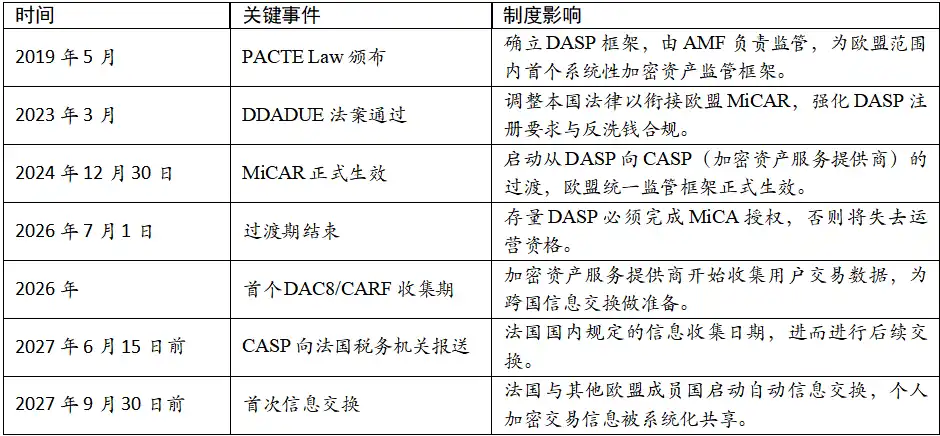
Table 1: Timeline of French Crypto Asset Regulation and Taxation

3 Current Regulatory System: The Institutional Leap from DASP to CASP

3.1 Core Regulatory Bodies and Division of Labor

Crypto asset regulation in France is carried out collaboratively by two main authorities: the Financial Markets Authority (AMF) and the Prudential Supervision and Resolution Authority (ACPR). The AMF is the core regulatory entity, responsible for the registration and authorization of digital asset service providers and the approval of Initial Coin Offerings (ICOs). Its regulatory focus is on market access, information disclosure, and investor protection. The ACPR, on the other hand, focuses on anti-money laundering (AML) and countering the financing of terrorism (CFT) compliance reviews, ensuring crypto asset transactions are not used for illegal purposes.

3.2 Legal Framework and Alignment with MiCAR

Before MiCAR came into effect, the French crypto market was primarily regulated under the PACTE Law. This law defined crypto assets as digital assets and required institutions providing services like custody and fiat currency exchange in France to register with the AMF. With the formal implementation of MiCAR on December 30, 2024, France is currently in a critical transition period from the DASP framework to the EU's unified CASP framework.

According to France's DDADUE law, DASP institutions registered with the AMF before December 30, 2024, can benefit from a transition period lasting until July 1, 2026, at the latest. During this period, these institutions can continue to operate within France, but if they need an EU passport to operate across the entire EU, they must apply for and obtain MiCA authorization in advance. CASPs under MiCAR must meet stricter capital requirements, governance standards, risk management, and customer protection measures.

3.3 International Cooperation Framework: DAC8/CARF and Tax Transparency

To further enhance the transparency of the crypto asset market, France is implementing the EU's DAC8 and the OECD's CARF. According to current plans, CASPs will need to start collecting user transaction data from 2026 and submit their first annual report to the French tax authorities by June 15, 2027.

This means that from 2027 onwards, an automatic information exchange mechanism will be activated between France and other EU member states, systematically sharing individuals' cross-border crypto transaction information with the respective tax authorities. This shift marks the end of anonymity for crypto asset transactions conducted through centralized platforms, moving tax compliance from reliance on taxpayer self-declaration to systematic reporting by CASPs and cross-border information sharing.

4 Crypto Asset Tax System: Categorized Taxation and Declaration Logic

4.1 Taxation Principles and Triggering Conditions

For individuals, France taxes crypto assets based on the principle that a taxable event is triggered only upon conversion into fiat currency or use for purchasing goods or services. That is, tax obligations arise only when crypto assets are sold for fiat currency or used to buy goods or services. Swaps between crypto assets (Crypto-to-Crypto) do not create an immediate tax obligation under the current system, a policy that greatly promotes the activity of the on-chain ecosystem.

For institutional investors and companies, France taxes crypto assets following the realization principle of corporate accounting standards. Crypto-to-Crypto transactions typically require recognizing profits and losses based on fair value changes, potentially creating immediate tax obligations even without conversion to fiat. This treatment is consistent with the accounting standards for traditional financial assets, requiring companies to value their held crypto assets at the end of each accounting period and include unrealized capital gains or losses in their current taxable income. Furthermore, capital losses for institutional investors can be carried forward to offset the company's total profits in future years, providing greater tax planning space for businesses.

4.2 Participant Classification and Tax Rate Structure

French tax law categorizes participants based on their nature and activity characteristics, with each category subject to different tax calculation rules. The following discusses occasional investors, professional investors and professional traders, crypto mining enterprises and pool operators, DeFi participants and liquidity providers, NFT traders, crypto exchanges and custodians, and institutional investors and fund managers.

4.2.1 Occasional Investors

Occasional investors are individual investors with low trading frequency, small scale, and non-professional nature. The French tax authorities use qualitative rather than quantitative criteria for determination, typically considering comprehensive factors such as: the complexity of transactions, tools used, transaction frequency, transaction scale, and its proportion in the taxpayer's total income.

Occasional investors are subject to the Flat-Rate Withholding Tax (PFU, Prélèvement Forfaitaire Unique). The rate is 30%, which includes 12.8% income tax and 17.2% social security contributions. Additionally, the portion of the annual sales total below €305 is exempt from tax. Losses generated from crypto trading within the same year can offset gains from the same year. Occasional investors calculate capital gains using the global cost proportion method (Portfolio Method). The specific formula is:

Net Capital Gain = Sale Price - (Total Acquisition Cost × Sale Price) / (Total Asset Market Value on Transaction Date)

This method allows taxpayers to consider the cost basis of the entire portfolio when calculating gains, rather than calculating transaction by transaction, which greatly simplifies the declaration process in practice. Meanwhile, occasional investors can choose to forgo the flat tax rate and instead be taxed according to the progressive income tax rate (0%-45%) plus 17.2% social security contributions. This option provides potential tax optimization space for low- and middle-income taxpayers.

4.2.2 Professional Investors and Professional Traders

Professional investors are individuals or entities with high trading frequency, large transaction size, crypto asset income constituting a high proportion of total income, use of professional equipment, and commercial characteristics. From January 1, 2023, the tax regime for professional investors has been shifted from Industrial and Commercial Profits (BIC) to the Non-Commercial Profits (BNC) framework.

Professional investors are subject to progressive income tax rates (0%-45%) plus 17.2% social security contributions. This means the tax burden increases with total income, reaching a maximum income tax rate of 45%. The taxable income for professional investors is the net capital gain, i.e., total gains minus total losses. Unlike occasional investors, professional investors can deduct losses within the same tax year, but losses cannot be carried forward to subsequent years.
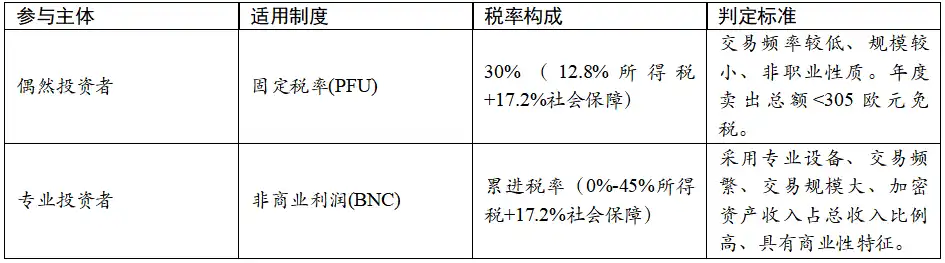
Table 2: Comparison of Occasional and Professional Investors

The distinction between professional and occasional is based on qualitative criteria, not quantitative standards. The French tax authorities typically consider comprehensive factors such as the complexity of transactions, tools used, transaction frequency, transaction scale, and its proportion in the taxpayer's total income.

4.2.3 Crypto Mining Enterprises and Mining Pool Operators

Mining income for crypto mining enterprises is treated under Non-Commercial Profits (BNC) rules and must be included in annual total income at the market value at the time of receipt. According to DGFiP guidance issued in August 2019, mining income does not create Value Added Tax (VAT) obligations.

Mining income is recognized as income at the market price of the crypto asset on the day it is received by the miner. For example, if a miner receives 1 Bitcoin on a certain day, the market price of Bitcoin on that day should be used as taxable income. Mining enterprises can deduct costs directly related to mining activities, including but not limited to electricity costs, hardware equipment depreciation, maintenance costs, cooling system operating costs, etc. The deduction of these costs follows general business expense deduction principles.

According to DGFiP guidance, mining activity is not considered a VAT-taxable transaction in the absence of providing personalized services for a specific beneficiary. Therefore, miners are not required to pay VAT on the digital asset rewards received, nor can they claim VAT deduction rights. The tax treatment for individuals or entities participating in mining pools is the same as for independent miners, i.e., taxed under BNC rules. Mining pool operators, as intermediaries, need to provide participants with detailed records of profit distribution for accurate declaration.
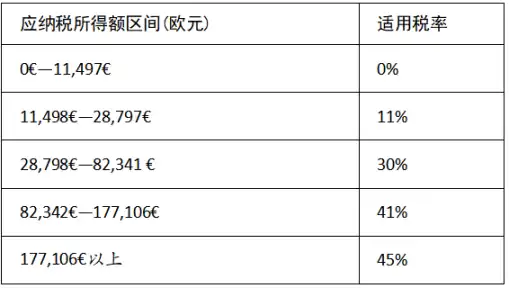
Table 3: 2026 French BNC Net Income Progressive Tax Rate Table

4.2.4 Crypto Exchanges and Custodians

Crypto exchanges and custodians are subject to strict regulation in France. From December 30, 2024, these institutions need to transition from the DASP framework to the CASP framework to comply with the EU's MiCAR requirements.

As commercial entities, the income of crypto exchanges and custodians (including transaction fees, custody fees, interest, etc.) should be taxed according to French corporate income tax rules. The standard corporate income tax rate is 25% (since 2022). According to EU and French VAT rules, the exchange of crypto assets is generally considered a financial service and may be exempt from VAT. However, certain ancillary services (such as consulting, custody, etc.) may be subject to VAT.

CASPs need to meet stricter capital requirements, governance standards, risk management, and customer protection measures. However, we anticipate that these compliance costs may be deductible as business expenses.

4.2.5 Institutional Investors and Fund Managers

Capital gains from crypto asset transactions by institutional investors should be taxed according to French corporate income tax rules. Companies or funds registered in France must include gains generated from crypto asset transactions in their annual profits. Gains are treated as ordinary business income, with a standard tax rate of 25%. Depending on the specific structure of the fund (e.g., UCITS, AIF, etc.), the tax treatment may differ. Certain types of funds may enjoy special tax treatments; for institutions under specific accounting standards, a "Mark-to-Market" system may also apply, requiring the valuation and taxation of unrealized gains at the end of each accounting year.

Unlike the 30% flat tax (PFU) applicable to individual investors, France offers a preferential tax rate of 15% for the first €42,500 of profits for small and medium-sized enterprises (SMEs) with turnover below a certain threshold (usually €7,630,000) that meet the conditions, with the excess portion taxed at 25%.
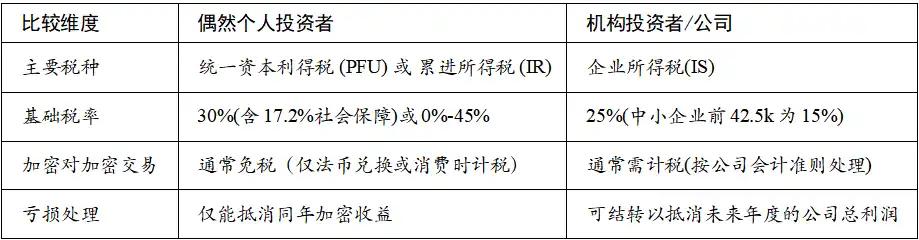
Table 4: Comparison of Individual and Institutional Investors

Simultaneously, institutional investors engaging in cross-border crypto transactions need to consider the relevant countries' tax treaties and information exchange obligations under the CARF/DAC8 framework (see section 3.3 for details).

4.2.6 DeFi and NFT: Tax Categories Not Yet Clarified in French Tax Law

DeFi participants include all participants who earn returns by locking crypto assets in smart contracts, such as stakers, yield farming participants, and lending platform users. The legal characterization of Staking and Yield Farming is not yet clear in French tax law, lacking specific legal provisions or tax guidance. Based on existing tax guidance, since staking and yield farming contribute to the maintenance of the blockchain system, their returns might be taxed under BNC rules, requiring recognition at market value upon receipt, but this interpretation still needs further confirmation.

Until legally clarified, DeFi participants should keep detailed transaction records, including staking time, return amount, market price on the return date, etc., and consult professional tax advisors when filing.

There is significant uncertainty regarding the tax characterization of NFTs in France, lacking specific legal provisions or tax guidance. Depending on the specific legal characterization of the NFT, the tax rate could vary greatly: If characterized as a digital asset (like cryptocurrency), it would be subject to the 30% flat tax or progressive rates (0%-45%) depending on the participant category; If characterized as a work of art, it would be subject to a very favorable fixed rate of only 6.5% on the gross sales price. This simplified, very preferential rate in France is a special regime for specific movable property like artworks, aimed at encouraging art transactions.

Given the uncertainty of characterization, NFT traders should keep detailed transaction records, including purchase price, sale price, transaction date, specific characteristics of the NFT, etc., and consult professional tax advisors when filing tax returns to determine the most reasonable characterization scheme.

5 Summary and Outlook

France's institutional development in the crypto asset field reflects an approach that balances regulation and incentives. Through the implementation of MiCAR and the advancement of DAC8/CARF, France is transforming its pioneering regulatory advantage into a competitive edge within the EU. However, this process also marks the end of the era of anonymity in crypto asset trading, as the entire market gradually moves towards openness and transparency. To adapt to regulatory changes, individual investors and institutions have different response paths:

Individual investors should establish a well-maintained transaction ledger, using professional tax software to record each transaction. Beyond the €305 tax-free allowance, they should ensure accurate declaration to avoid compliance risks arising from undeclared foreign accounts. They should also monitor the progress of DAC8/CARF to understand the impact of automatic information exchange starting in 2027 in advance.

Crypto service institutions should accelerate the transition from DASP to CASP, focusing on strengthening internal AML/CFT audit processes to meet the stricter capital and operational requirements under MiCAR. Simultaneously, they should establish robust data collection and reporting systems in preparation for DAC8/CARF data collection starting in 2026. Furthermore, both institutions and individuals should consistently monitor policymakers' stance on the legal characterization of DeFi and NFTs, coordination with other EU member states, and the consistency and effectiveness of DAC8/CARF implementation.


Domande pertinenti

QWhat are the key differences between the DASP and CASP regulatory frameworks for crypto asset service providers in France?

AThe DASP (Digital Asset Service Provider) framework was France's national registration system under the PACTE Law, which was voluntary and focused on market entry and investor protection. The CASP (Crypto Asset Service Provider) framework, mandated by the EU's MiCAR regulation, is a compulsory licensing system with stricter requirements. Key differences include: DASP was a registration system, while CASP is an authorization/licensing system; CASP imposes more rigorous capital, governance, risk management, and client protection requirements; and CASP providers must obtain MiCAR to operate across the EU (passporting), whereas DASP registration was only for France.

QHow does the French tax system classify individual crypto investors, and what are the tax implications for each category?

AFrench tax law classifies individual crypto investors into two main categories based on activity nature and frequency. 'Occasional Investors' engage in infrequent, non-professional trading and are subject to a flat tax rate of 30% (PFU), comprising 12.8% income tax and 17.2% social contributions. They benefit from a €305 annual exemption and can use the portfolio method for cost basis calculation. 'Professional Investors' are high-frequency, large-scale traders and are taxed under the non-commercial profits (BNC) regime at progressive income tax rates (0%-45%) plus 17.2% social contributions. Their classification is based on qualitative factors like transaction complexity, frequency, and proportion of total income.

QWhat significant change in international tax transparency for crypto assets is expected to begin in 2026 according to the article?

ABeginning in 2026, the international tax transparency era for crypto assets will commence with the implementation of the EU's DAC8 directive and the OECD's Crypto Asset Reporting Framework (CARF). From this date, Crypto Asset Service Providers (CASPs) in France will be required to start systematically collecting user transaction data. The first annual reports based on this data must be submitted to the French tax authorities by June 15, 2027. This will initiate an automatic exchange of information mechanism between France and other EU member states, effectively ending the anonymity of cross-border crypto transactions conducted on centralized platforms.

QHow are crypto mining activities taxed for individuals and businesses in France?

AIncome from crypto mining for both individuals and businesses is treated as non-commercial profits (BNC) under French tax law. The mining reward is taxed as income at its fair market value on the day it is received by the miner. Miners can deduct directly related operational costs, such as electricity, hardware depreciation, and maintenance, from this income. Importantly, according to a 2019 DGFiP guidance, mining activity is not subject to Value Added Tax (VAT) as it is not considered a supply of personalized services to a specific beneficiary.

QWhat is the current state of tax regulation for DeFi activities and NFT transactions in France?

AThe tax treatment of DeFi activities (like staking and liquidity mining) and NFT transactions remains largely uncertain and unclarified in French tax law. There is a lack of specific legal provisions or official tax guidance for these areas. For DeFi, rewards from staking and yield farming could potentially be taxed as non-commercial profits (BNC), but this interpretation awaits confirmation. For NFTs, the applicable tax rate depends entirely on their legal qualification, which is unclear. If classified similarly to cryptocurrencies, standard income tax rates apply; if classified as artwork, they could benefit from a preferential fixed tax rate of 6.5%. Participants in these areas are advised to maintain detailed records and seek professional tax advice.

Letture associate

Trading

Spot
Futures

Articoli Popolari

Cosa è $S$

Comprendere SPERO: Una Panoramica Completa Introduzione a SPERO Mentre il panorama dell'innovazione continua a evolversi, l'emergere delle tecnologie web3 e dei progetti di criptovaluta gioca un ruolo fondamentale nel plasmare il futuro digitale. Un progetto che ha attirato l'attenzione in questo campo dinamico è SPERO, denotato come SPERO,$$s$. Questo articolo mira a raccogliere e presentare informazioni dettagliate su SPERO, per aiutare gli appassionati e gli investitori a comprendere le sue basi, obiettivi e innovazioni nei domini web3 e crypto. Che cos'è SPERO,$$s$? SPERO,$$s$ è un progetto unico all'interno dello spazio crypto che cerca di sfruttare i principi della decentralizzazione e della tecnologia blockchain per creare un ecosistema che promuove l'impegno, l'utilità e l'inclusione finanziaria. Il progetto è progettato per facilitare interazioni peer-to-peer in modi nuovi, fornendo agli utenti soluzioni e servizi finanziari innovativi. Al suo interno, SPERO,$$s$ mira a responsabilizzare gli individui fornendo strumenti e piattaforme che migliorano l'esperienza dell'utente nello spazio delle criptovalute. Questo include la possibilità di metodi di transazione più flessibili, la promozione di iniziative guidate dalla comunità e la creazione di percorsi per opportunità finanziarie attraverso applicazioni decentralizzate (dApps). La visione sottostante di SPERO,$$s$ ruota attorno all'inclusività, cercando di colmare le lacune all'interno della finanza tradizionale mentre sfrutta i vantaggi della tecnologia blockchain. Chi è il Creatore di SPERO,$$s$? L'identità del creatore di SPERO,$$s$ rimane piuttosto oscura, poiché ci sono risorse pubblicamente disponibili limitate che forniscono informazioni dettagliate sul suo fondatore o fondatori. Questa mancanza di trasparenza può derivare dall'impegno del progetto per la decentralizzazione—un ethos che molti progetti web3 condividono, dando priorità ai contributi collettivi rispetto al riconoscimento individuale. Centrando le discussioni attorno alla comunità e ai suoi obiettivi collettivi, SPERO,$$s$ incarna l'essenza dell'empowerment senza mettere in evidenza individui specifici. Pertanto, comprendere l'etica e la missione di SPERO rimane più importante che identificare un creatore singolo. Chi sono gli Investitori di SPERO,$$s$? SPERO,$$s$ è supportato da una varietà di investitori che vanno dai capitalisti di rischio agli investitori angelici dedicati a promuovere l'innovazione nel settore crypto. Il focus di questi investitori generalmente si allinea con la missione di SPERO—dando priorità a progetti che promettono avanzamenti tecnologici sociali, inclusività finanziaria e governance decentralizzata. Queste fondazioni di investitori sono tipicamente interessate a progetti che non solo offrono prodotti innovativi, ma contribuiscono anche positivamente alla comunità blockchain e ai suoi ecosistemi. Il supporto di questi investitori rafforza SPERO,$$s$ come un concorrente degno di nota nel dominio in rapida evoluzione dei progetti crypto. Come Funziona SPERO,$$s$? SPERO,$$s$ impiega un framework multifunzionale che lo distingue dai progetti di criptovaluta convenzionali. Ecco alcune delle caratteristiche chiave che sottolineano la sua unicità e innovazione: Governance Decentralizzata: SPERO,$$s$ integra modelli di governance decentralizzati, responsabilizzando gli utenti a partecipare attivamente ai processi decisionali riguardanti il futuro del progetto. Questo approccio favorisce un senso di proprietà e responsabilità tra i membri della comunità. Utilità del Token: SPERO,$$s$ utilizza il proprio token di criptovaluta, progettato per servire varie funzioni all'interno dell'ecosistema. Questi token abilitano transazioni, premi e la facilitazione dei servizi offerti sulla piattaforma, migliorando l'impegno e l'utilità complessivi. Architettura Stratificata: L'architettura tecnica di SPERO,$$s$ supporta la modularità e la scalabilità, consentendo un'integrazione fluida di funzionalità e applicazioni aggiuntive man mano che il progetto evolve. Questa adattabilità è fondamentale per mantenere la rilevanza nel panorama crypto in continua evoluzione. Coinvolgimento della Comunità: Il progetto enfatizza iniziative guidate dalla comunità, impiegando meccanismi che incentivano la collaborazione e il feedback. Nutrendo una comunità forte, SPERO,$$s$ può affrontare meglio le esigenze degli utenti e adattarsi alle tendenze di mercato. Focus sull'Inclusione: Offrendo basse commissioni di transazione e interfacce user-friendly, SPERO,$$s$ mira ad attrarre una base utenti diversificata, inclusi individui che potrebbero non aver precedentemente interagito nello spazio crypto. Questo impegno per l'inclusione si allinea con la sua missione generale di empowerment attraverso l'accessibilità. Cronologia di SPERO,$$s$ Comprendere la storia di un progetto fornisce preziose intuizioni sulla sua traiettoria di sviluppo e sui traguardi. Di seguito è riportata una cronologia suggerita che mappa eventi significativi nell'evoluzione di SPERO,$$s$: Fase di Concettualizzazione e Ideazione: Le idee iniziali che formano la base di SPERO,$$s$ sono state concepite, allineandosi strettamente con i principi di decentralizzazione e focus sulla comunità all'interno dell'industria blockchain. Lancio del Whitepaper del Progetto: Dopo la fase concettuale, è stato rilasciato un whitepaper completo che dettaglia la visione, gli obiettivi e l'infrastruttura tecnologica di SPERO,$$s$ per suscitare interesse e feedback dalla comunità. Costruzione della Comunità e Prime Interazioni: Sono stati effettuati sforzi attivi di outreach per costruire una comunità di early adopters e potenziali investitori, facilitando discussioni attorno agli obiettivi del progetto e ottenendo supporto. Evento di Generazione del Token: SPERO,$$s$ ha condotto un evento di generazione del token (TGE) per distribuire i propri token nativi ai primi sostenitori e stabilire una liquidità iniziale all'interno dell'ecosistema. Lancio della Prima dApp: La prima applicazione decentralizzata (dApp) associata a SPERO,$$s$ è stata attivata, consentendo agli utenti di interagire con le funzionalità principali della piattaforma. Sviluppo Continuo e Partnership: Aggiornamenti e miglioramenti continui alle offerte del progetto, inclusi partnership strategiche con altri attori nello spazio blockchain, hanno plasmato SPERO,$$s$ in un concorrente competitivo e in evoluzione nel mercato crypto. Conclusione SPERO,$$s$ rappresenta una testimonianza del potenziale del web3 e delle criptovalute di rivoluzionare i sistemi finanziari e responsabilizzare gli individui. Con un impegno per la governance decentralizzata, il coinvolgimento della comunità e funzionalità progettate in modo innovativo, apre la strada verso un panorama finanziario più inclusivo. Come per qualsiasi investimento nello spazio crypto in rapida evoluzione, si incoraggiano potenziali investitori e utenti a ricercare approfonditamente e a impegnarsi in modo riflessivo con gli sviluppi in corso all'interno di SPERO,$$s$. Il progetto mostra lo spirito innovativo dell'industria crypto, invitando a ulteriori esplorazioni delle sue innumerevoli possibilità. Mentre il percorso di SPERO,$$s$ è ancora in fase di sviluppo, i suoi principi fondamentali potrebbero effettivamente influenzare il futuro di come interagiamo con la tecnologia, la finanza e tra di noi in ecosistemi digitali interconnessi.

75 Totale visualizzazioniPubblicato il 2024.12.17Aggiornato il 2024.12.17

Cosa è $S$

Cosa è AGENT S

Agent S: Il Futuro dell'Interazione Autonoma in Web3 Introduzione Nel panorama in continua evoluzione di Web3 e criptovalute, le innovazioni stanno costantemente ridefinendo il modo in cui gli individui interagiscono con le piattaforme digitali. Uno di questi progetti pionieristici, Agent S, promette di rivoluzionare l'interazione uomo-computer attraverso il suo framework agentico aperto. Aprendo la strada a interazioni autonome, Agent S mira a semplificare compiti complessi, offrendo applicazioni trasformative nell'intelligenza artificiale (AI). Questa esplorazione dettagliata approfondirà le complessità del progetto, le sue caratteristiche uniche e le implicazioni per il dominio delle criptovalute. Cos'è Agent S? Agent S si presenta come un innovativo framework agentico aperto, progettato specificamente per affrontare tre sfide fondamentali nell'automazione dei compiti informatici: Acquisizione di Conoscenze Specifiche del Dominio: Il framework apprende in modo intelligente da varie fonti di conoscenza esterne ed esperienze interne. Questo approccio duale gli consente di costruire un ricco repository di conoscenze specifiche del dominio, migliorando le sue prestazioni nell'esecuzione dei compiti. Pianificazione su Lungo Orizzonte di Compiti: Agent S impiega una pianificazione gerarchica potenziata dall'esperienza, un approccio strategico che facilita la suddivisione e l'esecuzione efficiente di compiti complessi. Questa caratteristica migliora significativamente la sua capacità di gestire più sottocompiti in modo efficiente ed efficace. Gestione di Interfacce Dinamiche e Non Uniformi: Il progetto introduce l'Interfaccia Agente-Computer (ACI), una soluzione innovativa che migliora l'interazione tra agenti e utenti. Utilizzando Modelli Linguistici Multimodali di Grandi Dimensioni (MLLM), Agent S può navigare e manipolare senza sforzo diverse interfacce grafiche utente. Attraverso queste caratteristiche pionieristiche, Agent S fornisce un framework robusto che affronta le complessità coinvolte nell'automazione dell'interazione umana con le macchine, preparando il terreno per innumerevoli applicazioni nell'AI e oltre. Chi è il Creatore di Agent S? Sebbene il concetto di Agent S sia fondamentalmente innovativo, informazioni specifiche sul suo creatore rimangono elusive. Il creatore è attualmente sconosciuto, il che evidenzia sia la fase embrionale del progetto sia la scelta strategica di mantenere i membri fondatori sotto anonimato. Indipendentemente dall'anonimato, l'attenzione rimane sulle capacità e sul potenziale del framework. Chi sono gli Investitori di Agent S? Poiché Agent S è relativamente nuovo nell'ecosistema crittografico, informazioni dettagliate riguardanti i suoi investitori e sostenitori finanziari non sono documentate esplicitamente. La mancanza di approfondimenti pubblicamente disponibili sulle fondazioni di investimento o sulle organizzazioni che supportano il progetto solleva interrogativi sulla sua struttura di finanziamento e sulla roadmap di sviluppo. Comprendere il supporto è cruciale per valutare la sostenibilità del progetto e il suo potenziale impatto sul mercato. Come Funziona Agent S? Al centro di Agent S si trova una tecnologia all'avanguardia che gli consente di funzionare efficacemente in contesti diversi. Il suo modello operativo è costruito attorno a diverse caratteristiche chiave: Interazione Uomo-Computer Simile a Quella Umana: Il framework offre una pianificazione AI avanzata, cercando di rendere le interazioni con i computer più intuitive. Mimando il comportamento umano nell'esecuzione dei compiti, promette di elevare le esperienze degli utenti. Memoria Narrativa: Utilizzata per sfruttare esperienze di alto livello, Agent S utilizza la memoria narrativa per tenere traccia delle storie dei compiti, migliorando così i suoi processi decisionali. Memoria Episodica: Questa caratteristica fornisce agli utenti una guida passo-passo, consentendo al framework di offrire supporto contestuale mentre i compiti si sviluppano. Supporto per OpenACI: Con la capacità di funzionare localmente, Agent S consente agli utenti di mantenere il controllo sulle proprie interazioni e flussi di lavoro, allineandosi con l'etica decentralizzata di Web3. Facile Integrazione con API Esterne: La sua versatilità e compatibilità con varie piattaforme AI garantiscono che Agent S possa adattarsi senza problemi agli ecosistemi tecnologici esistenti, rendendolo una scelta attraente per sviluppatori e organizzazioni. Queste funzionalità contribuiscono collettivamente alla posizione unica di Agent S all'interno dello spazio crittografico, poiché automatizza compiti complessi e multi-fase con un intervento umano minimo. Man mano che il progetto evolve, le sue potenziali applicazioni in Web3 potrebbero ridefinire il modo in cui si svolgono le interazioni digitali. Cronologia di Agent S Lo sviluppo e le tappe di Agent S possono essere riassunti in una cronologia che evidenzia i suoi eventi significativi: 27 Settembre 2024: Il concetto di Agent S è stato lanciato in un documento di ricerca completo intitolato “Un Framework Agentico Aperto che Usa i Computer Come un Umano”, mostrando le basi per il progetto. 10 Ottobre 2024: Il documento di ricerca è stato reso pubblicamente disponibile su arXiv, offrendo un'esplorazione approfondita del framework e della sua valutazione delle prestazioni basata sul benchmark OSWorld. 12 Ottobre 2024: È stata rilasciata una presentazione video, fornendo un'idea visiva delle capacità e delle caratteristiche di Agent S, coinvolgendo ulteriormente potenziali utenti e investitori. Questi indicatori nella cronologia non solo illustrano i progressi di Agent S, ma indicano anche il suo impegno per la trasparenza e il coinvolgimento della comunità. Punti Chiave su Agent S Man mano che il framework Agent S continua a evolversi, diversi attributi chiave si distinguono, sottolineando la sua natura innovativa e il potenziale: Framework Innovativo: Progettato per fornire un uso intuitivo dei computer simile all'interazione umana, Agent S porta un approccio nuovo all'automazione dei compiti. Interazione Autonoma: La capacità di interagire autonomamente con i computer attraverso GUI segna un passo avanti verso soluzioni informatiche più intelligenti ed efficienti. Automazione di Compiti Complessi: Con la sua metodologia robusta, può automatizzare compiti complessi e multi-fase, rendendo i processi più veloci e meno soggetti a errori. Miglioramento Continuo: I meccanismi di apprendimento consentono ad Agent S di migliorare dalle esperienze passate, migliorando continuamente le sue prestazioni e la sua efficacia. Versatilità: La sua adattabilità attraverso diversi ambienti operativi come OSWorld e WindowsAgentArena garantisce che possa servire un'ampia gamma di applicazioni. Man mano che Agent S si posiziona nel panorama di Web3 e delle criptovalute, il suo potenziale per migliorare le capacità di interazione e automatizzare i processi segna un significativo avanzamento nelle tecnologie AI. Attraverso il suo framework innovativo, Agent S esemplifica il futuro delle interazioni digitali, promettendo un'esperienza più fluida ed efficiente per gli utenti in vari settori. Conclusione Agent S rappresenta un audace passo avanti nell'unione tra AI e Web3, con la capacità di ridefinire il modo in cui interagiamo con la tecnologia. Sebbene sia ancora nelle sue fasi iniziali, le possibilità per la sua applicazione sono vaste e coinvolgenti. Attraverso il suo framework completo che affronta sfide critiche, Agent S mira a portare le interazioni autonome al centro dell'esperienza digitale. Man mano che ci addentriamo nei regni delle criptovalute e della decentralizzazione, progetti come Agent S giocheranno senza dubbio un ruolo cruciale nel plasmare il futuro della tecnologia e della collaborazione uomo-computer.

401 Totale visualizzazioniPubblicato il 2025.01.14Aggiornato il 2025.01.14

Cosa è AGENT S

Come comprare S

Benvenuto in HTX.com! Abbiamo reso l'acquisto di Sonic (S) semplice e conveniente. Segui la nostra guida passo passo per intraprendere il tuo viaggio nel mondo delle criptovalute.Step 1: Crea il tuo Account HTXUsa la tua email o numero di telefono per registrarti il tuo account gratuito su HTX. Vivi un'esperienza facile e sblocca tutte le funzionalità,Crea il mio accountStep 2: Vai in Acquista crypto e seleziona il tuo metodo di pagamentoCarta di credito/debito: utilizza la tua Visa o Mastercard per acquistare immediatamente SonicS.Bilancio: Usa i fondi dal bilancio del tuo account HTX per fare trading senza problemi.Terze parti: abbiamo aggiunto metodi di pagamento molto utilizzati come Google Pay e Apple Pay per maggiore comodità.P2P: Fai trading direttamente con altri utenti HTX.Over-the-Counter (OTC): Offriamo servizi su misura e tassi di cambio competitivi per i trader.Step 3: Conserva Sonic (S)Dopo aver acquistato Sonic (S), conserva nel tuo account HTX. In alternativa, puoi inviare tramite trasferimento blockchain o scambiare per altre criptovalute.Step 4: Scambia Sonic (S)Scambia facilmente Sonic (S) nel mercato spot di HTX. Accedi al tuo account, seleziona la tua coppia di trading, esegui le tue operazioni e monitora in tempo reale. Offriamo un'esperienza user-friendly sia per chi ha appena iniziato che per i trader più esperti.

826 Totale visualizzazioniPubblicato il 2025.01.15Aggiornato il 2025.03.21

Come comprare S

Discussioni

Benvenuto nella Community HTX. Qui puoi rimanere informato sugli ultimi sviluppi della piattaforma e accedere ad approfondimenti esperti sul mercato. Le opinioni degli utenti sul prezzo di S S sono presentate come di seguito.

活动图片