As the Strait of Hormuz Reopens, What Trades Is the Market Betting On?

marsbitPubblicato 2026-06-15Pubblicato ultima volta 2026-06-15

Introduzione

As the possibility of a US-Iran agreement and the reopening of the Strait of Hormuz emerges, financial markets are rapidly pricing out the geopolitical risk premium built over the past three months. Following announcements from US and Iranian officials, Asian markets rallied and oil prices (Brent crude fell to around $84) dropped significantly. Analysts highlight several potential trades: shorting crude oil's risk premium (with Brent potentially falling to $80), buying airline and cruise stocks (like DAL, UAL, CCL) due to lower fuel costs, favoring Asian energy-importing economies (Japan, South Korea), and extending bond duration while selling inflation expectations as energy-driven price pressures ease. Other beneficiaries include LNG, fertilizer, and chemical chains. However, risks remain as the formal signing is set for June 19th, with implementation and shipping logistics taking time. Key signals to watch are oil prices sustaining below key levels, the performance of transportation stocks, and prediction market probabilities for the deal. The market is betting on de-escalation but remains cautious of execution risks.

This is the 40th time Trump has said a U.S.-Iran deal is about to happen.

While we've largely become immune to Trump's statements, this time the progress is more concrete than ever before.

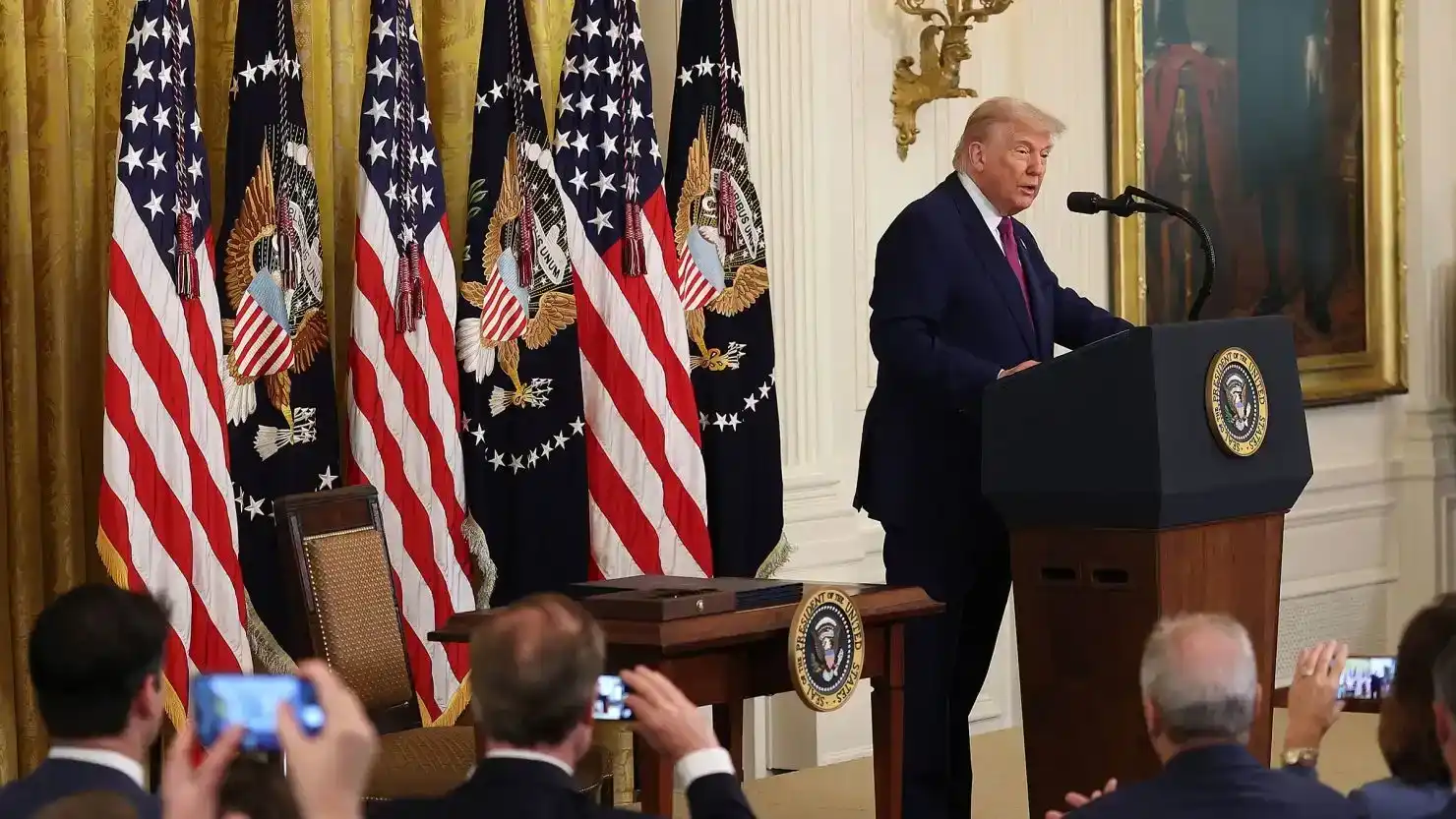
On June 14th, Pakistani Prime Minister Shehbaz Sharif announced a U.S.-Iran peace agreement. Trump subsequently confirmed, stating the maritime blockade would be lifted, allowing "free passage" through the Strait of Hormuz. Iran's Deputy Foreign Minister also said the text of the agreement is complete, with an immediate end to war and military operations, including actions towards Lebanon.
Asian markets gave the answer directly at Monday's open. Major indices in Tokyo and Seoul surged over 5% at one point, oil prices fell $3 per barrel, with Brent dropping to around $84. The logic is straightforward: the geopolitical risk premium that has been weighing on energy prices for the past three and a half months is being squeezed out by the market in a rush.

Although this is not yet a finalized peace agreement. The crucial signing is scheduled for June 19th in Switzerland, and the American and Iranian understandings of the deal differ. The U.S. speaks of a free and open strait, while Iranian media reports say maritime traffic will be coordinated and managed by Iran and Oman, resuming within 30 days according to "Iranian arrangements." Israel was still striking Beirut around the time of the announcement. The tough issues—nuclear matters, uranium enrichment, sanctions relief—have all been pushed into a 60-day negotiation window.

But we can more accurately say that the war and conflict have essentially shifted completely from the military level to the bargaining table.

The importance of the Strait of Hormuz needs little explanation. Before the war, about one-fifth of the world's oil and significant volumes of LNG passed through this waterway. Following U.S.-Israeli strikes on Iran on February 28th, Iran retaliated with missiles, drones, and maritime restrictions, gradually turning the strait from a "risk corridor" to a "de facto impeded corridor." Over the past three-plus months, the market feared a triple lock: Iran using the strait as a bargaining chip, the U.S. blockading Iranian ports, and the Israeli-Hezbollah front making it politically difficult for Iran to concede domestically. These three lines were twisted together, leaving no room for movement.
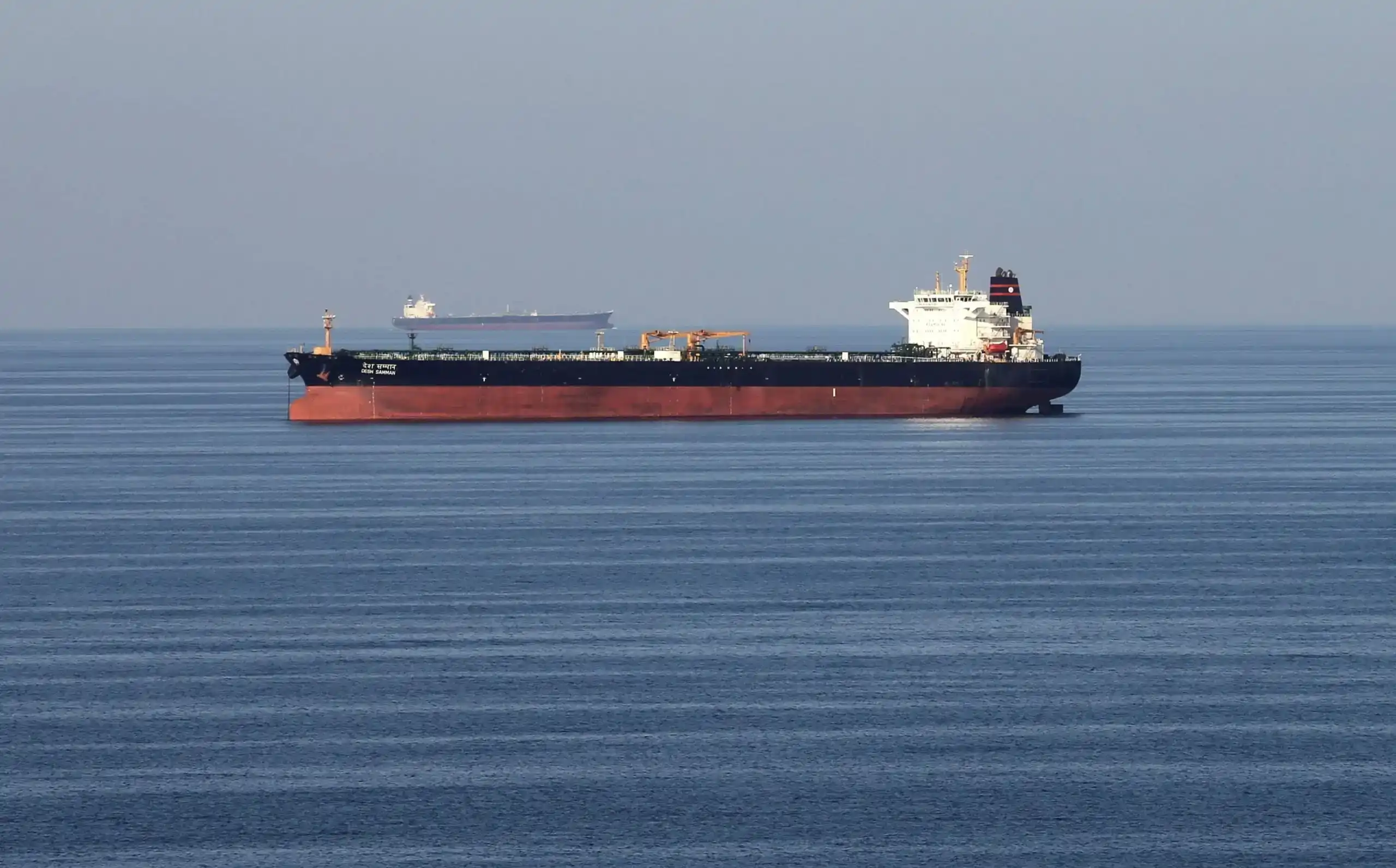
Now the strait has officially entered the reopening process. AP, citing energy experts, assesses that even if the agreement takes effect, it could take months for oil and gas supplies to normalize, as time is needed for vessels, insurance, refineries, mine clearance, and security arrangements. Tankers stranded in the Persian Gulf won't set sail based on a statement alone, and insurers and shipowners won't reset their risk assumptions to pre-war levels overnight.

For us investors, the most important question is: which financial products can we trade now?

What Is the Market Trading After the Strait Reopens?

Over the past few months, crude oil, natural gas, shipping insurance, jet fuel, fertilizers, and inflation expectations have all been layered with a Middle East risk premium. Now, if the agreement is signed as planned on June 19th and ship passage gradually resumes, these assets will be the first affected.

Some price reactions have been extremely swift. MarketWatch reported that following the deal news, Dow futures rose over 350 points, S&P 500 futures gained about 1%, and Nasdaq 100 futures increased roughly 1.6%. WTI fell below $81, with Brent dropping to around $83.5. Axios reported Brent at about $84.21, and U.S. gasoline prices also retreated from around $4.56/gallon in May to about $4.07.

To discuss more specifically, what other assets can we trade?

First, shorting the crude oil risk premium. CBA commodity analyst Vivek Dhar, in a report cited by WSJ, offered a judgment: if the Strait of Hormuz remains open, Brent could fall back to around $80 by year-end. His key assumption is that as long as oil product flows through the strait recover to 60-70% of pre-war levels, combined with non-OPEC+ supply growth and the existence of some alternative pipelines, the market could return to pricing that is relatively supply-loose. What does $80 Brent signify? It means the $15 to $20 premium added over the past three months due to the war will be systematically squeezed out.

Second, going long on airlines, cruise lines, and the travel chain. Lower fuel costs directly improve profit margins; this line is the most straightforward. IATA recently slashed its 2026 global airline industry net profit forecast from $41 billion to $23 billion, citing soaring jet fuel prices. Barron's reported IATA expects total aviation fuel costs to reach $350 billion this year. With oil dropping from the $90-$100 range to the low $80s, airline stocks have the greatest elasticity. Key names to watch include the airline ETF JETS, as well as DAL (Delta Air Lines), UAL (United Airlines), AAL (American Airlines), and LUV (Southwest Airlines). For cruise lines: CCL (Carnival Corporation), RCL (Royal Caribbean Group), NCLH (Norwegian Cruise Line Holdings). As of the close on June 12th, DAL was at $83.06, UAL at $115.52, AAL at $14.98, LUV at $45.47, CCL at $29.18, and NCLH at $19.43. If oil prices remain low ahead of the U.S. market open, airlines and cruise lines are likely the first place pre-market funds will flow.

Third, going long on Asian energy-importing countries. Japan, South Korea, India, China are direct beneficiaries of lower Middle Eastern oil and gas prices. Commerzbank Research, mentioned in a WSJ report, noted Asian currencies generally strengthened in early trading, with USD/JPY falling to about 159.93, USD/KRW to about 1505.60, and AUD rising to about 0.7079. NAB chief economist Sally Auld's view is that falling oil prices ease inflationary pressures for energy importers like Japan, leading to a rise in Japanese 10-year government bond futures. Trades could include going long on Japanese, Korean, or Indian stock indices, or going long on the currencies and bonds of Asian importing nations.

Fourth, going long on bond duration, shorting inflation expectations. Falling oil prices directly lower costs for gasoline, aviation, logistics, and some food items, also reducing market worries about central banks maintaining high interest rates. Watch TLT, the U.S. 10-year Treasury yield, TIPS breakevens, and gold. Gold is special here: if the market believes the strait reopening is real, both gold and oil's safe-haven premiums will recede; if the June 19th signing fails, both will rebound simultaneously. Gold acts as a hedge indicator in this trade, not a directional one.

Fifth, the repricing of the LNG, fertilizer, and chemical chains. Qatari LNG transits the Strait of Hormuz; its reopening will lower the risk premium for LNG in Asia and Europe, benefiting gas-consuming companies, chemical firms, and some power-cost-sensitive industries. The Middle East is also a major supplier of fertilizers like urea and ammonia; resumed navigation means reduced price pressure on agricultural inputs. This line is more macro-chain oriented, favorable for downstream chemical and agricultural cost sides, not necessarily specific stocks.

Polymarket's prediction markets can serve as a "probability thermometer." The "Yes" price for "US-Iran nuclear deal by June 30" is around 0.84, implying an 84% market-assigned probability. "US-Iran nuclear deal before 2027" Yes is about 0.945. "Will the U.S. invade Iran before 2027" Yes is only about 0.115. "Iran Nuke before 2027" is about 0.0735. "Will the Iranian regime fall by June 30" is about 0.0065. These numbers mean: the probability of a near-term deal is high, but longer-term tail risks remain. The market is betting on de-escalation, but not going all-in.

For a U.S. pre-market watchlist, the editor has compiled some:

Tier 1, most direct beneficiaries of lower fuel costs: JETS, DAL, UAL, AAL, LUV, CCL, RCL, NCLH.

Tier 2, beneficiaries of recovering risk appetite, especially small-caps and cyclicals: SPY (S&P 500 ETF), QQQ (Nasdaq-100 ETF), IWM (Russell 2000 small-cap ETF).

Tier 3, companies benefiting from lower costs but with slower elasticity: FDX (FedEx), UPS (United Parcel Service), DOW (Dow Inc.), LYB (LyondellBasell).

Conversely, XOM (Exxon Mobil), CVX (Chevron), SLB, HAL (Halliburton), XLE (Energy Select Sector SPDR Fund)—these upstream energy and oil services stocks are more likely to face near-term pressure. They were beneficiaries of high oil prices and the war premium; as that premium is squeezed out, their investment thesis needs recalculation.

Finally, risks. The biggest fear in this trade isn't "oil prices have already fallen," but "the agreement hasn't truly been implemented." The June 19th signing, maritime mine clearance, falling insurance rates, shipowners resuming passage, the implementation of the Iran-Oman coordination mechanism—these steps need verification one by one. Key signals to track: whether Brent can break below $80, WTI below $78, whether airline and cruise stocks can hold their gains after opening higher, and whether Polymarket's Iran deal contracts stay above 80%.

If these conditions hold simultaneously, it indicates the market is switching from "war shock" to "supply recovery."

If oil prices rebound to $88-$90, or if Polymarket deal probabilities drop rapidly, it's time to reduce exposure on this reopening trade.


Domande pertinenti

QAccording to the article, what are the three types of assets most directly impacted by the removal of Middle East risk premiums after the announcement of the Strait of Hormuz reopening?

AThe three most directly impacted asset types are: 1) Crude oil and natural gas (specifically their risk premiums), 2) Aviation fuel, shipping insurance, and related sectors like airlines and cruise lines, and 3) Inflation expectations, which influence bond markets (like US Treasuries and TIPS).

QWhat are the two primary trade ideas suggested for benefiting from falling oil prices due to the Hormuz reopening?

AThe two primary trade ideas are: 1) Shorting the crude oil risk premium, anticipating a systematic squeeze of the $15-$20 per barrel premium added during the conflict. 2) Going long on airline, cruise line, and tourism-related stocks (e.g., via ETF JETS, or stocks like DAL, UAL, CCL, RCL) as their fuel costs decline and profit margins improve.

QWhich Asian economies are highlighted as direct beneficiaries of cheaper Middle Eastern oil and gas imports?

AThe article highlights Japan, South Korea, India, and China as the primary Asian beneficiaries of cheaper oil and gas imports. It notes their currencies strengthened and their bond markets reacted positively to reduced inflationary pressures.

QWhat role does Polymarket's prediction market data play in the analysis, and what probability does it assign to a US-Iran nuclear deal by June 30?

APolymarket's data serves as a 'probability thermometer' for market sentiment on geopolitical risks. It assigns an 84% probability (Yes price ~0.84) to a US-Iran nuclear deal being reached by June 30, indicating high short-term confidence in the deal but not a complete elimination of long-term tail risks.

QAccording to the article, what are the key signals to watch to confirm the market is transitioning from 'war shock' to 'supply recovery' mode?

AThe key confirming signals are: 1) Brent crude oil price breaking below $80 per barrel and WTI below $78. 2) Airline and cruise stocks maintaining their gains after an initial rally. 3) Polymarket's probability for the Iran deal remaining above 80%. If these occur simultaneously, it signals the transition.

Letture associate

Microsoft CEO: In the AI Era, How Do You Define a Company's Moat?

Microsoft CEO Satya Nadella argues that in the AI era, a company's true competitive edge, or "moat," is not determined by choosing the single most powerful model, but by its ability to build a continuous "learning loop." This system integrates and evolves by connecting human workflows, domain expertise, organizational judgment, and employee experience. He posits that future companies will accumulate two types of capital: Human Capital (employee knowledge, judgment, creativity) and "Token Capital" (a firm's own built and owned AI capabilities). Importantly, AI amplifies rather than devalues human capital. Human direction is essential to guide progress, as computational power alone is aimless. The core opportunity lies in creating a closed-loop system where human and token capital reinforce each other in a compound, self-improving cycle. A company must be able to preserve its unique institutional knowledge—its "company veteran" expertise—even if it switches underlying general-purpose AI models. This requires private evaluation benchmarks, reinforcement learning environments based on internal data, and queryable knowledge bases. Nadella warns against a future where economic value is concentrated by a few dominant models that commoditize entire industries' knowledge. Instead, the priority should be building a broad "frontier ecosystem" where every company, industry, and nation can own its learning loop. This allows organizations to retain control of their intellectual property, amplify employee capabilities, and ensure the economic value created by AI is captured within their own businesses and communities. True corporate sovereignty in the AI age comes from turning organizational knowledge into a compounding system that creates enduring, defensible value.

marsbit4 min fa

Microsoft CEO: In the AI Era, How Do You Define a Company's Moat?

marsbit4 min fa

ETFs Are Just the Ticket: The True Institutionalization of Bitcoin Is Happening Where You Can't See It

Beyond the Bitcoin ETF spotlight, a deeper institutionalization is underway, leveraging Bitcoin as a foundational financial primitive. Institutions are using Bitcoin for purposes long reserved for assets like U.S. Treasuries and gold: as collateral for loans, insurance reserves, and the backbone of rated bonds. Examples include a Barbados-based insurer capitalizing with $40M in Bitcoin reserves and Ledn's $188M securitization of Bitcoin-backed loans, which received the first-ever investment-grade rating (BBB-) from S&P for a digital asset-backed security. This structure was stress-tested during a 27% price drop in early 2026, triggering automatic liquidations that functioned as designed but revealed the systemic risk of synchronized selling across leveraged positions. Infrastructure is evolving to support this, with platforms like Anchorage Digital's Atlas network enabling secure, institutional-grade settlement and collateral management. Strategies like basis trades and corporate treasuries (exemplified by companies like MicroStrategy issuing billions in equity and debt to fund Bitcoin acquisitions) further integrate Bitcoin into financial mechanics. While ETFs solved "how to own" Bitcoin, these developments answer "what to do with it," embedding the asset into the working machinery of finance—as collateral upon which loans, derivatives, and structured products are built. The real, enduring institutional shift is happening in these largely invisible plumbing and financing systems.

marsbit11 min fa

ETFs Are Just the Ticket: The True Institutionalization of Bitcoin Is Happening Where You Can't See It

marsbit11 min fa

ZEC Co-Founder Responds to Orchard Vulnerability: No Signs of Theft, Orchard Pool to Be Sealed

ZEC Co-Founder Addresses Orchard Vulnerability: No Signs of Theft, Plans to Sunset Orchard Pool A security vulnerability was recently discovered in Zcash's Orchard shielded pool, raising key concerns. The primary questions are whether the flaw was exploited, if user funds are safe, whether users can verify the total ZEC supply, and if other similar vulnerabilities exist. Analysis suggests the vulnerability was likely not exploited prior to its discovery. It was found proactively by a researcher using specialized tools, not due to an active breach. The development team and mining pools acted quickly to contain the issue. Typical financially-motivated attacks would likely have left visible on-chain evidence, which has not been observed. User funds in Orchard are considered safe and should be recoverable, assuming no prior exploitation. If the flaw was never used, all legitimate funds can be withdrawn. The article outlines risks associated with moving funds to transparent addresses or other pools, but concludes that leaving assets in place is a reasonable option. Currently, users cannot independently verify that the total ZEC supply hasn't been inflated due to this bug. However, the planned Ironwood network upgrade is designed to resolve this. It will permanently close the Orchard pool to new deposits and internal transfers, allowing only withdrawals. This mechanism will cap total withdrawals at the amount of legitimately deposited funds, enabling anyone to cryptographically verify the supply post-upgrade. Multiple teams, including Shielded Labs, have conducted extensive audits focused on counterfeiting vulnerabilities, assisted by advanced AI tools. No additional flaws of this type have been found so far, increasing confidence that no other similar undisclosed vulnerabilities exist. In summary, evidence indicates the Orchard bug was probably not used, user funds are secure, and no other counterfeiting flaws are currently known. The upcoming Ironwood upgrade will restore users' ability to independently verify the total ZEC supply, closing this chapter.

Foresight News15 min fa

ZEC Co-Founder Responds to Orchard Vulnerability: No Signs of Theft, Orchard Pool to Be Sealed

Foresight News15 min fa

Microsoft Announces Commercial-Grade Quantum Computer to be Completed in Three Years: Will the Boots Land?

Microsoft announces plans to build a commercially viable quantum computer by 2029, a significant acceleration from the previous industry consensus of a decade. The breakthrough is fueled by their new Majorana 2 quantum chip, which boasts a record-breaking average qubit lifetime of 20 seconds—a 1,000-fold reliability improvement over its predecessor. This leap was achieved by leveraging topological qubits, a theoretically more stable technology using Majorana zero modes, and switching the core superconducting material from aluminum to lead. Crucially, Microsoft's "Discovery" agentic AI platform accelerated the R&D process. AI agents autonomously analyzed vast experimental data, optimized manufacturing parameters (like the lead alloy composition), and solved issues like "ghost noise," dramatically speeding up experimentation. While the 20-second coherence time is a landmark, challenges remain: scaling from 12 qubits to the millions needed for practical applications, managing compilation costs, and verifying quantum results. Skeptics call for peer-reviewed data, and questions persist about whether even 20 seconds is sufficient for complex algorithms like breaking RSA encryption. The race is on with other approaches (superconducting, trapped ions), but Microsoft's confidence in its topological roadmap signals a potential shortcut to a scalable quantum future.

marsbit34 min fa

Microsoft Announces Commercial-Grade Quantum Computer to be Completed in Three Years: Will the Boots Land?

marsbit34 min fa

Trading

Spot
Futures
活动图片




