Are Altcoins Soaring? Is the Bull Market Back?

marsbitPubblicato 2026-04-17Pubblicato ultima volta 2026-04-17

Introduzione

Recent days have seen significant volatility in altcoins while Bitcoin remained relatively stable. Some low-market-cap tokens, with circulations under $20 million, surged by several hundred percent within days—without fundamental improvements, ecosystem breakthroughs, or new institutional inflows. This is not a true altseason. The Altseason Index stands at 34, and Bitcoin dominance is at 58.5%, indicating the market is still in a "Bitcoin season." The altcoin market cap has shrunk by ~40% since its peak in December 2024, falling to around $700 billion. This severe decline has made it cheaper for large holders to accumulate significant portions of circulating supply, enabling price manipulation. A case in point is SIREN, where a single entity allegedly controlled up to 88% of the circulating supply. Such concentration allows a small group to dictate price movements. Additionally, deeply negative funding rates (as low as -0.3% every 8 hours, annualized to -328%) force short sellers to pay high fees, accelerating liquidations and further fueling upward price spikes. On-chain activity, like a 97% weekly increase in BSC DEX volume, suggests excitement, but it is largely driven by existing capital, not new inflows. Institutional flows into altcoin ETFs (like those for Solana and XRP) have been weak or negative, indicating caution rather than rotation into altcoins. This rally is a signal of structural fragility, not broad bullish momentum. Until Bitcoin dominance falls ...

While Bitcoin has been holding steady these past few days, the altcoin season has seen a long-absent surge of intense volatility.

Tokens with a circulating market cap of less than $20 million have doubled, tripled, or even increased fivefold within a few days, with some approaching tenfold gains. There were no major developments, no ecosystem breakthroughs, no new institutional entries—the price was simply pushed up.

There's a ready explanation for this phenomenon: altcoins are high-Beta assets; when Bitcoin rises, alts run even faster. This holds true statistically but doesn't tell the whole story. High Beta can explain why alts outperform Bitcoin, but it can't explain the dozens-of-times difference in gains. That multiple comes from something else.

The Altcoin Season Index currently sits at 34, and the BTC Dominance rate is 58.5%. Both numbers tell you that this market is still quite a distance from a true altcoin season. Yet, in this market devoid of an alt season, certain tokens are moving with the intensity of one.

From December 2024 to April 2026, the total market capitalization of altcoins (excluding Bitcoin and Ethereum) shrank from a peak of approximately $1.16 trillion to around $700 billion, evaporating nearly 40%. When the market cap shrinks sufficiently, the rules of the game change. Price is no longer determined by market consensus but by who holds enough chips.

This is a vulnerability created by oversold conditions, not a signal from a bull market.

Altcoins Have Simply Fallen Too Much

The blockchain space has the concept of a 51% attack—controlling more than half of a network's hash rate allows one to alter records, double-spend tokens, and rewrite history. The capital version of this is logically simpler; it requires no technology, no computing power, just money. And in this cycle, the altcoin market, with its nearly 40% evaporation in market cap, has proportionally lowered the entry barrier by 40%.

As of early April 2026, the total altcoin market cap is approximately $700 billion, down about 40% from its peak of ~$1.16 trillion in December 2024. Using end-2025 as a cutoff point, the decline is about 44%. The two measurements use different time nodes, but the direction is consistent: the overall size of this market has nearly halved.
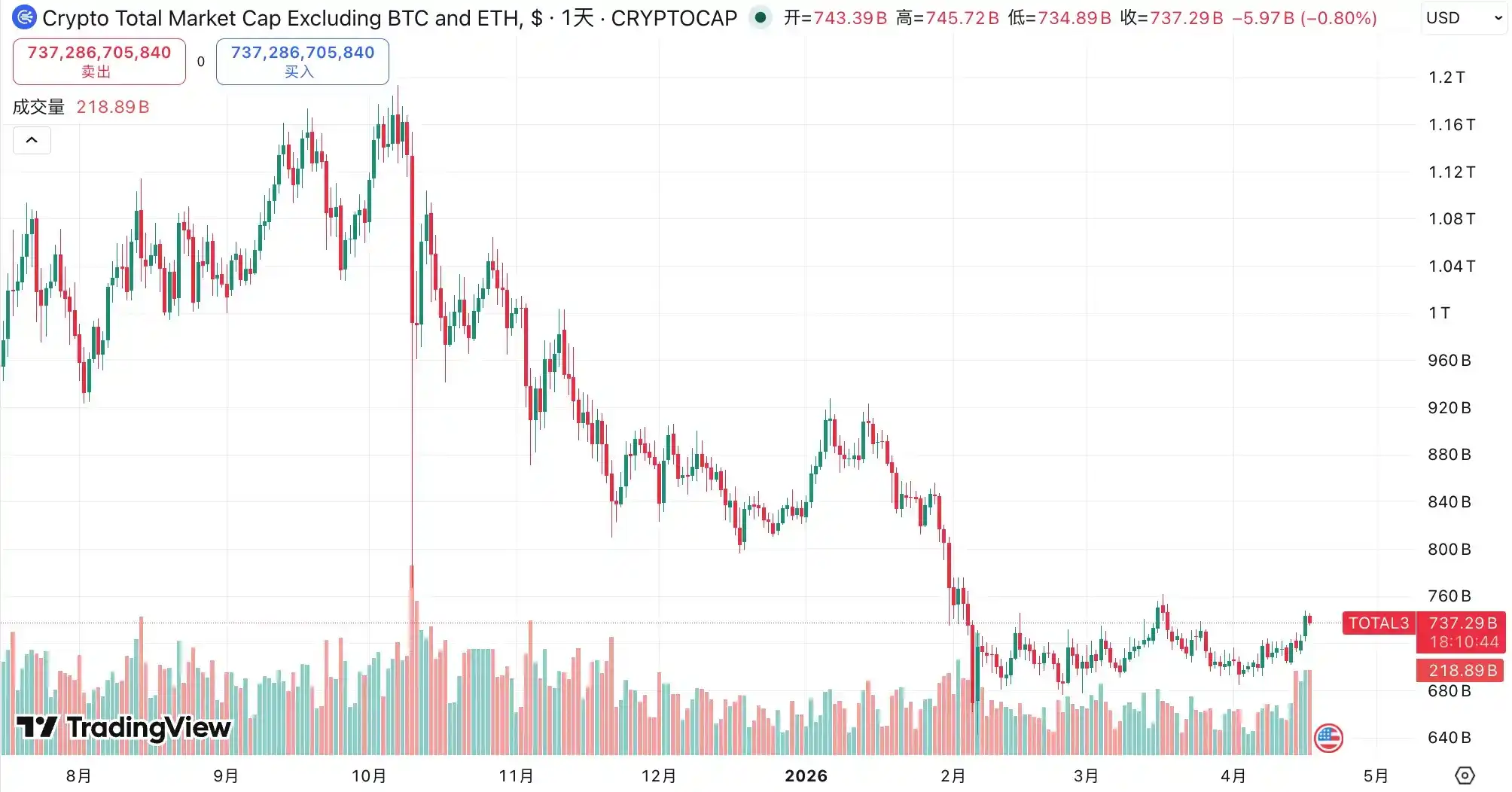
What does a halved market cap mean? $10 million represents 2% of the circulating supply in a market with a $500 million market cap, but 20% in a market with a $50 million market cap. The threshold has been lowered tenfold, but the amount of money hasn't changed. After being oversold, the cost of controlling the market becomes calculable. And if it's calculable, it's executable.

The recent sharp rise of the SIREN token provides a case study. SIREN experienced a rapid pump in late March, drawing significant attention. On March 24th, on-chain analyst EmberCN issued a warning: a single entity potentially controlled up to 88% of SIREN's circulating supply, worth approximately $1.8 billion at the time. As the news spread, SIREN plummeted from $2.56 to $0.79 that day, a drop of over 70%. During the rapid price exodus, almost no one could exit at a reasonable price because that price was never formed by the market in the first place.
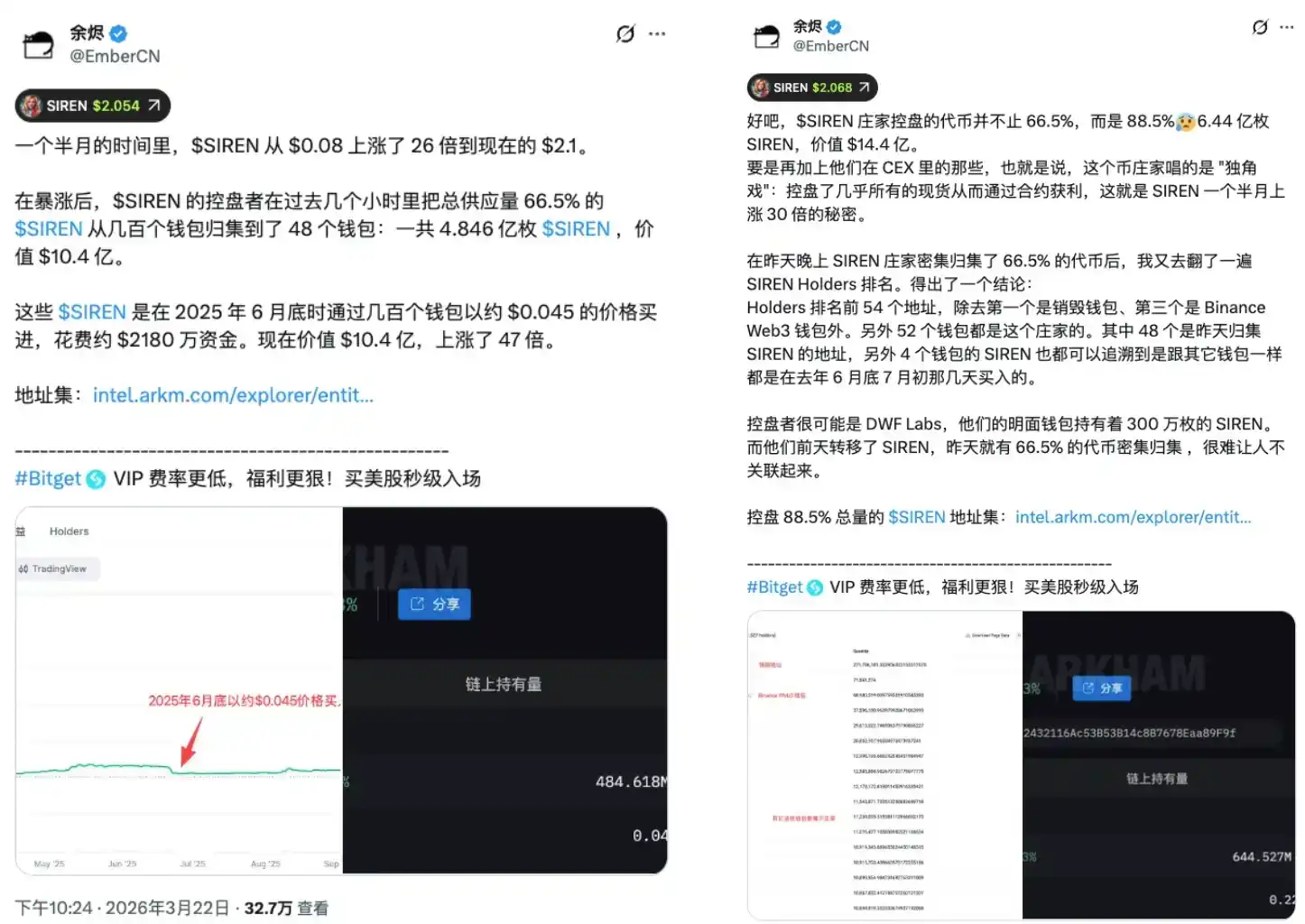
A conservative estimate suggests 48 wallets hold about 66.5% of the circulating chips. Even by this most conservative measure, an extremely limited set of addresses already possesses the structural conditions to control the price direction. From the moment the price was formed, the symmetry of this game was broken. Retail traders, bringing money they thought was participating in a free market, entered a container with a pre-set exit path.

SIREN is not an isolated case, nor a black swan; it is the structural norm for oversold altcoins. The deeper the fall, the less money is needed, and the easier it is to be hijacked. Being oversold isn't a discount; it's fragility. And this cycle's overall 40% market decline means this fragility has systematically expanded across the entire market.

Shorts Are the Fuel

If the story ended there, the logic would be one-directional: whales lock up supply, pump the price, dump on retail, and the price crashes. But the行情 of ultra-low market cap alts usually has another layer of structure superimposed on it: shorts become the kindling for the fire.

During SIREN's rapid price increase, the funding rate touched -0.2989% per 8 hours, annualized at approximately -328%. Translated, this means that shorting SIREN and holding the position requires paying the long side about 0.3% of the principal every 8 hours as a funding fee. Holding for a month, this fee alone could devour over 25% of the principal, not even counting the paper losses from the rising price.
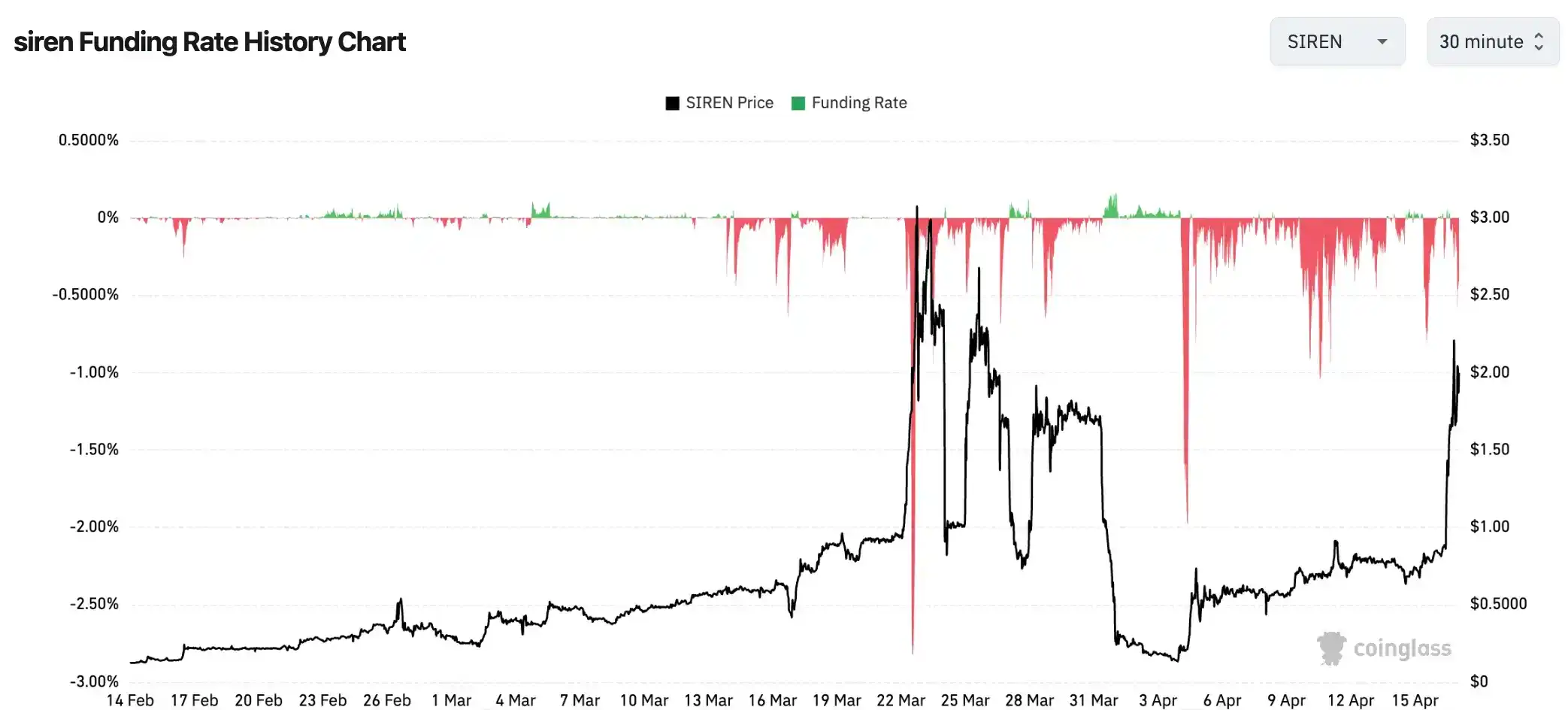
This number is not uncommon in small-cap alt markets. Some tokens have seen funding rates as low as -0.4579% per 8 hours during extreme moves, annualized at roughly -501%. At this level, short sellers face not the risk of being wrong on direction, but the certainty of being slowly ground down by a machine. Even if the eventual direction is correct, they are depleted before the right day arrives.

You see an altcoin pump 80% and decide to short it, waiting for a pullback. Every short position you open pays an interest payment to the opposing long side. Meanwhile, if the price continues to rise and hits your liquidation price, the system automatically buys back at market price to close your position. This forced buying further pushes the price higher.

The传导链 of a short squeeze operates like this: Price rises -> Shorts show paper losses -> Paper losses hit forced liquidation levels -> System automatically buys to close positions at market price -> This buying pushes price higher -> More shorts are triggered -> A new wave of buying arrives. In thin, low-liquidity, small-cap markets, each order can cause a much larger price move, making the chain reaction far more efficient than in large-cap assets.

There is an often-overlooked asymmetry here. Someone who sees a token surge 90% and decides to short it typically believes they are making a probabilistically correct judgment: "It has to pull back after rising so much." But in a market highly concentrated and locked up by holdings, this judgment must contend not only with the price direction but also with a funding fee bleeding 0.3% of principal every 8 hours, plus the chain reaction triggered by forced buying once liquidation levels are hit. This game is asymmetric from the start.

Extreme negative funding rates are the dashboard reading of this machine. Shorts have accumulated, ammunition is loaded, and accelerating the pump now means the people on the other side have only two choices: get liquidated or FOMO in and buy high. Both choices add fuel to the price. This isn't a rise formed by market consensus; it's a one-sided consumption event with a pre-designed structure.

A Bustling Market Without New Money

BSC chain's weekly DEX volume is up 97% year-over-year; the Altcoin Season Index is 34/100; BTC Dominance is 58.5%. These three numbers can be true simultaneously, and are simultaneously contradictory.

The on-chain heat is indeed scorching, but the latter two numbers tell you this market is still in "Bitcoin Season"—fewer than half of the major altcoins are outperforming Bitcoin, dominant capital is highly concentrated in Bitcoin, far from the point of diffusion. But the three numbers also point to the same reality: this is存量资金 accelerating their circulation, not new money entering. The hustle and bustle is real, but hustle and bustle does not equal expansion.

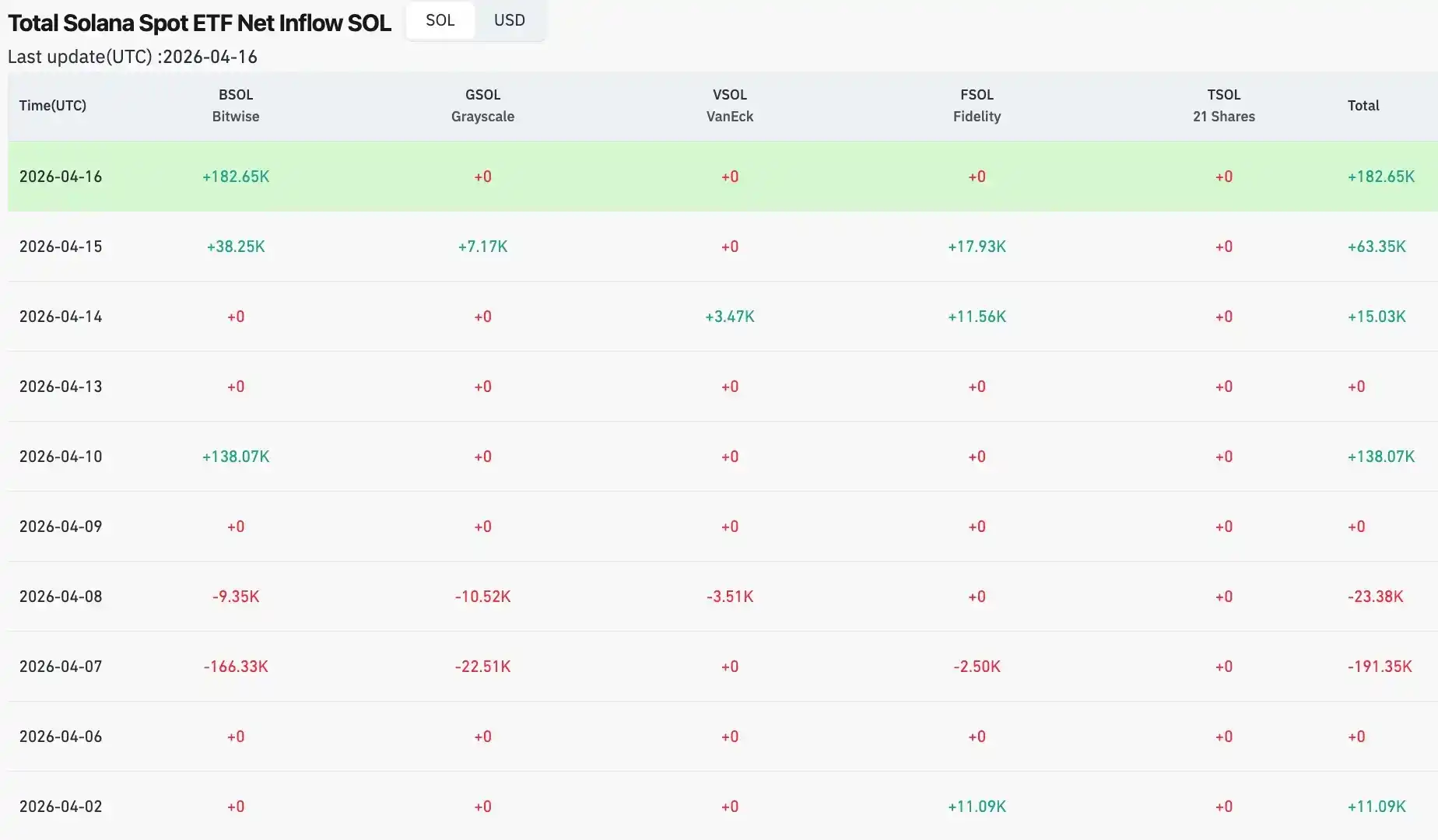
Institutional fund flows provide corroboration. In early April, net inflows for the Solana ETF fell to zero in a single day, after recording a net outflow of $6.2 million on March 30th. The XRP ETF saw continuous net outflows at the start of the month, with only a微量 inflow of about $64.6k on April 2nd. The Ethereum ETF, while seeing a single-day net inflow of $120 million on April 6th, had already experienced an outflow of $71 million the previous day. The overall pattern of institutional funds towards alts is观望, not rotation.
Comparing this to the true altcoin season of 2021 reveals a structural gap. That cycle, from the beginning of the year to May, BTC Dominance fell from over 70% to below 40%, touching a low of around 39%. The rotation of funds between Bitcoin and alts was clear, and the Altcoin Season Index once exceeded 90. That was a全面扩张 driven by泛滥的宏观流动性, with the afterglow of DeFi Summer still warm, retail FOMO entering en masse, stablecoin issuance rapidly expanding同期, and incremental funds continuously pouring into the entire ecosystem. Today's score of 34 and 58.5% dominance paint a different picture; the engine is just warming up, far from running at full speed.

There is also a variable unique to this cycle. Institutional money entering the market via ETFs follows an internal asset allocation logic, not the emotional logic of the crypto market. Institutions are doing "adjust Bitcoin allocation to X%", not "alt season is coming, load up on alts". Structurally, this capital will not spontaneously rotate into the alt market unless explicit instructions are given. This is the most fundamental structural difference between 2021 and 2026. The money that came in 2021 included a large amount of retail capital that went "wherever was hot". Today's institutional money is anchor-style, with a fixed path, not drifting with market sentiment.

The +97% on-chain volume hustle is real, but a market without new money is zero-sum. Every winner's gain corresponds to another player's loss; the total size of the pool hasn't grown.存量博弈 doesn't necessarily mean a crash, but it defines the structure of the game. The热闹 belongs only to those already in the field, those who already hold chips. Those who come in later are typically using their own money to complete the last mile of someone else's exit.

Epilogue

Returning to the data from the beginning: Bitcoin rose about 0.85% in four days, while a few small-cap tokens multiplied several times over the same period. Now you have a framework. Bitcoin's rise is one thing—the macro environment is catching its breath, institutional money is testing the waters, the market is waiting for the next clear signal. The altcoin暴拉 is another thing—low market caps post-overfall create structural vulnerabilities, small amounts of capital leverage price in thin liquidity containers, and extreme negative funding rates turn shorts into fuel for longs. These two things happening simultaneously does not mean they are telling the same story.

Altcoin Season Index 34, BTC Dominance 58.5%. By the historical standards of 2021, this machine hasn't even finished its warm-up procedure. BTC Dominance needs to fall from 58% towards the ~39% seen back then, institutional funds need to expand from "Bitcoin allocation" to "crypto asset portfolio allocation", incremental funds need to持续流入 instead of cashing out at highs. None of these are things a single price surge can solve.

There are two types of people in this machine: those who know for whom it is running, and those who are the fuel required for its operation.

BTC's rise is the signal; the altcoin暴拉 is the echo. Distinguishing between these two things is necessary to make choices in this market that aren't pre-designed by the machine.


Domande pertinenti

QWhat is the main reason behind the recent sharp price increases in some small-cap altcoins, according to the article?

AThe main reason is that the altcoin market has experienced a nearly 40% decline in total market cap, making it cheaper for entities to accumulate large portions of a token's supply and manipulate its price, rather than a signal of a true bull market.

QWhat does the article suggest is the role of short sellers in these altcoin price surges?

AShort sellers act as fuel for the price surges. Extremely negative funding rates force them to pay high fees to longs, and if the price continues to rise, their forced liquidations create automatic buy orders that further push the price up in a cascading effect.

QWhat key metric does the article use to argue that a true 'altcoin season' has not yet arrived?

AThe article cites the Altcoin Season Index, which is at 34/100, and the Bitcoin Dominance rate, which is at 58.5%, as indicators that the market is still in a 'Bitcoin season' and far from a broad-based altcoin rally.

QHow does the source of new capital in this cycle differ from the 2021 cycle, according to the article?

AIn the 2021 cycle, new capital included a large amount of retail 'FOMO' money that flowed to wherever was hot. In the current cycle, capital is primarily from institutions via ETFs, which follow internal asset allocation logic (e.g., 'allocate X% to Bitcoin') and are not easily rotated into altcoins based on market sentiment.

QWhat is the article's final conclusion about the relationship between Bitcoin's price action and the altcoin surges?

AThe article concludes that Bitcoin's rise is a potential signal of macro improvement, while the altcoin surges are an 'echo'—a result of structural vulnerabilities and manipulation in a low-liquidity, oversold market, and that the two phenomena are not telling the same story.

Letture associate

Trading

Spot
Futures

Articoli Popolari

Cosa è BITCOIN

Comprendere HarryPotterObamaSonic10Inu (ERC-20) e la sua posizione nel mondo delle criptovalute Negli ultimi anni, il mercato delle criptovalute ha assistito a un aumento della popolarità delle meme coin, catturando l'interesse non solo dei trader, ma anche di coloro che cercano coinvolgimento comunitario e valore di intrattenimento. Tra questi token unici c'è HarryPotterObamaSonic10Inu (ERC-20), un progetto intrigante che mescola riferimenti culturali nel tessuto delle criptovalute. Questo articolo esplora gli aspetti chiave di HarryPotterObamaSonic10Inu, analizzando i suoi meccanismi, l'etica guidata dalla comunità e il suo coinvolgimento con il panorama crittografico più ampio. Che cos'è HarryPotterObamaSonic10Inu (ERC-20)? Come suggerisce il suo nome, HarryPotterObamaSonic10Inu è una meme coin costruita sulla blockchain di Ethereum, classificata secondo lo standard ERC-20. A differenza delle criptovalute tradizionali che possono enfatizzare l'utilità pratica o il potenziale investimento, questo token prospera grazie al valore di intrattenimento e alla forza della sua comunità. Il progetto mira a creare un ambiente in cui gli utenti coinvolti possono riunirsi, condividere idee e partecipare ad attività ispirate a diversi fenomeni culturali. Una caratteristica notevole di HarryPotterObamaSonic10Inu è la zero tassa sulle transazioni. Questo elemento allettante tende a incoraggiare il trading e il coinvolgimento della comunità, privo di costi aggiuntivi che possono scoraggiare i trader di piccole dimensioni. L'offerta totale della moneta è fissata a un miliardo di token, un numero che segna la sua intenzione di mantenere una circolazione sostanziale all'interno della comunità. Creatore di HarryPotterObamaSonic10Inu (ERC-20) Le origini di HarryPotterObamaSonic10Inu sono avvolte in un certo mistero; i dettagli sul creatore rimangono sconosciuti. Lo sviluppo di questo token non presenta un team identificabile o un piano esplicito, cosa non rara nel settore delle meme coin. Invece, il progetto è emerso organicamente, con il suo progresso fortemente dipendente dall'entusiasmo e dalla partecipazione della sua comunità. Investitori di HarryPotterObamaSonic10Inu (ERC-20) Per quanto riguarda investimenti esterni e finanziamenti, HarryPotterObamaSonic10Inu rimane ambiguo. Il token non elenca alcuna fondazione di investimento conosciuta o un sostegno organizzativo significativo. Invece, la linfa vitale del progetto è la sua comunità di base, che informa la sua crescita e sostenibilità attraverso azioni collettive e coinvolgimento nello spazio crittografico. Come funziona HarryPotterObamaSonic10Inu (ERC-20)? In quanto meme coin, HarryPotterObamaSonic10Inu opera principalmente al di fuori delle strutture tradizionali che governano spesso il valore degli asset. Ci sono diversi aspetti distintivi che definiscono il funzionamento del progetto: Transazioni senza tasse: Senza costi fiscali sulle transazioni, gli utenti possono comprare e vendere liberamente il token senza preoccuparsi di costi nascosti. Coinvolgimento della comunità: Il progetto prospera sull'interazione della comunità, sfruttando le piattaforme social per creare entusiasmo e facilitare il coinvolgimento. Discussioni, condivisione di contenuti e coinvolgimento sono elementi cruciali che aiutano ad espandere la sua portata e a favorire la lealtà tra i sostenitori. Nessuna utilità pratica: Va notato che HarryPotterObamaSonic10Inu non offre un'utilità concreta all'interno dell'ecosistema finanziario. Piuttosto, è classificato come un token principalmente per attività di intrattenimento e comunitarie. Riferimento culturale: Il token incorpora astutamente elementi della cultura pop per attirare interesse, collegandosi a appassionati di meme e seguaci delle criptovalute. HarryPotterObamaSonic10Inu esemplifica come le meme coin operino in modo diverso rispetto ai progetti di criptovalute più tradizionali, entrando nel mercato come costrutti sociali innovativi piuttosto che come asset utilitari. Cronologia di HarryPotterObamaSonic10Inu (ERC-20) La storia di HarryPotterObamaSonic10Inu è segnata da diversi traguardi notevoli: Creazione: Il token è emerso da un meme virale, catturando l'immaginazione di molti appassionati di criptovalute. Le date di creazione specifiche non sono disponibili, sottolineando la sua crescita organica. Inserimento negli scambi: HarryPotterObamaSonic10Inu ha fatto il suo ingresso in vari scambi, consentendo un accesso e un trading più facili da parte della comunità. Iniziative di coinvolgimento della comunità: Attività in corso volte a migliorare l'interazione della comunità, comprese gare, campagne sui social media e generazione di contenuti da parte di fan e sostenitori. Piani di espansione futura: La tabella di marcia del progetto include il lancio di una collezione NFT, merchandising e un sito di eCommerce relativo ai suoi temi culturali, coinvolgendo ulteriormente la comunità e cercando di aggiungere più dimensioni al suo ecosistema. Punti chiave su HarryPotterObamaSonic10Inu (ERC-20) Natura guidata dalla comunità: Il progetto dà priorità al contributo collettivo e alla creatività, garantendo che il coinvolgimento degli utenti sia al centro del suo sviluppo. Classificazione come meme coin: Rappresenta l'epitome delle criptovalute basate sull'intrattenimento, distinguendosi dai veicoli d'investimento tradizionali. Nessuna affiliazione diretta con Bitcoin: Nonostante la somiglianza nel nome del ticker, HarryPotterObamaSonic10Inu è distintivo e non ha alcuna relazione con Bitcoin o altre criptovalute consolidate. Focus sulla collaborazione: HarryPotterObamaSonic10Inu è progettato per creare uno spazio per la collaborazione e la condivisione di storie tra i suoi detentori, fornendo un canale per la creatività e il legame comunitario. Prospettive future: L'ambizione di espandersi oltre il suo presupposto iniziale verso NFT e merchandising delinea un percorso per il progetto per potenzialmente entrare in strade più mainstream all'interno della cultura digitale. Poiché le meme coin continuano a catturare l'immaginazione della comunità crittografica, HarryPotterObamaSonic10Inu (ERC-20) si distingue per i suoi legami culturali e il suo approccio centrato sulla comunità. Anche se potrebbe non adattarsi al modello tipico di un token orientato all'utilità, la sua essenza risiede nella gioia e nella camaraderia coltivate tra i suoi sostenitori, evidenziando la natura in evoluzione delle criptovalute in un'epoca sempre più digitale. Con la continuazione dello sviluppo del progetto, sarà importante osservare come le dinamiche della comunità influenzano la sua traiettoria nel panorama in continuo cambiamento della tecnologia blockchain.

1.3k Totale visualizzazioniPubblicato il 2024.04.01Aggiornato il 2024.12.03

Cosa è BITCOIN

Come comprare BTC

Benvenuto in HTX.com! Abbiamo reso l'acquisto di Bitcoin (BTC) semplice e conveniente. Segui la nostra guida passo passo per intraprendere il tuo viaggio nel mondo delle criptovalute.Step 1: Crea il tuo Account HTXUsa la tua email o numero di telefono per registrarti il tuo account gratuito su HTX. Vivi un'esperienza facile e sblocca tutte le funzionalità,Crea il mio accountStep 2: Vai in Acquista crypto e seleziona il tuo metodo di pagamentoCarta di credito/debito: utilizza la tua Visa o Mastercard per acquistare immediatamente BitcoinBTC.Bilancio: Usa i fondi dal bilancio del tuo account HTX per fare trading senza problemi.Terze parti: abbiamo aggiunto metodi di pagamento molto utilizzati come Google Pay e Apple Pay per maggiore comodità.P2P: Fai trading direttamente con altri utenti HTX.Over-the-Counter (OTC): Offriamo servizi su misura e tassi di cambio competitivi per i trader.Step 3: Conserva Bitcoin (BTC)Dopo aver acquistato Bitcoin (BTC), conserva nel tuo account HTX. In alternativa, puoi inviare tramite trasferimento blockchain o scambiare per altre criptovalute.Step 4: Scambia Bitcoin (BTC)Scambia facilmente Bitcoin (BTC) nel mercato spot di HTX. Accedi al tuo account, seleziona la tua coppia di trading, esegui le tue operazioni e monitora in tempo reale. Offriamo un'esperienza user-friendly sia per chi ha appena iniziato che per i trader più esperti.

3.6k Totale visualizzazioniPubblicato il 2024.12.12Aggiornato il 2025.03.21

Come comprare BTC

Cosa è $BITCOIN

ORO DIGITALE ($BITCOIN): Un'Analisi Completa Introduzione all'ORO DIGITALE ($BITCOIN) L'ORO DIGITALE ($BITCOIN) è un progetto basato su blockchain che opera sulla rete Solana, con l'obiettivo di combinare le caratteristiche dei metalli preziosi tradizionali con l'innovazione delle tecnologie decentralizzate. Sebbene condivida un nome con Bitcoin, spesso definito “oro digitale” a causa della sua percezione come riserva di valore, l'ORO DIGITALE è un token separato progettato per creare un ecosistema unico all'interno del panorama Web3. Il suo obiettivo è posizionarsi come un asset digitale alternativo valido, anche se i dettagli riguardanti le sue applicazioni e funzionalità sono ancora in fase di sviluppo. Cos'è l'ORO DIGITALE ($BITCOIN)? L'ORO DIGITALE ($BITCOIN) è un token di criptovaluta esplicitamente progettato per l'uso sulla blockchain di Solana. A differenza di Bitcoin, che fornisce un ruolo di stoccaggio di valore ampiamente riconosciuto, questo token sembra concentrarsi su applicazioni e caratteristiche più ampie. Aspetti notevoli includono: Infrastruttura Blockchain: Il token è costruito sulla blockchain di Solana, nota per la sua capacità di gestire transazioni ad alta velocità e a basso costo. Dinamiche di Offerta: L'ORO DIGITALE ha un'offerta massima fissata a 100 quadrilioni di token (100P $BITCOIN), sebbene i dettagli riguardanti la sua offerta circolante siano attualmente non divulgati. Utilità: Sebbene le funzionalità precise non siano esplicitamente delineate, ci sono indicazioni che il token potrebbe essere utilizzato per varie applicazioni, potenzialmente coinvolgendo applicazioni decentralizzate (dApp) o strategie di tokenizzazione degli asset. Chi è il Creatore dell'ORO DIGITALE ($BITCOIN)? Attualmente, l'identità dei creatori e del team di sviluppo dietro l'ORO DIGITALE ($BITCOIN) rimane sconosciuta. Questa situazione è tipica tra molti progetti innovativi nel settore blockchain, in particolare quelli allineati con la finanza decentralizzata e i fenomeni delle meme coin. Sebbene tale anonimato possa favorire una cultura guidata dalla comunità, intensifica le preoccupazioni riguardo alla governance e alla responsabilità. Chi sono gli Investitori dell'ORO DIGITALE ($BITCOIN)? Le informazioni disponibili indicano che l'ORO DIGITALE ($BITCOIN) non ha alcun sostenitore istituzionale noto o investimenti di venture capital prominenti. Il progetto sembra operare su un modello peer-to-peer incentrato sul supporto e sull'adozione della comunità piuttosto che su percorsi di finanziamento tradizionali. La sua attività e liquidità si trovano principalmente su exchange decentralizzati (DEX), come PumpSwap, piuttosto che su piattaforme di trading centralizzate consolidate, evidenziando ulteriormente il suo approccio di base. Come Funziona l'ORO DIGITALE ($BITCOIN) Le meccaniche operative dell'ORO DIGITALE ($BITCOIN) possono essere elaborate in base al suo design blockchain e alle caratteristiche della rete: Meccanismo di Consenso: Sfruttando il proof-of-history (PoH) unico di Solana combinato con un modello di proof-of-stake (PoS), il progetto garantisce una validazione efficiente delle transazioni contribuendo all'alta performance della rete. Tokenomics: Sebbene meccanismi deflazionistici specifici non siano stati dettagliati ampiamente, l'ampia offerta massima di token implica che potrebbe soddisfare microtransazioni o casi d'uso di nicchia che devono ancora essere definiti. Interoperabilità: Esiste il potenziale per l'integrazione con l'ecosistema più ampio di Solana, inclusi vari piattaforme di finanza decentralizzata (DeFi). Tuttavia, i dettagli riguardanti integrazioni specifiche rimangono non specificati. Cronologia degli Eventi Chiave Ecco una cronologia che evidenzia traguardi significativi riguardanti l'ORO DIGITALE ($BITCOIN): 2023: Il dispiegamento iniziale del token avviene sulla blockchain di Solana, contrassegnato dal suo indirizzo di contratto. 2024: L'ORO DIGITALE guadagna visibilità poiché diventa disponibile per il trading su exchange decentralizzati come PumpSwap, consentendo agli utenti di scambiarlo contro SOL. 2025: Il progetto assiste a un'attività di trading sporadica e a un potenziale interesse per impegni guidati dalla comunità, sebbene non siano state documentate partnership significative o avanzamenti tecnici fino ad ora. Analisi Critica Punti di Forza Scalabilità: L'infrastruttura sottostante di Solana supporta alti volumi di transazioni, il che potrebbe migliorare l'utilità di $BITCOIN in vari scenari di transazione. Accessibilità: Il potenziale basso prezzo di trading per token potrebbe attrarre investitori al dettaglio, facilitando una partecipazione più ampia grazie a opportunità di proprietà frazionata. Rischi Mancanza di Trasparenza: L'assenza di sostenitori, sviluppatori o di un processo di audit pubblicamente noti potrebbe generare scetticismo riguardo alla sostenibilità e all'affidabilità del progetto. Volatilità del Mercato: L'attività di trading è fortemente dipendente dal comportamento speculativo, il che può comportare una significativa volatilità dei prezzi e incertezze per gli investitori. Conclusione L'ORO DIGITALE ($BITCOIN) emerge come un progetto intrigante ma ambiguo all'interno dell'evolvente ecosistema di Solana. Sebbene tenti di sfruttare la narrativa dell'“oro digitale”, la sua partenza dal ruolo consolidato di Bitcoin come riserva di valore sottolinea la necessità di una chiara differenziazione della sua utilità e struttura di governance. L'accettazione e l'adozione future dipenderanno probabilmente dall'affrontare l'attuale opacità e dalla definizione più esplicita delle sue strategie operative ed economiche. Nota: Questo rapporto comprende informazioni sintetizzate disponibili a ottobre 2023, e potrebbero essersi verificati sviluppi oltre il periodo di ricerca.

99 Totale visualizzazioniPubblicato il 2025.05.13Aggiornato il 2025.05.13

Cosa è $BITCOIN

Discussioni

Benvenuto nella Community HTX. Qui puoi rimanere informato sugli ultimi sviluppi della piattaforma e accedere ad approfondimenti esperti sul mercato. Le opinioni degli utenti sul prezzo di BTC BTC sono presentate come di seguito.

活动图片













