Today, the AI community was bombarded by the animated graphic below.
The data shows that Anthropic has officially surpassed OpenAI in revenue, leaping to become the world's number one in the AI industry!
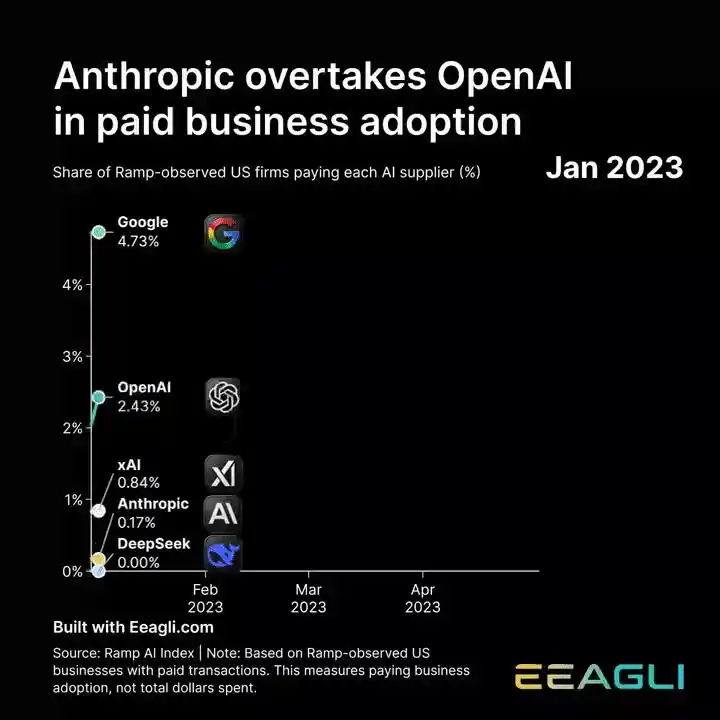
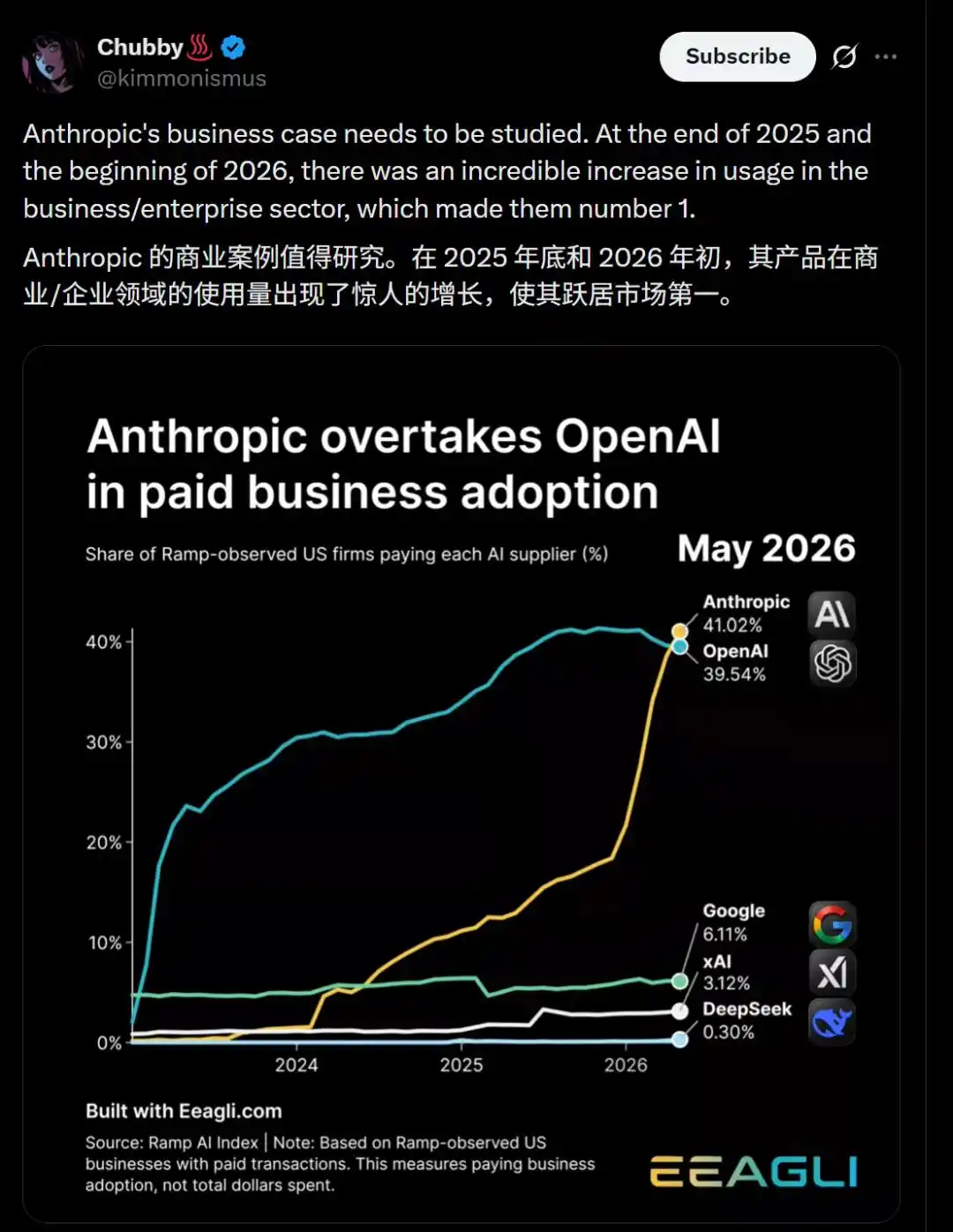
According to the latest 2026 report from the American institution Ramp: In the share of enterprise AI spending in the US, Anthropic captured 34.4% in April 2026, surpassing OpenAI's 32.3% for the first time.
By June 2026, as the overall enterprise AI adoption rate broke through the 50% barrier, Anthropic's share surged to 41%, leaving OpenAI far behind.
Anthropic is ascending to become the new king of global AI commercialization with the posture of 'quietly making a fortune'.
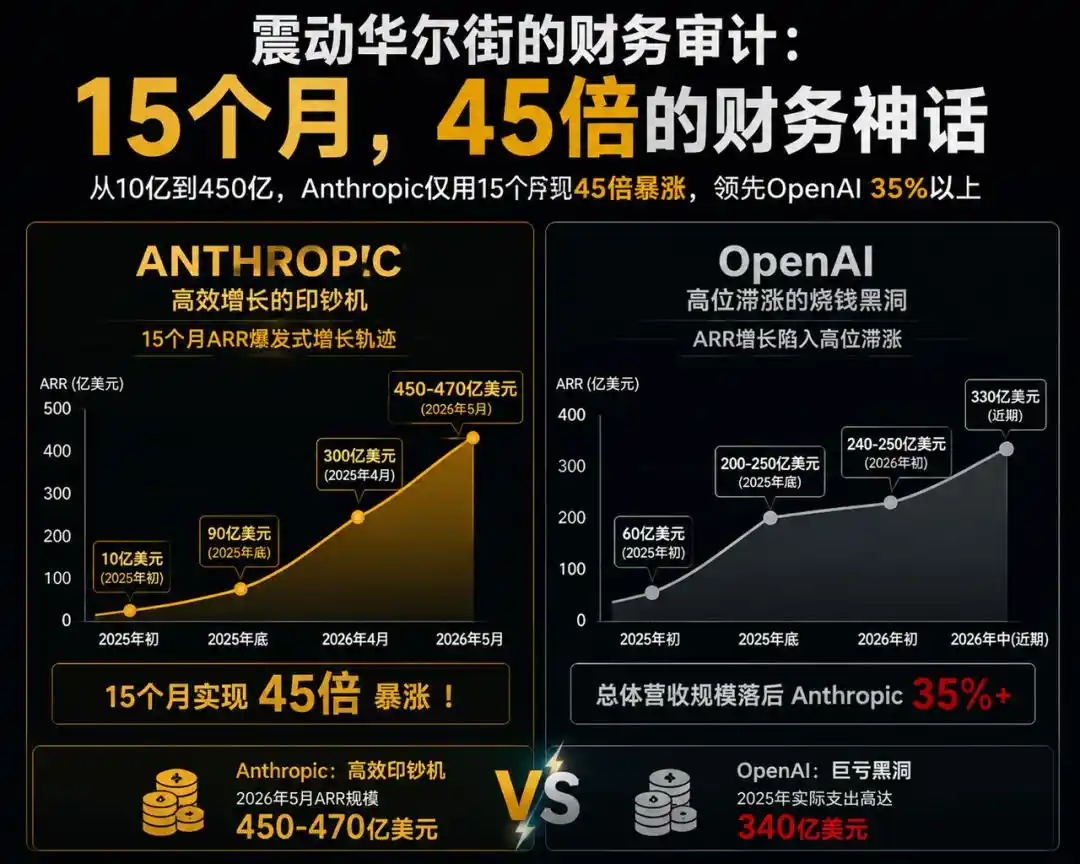
A Financial Audit That Shook Wall Street: 15 Months, A 45x Financial Myth
Comparing the core financial data of the two companies reveals a suffocating contrast.
In software industry history, Salesforce was once seen as the ultimate growth myth—it achieved approximately $38 billion in revenue in its 2025 fiscal year.
However, Anthropic is using a pace bordering on science fiction to crush all previous records to dust.
Looking back at Anthropic's explosive trajectory over the past 15 months—
Early 2025: At this time, Anthropic's ARR hovered around just $1 billion.
End of 2025: As large models deeply penetrated enterprise workflows, its ARR instantly soared to $9 billion.
April 2026: Anthropic dropped a bombshell, officially announcing its ARR had broken through the $30 billion mark.
May 2026: Its ARR had already approached or reached an astonishing $45 to $47 billion!
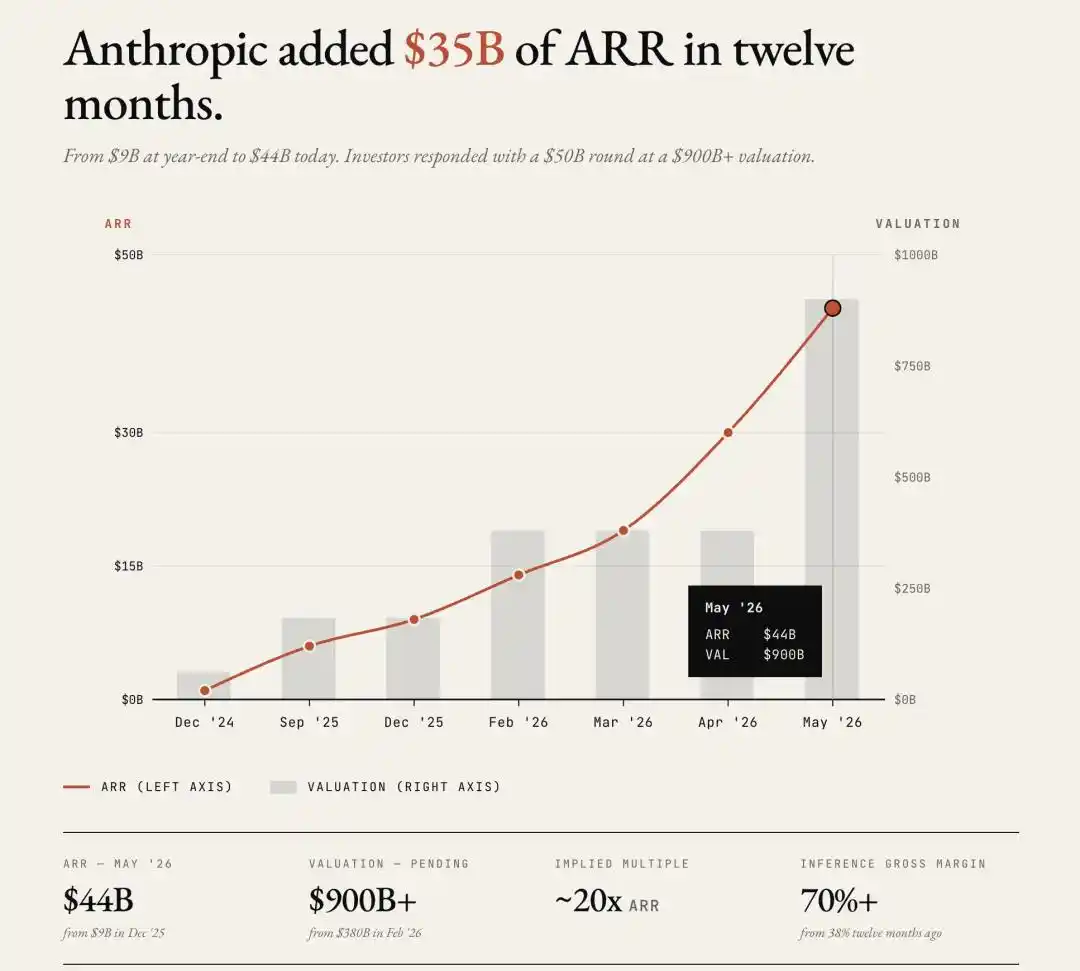
From $1 billion to $45 billion, Anthropic achieved a 45x surge in just 15 months!
This is an unprecedented rate of expansion in human commercial history.
In contrast, OpenAI fell into an awkward state of 'stagnant growth at a high level'.
In 2025, OpenAI's ARR grew laboriously from $6 billion to between $20 and $25 billion. By early 2026, this figure hovered around $24 to $25 billion for a long time.
Although OpenAI recently managed to pull its ARR up to $33 billion, by this time, Anthropic already led OpenAI by over 35% in total revenue scale!
Ability to Generate Cash Flow: One Money Printing Machine, One Bottomless Pit
What keeps investors up at night even more is the completely opposite cash-generating abilities of the two companies.
OpenAI is a huge loss-making black hole.
According to disclosures by The Wall Street Journal and Reuters, OpenAI faced devastating losses in 2025, with its book loss amounting to $38 billion, and actual annual expenditures of $34 billion.
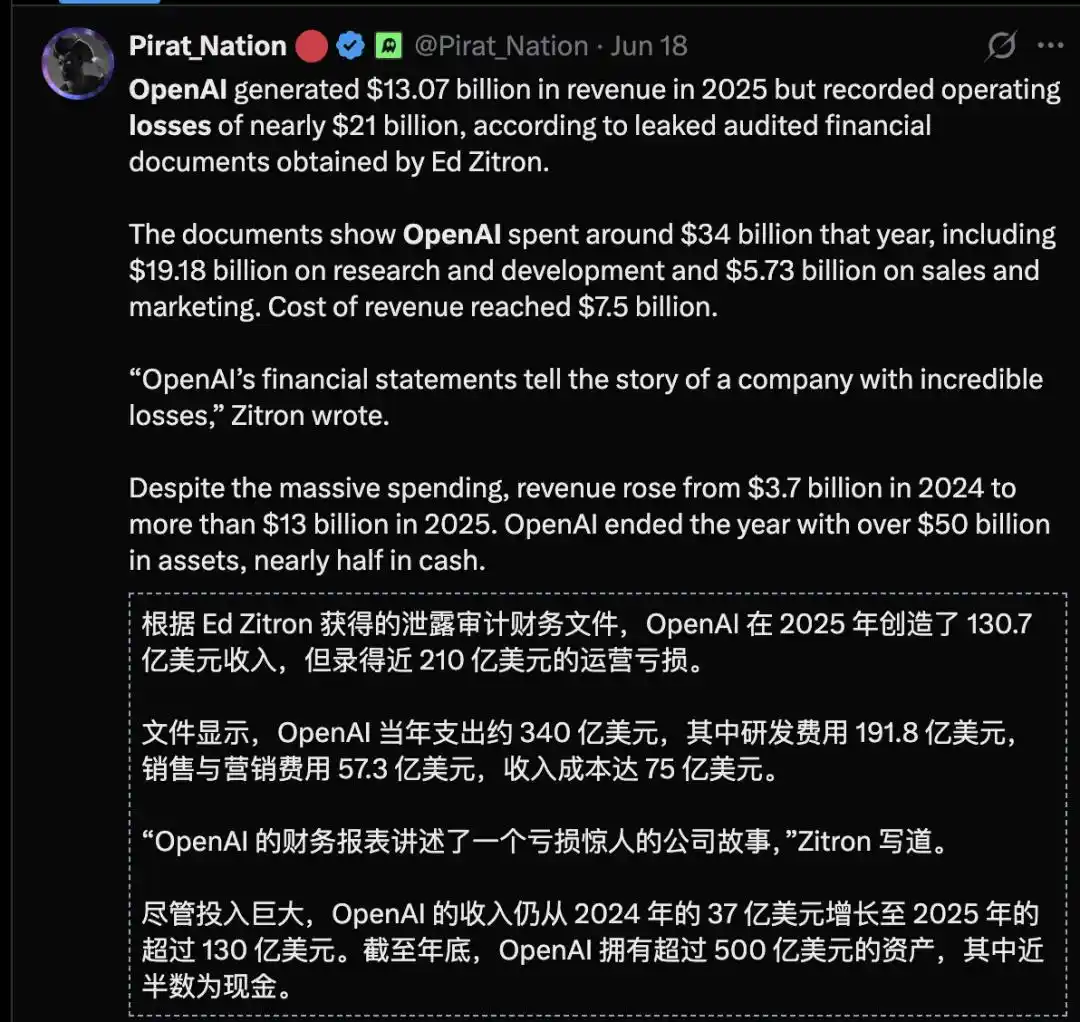
A severe imbalance between income and expenditure and frenzied compute capital expenditures have pushed its break-even point indefinitely into the future—it is not expected to be achieved until 2030.
In contrast, Anthropic is an efficient money printing machine.
Industry insiders reveal that Anthropic's actual expenditure on core large model training is only a quarter of OpenAI's!
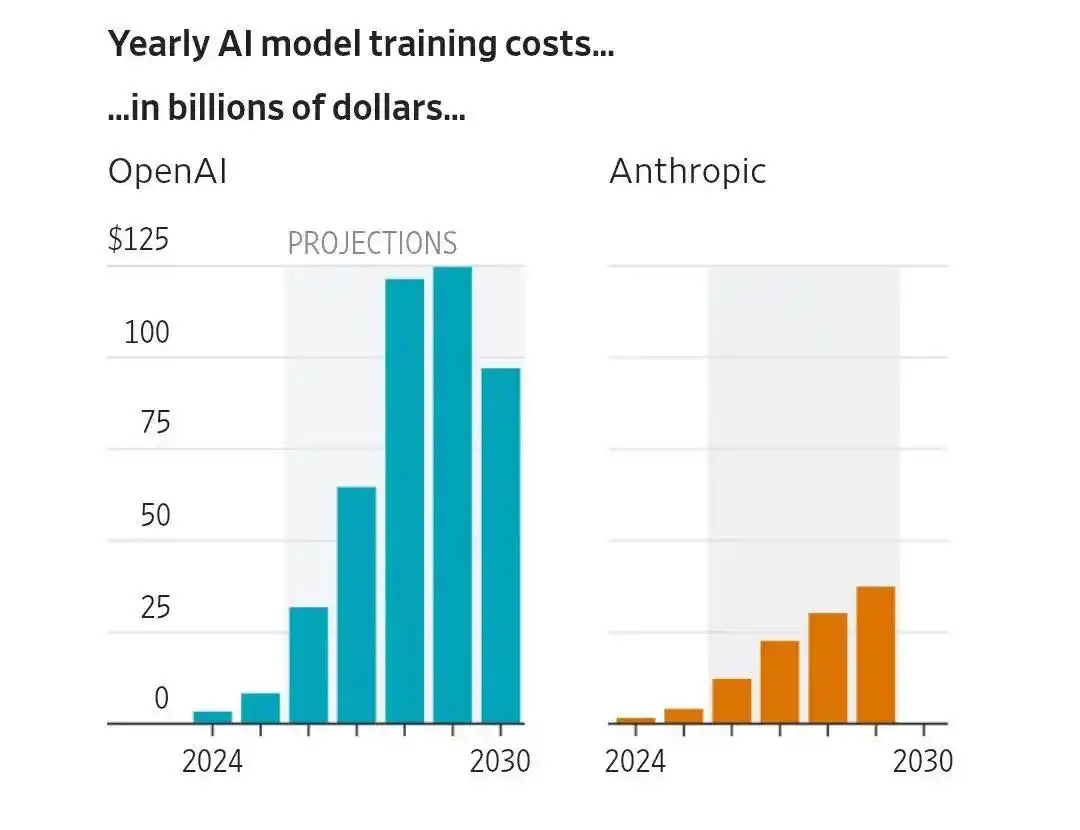
By 2030, OpenAI is projected to have annual model training expenditures reaching $125 billion.
Anthropic's projection for the same period is approximately $30 billion.
In Q1 2026, Anthropic generated $4.8 billion in revenue; in Q2, single-quarter revenue is expected to double sequentially to $10.9 billion. Even more staggering: Anthropic is expected to achieve its first-ever profit in Q2 2026, with operating profit projected at $559 million.
Financial planning shows Anthropic expects to achieve positive cash flow in 2027, with a 2028 revenue target of $70 billion and gross margin approaching 77%.
Just in May 2026, Anthropic completed a $6.5 billion Series H funding round, with its latest valuation pushed to $965 billion, completely leaving OpenAI behind.
King of the B-Side: Traffic is Poison, Enterprises are the Antidote
Why did two companies with similar technological paths, both born from top Silicon Valley labs, diverge onto such drastically different destinies in just over a year?
The answer lies in their DNA and revenue structures.
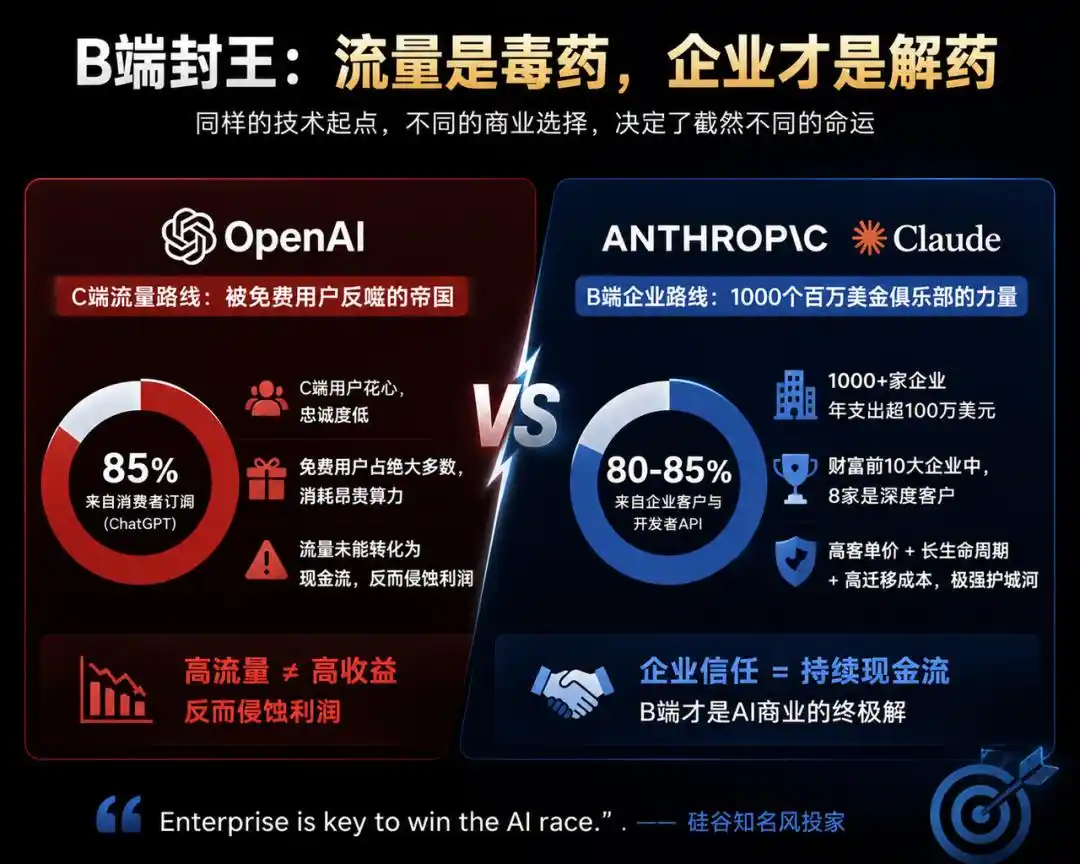
This is the ultimate showdown between a 'C-side traffic route' and a 'B-side enterprise route'.
OpenAI's C-Side Dilemma: An Empire Eaten by Free Users
Opening OpenAI's revenue statement reveals a huge hidden danger: a whopping 85% of its total revenue comes from ChatGPT consumer subscriptions.
On the surface, ChatGPT boasts hundreds of millions of active users weekly, looking infinitely glorious. But tearing off the facade reveals a fatal flaw hidden within.
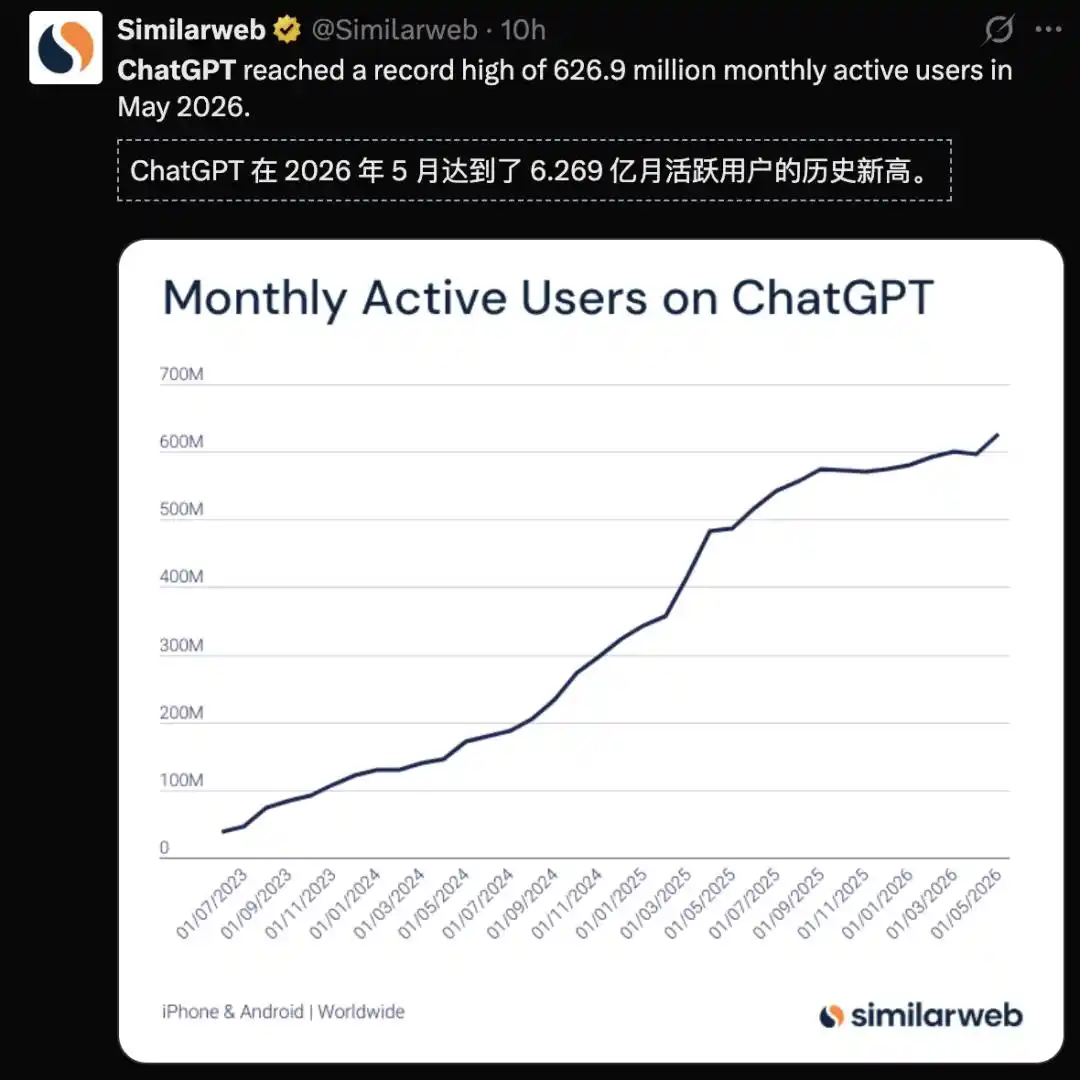
C-side users are the most fickle and least loyal group under the sun.
Even more deadly, the vast majority are freeloading free users. Every conversation is voraciously consuming GPU computing power. The traffic does not translate into equivalent cash flow but instead becomes a heavy burden.
Anthropic's B-Side Philosophy: The Power of a 1000-Member Million-Dollar Club
Anthropic's revenue structure is precisely the mirror opposite: 80% to 85% of its total revenue is rooted in B-side enterprise customers and developer APIs.
Anthropic placed all its chips on the enterprise market from day one.
In 2026, this strategy ushered in an avalanche of dividends: Its client roster already includes over 1,000 industry giants, each spending over $1 million annually on Anthropic's AI.
8 out of the top 10 Fortune companies are already deep Anthropic clients. When new enterprise buyers entering the market choose a large model supplier, a staggering 70% prefer Anthropic first.
A typical case is KPMG, which didn't pilot a partnership with OpenAI but instead granted Anthropic the highest level of access—rolling out Claude comprehensively to its global workforce of 276,000 employees, deeply integrating it into core processes like auditing, taxation, and consulting.
When Claude's APIs are deeply intertwined with Slack, internal ERPs, code repositories, databases, and workflows, and possess customized 'long-term memory' and a robust 'Constitutional AI safety defense mechanism', enterprises will not easily uproot this AI brain just to save a few dollars.
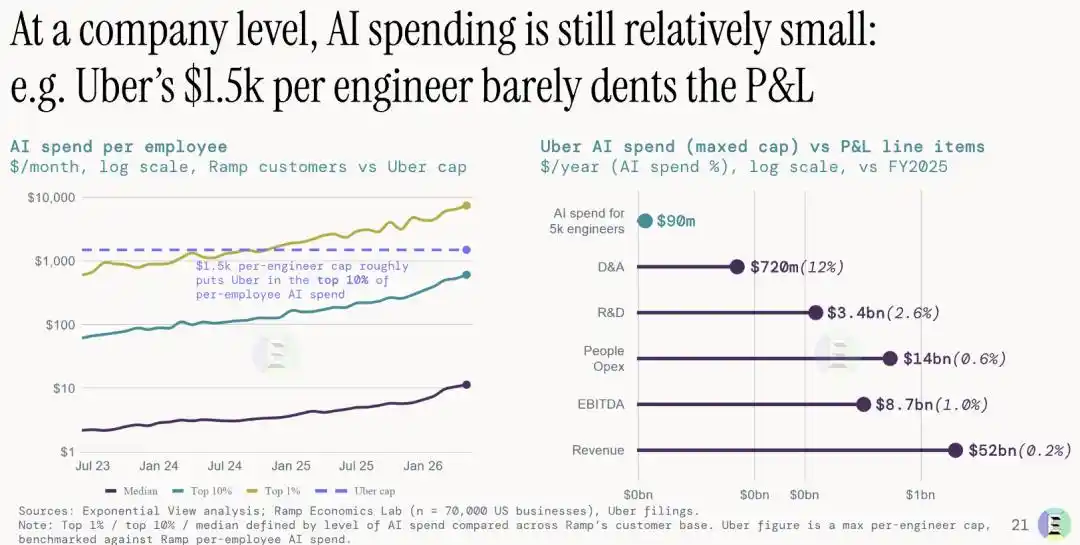
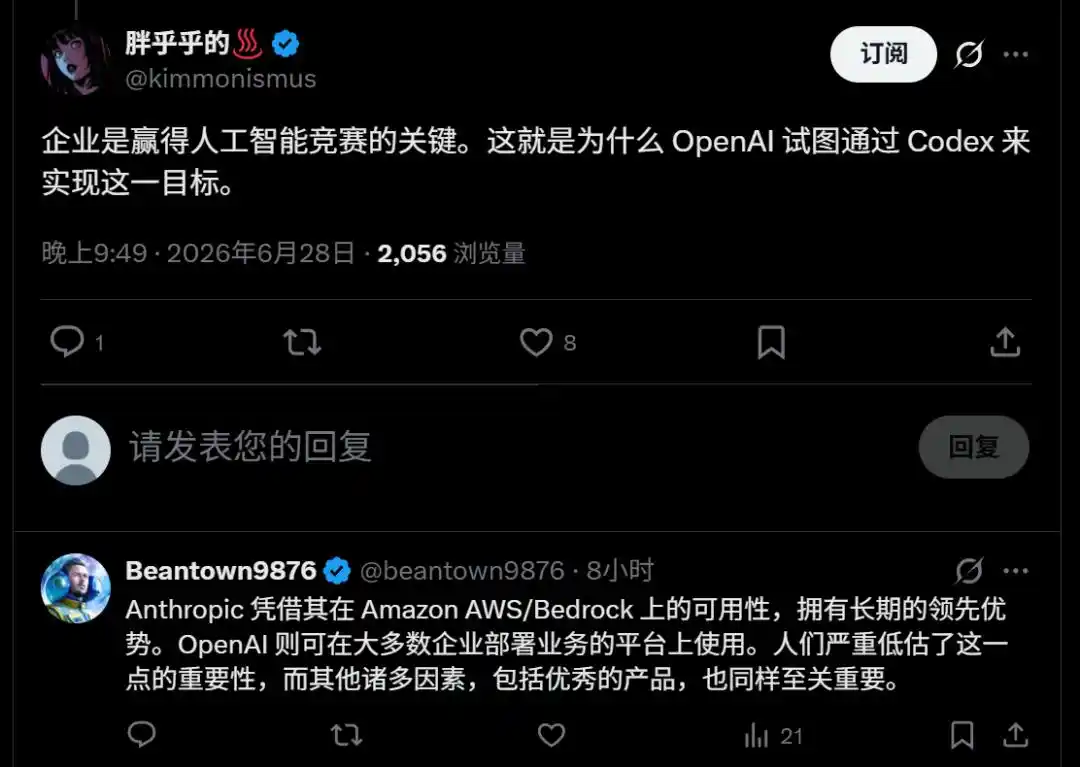
The enterprise side is the only solution to winning the AI arms race.
Although OpenAI later realized this and tried desperately to catch up with Codex and Enterprise GPT, it had already fallen behind in commercial trust.
The $1.7 Million 'Black Bill' and the Agent Billing Crisis
However, there are no perfect commercial myths in the world. Even on the crown of Anthropic, the new king who swept up $45 billion in ARR, hidden landmines are buried.
As large models transform into autonomous agents, the industry's most fundamental billing logic and security vulnerabilities are beginning to expose black holes.
The $1.7 Million Black Bill: The Money-Devouring Beast of Frenzied Retries
Recently, an article in *The Information* sent shockwaves through the industry: An audit found that certain major clients of Anthropic were overcharged a full $1.7 million on their API bills without their knowledge.

This exposes the most terrifying billing black hole in the commercialization of Agents.
In the traditional API era, a user inputs a sentence, the model replies with one, and the billing was per call, transparent, and completely controlled.
But now, enterprises are massively deploying Agents to perform complex tasks. In this process, once an Agent encounters a setback in one of its intermediate execution steps, these AI Agents start to spontaneously, blindly, and endlessly retry in the background.
Every retry step consumes thousands upon thousands of tokens. This casts a shadow over the core trust chain of large model commercialization.
Wall Street has also begun questioning Anthropic's hefty $45 billion ARR.
The focal point of controversy: Anthropic may have aggressively counted the channel revenue promised by its strategic investors (Google AWS, Amazon, etc.) in cooperation agreements into its native ARR.
Global Endgame Fantasy: Could the Chinese Large Models' Big Move Be a Dimensionality Reduction Strike?
Just as OpenAI and Anthropic are locked in fierce battle on their dollar-piled thrones, on the other side of the ocean, a brand new logic is brazenly taking shape.
A spicy prophecy posted on X by the well-known Silicon Valley influencer Xiaoyin Qu tore open another side of this endgame battle:
'The ultimate script for Chinese large models is actually very simple: Use completely free top-tier large models to utterly kill the paid myth of OpenAI and Anthropic. First, achieve industry-wide free access, then leverage China's extremely cheap electricity costs to export inference capabilities as an incredibly cheap resource globally.
Imagine a world like this: Global enterprises no longer need to pay hundreds of billions of dollars in expensive licensing fees but can access AI capabilities of comparable intelligence at zero cost. What will happen then?'
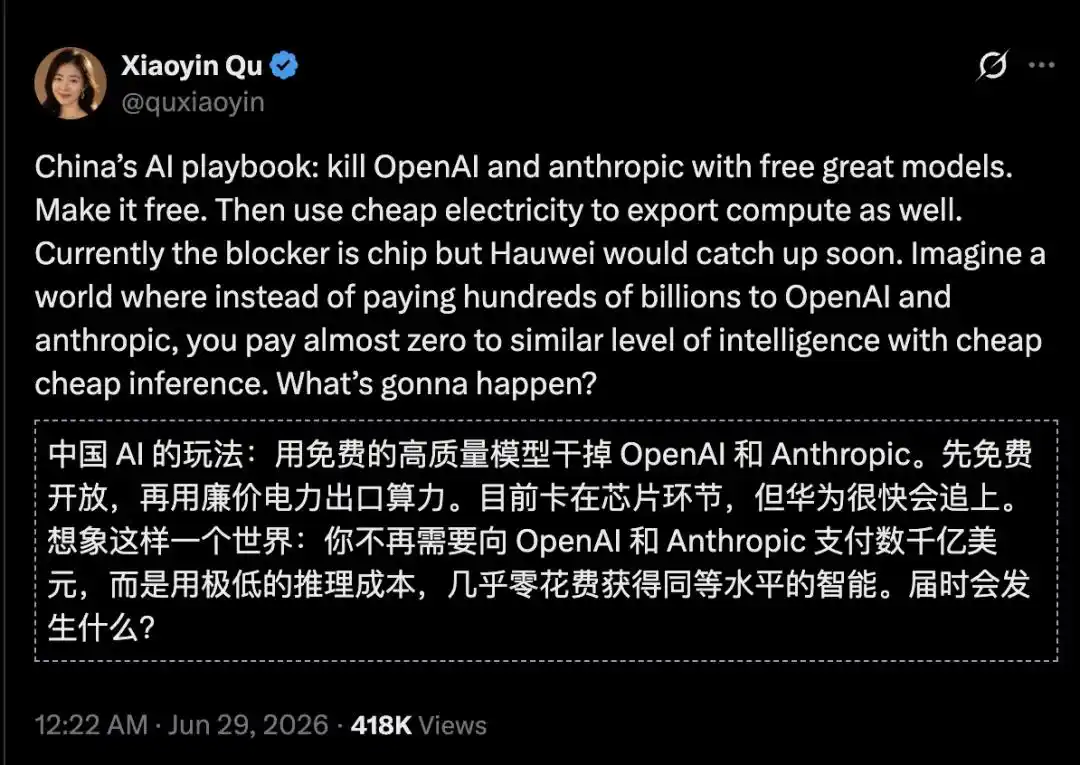
This is a terrifying prospect for Silicon Valley elites.
If within the next 1-2 years, the marginal cost of high-tier models is indeed driven down by Chinese manufacturers to approach infinitely close to zero, then the $45 billion ARR and 77% gross margin that Anthropic prides itself on today will instantly lose their foundation.
Could a dimensionality reduction strike descend from another dimension?
References:
https://x.com/StockMKTNewz/status/2070880187533721738260629
This article is from the WeChat public account "新智元" (New Zhiyuan), author: ASI启示录 (ASI Apocalypse).