Anthropic Tests "Lobster" Conway: Supports Independent UI, Webhook Activation, and Custom Extension Standards

marsbitPubblicato 2026-04-02Pubblicato ultima volta 2026-04-02

Introduzione

Anthropic is actively developing "Conway," a persistent agent solution designed to provide Claude with an always-on, independently running intelligent environment. It features a standalone UI instance, operating as a traditional chat interface and more of a dedicated workspace. Conway can directly control browsers, connect to external services, and integrate Claude Code for deeper code execution and task handling. It supports Webhook-based invocation, enabling external services or events to trigger automated workflows. Additionally, Conway will support for extensions through the upcoming CNW ZIP standard, allowing developers to build custom tools, UI tabs, and context handlers, similar to an app store ecosystem. This enhancement aims to transform Claude from a reactive conversational tool into a proactive, multi-step task assistant, positioning it as a strong competitor in the AI agent space and advancing the trend toward always-on AI capabilities.

Anthropic is actively developing a persistent agent solution named Conway, aimed at creating an always-on, independently running intelligent environment for Claude.

According to related information, Conway will feature an independent UI instance, moving beyond the traditional chat interface to operate as a standalone agent workspace. It will be capable of directly controlling browsers, connecting external connectors, and integrating Claude Code functionality (potentially involving Epitax-related features), enabling deeper code execution and task handling. Simultaneously, Conway supports invocation via Webhooks, allowing external services or events to trigger agent workflows, thereby boosting automated response capabilities.
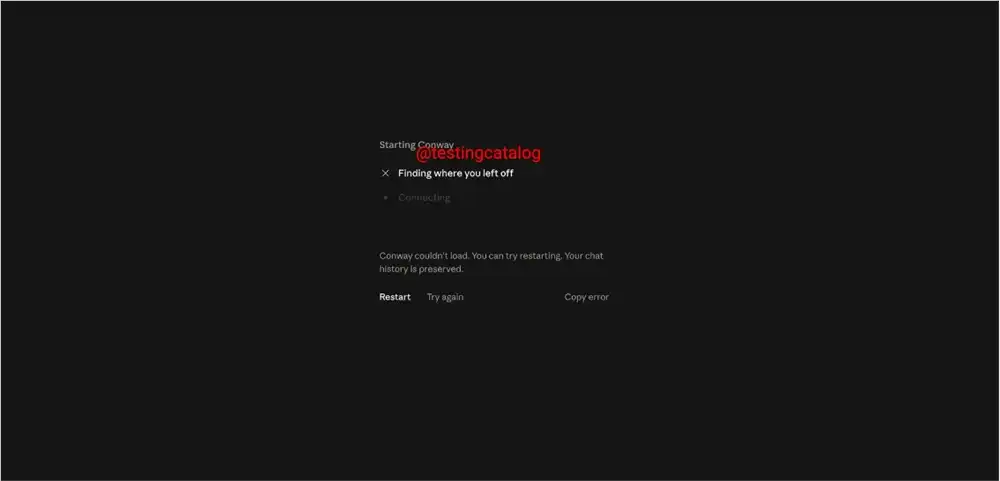
Additionally, Conway will support an extension system. Anthropic is set to launch the CNW ZIP standard, which developers can use to easily build custom tools, UI tabs, and context handlers, forming an ecosystem expansion capability similar to an "app store." This will significantly enhance Claude's flexibility and scalability in handling complex tasks.
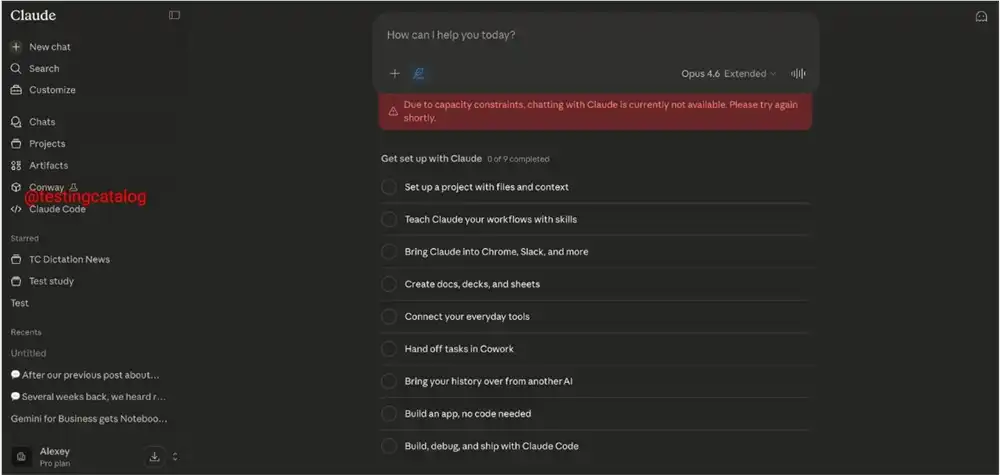
The emergence of Conway is seen as a key strategic move by Anthropic in the AI agent domain, aiming to transform Claude from a passive conversational tool into a persistent assistant capable of continuous operation and autonomous execution of multi-step tasks. It not only supports browser automation and event triggering but also strengthens code generation, execution, and problem-solving capabilities through native integration of Claude Code.

Industry observers believe that Conway has the potential to become a strong competitor to rivals like OpenClaw, driving the advancement of AI agents toward an "always-on" direction. The era where Claude can truly "show its prowess" may be just around the corner.


Domande pertinenti

QWhat is the name of the persistent agent solution being developed by Anthropic for Claude?

AThe persistent agent solution being developed by Anthropic for Claude is named Conway.

QHow does Conway differ from a traditional chat interface?

AConway differs by being an independent UI instance that operates as a standalone agent workspace, capable of directly controlling the browser, connecting to external connectors, and integrating Claude Code functionality.

QWhat method does Conway support to allow external services or events to trigger its work?

AConway supports being invoked via Webhook, which allows external services or events to trigger the agent's work and enhance automated response capabilities.

QWhat is the name of the extension standard that will allow developers to build custom tools for Conway?

AThe extension standard that developers can use to build custom tools, UI tabs, and context handlers for Conway is called the CNW ZIP standard.

QHow is Conway expected to transform the role of Claude according to the article?

AConway is expected to transform Claude from a passive conversational tool into a persistent assistant that can run continuously and autonomously execute multi-step tasks, moving towards an 'always-on' AI agent direction.

Letture associate

Aave Is Surrendering the Throne of DeFi Lending Due to Its Own Stupidity

Aave, a leading DeFi lending protocol, is facing a severe crisis and losing its dominant market position due to its poor handling of a recent security incident. The crisis began when Kelp DAO suffered a hack resulting in a loss of $292 million in rsETH. In the aftermath, approximately $17.2 billion in funds flowed out of Aave as user panic escalated. The article criticizes Aave's crisis management as "extremely foolish." Instead of promptly offering reassurance or committing to cover the potential bad debt—estimated between $123.7 million and $230.1 million, which Aave could have afforded—the protocol initially deflected blame, emphasizing that its code was not at fault. This delay and lack of a clear guarantee led to widespread user anxiety, triggering a bank run-like scenario where users withdrew funds or borrowed aggressively from other pools, causing liquidity shortages. Meanwhile, Aave’s competitor Spark—a fork of Aave’s own code—has benefited significantly. Having removed support for rsETH months earlier, Spark avoided any losses from the incident and has since seen its TVL grow by nearly $2 billion, attracting major deposits such as over $1.24 billion from Justin Sun. Spark has actively capitalized on the situation, publicly criticizing Aave’s security reputation. Although Aave’s founder Stani eventually announced a relief plan named "DeFi United" with several partners and a personal donation, the damage to user trust and capital outflows may be irreversible. The article concludes that Aave is losing its throne in DeFi lending to aggressive competitors like Spark, Morpho, and Jupiter Lend.

Odaily星球日报59 min fa

Aave Is Surrendering the Throne of DeFi Lending Due to Its Own Stupidity

Odaily星球日报59 min fa

Trading

Spot
Futures
活动图片




