All about the crypto rally ‘no one is googling’ – What does this mean for investors?

ambcryptoPubblicato 2026-03-18Pubblicato ultima volta 2026-03-18

Introduzione

The cryptocurrency market is showing signs of recovery, with Bitcoin holding near $74,160 and Ethereum trading at $2,327, while the total market cap reached $2.53 trillion. However, Google Trends data reveals a contradiction: public interest and online searches for major cryptocurrencies like BTC, ETH, XRP, and ADA are at multi-month lows. This suggests the rally may be driven by institutional accumulation rather than retail FOMO. Market sentiment remains cautious, with the Fear & Greed Index still in "Fear" territory. While Santiment data shows positive discussions around major assets, retail confidence has not fully returned. This quiet recovery may indicate significant growth potential before the next major surge.

The cryptocurrency market is starting to show signs of recovery, with most major coins trading in the green after February’s slump. In fact, at press time, the total crypto market cap had climbed to as high as $2.53 trillion.

While Bitcoin [BTC] was holding strong at around $74,160, Ethereum [ETH] traded at $2,327 on the charts. Similarly, XRP was valued at $1.51 and Cardano was trading $0.28 – All showing signs of positive movement.

Still, there is an interesting contradiction in the market that must be looked at. Despite the prices rising, Google Trends data revealed that online searches and public interest in major cryptocurrencies are now at multi-month lows.
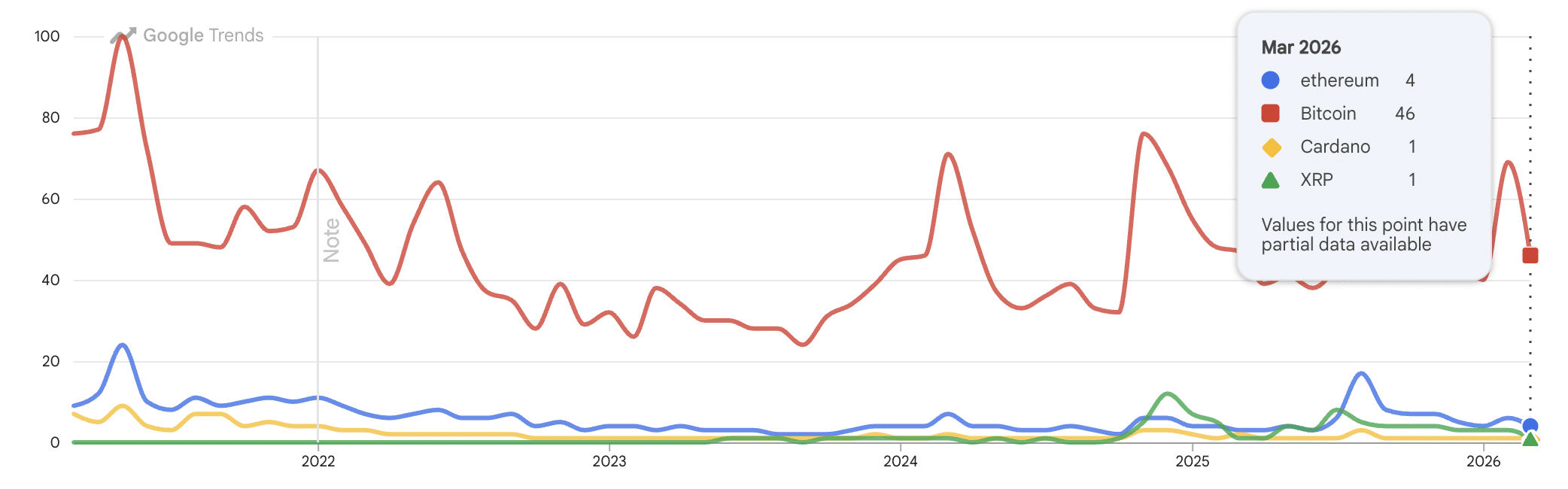
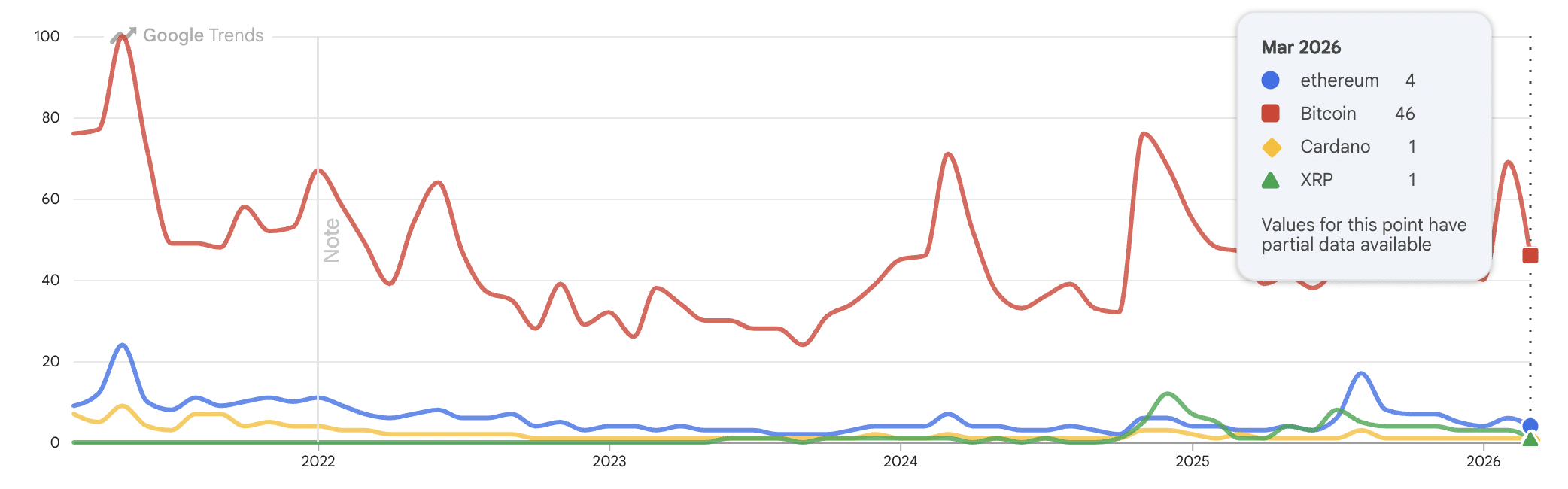
Source: Google Trends

Normally, strong rallies attract a lot of retail attention and excitement. However, the reality right now is quite different.

This suggested that the prevailing price movement may be driven more by institutional investors quietly accumulating assets, rather than retail traders rushing in with FOMO.

Price action and Google Trends move in opposite directions

Weighing in on the notion, Joao Wedson, founder and CEO of Alphractal, noted,

Google Trends data for BTC, ETH, XRP, and ADA shows that none of these cryptocurrencies are generating strong social interest right now.

This may also be indicative of the fact that the crypto market is exhibiting a silent recovery. Normally, Bitcoin nearing $75,000 would trigger strong retail excitement, with more searches and online discussions.

However, this time, the hype is missing. While prices may be rising, retail investors have not fully returned – Evidence that the current move may be driven more by quieter capital inflows.

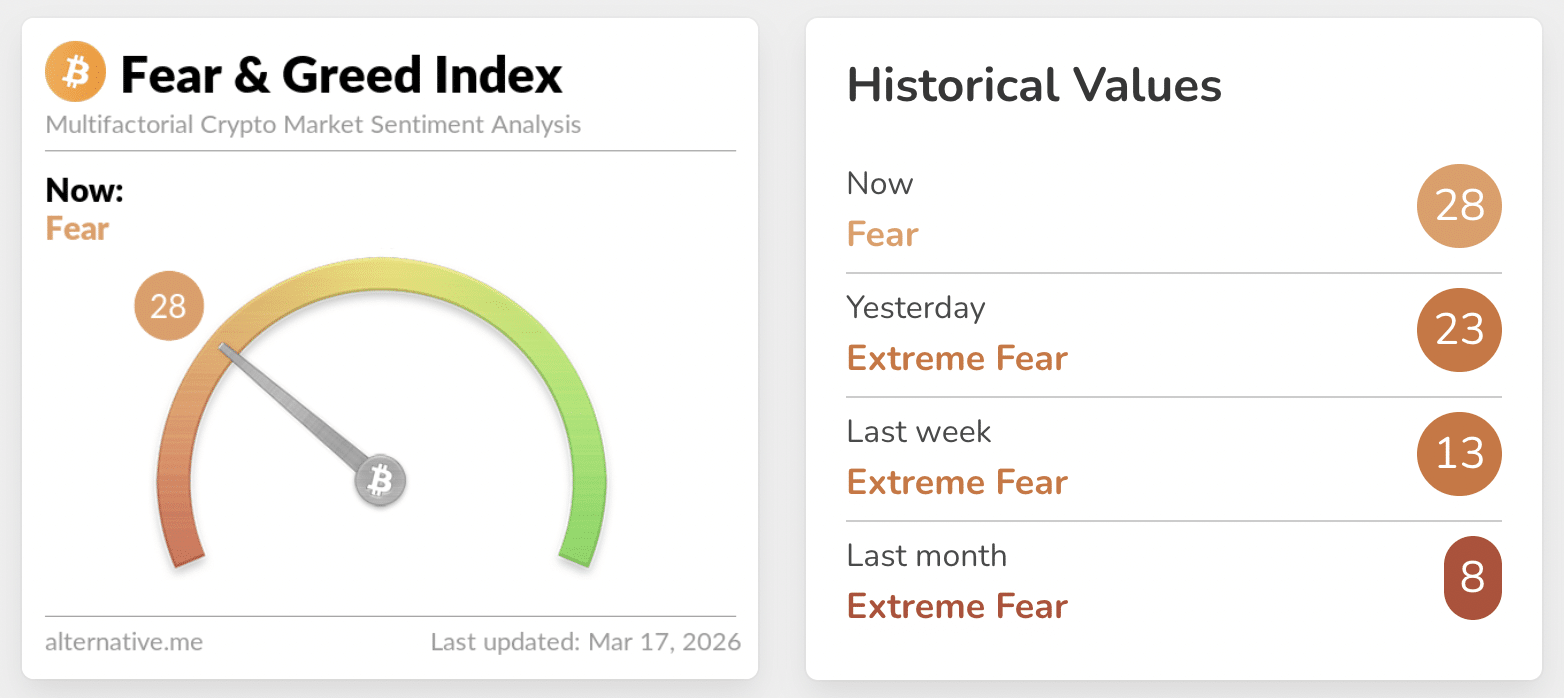
One reason for the hesitation is the fear left from recent market downturns. For instance – The Crypto Fear & Greed Index is still in the “Fear” zone, though this was an improvement from the “Extreme Fear” seen a day prior.
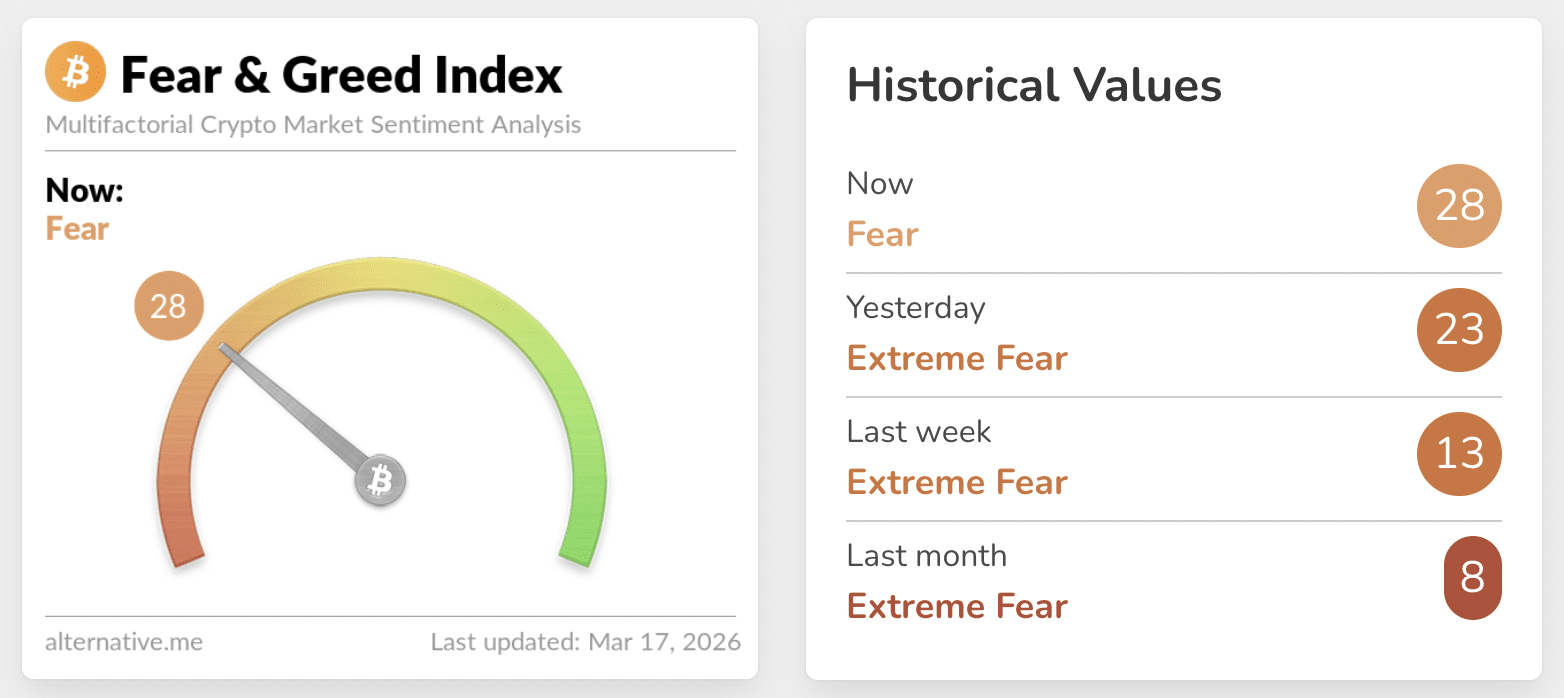
Source: Alternative

Different sentiments for major coins

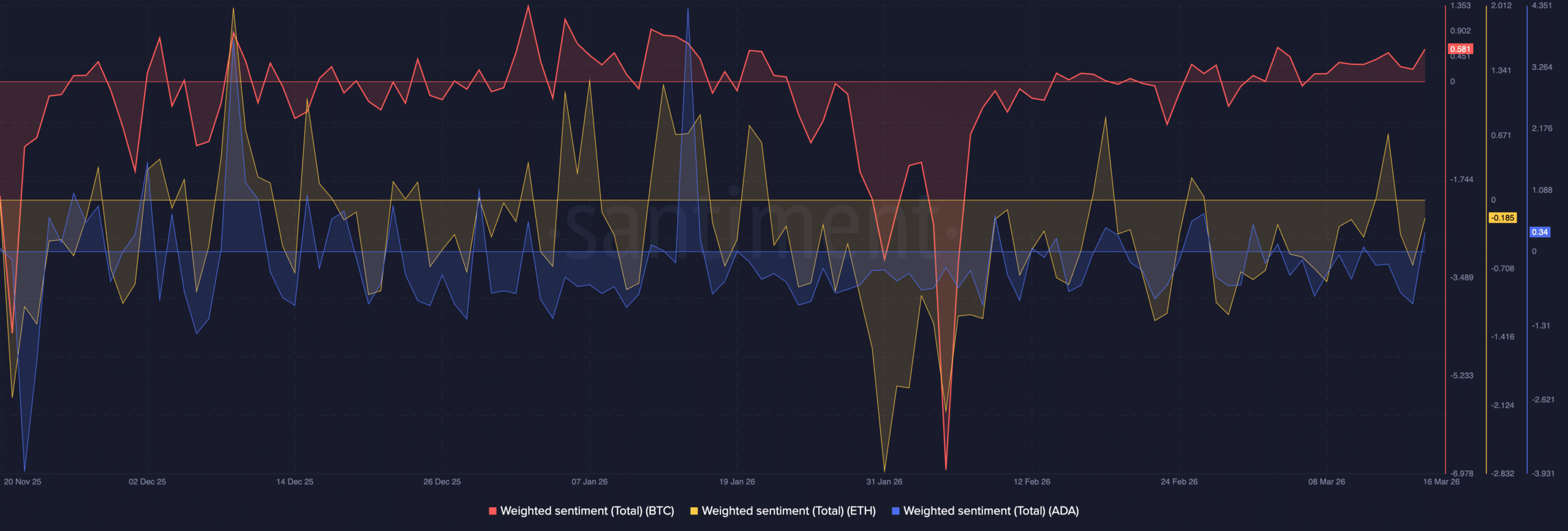
On the contrary, Santiment data underlined mixed sentiment across major cryptocurrencies.

According to the same, Bitcoin has the strongest sentiment, with mostly positive discussions and a reputation as the safest crypto asset.
Source: Santiment

Ethereum exhibited mixed sentiment as investors balance its long-term potential with short-term concerns. Meanwhile, Cardano [ADA] was recorded to have the weakest sentiment, with many investors still cautious about its near-term outlook.

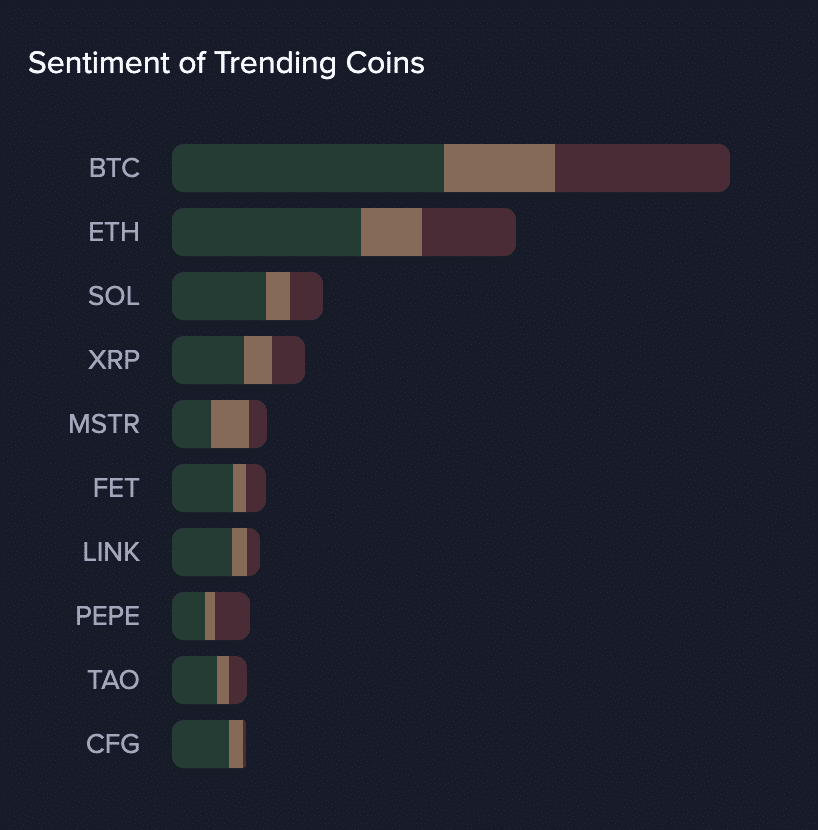
Worth noting, however, that even though the overall social interest has been low, Santiment’s trending coin data highlighted a positive trend.
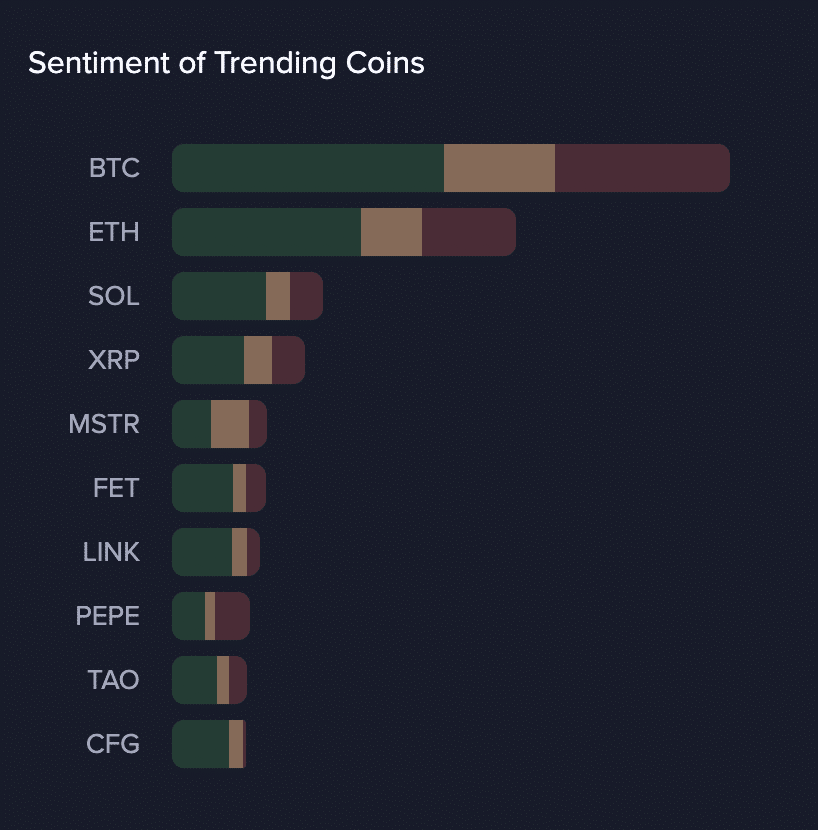
Source: Santiment

Major assets like Bitcoin, Ethereum, Solana [SOL], and XRP have continued to dominate discussions too, with sentiment leaning more towards the positive side.

Put simply, it can be argued that it is a very confusing trend in the market where retail investors are still figuring out the mixed market moves.

What’s more?

This also aligns with a recent analysis covered by AMBCrypto, which noted that coins such as Bitcoin, Ethereum, Dogecoin [DOGE], and Tether continue to trend online even during periods of extreme fear.

Overall, the market might just be in a pre-FOMO phase. While the prices have started to recover, public confidence is yet to fully return.

For experienced market observers, this quiet recovery could be a positive sign – A sign that there may still be significant room for growth before retail investors return and push the next major rally.


Final Summary

  • Market sentiment is still cautious, with the Fear & Greed Index staying in the “Fear” zone despite improving conditions.
  • If confidence improves and retail interest rises, the quiet recovery could set the stage for the next major market surge.


Crypto di tendenza

Domande pertinenti

QWhat is the current state of the cryptocurrency market according to the article?

AThe cryptocurrency market is showing signs of recovery, with most major coins trading positively and the total market cap reaching as high as $2.53 trillion. However, public interest, as measured by Google Trends, is at multi-month lows.

QWhat does the divergence between rising prices and low Google search interest suggest about the market rally?

AThe divergence suggests that the current price movement is likely driven more by institutional investors quietly accumulating assets rather than retail traders entering the market with FOMO (Fear Of Missing Out).

QWhat is the current reading of the Crypto Fear & Greed Index, and what does it indicate?

AThe Crypto Fear & Greed Index is in the 'Fear' zone, which is an improvement from the 'Extreme Fear' seen the day before. This indicates that market sentiment is still cautious despite improving price conditions.

QWhich major cryptocurrency was noted as having the strongest sentiment, and which had the weakest?

ABitcoin (BTC) was noted as having the strongest sentiment, with mostly positive discussions. Cardano (ADA) was recorded to have the weakest sentiment, with many investors remaining cautious about its near-term outlook.

QWhat phase does the article suggest the market might currently be in, and what could it lead to?

AThe article suggests the market might be in a 'pre-FOMO phase,' where prices have started to recover but public confidence has not fully returned. This quiet recovery could set the stage for the next major market surge if retail investor interest rises.

Letture associate

US and Japan's Unprecedented Joint Action in 30 Years Marks End of Yen Carry Trade Era

Japan and the U.S. conducted a rare coordinated intervention in the foreign exchange market around August 3rd to stem the yen's sharp depreciation. U.S. Treasury Secretary Scott Bessette's notepad, photographed by Reuters, revealed plans for a $5-10 billion yen-buying operation. Following official confirmation, the USD/JPY pair plunged from near 164 to around 155-156. The intervention marks a significant shift as the U.S. moved from verbal support to practical coordination. While the core carry trade logic—exploiting the higher U.S. interest rates—remains intact, the risk structure has changed. Traders must now account for potential repeated bilateral actions, altering the risk-reward calculation for yen shorts. The intervention's immediate effect is forcing leveraged positions to unwind, amplifying the yen's rebound. However, analysts note this does not signal the end of the yen carry trade. The fundamental driver—the wide interest rate differential between the U.S. (3.50%-3.75%) and Japan (1%)—persists. The action is seen more as buying time for the Bank of Japan's gradual policy normalization while mitigating imported inflation pressures. To avoid destabilizing the U.S. Treasury market during intervention, authorities utilized the Fed's FIMA repo facility, allowing Japan to obtain dollar liquidity using its Treasury holdings as collateral instead of selling them. The move aims to contain spillover risks. While creating short-term volatility and compressing leverage for yen bears, the long-term trend for the yen will ultimately depend on the convergence of U.S. and Japanese monetary policies, not unilateral market operations. The current action is narrower in scope than historical agreements like the Plaza Accord, focused on curbing excessive yen weakness rather than engineering a broad-based dollar decline.

marsbit19 min fa

US and Japan's Unprecedented Joint Action in 30 Years Marks End of Yen Carry Trade Era

marsbit19 min fa

Why Hasn't Bitcoin Made the Expected Surge? There Are Both Positive and Negative Data

Analytical firm Glassnode reports Bitcoin retreated to around $62,600 after failing to sustain above $66,000. Weak spot market demand and defensive positions in derivatives are applying downward pressure. However, structural support remains from resilient long-term holders, surging on-chain activity, and renewed inflows into Bitcoin ETFs. The price action reflects weakened spot momentum, with low trading volume and persistent seller pressure keeping Bitcoin in a consolidation phase with limited breakout potential. While open interest in derivatives has fallen, funding rates have risen again, and options investors maintain a cautious stance. Demand for downside protection has increased. Positively, Bitcoin ETFs have seen renewed net inflows and trading volume, indicating institutional repositioning. On-chain metrics show a significant spike in active addresses and adjusted transaction volume, pointing to increased network usage. The historically low ratio of short-term to long-term holders suggests long-term conviction remains firm. However, overall market profitability continues to decline as the proportion of Bitcoin in profit nears cycle lows, indicating a trend of loss realization and de-risking by investors. Glassnode concludes the Bitcoin market is in a transitional phase. Structural support is present, but valuation pressure, insufficient spot demand, and defensive derivatives positioning continue to limit overall risk appetite.

cryptonews.ru49 min fa

Why Hasn't Bitcoin Made the Expected Surge? There Are Both Positive and Negative Data

cryptonews.ru49 min fa

Trading

Spot

Articoli Popolari

Come comprare ONE

Benvenuto in HTX.com! Abbiamo reso l'acquisto di Harmony (ONE) semplice e conveniente. Segui la nostra guida passo passo per intraprendere il tuo viaggio nel mondo delle criptovalute.Step 1: Crea il tuo Account HTXUsa la tua email o numero di telefono per registrarti il tuo account gratuito su HTX. Vivi un'esperienza facile e sblocca tutte le funzionalità,Crea il mio accountStep 2: Vai in Acquista crypto e seleziona il tuo metodo di pagamentoCarta di credito/debito: utilizza la tua Visa o Mastercard per acquistare immediatamente HarmonyONE.Bilancio: Usa i fondi dal bilancio del tuo account HTX per fare trading senza problemi.Terze parti: abbiamo aggiunto metodi di pagamento molto utilizzati come Google Pay e Apple Pay per maggiore comodità.P2P: Fai trading direttamente con altri utenti HTX.Over-the-Counter (OTC): Offriamo servizi su misura e tassi di cambio competitivi per i trader.Step 3: Conserva Harmony (ONE)Dopo aver acquistato Harmony (ONE), conserva nel tuo account HTX. In alternativa, puoi inviare tramite trasferimento blockchain o scambiare per altre criptovalute.Step 4: Scambia Harmony (ONE)Scambia facilmente Harmony (ONE) nel mercato spot di HTX. Accedi al tuo account, seleziona la tua coppia di trading, esegui le tue operazioni e monitora in tempo reale. Offriamo un'esperienza user-friendly sia per chi ha appena iniziato che per i trader più esperti.

435 Totale visualizzazioniPubblicato il 2024.12.12Aggiornato il 2026.06.02

Come comprare ONE

Discussioni

Benvenuto nella Community HTX. Qui puoi rimanere informato sugli ultimi sviluppi della piattaforma e accedere ad approfondimenti esperti sul mercato. Le opinioni degli utenti sul prezzo di ONE ONE sono presentate come di seguito.

活动图片