After Nvidia's Earnings, Why Is the Market Still "Yawning"?

marsbitPubblicato 2026-02-26Pubblicato ultima volta 2026-02-26

Introduzione

Nvidia's earnings report, often dubbed the "Super Bowl" of earnings season, met expectations, yet its stock became stuck around the key $200 level in after-hours trading. Surprisingly, the market's reaction was muted, with the VIX 1-day volatility measure rising less than anticipated before falling sharply. This calm suggests a potential major shift in market structure—from extreme individual stock movements toward a broader, more macro theme: "Dispersion Unwind." Prior to earnings, heavy options activity, particularly out-of-the-money calls at strikes like $200 and $195, had set up aggressive bets. However, as the stock failed to break above these levels, the options market shifted from being a potential catalyst to a drag, with gamma squeeze dynamics likely working in reverse and accelerating the stock's stagnation. This overall market "boredom" post-Nvidia indicates that the previous high-dispersion regime—where a few AI winners like Nvidia and AMD saw extreme volatility while many other stocks lagged—may be ending. Key indicators like the 3-month dispersion vs. correlation spread (DSPX-COR3M) suggest a reversion to the mean is likely, meaning individual stock volatility will converge toward index volatility, and correlations between stocks will rise. This would make alpha-generating long/short strategies more difficult and could prompt a broader sector rotation. Adding to the technical backdrop is the settlement of approximately $1370 billion in US Treasury securities ...

The "Super Bowl" of earnings season has just concluded. Nvidia (NVDA) delivered a report that met expectations, yet its stock price seemed glued to the crucial psychological barrier of $200 in after-hours trading, unable to move significantly up or down. Meanwhile, the VIX index, a measure of market fear, saw its 1-day volatility (VIX 1-day) rise much less than many traders anticipated following the earnings release, before opening significantly lower, dropping to around 9. It felt like a highly anticipated concert where the lead singer performed steadily, yet the audience remained unusually calm, with some even dozing off.
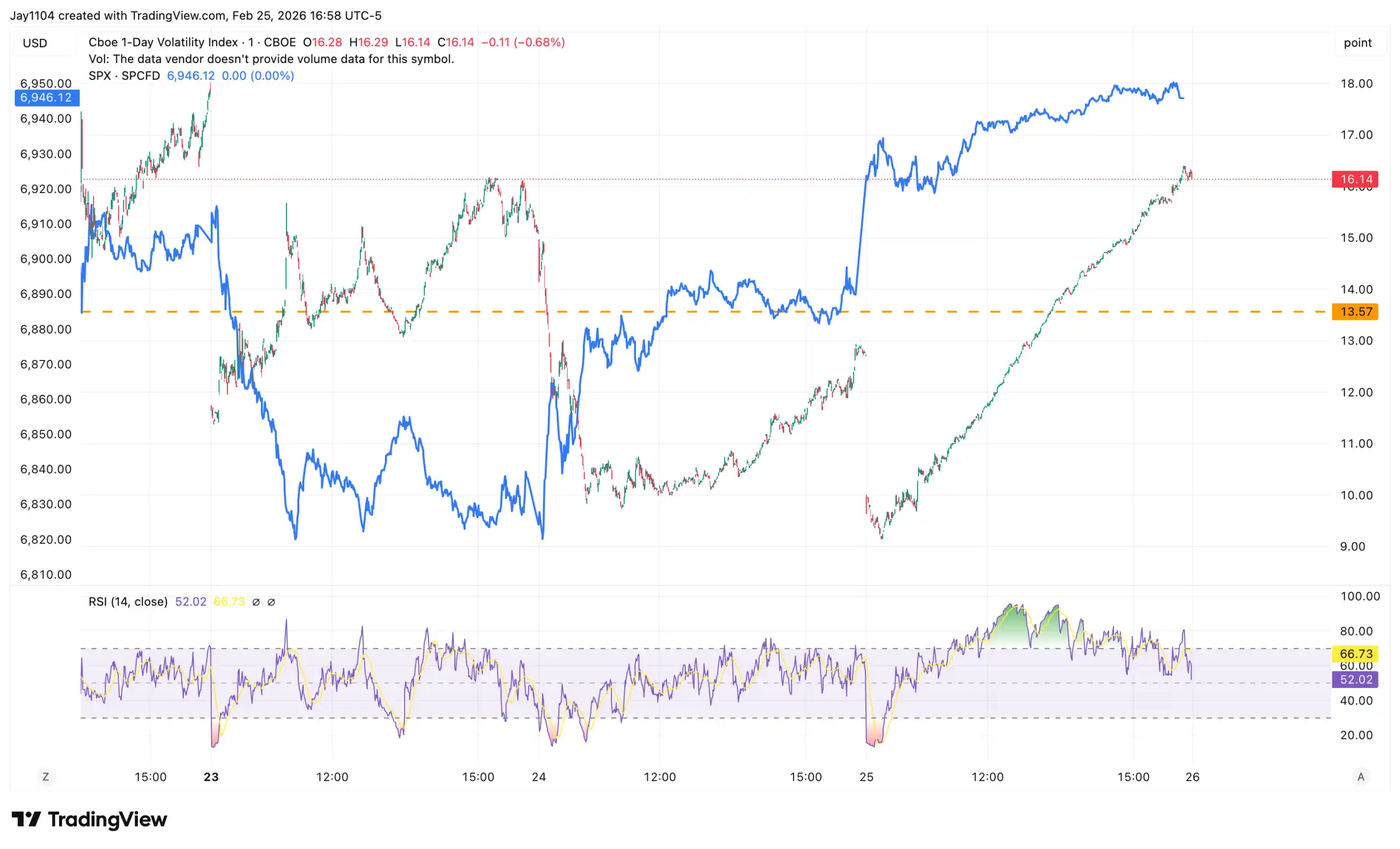
Behind this calm, a significant shift in market structure might be brewing. After the most heavyweight "shoe" has dropped, the market's focus is shifting from extreme individual stock performances to a broader, and perhaps drier, theme: "Dispersion Unwind."

The Options Dilemma of "Buy the Rumor, Sell the News"

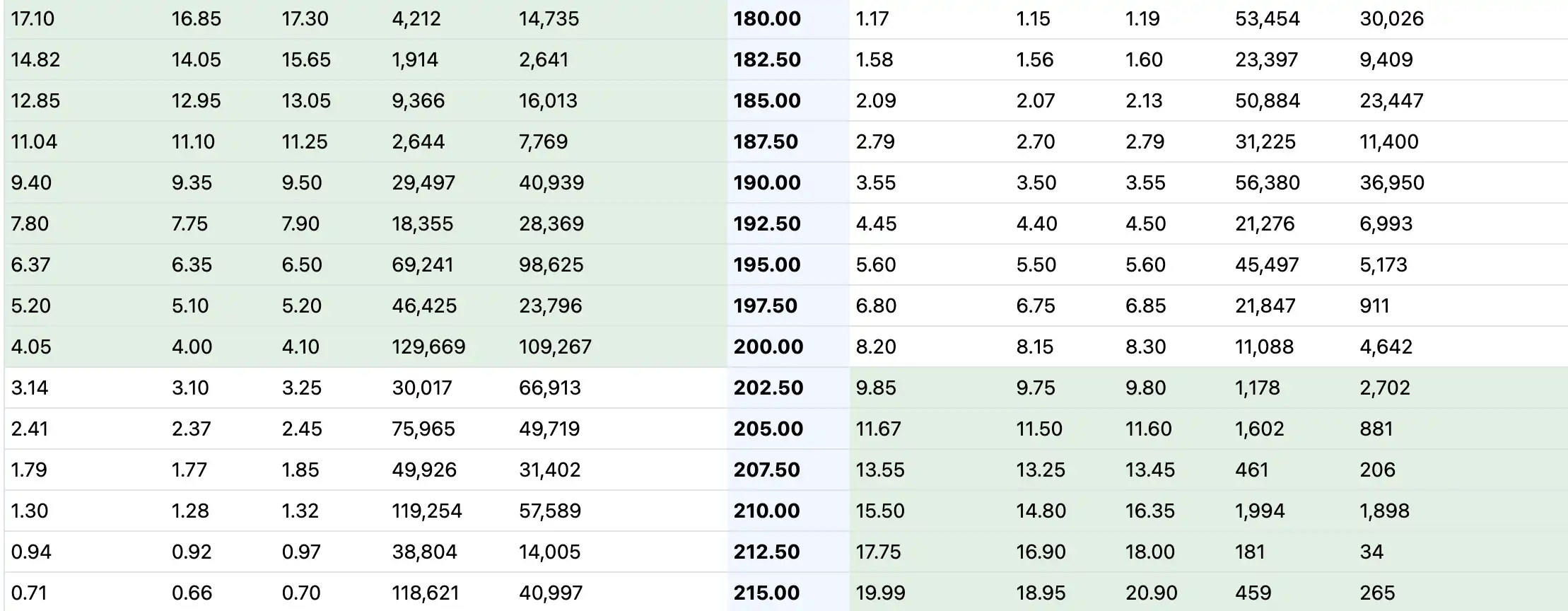
First, look at Nvidia itself. Pre-earnings, market sentiment was maxed out, especially in the options market. Significant capital was bet on the stock breaking above the $200-$205 range post-earnings. However, reality was harsh. After the report, the stock hovered around $200, causing the value of numerous out-of-the-money options (particularly the $200 and $195 call options) to evaporate rapidly.

I recall a similar scenario during a tech earnings season in 2023. A star company then reported better-than-expected earnings, but its stock opened high and then fell, largely due to the reverse effect of a Gamma Squeeze—when the stock price fails to break through key strike prices, the selling operations conducted by market makers for hedging purposes actually amplify the downward pressure on the stock. The situation with Nvidia's options chain this time feels somewhat familiar. When the most optimistic expectations aren't met, the options market turns from a "booster" into a "speed bump."
Intermission After the Market "Blockbuster": Dispersion Unwind Takes the Stage

Why did the entire market seem a bit "boring" after Nvidia's earnings? It's likely because the main logic driving the market recently—extreme divergence in individual stock performances—is approaching an inflection point.

Dispersion, simply put, is the difference between the volatility of individual stocks and the overall market volatility. During the AI frenzy, we've seen a few giants like Nvidia and AMD surge ahead with剧烈 volatility, while many other stocks have performed modestly. This high-dispersion environment is a playground for active stock pickers and quantitative hedge funds. However, this state cannot last forever.

A key indicator to watch now is the three-month dispersion vs. correlation spread (DSPX-COR3M). When this spread is high, it means individual stock movements are highly divergent (high dispersion), while the co-movement between stocks (correlation) is low. Historical experience suggests this state tends to mean-revert. That is, the implied volatility of individual stocks will gradually converge towards the volatility of the broader market index, leading to decreased dispersion and increased correlation among stocks.
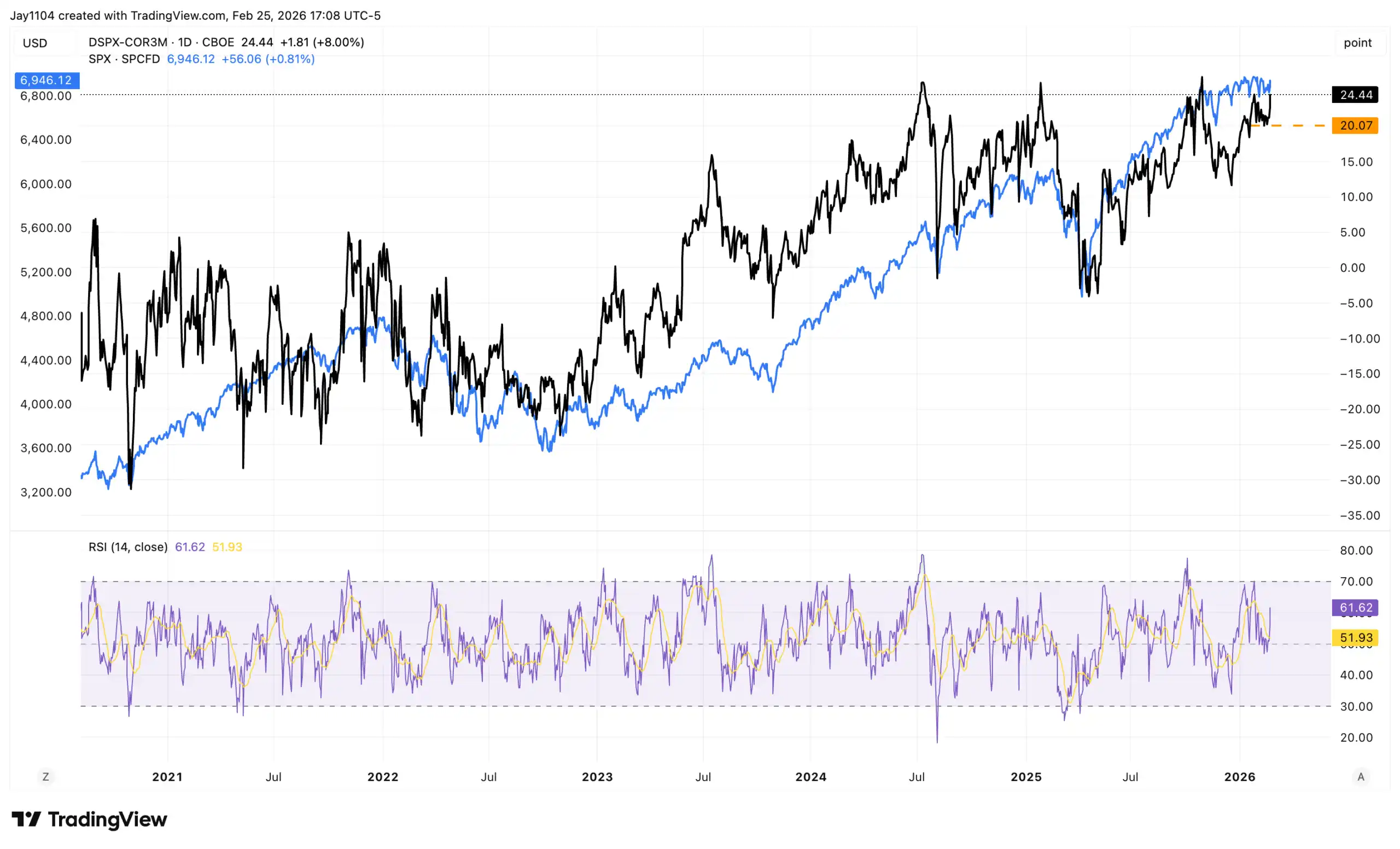
In plainer terms: the "star solo performance" might be taking a brief intermission, and what follows could be a time for a "chorus." If dispersion begins to unwind, the profitable environment for long-short strategies—which made money by going long strong AI stocks and shorting weak ones over the past few months—could deteriorate. Capital might重新审视 sector rotation or return to trades more focused on macro beta (the overall market's rise and fall).

The Unignorable "Background Noise": Massive Treasury Settlement

While the market ponders this style shift, a technical factor is humming in the background—the settlement of a massive amount of US Treasury securities.

According to the public settlement schedule, approximately $1370 billion in Treasuries are set to settle in the immediate following trading days (including $22 billion on the earnings day, $37 billion the next day, etc.). While these massive fund transfers don't directly represent capital flowing out of the stock market, they can impact liquidity in the financial system in the short term, potentially exacerbating short-term market volatility. It's like a swimming pool simultaneously draining and refilling; beneath the calm surface, undercurrents are swirling.

I recall similar liquidity disturbances during a "rebalancing week" at a previous quarter-end last year. At that time, the US market experienced several days of low-volume sell-offs into the close without any fundamental negative news, largely due to the combined effect of institutional position adjustments and bond settlements. For short-term traders, these dates represent additional "calendar risk" to be mindful of.

Where Does the Market Go From Here?

Overall, Nvidia's earnings might signal a temporary lull in micro-driven forces. The market needs a new catalyst. This catalyst could come from:

  1. Further clarity on macro policy: The monetary policy path of major global central banks, especially the Fed, will come back into focus. Any hints regarding the timing and pace of interest rate cuts could trigger a repricing of market styles.
  2. Broad validation through earnings: The AI narrative cannot be sustained by Nvidia alone. The market needs to see more companies (whether tech giants or traditional industries) provide concrete AI capital expenditure plans and revenue contributions in their earnings calls to prove the breadth and depth of this wave.
  3. The self-fulfilling prophecy of dispersion unwind: Once more and more investors begin anticipating and trading the "dispersion unwind," the process itself will accelerate. Capital partially withdrawing from the crowded AI trade to seek other valuation洼地 could facilitate a healthy sector rotation.

For investors, strategy adjustments might be necessary now. Chasing after single明星 stocks that are fully valued and have extremely crowded options is seeing a changing risk-reward ratio. Instead, one might start focusing on two aspects: First, sectors that could benefit from dispersion unwind (e.g., macro-sensitive cyclical or financial stocks that have lagged recently). Second, monitoring changes in overall market volatility; if the VIX is at low levels, it might be time to buy some "insurance" for the portfolio (like index put options).

The market will never be高潮迭起 (continuously climactic) forever. "Flat periods" like the present are precisely windows to observe capital flows and adjust positioning. After all, when the choir starts tuning their instruments, the next piece isn't far from beginning. Of course, any judgment must be combined with real-time market dynamics. At nodes of liquidity change and style rotation, staying flexible is more important than stubborn persistence.

Related reading: A 10,000-Word Deconstruction of Nvidia's 20-Year Rise: From Two Gaming GPUs to a $5 Trillion Empire


Domande pertinenti

QWhy did Nvidia's stock price remain stagnant around $200 after its earnings report, despite meeting expectations?

AThe stagnation was largely due to the 'buy the rumor, sell the news' effect in the options market. Many out-of-the-money call options (e.g., at $200 and $195 strikes) lost value quickly as the stock failed to break above key levels, leading to gamma squeeze dynamics where market makers' hedging activities added downward pressure instead of upward momentum.

QWhat is 'Dispersion Unwind' and how does it relate to the market's reaction to Nvidia's earnings?

A'Dispersion Unwind' refers to the convergence of individual stock volatility towards the broader market's volatility, reducing the divergence in stock performances. After Nvidia's earnings, the market's focus shifted from extreme individual movements (like Nvidia's previous rallies) to this broader theme, indicating that the high-dispersion environment driven by AI hype might be pausing, leading to a calmer, more correlated market.

QHow did the VIX 1-day index behave after Nvidia's earnings report, and what does this suggest about market sentiment?

AThe VIX 1-day index initially rose less than expected after Nvidia's earnings and then fell sharply to around 9 at the open. This indicates that market anticipation and panic were low, suggesting a lack of fear or surprise despite the high-profile event, which aligns with the overall theme of dispersion unwind and reduced volatility in individual stocks.

QWhat role did the settlement of U.S. Treasury bonds play in the market dynamics around Nvidia's earnings?

AThe settlement of approximately $1370 billion in U.S. Treasury bonds around the time of Nvidia's earnings created liquidity pressures in the financial system. While not directly causing equity outflows, this technical factor could amplify short-term market volatility by affecting liquidity, similar to past events where such settlements led to unexplained end-of-day market moves.

QWhat future catalysts might drive the market following Nvidia's earnings, according to the article?

AThe market may seek new catalysts from: 1) Macro policy clarity, especially from the Fed on interest rate cuts; 2) Broader validation of AI earnings and capital expenditure plans across more companies; and 3) The self-fulfilling process of dispersion unwind, which could lead to sector rotation into undervalued areas like cyclical or financial stocks, away from crowded AI trades.

Letture associate

In Conversation with Ray Dalio: We Are Currently in an AI Bubble, with 1% of My Portfolio in Bitcoin

Ray Dalio, founder of Bridgewater Associates, warns in an interview that the current AI boom shows classic bubble characteristics, which could lead to significant economic downturns as seen in past cycles like 1929 or 2000. He explains that speculative enthusiasm, fueled by debt and overvaluation, often precedes a crash when rising rates or taxation force asset sales, causing widespread losses and recession. Dalio also outlines his "Big Cycle" theory, describing an approximate 80-year pattern where widening wealth gaps, massive government deficits, and shifting geopolitical power (like China's rise) create internal conflict and global instability. He emphasizes that we are in a late-cycle, transitional phase where traditional powers like the US and UK face decline. For personal wealth protection, Dalio advises diversification beyond cash into assets like stocks, bonds, real estate, and particularly gold, which he prefers over Bitcoin. While he holds about 1% of his portfolio in Bitcoin as a non-printable hard asset, he views gold as more secure from technological or governmental threats. Regarding AI's impact, Dalio believes it will disproportionately benefit capital owners, worsening inequality by replacing both physical and cognitive labor. He suggests that human intuition and emotional intelligence, combined with AI, will be key for future workers. On taxation, Dalio argues that wealth taxes are impractical and risk triggering asset sell-offs, reducing productive investment. He points to the UK as a cautionary example of debt, low productivity, and political strife. Geopolitically, Dalio foresees a more regionalized world, with the US showing weakness in prolonged conflicts like with Iran, akin to past imperial declines. The ideal outcome, he suggests, is coexisting powerful blocs (e.g., Americas, China-Asia Pacific) without major war.

marsbit37 min fa

In Conversation with Ray Dalio: We Are Currently in an AI Bubble, with 1% of My Portfolio in Bitcoin

marsbit37 min fa

Daily 7.2 Trillion KRW: Foreign Capital's Record Net Buying on Friday! Wall Street Says Headwinds for Korean Stock Fund Flows Have Subsided

South Korean stock market sees a dramatic shift in fund flows. On July 31, foreign investors made a record net purchase of approximately KRW 7.2 trillion in KOSPI stocks, marking a fundamental reversal from the persistent large-scale net outflows seen in previous months. This contributed to a significant narrowing of foreign net selling in July to KRW 9.8 trillion, down sharply from KRW 48.4 trillion in June and KRW 44.5 trillion in May. Simultaneously, domestic institutional pressure eased. South Korean pension funds and asset managers turned to a net buying position in July, purchasing KRW 1.0 trillion worth of KOSPI shares, contrasting with net sales in May and June. Market volatility is expected to be dampened by new financial regulations. Effective July 31, the Financial Services Commission tightened access for retail investors to single-stock leveraged ETFs by raising the minimum cash deposit requirement. Trading volumes for these products subsequently dropped to about 50% of their monthly average. Citigroup Research maintains its year-end KOSPI target of 10,000 points. The firm cites several supportive factors: the substantial easing of headwinds from capital outflows, a robust fundamental outlook for the semiconductor sector, historically low market valuations, strong economic fundamentals, and the potential for policy support from financial authorities if needed.

marsbit37 min fa

Daily 7.2 Trillion KRW: Foreign Capital's Record Net Buying on Friday! Wall Street Says Headwinds for Korean Stock Fund Flows Have Subsided

marsbit37 min fa

Thanks to Dice Rolls, Bitcoin Keys Are Stored Offline, But Not Everyone Will Do It

The article discusses using dice rolls to generate secure Bitcoin wallet seeds, providing entropy independent of potentially flawed hardware random number generators. It explains that each fair dice roll offers about 2.585 bits of entropy, with around 50 rolls needed for a standard 12-word seed phrase and 99+ recommended for higher security. This method gained attention after a vulnerability was revealed in some Coldcard hardware wallets, where a faulty firmware RNG (dating back to 2021) compromised generated keys. The analysis notes that while a dice-generated main seed was safe from this specific flaw, other Coldcard functions (like creating paper wallets, backup keys, or passwords) could still be vulnerable if they used the defective RNG. The piece argues that while dice-based entropy is technically robust, the manual process is error-prone, tedious, and unrealistic for most new users, who might make mistakes in recording or inputting rolls. It concludes that while manual entropy generation should remain an option for advanced users, the long-term goal is to develop reliable, user-friendly hardware and software that securely generates randomness without requiring specialized knowledge. Coldcard users are advised to check their firmware version and replace any secondary secrets (like paper wallet keys) created with vulnerable devices, while also considering multi-signature setups with devices from different manufacturers for added security.

cryptonews.ru5 h fa

Thanks to Dice Rolls, Bitcoin Keys Are Stored Offline, But Not Everyone Will Do It

cryptonews.ru5 h fa

Trading

Spot
活动图片




