After Mainland's Document No. 42 Sets the Tone, What is the Best RWA Token Standard?

marsbitPubblicato 2026-02-09Pubblicato ultima volta 2026-02-09

Introduzione

The People's Bank of China, along with eight other departments, issued Document No. 42 (2026), which formally recognizes Real World Asset tokenization (RWA) as a legitimate business model and outlines a compliance pathway. The document defines RWA as using encryption and distributed ledger technology to convert ownership or profit rights of assets into tokens or token-like equity or debt instruments. The article analyzes existing global RWA token standards and applications, arguing that the ideal standard should prioritize practical application and user experience over designing a perfect, all-encompassing specification upfront. It reviews several models: - **HK's ABT (2022):** An early framework highlighting benefits like fragmentation, liquidity, and transparency. - **ERC-3525 & ERC-3475:** Standards for bonds and contracts criticized for being overly complex and lacking adoption due to poor compatibility. - **Aave's aToken:** A highly successful model using a "Scaled Balance" mechanism where interest accrues and is realized during transactions, minimizing project overhead. - **Lido's stETH:** A "Rebase" model that automatically adjusts token balances daily to reflect staking rewards, offering a seamless user experience. - **Ondo & xStock (Stocks):** These platforms use a "Rebase" mechanism on Solana (via token2022 standard) where a "multiplier" adjusts to handle corporate actions like stock splits or dividends. The conclusion is that China's regulatory clarity...

Author: Shisi Jun

On February 6, 2026, the People's Bank of China, in conjunction with eight major departments, once again released [Yin Fa (2026) No. 42] document. There have been many market interpretations already. This article aims to provide a more vertical analysis by combining RWA with the current on-chain market situation.

1. How to Understand Document No. 42

In the author's view, reading the original text together with the attached document "Regulatory Guidelines on the Overseas Issuance of Asset-Backed Security Tokens for Domestic Assets" reveals a lot. The core point is that Document No. 42 devotes significant space to defining and regulating "Real World Asset Tokenization" (RWA). This amounts to the regulatory authorities formally recognizing RWA as a business model and providing a path for compliant application and filing.

There are three key pieces of information, presented here in the original text, followed by an interpretation.

First, the accurate定性 (qualification) of RWA:

"Real World Asset Tokenization refers to the use of encryption technology and distributed ledger or similar technology to convert ownership,收益权 (beneficial rights), etc., of assets into tokens or other equity/debt instruments with token characteristics, and to conduct issuance and trading activities."

With the definition established, how is it applied? The text continues:

"Exceptions are made for related business activities carried out relying on specific financial infrastructure, upon approval by the competent business authorities in accordance with laws and regulations."

So, who can participate? There are also clear process regulations for applying and utilizing RWA assets:

The domestic entity that actually controls the underlying assets needs to file with the China Securities Regulatory Commission (CSRC), submitting a filing report,全套 (complete set of) overseas issuance materials, and other documents, fully explaining the domestic filing entity information, underlying asset information, token issuance plan, and other relevant situations.

Therefore, in the author's view, combining the two, it can be said that RWA assets have been clearly separated from virtual currencies, which were previously heavily crackdown upon, and the two are not subject to the same management approach.

2. The Evolution of Global RWA Standards

Alongside the Mainland's institutional定性 (qualification), how is the current global RWA market developing? When regulatory issues are alleviated, subsequent application becomes a practical reality that must be faced.

In fact, the current market has long been in an era of a Token standard war.

This complexity has brought industry-level compatibility challenges for RWA. Let's delve into the mainstream RWA token application standards.

This article will start from HK ABT (asset-backed token) in 2022, move to ERC-3525 and ERC-3475围绕 (surrounding) bonds, then to AAVE's Atoken, stETH, and AMPL from the DeFi era, and finally to how the leading on-chain stock platforms Ondo and xStock handle the特性迁移 (characteristic migration) of stock tokenization.

2.1 HK and ABT

The Hong Kong government's "Policy Statement on the Development of Virtual Assets in Hong Kong," released on October 31, 2022,重点提及 (highlighted) asset-backed tokens (ABT).

Conventionally, tokens are divided into 4 major types, distinguished by the token's purpose and source of value.
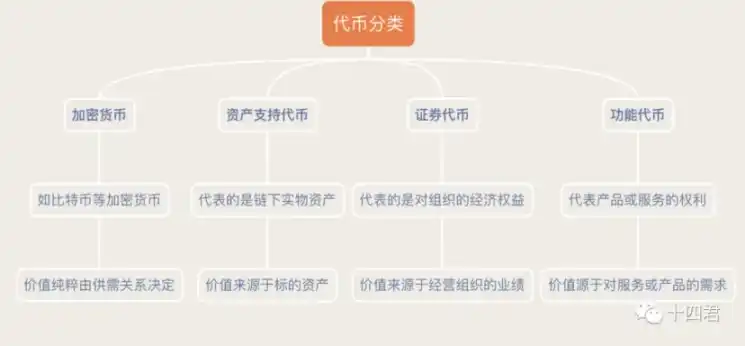
In fact, the thinking behind the Mainland document and the practices previously attempted in HK are continuous. They both必然有 (must have) physical off-chain assets or权益 (rights) as the value标的 (target).
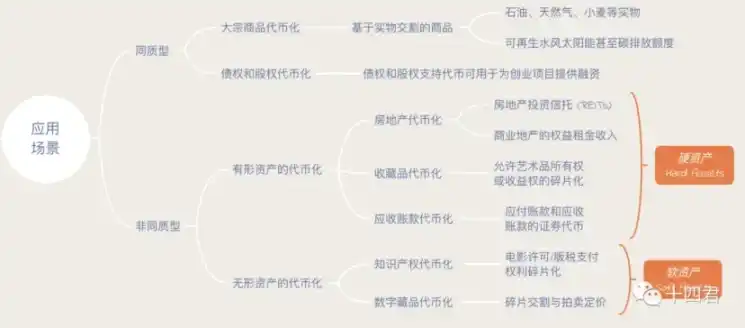
Thus, through compliant tokenization, on-chain characteristics bring enhancements to the assets:

  1. Fragmentation: Refers to dividing property rights into smaller units for sale, making them easier to trade, price, and circulate.
  2. Liquidity: Defined by the speed at which an asset can be converted into cash, with order books shared via on-chain广播 (broadcasting).
  3. Cost Efficiency: When trading based on blockchain smart contracts, the costs of these external third parties are eliminated or significantly reduced.
  4. Automation: Blockchain-based smart contracts do not require these manual interactions, providing a trustworthy technological foundation.
  5. Transparency: One of the most significant features of on-chain transactions is the immutable record-keeping.

From the audience's perspective:

  • For institutions: The splitting and conversion of large orders bring benefits in terms of fragmented liquidity efficiency and cost reduction.
  • For users: Possessing a transparent and automated trustworthy environment to ensure their rights and interests.

Currently, the most直观有应用价值的 (intuitively valuable for application) are stocks and bonds, as both can perfectly adapt to the aforementioned advantages of liquidity, automation, and fragmentation.

3. Bond Scenario Standards: ERC-3525 and ERC-3475

There was significant爆发 (explosion) around this asset type before and after HKABT, leading to industry standards like ERC-3525 and ERC-3475:

  • ERC-3525 focuses on the management of semi-fungible tokens,完善 (perfecting) the combination and splitting of assets at the numerical level,侧重 (focusing on) traditional financial assets on-chain.
  • ERC-3475 focuses on the definition of semi-fungible tokens, providing better规范 (standardization) for defining contracts with low standardization,侧重 (focusing on) traditional commercial contracts on-chain.

Objectively speaking, these two standards are not widely used. This is because they were standards first, business second, rather than being summarized from existing business practices. Hence, their actual influence has been decreasing (far less than Atoken and stEth discussed later).

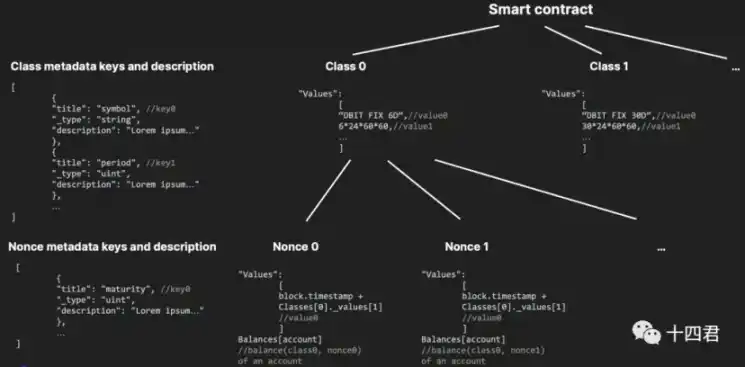
In the author's view, this is because the初衷 (original intention) of such standard designs aimed to be all-encompassing. For example, ERC-3475 (see image below) is practically a representative of包容万物 (encompassing everything), which directly led to high barriers to user understanding and high barriers to app adaptation.

Ultimately, aiming too high meant writing everything等于没写 (was equivalent to writing nothing), so it's understandable that there are few market applications.
4. Bond Scenario Applications: AToken & stEth

Compared to the "standard first, application later" type, let's look at the典范 (paradigm) of "application first, standard later".

4.1 Real-Time Compound Interest Model: Aave's Atoken

Aave is the top DeFi infrastructure in the web3 industry, dealing in on-chain asset collateralized lending for interest. The Atoken is the collateral certificate, with core functions as follows:

  1. Proof of Deposit: Holding aToken is equivalent to the user owning a corresponding amount of assets in the Aave protocol, and these assets automatically earn interest over time.
  2. Lending Mechanism: aTokens can be used to evaluate a user's deposit amount and determine their loan额度 (quota).
  3. Automatic Interest Distribution: The quantity of aTokens automatically increases according to the current deposit interest rate.
  4. Transferability and Liquidity: Users can transfer or collateralize aTokens into other protocols to obtain more收益 (yield) or use them in other DeFi products.

Looking at it this way, it can be said that each point is also the path RWA must take in the future.

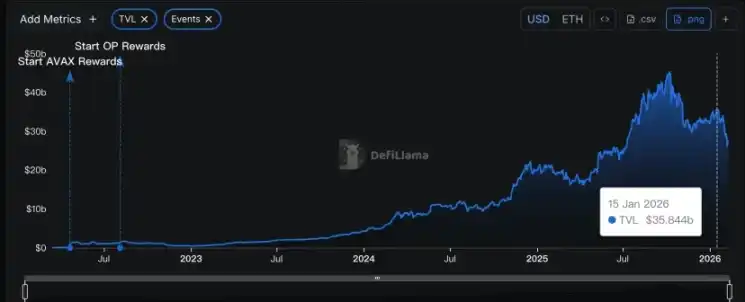
Looking at its market status, it has been growing robustly, with Atoken's total assets reaching around $30 billion.
Why is Atoken so successful?

Clearly, with almost 100% growth annually, it can be called a successful典范 (paradigm).

Ultimately, because atoken is already very well-adapted to the existing market. After all, originating from Aave, they understand that adaptability is a key path for development in the blockchain market. The two standards mentioned above ultimately got stuck on adaptability; existing asset dashboards and wallets found it difficult to integrate this type of asset.

Adaptability is not a simple word because it has a key problem to solve: if on-chain assets cannot generate interest, their practical significance is greatly reduced.

But if they are to generate interest, how should this interest be given to users?

After all, everyone's质押时间 (staking time) is different, and the staking interest rates vary across periods. Different assets have different market demands, corresponding to different lending spreads.

If interest is simply transferred to users periodically, the project's cost and management complexity would significantly increase, ultimately passing the cost to the users.

Some say this is an on-chain performance issue, so they built new high-performance public chains to rival web2 server performance, but they then face the cost of user migration.

Aave's answer is to hide the interest in the user's daily transactions.

AToken essentially uses a Scaled Balance mechanism to calculate the user's actual balance:

Liquidity Index = Initial Index × (1 + Interest Rate × Time)

This logic ensures that interest is automatically calculated and accumulated during transfers (whether sending or receiving), triggering new minting events to increase supply during the transfer.

For the project side, this eliminates a dividend distribution transaction, and users see their interest不知不觉中 (unconsciously). Even if not seen, it will be calculated in the next operation, so there is no loss.

This clever design, requiring just a few lines of code, is very native-thinking.

Moreover, this line of thinking paved the way for the inheritance and evolution of subsequent on-chain asset standards like stEth, ondo, and xStock.

4.2 Rebase Model: Lido's stETH

stETH, based on the previous interest concept, further simplifies the logic of staking and withdrawal, no longer calculating based on interest + time accumulation, but rather on shares.

stETH = Amount of ETH staked by user * (Total protocol assets / Total internal shares)

You might find it strange: How can it have no interest? It's all about staking for interest. If someone stakes for 1 year and I stake for 1 day, shouldn't the share change?

This is because of Lido's daily automatic rebase mechanism. For example:

  1. Suppose I bought 1 ETH a year ago and joined a total stake of 100 ETH. My share is 1%.
  2. Lido daily obtains staking rewards from the Ethereum Beacon Chain and then performs a rebase on the protocol.
  3. Thus, when I withdraw after one year, I naturally get the 4% (assuming 4% APY).
  4. If I buy this 1% share on the last day, I am buying based on a share that has accumulated costs for nearly 364 days, approaching 104% of the original value, and can only benefit from 1 rebase.

Why design it this way?

Because making stETH's yield automatically arrive daily,无需等待 (no waiting) and无需手动领取 (no manual claiming), is its greatest convenience.

The previous Atoken required a transaction to realize the interest, whereas stETH can automatically update the balance daily, making it easy for various wallets to兼容 (be compatible).

This ultimately allows users to see the interest increase on their balance sheet, aligning with our conventional concept of saving: interest automatically arriving daily, providing peace of mind.

Comparing the two归根究底 (in the final analysis), it comes down to different scenarios.

Aave is for lending, with interest rates fluctuating greatly in real-time; high-rate periods can yield a day's worth equal to a month. Lido, with fixed income, is smooth and steady, less concerned with one day's interest, thus allowing for further optimized user experience.

Are these two suitable as Token standard methods for the RWA era?

The author believes neither is perfectly suitable, but they can be used for reference. Let's look at the final主角 (main character) of today: the on-chain stock model.

5. On-Chain Stock RWA Scenario

Although not large in the overall RWA total value (900M vs 27B), due to the characteristics of stocks, it is one of the most promising scenarios for trading liquidity and on-chain application imagination.

The main players here are: Ondo, xStock.

We can see that over the past six months, the top DEXs and wallets in the market have been investing here. Objectively speaking, the judgment of these leading platforms regarding future trends seems remarkably consistent.

  • 2025.7.1: Jupipter supports xStock trading and begins large-scale promotion.
  • 2025.9.25: Solana official launches new RWA Twitter account.
  • 2026.1.22: Jupiter partners with Ondo Finance to list 200+ types of tokenized stocks.
  • 2026.1.24: Binance Wallet supports Ondo asset trading in professional mode.
  • 2026.2.3: MetaMask launches tokenized US stocks and ETFs, stating the market is shifting on-chain.
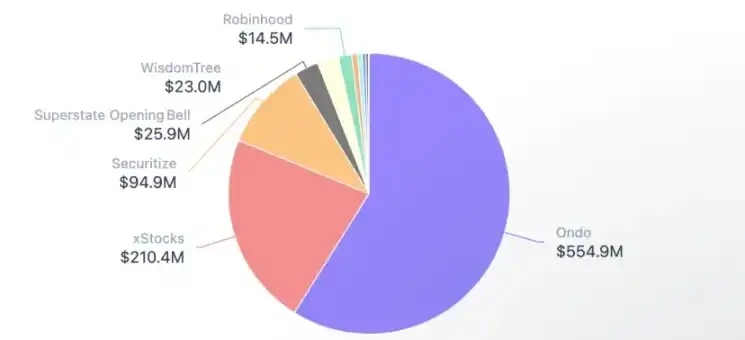
They actually use a share-based Rebase model, specifically an "On-Chain Shares + Multiplier Scaling" Rebase mechanism.

On the Solana chain, this mechanism is an extension in its mainstream token2022 standard. Each token can have a parameter called a Multiplier set by the project. The balance the user holds is called the raw amount, meaning the number of shares.

Then, the project dynamically adjusts the Multiplier parameter in the token settings during scenarios like stock splits, reverse splits, dividend distributions, etc., modifying the display amount.

This creates a divide: if users use a wallet that doesn't support this parameter, they might feel something is wrong with their assets. In supported cases, they see the UI amount, i.e., the amount displayed on the client.

6. Summary and Reflection

The preceding text,洋洋洒洒 (voluminously) over four thousand words, has reviewed the mainstream on-chain asset tokenization and real-world asset tokenization leading players and evolution paths.

Various partial reflections have been mentioned in each module. So now it's time to return to the core of the title: "Cold Thinking".

Because, looking at the extended timeline, RWA has been around for almost 10 years.

  • Early Exploration, 2016-2019: Experimental stage of asset on-chain, mainly stablecoins.
  • Initial Institutional Phase, 2020-2022: RWA entered the DeFi lending field, i.e., the Tokenised Stocks尝试 (attempted) by BN/FTX (which closed down not long after).
  • Compliance Stage, 2023 - Present: Compliance began to clarify / Some RWA assets expanded rapidly (stablecoins, US Treasuries, etc.), and new asset types and platforms gained traction.

Therefore, in the author's view, the Mainland's定性 (qualification) of RWA is objectively a positive development, but not entirely so. It could even be said to be a belated notice. Moreover, HK previously introduced a similar system, ABT, but did it develop?

Clearly, compared to the state of affairs in the other hemisphere, it hasn't flourished much. This is closely related to HK's very cautious management of licenses. Whether it's about acting boldly from the start or试探和约束 (testing and constraining) bit by bit – the latter can scare away many platform operators hoping to build.

The new system has openness, but what is opened up is not necessarily what users真正要用 (truly want to use) or what the market needs.

We can see that Aave's Atoken is very successful because it addresses the use of idle on-chain assets, allowing users to lend them out.

stETH is also great because it solves the pathway for POS (Proof of Stake) staking. Although there is a risk of Lido concentrating too much value (power), it provides stable收益 (yield) for staking. Similarly, one can read the author's article on Jito, which is another staking model.

And they all care deeply about user experience, meticulously handling compatibility and project costs bit by bit.

Therefore, issuance itself is not the goal; applying on-chain liquidity, fragmentation, transparency, and automation to the tokens is where the value lies.

It's not about defining a perfect standard first, but respecting rules and consensus, leveraging strengths step by step.

Just like common stocks: various exchanges are not 7*24 hours, but on-chain ones are.

Gold markets in various regions have their own opening hours, but on-chain does not.

This time gap is the true value (Gap) of being on-chain, as it can solve the problem of value discovery in non-trading markets. Compared to pre-market trading, it is more敏锐 (sensitive). Compared to cross-exchange price differences, it has lower磨损 (friction). Moreover, liquidity spanning the globe offers value discovery from a completely different交叉视角 (intersecting perspective). In the future, company pricing might not rely on the NYSE on-chain but rather the NYSE listing might first look at the on-chain price.


Domande pertinenti

QWhat is the core significance of China's Document No. 42 regarding RWA?

AThe core significance is that it formally recognizes Real World Asset Tokenization (RWA) as a legitimate business form, clearly defines it, and provides a compliance path for its application and filing. It separates RWA assets from strictly prohibited virtual currencies, indicating they will be managed under different frameworks.

QWhat are the key advantages of tokenizing assets on-chain as mentioned in the article?

AThe key advantages are: 1. Fractionalization: Dividing ownership into smaller, tradable units. 2. Liquidity: Faster conversion to cash with shared on-chain order books. 3. Cost-effectiveness: Reduced third-party costs via smart contracts. 4. Automation: Trustless execution through smart contracts. 5. Transparency: Immutable record-keeping on the blockchain.

QHow does Aave's aToken mechanism handle interest distribution for users?

AAave's aToken uses a Scaled Balance mechanism. A liquidity index (initial index * (1 + interest rate * time)) calculates the user's actual balance. Interest is automatically accumulated and minted during any token transfer (sending or receiving), eliminating the need for separate, costly distribution transactions by the project and ensuring users never lose their accrued interest.

QWhat is the fundamental difference between the interest mechanisms of aTokens and stETH?

AaTokens accrue interest' behind the scenes' and it is realized upon transfer transactions. In contrast, stETH uses a daily rebase mechanism where the protocol's total assets and the internal share quantity are used to calculate a user's balance, causing the token balance displayed in compatible wallets to increase automatically every day, mimicking a traditional savings account.

QAccording to the author, what is the 'true value' of on-chain RWA assets beyond mere issuance?

AThe true value lies in applying on-chain features like liquidity, fractionalization, transparency, and automation to the tokens. This creates value by enabling 24/7 global trading, lower transaction costs, and new forms of cross-border price discovery, potentially allowing on-chain markets to influence traditional exchange pricing in the future, not just mirror it.

Letture associate

Cook's Curtain Call and Ternus Takes the Helm: The Disruption and Reboot of Apple's 4 Trillion Dollar Empire

Tim Cook has officially announced he will step down as CEO of Apple in September, transitioning to executive chairman after a 15-year tenure during which he grew the company’s market value from around $350 billion to nearly $4 trillion. He will be succeeded by John Ternus, a 50-year-old hardware engineering veteran who has been groomed for the role through increasing public visibility and internal responsibility. Ternus’s appointment signals a strategic shift toward hardware and engineering leadership, with Johny Srouji—head of Apple Silicon—taking on an expanded role as Chief Hardware Officer. This consolidation aims to strengthen Apple’s core technological capabilities. However, Cook’s departure highlights a significant unresolved issue: Apple’s delayed and fragmented approach to artificial intelligence. Despite early efforts, such as hiring John Giannandrea from Google in 2018, Apple’s AI initiatives—particularly around Siri—have struggled with internal restructuring and reliance on external partnerships, including with Google. The transition comes at a critical moment as Apple faces paradigm shifts with the rise of artificial general intelligence (ASI). The company’s closed ecosystem of hardware, software, and services—once a major advantage—now presents challenges in adapting to an AI-centric world where intelligence may matter more than the device itself. Ternus must quickly articulate a clear AI strategy, possibly starting at WWDC, to reassure markets and redefine Apple’s role in a new technological era. His task is not only to maintain Apple’s operational excellence but also to reinvigorate its capacity to innovate and lead in the age of AI.

marsbit21 min fa

Cook's Curtain Call and Ternus Takes the Helm: The Disruption and Reboot of Apple's 4 Trillion Dollar Empire

marsbit21 min fa

Trading

Spot
Futures

Articoli Popolari

Cosa è $S$

Comprendere SPERO: Una Panoramica Completa Introduzione a SPERO Mentre il panorama dell'innovazione continua a evolversi, l'emergere delle tecnologie web3 e dei progetti di criptovaluta gioca un ruolo fondamentale nel plasmare il futuro digitale. Un progetto che ha attirato l'attenzione in questo campo dinamico è SPERO, denotato come SPERO,$$s$. Questo articolo mira a raccogliere e presentare informazioni dettagliate su SPERO, per aiutare gli appassionati e gli investitori a comprendere le sue basi, obiettivi e innovazioni nei domini web3 e crypto. Che cos'è SPERO,$$s$? SPERO,$$s$ è un progetto unico all'interno dello spazio crypto che cerca di sfruttare i principi della decentralizzazione e della tecnologia blockchain per creare un ecosistema che promuove l'impegno, l'utilità e l'inclusione finanziaria. Il progetto è progettato per facilitare interazioni peer-to-peer in modi nuovi, fornendo agli utenti soluzioni e servizi finanziari innovativi. Al suo interno, SPERO,$$s$ mira a responsabilizzare gli individui fornendo strumenti e piattaforme che migliorano l'esperienza dell'utente nello spazio delle criptovalute. Questo include la possibilità di metodi di transazione più flessibili, la promozione di iniziative guidate dalla comunità e la creazione di percorsi per opportunità finanziarie attraverso applicazioni decentralizzate (dApps). La visione sottostante di SPERO,$$s$ ruota attorno all'inclusività, cercando di colmare le lacune all'interno della finanza tradizionale mentre sfrutta i vantaggi della tecnologia blockchain. Chi è il Creatore di SPERO,$$s$? L'identità del creatore di SPERO,$$s$ rimane piuttosto oscura, poiché ci sono risorse pubblicamente disponibili limitate che forniscono informazioni dettagliate sul suo fondatore o fondatori. Questa mancanza di trasparenza può derivare dall'impegno del progetto per la decentralizzazione—un ethos che molti progetti web3 condividono, dando priorità ai contributi collettivi rispetto al riconoscimento individuale. Centrando le discussioni attorno alla comunità e ai suoi obiettivi collettivi, SPERO,$$s$ incarna l'essenza dell'empowerment senza mettere in evidenza individui specifici. Pertanto, comprendere l'etica e la missione di SPERO rimane più importante che identificare un creatore singolo. Chi sono gli Investitori di SPERO,$$s$? SPERO,$$s$ è supportato da una varietà di investitori che vanno dai capitalisti di rischio agli investitori angelici dedicati a promuovere l'innovazione nel settore crypto. Il focus di questi investitori generalmente si allinea con la missione di SPERO—dando priorità a progetti che promettono avanzamenti tecnologici sociali, inclusività finanziaria e governance decentralizzata. Queste fondazioni di investitori sono tipicamente interessate a progetti che non solo offrono prodotti innovativi, ma contribuiscono anche positivamente alla comunità blockchain e ai suoi ecosistemi. Il supporto di questi investitori rafforza SPERO,$$s$ come un concorrente degno di nota nel dominio in rapida evoluzione dei progetti crypto. Come Funziona SPERO,$$s$? SPERO,$$s$ impiega un framework multifunzionale che lo distingue dai progetti di criptovaluta convenzionali. Ecco alcune delle caratteristiche chiave che sottolineano la sua unicità e innovazione: Governance Decentralizzata: SPERO,$$s$ integra modelli di governance decentralizzati, responsabilizzando gli utenti a partecipare attivamente ai processi decisionali riguardanti il futuro del progetto. Questo approccio favorisce un senso di proprietà e responsabilità tra i membri della comunità. Utilità del Token: SPERO,$$s$ utilizza il proprio token di criptovaluta, progettato per servire varie funzioni all'interno dell'ecosistema. Questi token abilitano transazioni, premi e la facilitazione dei servizi offerti sulla piattaforma, migliorando l'impegno e l'utilità complessivi. Architettura Stratificata: L'architettura tecnica di SPERO,$$s$ supporta la modularità e la scalabilità, consentendo un'integrazione fluida di funzionalità e applicazioni aggiuntive man mano che il progetto evolve. Questa adattabilità è fondamentale per mantenere la rilevanza nel panorama crypto in continua evoluzione. Coinvolgimento della Comunità: Il progetto enfatizza iniziative guidate dalla comunità, impiegando meccanismi che incentivano la collaborazione e il feedback. Nutrendo una comunità forte, SPERO,$$s$ può affrontare meglio le esigenze degli utenti e adattarsi alle tendenze di mercato. Focus sull'Inclusione: Offrendo basse commissioni di transazione e interfacce user-friendly, SPERO,$$s$ mira ad attrarre una base utenti diversificata, inclusi individui che potrebbero non aver precedentemente interagito nello spazio crypto. Questo impegno per l'inclusione si allinea con la sua missione generale di empowerment attraverso l'accessibilità. Cronologia di SPERO,$$s$ Comprendere la storia di un progetto fornisce preziose intuizioni sulla sua traiettoria di sviluppo e sui traguardi. Di seguito è riportata una cronologia suggerita che mappa eventi significativi nell'evoluzione di SPERO,$$s$: Fase di Concettualizzazione e Ideazione: Le idee iniziali che formano la base di SPERO,$$s$ sono state concepite, allineandosi strettamente con i principi di decentralizzazione e focus sulla comunità all'interno dell'industria blockchain. Lancio del Whitepaper del Progetto: Dopo la fase concettuale, è stato rilasciato un whitepaper completo che dettaglia la visione, gli obiettivi e l'infrastruttura tecnologica di SPERO,$$s$ per suscitare interesse e feedback dalla comunità. Costruzione della Comunità e Prime Interazioni: Sono stati effettuati sforzi attivi di outreach per costruire una comunità di early adopters e potenziali investitori, facilitando discussioni attorno agli obiettivi del progetto e ottenendo supporto. Evento di Generazione del Token: SPERO,$$s$ ha condotto un evento di generazione del token (TGE) per distribuire i propri token nativi ai primi sostenitori e stabilire una liquidità iniziale all'interno dell'ecosistema. Lancio della Prima dApp: La prima applicazione decentralizzata (dApp) associata a SPERO,$$s$ è stata attivata, consentendo agli utenti di interagire con le funzionalità principali della piattaforma. Sviluppo Continuo e Partnership: Aggiornamenti e miglioramenti continui alle offerte del progetto, inclusi partnership strategiche con altri attori nello spazio blockchain, hanno plasmato SPERO,$$s$ in un concorrente competitivo e in evoluzione nel mercato crypto. Conclusione SPERO,$$s$ rappresenta una testimonianza del potenziale del web3 e delle criptovalute di rivoluzionare i sistemi finanziari e responsabilizzare gli individui. Con un impegno per la governance decentralizzata, il coinvolgimento della comunità e funzionalità progettate in modo innovativo, apre la strada verso un panorama finanziario più inclusivo. Come per qualsiasi investimento nello spazio crypto in rapida evoluzione, si incoraggiano potenziali investitori e utenti a ricercare approfonditamente e a impegnarsi in modo riflessivo con gli sviluppi in corso all'interno di SPERO,$$s$. Il progetto mostra lo spirito innovativo dell'industria crypto, invitando a ulteriori esplorazioni delle sue innumerevoli possibilità. Mentre il percorso di SPERO,$$s$ è ancora in fase di sviluppo, i suoi principi fondamentali potrebbero effettivamente influenzare il futuro di come interagiamo con la tecnologia, la finanza e tra di noi in ecosistemi digitali interconnessi.

75 Totale visualizzazioniPubblicato il 2024.12.17Aggiornato il 2024.12.17

Cosa è $S$

Cosa è AGENT S

Agent S: Il Futuro dell'Interazione Autonoma in Web3 Introduzione Nel panorama in continua evoluzione di Web3 e criptovalute, le innovazioni stanno costantemente ridefinendo il modo in cui gli individui interagiscono con le piattaforme digitali. Uno di questi progetti pionieristici, Agent S, promette di rivoluzionare l'interazione uomo-computer attraverso il suo framework agentico aperto. Aprendo la strada a interazioni autonome, Agent S mira a semplificare compiti complessi, offrendo applicazioni trasformative nell'intelligenza artificiale (AI). Questa esplorazione dettagliata approfondirà le complessità del progetto, le sue caratteristiche uniche e le implicazioni per il dominio delle criptovalute. Cos'è Agent S? Agent S si presenta come un innovativo framework agentico aperto, progettato specificamente per affrontare tre sfide fondamentali nell'automazione dei compiti informatici: Acquisizione di Conoscenze Specifiche del Dominio: Il framework apprende in modo intelligente da varie fonti di conoscenza esterne ed esperienze interne. Questo approccio duale gli consente di costruire un ricco repository di conoscenze specifiche del dominio, migliorando le sue prestazioni nell'esecuzione dei compiti. Pianificazione su Lungo Orizzonte di Compiti: Agent S impiega una pianificazione gerarchica potenziata dall'esperienza, un approccio strategico che facilita la suddivisione e l'esecuzione efficiente di compiti complessi. Questa caratteristica migliora significativamente la sua capacità di gestire più sottocompiti in modo efficiente ed efficace. Gestione di Interfacce Dinamiche e Non Uniformi: Il progetto introduce l'Interfaccia Agente-Computer (ACI), una soluzione innovativa che migliora l'interazione tra agenti e utenti. Utilizzando Modelli Linguistici Multimodali di Grandi Dimensioni (MLLM), Agent S può navigare e manipolare senza sforzo diverse interfacce grafiche utente. Attraverso queste caratteristiche pionieristiche, Agent S fornisce un framework robusto che affronta le complessità coinvolte nell'automazione dell'interazione umana con le macchine, preparando il terreno per innumerevoli applicazioni nell'AI e oltre. Chi è il Creatore di Agent S? Sebbene il concetto di Agent S sia fondamentalmente innovativo, informazioni specifiche sul suo creatore rimangono elusive. Il creatore è attualmente sconosciuto, il che evidenzia sia la fase embrionale del progetto sia la scelta strategica di mantenere i membri fondatori sotto anonimato. Indipendentemente dall'anonimato, l'attenzione rimane sulle capacità e sul potenziale del framework. Chi sono gli Investitori di Agent S? Poiché Agent S è relativamente nuovo nell'ecosistema crittografico, informazioni dettagliate riguardanti i suoi investitori e sostenitori finanziari non sono documentate esplicitamente. La mancanza di approfondimenti pubblicamente disponibili sulle fondazioni di investimento o sulle organizzazioni che supportano il progetto solleva interrogativi sulla sua struttura di finanziamento e sulla roadmap di sviluppo. Comprendere il supporto è cruciale per valutare la sostenibilità del progetto e il suo potenziale impatto sul mercato. Come Funziona Agent S? Al centro di Agent S si trova una tecnologia all'avanguardia che gli consente di funzionare efficacemente in contesti diversi. Il suo modello operativo è costruito attorno a diverse caratteristiche chiave: Interazione Uomo-Computer Simile a Quella Umana: Il framework offre una pianificazione AI avanzata, cercando di rendere le interazioni con i computer più intuitive. Mimando il comportamento umano nell'esecuzione dei compiti, promette di elevare le esperienze degli utenti. Memoria Narrativa: Utilizzata per sfruttare esperienze di alto livello, Agent S utilizza la memoria narrativa per tenere traccia delle storie dei compiti, migliorando così i suoi processi decisionali. Memoria Episodica: Questa caratteristica fornisce agli utenti una guida passo-passo, consentendo al framework di offrire supporto contestuale mentre i compiti si sviluppano. Supporto per OpenACI: Con la capacità di funzionare localmente, Agent S consente agli utenti di mantenere il controllo sulle proprie interazioni e flussi di lavoro, allineandosi con l'etica decentralizzata di Web3. Facile Integrazione con API Esterne: La sua versatilità e compatibilità con varie piattaforme AI garantiscono che Agent S possa adattarsi senza problemi agli ecosistemi tecnologici esistenti, rendendolo una scelta attraente per sviluppatori e organizzazioni. Queste funzionalità contribuiscono collettivamente alla posizione unica di Agent S all'interno dello spazio crittografico, poiché automatizza compiti complessi e multi-fase con un intervento umano minimo. Man mano che il progetto evolve, le sue potenziali applicazioni in Web3 potrebbero ridefinire il modo in cui si svolgono le interazioni digitali. Cronologia di Agent S Lo sviluppo e le tappe di Agent S possono essere riassunti in una cronologia che evidenzia i suoi eventi significativi: 27 Settembre 2024: Il concetto di Agent S è stato lanciato in un documento di ricerca completo intitolato “Un Framework Agentico Aperto che Usa i Computer Come un Umano”, mostrando le basi per il progetto. 10 Ottobre 2024: Il documento di ricerca è stato reso pubblicamente disponibile su arXiv, offrendo un'esplorazione approfondita del framework e della sua valutazione delle prestazioni basata sul benchmark OSWorld. 12 Ottobre 2024: È stata rilasciata una presentazione video, fornendo un'idea visiva delle capacità e delle caratteristiche di Agent S, coinvolgendo ulteriormente potenziali utenti e investitori. Questi indicatori nella cronologia non solo illustrano i progressi di Agent S, ma indicano anche il suo impegno per la trasparenza e il coinvolgimento della comunità. Punti Chiave su Agent S Man mano che il framework Agent S continua a evolversi, diversi attributi chiave si distinguono, sottolineando la sua natura innovativa e il potenziale: Framework Innovativo: Progettato per fornire un uso intuitivo dei computer simile all'interazione umana, Agent S porta un approccio nuovo all'automazione dei compiti. Interazione Autonoma: La capacità di interagire autonomamente con i computer attraverso GUI segna un passo avanti verso soluzioni informatiche più intelligenti ed efficienti. Automazione di Compiti Complessi: Con la sua metodologia robusta, può automatizzare compiti complessi e multi-fase, rendendo i processi più veloci e meno soggetti a errori. Miglioramento Continuo: I meccanismi di apprendimento consentono ad Agent S di migliorare dalle esperienze passate, migliorando continuamente le sue prestazioni e la sua efficacia. Versatilità: La sua adattabilità attraverso diversi ambienti operativi come OSWorld e WindowsAgentArena garantisce che possa servire un'ampia gamma di applicazioni. Man mano che Agent S si posiziona nel panorama di Web3 e delle criptovalute, il suo potenziale per migliorare le capacità di interazione e automatizzare i processi segna un significativo avanzamento nelle tecnologie AI. Attraverso il suo framework innovativo, Agent S esemplifica il futuro delle interazioni digitali, promettendo un'esperienza più fluida ed efficiente per gli utenti in vari settori. Conclusione Agent S rappresenta un audace passo avanti nell'unione tra AI e Web3, con la capacità di ridefinire il modo in cui interagiamo con la tecnologia. Sebbene sia ancora nelle sue fasi iniziali, le possibilità per la sua applicazione sono vaste e coinvolgenti. Attraverso il suo framework completo che affronta sfide critiche, Agent S mira a portare le interazioni autonome al centro dell'esperienza digitale. Man mano che ci addentriamo nei regni delle criptovalute e della decentralizzazione, progetti come Agent S giocheranno senza dubbio un ruolo cruciale nel plasmare il futuro della tecnologia e della collaborazione uomo-computer.

402 Totale visualizzazioniPubblicato il 2025.01.14Aggiornato il 2025.01.14

Cosa è AGENT S

Come comprare S

Benvenuto in HTX.com! Abbiamo reso l'acquisto di Sonic (S) semplice e conveniente. Segui la nostra guida passo passo per intraprendere il tuo viaggio nel mondo delle criptovalute.Step 1: Crea il tuo Account HTXUsa la tua email o numero di telefono per registrarti il tuo account gratuito su HTX. Vivi un'esperienza facile e sblocca tutte le funzionalità,Crea il mio accountStep 2: Vai in Acquista crypto e seleziona il tuo metodo di pagamentoCarta di credito/debito: utilizza la tua Visa o Mastercard per acquistare immediatamente SonicS.Bilancio: Usa i fondi dal bilancio del tuo account HTX per fare trading senza problemi.Terze parti: abbiamo aggiunto metodi di pagamento molto utilizzati come Google Pay e Apple Pay per maggiore comodità.P2P: Fai trading direttamente con altri utenti HTX.Over-the-Counter (OTC): Offriamo servizi su misura e tassi di cambio competitivi per i trader.Step 3: Conserva Sonic (S)Dopo aver acquistato Sonic (S), conserva nel tuo account HTX. In alternativa, puoi inviare tramite trasferimento blockchain o scambiare per altre criptovalute.Step 4: Scambia Sonic (S)Scambia facilmente Sonic (S) nel mercato spot di HTX. Accedi al tuo account, seleziona la tua coppia di trading, esegui le tue operazioni e monitora in tempo reale. Offriamo un'esperienza user-friendly sia per chi ha appena iniziato che per i trader più esperti.

826 Totale visualizzazioniPubblicato il 2025.01.15Aggiornato il 2025.03.21

Come comprare S

Discussioni

Benvenuto nella Community HTX. Qui puoi rimanere informato sugli ultimi sviluppi della piattaforma e accedere ad approfondimenti esperti sul mercato. Le opinioni degli utenti sul prezzo di S S sono presentate come di seguito.

活动图片