Author: Thejaswini M A
Original Title: The Reality Layer
Compiled and Edited by: BitpushNews
Vitalik Buterin took about five years to realize that L2 (Layer 2 networks) are logically not feasible.
Five years of hype, billions of dollars in capital investment, countless teams dedicated to building Rollup infrastructure. And now, this argument is collapsing.
Does this mean the technology has failed? Not at all.
But because L1 (Layer 1 main chains) are scaling themselves, and L2s cannot, and are unwilling to, fulfill their original promise as "trustless extensions of Ethereum." Vitalik's argument actually makes sense: L2s have evolved into something completely different from their original intent.
However, the deeper issue (and one that Vitalik hasn't fully addressed) is that this debate is still trapped within the same broken framework: Global Ordering.
Almost all mainstream blockchains are built on the assumption that the entire network needs to reach consensus on a single, global order of events. This is precisely the bottleneck. This is why L1 cannot scale without increasing the Gas limit, and why L2s ultimately become centralized.
This...... is actually okay! But it changes the marketing narrative, and it changes what we should be obsessed with next.
Vitalik's pivot (whether you agree with it or not) forces us to look at things from a different perspective.
If Ethereum is not destined to be a permanent "$200 fee machine," then L2s cannot just be "cheaper Ethereum." They must provide real value, such as privacy, specialization, speed, and stronger guarantees.
And this is where I think Reality Network becomes relevant.
I'm actually confused as to why we've never thought about this part of the "trust" equation.
We chatter endlessly about privacy, are almost obsessed with decentralization, and write manifestos about censorship resistance and trustlessness. Yet, when it comes to computation—the actual execution of the code that determines where your money, data, and transactions go—we just... choose to trust it.
If Coinbase tells you your balance is $1,000, you trust it. If Uber tells you the fare is $12, you trust it. If an AI agent tells you it executed a transaction on your behalf, you trust it. If a Rollup sequencer says your transaction was included in block 47,293, you still trust it.
Why?
Because we have no way to verify it. The code runs elsewhere, on someone else's servers, in someone else's data centers. You are asked to blindly believe the output is correct.
Blockchains solved the verification of financial state. Bitcoin proved you don't need to trust a bank to know how much money you have; Ethereum proved you don't need to trust a lawyer to execute a contract. But, they did not prove that the computation itself actually happened as claimed.
The vast majority of computation still happens off-chain, and the results are "accepted," not "proven." As AI agents and autonomous systems scale, this becomes a systemic risk. If an AI agent manages your portfolio, executes trades, interacts with other agents, and makes decisions on your behalf, how do you know it actually did what it said it did?
You don't. You just have to trust it.
That's insane.
This is where Reality Network comes in. Reality is the first network designed to make computation itself verifiable. Not just the outcome, not just the state, but the Execution.
It is a verification layer that sits beneath and spans across blockchains, applications, and systems, making it possible to prove that code ran correctly, at the time it claimed, under the rules it claimed, based on the inputs it claimed.
If Bitcoin made "value" verifiable, and Ethereum made "logic" verifiable, then Reality makes "computation" verifiable.
What is Reality Network?
Reality is a permissionless global truth machine, built on three core primitives: 2MEME (a consensus engine that rewards information, not capital), rApps (verifiable applications that run deterministically and produce cryptographic proofs), and Global DEX (cross-chain native atomic swaps without bridges or wrapped tokens).
Let me break this down:
The internet was designed to move data, not to prove how that data was generated. As software becomes global and autonomous, the right to verify is pushed to institutions, platforms, and cloud providers. Blockchains have shown that collaboration can happen without trusted intermediaries. Reality takes this a step further, making computation itself verifiable.
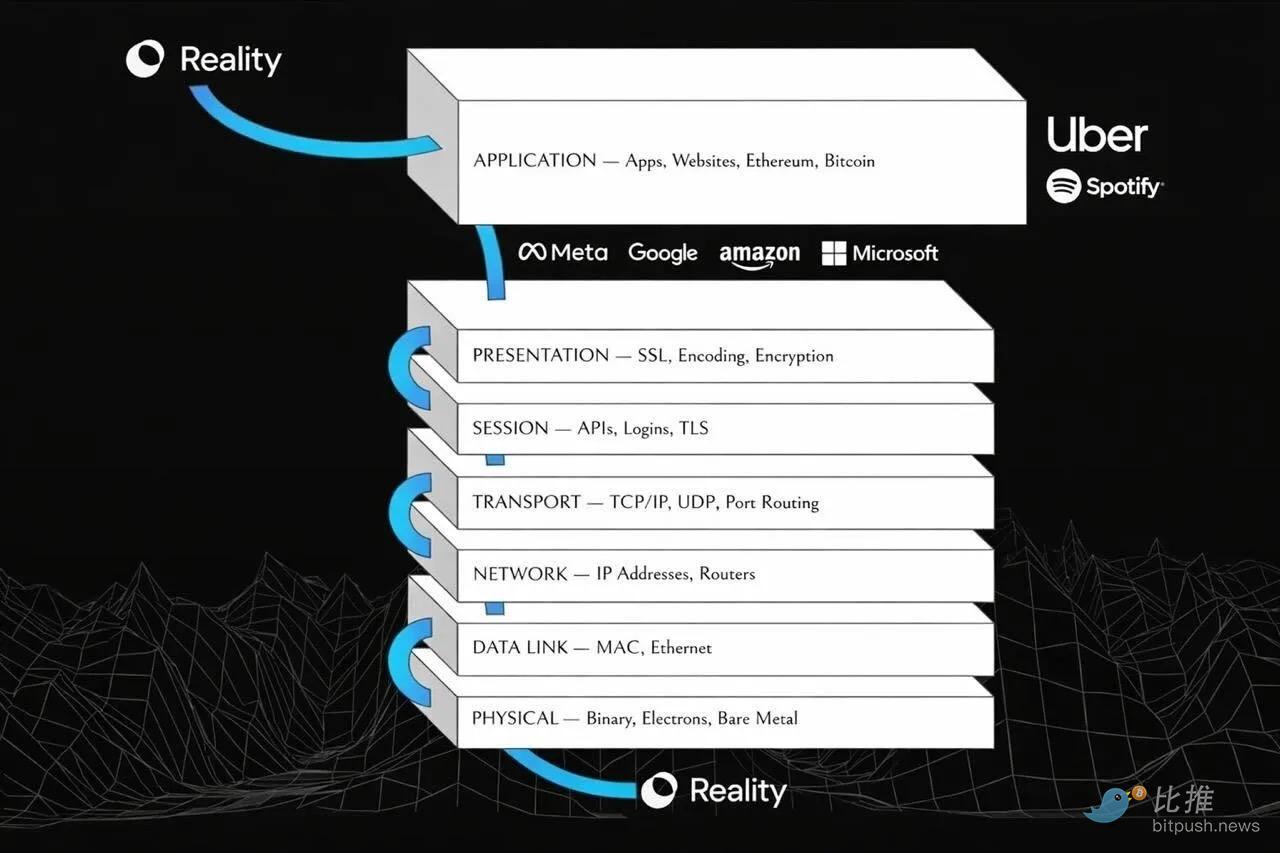
Most blockchains exist at the application layer of the internet, recording and securing *after* computation has happened.
(Image Source: Youtube)
Everything below the application layer (operating systems, servers, hardware) is trust-based. Reality pushes verification to where the code actually runs, binding "truth" to "execution".
This introduces Computational Provenance: providing cryptographic proof at the moment execution, data, and collaboration happen.
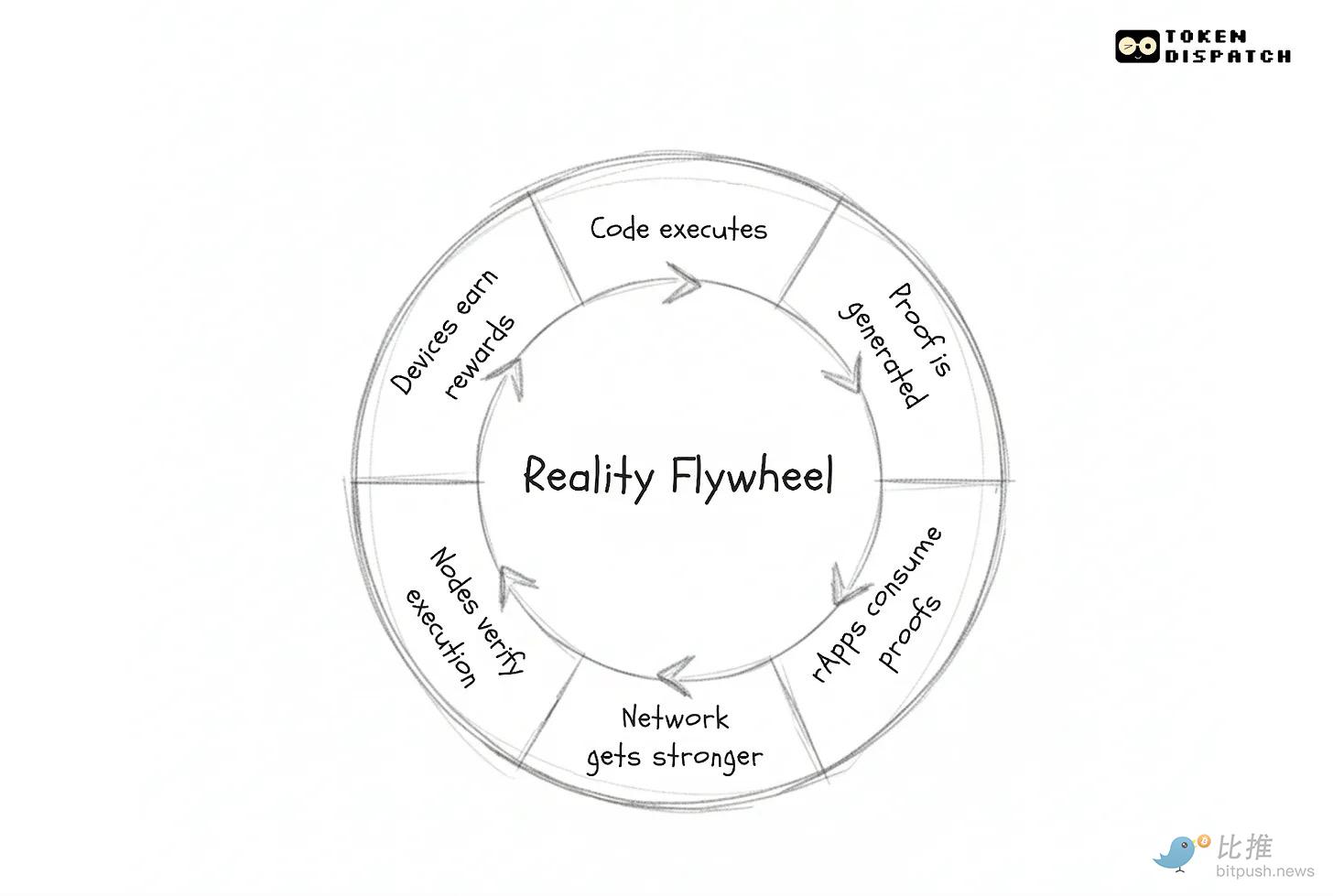
How does it work?
1. 2MEME: Reality's Consensus Engine
Traditional consensus systems reward things that can be "hoarded." Proof of Work (PoW) rewards energy, Proof of Stake (PoS) rewards capital. 2MEME rewards contribution.
It asks: Who is providing the most useful, most original signal to the network right now?
Security is decoupled from staked amount or specialized hardware, allowing consumer devices like laptops and phones to participate meaningfully. Nodes earn rewards by staying online, responding quickly, contributing original signals, and increasing the network's information entropy.
This is stunning because it solves the Byzantine Generals Problem in a way other decentralized networks never have. Experimental results show 2MEME can tolerate over 80% malicious nodes, compared to ~50% for Bitcoin. This means it's a completely different security model.
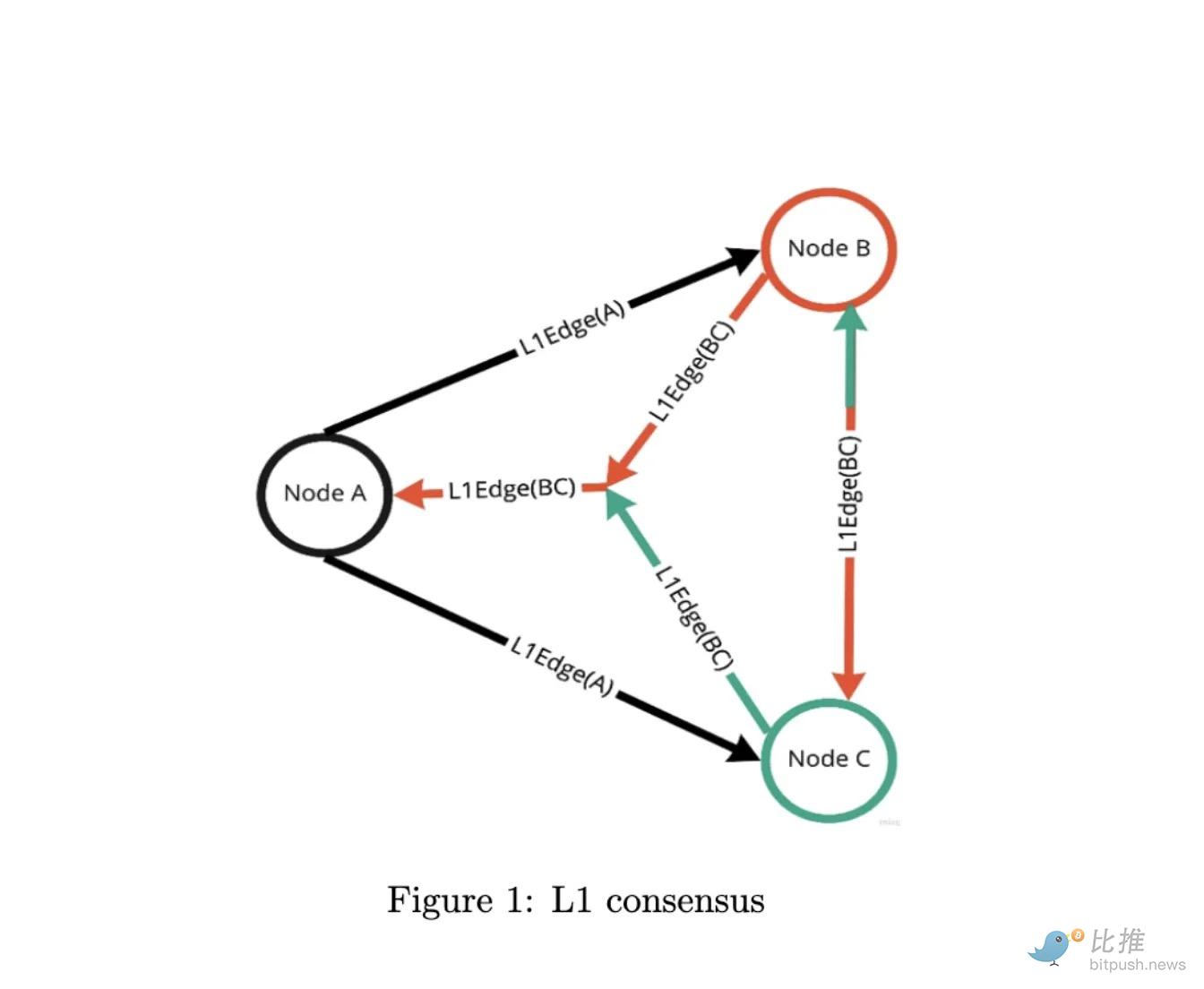
As more nodes join, the network becomes faster and more efficient. This is the opposite of traditional blockchains, where additional participants add congestion and coordination costs. We've seen this play out time and again.
The result is a global, verifiable compute marketplace where trust scales with contribution, not capital and hardware.
2. rApps: A New Class of Verifiable Software
rApps are basically applications that "don't require you to trust them."
When an rApp runs, it doesn't just give you an output and hope you believe it. It provides evidence proving the code indeed ran as declared, under the declared inputs and rules. Anyone can check that proof themselves. No need to trust the developer, the server, or the person running the code.
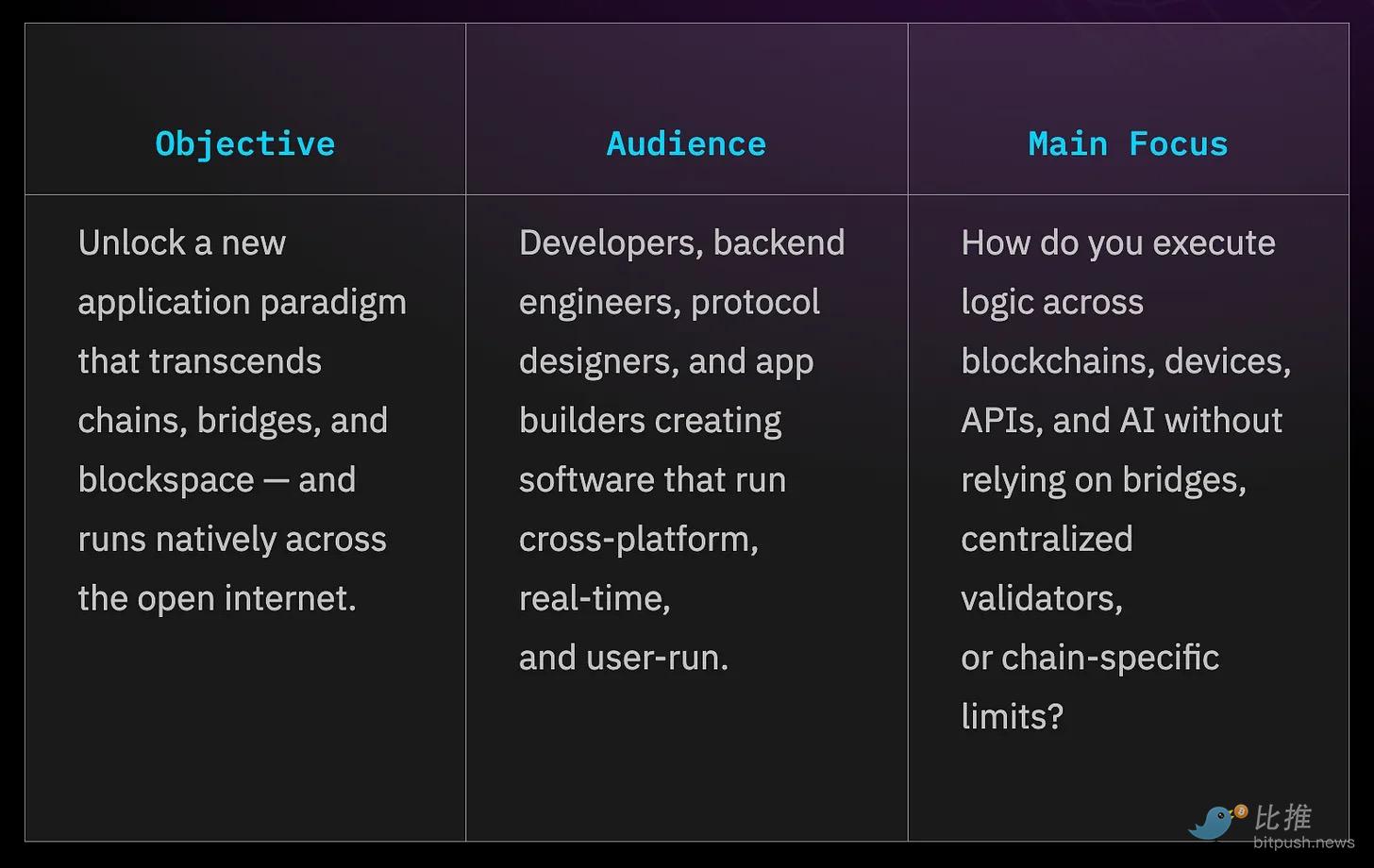
This means you can build applications that require no trust at any level: not the developer, not the host, not the validators or sequencers. The application proves its own correctness.
This is why rApps aren't "Apps" in the usual sense. They are more like user-owned infrastructure. Communities, companies, and developers can deploy their own execution, collaboration, and economic rules without relying on centralized intermediaries. Because execution is portable (meaning it can run on any device and be verified anywhere), they scale like the internet but behave like critical infrastructure.
Cyberlete is one of the most grounded examples I've seen that embodies Reality's vision. It's an anti-cheat system for online gaming, but without a centralized server to decide who is legitimate.
Instead of trusting accounts, CAPTCHAs, or company backends, Cyberlete observes the player's actual actions: mouse movements, input intervals, and those tiny patterns that are hard to fake but easy for humans to produce. These signals are streamed in real-time to an rApp as they happen.
In less than a second, the system runs behavioral checks and produces evidence analyzing what occurred, proving the inputs came from a real person, not a bot or replay script. This is a task existing blockchain architectures simply cannot handle in terms of speed or cost.
3. Global DEX: Native Swaps Without Bridges
Most DEXs don't trade assets directly. They route trades through liquidity pools, wrapped tokens, and Automated Market Makers (AMMs), fracturing liquidity while claiming innovation.
These mechanisms exist to patch architectural limitations. Liquidity pools substitute for real markets, wrapped assets substitute for native assets. The result is a DeFi landscape split across different chains, pools, and abstraction layers, never truly converging into a unified market.
Reality ends this entirely.
Reality introduces a global, verifiable order book where assets can be swapped directly between systems without relying on liquidity pools or exchange custody. BTC, ETH, SOL — swapped natively. No bridges, no wrapping, no intermediaries.
When markets are native to the network, capital is no longer "held hostage." New projects get liquidity permissionlessly, users trade without giving up custody.
Why does this matter? (Three Reasons)
-
Reason 1: Existing blockchains cannot handle verifiable AI
Today, AI inference is where trust silently breaks down. Models run on centralized servers, produce outputs users cannot verify, and influence the world without accountability. rApps change this by making inference itself a verifiable computation. This unlocks AI agents whose decisions can be independently confirmed, backends without centralized servers, and tamper-resistant governance systems without administrators. As AI scales, unverifiable computation becomes a systemic risk. Reality is the only network designed specifically to handle this.
-
Reason 2: Cryptocurrency lacks a "Verification Coordination Layer"
All chains have computation, but no chain can coordinate "truth" across systems. The market needs to fill this void, acting as the deterministic verification fabric linking all chains, agents, and applications. It's the missing "Trust API" for the entire industry. Ethereum sits on top of the internet, while Reality integrates all layers of computation and collaboration. Is it competing with L1s? Not exactly. I'd say it's the substrate they live on.
-
Reason 3: Decentralization has been captured by capital
Bitcoin and Ethereum both reward things that can be hoarded: energy in PoW, capital in PoS. This creates validator cartels, leads to power concentration, and excludes ordinary participants. 2MEME rewards signal, not capital. If a laptop contributes useful information, it can impact security. This is decentralization that can truly scale.
How can you participate?
Reality turns your laptop or phone into a node that earns rewards by contributing computation, staying online, and providing signals to the network.
Here's how it works:
-
Download the Reality Portal app (available now).
-
Your device becomes a node in the compute grid.
-
Earn rewards by executing rApps, verifying computations, and participating in consensus.
-
The more useful signals you provide, the more rewards you earn.
There are no staking thresholds, no validator minimums, and no specialized hardware required. Just your contribution.
Here are the groups who would be interested in this:
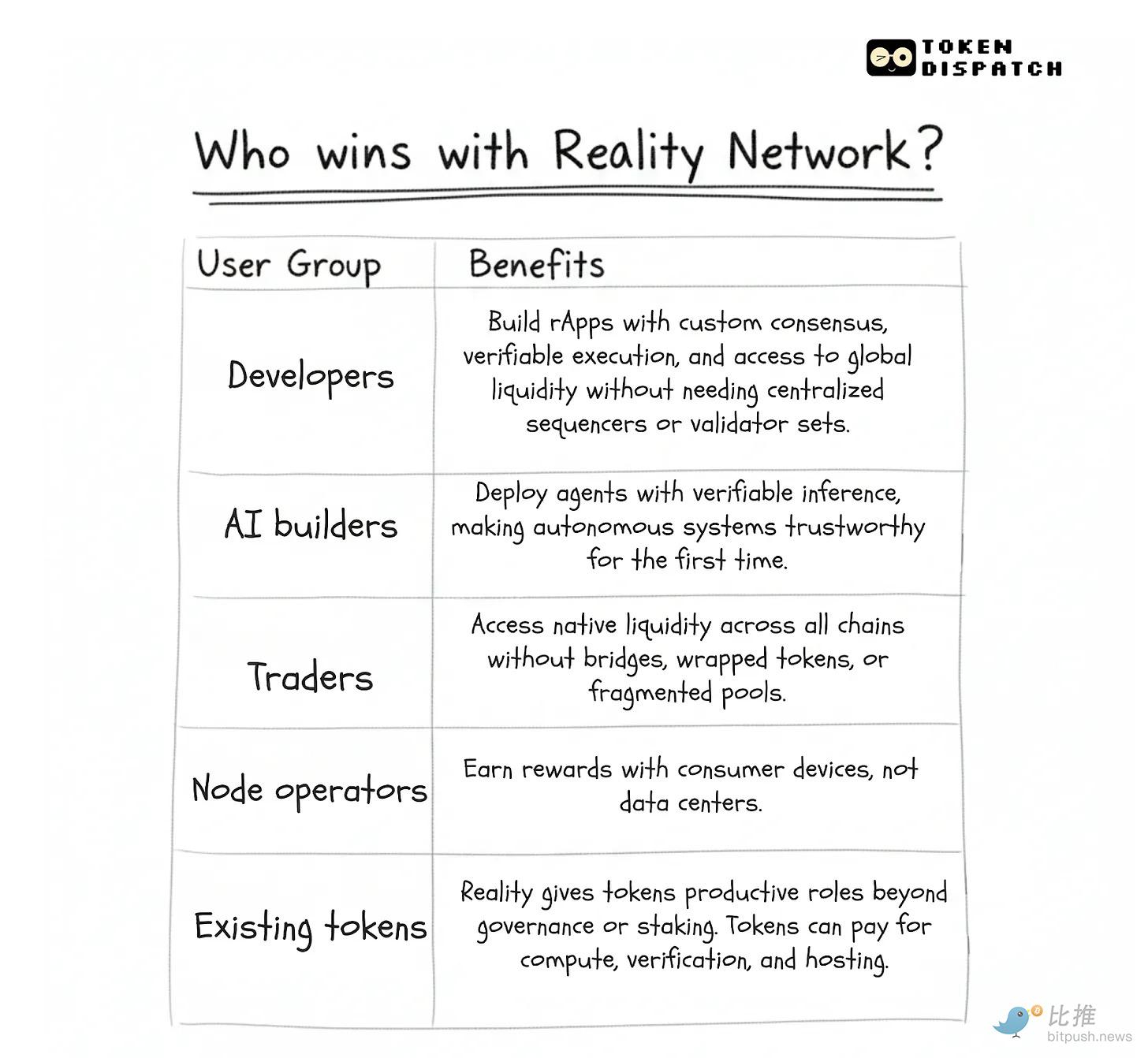
Here's what I think is happening:
We built complex systems to agree on "who owns what" and called it decentralization. But "ownership" is downstream from "execution." And execution—the actual running of the code that determines the outcome—was never truly decentralized.
Reality is the first system I've seen that truly removes the intermediary at the most critical level: computation itself.
This is a fundamental, substrate-level change. When you can prove code ran correctly without trusting the executor, the entire architecture of the internet is reshaped. AI agents become accountable, markets become permissionless, and software becomes verifiable by default.
Vitalik is right that the current L2 vision is problematic. But the solution isn't to patch Ethereum by raising gas limits and adding native Rollup precompiles. It's to stop seeing blockchains as the endgame and start seeing them as applications built on top of a verification layer that didn't exist until now.
Reality is that verification layer.
If it works as claimed, then everything we've built in the last decade is just a prototype for what's coming.
Twitter:https://twitter.com/BitpushNewsCN
Bitpush TG Discussion Group:https://t.me/BitPushCommunity
Bitpush TG Channel: https://t.me/bitpush