a16z Founder: In the Agent Era, What Truly Matters Has Changed

marsbitPubblicato 2026-04-20Pubblicato ultima volta 2026-04-20

Introduzione

Marc Andreessen, co-founder of a16z, argues that the current AI boom is not an overnight success but the culmination of 80 years of research, now delivering practical results. He emphasizes that this era is defined by the convergence of four key capabilities: large language models (LLMs), reasoning, coding, and agents capable of recursive self-improvement. Andreessen describes the agent architecture—combining an LLM with a shell, file system, markdown, and cron/loop—as a fundamental shift beyond chatbots. This structure leverages existing software components, allowing agents to maintain state, introspect, and extend their own functionality. He predicts a move away from traditional GUI and browser-based interactions toward an "agent-first" world where software is primarily operated by bots, not humans, with people simply stating their goals. He draws parallels to the 2000 internet bubble but notes key differences: current AI infrastructure investments are led by cash-rich giants and quickly monetized. He highlights that scaling constraints involve not just GPUs but the entire chip ecosystem. Open source and edge inference are crucial for democratizing knowledge and enabling low-latency, cost-effective applications on local hardware. Finally, Andreessen identifies significant non-technical challenges: potential short-term cybersecurity crises, the need for "proof of human" identity solutions, financial infrastructure for agents, and institutional resistance from sectors like...

Original Title: Marc Andreessen introspects on Death of the Browser, Pi + OpenClaw, and Why "This Time Is Different"

Original Compilation: FuturePulse

Signal Source: This is the latest interview with a16z founder Marc Andreessen on the Latent Space podcast. He is a renowned American internet entrepreneur and a key figure in the early development of the internet; after founding a16z, he became a representative figure among Silicon Valley's top investors. The entire conversation revolves around the history and latest trends of AI development and is highly worth reading.

I. This Wave of AI Did Not Emerge Out of Nowhere; It Is the First Comprehensive "Start of Work" After an 80-Year Technological Marathon
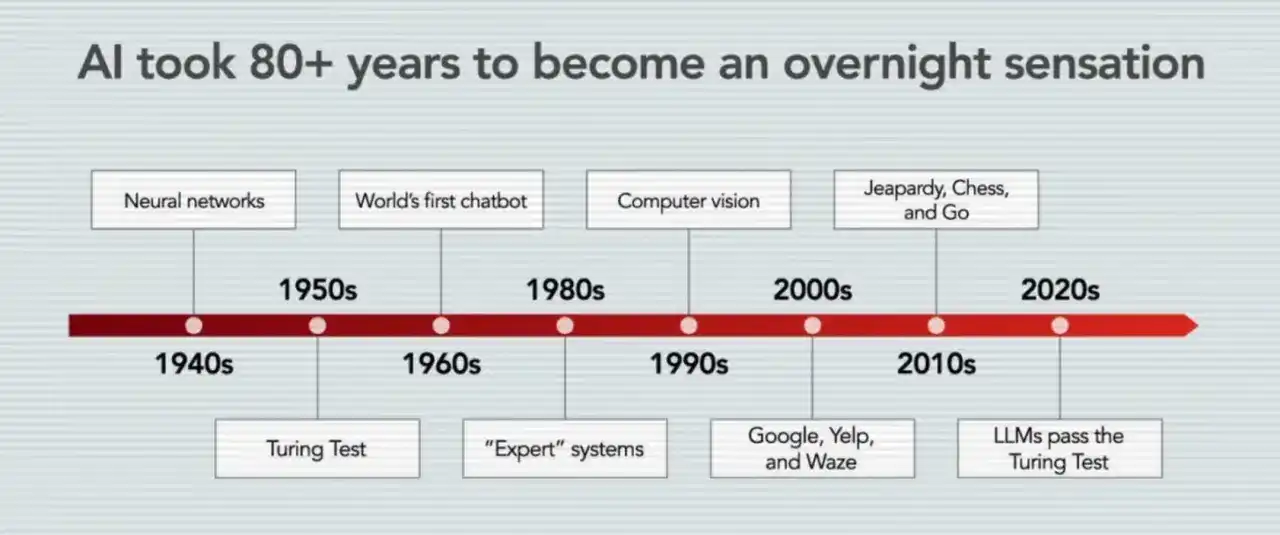
  • This wave of AI did not emerge out of nowhere; it is the result of an 80-year technological marathon.

  • Marc Andreessen directly refers to the present as an "80-year overnight success," meaning that the sudden explosion in the public eye is actually the concentrated release of decades of technological储备.

  • He traces this technological线索 back to early neural network research and emphasizes that the industry has now accepted the judgment that "neural networks are the correct architecture."

  • In his narrative, the key nodes are not single moments but a series of堆叠: AlexNet, Transformer, ChatGPT, reasoning models, and then agents and self-improvement.

  • He particularly emphasizes that this time it's not just text generation that has become stronger; four types of capabilities have emerged simultaneously: LLMs, reasoning, coding, and agents / recursive self-improvement.

  • The reason he believes "this time is different" is not because the narrative is more compelling, but because these capabilities have already begun to work on real-world tasks.

II. The Agent Architecture Represented by Pi and OpenClaw Is a Deeper Change in Software Architecture Than Chatbot
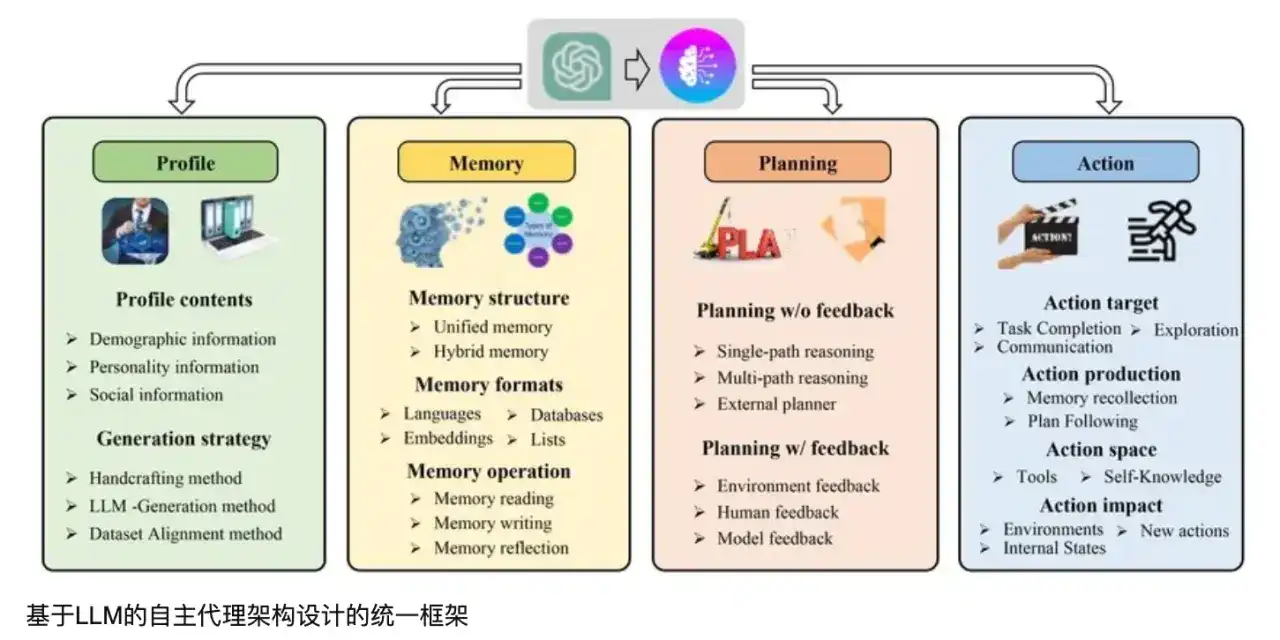
  • He describes agents very concretely: essentially, they are "LLM + shell + file system + markdown + cron/loop." In this structure, the LLM is the core for reasoning and generation, the shell provides the execution environment, the file system saves the state, markdown makes the state readable, and cron/loop provides periodic awakening and task advancement.

  • He believes the importance of this combination lies in the fact that除了 the model itself is new, all other components are mature, understandable, and reusable parts of the software world.

  • The state of the agent is saved in files, so it can migrate across models and runtimes; the underlying model can be replaced, but the memory and state are still retained.

  • He repeatedly emphasizes introspection: the agent knows its own files, can read its own state, and can even rewrite its own files and functions, moving towards "extend yourself."

  • In his view, the real breakthrough is not just that "the model can answer," but that the agent can utilize the existing Unix toolchain to bring in the potential capabilities of the entire computer.

III. The Era of Browsers, Traditional GUIs, and "Manual Clicking on Software" Will Be Gradually Replaced by Agent-First Interaction Methods

  • Marc Andreessen has clearly stated that in the future, "you may no longer need a user interface."

  • He further pointed out that the main users of future software may not be humans, but "other bots."

  • This means that many of the interfaces designed today for human clicking, browsing, and form-filling will degenerate into the execution layer called by agents behind the scenes.

  • In this world, humans are more like goal-setters: telling the system what they want, and then having the agent call services, operate software, and complete processes.

  • He connects this change to the broader future of software: high-quality software will become increasingly "abundant," no longer a scarce product手工 crafted by a few engineers.

  • He also judges that the importance of programming languages will decline; models will write code across languages, translate between them, and in the future, humans will be more concerned with explaining why the AI organized the code in a certain way, rather than clinging to a particular language itself.

  • He even mentioned a more radical direction: conceptually, AI may not only output code but also directly output lower-level binary code or model weights (模型权重).

IV. This AI Investment Cycle Has Similarities to the 2000 Internet Bubble, but the Underlying Supply and Demand Structure Is Different

  • Looking back at 2000, he emphasized that the crash was largely not because "the internet didn't work," but because of overbuilding in telecommunications and bandwidth infrastructure, with fiber optics and data centers being laid超前, followed by a long period of digestion.

  • He believes that today we can indeed see concerns about "overbuilding," but the main investors are cash-rich large companies like Microsoft, Amazon, and Google, not highly leveraged fragile players.

  • He特别指出 that now, as long as an investment in operable GPUs is formed, it can usually be converted into revenue quickly, which is different from the大量闲置 capacity in 2000.

  • He also emphasized that what we are using now is actually a "sandbagged" version of the technology: because of insufficient supply of GPUs, memory, data centers, etc., the potential of the models has not been fully released.

  • In his judgment, the real constraints in the coming years are not only GPUs but also the联动 bottlenecks of CPUs, memory, network, and the entire chip ecosystem.

  • He juxtaposes AI scaling laws with the previous Moore's Law, believing that they not only describe规律 but also continuously stimulate capital, engineering, and industry to advance together.

  • He mentioned a very反常 but important phenomenon: as software optimization speeds up, some older-generation chips may even become more economically valuable than when they were first purchased.

V. Open Source, Edge Inference, and Local Operation Are Not Sidelights but Part of the AI Competitive Landscape

  • Marc Andreessen clearly believes that open source is very important, not only because it's free but because it "lets the whole world learn how it's made."

  • He describes open-source releases like DeepSeek as a "gift to the world," because code + paper quickly扩散 knowledge and raise the entire industry's baseline.

  • In his narrative, open source is not just a technical choice; it may also be a geopolitical and market strategy: different countries and companies will adopt different开放 strategies based on their commercial constraints and influence goals.

  • He also emphasizes the importance of edge inference ("Edge inference"): in the coming years, centralized inference costs may not be low enough, and many consumer-level applications cannot bear long-term high cloud inference costs.

  • He mentioned a recurring pattern: models that seem "impossible to run on a PC" today often can indeed run on local machines a few months later.

  • Besides cost, factors promoting local operation include trust, privacy, latency, and usage scenarios: wearable devices, door locks, portable devices, etc., are more suitable for low-latency,就地 inference.

  • His judgment is very direct: almost everything with a chip may have an AI model in the future.

VI. The Real Challenges of AI Lie Not Only in Model Capabilities but Also in Security, Identity, Capital Flow, Organization, and Institutional Resistance

  • On security, his judgment is very sharp: almost all potential security bugs will be easier to find, and there may be a short-term "computer security catastrophe."

  • But he also believes that programming intelligences will scale the ability to patch vulnerabilities; in the future, the way to "protect software" may be to have bots scan and fix it.

  • On the identity issue, he believes "proof of bot" is not feasible because bots will become increasingly powerful; the真正可行的 direction is "proof of human," which is a combination of biometrics, cryptographic verification, and selective disclosure.

  • He also talked about a frequently overlooked problem: if agents are really going to handle affairs in the real world, they will eventually need money, payment capabilities, and even some form of bank account, card, or stablecoin-style infrastructure. At the organizational level, he used the framework of managerial capitalism, believing that AI may重新强化 founder-led companies, because bots are very good at reports, coordination, paperwork, and a lot of "managerial work."

  • But he does not believe that society will quickly and smoothly accept AI: he cited examples like professional licenses, unions, dockworker strikes, government departments, K-12 education, and healthcare to illustrate that the real world has大量制度性减速器.

  • His judgment is that both AI utopians and doomsayers tend to overlook one point: just because something is technologically possible does not mean that 8 billion people will immediately change accordingly.


Crypto di tendenza

Domande pertinenti

QAccording to Marc Andreessen, why is the current AI boom considered an '80-year overnight success'?

AHe describes it an '80-year overnight success' because the public sees a sudden explosion, but behind it is the concentrated release of decades of technical reserves, tracing the technological lineage back to early neural network research.

QWhat is the core architecture of an AI agent as described by Marc Andreessen?

AHe describes an agent as essentially 'LLM + shell + file system + markdown + cron/loop', where the LLM is the reasoning core, the shell provides the execution environment, the file system saves state, markdown ensures readability, and cron/loop enables periodic wake-up and task progression.

QHow does Andreessen believe user interaction with software will change in the agent era?

AHe believes the era of browsers and traditional GUIs for manual clicking will be gradually replaced. People will state their goals, and agents will call services, operate software, and complete processes. The primary users of software may become 'other bots', not humans.

QWhat key difference does Andreessen highlight between the current AI investment cycle and the 2000 internet bubble?

AA key difference is that today's investment is led by cash-rich large companies like Microsoft, Amazon, and Google, not highly leveraged, fragile players. Additionally, GPU investments can quickly be converted into revenue, unlike the大量闲置容量 (massive idle capacity) of 2000.

QWhat is Andreessen's view on the importance of open source in AI development?

AHe believes open source is crucial not just because it's free, but because it 'lets the whole world learn how it is made.' He describes open-source releases as a 'gift to the world' that rapidly disseminates knowledge and raises the entire industry's baseline.

Letture associate

In Conversation with Ray Dalio: We Are Currently in an AI Bubble, with 1% of My Portfolio in Bitcoin

Ray Dalio, founder of Bridgewater Associates, warns in an interview that the current AI boom shows classic bubble characteristics, which could lead to significant economic downturns as seen in past cycles like 1929 or 2000. He explains that speculative enthusiasm, fueled by debt and overvaluation, often precedes a crash when rising rates or taxation force asset sales, causing widespread losses and recession. Dalio also outlines his "Big Cycle" theory, describing an approximate 80-year pattern where widening wealth gaps, massive government deficits, and shifting geopolitical power (like China's rise) create internal conflict and global instability. He emphasizes that we are in a late-cycle, transitional phase where traditional powers like the US and UK face decline. For personal wealth protection, Dalio advises diversification beyond cash into assets like stocks, bonds, real estate, and particularly gold, which he prefers over Bitcoin. While he holds about 1% of his portfolio in Bitcoin as a non-printable hard asset, he views gold as more secure from technological or governmental threats. Regarding AI's impact, Dalio believes it will disproportionately benefit capital owners, worsening inequality by replacing both physical and cognitive labor. He suggests that human intuition and emotional intelligence, combined with AI, will be key for future workers. On taxation, Dalio argues that wealth taxes are impractical and risk triggering asset sell-offs, reducing productive investment. He points to the UK as a cautionary example of debt, low productivity, and political strife. Geopolitically, Dalio foresees a more regionalized world, with the US showing weakness in prolonged conflicts like with Iran, akin to past imperial declines. The ideal outcome, he suggests, is coexisting powerful blocs (e.g., Americas, China-Asia Pacific) without major war.

marsbit36 min fa

In Conversation with Ray Dalio: We Are Currently in an AI Bubble, with 1% of My Portfolio in Bitcoin

marsbit36 min fa

Daily 7.2 Trillion KRW: Foreign Capital's Record Net Buying on Friday! Wall Street Says Headwinds for Korean Stock Fund Flows Have Subsided

South Korean stock market sees a dramatic shift in fund flows. On July 31, foreign investors made a record net purchase of approximately KRW 7.2 trillion in KOSPI stocks, marking a fundamental reversal from the persistent large-scale net outflows seen in previous months. This contributed to a significant narrowing of foreign net selling in July to KRW 9.8 trillion, down sharply from KRW 48.4 trillion in June and KRW 44.5 trillion in May. Simultaneously, domestic institutional pressure eased. South Korean pension funds and asset managers turned to a net buying position in July, purchasing KRW 1.0 trillion worth of KOSPI shares, contrasting with net sales in May and June. Market volatility is expected to be dampened by new financial regulations. Effective July 31, the Financial Services Commission tightened access for retail investors to single-stock leveraged ETFs by raising the minimum cash deposit requirement. Trading volumes for these products subsequently dropped to about 50% of their monthly average. Citigroup Research maintains its year-end KOSPI target of 10,000 points. The firm cites several supportive factors: the substantial easing of headwinds from capital outflows, a robust fundamental outlook for the semiconductor sector, historically low market valuations, strong economic fundamentals, and the potential for policy support from financial authorities if needed.

marsbit36 min fa

Daily 7.2 Trillion KRW: Foreign Capital's Record Net Buying on Friday! Wall Street Says Headwinds for Korean Stock Fund Flows Have Subsided

marsbit36 min fa

Thanks to Dice Rolls, Bitcoin Keys Are Stored Offline, But Not Everyone Will Do It

The article discusses using dice rolls to generate secure Bitcoin wallet seeds, providing entropy independent of potentially flawed hardware random number generators. It explains that each fair dice roll offers about 2.585 bits of entropy, with around 50 rolls needed for a standard 12-word seed phrase and 99+ recommended for higher security. This method gained attention after a vulnerability was revealed in some Coldcard hardware wallets, where a faulty firmware RNG (dating back to 2021) compromised generated keys. The analysis notes that while a dice-generated main seed was safe from this specific flaw, other Coldcard functions (like creating paper wallets, backup keys, or passwords) could still be vulnerable if they used the defective RNG. The piece argues that while dice-based entropy is technically robust, the manual process is error-prone, tedious, and unrealistic for most new users, who might make mistakes in recording or inputting rolls. It concludes that while manual entropy generation should remain an option for advanced users, the long-term goal is to develop reliable, user-friendly hardware and software that securely generates randomness without requiring specialized knowledge. Coldcard users are advised to check their firmware version and replace any secondary secrets (like paper wallet keys) created with vulnerable devices, while also considering multi-signature setups with devices from different manufacturers for added security.

cryptonews.ru5 h fa

Thanks to Dice Rolls, Bitcoin Keys Are Stored Offline, But Not Everyone Will Do It

cryptonews.ru5 h fa

Trading

Spot

Articoli Popolari

Come comprare ERA

Benvenuto in HTX.com! Abbiamo reso l'acquisto di Caldera (ERA) semplice e conveniente. Segui la nostra guida passo passo per intraprendere il tuo viaggio nel mondo delle criptovalute.Step 1: Crea il tuo Account HTXUsa la tua email o numero di telefono per registrarti il tuo account gratuito su HTX. Vivi un'esperienza facile e sblocca tutte le funzionalità,Crea il mio accountStep 2: Vai in Acquista crypto e seleziona il tuo metodo di pagamentoCarta di credito/debito: utilizza la tua Visa o Mastercard per acquistare immediatamente CalderaERA.Bilancio: Usa i fondi dal bilancio del tuo account HTX per fare trading senza problemi.Terze parti: abbiamo aggiunto metodi di pagamento molto utilizzati come Google Pay e Apple Pay per maggiore comodità.P2P: Fai trading direttamente con altri utenti HTX.Over-the-Counter (OTC): Offriamo servizi su misura e tassi di cambio competitivi per i trader.Step 3: Conserva Caldera (ERA)Dopo aver acquistato Caldera (ERA), conserva nel tuo account HTX. In alternativa, puoi inviare tramite trasferimento blockchain o scambiare per altre criptovalute.Step 4: Scambia Caldera (ERA)Scambia facilmente Caldera (ERA) nel mercato spot di HTX. Accedi al tuo account, seleziona la tua coppia di trading, esegui le tue operazioni e monitora in tempo reale. Offriamo un'esperienza user-friendly sia per chi ha appena iniziato che per i trader più esperti.

435 Totale visualizzazioniPubblicato il 2025.07.17Aggiornato il 2026.06.02

Come comprare ERA

Discussioni

Benvenuto nella Community HTX. Qui puoi rimanere informato sugli ultimi sviluppi della piattaforma e accedere ad approfondimenti esperti sul mercato. Le opinioni degli utenti sul prezzo di ERA ERA sono presentate come di seguito.

活动图片












