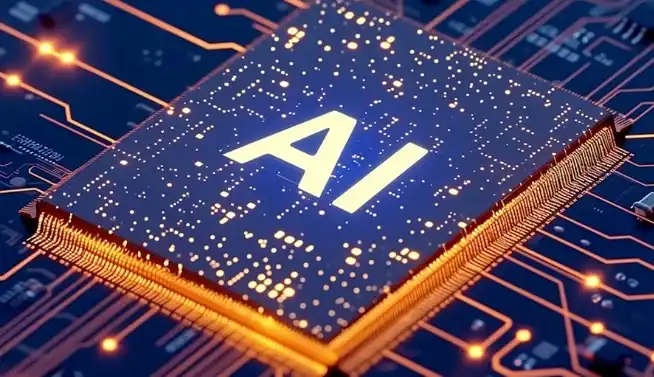
Farewell to the Copper Era: Understanding the Logic of the AI Silicon Photonics Industry Chain and Key US Stock Players
**Summary: The Era of Silicon Photonics and Key AI Infrastructure Stocks**
The article delves into the transition from copper-based interconnects to silicon photonics (SiPh) as a critical enabler for next-generation AI data centers. It explains that copper faces fundamental physical limits—the bandwidth wall, density wall, and power wall—at high data rates (1.6T+), making a material shift essential. Silicon photonics, which integrates components like lasers, modulators, and detectors onto a silicon chip, offers a solution by leveraging mature CMOS manufacturing for cost-effective, high-volume production. A key challenge is that silicon itself is not an efficient light source, making Indium Phosphide (InP) lasers a critical and supply-constrained component.
A major industry catalyst was NVIDIA's 2025 GTC announcement, declaring optical interconnects a "standard" from its Rubin platform onward, followed by strategic investments to secure the supply chain.
The industry is structured in four key layers:
1. **Foundries:** TSMC leads with its COUPE platform, while Tower Semiconductor (specialized SiPh foundry) and GlobalFoundries are major players.
2. **Core Component Suppliers:** Lumentum is highlighted as the sole volume manufacturer of the crucial 200G/lane EML laser, with orders locked by NVIDIA through 2027.
3. **Module & System Manufacturers:** Coherent holds significant market share, with Chinese manufacturers like InnoLight also noted for scale.
4. **System Integrators:** NVIDIA, Broadcom, and Marvell dominate this layer, setting standards and integrating technology.
The article identifies core public investment targets: **NVIDIA (NVDA)** as the ecosystem driver; **Broadcom (AVGO)** and **Marvell (MRVL)** in networking/switching chips; **Lumentum (LITE)** and **Coherent (COHR)** for critical components; and foundries **TSMC (TSM)** and **Tower Semiconductor (TSEM)**. Private companies Lightmatter and Ayar Labs are noted as key IPO candidates.
The silicon photonics shift is driving a re-rating of company valuations, moving them from traditional telecom/industrial metrics to premium AI infrastructure multiples. The industry features high barriers to entry (e.g., multi-year lead times for InP laser capacity, complex 3D integration/thermal management, and lengthy customer qualification cycles), suggesting a "winner-takes-most" dynamic.
Risks include dependence on hyperscaler capex cycles, potential technology disruption among competing optical approaches (LPO, CPO, OCS, Optical I/O), and a timeline where widespread CPO deployment may not occur until ~2028, with LPO serving as a transitional technology. The conclusion advises that betting on the overall industry trend may be safer than betting on any single company.
marsbit45 min fa