«Latam Insights»: Tokenized Cows in Brazil, the Reality of Remittances in El Salvador, and a Cryptocurrency Bill in Argentina

cryptonews.ruPubblicato 2026-07-27Pubblicato ultima volta 2026-07-27

Introduzione

In Brazil, a farm in Paraná secured a $100,000 loan using 10 tokenized cows as collateral, monitored via decentralized tech, allowing for higher valuations due to reduced lender risk. In El Salvador, crypto remittances accounted for only 0.7% ($35.4M) of the $5B+ received in H1 2026, though volume grew 39% year-over-year, with traditional channels dominating. Meanwhile, Argentina's new deregulation bill aims to integrate crypto and blockchain into capital markets by allowing investment funds to hold digital assets and permitting the tokenization of securities, potentially unlocking billions in demand.

The Engendro Velho farm, located in the state of Paraná (Brazil), received a loan of nearly $20,000 using a herd of 10 cows as collateral, with decentralized technology used to digitize information about each cow.

The farmer received a financial agricultural bond (CPR-F) worth nearly $100,000 from BMP, a direct lending company, and the collateral assets (each cow) were transferred to Target FIDC – a fintech company that registered the transaction using data about each animal.

While such deals are not new, tokenization and monitoring of cows allow farmers to negotiate better terms, as lenders can check the herd's condition at any time, reducing the risks associated with such a loan.

Humberto Brenner, director of Target FIDC, emphasized that because of this factor, the price of a cow can reach a level 2.5 times higher than the price that would be set in similar agreements without monitoring. “Monitoring eliminates this uncertainty,” he stated.

5 Years After Bitcoin Law Adoption, Cryptocurrency Accounts for Only 0.7% of El Salvador's $5 Billion Remittance Market

Data released by the Central Bank of El Salvador showed that in the first half of 2026, only $35.4 million of the total external remittances to the country were sent through digital currency channels. This figure represents less than 1% of all funds sent to the country in 2026, the total of which exceeded $5 billion.

For comparison, the share of cash remittances, delivered in person when senders travel from another country to El Salvador to visit their relatives, grew to 3.8%. However, cryptocurrency remittance figures are significantly higher than in the first half of 2025, when their volume was $25.4 million, representing a growth of 39.1%.

The total volume of remittances during this period also grew from $4.84 billion to $5.06 billion, corresponding to an increase of $219.2 million (4.5%). Money transfer companies and banks are the preferred channels for Salvadorans sending money home, accounting for over 84% of the volume of funds coming from abroad.

Argentina Proposes Deregulation Bill to Modernize Capital Markets with Crypto and Blockchain

A preliminary deregulation bill, prepared by Minister of Deregulation Federico Sturzenegger, proposes significant changes aimed at incorporating digital assets and decentralized technologies into national financial markets, with the goal of opening new opportunities for investors interested in these assets.

Primarily, the bill proposes to allow investment funds to invest in digital assets if it aligns with the fund's investment policy. Preliminary estimates suggest this would create billions in demand for digital assets.

“Today, cryptoassets are investment assets; allowing funds to invest in them is a good thing, of course, provided they comply with regulatory requirements that the CNV must approve. It is not about just anyone going out to buy Bitcoin, and it's not about any cryptoasset whatsoever,” a source who wished to remain anonymous told Clarin.

Furthermore, the document allows for the tokenization of all negotiable securities, including the issuance, custody, transfer, and sale of these assets using decentralized technologies.

end-content

Crypto di tendenza

Domande pertinenti

QHow did the Brazilian farm Engendro Velho use decentralized technology to secure a loan, and what was the impact on the value of their collateral?

AThe farm used decentralized technology to tokenize and monitor a herd of 10 cows, which were used as collateral for a loan. This real-time monitoring allowed creditors to verify the herd's condition, reducing risk. Consequently, the monitored cows could be valued at up to 2.5 times the price they would have in similar agreements without monitoring.

QAccording to the Central Bank of El Salvador, what percentage of the $5 billion remittance market did cryptocurrency represent in the first half of 2026, and how does this compare to cash remittances delivered in person?

AIn the first half of 2026, cryptocurrency represented only 0.7% (or $35.4 million) of El Salvador's $5 billion remittance market. In comparison, cash remittances delivered in person by visitors accounted for 3.8% of the market.

QWhat is one of the key proposals in Argentina's draft deregulation bill regarding investment funds and digital assets?

AOne key proposal is to allow investment funds to invest in digital assets, provided it aligns with the fund's investment policy and complies with regulations to be approved by the CNV (National Securities Commission). This is expected to generate billions in demand for digital assets.

QWhat does Argentina's preliminary deregulation bill propose regarding the tokenization of securities?

AThe bill proposes to allow the tokenization of all negotiable securities, including their issuance, custody, transfer, and sale using decentralized technologies.

QDespite the low overall percentage, how did the volume of cryptocurrency remittances to El Salvador change from the first half of 2025 to the first half of 2026?

AThe volume of cryptocurrency remittances grew by 39.1%, increasing from $25.4 million in the first half of 2025 to $35.4 million in the first half of 2026.

Letture associate

ChangXin's Debut: The Missed 50 Billion Yuan by Country Garden, and the Handover of an Era

On July 27, 2026, Changxin Memory Technologies (CXMT) debuted on the STAR Market, its share price surging 471.59%. With a market cap exceeding ICBC, it became China’s most valuable A-share company, highlighting a dramatic technological and economic shift. In 2021, at the peak of China's real estate boom, developer Country Garden invested 2 billion yuan (20 billion) for a 1.56% stake in the fledgling chipmaker through its venture capital arm. The investment was strategic; CXMT represented a crucial "chain-blocker" in China's semiconductor supply chain. Country Garden’s unique "perpetual capital" model allowed for long-term bets on hard tech, from space rockets to memory chips. However, the property sector’s severe downturn forced Country Garden's hand. Facing immense liquidity pressure to fund construction and deliver pre-sold homes, it sold its entire CXMT stake back to Hefei's state-owned capital for the original 2 billion yuan in December 2024. By the IPO date, that stake was worth roughly 50 billion yuan, a 500 billion opportunity lost. This story encapsulates a pivotal transition. Money accumulated during the property boom was redirected to seed next-generation industries like semiconductors. Yet the old cycle collapsed faster than the new one could mature. While Country Garden accurately foresaw the strategic importance of chip manufacturing, it ultimately misjudged how long its own capital could wait, becoming a poignant symbol of an era's handover from bricks and mortar to silicon and innovation.

marsbit17 min fa

ChangXin's Debut: The Missed 50 Billion Yuan by Country Garden, and the Handover of an Era

marsbit17 min fa

Why Can't Kimi Go to a Nightclub to Celebrate Success?

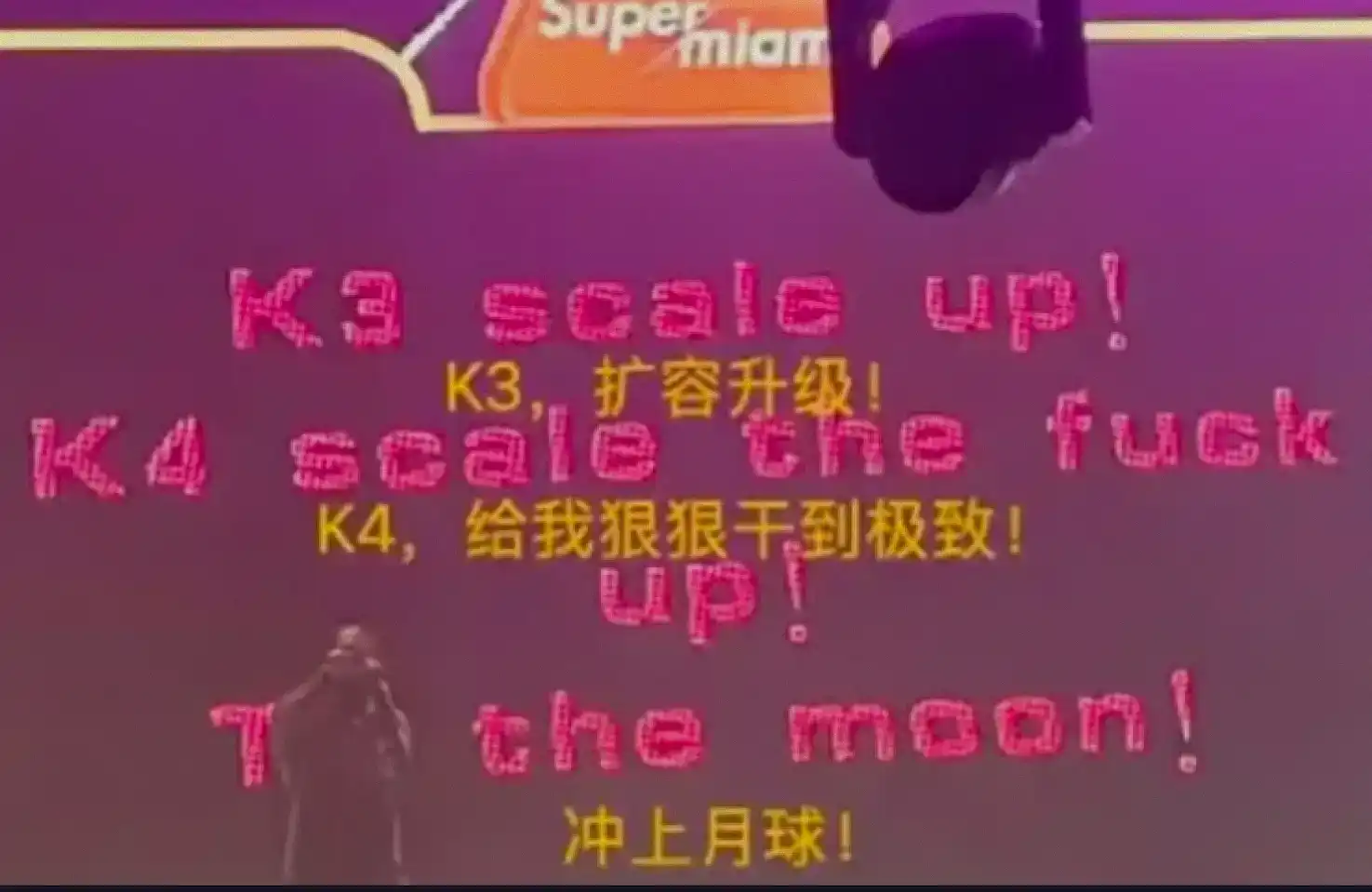
"Why Can't Kimi Go to a Nightclub to Celebrate Success?" The article discusses the controversy surrounding the Chinese AI company Kimi's decision to hold a celebration at a Beijing nightclub after the successful release of its K3 model. While the event drew criticism on social media for being "flashy" and a sign of losing focus, the author argues this reflects a double standard. The piece contrasts the reaction to Kimi with the perception of similar celebrations by Silicon Valley tech companies. In the U.S., such events are often seen as symbols of ambition and a vibrant culture. The author suggests a "Silicon Valley worship" exists, where Western tech elites are granted the freedom to define success and lifestyle, while Chinese companies face constant scrutiny and must prove their worthiness beyond just technical achievements. Furthermore, the article critiques a deep-rooted "moralism of hardship" in Chinese culture, where success is expected to be earned through visible struggle and austerity, especially for scientists and innovators. Figures like mathematician Wang Hong, who presents an elegant and stylish image, challenge the stereotypical expectation of the disheveled, ascetic academic. The core argument is that Kimi's nightclub celebration itself proves nothing about the company's long-term viability or technical prowess. The backlash, however, reveals unrealistic expectations for Chinese tech firms: to simultaneously embody the disruptive energy of Silicon Valley while maintaining the humble demeanor of a perpetual underdog. The author concludes that a mature tech culture should allow Chinese talent to experience and express the joy of their achievements without judgment.

marsbit37 min fa

Why Can't Kimi Go to a Nightclub to Celebrate Success?

marsbit37 min fa

Trading

Spot

Articoli Popolari

Come comprare BILL

Benvenuto in HTX.com! Abbiamo reso l'acquisto di Billions Network (BILL) semplice e conveniente. Segui la nostra guida passo passo per intraprendere il tuo viaggio nel mondo delle criptovalute.Step 1: Crea il tuo Account HTXUsa la tua email o numero di telefono per registrarti il tuo account gratuito su HTX. Vivi un'esperienza facile e sblocca tutte le funzionalità,Crea il mio accountStep 2: Vai in Acquista crypto e seleziona il tuo metodo di pagamentoCarta di credito/debito: utilizza la tua Visa o Mastercard per acquistare immediatamente Billions NetworkBILL.Bilancio: Usa i fondi dal bilancio del tuo account HTX per fare trading senza problemi.Terze parti: abbiamo aggiunto metodi di pagamento molto utilizzati come Google Pay e Apple Pay per maggiore comodità.P2P: Fai trading direttamente con altri utenti HTX.Over-the-Counter (OTC): Offriamo servizi su misura e tassi di cambio competitivi per i trader.Step 3: Conserva Billions Network (BILL)Dopo aver acquistato Billions Network (BILL), conserva nel tuo account HTX. In alternativa, puoi inviare tramite trasferimento blockchain o scambiare per altre criptovalute.Step 4: Scambia Billions Network (BILL)Scambia facilmente Billions Network (BILL) nel mercato spot di HTX. Accedi al tuo account, seleziona la tua coppia di trading, esegui le tue operazioni e monitora in tempo reale. Offriamo un'esperienza user-friendly sia per chi ha appena iniziato che per i trader più esperti.

328 Totale visualizzazioniPubblicato il 2026.05.07Aggiornato il 2026.06.02

Come comprare BILL

Discussioni

Benvenuto nella Community HTX. Qui puoi rimanere informato sugli ultimi sviluppi della piattaforma e accedere ad approfondimenti esperti sul mercato. Le opinioni degli utenti sul prezzo di BILL BILL sono presentate come di seguito.

活动图片