After Missing the 20x, I've Found a 'Dumb' Method for AI Investing

marsbitPubblicato 2026-06-23Pubblicato ultima volta 2026-06-23

Introduzione

**Missing the 20x Opportunity: A Simple 'Dumb' Approach to AI Investing** The AI boom, driving NVIDIA's revenue from $60B to $216B in two years, creates immense investment pressure. However, like the internet bubble of 2000, the largest AI opportunities likely lie ahead, perhaps after a correction. Instead of rushing in now or waiting paralyzed for a crash, the author proposes a third way: building a "knowledge warehouse" by systematically mapping the AI industry to be ready when opportunities arise. The core of the strategy is understanding AI's four-layer value chain: 1. **Compute Infrastructure (The "Engine"):** This foundational layer, where all money eventually flows, includes: a) **Chip Design:** NVIDIA's dominance via its CUDA ecosystem, b) **Chip Manufacturing/Packaging/Memory:** TSMC's near-monopoly in advanced manufacturing and SK Hynix's lead in High Bandwidth Memory (HBM), c) **Optical Interconnects:** Essential for large-scale AI clusters (e.g., Lumentum, Coherent), d) **Cooling & Power:** Critical for high-density AI data centers (e.g., Vertiv), e) **Servers/Data Centers & Cloud Platforms:** The physical and virtual wholesale providers. 2. **Models & Tools (The "OS"):** The competitive layer of foundation models (OpenAI, Anthropic, Google, Meta, xAI), now generating real revenue. A key shift is the center of gravity moving from **Training** models to **Inference** (running models), which demands different chip characteristics and could challenge NVIDIA's mon...

Forty years ago, on October 22, 1978, Deng Xiaoping visited Japan for the first time. Traveling the 370-kilometer journey from Tokyo to Kyoto on the world's first high-speed railway—Japan's 'Hikari' Shinkansen—the Japanese accompanying personnel asked him for his impressions. He said: "It just feels like it urges one to run faster. So right now, we are just suited to ride such a train."

AI also has that effect of urging people to run faster.

Over the past two years, Nvidia's revenue has surged from $60 billion to $216 billion, and its stock price has increased tenfold. The wave of investment around AI has swept the globe—optical modules, data centers, cooling, robotics, AI applications—one wave after another. Every day there are new stories of price surges, and every day someone regrets not getting in earlier.

But while AI urges one to run, before running, one must first see the road clearly.

AI is the longest track our generation can encounter. The internet took ten years from 1995 to Google's IPO, and another eight years to Facebook's IPO. In between, it experienced the 2000 bubble burst, with the NASDAQ falling 78%. AI will likely follow a similar path—we might currently be in a position similar to 1998 or 1999. The truly biggest opportunities might only appear after the future bubble bursts, or perhaps they are hidden in some corner nobody is paying attention to today.

Currently, model capabilities are advancing at a rapid pace, capital is pouring in frantically, and valuations are pushed to uneasy heights. In this environment, there are two types of people:

The first type rush in to buy now—gambling that they've timed it right. They might make money, but are more likely to buy halfway up the mountain and then be shaken out by a correction.

The second type wait for the crash—but the problem is, when the crash really comes, will you dare to buy? Do you know what to buy? If you know nothing about this industry, you will only panic more in the face of panic.

I choose a third way: Don't rush to buy stocks now, but first build a position—build a 'knowledge position'.

Because no matter how AI develops, when the real opportunities appear, if we don't want to miss them—we must first become experts with a comprehensive understanding of the entire industry. So-called 'killer intuition' is nothing more than coming from a cognitive state of 'having a clear mental map'.

Starting today, I will begin doing something slow and 'dumb': systematically researching the AI industry from a holistic perspective, studying it bit by bit, understanding the entire AI industry chain from start to finish. Who is making money? Where does the money come from? Where does it flow? Who is irreplaceable? Who is feeding on leftovers?

So that when the day comes that the market gives us an opportunity—whether it's a crash, a correction, or some overlooked corner—I can make a judgment in seconds: 'Is this price worth acting on?'

Furthermore, in doing this, I will have two differentiators:

First, my investment foundation is solid. I have extensive experience and an extremely fast pace of evolution in investing. My return rate over the past three years, as my long-time followers are very clear, has reached a level few can match. Of course, the key isn't the return rate, as that might involve luck. The most important thing, and what is generally recognized, is my pace of evolution—I think this is even more crucial in the AI era. It's not about who is better, but about who evolves faster.

There's no need to dwell on the past. The future starts now. Let's 'wait and see'.

Second, I focus on one thing: how does this thing make money? My rapid evolution in recent years is mainly due to my focus: I only pay attention to the wealth opportunities behind phenomena. Most of the articles we see now teach you to use new Skills, new GitHub repos, pursuing trends and new things every day. These things are important, but from an investor's perspective, I care more about the wealth opportunities behind them.

When the iPhone 4 was released, did you, like others, marvel at the phone's design and performance, or did you research the investment opportunities behind it?

This article is the first in a series of research, aiming to do one main thing: light up the map. If systematically researching the entire AI industry chain is like playing a large open-world game—the first step isn't to rush to fight the Boss, but to first light up the map: which major regions, which key nodes, what is the main quest, what are the side quests. Once the map is clear, no matter what situation arises later, judgments can be made in seconds.

Chapter 1: Why View AI from a Holistic Perspective?

Nvidia's tenfold increase in two years is the most dazzling story in AI investing. But if you only see Nvidia, it's like only seeing one tree—you'll miss the structure of the entire forest beneath it.

Every major technological wave sees money spread outward along the industry chain, layer by layer. This has been repeatedly proven in history:

In the internet era, the first wave of money rushed into Cisco (network equipment), the second wave into Google, Amazon (platforms), the third wave into Facebook, Netflix (applications). In the mobile internet era, the first wave was Qualcomm (chips), the second wave was Apple (terminals), the third wave was WeChat, TikTok (super-apps).

AI is no exception. We can see a rough diffusion chain:

First Circle (2023-2024, already fully priced): GPU—Nvidia
Second Circle (2024-2025, currently being priced): Optical Interconnect, Power—LITE up 16x, Vertiv up 10x
Third Circle (2025-2026, not yet fully priced): Cooling, Storage, Specialized Foundry
Fourth Circle (2026+, awaiting catalyst): AI Applications, Energy Infrastructure, Robotics

For investors, the key insight is: The more foundational the infrastructure layer, the fewer players, the lower the substitutability, and the stronger the pricing power.

There might be thousands of companies competing in the 4th layer AI applications. This is why Nvidia earns $216 billion a year, while most AI application companies are still losing money.

But this also means that within the second, third, and even fourth circles of the infrastructure layer—those companies not yet labeled as 'AI concepts' by the market—may hide a wealth of opportunities. We need to first understand which players exist, what they do, and what they are worth.

Understanding this is significant because: When future market corrections, panic, or divergence occur, we will know where we should be looking.

The diffusion circles described above outline the sequence of market sentiment and capital flow—what money chases first, what later. But to truly understand the business logic of each segment, another map is needed: the hierarchical structure of the industry chain. Next, we will deconstruct it layer by layer, from the bottom up.

I divide the entire AI industry chain into a 4-layer structure, 4 main quest maps.

Chapter 2: Four-Layer Structure, Four Main Quest Maps

The four maps are: Computing Power Infrastructure, Model Layer, Middleware, Application Layer, plus one ultimate constraint: Power.

First Layer: Computing Power Infrastructure—The 'Engine' of AI

This layer is the physical foundation of the entire industry chain. All money—no matter which layer it flows in from—will ultimately settle here.

(1) Chip Design: The Arms King

Nvidia is the undisputed hegemon. In FY 2026 (ending January 2026), total revenue was $216 billion, with data centers contributing $193.7 billion—just two years ago it was less than $50 billion. This growth rate is unprecedented in semiconductor history.

What do these numbers mean? A specific example: training a cutting-edge large model costs hundreds of millions of dollars just for GPUs. And training is a one-time cost; after the model goes live, it needs to process hundreds of millions of user requests daily, each consuming computing power—this is the 'inference' cost. A model's lifetime inference cost can be more than ten times its training cost. This means as long as AI is being used, Nvidia continues to collect a 'tax'.

Nvidia's moat isn't just hardware. Its real barrier is CUDA—a software ecosystem with over 5 million developers. Like iOS for Apple, CUDA makes it hard for users to leave once they're in. AMD (MI300X) and Intel (Gaudi) are catching up, but the ecosystem gap is at least several years.

Another route is custom AI chips. Broadcom provides custom designs for Google's TPU, Amazon's Trainium, etc. The logic is simple: tech giants don't want to be 'choked' by one company forever. But at least for now, self-developed chips are supplements, not replacements.

Core Question: How long can Nvidia's monopoly last? Duan Yongping also said he doesn't understand—"Nvidia will definitely still be around in 10 years, but will it still hold its current market position?" This is a question worth trillions of dollars. And behind this, chip manufacturing involves a long industry chain, which has already boosted many companies. I will pay more attention to this.

(2) Chip Manufacturing, Packaging & Memory: The Armory

Chips designed need to be made. TSMC almost monopolizes the manufacturing of the world's most advanced AI chips. Nvidia, AMD, Broadcom, Apple's core chips are all fabricated by TSMC. In the 3nm, 2nm race, Samsung and Intel's foundry businesses lag far behind.

A more critical bottleneck is High-Bandwidth Memory (HBM). No matter how powerful an AI chip's computing power is, if data can't be 'fed' in, it's useless. SK Hynix leads the HBM field, with HBM3E being almost an exclusive supplier to Nvidia. Samsung and Micron are catching up, with a significant yield gap.

Advanced Packaging (CoWoS) is another capacity bottleneck—supply has been unable to meet demand for over a year.

Core Question: TSMC and SK Hynix's capacity is power. Whoever controls capacity controls the pace of the AI arms race.

(3) Optical Interconnect & Networking: The Nervous System

AI training clusters have expanded from thousands of GPUs to hundreds of thousands. How do chips communicate at high speed? Traditional copper cables hit a physical limit beyond 800Gbps—signal attenuation, power consumption surge, heat dissipation out of control. Optical interconnect is the only way out; this isn't something engineering optimization can solve, it's a hard constraint set by the fundamental laws of electromagnetics.

Key players: Lumentum (LITE, InP laser leader, 16x stock), Coherent (COHR, optical vertical integration), Tower Semiconductor (TSEM, silicon photonics foundry, I've previously written in-depth reports on this), Arista Networks (ANET, AI data center switches), Astera Labs (ALAB, connectivity chips).

Core Question: Optical interconnect is a second-circle opportunity—already being priced, but perhaps not fully priced yet. The key is distinguishing which companies still have room, and which are already priced in. I've recently written several reports related to this.

(4) Cooling & Power Supply: The City Sewer

Nvidia's latest GB200 cabinet power consumption is as high as 120 kilowatts. Putting tens of thousands of cards together generates astonishing heat. Liquid cooling has gone from 'optional' to 'essential'. Microsoft's two-phase immersion cooling technology has already reduced Azure server cooling energy consumption by 95%. Vertiv (VRT) is the leader in this field, with nVent (NVT), Modine (MOD) also growing rapidly.

Core Question: Not sexy, but indispensable. Typical third-circle—most people don't see it, but without it, AI data centers can't run. I will have related reports coming soon.

(5) Servers & Data Centers

Dell, Supermicro integrate chips, memory, networking, and cooling into AI servers. Equinix, Digital Realty provide physical facilities. CoreWeave (IPO expected 2025) is a representative of pure GPU cloud.

(6) Cloud Computing Platforms: Computing Power Wholesalers

AWS, Azure, GCP are the 'wholesalers' of computing power—the three clouds together account for about 65% global market share. Oracle became an unexpected winner with its AI cloud growth.

Second Layer: Models & Tools—The 'Operating System' of AI

This is the most watched, fastest-growing, but most uncertain layer in the AI industry chain.

Five strong contenders: OpenAI (GPT), Anthropic (Claude), Google (Gemini), Meta (Llama open-source), xAI (Grok). The revenue growth in this layer is staggering—Anthropic's ARR (Annualized Recurring Revenue) soared from $1 billion at the end of 2024 to $9 billion by the end of 2025, and surpassed $30 billion by April 2026.

Salesforce took 20 years to reach $30 billion in annual revenue; Anthropic did it in less than 3 years. OpenAI's current ARR is about $24 billion; the two combined exceed $50 billion. Model companies are no longer 'cash-burning stories', but real, gold-earning businesses.

But behind the revenue surge, there's a noteworthy structural change occurring: The focus of AI computing power is shifting from 'training' to 'inference'.

Over the past two years, AI's main computing power consumption was on training large models—pouring massive amounts of data to teach the model to understand the world. But once a model is trained, what follows is 'inference'—actually having the model answer questions and perform tasks.

Research by Deloitte shows that inference's computing power consumption had already surpassed training by the end of 2025, accounting for over 55% of AI cloud infrastructure spending. Some even point out, "In the past, 80% of computing power was spent on training and 20% on inference. In the future, this ratio will reverse."

What does this mean? The inference market may be far larger than the training market (projected to reach $255 billion by 2030), and inference's requirements for chips differ from training—it emphasizes cost efficiency and low latency more than extreme peak computing power. This could be a breakthrough point for challenging Nvidia's monopoly: AMD, Marvell (just received a $2 billion investment from Nvidia), and various self-developed chips are all targeting the inference market.

The most thought-provoking question in this layer is: Will AI models form an oligopoly, or will they be 'commoditized'?

Meta's Llama is free and open-source; DeepSeek created a competitive model at extremely low cost. GLM-5's current API packages are out of stock. Open-source is lowering the barrier to entry for the model layer. But 'commoditization' isn't that simple either—the capability gaps between models are narrowing but haven't disappeared.

Especially in deep usage scenarios, the experiential differences between models remain significant. Moreover, enterprises' API integrations, workflow customizations, and data accumulation create switching costs. The final landscape might be neither 'winner-takes-all' nor 'fully commoditized', but somewhere in between—a few major models occupy the primary market but maintain differentiated competition among themselves.

If profits in the model layer are compressed by open-source, real value will shift upward and downward. Upward to the infrastructure layer because everyone needs to run models, and computing power demand increases rather than decreases. Downward to the application layer because calling costs decrease, making AI applications easier to monetize. This process of profit redistribution might be one of the most important variables in the AI industry chain over the next few years.

Third Layer: Middleware & Platforms—The Glue Layer

The middle layer connecting models and applications. Representative companies: Scale AI (data labeling & AI evaluation, valuation $13.8 billion), LangChain (LLM application development framework), Hugging Face (model sharing platform, the GitHub of AI).

Most companies in this layer are not yet public and are relatively small. But once the AI application layer explodes, these 'glue' companies might experience explosive growth—just like Shopify and Stripe rose with the e-commerce boom. Worth continuous attention.

Fourth Layer: Vertical Applications—The Money Entry Point

Where AI directly creates value for end-users. Several directions:

Enterprise AI Platforms: Palantir sells AI operating systems to governments and enterprises. ServiceNow, Salesforce are grafting AI onto traditional SaaS.

Code Tools: GitHub Copilot is the de facto standard; Cursor is challenging it. The logic is clear—if AI can double programmer efficiency, every enterprise will pay.

Medical AI: Isomorphic Labs (under Alphabet, AlphaFold lineage) might be the most noteworthy long-term prospect, potentially IPO in 2027.

Robotics & Embodied AI: The direction with the largest long-term TAM (Total Addressable Market). Tesla Optimus, Figure AI, Unitree Robotics. But it's still very early.

Autonomous Driving: Waymo has the most mature commercialization; Tesla FSD is catching up with a vision-only approach.

The application layer is where a hundred flowers bloom and also the hardest layer to pick winners. But a noteworthy trend is: The global AI application market size is projected to exceed the upstream infrastructure market for the first time in 2026—money is shifting from 'building the city' to 'opening shops'. Meanwhile, AI Agents (autonomous agents) are becoming a new form of enterprise applications. By the end of 2026, over 40% of enterprise applications are expected to contain built-in AI Agent functionality, compared to less than 5% in 2025.

Cross-Cutting Dimension: Energy—The Ultimate Constraint of AI

All layers cannot avoid one question: Where does the electricity come from?

AI data center power consumption is growing exponentially. Microsoft has $80 billion in Azure orders that cannot be delivered due to insufficient power. This has sparked a wave of energy investment: Constellation Energy (nuclear), NuScale and Oklo (small modular reactors), GE Vernova (gas turbines).

AI will continue to expand; energy infrastructure is a derivative sector with extremely high certainty.

Chapter 4: Four Questions Beyond the Consensus

After drawing the map, the most valuable part isn't confirming consensus, but identifying what the market might be overlooking. Currently, I'm focusing on 4 questions, and subsequent research will start more from these angles.

Question 1: The shift from training to inference—whose fate will it change?

Over the past two years, the main demand for AI computing power was training large models. But now inference (making models actually work) has surpassed training to become a larger market. Inference has different chip requirements than training—more focused on cost-performance ratio than ultimate computing power.

This might open a window: Nvidia's monopoly in the training market is almost unshakeable, but the inference market is more fragmented. AMD, Marvell, Broadcom, and various self-developed chips all have opportunities. Meanwhile, the 'continuous consumption' nature of inference means computing power demand isn't a one-time event but grows continuously with AI application adoption—good news for the entire supply chain.

Question 2: Where is the return on the $600 billion investment?

In 2026, the capital expenditures of the five major tech giants will exceed $600 billion, but the revenue generated by AI applications is roughly a fraction of that figure. A similar input-output gap in history only occurred once—the telecom infrastructure boom in the late 1990s. The outcome then was bankruptcy for many fiber optic companies.

Of course, the key difference is: telecom companies back then relied on debt; today's tech giants rely on their own profits, with debt-to-asset ratios at historical lows. But if AI application monetization speed can't keep up, the capital expenditure growth rate will inevitably slow down—and this will ripple through the entire supply chain. Which companies' risks does this pose?

Question 3: What does the landscape of the second and third circles look like?

Nvidia is the first circle, already fully researched and priced. Optical interconnect and power supply are the second circle, being re-recognized by the market. What about the third circle? Cooling, specialized foundry, AI security, edge inference chips—which companies are in these segments? What are their business models? What is the competitive landscape? If these aren't clarified now, it will be too late when real opportunities appear. This is precisely what the subsequent layer-by-layer research aims to do.

Question 4: How does geopolitics affect the industry chain?

The U.S. export controls on AI chips to China are splitting the global AI industry chain in two. Nvidia's H20 is banned; China is building an independent AI infrastructure set. This means two parallel industry chains are both investing, potentially making the total volume larger than expected. But it also means some suppliers face the risk of 'choosing sides'.

Chapter 5: The Path Forward

The map is drawn; next is the main quest.

I will start from the first layer, delving into each segment one by one. Like clearing areas in a game—first do the main quest (the most core companies and logic of each layer), then the side quests (marginal but potentially surprising corners).

At each stop, clarify three things: What is the business model of this segment? What does the competitive landscape look like? What valuation level is it at? Once these three things are clear, no matter how the market changes in the future, we will have the basis for judgment.

Some Closing Remarks

While writing this industry chain overview, I remembered the LITE story.

I previously did an in-depth review of Lumentum (LITE) on my public account: 'How did others catch LITE's 20x in a year?' It's a textbook case: mid-2024, the market still viewed it as a 'telecom cycle stock', unwanted at $50 per share. But its essence was the 'nervous system' of AI data centers, with a 50-60% global share in InP lasers, the physical limits of copper cables, management expanding capacity counter-cyclically during losses, and book asset value higher than market cap.

All information was public, but I didn't have an industry chain map in my mind to recognize it.

Ultimately, all missed opportunities are not due to 'acting too slowly', but to 'researching too little'.

That's why I want to build a 'knowledge position'. AI is a sufficiently long track—long enough not to need anxiety about not getting on board now, but also not to do nothing and just wait. Understanding every layer, every segment of the industry chain is itself the best preparation. When the day comes that the market gives us an opportunity—whether in the ruins after a bubble burst, or at some suddenly appearing inflection point—with a map in hand, a judgment can be made in seconds.

'Killer intuition is not innate; it's earned through thousands of hours of research.'

Crypto di tendenza

Domande pertinenti

QAccording to the author, what is the 'foolish but effective' approach to AI investment mentioned in the title?

AThe 'foolish but effective' approach is not to rush into buying stocks immediately, but to first build a 'knowledge warehouse'—to systematically research and understand the entire AI industry chain from the ground up, from the infrastructure layer to the application layer.

QThe article divides the AI industry chain into four layers. What are they, from the foundational layer upwards?

AThe four layers, from foundational to top, are: 1. Computing Infrastructure (the 'engine'), 2. Models & Tools (the 'operating system'), 3. Middleware & Platforms (the 'glue layer'), and 4. Vertical Applications (where value is created for end-users). Additionally, Energy is highlighted as a cross-cutting ultimate constraint.

QWhat key structural shift in the AI compute market is highlighted in the article, and what potential impact could it have on the industry landscape?

AThe key shift is the transition from 'training' to 'inference' as the primary driver of AI compute demand. Inference is projected to become a larger market than training. This could challenge NVIDIA's dominance, as inference chips prioritize cost efficiency and low latency over peak compute power, potentially opening opportunities for competitors like AMD, Marvell, and custom in-house chips from major companies.

QWhat are the 'four consensus-breaking questions' the author plans to focus on in future research?

A1. How will the shift from training to inference change the fate of different players? 2. Where will the return on the massive (over $600B) capital investment from tech giants come from? 3. What does the landscape of the 'second circle' and 'third circle' opportunities (like cooling, specialized manufacturing, AI security) look like? 4. How will geopolitics and export controls affect the global AI supply chain?

QUsing the example of Lumentum (LITE), what broader investment lesson does the author draw about missing major opportunities?

AThe lesson is that missing major opportunities like LITE's 20x rise is fundamentally not about 'acting too slowly,' but about 'researching too little.' The information was publicly available, but the lack of a comprehensive mental map of the AI industry chain prevented recognition of its crucial role in AI data centers (as a leader in InP lasers for optical interconnects). This underscores the value of building deep industry knowledge ('knowledge warehouse') before making investment decisions.

Letture associate

Ethlabs Founded, Treasury Companies to Fund Ethereum Post-EF

Former Ethereum Foundation (EF) core researchers Ansgar Dietrichs, Barnabé Monnot, Caspar Schwarz-Schilling, Josh Rudolf, and Julian Ma announced the launch of Ethlabs, an independent non-profit R&D lab focused on Ethereum core protocol research and institutional-grade infrastructure. The initiative, backed by over 50 community participants including ETH treasury companies BitMine and Sharplink, Joseph Lubin, Hayden Adams, and Jesse Pollak, aims to make Ethereum the global economic settlement layer. This move comes amidst significant pressure on the EF, which has seen key departures and a strategic narrowing of its focus. A critical funding gap of approximately $30 million annually for core client development, following the expiration of the client incentive program, poses a near-term risk to the network's development. The context includes the evolution of ETH's value narrative. While mechanisms like EIP-1559 and the Merge previously supported the "ultrasound money" thesis, the success of L2 scaling via EIP-4844 has drastically reduced L1 fee revenue, leading to net ETH issuance and challenging that narrative. Ethlabs has listed ETH monetary economics as a primary research focus. Backing from corporate ETH treasuries like BitMine and Sharplink represents a strategic alignment, as these entities' asset values are directly tied to Ethereum's health and adoption. Their support is an investment rather than a pure donation. Ethereum's governance is shifting from a centralized EF model to a distributed network of specialized "manager nodes," including Ethlabs and a streamlined EF. While this promotes efficiency and reduces single-point failure risk, it introduces new challenges in coordination, priority alignment, and filling critical funding gaps across the decentralized ecosystem.

Foresight News14 min fa

Ethlabs Founded, Treasury Companies to Fund Ethereum Post-EF

Foresight News14 min fa

From Logo to Bo Niu: TRON Further Perfects Its Brand Visual Assets

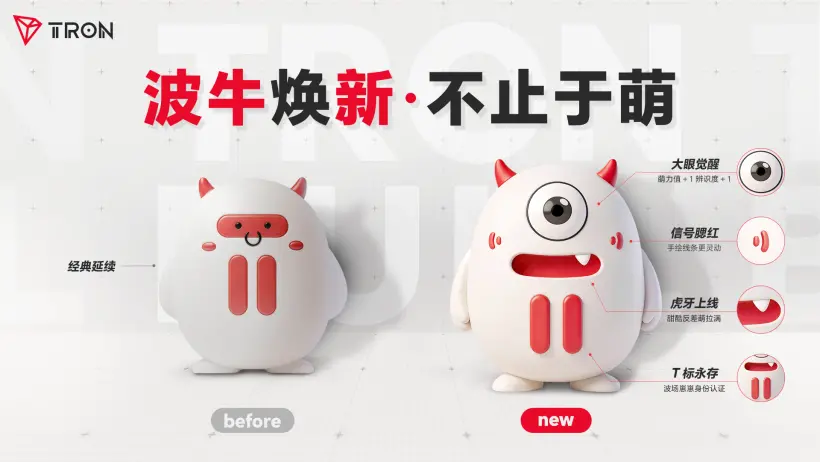
On June 23rd, TRON completed a significant upgrade to its official mascot, Bo Niu. The revamped character features larger, brighter eyes, more expressive facial details, and a clearer "T" structural motif, while retaining its signature red-and-white color scheme and horned design. This refresh aims to enhance Bo Niu's approachability, emotional range, and versatility for use across social media, community interactions, offline events, and branded merchandise. The redesign focuses on creating a stronger first impression. A more open facial structure with distinct, expressive eyes and the addition of a mouth with a small fang make the character friendlier and more suitable for dynamic content like animations and emojis. Subtle brand elements are integrated, such as stylized cheek lines inspired by "signal" icons, referencing the "wave" in "TRON," and a "T" shape formed by its smile and chest markings. Bo Niu has also been given a more defined personality as "TRON's Chief Luck Officer," with traits like being playful and sweet. This persona provides a more accessible and emotionally resonant entry point to the TRON brand, contrasting with often technical Web3 narratives. This mascot upgrade is part of TRON's ongoing effort to build a comprehensive and extensible visual identity system, following its recent logo refresh. Bo Niu is positioned as a key asset to connect with users, foster community, and convey brand warmth in everyday contexts.

marsbit18 min fa

From Logo to Bo Niu: TRON Further Perfects Its Brand Visual Assets

marsbit18 min fa

TRON Refreshes the Bull Image, Creating a More Approachable Brand Character

TRON's official mascot "BONiu" (Wave Bull) has received a comprehensive visual upgrade. Retaining its core red-and-white color scheme, horned silhouette, and brand DNA, the refreshed character features larger, brighter eyes, more expressive facial details including a mouth with a small fang, and enhanced emotive capabilities. The redesign aims to strengthen the mascot's亲和力, emotional expressiveness, and adaptability across various scenarios. Key updates include a clearer facial structure for instant recognition, a simplified and more intuitive五官 design, and the integration of subtle brand language. The cheek blushes are now inspired by a "signal" icon, while the smile and chest lines form a stable "T" structure, creating a cohesive超级符号 for the brand. The character has also been equipped with a 12-phoneme lip-sync system to support future动画 and interactive content. Beyond its visual role, BONiu's persona has been enriched. Now titled "TRON's Chief Luck Officer," it carries playful personality tags like "foodie enthusiast" and "full-of-tricks," allowing it to engage with the community in a more approachable and relatable manner. This update provides a lower-barrier, emotionally warm entry point for users amidst the often technical and abstract narratives of Web3. This mascot revamp is part of TRON's ongoing effort to refine its visual asset system, following the earlier logo update. By evolving from a static visual into a dynamic, expressive brand角色, the new BONiu is positioned to become a key asset for connecting with users, building brand记忆, and conveying TRON's personality across社交传播, community互动,线下活动, and merchandise.

链捕手35 min fa

TRON Refreshes the Bull Image, Creating a More Approachable Brand Character

链捕手35 min fa

Trading

Spot
Futures

Articoli Popolari

Cosa è GROK AI

Grok AI: Rivoluzionare la Tecnologia Conversazionale nell'Era Web3 Introduzione Nel panorama in rapida evoluzione dell'intelligenza artificiale, Grok AI si distingue come un progetto notevole che collega i domini della tecnologia avanzata e dell'interazione con l'utente. Sviluppato da xAI, un'azienda guidata dal rinomato imprenditore Elon Musk, Grok AI cerca di ridefinire il modo in cui interagiamo con l'intelligenza artificiale. Mentre il movimento Web3 continua a prosperare, Grok AI mira a sfruttare il potere dell'IA conversazionale per rispondere a query complesse, offrendo agli utenti un'esperienza che è non solo informativa ma anche divertente. Cos'è Grok AI? Grok AI è un sofisticato chatbot di intelligenza artificiale conversazionale progettato per interagire dinamicamente con gli utenti. A differenza di molti sistemi di intelligenza artificiale tradizionali, Grok AI abbraccia un'ampia gamma di domande, comprese quelle tipicamente considerate inappropriate o al di fuori delle risposte standard. Gli obiettivi principali del progetto includono: Ragionamento Affidabile: Grok AI enfatizza il ragionamento di buon senso per fornire risposte logiche basate sulla comprensione contestuale. Supervisione Scalabile: L'integrazione dell'assistenza degli strumenti garantisce che le interazioni degli utenti siano sia monitorate che ottimizzate per la qualità. Verifica Formale: La sicurezza è fondamentale; Grok AI incorpora metodi di verifica formale per migliorare l'affidabilità delle sue uscite. Comprensione del Lungo Contesto: Il modello di IA eccelle nel trattenere e richiamare una vasta storia di conversazione, facilitando discussioni significative e consapevoli del contesto. Robustezza Adversariale: Concentrandosi sul miglioramento delle sue difese contro input manipolati o malevoli, Grok AI mira a mantenere l'integrità delle interazioni degli utenti. In sostanza, Grok AI non è solo un dispositivo di recupero informazioni; è un partner conversazionale immersivo che incoraggia un dialogo dinamico. Creatore di Grok AI Il cervello dietro Grok AI non è altri che Elon Musk, un individuo sinonimo di innovazione in vari campi, tra cui automotive, viaggi spaziali e tecnologia. Sotto l'egida di xAI, un'azienda focalizzata sull'avanzamento della tecnologia AI in modi benefici, la visione di Musk mira a rimodellare la comprensione delle interazioni con l'IA. La leadership e l'etica fondamentale sono profondamente influenzate dall'impegno di Musk nel superare i confini tecnologici. Investitori di Grok AI Sebbene i dettagli specifici riguardanti gli investitori che sostengono Grok AI rimangano limitati, è pubblicamente riconosciuto che xAI, l'incubatore del progetto, è fondato e supportato principalmente dallo stesso Elon Musk. Le precedenti imprese e partecipazioni di Musk forniscono un robusto sostegno, rafforzando ulteriormente la credibilità e il potenziale di crescita di Grok AI. Tuttavia, al momento, le informazioni riguardanti ulteriori fondazioni di investimento o organizzazioni che supportano Grok AI non sono facilmente accessibili, segnando un'area per potenziali esplorazioni future. Come Funziona Grok AI? Le meccaniche operative di Grok AI sono innovative quanto il suo framework concettuale. Il progetto integra diverse tecnologie all'avanguardia che facilitano le sue funzionalità uniche: Infrastruttura Robusta: Grok AI è costruito utilizzando Kubernetes per l'orchestrazione dei container, Rust per prestazioni e sicurezza, e JAX per il calcolo numerico ad alte prestazioni. Questo trio garantisce che il chatbot operi in modo efficiente, si scaldi efficacemente e serva gli utenti prontamente. Accesso alla Conoscenza in Tempo Reale: Una delle caratteristiche distintive di Grok AI è la sua capacità di attingere a dati in tempo reale attraverso la piattaforma X—precedentemente nota come Twitter. Questa capacità consente all'IA di accedere alle informazioni più recenti, permettendole di fornire risposte e raccomandazioni tempestive che altri modelli di IA potrebbero perdere. Due Modalità di Interazione: Grok AI offre agli utenti la scelta tra “Modalità Divertente” e “Modalità Normale”. La Modalità Divertente consente uno stile di interazione più giocoso e umoristico, mentre la Modalità Normale si concentra sulla fornitura di risposte precise e accurate. Questa versatilità garantisce un'esperienza su misura che soddisfa varie preferenze degli utenti. In sostanza, Grok AI sposa prestazioni con coinvolgimento, creando un'esperienza che è sia arricchente che divertente. Cronologia di Grok AI Il viaggio di Grok AI è segnato da traguardi fondamentali che riflettono le sue fasi di sviluppo e distribuzione: Sviluppo Iniziale: La fase fondamentale di Grok AI si è svolta in circa due mesi, durante i quali sono stati condotti l'addestramento iniziale e il perfezionamento del modello. Rilascio Beta di Grok-2: In un significativo avanzamento, è stata annunciata la beta di Grok-2. Questo rilascio ha introdotto due versioni del chatbot—Grok-2 e Grok-2 mini—ognuna dotata delle capacità per chattare, programmare e ragionare. Accesso Pubblico: Dopo lo sviluppo beta, Grok AI è diventato disponibile per gli utenti della piattaforma X. Coloro che hanno account verificati tramite un numero di telefono e attivi per almeno sette giorni possono accedere a una versione limitata, rendendo la tecnologia disponibile a un pubblico più ampio. Questa cronologia racchiude la crescita sistematica di Grok AI dall'inizio all'impegno pubblico, enfatizzando il suo impegno per il miglioramento continuo e l'interazione con gli utenti. Caratteristiche Chiave di Grok AI Grok AI comprende diverse caratteristiche chiave che contribuiscono alla sua identità innovativa: Integrazione della Conoscenza in Tempo Reale: L'accesso a informazioni attuali e rilevanti differenzia Grok AI da molti modelli statici, consentendo un'esperienza utente coinvolgente e accurata. Stili di Interazione Versatili: Offrendo modalità di interazione distinte, Grok AI soddisfa varie preferenze degli utenti, invitando alla creatività e alla personalizzazione nella conversazione con l'IA. Avanzata Struttura Tecnologica: L'utilizzo di Kubernetes, Rust e JAX fornisce al progetto un solido framework per garantire affidabilità e prestazioni ottimali. Considerazione del Discorso Etico: L'inclusione di una funzione di generazione di immagini mette in mostra lo spirito innovativo del progetto. Tuttavia, solleva anche considerazioni etiche riguardanti il copyright e la rappresentazione rispettosa di figure riconoscibili—una discussione in corso all'interno della comunità AI. Conclusione Come entità pionieristica nel campo dell'IA conversazionale, Grok AI incarna il potenziale per esperienze utente trasformative nell'era digitale. Sviluppato da xAI e guidato dall'approccio visionario di Elon Musk, Grok AI integra conoscenze in tempo reale con capacità di interazione avanzate. Si sforza di spingere i confini di ciò che l'intelligenza artificiale può realizzare, mantenendo un focus su considerazioni etiche e sicurezza degli utenti. Grok AI non solo incarna il progresso tecnologico, ma rappresenta anche un nuovo paradigma conversazionale nel panorama Web3, promettendo di coinvolgere gli utenti con sia conoscenze esperte che interazioni giocose. Man mano che il progetto continua a evolversi, si erge come testimonianza di ciò che l'incrocio tra tecnologia, creatività e interazione simile a quella umana può realizzare.

499 Totale visualizzazioniPubblicato il 2024.12.26Aggiornato il 2024.12.26

Cosa è GROK AI

Cosa è ERC AI

Euruka Tech: Una Panoramica di $erc ai e delle sue Ambizioni in Web3 Introduzione Nel panorama in rapida evoluzione della tecnologia blockchain e delle applicazioni decentralizzate, nuovi progetti emergono frequentemente, ciascuno con obiettivi e metodologie uniche. Uno di questi progetti è Euruka Tech, che opera nel vasto dominio delle criptovalute e del Web3. L'obiettivo principale di Euruka Tech, in particolare del suo token $erc ai, è presentare soluzioni innovative progettate per sfruttare le crescenti capacità della tecnologia decentralizzata. Questo articolo si propone di fornire una panoramica completa di Euruka Tech, un'esplorazione dei suoi obiettivi, della funzionalità, dell'identità del suo creatore, dei potenziali investitori e della sua importanza nel contesto più ampio del Web3. Cos'è Euruka Tech, $erc ai? Euruka Tech è caratterizzato come un progetto che sfrutta gli strumenti e le funzionalità offerte dall'ambiente Web3, concentrandosi sull'integrazione dell'intelligenza artificiale nelle sue operazioni. Sebbene i dettagli specifici sul framework del progetto siano piuttosto sfuggenti, è progettato per migliorare l'engagement degli utenti e automatizzare i processi nello spazio crypto. Il progetto mira a creare un ecosistema decentralizzato che non solo faciliti le transazioni, ma incorpori anche funzionalità predittive attraverso l'intelligenza artificiale, da cui il nome del suo token, $erc ai. L'obiettivo è fornire una piattaforma intuitiva che faciliti interazioni più intelligenti e un'elaborazione delle transazioni più efficiente all'interno della crescente sfera del Web3. Chi è il Creatore di Euruka Tech, $erc ai? Attualmente, le informazioni riguardanti il creatore o il team fondatore di Euruka Tech rimangono non specificate e piuttosto opache. Questa assenza di dati solleva preoccupazioni, poiché la conoscenza del background del team è spesso essenziale per stabilire credibilità nel settore blockchain. Pertanto, abbiamo classificato queste informazioni come sconosciute fino a quando dettagli concreti non saranno resi disponibili nel dominio pubblico. Chi sono gli Investitori di Euruka Tech, $erc ai? Allo stesso modo, l'identificazione degli investitori o delle organizzazioni di supporto per il progetto Euruka Tech non è prontamente fornita attraverso la ricerca disponibile. Un aspetto cruciale per i potenziali stakeholder o utenti che considerano di impegnarsi con Euruka Tech è la garanzia che deriva da partnership finanziarie consolidate o dal supporto di società di investimento rispettabili. Senza divulgazioni sulle affiliazioni di investimento, è difficile trarre conclusioni complete sulla sicurezza finanziaria o sulla longevità del progetto. In linea con le informazioni trovate, anche questa sezione rimane allo stato di sconosciuto. Come funziona Euruka Tech, $erc ai? Nonostante la mancanza di specifiche tecniche dettagliate per Euruka Tech, è essenziale considerare le sue ambizioni innovative. Il progetto cerca di sfruttare la potenza computazionale dell'intelligenza artificiale per automatizzare e migliorare l'esperienza dell'utente all'interno dell'ambiente delle criptovalute. Integrando l'IA con la tecnologia blockchain, Euruka Tech mira a fornire funzionalità come operazioni automatizzate, valutazioni del rischio e interfacce utente personalizzate. L'essenza innovativa di Euruka Tech risiede nel suo obiettivo di creare una connessione fluida tra gli utenti e le vaste possibilità presentate dalle reti decentralizzate. Attraverso l'utilizzo di algoritmi di apprendimento automatico e IA, mira a ridurre le sfide degli utenti alle prime armi e semplificare le esperienze transazionali all'interno del framework Web3. Questa simbiosi tra IA e blockchain sottolinea l'importanza del token $erc ai, fungendo da ponte tra le interfacce utente tradizionali e le avanzate capacità delle tecnologie decentralizzate. Cronologia di Euruka Tech, $erc ai Sfortunatamente, a causa delle limitate informazioni disponibili riguardo a Euruka Tech, non siamo in grado di presentare una cronologia dettagliata dei principali sviluppi o traguardi nel percorso del progetto. Questa cronologia, tipicamente preziosa per tracciare l'evoluzione di un progetto e comprendere la sua traiettoria di crescita, non è attualmente disponibile. Man mano che le informazioni su eventi notevoli, partnership o aggiunte funzionali diventano evidenti, gli aggiornamenti miglioreranno sicuramente la visibilità di Euruka Tech nella sfera crypto. Chiarimento su Altri Progetti “Eureka” È importante sottolineare che più progetti e aziende condividono una nomenclatura simile con “Eureka.” La ricerca ha identificato iniziative come un agente IA della NVIDIA Research, che si concentra sull'insegnamento ai robot di compiti complessi utilizzando metodi generativi, così come Eureka Labs ed Eureka AI, che migliorano l'esperienza utente nell'istruzione e nell'analisi del servizio clienti, rispettivamente. Tuttavia, questi progetti sono distinti da Euruka Tech e non dovrebbero essere confusi con i suoi obiettivi o funzionalità. Conclusione Euruka Tech, insieme al suo token $erc ai, rappresenta un attore promettente ma attualmente oscuro nel panorama del Web3. Sebbene i dettagli sul suo creatore e sugli investitori rimangano non divulgati, l'ambizione centrale di combinare intelligenza artificiale e tecnologia blockchain si erge come un punto focale di interesse. Gli approcci unici del progetto nel promuovere l'engagement degli utenti attraverso l'automazione avanzata potrebbero distinguerlo mentre l'ecosistema Web3 progredisce. Con l'evoluzione continua del mercato crypto, gli stakeholder dovrebbero tenere d'occhio gli sviluppi riguardanti Euruka Tech, poiché lo sviluppo di innovazioni documentate, partnership o una roadmap definita potrebbe presentare opportunità significative nel prossimo futuro. Così com'è, attendiamo ulteriori approfondimenti sostanziali che potrebbero svelare il potenziale di Euruka Tech e la sua posizione nel competitivo panorama crypto.

520 Totale visualizzazioniPubblicato il 2025.01.02Aggiornato il 2025.01.02

Cosa è ERC AI

Cosa è DUOLINGO AI

DUOLINGO AI: Integrare l'apprendimento delle lingue con Web3 e innovazione AI In un'era in cui la tecnologia rimodella l'istruzione, l'integrazione dell'intelligenza artificiale (AI) e delle reti blockchain annuncia una nuova frontiera per l'apprendimento delle lingue. Entra in scena DUOLINGO AI e la sua criptovaluta associata, $DUOLINGO AI. Questo progetto aspira a fondere la potenza educativa delle principali piattaforme di apprendimento delle lingue con i benefici della tecnologia decentralizzata Web3. Questo articolo esplora gli aspetti chiave di DUOLINGO AI, esaminando i suoi obiettivi, il framework tecnologico, lo sviluppo storico e il potenziale futuro, mantenendo chiarezza tra la risorsa educativa originale e questa iniziativa indipendente di criptovaluta. Panoramica di DUOLINGO AI Alla sua base, DUOLINGO AI cerca di stabilire un ambiente decentralizzato in cui gli studenti possono guadagnare ricompense crittografiche per il raggiungimento di traguardi educativi nella competenza linguistica. Applicando smart contracts, il progetto mira ad automatizzare i processi di verifica delle competenze e le allocazioni di token, aderendo ai principi di Web3 che enfatizzano la trasparenza e la proprietà da parte degli utenti. Il modello si discosta dagli approcci tradizionali all'acquisizione linguistica, facendo forte affidamento su una struttura di governance guidata dalla comunità, che consente ai detentori di token di suggerire miglioramenti ai contenuti dei corsi e alle distribuzioni delle ricompense. Alcuni degli obiettivi notevoli di DUOLINGO AI includono: Apprendimento Gamificato: Il progetto integra traguardi blockchain e token non fungibili (NFT) per rappresentare i livelli di competenza linguistica, promuovendo la motivazione attraverso ricompense digitali coinvolgenti. Creazione di Contenuti Decentralizzati: Apre opportunità per educatori e appassionati di lingue di contribuire con i propri corsi, facilitando un modello di condivisione dei ricavi che beneficia tutti i collaboratori. Personalizzazione Guidata dall'AI: Utilizzando modelli avanzati di machine learning, DUOLINGO AI personalizza le lezioni per adattarsi ai progressi individuali, simile alle funzionalità adattive presenti nelle piattaforme consolidate. Creatori del Progetto e Governance A partire da aprile 2025, il team dietro $DUOLINGO AI rimane pseudonimo, una pratica comune nel panorama decentralizzato delle criptovalute. Questa anonimato è inteso a promuovere la crescita collettiva e il coinvolgimento degli stakeholder piuttosto che concentrarsi su sviluppatori individuali. Lo smart contract distribuito sulla blockchain di Solana annota l'indirizzo del wallet dello sviluppatore, che segna l'impegno verso la trasparenza riguardo alle transazioni, nonostante l'identità dei creatori sia sconosciuta. Secondo la sua roadmap, DUOLINGO AI mira a evolversi in un'Organizzazione Autonoma Decentralizzata (DAO). Questa struttura di governance consente ai detentori di token di votare su questioni critiche come l'implementazione di funzionalità e le allocazioni del tesoro. Questo modello si allinea con l'etica dell'empowerment della comunità presente in varie applicazioni decentralizzate, enfatizzando l'importanza del processo decisionale collettivo. Investitori e Partnership Strategiche Attualmente, non ci sono investitori istituzionali o capitalisti di rischio identificabili pubblicamente legati a $DUOLINGO AI. Invece, la liquidità del progetto proviene principalmente da scambi decentralizzati (DEX), segnando un netto contrasto con le strategie di finanziamento delle aziende tradizionali di tecnologia educativa. Questo modello di base indica un approccio guidato dalla comunità, riflettendo l'impegno del progetto verso la decentralizzazione. Nel suo whitepaper, DUOLINGO AI menziona la formazione di collaborazioni con “piattaforme educative blockchain” non specificate, mirate ad arricchire la sua offerta di corsi. Sebbene partnership specifiche non siano ancora state divulgate, questi sforzi collaborativi suggeriscono una strategia per mescolare innovazione blockchain con iniziative educative, ampliando l'accesso e il coinvolgimento degli utenti attraverso diverse vie di apprendimento. Architettura Tecnologica Integrazione AI DUOLINGO AI incorpora due componenti principali guidate dall'AI per migliorare la sua offerta educativa: Motore di Apprendimento Adattivo: Questo sofisticato motore apprende dalle interazioni degli utenti, simile ai modelli proprietari delle principali piattaforme educative. Regola dinamicamente la difficoltà delle lezioni per affrontare le sfide specifiche degli studenti, rinforzando le aree deboli attraverso esercizi mirati. Agenti Conversazionali: Utilizzando chatbot alimentati da GPT-4, DUOLINGO AI offre una piattaforma per gli utenti per impegnarsi in conversazioni simulate, promuovendo un'esperienza di apprendimento linguistico più interattiva e pratica. Infrastruttura Blockchain Costruito sulla blockchain di Solana, $DUOLINGO AI utilizza un framework tecnologico completo che include: Smart Contracts per la Verifica delle Competenze: Questa funzionalità assegna automaticamente token agli utenti che superano con successo i test di competenza, rinforzando la struttura di incentivi per risultati di apprendimento genuini. Badge NFT: Questi token digitali significano vari traguardi che gli studenti raggiungono, come completare una sezione del loro corso o padroneggiare competenze specifiche, consentendo loro di scambiare o mostrare digitalmente i loro successi. Governance DAO: I membri della comunità dotati di token possono partecipare alla governance votando su proposte chiave, facilitando una cultura partecipativa che incoraggia l'innovazione nell'offerta di corsi e nelle funzionalità della piattaforma. Cronologia Storica 2022–2023: Concettualizzazione I lavori per DUOLINGO AI iniziano con la creazione di un whitepaper, evidenziando la sinergia tra i progressi dell'AI nell'apprendimento delle lingue e il potenziale decentralizzato della tecnologia blockchain. 2024: Lancio Beta Un lancio beta limitato introduce offerte in lingue popolari, premiando i primi utenti con incentivi in token come parte della strategia di coinvolgimento della comunità del progetto. 2025: Transizione DAO Ad aprile, avviene un lancio completo della mainnet con la circolazione di token, stimolando discussioni nella comunità riguardo a possibili espansioni nelle lingue asiatiche e ad altri sviluppi dei corsi. Sfide e Direzioni Future Ostacoli Tecnici Nonostante i suoi obiettivi ambiziosi, DUOLINGO AI affronta sfide significative. La scalabilità rimane una preoccupazione costante, in particolare nel bilanciare i costi associati all'elaborazione dell'AI e nel mantenere una rete decentralizzata reattiva. Inoltre, garantire la creazione e la moderazione di contenuti di qualità in un'offerta decentralizzata presenta complessità nel mantenere standard educativi. Opportunità Strategiche Guardando al futuro, DUOLINGO AI ha il potenziale per sfruttare partnership di micro-credentialing con istituzioni accademiche, fornendo validazioni verificate dalla blockchain delle competenze linguistiche. Inoltre, l'espansione cross-chain potrebbe consentire al progetto di attingere a basi utenti più ampie e a ulteriori ecosistemi blockchain, migliorando la sua interoperabilità e portata. Conclusione DUOLINGO AI rappresenta una fusione innovativa di intelligenza artificiale e tecnologia blockchain, presentando un'alternativa focalizzata sulla comunità ai sistemi tradizionali di apprendimento delle lingue. Sebbene il suo sviluppo pseudonimo e il modello economico emergente comportino alcuni rischi, l'impegno del progetto verso l'apprendimento gamificato, l'istruzione personalizzata e la governance decentralizzata illumina un percorso per la tecnologia educativa nel regno di Web3. Man mano che l'AI continua a progredire e l'ecosistema blockchain evolve, iniziative come DUOLINGO AI potrebbero ridefinire il modo in cui gli utenti interagiscono con l'istruzione linguistica, potenziando le comunità e premiando il coinvolgimento attraverso meccanismi di apprendimento innovativi.

474 Totale visualizzazioniPubblicato il 2025.04.11Aggiornato il 2025.04.11

Cosa è DUOLINGO AI

Discussioni

Benvenuto nella Community HTX. Qui puoi rimanere informato sugli ultimi sviluppi della piattaforma e accedere ad approfondimenti esperti sul mercato. Le opinioni degli utenti sul prezzo di AI AI sono presentate come di seguito.

活动图片