In May 2026, in the federal court of Oakland, the filter was peeled away layer by layer from OpenAI.
What was presented before the jury was a chaotic, muddled Rashomon:
Greg Brockman's private diary interwoven with anxiety and calculation, Elon Musk's unyielding grip on power, Sam Altman's integrity issues dancing on the edge of the bottom line, the colossal shadow of Microsoft looming between computing power and capital, and that heart-stopping yet hastily concluded boardroom coup at the end of 2023.
Amidst all this mess, there was another question that sounded grand but landed in court with an exceptionally specific weight: Back in the day, OpenAI said it would 'benefit all of humanity.' Does that promise still hold water?
As of May 15, 2026, there was no final verdict in this trial, and the jury's reference opinion remained hanging in the air. But one thing had tangibly happened: OpenAI was dragged out of myth and back to earth.
In recent years, OpenAI has often been written as a story about the future. ChatGPT exploded in popularity, Altman toured countries, large models infiltrated offices, schools, phones, and corporate workflows. This was a company born with a religious-like sense of grandeur, speaking of humanity's fate, the awakening of intelligence, safety boundaries, and tomorrow's dawn, like a lighthouse built for humanity in advance.
But the court doesn't care about any of that. The court asks about facts.
'All of Humanity' Takes the Witness Stand
In 2015, when OpenAI was born, it was clean-cut.
It declared itself a non-profit AI research company, aiming to develop digital intelligence to benefit humanity as a whole, free from the constraints of financial returns.
Altman and Musk were co-chairs, Brockman was CTO, and Ilya Sutskever was the head of research. Back then, OpenAI seemed to retain the last vestiges of Silicon Valley's golden-age idealism: the brightest minds weren't serving any one company but safeguarding humanity's future.
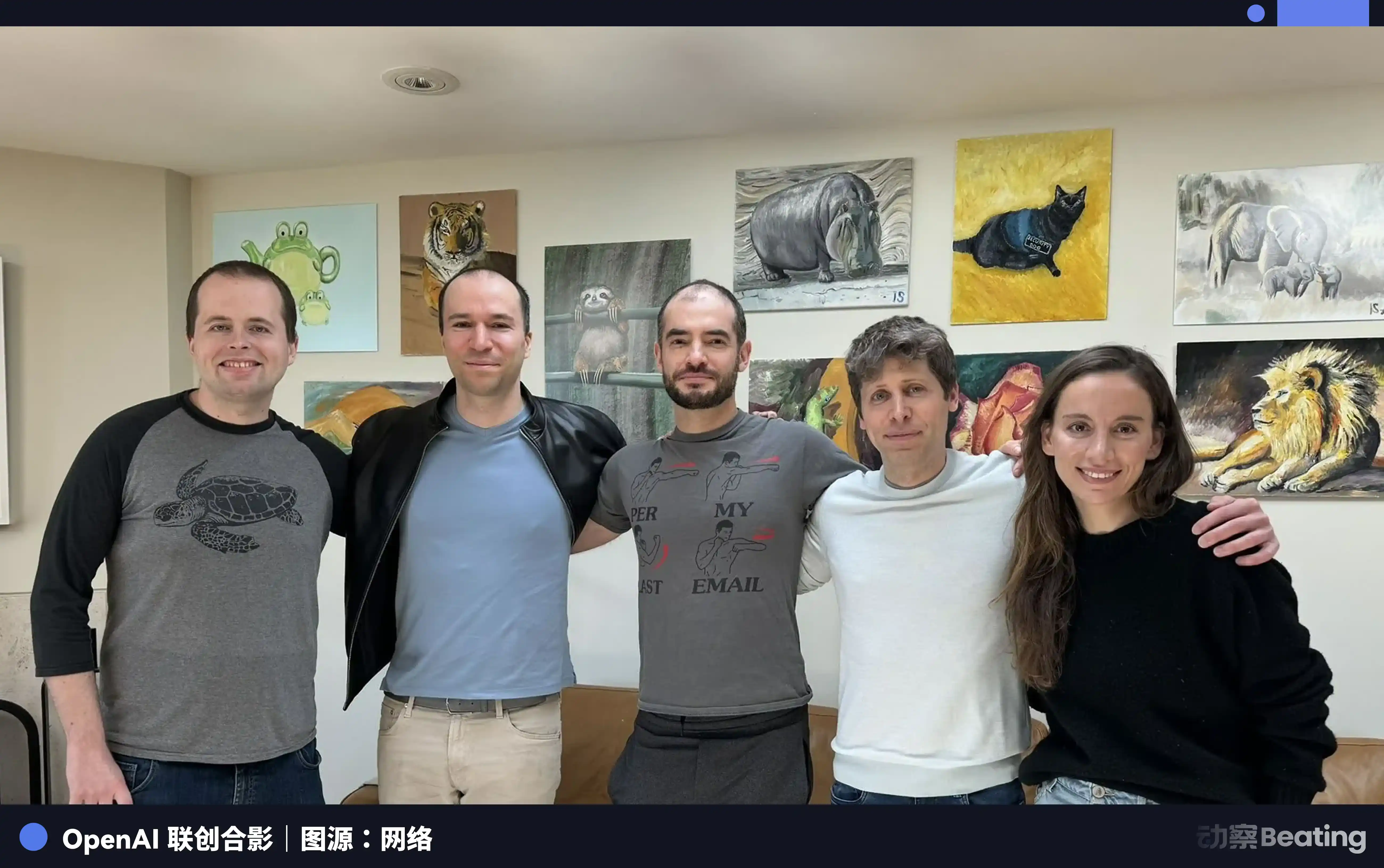
A decade later, this promise was served up in court.
Musk's side argued that Altman, Brockman, and OpenAI used their non-profit mission to secure his funding and trust, only to later pivot to a for-profit structure, benefiting individuals and Microsoft.
OpenAI's side argued that Musk's money was a donation without specific conditions; he was long aware of discussions about a for-profit structure but simply didn't gain control; his lawsuit now stems from regret over leaving and because his own xAI has become a competitor.
The language from both sides was rather harsh.
Musk positioned himself as the guardian of the mission. OpenAI positioned him as the out-of-control founder. One side says, 'You stole a charity,' the other says, 'You just failed to control it.' In the end, the most awkward part wasn't which side was better at storytelling, but that 'all of humanity,' repeatedly invoked, never truly sat at the table.
The term 'all of humanity' appeared in founding announcements, charters, speeches, and media reports, occupying the moral high ground.
But in court, it was dissected into evidence: Is Brockman's diary a true reflection of intent? What do emails from 2017 reveal? What exactly was transferred away with OpenAI LP in 2019? Did Microsoft's cloud and money alter the company's direction? Do Altman's integrity issues undermine the company's continued claim of 'trust us'?
The more an AI company likes to claim it represents humanity, the more specific the questions should be: Which humans are you including? Who signs for these people? Who can remove you? Who can audit the books? Who can say no?
The court couldn't answer these questions for the public, but it forced them out into the open.
As a result, OpenAI's story no longer resembles the growth narrative of a future company, but more like an old ledger. Once the books were opened, people discovered the cracks didn't just appear after ChatGPT's explosive success.
The Crack in 2017
OpenAI didn't change overnight.
Looking only from the start of ChatGPT, one might mistakenly think OpenAI was pushed by money after success, like many companies—first ideals, then business.
But the trial turned back time to 2017. Back then, OpenAI lacked today's prominence, AGI wasn't yet a buzzword, but the founding team already faced a problem: if they truly wanted to build Artificial General Intelligence, donations and passion were far from enough.
This is Silicon Valley idealism's toughest moment. The bigger the ideal, the bigger the bill. The bigger the bill, the harder it is to keep the organization pure. All those grand, humanity-wide vision statements uttered on stage eventually have to land on chips, servers, engineer salaries, cloud resources, and long-term capital. Without these, AGI is just a wish; with these, non-profit becomes increasingly untenable.
In 2017, OpenAI internally began discussing paths like a for-profit affiliate, B-corp, partnerships with existing companies, or attachment to Tesla. Musk had proposed funding OpenAI through Tesla. OpenAI's side countered that Musk wasn't purely against profit-seeking; control was his central, unyielding demand.
There was another scene worth remembering from that year: Dota.
After OpenAI's AI defeated top human players in Dota 1v1, the team first felt more strongly that this thing could actually become huge. The trial mentioned a discussion at Musk's San Francisco house, later called the 'haunted mansion meeting,' where they celebrated the technical breakthrough and also debated whether OpenAI should go for-profit.
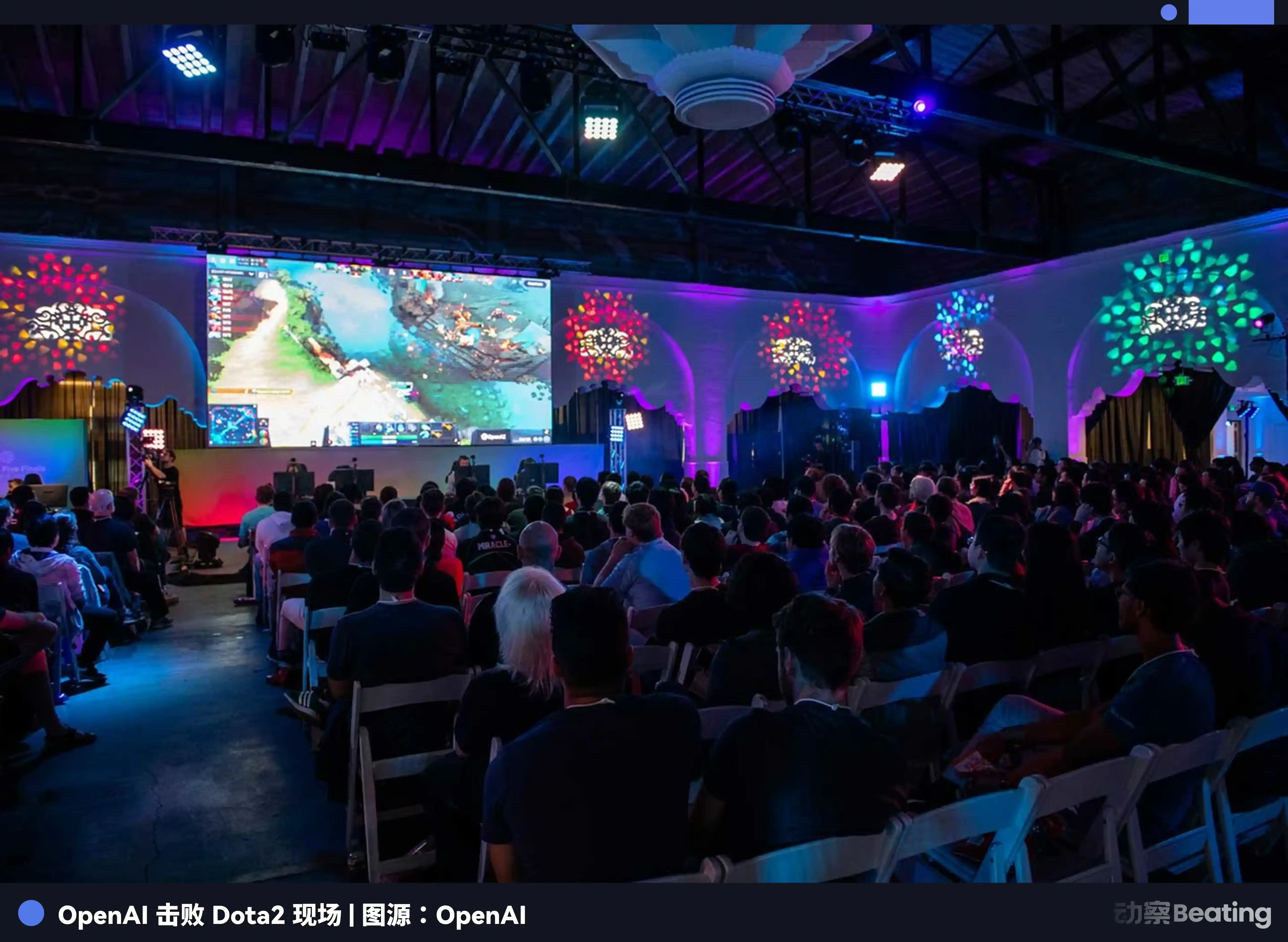
Many companies begin reinterpreting themselves after product success. OpenAI started earlier. Before it became the behemoth it is today, the founders already knew the non-profit structure couldn't sustain the AGI narrative. OpenAI's ideal, from the very beginning, required a heavier machine to sustain it.
Thus, an organization that appeared to be about scientific safety quickly entered into control negotiations.
Who would hold the steering wheel? Musk or Altman? The non-profit board or future investors? Or the never-truly-present 'all of humanity'?
Looking at Musk now, he was indeed an early major funder and helped build OpenAI's non-profit narrative. But he was also one of the first in this story to see how much power AI could bring. And upon seeing it, he too wanted to grasp it tightly.
Musk's Steering Wheel
In the trial, Musk repeatedly emphasized one thing: OpenAI was stolen.
This phrasing is powerful. It compresses a complex organizational shift into a sentence anyone can understand. A charity, meant to serve humanity, later turned into a massive commercial machine. It sounds like property theft and also like a moral betrayal.
But there are no such simple stories in court.
OpenAI's lawyers' cross-examination of Musk focused on dismantling his image as a pure victim. Lawyers produced emails and documents, pressing him on whether he knew early on that OpenAI might need a for-profit structure, and whether he had tried to have Tesla absorb OpenAI, or sought dominance in other ways.
Musk disliked this dissection. He told the court the questions were trying to 'trick me.' The judge repeatedly asked him to answer directly. When he tried to steer the topic to AI extinction risk, the judge also reminded him that the case wouldn't dwell much on extinction.
These scenes say a lot about Musk.
He prefers grand narratives. Humanity's fate, AI risk, Mars, free expression, civilizational survival—these are his favorite topics. But the court demanded answers to smaller, sharper questions: When did you know? Did you agree? Did you want control? Was your money to OpenAI a donation or an investment...
The contradiction within Musk is precisely the contradiction in OpenAI's story. He may genuinely fear AI running amok, and genuinely believe OpenAI betrayed its mission. But that doesn't preclude him from also wanting the company to run according to his will.
The more one believes they are saving humanity, the more stubbornly they tend to think they should hold the steering wheel.
This isn't a problem unique to Musk. It's the undertone of many grand Silicon Valley narratives. They like to dress private will as a human mission, control as responsibility, and organizational power as future necessity. Musk just makes it more overt, intense, and visible.
So, in this case, Musk isn't just the accuser; he is also evidence itself.
Brockman's Diary
Greg Brockman wasn't originally the most eye-catching person in this drama.
Musk is too dramatic, Altman too central, Sutskever too tragic, Microsoft too huge. Brockman was caught in the middle—an early core founder of OpenAI and a key figure in its later practical operations. But this trial thrust him into the spotlight because his private diary became evidence.
In the second week of the trial, Brockman was grilled about his diary, emails, and texts. Musk's side used these materials to prove he and Altman had self-interested motives early on. OpenAI's side said Musk was taking things out of context.
The diary contained wealth goals. Anxiety about the company's revenue path. Phrases like 'making the billions.' More pointedly, there were self-reminders about not 'stealing' the non-profit from Musk, or else risking moral bankruptcy. Musk's lawyers repeatedly seized on these contents. Brockman denied deceiving Musk, saying these private writings weren't event records but stream-of-consciousness personal notes.
A diary isn't a verdict. It can't directly prove fraud. It can also contain raw thoughts written in moments of exhaustion, anxiety, and self-rationalization. Every writer knows private notes don't equal final positions, let alone complete facts.
But the real importance of Brockman's diary isn't in proving any guilt, but in showing they knew where the boundaries were. OpenAI's early core figures didn't blindly stumble into commercialization. They knew the 'non-profit' shell carried moral weight, knew Musk's early funding was based on trust, and knew that pivoting to another structure mere months later while still claiming commitment to non-profit would seem dishonest.
Knowing didn't mean stopping.
During the trial, Brockman disclosed that his OpenAI equity was worth close to $30 billion.
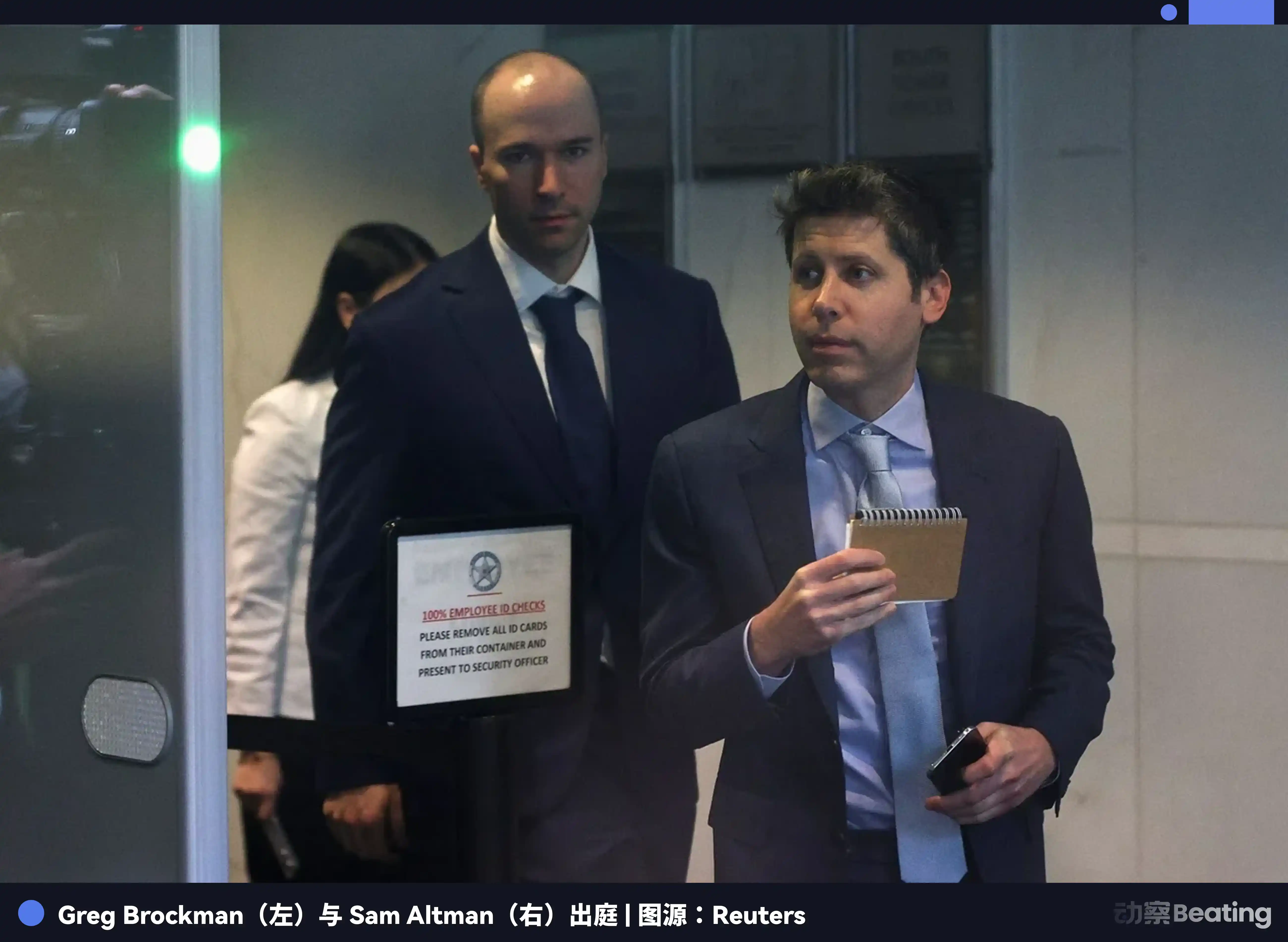
While this figure isn't cash, not pocketed wealth—it's equity value based on valuation, still dependent on company prospects and transaction structure—its symbolic meaning is enough. Someone who once worried about moral boundaries in a private diary later sat in court, asked about his OpenAI equity worth nearly $30 billion. Public mission and private wealth were placed on the same table at that moment.
Brockman is like many key figures in brilliant organizations: smart, dedicated, capable, with a sense of shame, also capable of gradually convincing themselves to keep moving forward.
This is where OpenAI is most complex. It's not a group of villains conspiring to destroy an ideal. It's more like a group of smart people who, at every juncture, found reasons to keep going, ultimately taking the initial promise into a machine they themselves might not fully control.
And at the center of this machine is Altman.
Altman's Trust Debt
What Sam Altman was interrogated about in this trial wasn't just which statements were true or false. Musk's side's real attack was on his right to rule.
In closing arguments, Musk's lawyer, Steven Molo, placed Altman's integrity issues at the core. He told the jury that five people who worked closely with Altman for years—Musk, Sutskever, Murati, Toner, and McCauley—all called him a 'liar.'
These five names are more important than the accusation itself.
Musk is an opponent, and could be seen as having a conflict of interest. But Sutskever is an OpenAI co-founder and former chief scientist; Murati was CTO and briefly interim CEO in 2023; Toner and McCauley are former board members. They are people from within OpenAI's power structure.
We can't simplistically label Altman good or bad.
The internal feelings toward Altman at OpenAI are clearly complex. He pushed the organization to the world's center, but also made some core figures uneasy. He possesses formidable organizational, fundraising, media, and political skills, which is why the company reached its current position.
When the board removed Altman in 2023, OpenAI's official reason was that he was 'not consistently candid' in his communications with the board. Days later, Altman returned. In 2024, OpenAI released a summary of the WilmerHale investigation, acknowledging a trust breakdown between the former board and Altman, but also concluding the board acted too hastily, failing to give key stakeholders advance notice, conduct a full investigation, or give Altman a chance to respond.
These stories together constitute Altman's true 'trust debt.'
He isn't a hero in the traditional sense. He fits the mold of the Silicon Valley nouveau riche: able to speak of mission, raise money, organize talent, handle the media, negotiate with giants, and turn a lab into a world-class company.
The stronger his abilities, the bigger the problem: if a company relies on his personal credit to assure the world 'we will benefit all humanity,' then his credibility is no longer a matter of private character, but of public governance.
Altman had his own counterattacks in court. He stated Musk repeatedly tried to have Tesla absorb OpenAI, which was incompatible with OpenAI's mission. He also said OpenAI has in fact created immense philanthropic value.
This is OpenAI's predicament. It can claim it's still controlled by a non-profit, and that commercialization gives the non-profit greater value; but the average person hearing this can't help but ask: if the public mission relies on a massively valued company and a powerful CEO to safeguard it, is it a mission, or a line of trust credit?
In 2023, the board tried to call in that line of credit. It failed.
Mission Loses to Reality
OpenAI's board wasn't completely powerless.
On paper, the non-profit board holds mission oversight rights. When OpenAI LP was formed in 2019, OpenAI explained externally that this was a 'capped-profit' structure, with returns for employees and investors capped, and anything beyond going to the non-profit, with the whole still controlled by the non-profit. This design sounded like a compromise, enabling fundraising without fully surrendering the mission.
The problem is, reality developed far faster than the charter.
After 2019, OpenAI's ties with Microsoft deepened. Microsoft invested funds, provided cloud and supercomputing resources, and obtained commercialization rights. Court materials showed that large amounts of OpenAI's IP and employees transferred to the for-profit entity. By the ChatGPT era, OpenAI was no longer just a research institution, but a commercial system connecting users, clients, developers, cloud resources, investors, and global competition.
Such a system can't be stopped with the push of a button.
Microsoft CEO Satya Nadella was asked in court about Microsoft's $13 billion investment in OpenAI and the potential return of around $92 billion if successful. His response, in essence, was that if the pie gets bigger, the non-profit would also benefit.
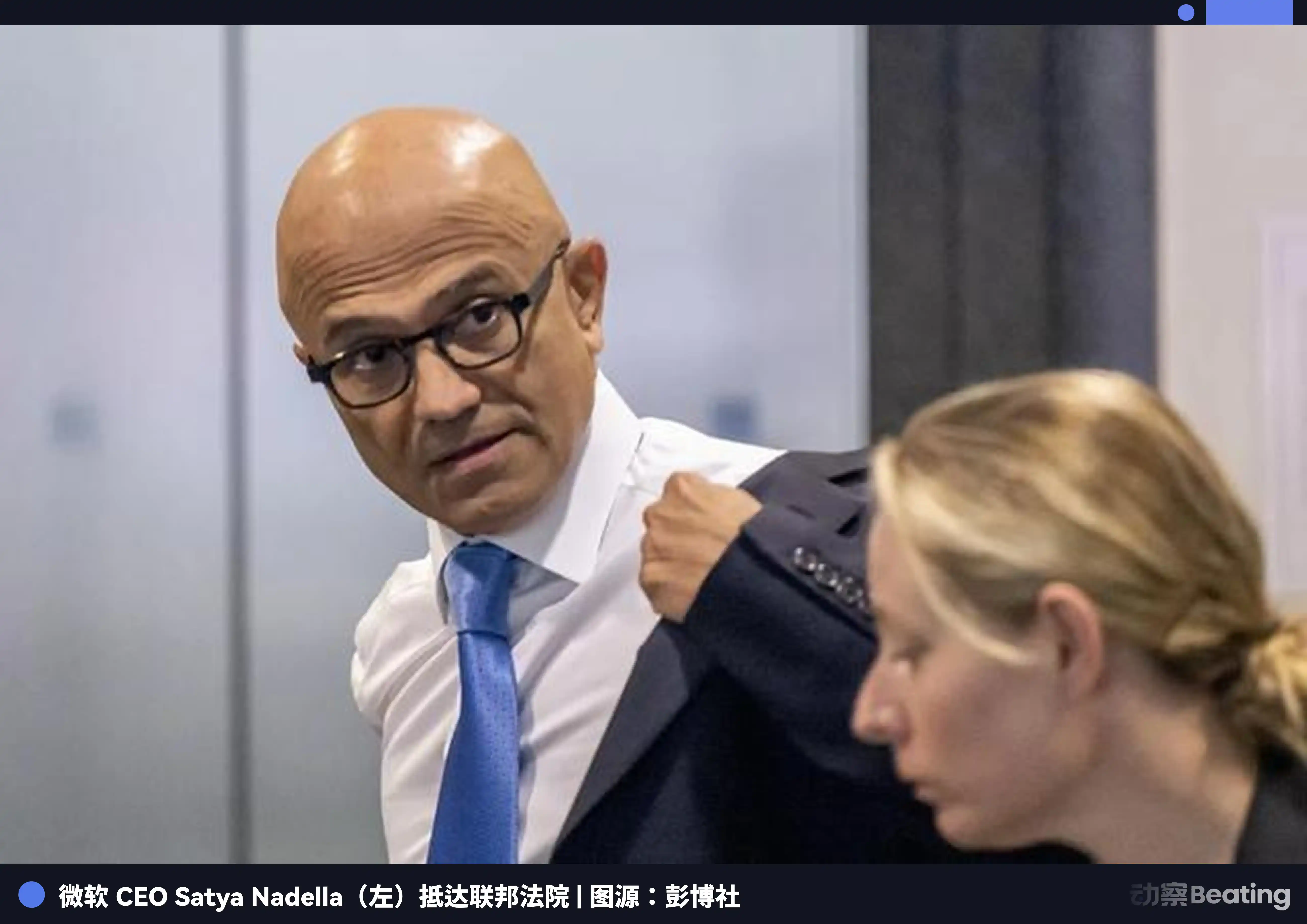
This logic is typical: commercialization isn't a betrayal of the mission, but a way to expand its funding.
Yet in the same set of testimonies, texts between Nadella and Altman about the launch of ChatGPT's paid version were also mentioned. Nadella asked when the paid version would launch; Altman said computing power was insufficient and the experience wasn't good enough, but Nadella was impatient, saying 'as soon as possible.'
Once OpenAI was bound to Microsoft, product timelines, customer commitments, computing power constraints, and commercial returns became intertwined. The board could discuss the mission, but Microsoft had to ensure customer experience; the board could worry about safety, but users and businesses were already using the products; the board could fire the CEO, but employees, investors, partners, and public opinion would immediately rush in.
Nadella's perspective on the 2023 board crisis is also crucial. He said he wasn't given clear reasons for Altman's ouster, criticizing the board's handling as 'amateur city.' More importantly, he had already prepared to welcome Altman and other employees to Microsoft if they couldn't return to OpenAI.
This is reality. The non-profit board appears to hold the steering wheel, but the engine, accelerator, fuel, and passengers are no longer solely under its control. When an AI company is already connected to massive valuations, cloud providers, enterprise clients, employee stock options, and global users, a board representing the mission finds it very hard to actually hit the brakes.
The bigger the AGI narrative, the bigger the computing bill; the bigger the computing bill, the more it needs cloud giants; the more it needs cloud giants, the less the mission can be protected by the charter alone.
In the AI era, computing power isn't a back-office resource. Computing power is power itself. Whoever provides the computing power participates in defining how fast a company can go, where it goes, and whom it serves. Whoever can shoulder the bill for failed training runs can demand a share of the rewards upon success. Whoever guarantees ongoing enterprise client signings will have more say than the board in a crisis.
This trial finally allows us to see the whole picture clearly. It tells us it's not that one person destroyed the ideal, but that an ideal, without a sufficiently robust institutional body, will inevitably grow a skeleton of reality.
That skeleton isn't necessarily evil, but it is certainly no longer pure.
Users Are Not Bystanders
Musk, Altman, Brockman, Nadella—these are names far removed from our daily lives. Damage claims in the hundreds of billions, equity worth nearly $30 billion, a $13 billion investment, a potential $92 billion return—these numbers are so large they feel unreal. Ordinary people sit in offices, squeeze onto subways in the morning, scroll through Douyin at night. Their relationship with AI might just be opening an app and asking: help me revise a proposal, write some code, translate an email.
But that's exactly the problem.
OpenAI is no longer a distant lab. Its models are entering writing, translation, programming, search, customer service, education, office software, and enterprise workflows. An ordinary person might not know if OpenAI is an LP, LLC, or PBC, nor care whether Altman or Musk is better at storytelling. But they are using AI.
Children use it for homework, schools must decide how to handle AI-written essays; programmers use it to write code, companies must decide how to measure human output; journalists use it to research, outline, and edit headlines, readers then face more content of unclear origin; enterprises integrate it into customer service and approval processes, employees find their time and performance being reshaped by the system.
We used to think we were just users. But users employ tools, and tools also shape users.
What a model can and cannot answer; which content is deemed safe, which risky; which companies get access to stronger models, which people only get packaged versions; which languages, professions, regions, and knowledge are better supported, which are treated roughly. These questions seem technical, but they ultimately land in the lives of ordinary people.
Therefore, the OpenAI trial is actually a window. Through it, people can see that the manufacturing site of future infrastructure isn't clean or transparent. There are smart people, ideals, fears, ambitions, equity stakes, cloud bills, boardroom fights, and some private documents they never thought would be read aloud publicly.
Water, electricity, roads, schools, hospitals, search engines, mobile operating systems—once these things enter daily life, they cease to be just commercial products. AI is heading in that direction. It may not yet be as stable as utilities, but it's already starting to be as relied upon. One can choose not to use a specific chatbot, but it's hard to forever avoid work processes, information gateways, and organizational rules transformed by AI.
Regardless of who wins this trial, ordinary users will most likely continue using AI the next day. Students will still have it revise essays, programmers will still have it complete code, enterprises will still integrate it into systems, entrepreneurs will still build apps around models.
But the court at least tore open a layer of packaging. It tells us that the AIs entering our daily lives didn't grow from a transparent, stable machine purely operating for public good. They come from specific people, a complex contract, cloud computing bills, a boardroom coup, some private diaries, and a battle for control.
This isn't a story that can be summed up by 'capital corrupts ideals.' What's more real, and more unsettling, is that AI is becoming infrastructure for ordinary people, but its steering wheel remains in the hands of a few.
When the future is being manufactured as a product, ordinary people cannot remain mere users.