BlackRock Warns Bitcoin And Ethereum Investors About Quantum Computing

bitcoinistPubblicato 2026-06-10Pubblicato ultima volta 2026-06-10

Introduzione

BlackRock's report warns that future advancements in quantum computing could threaten the cryptographic security of Bitcoin, Ethereum, and other digital assets. While no cryptographically relevant quantum computer (CRQC) exists today, the firm stresses the need for proactive industry migration to post-quantum cryptography before "Q-Day." The primary risk lies in the elliptic curve cryptography (ECC) used for digital signatures, which a powerful quantum computer running Shor's algorithm could break. Bitcoin's SHA-256 hash function is considered quantum-resistant, but roughly 35% of circulating BTC may be vulnerable due to exposed public keys. The report notes that Bitcoin's technical upgrade path is relatively narrow, focusing on signature algorithms, but faces significant challenges in decentralized coordination. Ethereum has a more defined migration roadmap but greater complexity due to its proof-of-stake architecture, smart contracts, and layered cryptographic systems. BlackRock concludes that quantum computing presents a manageable but serious long-term risk. Successfully coordinating and implementing post-quantum upgrades across decentralized networks is seen as a multi-year challenge, but one that is less daunting than building a functional CRQC.

BlackRock has entered the quantum-computing debate with a new report warning that future breakthroughs could eventually threaten the cryptography securing Bitcoin, Ethereum and much of the broader digital-asset market. The firm’s central message is not that blockchains face an immediate crisis, but that the industry needs to begin post-quantum migration before “Q-Day” becomes a live security event.

The report, titled “Quantum Computing and Blockchains,” was authored by Will Su, Head of Digital Assets Research at BlackRock, Inish Crisson, Senior Software Engineer at Aladdin Digital Assets Lab, and Robert Mitchnick, BlackRock’s Head of Digital Assets. It frames quantum computing as both a cybersecurity risk and a potential test of blockchain governance, particularly for networks that rely on elliptic curve cryptography for transaction signatures.

“Quantum computing has been the subject of growing attention in recent years, particularly due to its implications for blockchains and many other elements of modern cyber infrastructure,” the authors wrote. “In our view, quantum computing is likely to be a manageable risk for blockchains, subject to the industry’s ability to upgrade swiftly and proactively to post-quantum cryptography in the coming years.”

Bitcoin And Ethereum’s Core Risk

BlackRock stresses that no functional Cryptographically Relevant Quantum Computer, or CRQC, exists today. But it says timelines have shifted. The report notes that Google has moved its post-quantum migration deadline to 2029, while IBM is targeting large-scale fault-tolerant quantum computing between 2029 and 2033.

The main issue is not Bitcoin’s proof-of-work engine. BlackRock says Bitcoin’s SHA-256 hash function is “largely considered quantum-resistant,” with Grover’s algorithm offering only a quadratic speedup that could be absorbed by Bitcoin’s difficulty adjustment. The more relevant attack surface is ownership: the digital signatures that prove control over coins.

Bitcoin and Ethereum currently rely on elliptic curve cryptography for key ownership and transaction authorization. Classical computers would need millions to billions of years to break 256-bit ECC, according to the report. A sufficiently powerful quantum computer using Shor’s Algorithm could change that equation by turning private-key recovery into a more tractable mathematical problem.

“The foundations of modern-day cryptography become challenged in the quantum world,” BlackRock wrote. “This is not because quantum computers run faster. Rather, QCs are particularly efficient at teasing out hidden patterns in large datasets by leveraging unique properties of quantum physics and employing quantum algorithms to solve classically infeasible problems like ECDLPs in as little as days to minutes.”

Bitcoin’s Migration Is Simpler, But Coordination Is Hard

For Bitcoin, BlackRock argues that the technical scope of a post-quantum upgrade is narrower than for many other systems because the core task is replacing a digital-signature algorithm. The harder problem is social coordination across a decentralized network that deliberately avoids rapid or centralized change.

The report says nearly 7 million BTC, or roughly 35% of circulating supply, may be vulnerable to long-range quantum attacks because public keys have already been exposed. That figure includes 1.9 million BTC in address types that expose unhashed public keys and another 5 million BTC in reused addresses that have revealed public keys in previous transactions while still holding UTXOs.

BlackRock also highlights the unresolved debate around inactive or lost coins. It cites Chainalysis estimates that 2.3 million to 3.7 million BTC, or 11% to 19% of circulating supply, may be permanently lost. That includes roughly 1.1 million BTC in P2PK addresses widely believed to belong to Satoshi Nakamoto.

“In our view, PQ migration for cryptocurrencies is eminently addressable from a technical standpoint, and the key challenge is one of timely coordination and implementation,” the report said. “The end-to-end process to build consensus around PQC protocols and timing, implement upgrades on the blockchain, and perform orderly migrations across the ecosystem will likely be a multi-year endeavor.”

Ethereum Has A Roadmap, But More Moving Parts

Ethereum’s situation is different. BlackRock says the network has a more clearly defined migration path, guided by the Ethereum Foundation, but faces greater technical complexity due to its proof-of-stake architecture, smart-contract environment, data layer and application-layer zero-knowledge systems.

The report cites four Ethereum vulnerability areas identified by Vitalik Buterin in early 2026: BLS signatures in the consensus layer, KZG proofs in the data layer, externally owned account signatures, and zero-knowledge proofs in the application layer. In simpler terms, validator voting, data verification, user transactions and app-level proofs all touch quantum-vulnerable cryptographic assumptions.

BlackRock points to Ethereum’s “L1 Strawmap,” a draft sequence of seven network updates and hard forks between 2026 and 2029, five of which directly address quantum vulnerabilities. These include native account abstraction, post-quantum signature precompiles, post-quantum validator keys, hash-based consensus signatures and a longer-term shift from KZG commitments toward STARK-based verification.

A Wall Of Worry For Crypto

BlackRock’s conclusion is measured. The report does not present quantum computing as an imminent existential threat to Bitcoin or Ethereum. It argues instead that quantum risk is one of the few remaining “walls of worry” for digital assets, and that successful post-quantum migrations could strengthen the sector over time.

“Global cybersecurity infrastructure stands at an important inflection point as quantum computing advances,” the authors wrote. “Digital assets including Bitcoin and Ethereum are technically positioned for migration; a harder problem is coordinating timelines and rolling out upgrades across decentralized networks in an orderly manner. That said, it is a much less daunting task to upgrade current cryptographic systems, including Bitcoin, Ethereum, and others, to a quantum-secure standard than it is to build a CRQC from where quantum computing progress stands today.”

At press time, BTC traded at $62,629.
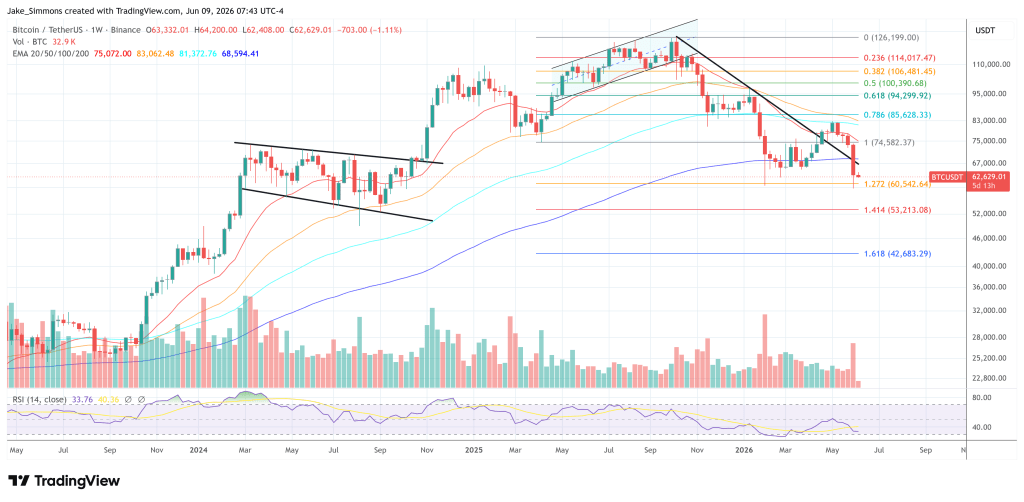
Bitcoin trades below the 200-week EMA, 1-week chart | Source: BTCUSDT on TradingView.com

Domande pertinenti

QWhat is the main message of BlackRock's report on quantum computing and blockchains?

AThe main message is not that blockchains face an immediate crisis, but that the industry needs to proactively begin migrating to post-quantum cryptography before 'Q-Day' becomes a live security event.

QAccording to the report, what is the primary quantum vulnerability for Bitcoin and Ethereum?

AThe primary vulnerability is the elliptic curve cryptography used for key ownership and transaction authorization, which could be broken by a sufficiently powerful quantum computer using Shor's Algorithm to recover private keys.

QWhy does BlackRock consider Bitcoin's migration path to be technically simpler but still challenging?

AIt is technically simpler because the core task is primarily replacing a digital-signature algorithm. The greater challenge is the social coordination required across a decentralized network that avoids rapid or centralized change.

QWhat key difference does the report highlight between Bitcoin and Ethereum regarding quantum risk mitigation?

AEthereum has a more clearly defined migration roadmap (like the L1 Strawmap) guided by the Ethereum Foundation, but faces greater technical complexity due to its proof-of-stake architecture, smart contracts, data layer, and application-layer zero-knowledge systems.

QWhat is BlackRock's overall conclusion about the quantum computing threat to cryptocurrencies?

ABlackRock concludes that quantum computing is not an imminent existential threat but a manageable risk and a 'wall of worry.' Successfully upgrading to post-quantum cryptography is seen as a much less daunting task than building a Cryptographically Relevant Quantum Computer (CRQC).

Letture associate

Y Combinator Co-founder: How to Make a Billion Dollars?

The Y Combinator co-founder argues that becoming a billionaire by founding a successful startup is not only possible but demonstrably achievable without unfair or unethical practices. He disputes a politician's claim to the contrary, using the example of a founder whose company grew at 93% monthly solely through creating a product users loved and recommended. The core mechanism is exponential growth. A conservative 15% monthly growth rate compounds to a 4384x increase over five years, which can easily lead to billion-dollar valuations and founder wealth. The process depends on two key variables: the growth rate and the duration it can be sustained. A high growth rate stems from a great product that users naturally promote, while a long duration requires a large enough market. For aspiring founders, especially young ones, the simplest path is to build something they and their friends genuinely need. Young people's current needs often predict future mass-market trends. He advises against actively "searching" for ideas, as this tends to filter out unconventional but promising ones. Instead, inspiration should come from working on interesting projects with friends, as many iconic companies (e.g., Apple, Facebook) started this way. Ultimately, building a massively valuable startup is not about exploitation but empathy: deeply understanding a user group and building a product that significantly improves their lives. This, powered by exponential growth in a large market, is the legitimate path to immense wealth creation.

Foresight News5 min fa

Y Combinator Co-founder: How to Make a Billion Dollars?

Foresight News5 min fa

The 800V Voltage Standard Championed by Nvidia: Which Infrastructure Providers Stand to Benefit?

NVIDIA is actively promoting the 800VDC architecture as a key direction for its next-generation AI factories and high-power racks, particularly for the upcoming Rubin and Kyber platforms. The primary driver is the rapidly increasing power density of AI racks, with designs like GB200/GB300 NVL72 reaching 120-140kW and future systems potentially hitting 180-220kW. At such high power levels, traditional low-voltage power delivery becomes inefficient due to massive current, leading to significant copper use, cable bulk, heat, and power loss. The 800VDC standard aims to increase efficiency by transmitting power at higher voltage and lower current to the rack before stepping it down locally for GPUs. NVIDIA claims this can improve efficiency by up to 5%, reduce total cost of ownership (TCO) by up to 30%, and cut copper usage by approximately 45%. This shift redefines infrastructure roles, pushing power engineering to the forefront alongside GPU performance. Key beneficiaries and ecosystem partners highlighted include: 1. **Power Infrastructure Providers:** Companies like Vertiv, Schneider Electric, Delta Electronics (台达电), and Korean firms LS Electric and HD Hyundai Electric are involved in designing next-gen AI factory power distribution, rack power supplies, and backup systems. 2. **Power Semiconductors:** Suppliers of SiC/GaN devices, such as Infineon and STMicroelectronics, are better suited for high-voltage, high-efficiency conversion in this new architecture. 3. **Connectivity & Structure:** The focus shifts to high-reliability components like busbars, high-voltage connectors, and advanced PCBs that meet stricter insulation and safety requirements. 4. **Liquid Cooling & Rack ODM:** As power and heat density rise, liquid cooling becomes critical. Full-rack system integrators (e.g., Dell, Wiwynn, Wistron) must now demonstrate robust pre-delivery testing capabilities, including burn-in testing under full load, requiring significant power and cooling infrastructure in their factories. The transition is not immediate for all data centers but is targeted at high-density AI factories. NVIDIA’s 800VDC ecosystem is in a preparatory phase, with full-scale production expected to align with the 2027 launch of Kyber rack-scale systems. The investment thesis revolves around which companies can demonstrate proven product integration, customer validation, and reliable delivery of complete, high-power AI rack systems, making power, cooling, and testing capabilities new critical variables in the AI infrastructure value chain alongside GPUs.

marsbit25 min fa

The 800V Voltage Standard Championed by Nvidia: Which Infrastructure Providers Stand to Benefit?

marsbit25 min fa

Did 'Unlimited Minting' Actually Happen? Zcash Founder Responds to Four Major Market Concerns

The Orchard shielding pool in the privacy cryptocurrency Zcash was recently found to have contained a critical counterfeiting vulnerability that existed for four years. This discovery caused significant market panic and a sharp drop in the price of ZEC, though it has since recovered partially. Zcash founder Zooko Wilcox addressed four key questions raised by the vulnerability. First, while it's unknown if the bug was exploited, he believes it likely was not, citing advanced, targeted discovery methods, a rapid response to freeze the pool, and the typical "smash-and-grab" nature of past crypto exploits. Second, he states that if no exploitation occurred, all legitimate user funds in Orchard are recoverable. However, cautious users moving funds should be aware of privacy trade-offs and other risks involved in transferring to transparent or Sapling pools. Third, users currently cannot independently verify that the total ZEC supply hasn't been inflated due to this bug. However, the proposed "Ironwood" network upgrade will restore this ability by permanently sealing the Orchard pool. This will prevent any counterfeit funds from circulating and allow anyone running a node to cryptographically verify that the supply cap has not been breached. Finally, regarding other undiscovered vulnerabilities, Wilcox notes that intensive ongoing audits by multiple teams, including using advanced AI-assisted tools, have so far found no other counterfeiting bugs. This provides increased, though not absolute, confidence. In conclusion, while assessments suggest the bug was likely unused and funds are safe, the core issue was the loss of user-verifiable supply integrity. The Ironwood upgrade is presented as the solution, aiming to restore trust by allowing users to independently verify Zcash's supply security without relying on third-party assurances.

marsbit26 min fa

Did 'Unlimited Minting' Actually Happen? Zcash Founder Responds to Four Major Market Concerns

marsbit26 min fa

The First Prediction Market Stock Has Emerged!

"Prediction Market Unicorn Emerges!" While the World Cup drives record trading volumes in prediction markets, the industry leader Kalshi faces a new threat from a former key ally. In March 2025, Kalshi partnered with online broker Robinhood to offer prediction market services, allowing users to bet on events. This deal was mutually beneficial: Kalshi gained access to Robinhood's massive retail user base, with an estimated 25-35% of its volume coming through this channel, while Robinhood earned significant fees, reporting a 320% year-over-year increase in "other transaction revenue" to $147 million in Q1 2026, largely fueled by prediction markets. However, Robinhood's ambitions have grown. Recognizing that its user base and distribution power are the scarcest resources, it initiated a plan to bring operations in-house. In late 2025, Robinhood partnered with Susquehanna to acquire CFTC-regulated exchange MIAXdx, renaming it Rothera Exchange. By June 2026, Robinhood launched its own prediction market product on Rothera, strategically using the World Cup as a launchpad. Initial data shows Rothera processing tens of millions of contracts within days, directly siphoning volume away from Kalshi. This shift marks a pivotal moment: control is moving from the market infrastructure provider (Kalshi) to the entity controlling user distribution (Robinhood). The story illustrates a recurring internet era dynamic: "He who controls distribution controls everything." As more platforms with large user bases recognize the value of prediction markets, the industry's future competition may center less on which platform has the best market technology and more on which one owns the user gateway.

marsbit38 min fa

The First Prediction Market Stock Has Emerged!

marsbit38 min fa

More Popular Than SpaceX, Oversubscribed Over 6,586 Times, What's the Meme Power Behind Liuliu Mei (06658.HK)?

Liumeimei, a popular Chinese snack brand known as "Liuliumei" in China, listed on the Hong Kong Stock Exchange (stock code: 06658.HK). On its debut, the stock price surged dramatically, opening 116% above the issue price and peaking with gains over 190%. This surge is widely attributed not to its traditional consumer goods business, but to a "Meme stock" phenomenon. Its stock ticker abbreviation "LLM" coincidentally matches the acronym for "Large Language Model," the core technology of the ongoing AI boom. This association, coupled with a strong same-day performance by another AI-related stock, triggered a massive wave of speculative retail investment. The IPO itself saw extreme oversubscription in the public offering segment, exceeding 6,586 times, though retail investors were allocated only 10% of shares. Analysts and the article frame this event as part of a broader "stock Meme-ification" trend in global markets, where stocks can experience volatile price movements based on viral narratives, wordplay (like homophones or abbreviations), celebrity mentions, or fleeting social media attention—similar to dynamics seen in the cryptocurrency meme coin sector. Examples cited include the 2021 GameStop saga, stocks linked to political figures like Donald Trump, and other companies benefiting from AI hype or谐音梗 (homophone puns). While such trends can create significant short-term wealth for some, the article notes they also carry risks of market manipulation, "pump and dump" schemes, and investments detached from fundamental business value. The Liumeimei listing is presented as a prime example of how attention and internet culture are increasingly driving capital flows in modern financial markets.

marsbit41 min fa

More Popular Than SpaceX, Oversubscribed Over 6,586 Times, What's the Meme Power Behind Liuliu Mei (06658.HK)?

marsbit41 min fa

Trading

Spot
Futures

Articoli Popolari

Cosa è BITCOIN

Comprendere HarryPotterObamaSonic10Inu (ERC-20) e la sua posizione nel mondo delle criptovalute Negli ultimi anni, il mercato delle criptovalute ha assistito a un aumento della popolarità delle meme coin, catturando l'interesse non solo dei trader, ma anche di coloro che cercano coinvolgimento comunitario e valore di intrattenimento. Tra questi token unici c'è HarryPotterObamaSonic10Inu (ERC-20), un progetto intrigante che mescola riferimenti culturali nel tessuto delle criptovalute. Questo articolo esplora gli aspetti chiave di HarryPotterObamaSonic10Inu, analizzando i suoi meccanismi, l'etica guidata dalla comunità e il suo coinvolgimento con il panorama crittografico più ampio. Che cos'è HarryPotterObamaSonic10Inu (ERC-20)? Come suggerisce il suo nome, HarryPotterObamaSonic10Inu è una meme coin costruita sulla blockchain di Ethereum, classificata secondo lo standard ERC-20. A differenza delle criptovalute tradizionali che possono enfatizzare l'utilità pratica o il potenziale investimento, questo token prospera grazie al valore di intrattenimento e alla forza della sua comunità. Il progetto mira a creare un ambiente in cui gli utenti coinvolti possono riunirsi, condividere idee e partecipare ad attività ispirate a diversi fenomeni culturali. Una caratteristica notevole di HarryPotterObamaSonic10Inu è la zero tassa sulle transazioni. Questo elemento allettante tende a incoraggiare il trading e il coinvolgimento della comunità, privo di costi aggiuntivi che possono scoraggiare i trader di piccole dimensioni. L'offerta totale della moneta è fissata a un miliardo di token, un numero che segna la sua intenzione di mantenere una circolazione sostanziale all'interno della comunità. Creatore di HarryPotterObamaSonic10Inu (ERC-20) Le origini di HarryPotterObamaSonic10Inu sono avvolte in un certo mistero; i dettagli sul creatore rimangono sconosciuti. Lo sviluppo di questo token non presenta un team identificabile o un piano esplicito, cosa non rara nel settore delle meme coin. Invece, il progetto è emerso organicamente, con il suo progresso fortemente dipendente dall'entusiasmo e dalla partecipazione della sua comunità. Investitori di HarryPotterObamaSonic10Inu (ERC-20) Per quanto riguarda investimenti esterni e finanziamenti, HarryPotterObamaSonic10Inu rimane ambiguo. Il token non elenca alcuna fondazione di investimento conosciuta o un sostegno organizzativo significativo. Invece, la linfa vitale del progetto è la sua comunità di base, che informa la sua crescita e sostenibilità attraverso azioni collettive e coinvolgimento nello spazio crittografico. Come funziona HarryPotterObamaSonic10Inu (ERC-20)? In quanto meme coin, HarryPotterObamaSonic10Inu opera principalmente al di fuori delle strutture tradizionali che governano spesso il valore degli asset. Ci sono diversi aspetti distintivi che definiscono il funzionamento del progetto: Transazioni senza tasse: Senza costi fiscali sulle transazioni, gli utenti possono comprare e vendere liberamente il token senza preoccuparsi di costi nascosti. Coinvolgimento della comunità: Il progetto prospera sull'interazione della comunità, sfruttando le piattaforme social per creare entusiasmo e facilitare il coinvolgimento. Discussioni, condivisione di contenuti e coinvolgimento sono elementi cruciali che aiutano ad espandere la sua portata e a favorire la lealtà tra i sostenitori. Nessuna utilità pratica: Va notato che HarryPotterObamaSonic10Inu non offre un'utilità concreta all'interno dell'ecosistema finanziario. Piuttosto, è classificato come un token principalmente per attività di intrattenimento e comunitarie. Riferimento culturale: Il token incorpora astutamente elementi della cultura pop per attirare interesse, collegandosi a appassionati di meme e seguaci delle criptovalute. HarryPotterObamaSonic10Inu esemplifica come le meme coin operino in modo diverso rispetto ai progetti di criptovalute più tradizionali, entrando nel mercato come costrutti sociali innovativi piuttosto che come asset utilitari. Cronologia di HarryPotterObamaSonic10Inu (ERC-20) La storia di HarryPotterObamaSonic10Inu è segnata da diversi traguardi notevoli: Creazione: Il token è emerso da un meme virale, catturando l'immaginazione di molti appassionati di criptovalute. Le date di creazione specifiche non sono disponibili, sottolineando la sua crescita organica. Inserimento negli scambi: HarryPotterObamaSonic10Inu ha fatto il suo ingresso in vari scambi, consentendo un accesso e un trading più facili da parte della comunità. Iniziative di coinvolgimento della comunità: Attività in corso volte a migliorare l'interazione della comunità, comprese gare, campagne sui social media e generazione di contenuti da parte di fan e sostenitori. Piani di espansione futura: La tabella di marcia del progetto include il lancio di una collezione NFT, merchandising e un sito di eCommerce relativo ai suoi temi culturali, coinvolgendo ulteriormente la comunità e cercando di aggiungere più dimensioni al suo ecosistema. Punti chiave su HarryPotterObamaSonic10Inu (ERC-20) Natura guidata dalla comunità: Il progetto dà priorità al contributo collettivo e alla creatività, garantendo che il coinvolgimento degli utenti sia al centro del suo sviluppo. Classificazione come meme coin: Rappresenta l'epitome delle criptovalute basate sull'intrattenimento, distinguendosi dai veicoli d'investimento tradizionali. Nessuna affiliazione diretta con Bitcoin: Nonostante la somiglianza nel nome del ticker, HarryPotterObamaSonic10Inu è distintivo e non ha alcuna relazione con Bitcoin o altre criptovalute consolidate. Focus sulla collaborazione: HarryPotterObamaSonic10Inu è progettato per creare uno spazio per la collaborazione e la condivisione di storie tra i suoi detentori, fornendo un canale per la creatività e il legame comunitario. Prospettive future: L'ambizione di espandersi oltre il suo presupposto iniziale verso NFT e merchandising delinea un percorso per il progetto per potenzialmente entrare in strade più mainstream all'interno della cultura digitale. Poiché le meme coin continuano a catturare l'immaginazione della comunità crittografica, HarryPotterObamaSonic10Inu (ERC-20) si distingue per i suoi legami culturali e il suo approccio centrato sulla comunità. Anche se potrebbe non adattarsi al modello tipico di un token orientato all'utilità, la sua essenza risiede nella gioia e nella camaraderia coltivate tra i suoi sostenitori, evidenziando la natura in evoluzione delle criptovalute in un'epoca sempre più digitale. Con la continuazione dello sviluppo del progetto, sarà importante osservare come le dinamiche della comunità influenzano la sua traiettoria nel panorama in continuo cambiamento della tecnologia blockchain.

1.7k Totale visualizzazioniPubblicato il 2024.04.01Aggiornato il 2024.12.03

Cosa è BITCOIN

Come comprare BTC

Benvenuto in HTX.com! Abbiamo reso l'acquisto di Bitcoin (BTC) semplice e conveniente. Segui la nostra guida passo passo per intraprendere il tuo viaggio nel mondo delle criptovalute.Step 1: Crea il tuo Account HTXUsa la tua email o numero di telefono per registrarti il tuo account gratuito su HTX. Vivi un'esperienza facile e sblocca tutte le funzionalità,Crea il mio accountStep 2: Vai in Acquista crypto e seleziona il tuo metodo di pagamentoCarta di credito/debito: utilizza la tua Visa o Mastercard per acquistare immediatamente BitcoinBTC.Bilancio: Usa i fondi dal bilancio del tuo account HTX per fare trading senza problemi.Terze parti: abbiamo aggiunto metodi di pagamento molto utilizzati come Google Pay e Apple Pay per maggiore comodità.P2P: Fai trading direttamente con altri utenti HTX.Over-the-Counter (OTC): Offriamo servizi su misura e tassi di cambio competitivi per i trader.Step 3: Conserva Bitcoin (BTC)Dopo aver acquistato Bitcoin (BTC), conserva nel tuo account HTX. In alternativa, puoi inviare tramite trasferimento blockchain o scambiare per altre criptovalute.Step 4: Scambia Bitcoin (BTC)Scambia facilmente Bitcoin (BTC) nel mercato spot di HTX. Accedi al tuo account, seleziona la tua coppia di trading, esegui le tue operazioni e monitora in tempo reale. Offriamo un'esperienza user-friendly sia per chi ha appena iniziato che per i trader più esperti.

4.0k Totale visualizzazioniPubblicato il 2024.12.12Aggiornato il 2026.06.02

Come comprare BTC

Cosa è $BITCOIN

ORO DIGITALE ($BITCOIN): Un'Analisi Completa Introduzione all'ORO DIGITALE ($BITCOIN) L'ORO DIGITALE ($BITCOIN) è un progetto basato su blockchain che opera sulla rete Solana, con l'obiettivo di combinare le caratteristiche dei metalli preziosi tradizionali con l'innovazione delle tecnologie decentralizzate. Sebbene condivida un nome con Bitcoin, spesso definito “oro digitale” a causa della sua percezione come riserva di valore, l'ORO DIGITALE è un token separato progettato per creare un ecosistema unico all'interno del panorama Web3. Il suo obiettivo è posizionarsi come un asset digitale alternativo valido, anche se i dettagli riguardanti le sue applicazioni e funzionalità sono ancora in fase di sviluppo. Cos'è l'ORO DIGITALE ($BITCOIN)? L'ORO DIGITALE ($BITCOIN) è un token di criptovaluta esplicitamente progettato per l'uso sulla blockchain di Solana. A differenza di Bitcoin, che fornisce un ruolo di stoccaggio di valore ampiamente riconosciuto, questo token sembra concentrarsi su applicazioni e caratteristiche più ampie. Aspetti notevoli includono: Infrastruttura Blockchain: Il token è costruito sulla blockchain di Solana, nota per la sua capacità di gestire transazioni ad alta velocità e a basso costo. Dinamiche di Offerta: L'ORO DIGITALE ha un'offerta massima fissata a 100 quadrilioni di token (100P $BITCOIN), sebbene i dettagli riguardanti la sua offerta circolante siano attualmente non divulgati. Utilità: Sebbene le funzionalità precise non siano esplicitamente delineate, ci sono indicazioni che il token potrebbe essere utilizzato per varie applicazioni, potenzialmente coinvolgendo applicazioni decentralizzate (dApp) o strategie di tokenizzazione degli asset. Chi è il Creatore dell'ORO DIGITALE ($BITCOIN)? Attualmente, l'identità dei creatori e del team di sviluppo dietro l'ORO DIGITALE ($BITCOIN) rimane sconosciuta. Questa situazione è tipica tra molti progetti innovativi nel settore blockchain, in particolare quelli allineati con la finanza decentralizzata e i fenomeni delle meme coin. Sebbene tale anonimato possa favorire una cultura guidata dalla comunità, intensifica le preoccupazioni riguardo alla governance e alla responsabilità. Chi sono gli Investitori dell'ORO DIGITALE ($BITCOIN)? Le informazioni disponibili indicano che l'ORO DIGITALE ($BITCOIN) non ha alcun sostenitore istituzionale noto o investimenti di venture capital prominenti. Il progetto sembra operare su un modello peer-to-peer incentrato sul supporto e sull'adozione della comunità piuttosto che su percorsi di finanziamento tradizionali. La sua attività e liquidità si trovano principalmente su exchange decentralizzati (DEX), come PumpSwap, piuttosto che su piattaforme di trading centralizzate consolidate, evidenziando ulteriormente il suo approccio di base. Come Funziona l'ORO DIGITALE ($BITCOIN) Le meccaniche operative dell'ORO DIGITALE ($BITCOIN) possono essere elaborate in base al suo design blockchain e alle caratteristiche della rete: Meccanismo di Consenso: Sfruttando il proof-of-history (PoH) unico di Solana combinato con un modello di proof-of-stake (PoS), il progetto garantisce una validazione efficiente delle transazioni contribuendo all'alta performance della rete. Tokenomics: Sebbene meccanismi deflazionistici specifici non siano stati dettagliati ampiamente, l'ampia offerta massima di token implica che potrebbe soddisfare microtransazioni o casi d'uso di nicchia che devono ancora essere definiti. Interoperabilità: Esiste il potenziale per l'integrazione con l'ecosistema più ampio di Solana, inclusi vari piattaforme di finanza decentralizzata (DeFi). Tuttavia, i dettagli riguardanti integrazioni specifiche rimangono non specificati. Cronologia degli Eventi Chiave Ecco una cronologia che evidenzia traguardi significativi riguardanti l'ORO DIGITALE ($BITCOIN): 2023: Il dispiegamento iniziale del token avviene sulla blockchain di Solana, contrassegnato dal suo indirizzo di contratto. 2024: L'ORO DIGITALE guadagna visibilità poiché diventa disponibile per il trading su exchange decentralizzati come PumpSwap, consentendo agli utenti di scambiarlo contro SOL. 2025: Il progetto assiste a un'attività di trading sporadica e a un potenziale interesse per impegni guidati dalla comunità, sebbene non siano state documentate partnership significative o avanzamenti tecnici fino ad ora. Analisi Critica Punti di Forza Scalabilità: L'infrastruttura sottostante di Solana supporta alti volumi di transazioni, il che potrebbe migliorare l'utilità di $BITCOIN in vari scenari di transazione. Accessibilità: Il potenziale basso prezzo di trading per token potrebbe attrarre investitori al dettaglio, facilitando una partecipazione più ampia grazie a opportunità di proprietà frazionata. Rischi Mancanza di Trasparenza: L'assenza di sostenitori, sviluppatori o di un processo di audit pubblicamente noti potrebbe generare scetticismo riguardo alla sostenibilità e all'affidabilità del progetto. Volatilità del Mercato: L'attività di trading è fortemente dipendente dal comportamento speculativo, il che può comportare una significativa volatilità dei prezzi e incertezze per gli investitori. Conclusione L'ORO DIGITALE ($BITCOIN) emerge come un progetto intrigante ma ambiguo all'interno dell'evolvente ecosistema di Solana. Sebbene tenti di sfruttare la narrativa dell'“oro digitale”, la sua partenza dal ruolo consolidato di Bitcoin come riserva di valore sottolinea la necessità di una chiara differenziazione della sua utilità e struttura di governance. L'accettazione e l'adozione future dipenderanno probabilmente dall'affrontare l'attuale opacità e dalla definizione più esplicita delle sue strategie operative ed economiche. Nota: Questo rapporto comprende informazioni sintetizzate disponibili a ottobre 2023, e potrebbero essersi verificati sviluppi oltre il periodo di ricerca.

99 Totale visualizzazioniPubblicato il 2025.05.13Aggiornato il 2025.05.13

Cosa è $BITCOIN

Discussioni

Benvenuto nella Community HTX. Qui puoi rimanere informato sugli ultimi sviluppi della piattaforma e accedere ad approfondimenti esperti sul mercato. Le opinioni degli utenti sul prezzo di BTC BTC sono presentate come di seguito.

活动图片