Macroeconomic Origins of the African Payments Market Structure

marsbitPubblicato 2026-06-05Pubblicato ultima volta 2026-06-05

Introduzione

Africa’s payment landscape exhibits the world’s highest mobile money penetration and fastest cryptocurrency adoption. This is not a market anomaly but a macroeconomic inevitability driven by deep structural factors: a vast, young population, heavy reliance on commodity exports and remittances generating massive cross‑border payment needs, and a chronically underdeveloped formal banking system plagued by de‑risking, high inflation, and currency instability. This vacuum has allowed mobile money (e.g., M‑Pesa) to become the primary payment channel domestically, while cryptocurrencies—particularly stablecoins—serve as a store of value against local‑currency depreciation and a lower‑cost cross‑border medium. The key divide is the Sahara: North Africa integrates with the MENA oil‑centric financial system, while Sub‑Saharan Africa, facing acute dollar shortages and fragmented currencies, is the epicenter of this fintech surge. Structural reliance on dollars, driven by trade deficits and weak local currency credibility, creates persistent dollar scarcity, which crypto and mobile payments effectively address. Efforts like the Pan‑African Payment and Settlement System (PAPSS) aim at de‑dollarization, but these alternatives will remain essential as long as underlying economic constraints—commodity dependence, limited industrialization, and financial exclusion—persist.

Africa's payments market exhibits distinct characteristics, boasting the world's highest mobile payment penetration rate and the fastest growth in cryptocurrency adoption. This is not a market-level coincidence, but a necessity arising from the long-term evolution of macroeconomic structures.

This article analyzes the two deep-seated structural drivers behind this necessity: (1) Africa's long-term reliance on resource exports, trade circulation, and remittances has created immense demand for cross-border settlement and transfers; (2) Africa's domestic financial infrastructure is underdeveloped, suffering from international bank de-risking and poor foreign exchange management, leading to a persistent absence of commercial banking and stubborn inflationary pressures.

These two forces jointly create a vacuum where mobile payments and cryptocurrencies have flourished: mobile payment platforms have replaced banks as daily payment channels, while cryptocurrencies assume the role previously held by local fiat currencies or the US dollar in emerging economies, acting both as a store of value against currency depreciation and a low-cost medium for cross-border exchange.

The key dividing line on this continent is the Sahara Desert: North of the Sahara integrates into the Middle East and North Africa (MENA) framework, anchored by oil and aligned with the Middle East; while Sub-Saharan Africa (SSA), plagued by severe dollar shortages and fragmented currency systems, has fostered a vast market with a natural demand for mobile payments and cryptocurrencies. SSA countries like Nigeria, Kenya, and South Africa rank among the world's highest in mobile payment and cryptocurrency adoption rates.

1 Africa's Macroeconomic Panorama: A Vast, Young, Yet Commodity-Dependent Primary Economy

1.1 Demographic Structure

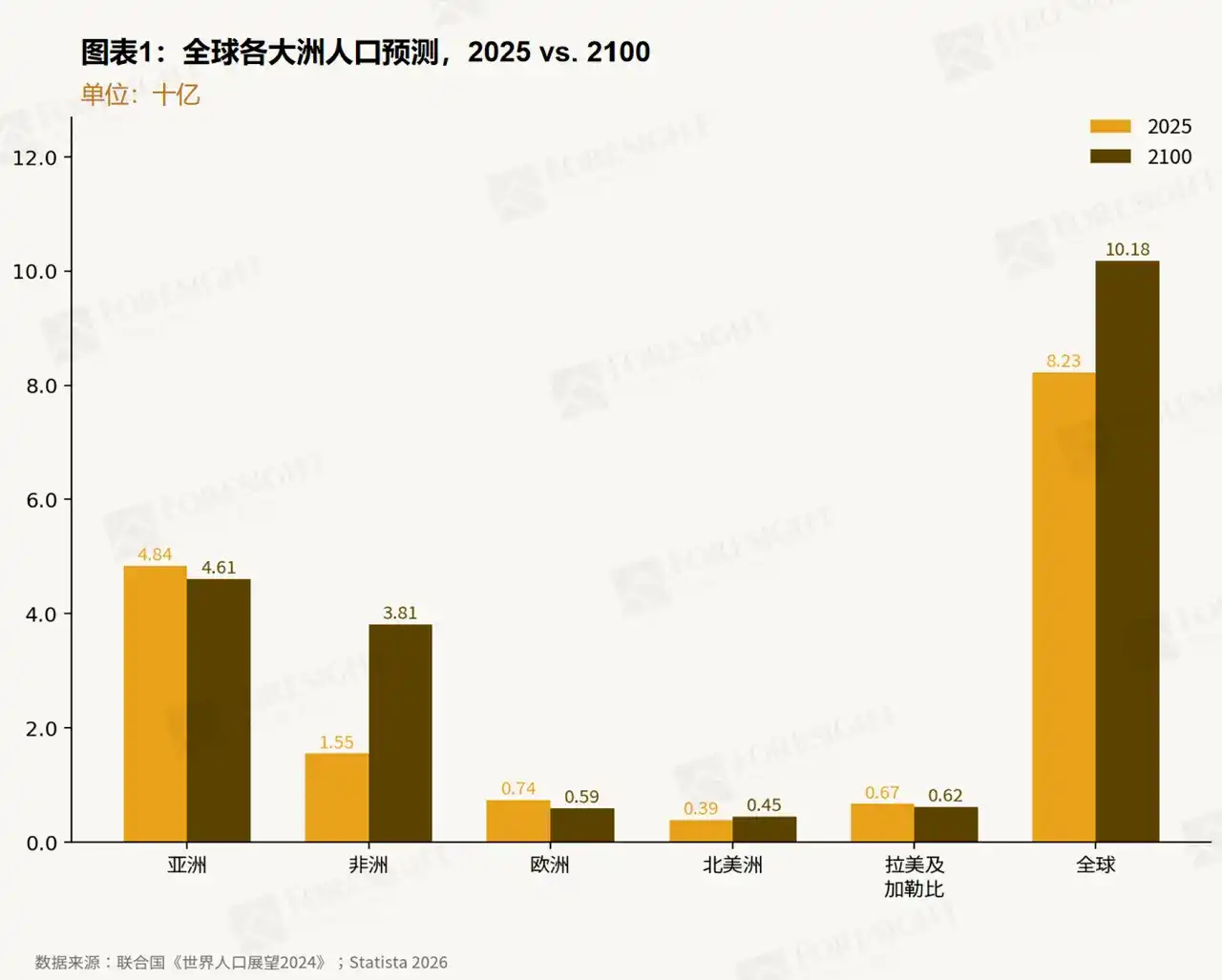
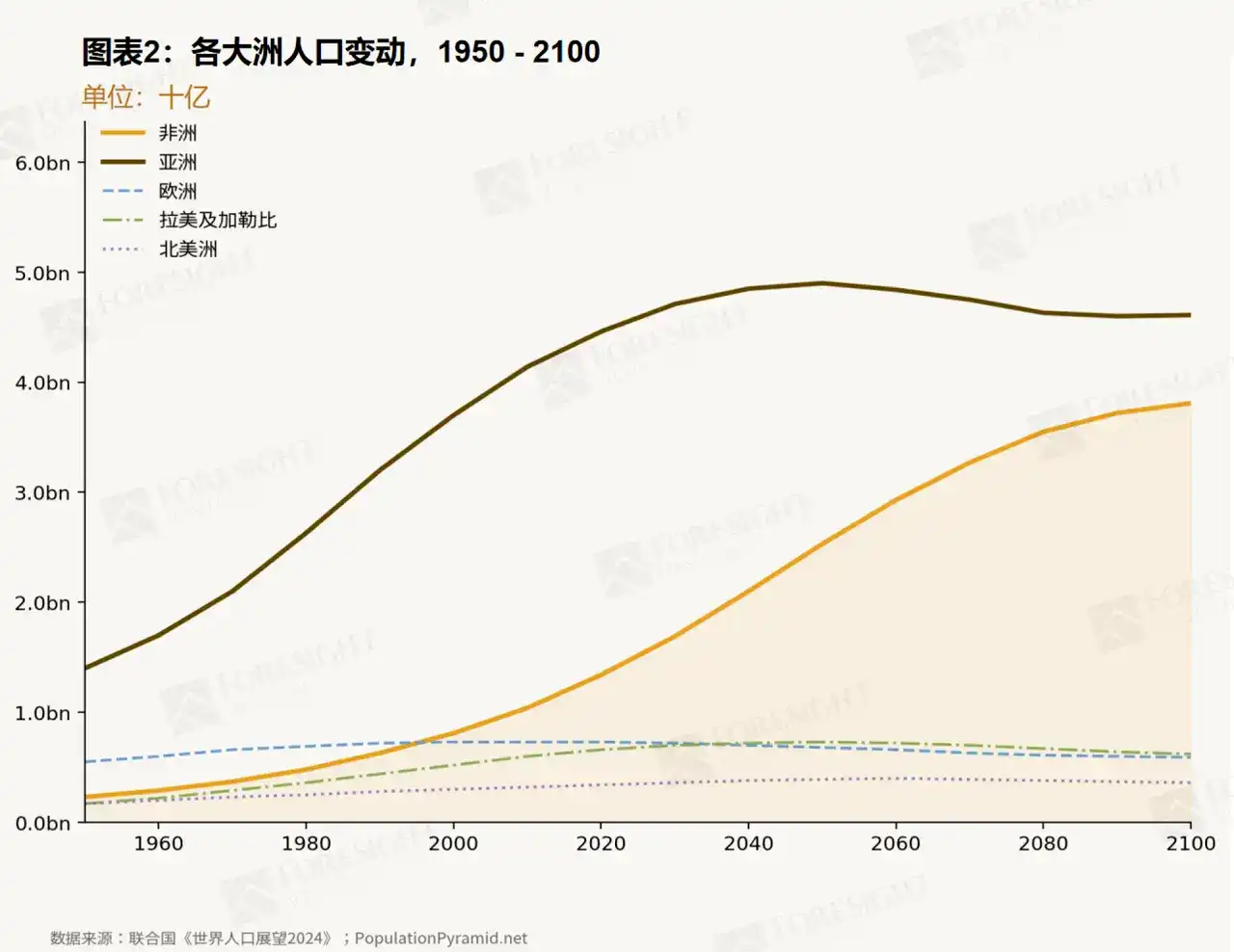
By 2025, Africa's population will reach about 1.55 billion, accounting for approximately 19% of the global total. It is the youngest continent globally, with a median age of just 19, and also the fastest-growing continent, with an annual growth rate of about 2%, unmatched by other continents.

By 2100, Africa's population is projected to nearly triple to 3.81 billion, constituting 37% of humanity by then. In stark contrast, Asia's population is expected to peak and decline by mid-century, Europe and Latin America face absolute contraction, while Africa alone will sustain substantial growth throughout the century (see Figures 1 and 2).

This demographic trend has profound implications for payments infrastructure. Against a backdrop where traditional banking coverage remains low, a large, young, urbanizing, mobile-native cohort is entering the labor market and consumer economy at scale. Consequently, demand for convenient, low-cost financial services (including payments, savings, credit) will only intensify.
1.2 Resource Endowment and Industrial Structure

Africa possesses extremely rich natural resources. According to OPEC's Annual Statistical Bulletin, as of 2024, the continent's proven crude oil reserves were approximately 119.4 billion barrels, accounting for about 7.6% of the global total, with the largest reserves concentrated in Libya, Nigeria, Algeria, and Angola. Beyond hydrocarbons, Africa's mineral resources also hold significant global importance and dominate several categories: the continent is the world's most crucial diamond producer, holds about 49% of global cobalt reserves, and is the absolute source of platinum group metals (PGMs), with South Africa alone controlling about 78% of global PGM reserves. These endowments make Africa a critical node in the global commodity supply chain.

However, much of this wealth is still extracted and exported as raw materials with little downstream processing or value addition. Simultaneously, local manufacturing and agriculture are underdeveloped, infrastructure is severely lacking, and refined fuels, processed foods, etc., remain import-dependent. This economic structure of being 'large at both import and export ends' locks the continent into the trade dependency pattern discussed next.

1.3 Trade Dependency and Remittance Flows

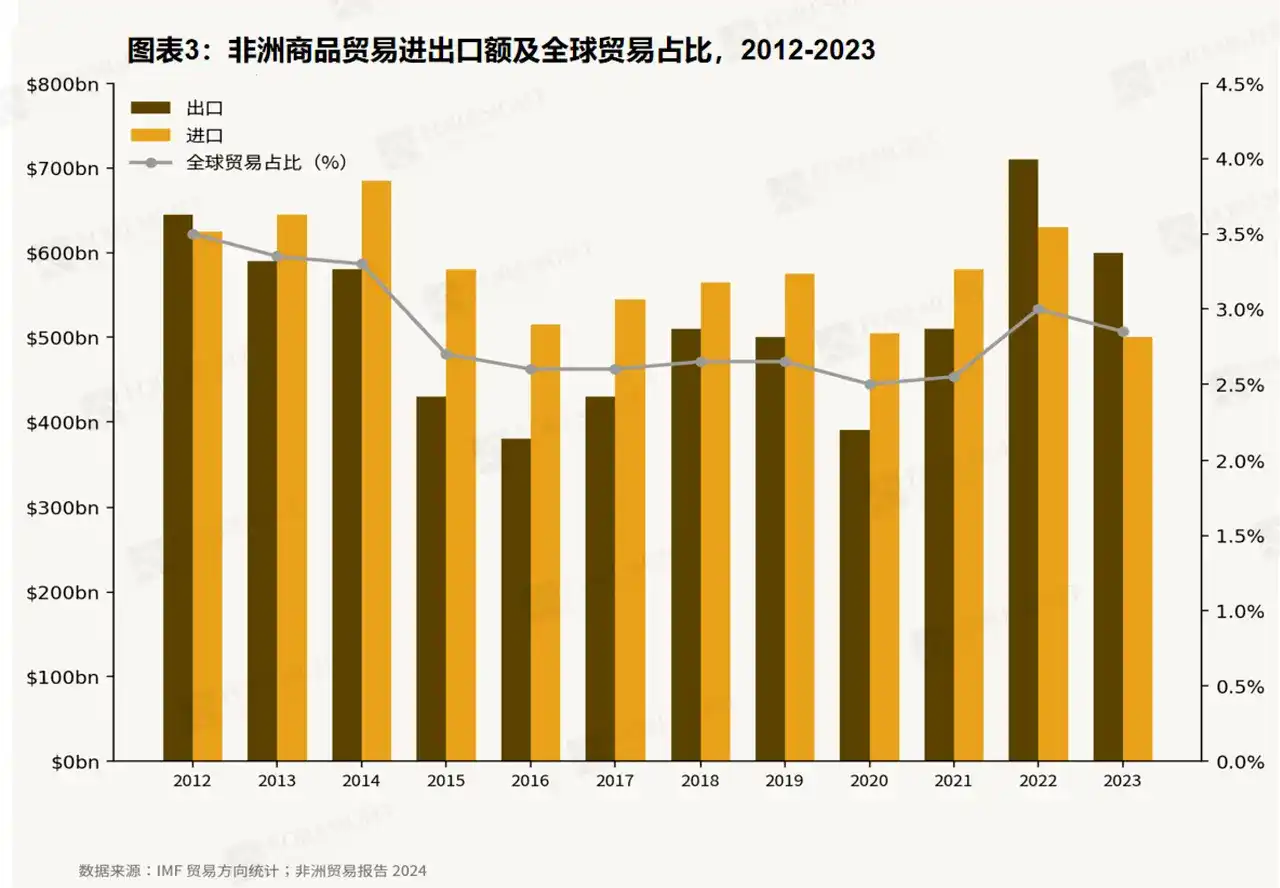
Africa's economy is deeply intertwined with global trade and overseas remittances. In 2023, Africa's cross-border goods exports and imports reached $604.5 billion and $684.5 billion, respectively, while remittance inflows amounted to $52.16 billion. For reference, Africa's total GDP in 2023 was approximately $2.96 trillion. These two pillars of trade and remittances are not only pivotal in Africa's economic structure but also generate massive demand for B2B cross-border trade settlement and C2C cross-border transfers, respectively.

Cross-border trade is a vital pillar of Africa's economy, but the commodity-dependent export structure and persistent trade deficits make it highly sensitive to global macro cycles. In 2023, Africa's total goods exports were $604.5 billion (down 15.1% year-on-year), imports were $684.5 billion (down 1.6% year-on-year), resulting in a trade deficit of about $80 billion (see Figure 3). Over a ten-year trend, Africa is extremely sensitive to fluctuations in the global commodity cycle. The oil price collapse of 2015–2016 pushed Africa's trade volume to a two-decade low, stalling resource-dependent economies (e.g., Nigeria, Angola, oil exporters) while non-resource economies maintained 7%–8% growth, showing a clear divergence. The 2020 COVID-19 shock triggered another collapse: global commodity prices plummeted, African GDP growth fell to -2%, followed by a V-shaped recovery in 2021. More recently, during 2022–2023, driven by a spike in commodity prices triggered by the Russia-Ukraine conflict, African exports briefly surged. However, simultaneously, the aggressive US Federal Reserve rate hikes pushed up the US dollar and tightened global liquidity, subjecting the entire continent to severe imported inflation and currency depreciation.
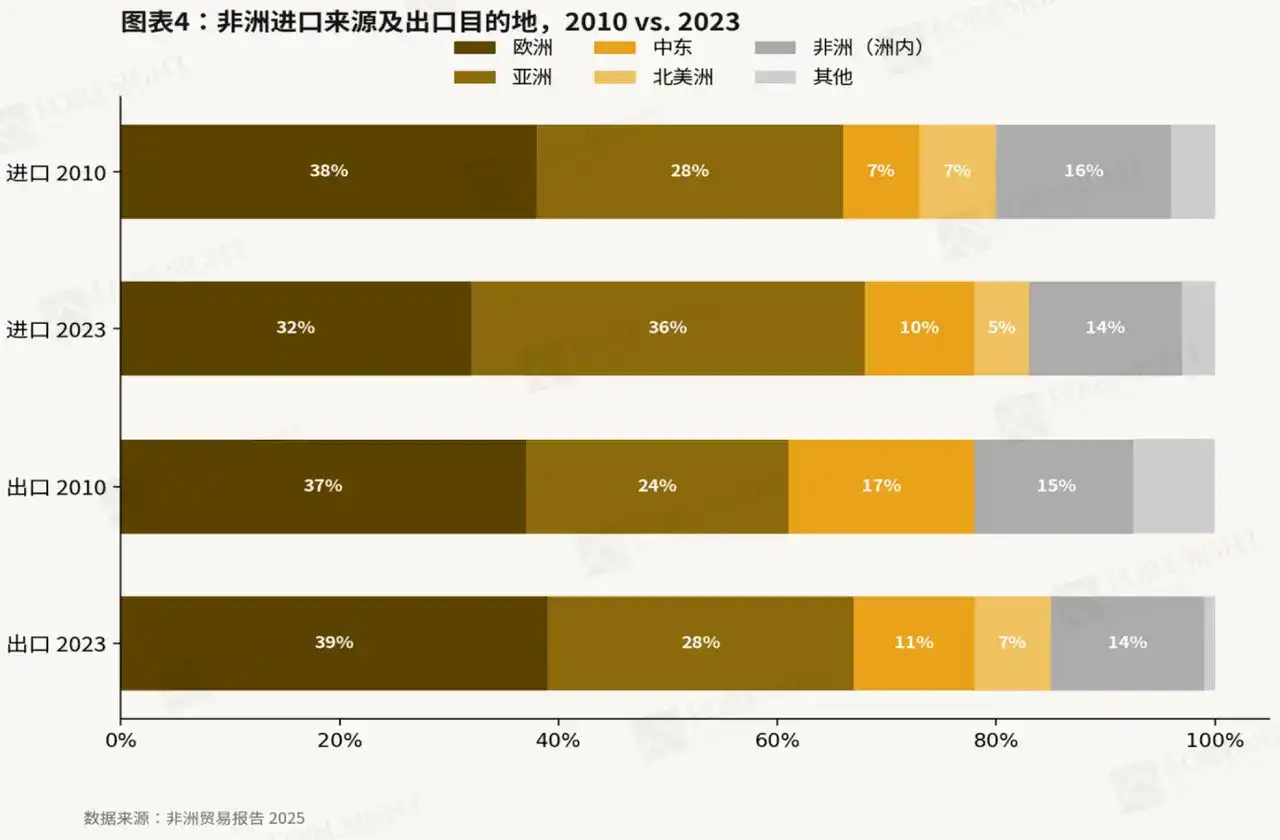
Africa's trade partner structure has changed significantly over the past decade (see Figure 4). Asia, led by China and India, has surpassed Europe to become Africa's largest source of imports—its share of total African imports rose from 28% in 2010 to 36% in 2023, while Europe's share fell from 38% to 32%. On the export side, Europe remains the top destination with a 39% share, but Asia's share has grown from 24% to 28%, and the Middle East has expanded sharply from 3% to 11%. North America's role has contracted on both import and export ends. These changes reflect the deepening commodity trade corridor between China and Africa and the Gulf states' growing importance as energy buyers and investment partners.

Beyond intercontinental trade, 'Intra-Africa Trade' among African countries is also growing rapidly, but barriers like currency and language remain bottlenecks to be overcome. Intra-African trade reached $192.2 billion in 2023, growing 3.8%. However, intra-African trade accounts for only 18% of Africa's total exports, compared to 70% for Europe and 52% for Asia. This reflects persistent obstacles like tariff fragmentation, currency inconvertibility, and weak cross-border infrastructure to intra-African trade growth. Against this backdrop, the African Continental Free Trade Area (AfCFTA) began operations in 2021, aiming to increase intra-African trade by 52% upon full implementation, but progress has been slow.

Remittances are another lifeline for Africa's economy and a source of massive C2C payment demand. According to World Bank data, Africa received $52.2 billion in remittances in 2023. The top five remittance corridors are Saudi Arabia→Egypt, UAE→Egypt, US→Nigeria, Kuwait→Egypt, France→Morocco. African labor exports to the Gulf, North America, and Europe form continuous reverse income flows to households. These corridors constitute one of the largest sources of cross-border C2C transfer demand and are also where the pain points of the traditional financial system in cross-border transfers—high costs, long time, and opacity—are most acutely felt, a key issue discussed in the next section.
2 The Deep Mismatch Between Foreign Trade/Remittance Demand and the Backward Financial System

2.1 Low Banking Coverage, Huge Unbanked Population Gap

Africa's formal financial system only covers a minority. According to the World Bank's 2021–2022 global Findex database, only 49% of adults in Sub-Saharan Africa had a financial account; by 2024, this figure rose to 58% but remained among the lowest globally. Beyond low coverage, African banking outlet density is also lagging. IMF's Financial Access Survey shows Kenya has only 4.4 bank branches per 100,000 adults, Morocco 22.2, and even South Africa, with Africa's most developed banking system, has just 38.7, all far below global averages. The result is a massive unmet demand for basic financial services: payments, savings, credit, insurance.

2.2 International De-risking and Correspondent Banking Retreat

Africa's second major hurdle comes from the retreat of the international financial system itself. Driven by concerns over anti-money laundering (AML) and customer due diligence (KYC) compliance risks, compounded by local realities like lack of formal ID, no fixed address, incomplete tax records, and a high cash economy share, major global banks have engaged in a de-risking wave. Since 2016, correspondent banking relationships have shrunk dramatically. According to SWIFT data, South Africa lost over 10% of its overseas correspondents, while Angola's decline reached 37%. This retreat directly raises the cost of legitimate cross-border transactions and marginalizes smaller African financial institutions from the global system.

2.3 Poor Foreign Exchange Management and Chronic Inflation

Currency system fragility further amplifies these structural defects. Due to fiscal deficits and a weak tax base, many African central banks resort to printing money to finance government spending, causing persistent imported inflation. Prices for food, fuel, and raw materials for manufactured goods surge as the local currency depreciates. Simultaneously, shallow capital markets, highly concentrated banking systems, and a historical deficit in central bank independence lead to ineffective monetary policy transmission, making interest rate hikes ineffective at curbing inflation or stabilizing exchange rates. In 2024, Africa's overall inflation rate hit 20.1%, the highest among major global regions, severely eroding the real value of local currency savings.

2.4 Consequence: Cash Dominance and Payments System Dysfunction

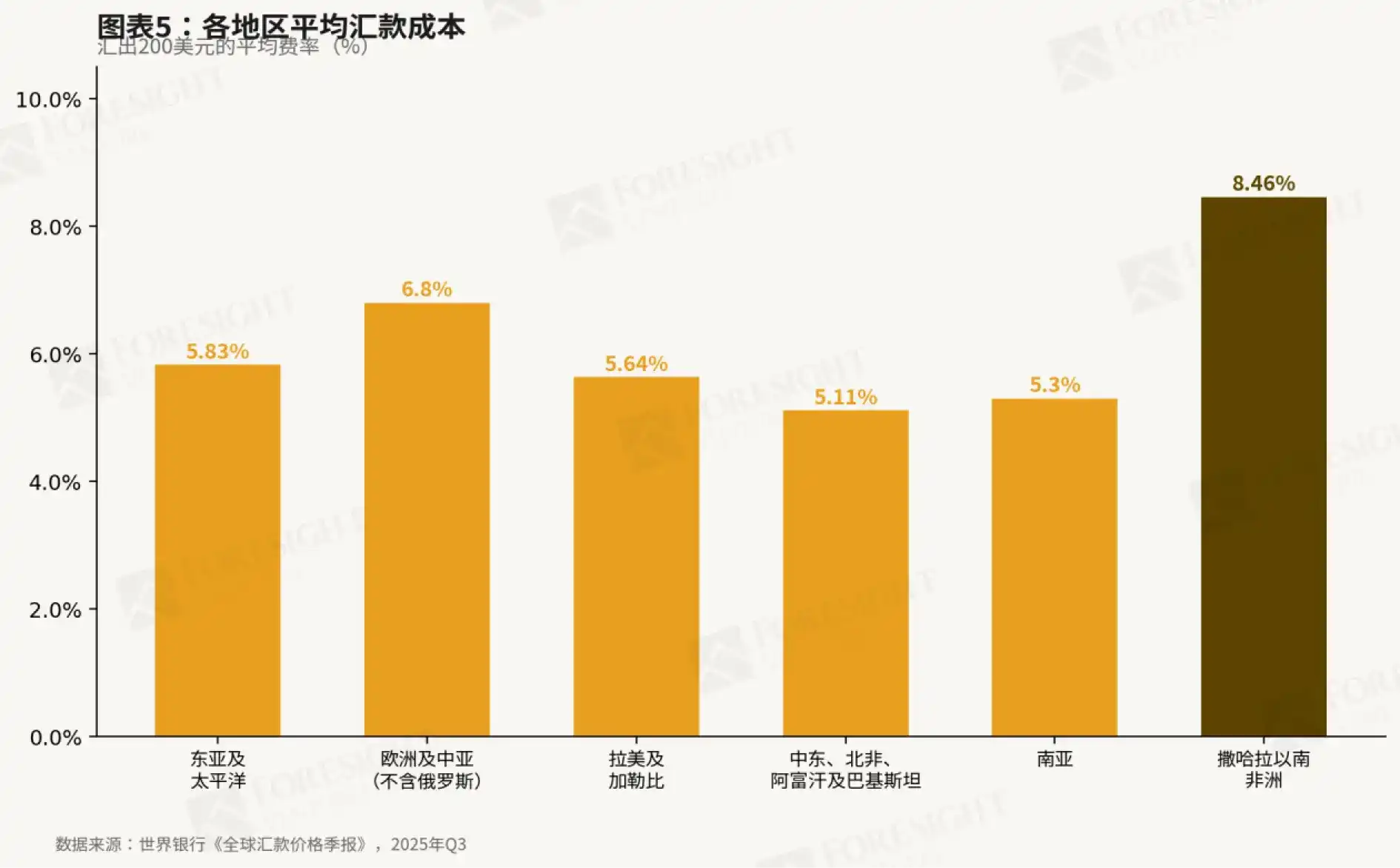
The triple dysfunction of bank exclusion, de-risking, and monetary instability has obvious consequences. Most Africans still rely on cash for daily transactions; remittance costs in Sub-Saharan Africa are the world's highest, averaging 8.46% per transfer according to the World Bank's Q3 2025 Remittance Price Report; ordinary people also lack effective inflation-hedging stores of value. The banking system fails comprehensively in access convenience, affordability, and currency stability, creating a market vacuum rapidly filled by emerging payment channels and cryptocurrencies.
3 Mobile Payments and Cryptocurrencies Thrive in the Vacuum Left by the Traditional Financial System

In the gap left by the absent banking system and under pressure from severe inflation and currency depreciation, Africa has developed the world's most dynamic mobile money and cryptocurrency markets. The emergence of these alternative payment channels is not a matter of choice but of necessity—they solve real problems the banking system cannot address: accessibility, affordability, and stability.

3.1 Mobile Payments: Africa Leads Globally

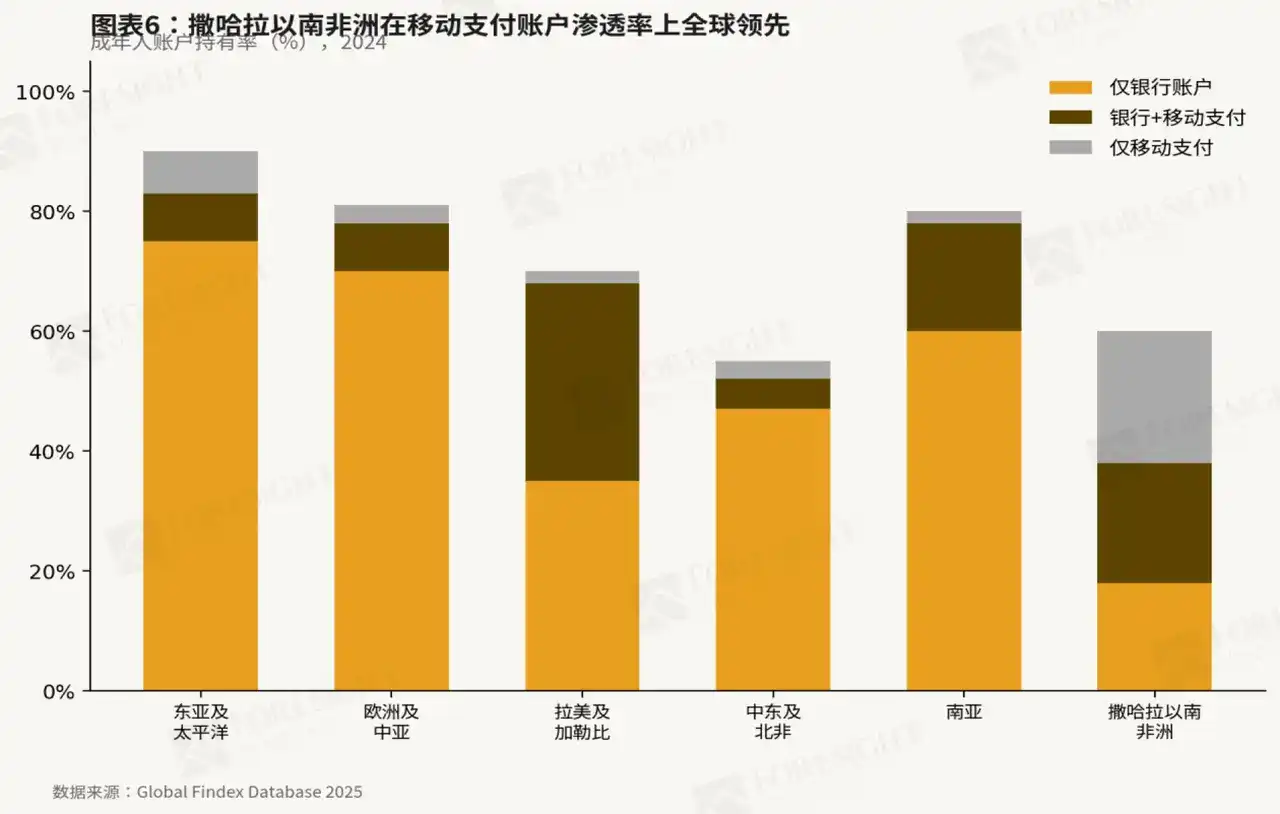
Africa accounts for most global mobile money transactions. According to the 2025 global Findex database, about 40% of adults in Sub-Saharan Africa use a mobile money account as their primary (or only) formal financial service. Kenya's M-Pesa platform exemplifies this model: relying on ubiquitous USSD technology (accessible via basic feature phone keypads), it built a network of millions of offline agent outlets and leveraged universal mobile coverage to capture 90.8% of Kenya's mobile payments market, successfully expanding to seven other African countries like Tanzania, Ghana, and Egypt. This offline agent-based, low-tech barrier architecture has proven far more scalable and inclusive than branch-based traditional banking, amassing a vast user base across urban and rural Africa.
3.2 Widespread Cryptocurrency Adoption Across the African Continent

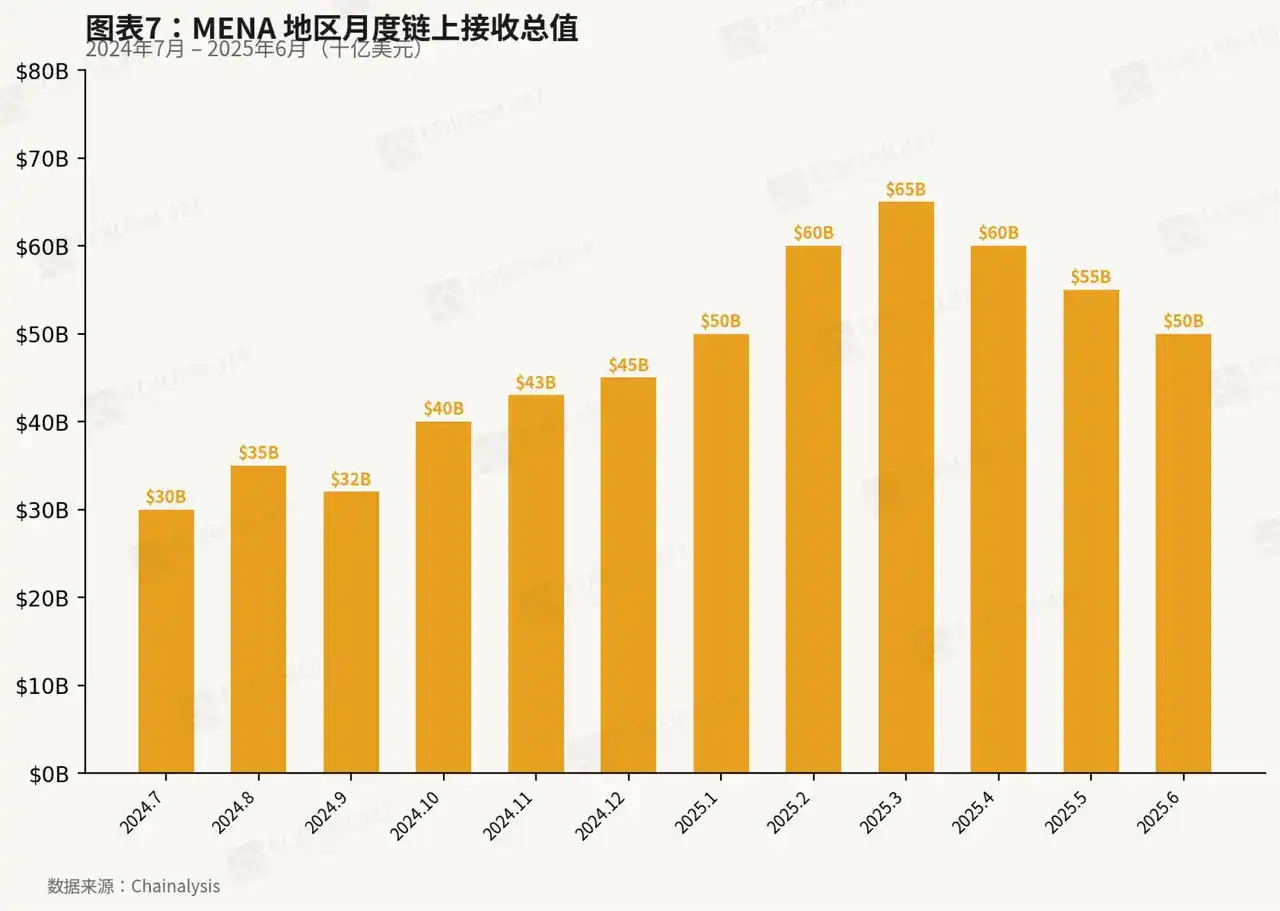
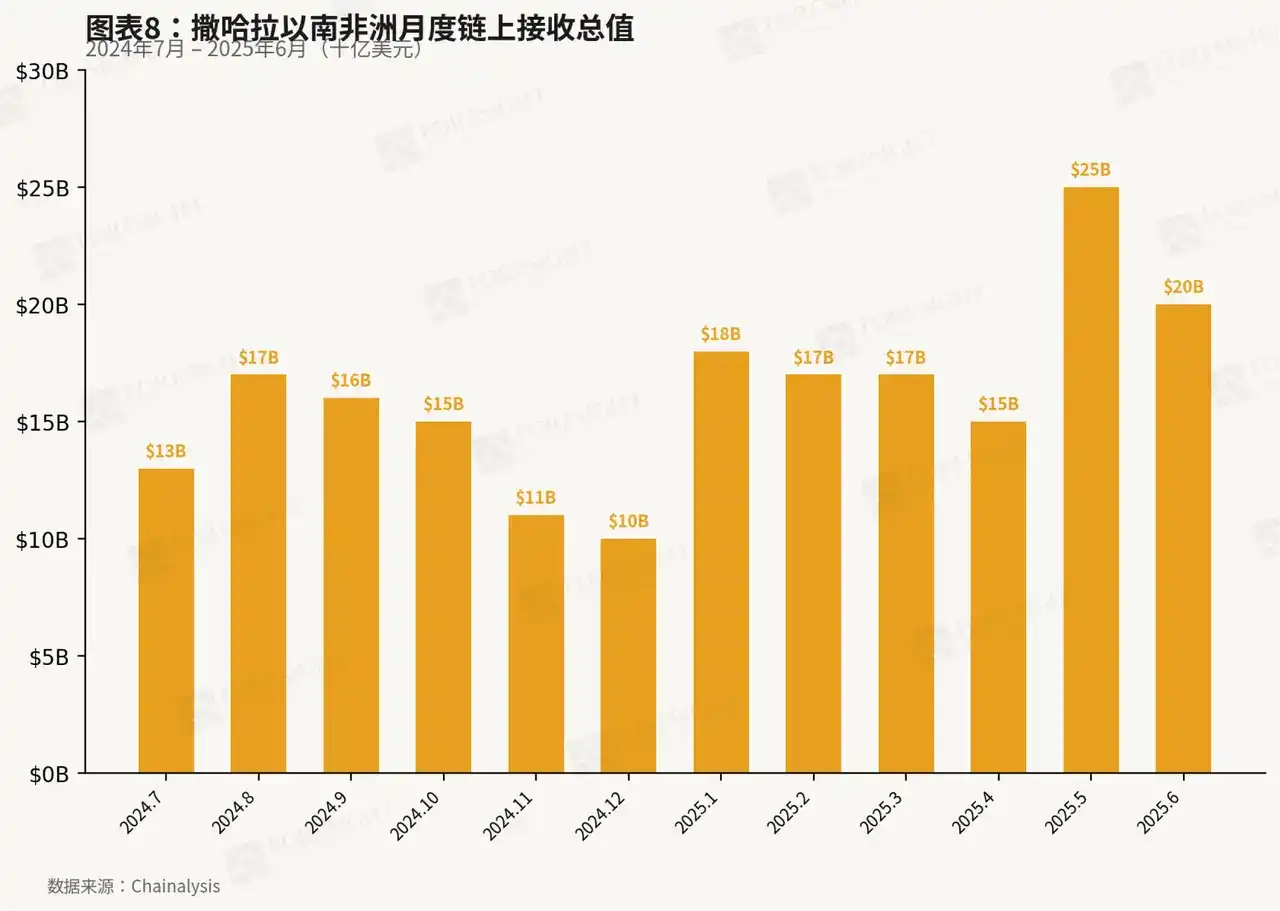
Cryptocurrency adoption rates on the African continent are among the world's highest and still rising sharply. In the Middle East and North Africa, total on-chain value received between July 2024 and June 2025 was approximately $600 billion; Sub-Saharan Africa recorded $200 billion in the same period, with a high growth rate of 52%, driven primarily by retail users and concentrated in a few countries (Nigeria, South Africa, Ethiopia, Kenya). Cryptocurrencies effectively meet African businesses' and individuals' needs for an inflation-hedging store of value and low-cost cross-border settlement—needs that mobile money and formal banking systems cannot fully satisfy.
4 Heterogeneity Within the African Continent

4.1 Why Understanding Internal Divergence in Africa Is Crucial

Africa's 54 countries span 42 different currency systems and belong to multiple linguistic spheres: Francophone, Anglophone, Arabophone, Lusophone, and Hispanophone. This fragmentation in language and currency is not merely a cultural difference but profoundly impacts cross-border trade, financial flows, and regulatory systems: payment networks are disjointed, regulatory frameworks are separate, and market opportunities are highly fragmented. Therefore, after establishing a holistic understanding of Africa's macroeconomic environment, it's essential to recognize internal regional differences in culture, regulation, and financial systems.

4.2 Divided by the Sahara: Middle East & North Africa (MENA) vs. Sub-Saharan Africa (SSA)

The most common analytical framework currently divides Africa into two systems along the Sahara Desert: the Middle East and North Africa (MENA) and Sub-Saharan Africa (SSA).

North Africa is highly integrated with the Arab world culturally, institutionally, and economically, with its economy centered on oil and gas resources and deeply embedded in the global energy market. Accordingly, its financial system and policy frameworks operate more within the MENA ecosystem, with a relatively mature banking system and lower levels of financial exclusion.

In contrast, Sub-Saharan Africa largely falls outside this system. The market driving the explosive growth of crypto and mobile payments is precisely this region, long plagued by deep-seated financial system inadequacy, dollar shortages, and currency instability. SSA currently accounts for nearly 60% of global mobile payment transaction volume and is also the world's fastest-growing region for cryptocurrency adoption.

4.3 Five-Region Framework: Differentiation in Population, Economy, and Fintech Ecosystems

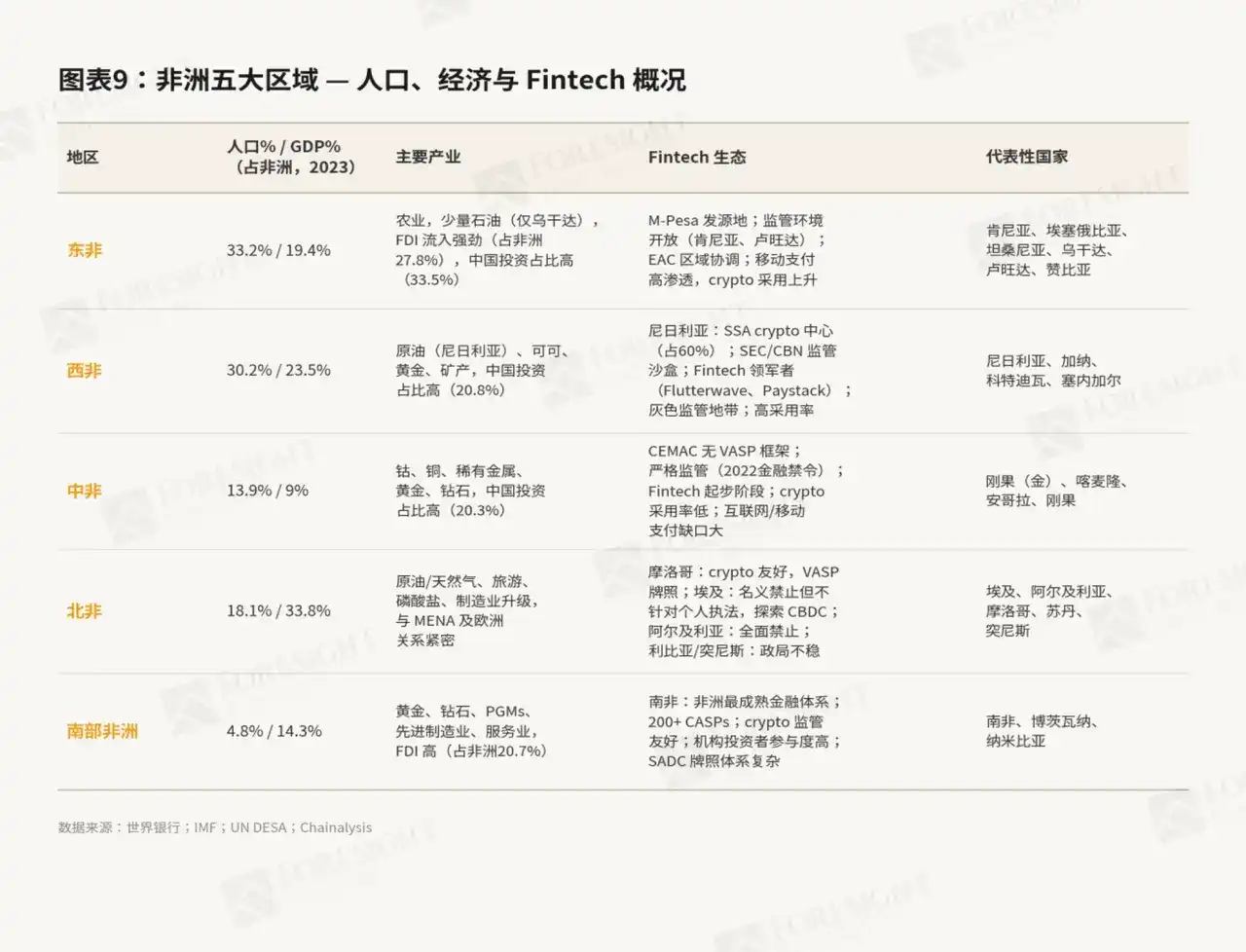
Further subdivision yields five African regions with significantly different macroeconomic characteristics. North Africa and Southern Africa have the highest GDP per capita; West and Central Africa are relatively less developed; East Africa has the lowest per capita income. However, economic growth rates show an inverse relationship with wealth levels: East Africa grows fastest, followed by Central Africa, North Africa, West Africa, and Southern Africa.

Cryptocurrency adoption patterns show similar features. Nigeria alone (in West Africa) accounts for most crypto transaction volume in SSA; meanwhile, East Africa, South Africa, and North Africa also show high adoption. Central and broader West Africa remain in earlier market stages. This differentiation essentially reflects variations in financial exclusion, dollar shortage pressure, and regulatory environments across regions.
5 The "Dollarization" and "Dollar Shortage" Behind Sub-Saharan Africa's Payments Market

5.1 Dollarization in Sub-Saharan Africa

Sub-Saharan African economies exhibit deep dollarization, far exceeding most other global regions. Dollar deposit and loan shares are key proxy indicators: in Nigeria, dollar deposits once constituted 40% of total deposits, and over 80% of external debt is dollar-denominated; in Ghana, dollar deposit shares have reached relatively high levels of 20%–30%. This dollarization is not accidental but a manifestation of rational economic behavior in the face of long-term currency instability.

5.2 Three Structural Drivers of Dollarization

Dollarization in Sub-Saharan Africa stems from three distinct economic pressures.

First, Store of Value: Due to fiscal deficits and external imbalances forcing central banks to print money, local currencies persistently depreciate, while the US dollar offers a stable unit of account.

Second, Medium of Exchange: Commodity prices (oil, minerals, food) are globally priced in US dollars, and even intra-African trade between two African countries is often settled in dollars—because the dollar is more stable than any single local currency.

Third, Financing Channel: Shallow local capital markets mean businesses and governments must borrow dollars from international creditors; when dollar debt becomes too large relative to dollar income, exchange rate risk becomes acute, driving more funds into dollar deposits.

5.3 Causes of the "Dollar Shortage"

The real pain point in Sub-Saharan Africa's current payments market is the dollar shortage. Limited foreign exchange earning capacity (commodity dependence, weak manufacturing exports), coupled with huge trade deficits and debt service pressures, continuously deplete government forex reserves. Consequently, central banks can only ration official forex through administrative controls. This scarcity fosters a parallel black market where dollars trade at significant premiums—sometimes 50% to 100% above official rates. Residents and businesses unable to obtain forex through official channels turn to informal channels: global remittance companies like Western Union, informal exchange houses, and increasingly, stablecoins and cryptocurrencies. The gap between official and parallel market exchange rates is precisely the crack alternative payment systems exploit.

5.4 Why Cryptocurrencies Thrive in This Vacuum

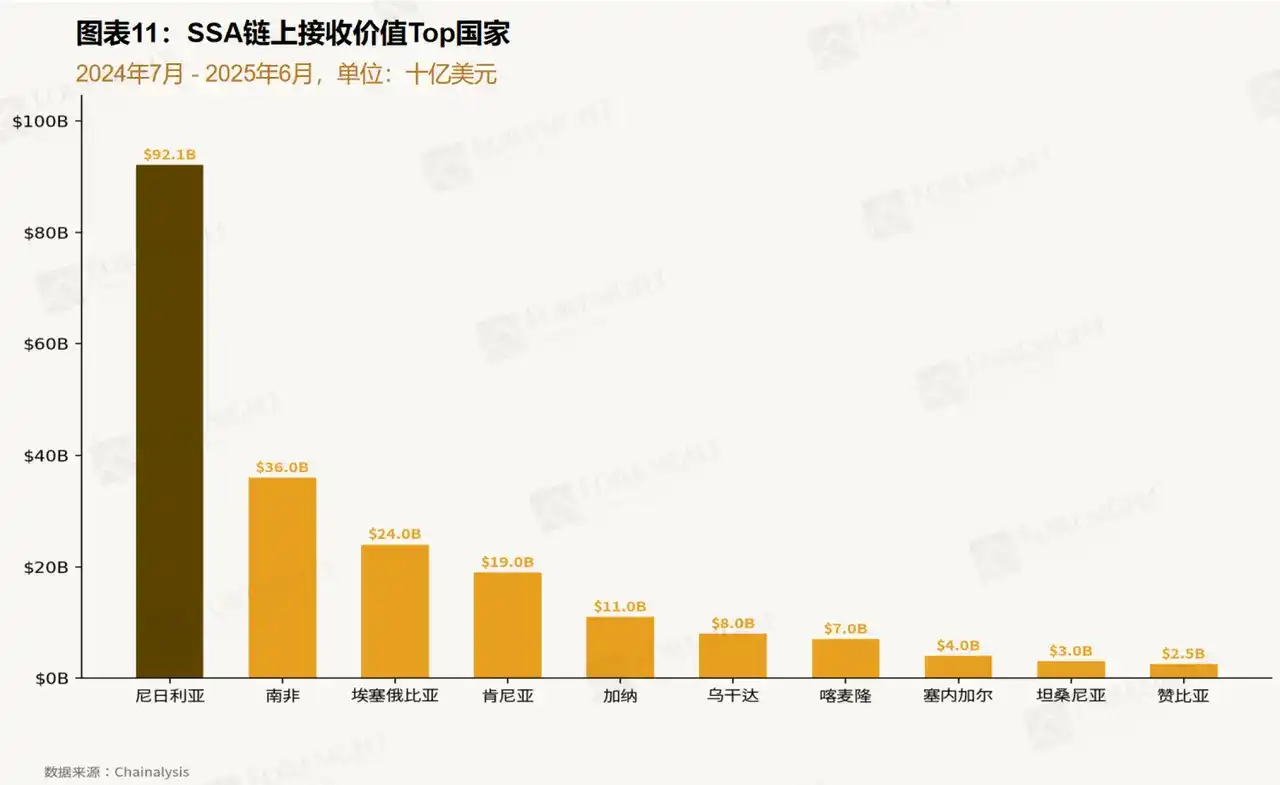
Stablecoins and other cryptocurrencies perform three critical functions missing from the formal banking system. They bypass capital controls, providing access to parallel market dollars; they execute cross-border transactions at lower costs than banks and remittance corridors; they also offer a globally liquid store of value unaffected by local currency risk. Therefore, Sub-Saharan Africa's crypto adoption is overwhelmingly retail-driven with small transaction amounts. As Figure 11 shows, compared to other global regions, Sub-Saharan Africa has a higher share of transfers in the $1,000–$10,000 range, reflecting flows for small remittances, informal business trade settlement, and personal savings. Nigeria dominates the region, accounting for about 45% of Sub-Saharan Africa's on-chain transaction volume (as shown in Figure 12), but Kenya, South Africa, and Ethiopia are also important regional hubs.
5.5 De-dollarization Attempts and Their Structural Limitations

African policymakers and regional institutions have attempted to reduce dollar dependence. The Pan-African Payment and Settlement System (PAPSS) aims to settle intra-African trade in local currencies and reduce forex costs; the planned 'Eco' currency zone in West Africa seeks stability through monetary union; central banks have also employed aggressive interest rate hikes and capital controls. However, all these efforts face a fundamental constraint: Sub-Saharan Africa's structural trade dependency. As long as the continent's imports exceed exports, external accounts remain in deficit, and most forex income comes from commodities, dollar demand will persistently outstrip supply. De-dollarization requires industrialization and trade rebalancing, a decades-long transformation not achievable by policy alone. In the interim, mobile money and cryptocurrencies will continue playing crucial roles, filling the gaps left by the traditional financial system.

Conclusion

Africa's outstanding performance in mobile money and cryptocurrency adoption is not a market coincidence but a macroeconomic necessity.

The continent's young demographic, rich natural resources, and deep integration into global commodity markets generate massive cross-border payment flows. However, its weak financial system, chronic monetary instability, and severe dollar shortages make the formal banking system fundamentally incapable of meeting this demand.

Mobile money solves domestic payments; cryptocurrencies are solving cross-border value transfer and inflation hedging. These are not niche use cases or speculative holdings but critical financial infrastructure filling the vacuum left by structural economic constraints. Crucially, these constraints are not cyclical; they are rooted in Africa's resource dependency, limited industrialization, and underdeveloped financial markets.

De-dollarization requires trade rebalancing and industrialization, both multi-decade transformations. Before that, and likely long after, alternative payment channels and currencies will remain central to Africa's economy.

Original article link

Domande pertinenti

QAccording to the article, what are the two deep structural drivers that shape Africa's unique payment market landscape?

AThe two deep structural drivers are: (1) Africa's long-term reliance on resource exports, trade circulation, and remittances, creating massive demand for cross-border settlement and remittances. (2) The underdevelopment of Africa's domestic financial infrastructure, compounded by international bank de-risking and mismanaged foreign exchange controls, leading to a chronic absence of commercial banking and persistent inflationary pressures.

QWhat key geographic and economic divide within Africa is highlighted in the analysis, and how does it affect payment system adoption?

AThe key divide is the Sahara Desert. North Africa is integrated into the oil-anchored MENA (Middle East and North Africa) framework, with relatively mature banking. Sub-Saharan Africa (SSA), facing severe dollar shortages and fragmented monetary systems, has naturally fostered a massive market with high demand for mobile payments and cryptocurrencies, making it a global leader in adoption rates for both.

QHow does the article explain the phenomenon of 'dollarization' in Sub-Saharan Africa and its connection to the 'dollar shortage'?

ADollarization in SSA is driven by the need for a stable store of value (against local currency depreciation), a medium of exchange (for dollar-priced commodities and intra-African trade), and access to financing (via dollar-denominated debt). The 'dollar shortage' arises from limited export earnings (due to commodity dependence), large trade deficits, and debt repayments, draining official reserves. This scarcity creates parallel black markets for dollars and pushes residents and businesses towards informal channels, including cryptocurrencies, to access foreign exchange.

QWhat specific roles do mobile payments and cryptocurrencies play in filling the vacuum left by the traditional financial system in Africa?

AMobile payment platforms, like Kenya's M-Pesa, have replaced banks as the primary channel for everyday domestic payments, offering accessibility and low cost through extensive agent networks. Cryptocurrencies, particularly stablecoins, fulfill roles that the local currency or traditional dollars once did: they act as a store of value against inflation and a low-cost medium for cross-border exchange, effectively bypassing capital controls and high remittance fees.

QWhy does the article argue that Africa's high adoption of mobile money and crypto is a macroeconomic 'necessity' rather than a market 'accident'?

AIt is a necessity because it directly addresses structural gaps created by Africa's macroeconomic conditions. The continent's young population, trade-dependent economy, and massive cross-border payment flows generate enormous demand for financial services. However, its weak banking infrastructure, chronic currency instability, and dollar shortages render the traditional system incapable of meeting this demand. Mobile money and crypto are not niche innovations but essential financial infrastructure filling this vacuum, a situation rooted in long-term structural constraints like resource dependency and limited industrialization.

Letture associate

Anthropic Cries Wolf: Is the AGI Threat Real, or Just an IPO Story?

Anthropic has published an article titled "When AI builds itself," discussing the emerging concept of "recursive self-improvement," where AI begins to actively participate in designing, training, testing, and optimizing its own subsequent versions. The company presents internal data showing that by May 2026, over 80% of code merged into its codebase was written by Claude, its AI model. Claude's capabilities have expanded to handling complex, open-ended engineering tasks, achieving a 76% success rate in such areas, and even contributing to research processes, such as optimizing code performance and conducting AI safety experiments. Anthropic outlines an evolution from human-driven development to AI-assisted workflows, culminating in the current stage where AI agents can autonomously write, run, and delegate code. The company cautions that the path toward a "closed loop," where AI continuously improves itself, is becoming visible. It calls for coordinated global mechanisms to potentially slow or pause frontier AI development to allow safety research and societal structures to catch up. However, the timing of this warning coincides with Anthropic's preparations for an IPO, framing the narrative not just as a safety concern but also as a demonstration of Claude's advanced capabilities and its integral role in accelerating Anthropic's own R&D—creating a potential "flywheel" effect for competitive advantage. This contrasts with OpenAI's recent, more policy-oriented discussion of the same risks, highlighting the competitive dynamics in the AI industry as companies position themselves in both the technological and regulatory landscape.

marsbit59 min fa

Anthropic Cries Wolf: Is the AGI Threat Real, or Just an IPO Story?

marsbit59 min fa

BIT Research: ETF Purchases Have Slowed, Strategy (MicroStrategy) Has Slowed, What Else Can Drive Bitcoin's Rise?

Market Refocus on Inflation and Rate Expectations Weighs on Bitcoin Currently, the market is in a phase of macro-repricing dominated by inflation and interest rate expectations. Bitcoin, which previously benefited from easy liquidity and low inflation, is seeing its core bullish drivers weaken. These drivers were market expectations for interest rate cuts and strong inflows from Bitcoin ETFs and institutions like MicroStrategy (referred to as "Strategy" in the text). The logic has shifted. Recent high inflation data (e.g., CPI hitting 3.8% in a May 2026 report) has caused the market to sharply reduce its rate cut expectations for 2025 and even price in potential hikes. This is a key constraint for Bitcoin, as it lacks cash flows and is highly sensitive to rate expectations. Concurrently, institutional capital flows have slowed significantly. Following the hot CPI data, Bitcoin ETFs saw accelerated outflows, with around $4.3 billion leaving over a period. MicroStrategy's ability to keep adding substantial Bitcoin to its balance sheet is also diminishing. Together, ETF and MicroStrategy holdings total roughly $110 billion, but their momentum as growth engines is cooling. In summary, Bitcoin's current pressure stems not from its own fundamentals but from a changing macro environment. As long as inflation stays elevated, Bitcoin is likely to remain in a consolidating phase. However, historically, inflation eventually peaks. Once it recedes and rate cut expectations rebuild, institutional capital could return, potentially fueling a new and more robust recovery phase for Bitcoin.

marsbit1 h fa

BIT Research: ETF Purchases Have Slowed, Strategy (MicroStrategy) Has Slowed, What Else Can Drive Bitcoin's Rise?

marsbit1 h fa

Earning 1000 Trillion in Half a Year, 'Pocketing' 20 Million per Capita: This Round of Wealth Creation in the Korean Stock Market is Unprecedented in Scale

The South Korean stock market is experiencing an unprecedented wealth surge in 2026, with household equity and fund asset values soaring by over 1,000 trillion KRW (~$730bn) year-to-date. This translates to an average per capita wealth increase of roughly 20 million KRW, fueled by a historic 109% rally in the KOSPI index. The boom is driven by three converging forces: an AI-driven semiconductor supercycle boosting giants like Samsung and SK Hynix; the government's "Value-Up" market reforms addressing long-standing corporate governance issues; and aggressive real estate regulations that have locked capital within financial markets, preventing profits from flowing back into property. This has triggered a wealth effect, boosting high-end consumption significantly. However, the gains are highly concentrated. The two semiconductor behemoths account for over half the index's value, but retail investors own relatively low stakes in them, systematically missing the biggest rallies. Wealth and consumption benefits are skewed towards luxury goods and imported cars, bypassing mainstream retail. Further risks stem from excessive leverage, with high trading volume in leveraged ETFs, and a market sentiment heavily reliant on the AI sector's fortunes and speculative rumors. While this cycle marks a potential shift from real estate to equities as a primary wealth generator for Koreans, its sustainability, amid structural imbalances and leverage, remains a critical test.

marsbit1 h fa

Earning 1000 Trillion in Half a Year, 'Pocketing' 20 Million per Capita: This Round of Wealth Creation in the Korean Stock Market is Unprecedented in Scale

marsbit1 h fa

Trading

Spot
Futures

Articoli Popolari

Cosa è $S$

Comprendere SPERO: Una Panoramica Completa Introduzione a SPERO Mentre il panorama dell'innovazione continua a evolversi, l'emergere delle tecnologie web3 e dei progetti di criptovaluta gioca un ruolo fondamentale nel plasmare il futuro digitale. Un progetto che ha attirato l'attenzione in questo campo dinamico è SPERO, denotato come SPERO,$$s$. Questo articolo mira a raccogliere e presentare informazioni dettagliate su SPERO, per aiutare gli appassionati e gli investitori a comprendere le sue basi, obiettivi e innovazioni nei domini web3 e crypto. Che cos'è SPERO,$$s$? SPERO,$$s$ è un progetto unico all'interno dello spazio crypto che cerca di sfruttare i principi della decentralizzazione e della tecnologia blockchain per creare un ecosistema che promuove l'impegno, l'utilità e l'inclusione finanziaria. Il progetto è progettato per facilitare interazioni peer-to-peer in modi nuovi, fornendo agli utenti soluzioni e servizi finanziari innovativi. Al suo interno, SPERO,$$s$ mira a responsabilizzare gli individui fornendo strumenti e piattaforme che migliorano l'esperienza dell'utente nello spazio delle criptovalute. Questo include la possibilità di metodi di transazione più flessibili, la promozione di iniziative guidate dalla comunità e la creazione di percorsi per opportunità finanziarie attraverso applicazioni decentralizzate (dApps). La visione sottostante di SPERO,$$s$ ruota attorno all'inclusività, cercando di colmare le lacune all'interno della finanza tradizionale mentre sfrutta i vantaggi della tecnologia blockchain. Chi è il Creatore di SPERO,$$s$? L'identità del creatore di SPERO,$$s$ rimane piuttosto oscura, poiché ci sono risorse pubblicamente disponibili limitate che forniscono informazioni dettagliate sul suo fondatore o fondatori. Questa mancanza di trasparenza può derivare dall'impegno del progetto per la decentralizzazione—un ethos che molti progetti web3 condividono, dando priorità ai contributi collettivi rispetto al riconoscimento individuale. Centrando le discussioni attorno alla comunità e ai suoi obiettivi collettivi, SPERO,$$s$ incarna l'essenza dell'empowerment senza mettere in evidenza individui specifici. Pertanto, comprendere l'etica e la missione di SPERO rimane più importante che identificare un creatore singolo. Chi sono gli Investitori di SPERO,$$s$? SPERO,$$s$ è supportato da una varietà di investitori che vanno dai capitalisti di rischio agli investitori angelici dedicati a promuovere l'innovazione nel settore crypto. Il focus di questi investitori generalmente si allinea con la missione di SPERO—dando priorità a progetti che promettono avanzamenti tecnologici sociali, inclusività finanziaria e governance decentralizzata. Queste fondazioni di investitori sono tipicamente interessate a progetti che non solo offrono prodotti innovativi, ma contribuiscono anche positivamente alla comunità blockchain e ai suoi ecosistemi. Il supporto di questi investitori rafforza SPERO,$$s$ come un concorrente degno di nota nel dominio in rapida evoluzione dei progetti crypto. Come Funziona SPERO,$$s$? SPERO,$$s$ impiega un framework multifunzionale che lo distingue dai progetti di criptovaluta convenzionali. Ecco alcune delle caratteristiche chiave che sottolineano la sua unicità e innovazione: Governance Decentralizzata: SPERO,$$s$ integra modelli di governance decentralizzati, responsabilizzando gli utenti a partecipare attivamente ai processi decisionali riguardanti il futuro del progetto. Questo approccio favorisce un senso di proprietà e responsabilità tra i membri della comunità. Utilità del Token: SPERO,$$s$ utilizza il proprio token di criptovaluta, progettato per servire varie funzioni all'interno dell'ecosistema. Questi token abilitano transazioni, premi e la facilitazione dei servizi offerti sulla piattaforma, migliorando l'impegno e l'utilità complessivi. Architettura Stratificata: L'architettura tecnica di SPERO,$$s$ supporta la modularità e la scalabilità, consentendo un'integrazione fluida di funzionalità e applicazioni aggiuntive man mano che il progetto evolve. Questa adattabilità è fondamentale per mantenere la rilevanza nel panorama crypto in continua evoluzione. Coinvolgimento della Comunità: Il progetto enfatizza iniziative guidate dalla comunità, impiegando meccanismi che incentivano la collaborazione e il feedback. Nutrendo una comunità forte, SPERO,$$s$ può affrontare meglio le esigenze degli utenti e adattarsi alle tendenze di mercato. Focus sull'Inclusione: Offrendo basse commissioni di transazione e interfacce user-friendly, SPERO,$$s$ mira ad attrarre una base utenti diversificata, inclusi individui che potrebbero non aver precedentemente interagito nello spazio crypto. Questo impegno per l'inclusione si allinea con la sua missione generale di empowerment attraverso l'accessibilità. Cronologia di SPERO,$$s$ Comprendere la storia di un progetto fornisce preziose intuizioni sulla sua traiettoria di sviluppo e sui traguardi. Di seguito è riportata una cronologia suggerita che mappa eventi significativi nell'evoluzione di SPERO,$$s$: Fase di Concettualizzazione e Ideazione: Le idee iniziali che formano la base di SPERO,$$s$ sono state concepite, allineandosi strettamente con i principi di decentralizzazione e focus sulla comunità all'interno dell'industria blockchain. Lancio del Whitepaper del Progetto: Dopo la fase concettuale, è stato rilasciato un whitepaper completo che dettaglia la visione, gli obiettivi e l'infrastruttura tecnologica di SPERO,$$s$ per suscitare interesse e feedback dalla comunità. Costruzione della Comunità e Prime Interazioni: Sono stati effettuati sforzi attivi di outreach per costruire una comunità di early adopters e potenziali investitori, facilitando discussioni attorno agli obiettivi del progetto e ottenendo supporto. Evento di Generazione del Token: SPERO,$$s$ ha condotto un evento di generazione del token (TGE) per distribuire i propri token nativi ai primi sostenitori e stabilire una liquidità iniziale all'interno dell'ecosistema. Lancio della Prima dApp: La prima applicazione decentralizzata (dApp) associata a SPERO,$$s$ è stata attivata, consentendo agli utenti di interagire con le funzionalità principali della piattaforma. Sviluppo Continuo e Partnership: Aggiornamenti e miglioramenti continui alle offerte del progetto, inclusi partnership strategiche con altri attori nello spazio blockchain, hanno plasmato SPERO,$$s$ in un concorrente competitivo e in evoluzione nel mercato crypto. Conclusione SPERO,$$s$ rappresenta una testimonianza del potenziale del web3 e delle criptovalute di rivoluzionare i sistemi finanziari e responsabilizzare gli individui. Con un impegno per la governance decentralizzata, il coinvolgimento della comunità e funzionalità progettate in modo innovativo, apre la strada verso un panorama finanziario più inclusivo. Come per qualsiasi investimento nello spazio crypto in rapida evoluzione, si incoraggiano potenziali investitori e utenti a ricercare approfonditamente e a impegnarsi in modo riflessivo con gli sviluppi in corso all'interno di SPERO,$$s$. Il progetto mostra lo spirito innovativo dell'industria crypto, invitando a ulteriori esplorazioni delle sue innumerevoli possibilità. Mentre il percorso di SPERO,$$s$ è ancora in fase di sviluppo, i suoi principi fondamentali potrebbero effettivamente influenzare il futuro di come interagiamo con la tecnologia, la finanza e tra di noi in ecosistemi digitali interconnessi.

75 Totale visualizzazioniPubblicato il 2024.12.17Aggiornato il 2024.12.17

Cosa è $S$

Cosa è AGENT S

Agent S: Il Futuro dell'Interazione Autonoma in Web3 Introduzione Nel panorama in continua evoluzione di Web3 e criptovalute, le innovazioni stanno costantemente ridefinendo il modo in cui gli individui interagiscono con le piattaforme digitali. Uno di questi progetti pionieristici, Agent S, promette di rivoluzionare l'interazione uomo-computer attraverso il suo framework agentico aperto. Aprendo la strada a interazioni autonome, Agent S mira a semplificare compiti complessi, offrendo applicazioni trasformative nell'intelligenza artificiale (AI). Questa esplorazione dettagliata approfondirà le complessità del progetto, le sue caratteristiche uniche e le implicazioni per il dominio delle criptovalute. Cos'è Agent S? Agent S si presenta come un innovativo framework agentico aperto, progettato specificamente per affrontare tre sfide fondamentali nell'automazione dei compiti informatici: Acquisizione di Conoscenze Specifiche del Dominio: Il framework apprende in modo intelligente da varie fonti di conoscenza esterne ed esperienze interne. Questo approccio duale gli consente di costruire un ricco repository di conoscenze specifiche del dominio, migliorando le sue prestazioni nell'esecuzione dei compiti. Pianificazione su Lungo Orizzonte di Compiti: Agent S impiega una pianificazione gerarchica potenziata dall'esperienza, un approccio strategico che facilita la suddivisione e l'esecuzione efficiente di compiti complessi. Questa caratteristica migliora significativamente la sua capacità di gestire più sottocompiti in modo efficiente ed efficace. Gestione di Interfacce Dinamiche e Non Uniformi: Il progetto introduce l'Interfaccia Agente-Computer (ACI), una soluzione innovativa che migliora l'interazione tra agenti e utenti. Utilizzando Modelli Linguistici Multimodali di Grandi Dimensioni (MLLM), Agent S può navigare e manipolare senza sforzo diverse interfacce grafiche utente. Attraverso queste caratteristiche pionieristiche, Agent S fornisce un framework robusto che affronta le complessità coinvolte nell'automazione dell'interazione umana con le macchine, preparando il terreno per innumerevoli applicazioni nell'AI e oltre. Chi è il Creatore di Agent S? Sebbene il concetto di Agent S sia fondamentalmente innovativo, informazioni specifiche sul suo creatore rimangono elusive. Il creatore è attualmente sconosciuto, il che evidenzia sia la fase embrionale del progetto sia la scelta strategica di mantenere i membri fondatori sotto anonimato. Indipendentemente dall'anonimato, l'attenzione rimane sulle capacità e sul potenziale del framework. Chi sono gli Investitori di Agent S? Poiché Agent S è relativamente nuovo nell'ecosistema crittografico, informazioni dettagliate riguardanti i suoi investitori e sostenitori finanziari non sono documentate esplicitamente. La mancanza di approfondimenti pubblicamente disponibili sulle fondazioni di investimento o sulle organizzazioni che supportano il progetto solleva interrogativi sulla sua struttura di finanziamento e sulla roadmap di sviluppo. Comprendere il supporto è cruciale per valutare la sostenibilità del progetto e il suo potenziale impatto sul mercato. Come Funziona Agent S? Al centro di Agent S si trova una tecnologia all'avanguardia che gli consente di funzionare efficacemente in contesti diversi. Il suo modello operativo è costruito attorno a diverse caratteristiche chiave: Interazione Uomo-Computer Simile a Quella Umana: Il framework offre una pianificazione AI avanzata, cercando di rendere le interazioni con i computer più intuitive. Mimando il comportamento umano nell'esecuzione dei compiti, promette di elevare le esperienze degli utenti. Memoria Narrativa: Utilizzata per sfruttare esperienze di alto livello, Agent S utilizza la memoria narrativa per tenere traccia delle storie dei compiti, migliorando così i suoi processi decisionali. Memoria Episodica: Questa caratteristica fornisce agli utenti una guida passo-passo, consentendo al framework di offrire supporto contestuale mentre i compiti si sviluppano. Supporto per OpenACI: Con la capacità di funzionare localmente, Agent S consente agli utenti di mantenere il controllo sulle proprie interazioni e flussi di lavoro, allineandosi con l'etica decentralizzata di Web3. Facile Integrazione con API Esterne: La sua versatilità e compatibilità con varie piattaforme AI garantiscono che Agent S possa adattarsi senza problemi agli ecosistemi tecnologici esistenti, rendendolo una scelta attraente per sviluppatori e organizzazioni. Queste funzionalità contribuiscono collettivamente alla posizione unica di Agent S all'interno dello spazio crittografico, poiché automatizza compiti complessi e multi-fase con un intervento umano minimo. Man mano che il progetto evolve, le sue potenziali applicazioni in Web3 potrebbero ridefinire il modo in cui si svolgono le interazioni digitali. Cronologia di Agent S Lo sviluppo e le tappe di Agent S possono essere riassunti in una cronologia che evidenzia i suoi eventi significativi: 27 Settembre 2024: Il concetto di Agent S è stato lanciato in un documento di ricerca completo intitolato “Un Framework Agentico Aperto che Usa i Computer Come un Umano”, mostrando le basi per il progetto. 10 Ottobre 2024: Il documento di ricerca è stato reso pubblicamente disponibile su arXiv, offrendo un'esplorazione approfondita del framework e della sua valutazione delle prestazioni basata sul benchmark OSWorld. 12 Ottobre 2024: È stata rilasciata una presentazione video, fornendo un'idea visiva delle capacità e delle caratteristiche di Agent S, coinvolgendo ulteriormente potenziali utenti e investitori. Questi indicatori nella cronologia non solo illustrano i progressi di Agent S, ma indicano anche il suo impegno per la trasparenza e il coinvolgimento della comunità. Punti Chiave su Agent S Man mano che il framework Agent S continua a evolversi, diversi attributi chiave si distinguono, sottolineando la sua natura innovativa e il potenziale: Framework Innovativo: Progettato per fornire un uso intuitivo dei computer simile all'interazione umana, Agent S porta un approccio nuovo all'automazione dei compiti. Interazione Autonoma: La capacità di interagire autonomamente con i computer attraverso GUI segna un passo avanti verso soluzioni informatiche più intelligenti ed efficienti. Automazione di Compiti Complessi: Con la sua metodologia robusta, può automatizzare compiti complessi e multi-fase, rendendo i processi più veloci e meno soggetti a errori. Miglioramento Continuo: I meccanismi di apprendimento consentono ad Agent S di migliorare dalle esperienze passate, migliorando continuamente le sue prestazioni e la sua efficacia. Versatilità: La sua adattabilità attraverso diversi ambienti operativi come OSWorld e WindowsAgentArena garantisce che possa servire un'ampia gamma di applicazioni. Man mano che Agent S si posiziona nel panorama di Web3 e delle criptovalute, il suo potenziale per migliorare le capacità di interazione e automatizzare i processi segna un significativo avanzamento nelle tecnologie AI. Attraverso il suo framework innovativo, Agent S esemplifica il futuro delle interazioni digitali, promettendo un'esperienza più fluida ed efficiente per gli utenti in vari settori. Conclusione Agent S rappresenta un audace passo avanti nell'unione tra AI e Web3, con la capacità di ridefinire il modo in cui interagiamo con la tecnologia. Sebbene sia ancora nelle sue fasi iniziali, le possibilità per la sua applicazione sono vaste e coinvolgenti. Attraverso il suo framework completo che affronta sfide critiche, Agent S mira a portare le interazioni autonome al centro dell'esperienza digitale. Man mano che ci addentriamo nei regni delle criptovalute e della decentralizzazione, progetti come Agent S giocheranno senza dubbio un ruolo cruciale nel plasmare il futuro della tecnologia e della collaborazione uomo-computer.

533 Totale visualizzazioniPubblicato il 2025.01.14Aggiornato il 2025.01.14

Cosa è AGENT S

Come comprare S

Benvenuto in HTX.com! Abbiamo reso l'acquisto di Sonic (S) semplice e conveniente. Segui la nostra guida passo passo per intraprendere il tuo viaggio nel mondo delle criptovalute.Step 1: Crea il tuo Account HTXUsa la tua email o numero di telefono per registrarti il tuo account gratuito su HTX. Vivi un'esperienza facile e sblocca tutte le funzionalità,Crea il mio accountStep 2: Vai in Acquista crypto e seleziona il tuo metodo di pagamentoCarta di credito/debito: utilizza la tua Visa o Mastercard per acquistare immediatamente SonicS.Bilancio: Usa i fondi dal bilancio del tuo account HTX per fare trading senza problemi.Terze parti: abbiamo aggiunto metodi di pagamento molto utilizzati come Google Pay e Apple Pay per maggiore comodità.P2P: Fai trading direttamente con altri utenti HTX.Over-the-Counter (OTC): Offriamo servizi su misura e tassi di cambio competitivi per i trader.Step 3: Conserva Sonic (S)Dopo aver acquistato Sonic (S), conserva nel tuo account HTX. In alternativa, puoi inviare tramite trasferimento blockchain o scambiare per altre criptovalute.Step 4: Scambia Sonic (S)Scambia facilmente Sonic (S) nel mercato spot di HTX. Accedi al tuo account, seleziona la tua coppia di trading, esegui le tue operazioni e monitora in tempo reale. Offriamo un'esperienza user-friendly sia per chi ha appena iniziato che per i trader più esperti.

1.1k Totale visualizzazioniPubblicato il 2025.01.15Aggiornato il 2026.06.02

Come comprare S

Discussioni

Benvenuto nella Community HTX. Qui puoi rimanere informato sugli ultimi sviluppi della piattaforma e accedere ad approfondimenti esperti sul mercato. Le opinioni degli utenti sul prezzo di S S sono presentate come di seguito.

活动图片