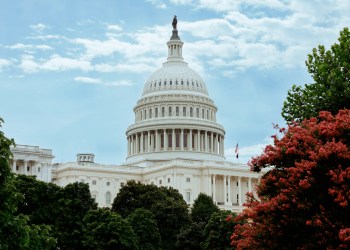
Juliana Stratton Defeats Crypto-Backed Krishnamoorthi in Illinois Senate Primary

TheNewsCryptoPubblicato 2026-03-18Pubblicato ultima volta 2026-03-18

Introduzione

Illinois Lieutenant Governor Juliana Stratton won the Democratic primary for the U.S. Senate, defeating Representative Raja Krishnamoorthi, who had significant financial backing from crypto-related groups. The super PAC Fairshake, among others, contributed nearly $10 million to Krishnamoorthi’s campaign, largely funding attack ads against Stratton. Stratton, strongly endorsed by Governor JB Pritzker, criticized her opponent’s support from “MAGA-backed crypto bros” and received an "F" rating from crypto advocacy groups due to her lack of support for cryptocurrency legislation. The race highlights the growing influence of crypto funding in U.S. political campaigns. Stratton is favored to win the general election against Republican Don Tracy in the solidly Democratic state.

Illinois Lieutenant Governor Juliana Stratton will become the state’s next Senator after she won the Democratic primary Tuesday night and defeated Representative Raja Krishnamoorthi. Senator Dick Durbin brought the race into the national spotlight when he announced his retirement, creating a competitive political environment. Illinois Governor JB Pritzker strongly backed Stratton by supporting her campaign through donations and endorsements.

According to The Washington Post, Krishnamoorthi had entered the race with substantial backing from crypto-related groups, including the super PAC organization Fairshake. Reports indicated that Fairshake and other related entities contributed nearly ten million dollars to his campaign. However, Fairshake directed much of its spending toward advertisements attacking Stratton rather than promoting Krishnamoorthi directly.

Crypto Funding Influence and Campaign Strategies

The strategy indicates a broader approach that groups used during the 2024 election cycle in other competitive political races. Stand With Crypto, a Coinbase-backed advocacy group, rates candidates based on their stances on cryptocurrency-related issues and developments. Stratton received an “F” rating based on her statement that mentioned her opponent’s support coming from “MAGA-backed crypto bros.” She also failed to support any legislation related to cryptocurrencies and failed to provide detailed policy positions.

Fairshake’s spokesperson, Geoff Vetter, issued a statement that congratulated various pro-crypto candidates on their victories in other contests across the country. He said, “We congratulate pro-crypto leaders like Donna Miller, Melissa Bean, and Rep. Nikki Budzinski.” Vetter went on to say that Fairshake is still dedicated to supporting candidates who align with innovation and policies across America. He said that voters chose more pro-crypto representatives, but that they will continue with their efforts.

Crypto Influence Expands in U.S. Election Campaigns

The Illinois Senate race has been given a rating of “Solid Democratic” by the Cook Political Report. This indicates that Democrats enjoy wide support across the state. The analysts predict that Stratton will enjoy an advantage going into the general election, which is scheduled for later this year against Republican candidate Don Tracy. This is an example of how cryptocurrency funding is being linked with politics.

The finding also serves as a reminder that cryptocurrency-based funding continues to play a significant role in shaping contemporary political campaigns. As the general election draws near, there is much interest in how cryptocurrency policy stances will change as more cryptocurrency players enter U.S. politics.

Highlighted Crypto News
CoinSwitch Launches Digivault to Address Growing Demand for Crypto Custody


TagsBlockchainCoinbasecrypto politicsCryptocurrencySenatorU.S Senate

Domande pertinenti

QWho won the Illinois Democratic Senate primary and who did they defeat?

AJuliana Stratton won the Illinois Democratic Senate primary and defeated Representative Raja Krishnamoorthi.

QWhat was the name of the super PAC that supported Krishnamoorthi and what was its strategy?

AThe super PAC was called Fairshake. Its strategy involved spending heavily on advertisements attacking Juliana Stratton rather than directly promoting Krishnamoorthi.

QWhy did Juliana Stratton receive an 'F' rating from the crypto advocacy group Stand With Crypto?

AShe received an 'F' rating because she failed to support any cryptocurrency-related legislation, did not provide detailed policy positions on the issue, and referred to her opponent's supporters as 'MAGA-backed crypto bros'.

QWhat is the Cook Political Report's rating for the Illinois Senate race and what does it indicate?

AThe Cook Political Report rates the Illinois Senate race as 'Solid Democratic,' which indicates that Democrats enjoy wide support across the state and that Stratton is predicted to have an advantage in the general election.

QAccording to the article, what is the broader significance of the funding in this primary race?

AIt is an example of how cryptocurrency funding is becoming linked with politics and continues to play a significant role in shaping contemporary political campaigns in the U.S.

Letture associate

4 Classic Bottom-Fishing Indicators All Failed, 3 New Indicators Point to the Bottom-Fishing Opportunity?

The article analyzes the shifting effectiveness of traditional Bitcoin bottom-buying indicators and proposes new metrics to identify potential market bottoms. Four classic indicators are discussed: - **MVRV Z-Score** (currently ~1.31) is distorted by institutional holdings, making historical "extreme negative" values unlikely. - **Ahr999 Index** has remained below 0.45 for nearly 50 days, but its long-term predictive power has diminished due to macro factors. - **SOPR Metrics** show STH-SOPR consistently below 1 (bearish), while LTH-SOPR remains between 0.75–1, indicating no full capitulation. - **Mayer Multiple** (price/200-day MA) has also stayed below 0.8 for 50 days but lacks consistent predictive strength. Three alternative indicators are suggested: 1. **CVDD (Cumulative Value Days Destroyed)**: Models a historical "iron bottom" near $45,000. 2. **NUPL (Net Unrealized Profit/Loss)**: Currently at 0.2; negative values often signal market bottoms. 3. **Stablecoin Exchange Netflow**: Sustained inflows of USDT/USDC to exchanges typically precede rebounds by 2–4 weeks, but current outflows suggest no immediate bottom. The conclusion emphasizes that indicators are reference tools, not guarantees, and cautions that widespread public euphoria (e.g., mainstream adoption talks) may signal a sell opportunity rather than a buy.

Odaily星球日报31 min fa

4 Classic Bottom-Fishing Indicators All Failed, 3 New Indicators Point to the Bottom-Fishing Opportunity?

Odaily星球日报31 min fa

Why Did Five Giants Jump In Within a Week to Open Bank Accounts for AI?

The article discusses a significant trend where five major companies—Stripe, Paradigm, Visa, Mastercard, and Coinbase—collectively launched initiatives within a week to enable AI systems to autonomously conduct financial transactions. Stripe and Paradigm introduced Tempo, a $5 billion blockchain project focused on machine-to-machine payments via its Machine Payments Protocol (MPP). Visa launched a command-line tool for AI agents to make credit card payments, while Coinbase upgraded its x402 protocol to support broader token payments. Mastercard acquired stablecoin firm BVNK for $1.8 billion to facilitate crypto-based transactions. World, co-founded by Sam Altman, released an identity verification toolkit for AI agents. The push stems from the growing capability of AI agents to perform complex tasks independently, creating a need for payment infrastructure that doesn’t require human intervention at every step. Traditional payment giants see an opportunity to leverage their existing networks, while crypto companies argue that blockchain-based systems offer a more seamless solution for non-human entities. Despite the high valuations and investments, current transaction volumes remain low (e.g., x402 recorded ~$65k in 24 hours). The situation parallels past infrastructure booms, where early investment outpaced immediate demand. The race to dominate AI payments is underway, but widespread adoption may take time.

比推38 min fa

Why Did Five Giants Jump In Within a Week to Open Bank Accounts for AI?

比推38 min fa

Trading

Spot
Futures
活动图片