Samsung SDS plans to expand stablecoin operations in partnership with Upbit operator Dunamu

cryptonews.ruPubblicato 2026-07-31Pubblicato ultima volta 2026-07-31

Introduzione

Samsung SDS CEO Lee Chun-hee outlined the company's strategy to expand its presence in the digital asset infrastructure market, particularly in stablecoins, during the Q2 2026 earnings call. This follows Samsung SDS's recent strategic investment, alongside Samsung Securities and Samsung Card, to acquire a 4% stake in Dunamu, the operator of South Korea's largest crypto exchange Upbit. Lee emphasized that Samsung SDS is not starting from scratch, having already gained experience through projects involving tokenized securities and stablecoin infrastructure. By combining its IT services, cloud solutions, and security expertise with Dunamu's blockchain capabilities, the company aims to become a leading provider of backend infrastructure for digital asset services rather than launching consumer-facing crypto businesses. The strategy is unfolding as South Korea's regulatory framework for digital assets and stablecoins continues to develop. While no specific product launches or timelines were announced, Lee positioned the investment as a long-term move to capitalize on synergies and opportunities in South Korea's evolving digital asset market.

Samsung SDS President and CEO Lee Chun-hee outlined this strategy on July 29 during a Samsung SDS Q2 2026 earnings conference call, discussing the company's recent investment in Dunamu—the operator of South Korea's largest cryptocurrency exchange Upbit—as part of broader efforts to expand its digital assets presence.

"By combining Samsung SDS's IT services, cloud solutions, and security capabilities with Dunamu's blockchain expertise, we aim to become a leading player in this market," Lee noted during the earnings call.

Building on Existing Stablecoin Experience

Lee pointed out that Samsung SDS is not starting from scratch in this sector. The company has already been involved in tokenized securities and stablecoin infrastructure projects, gaining experience it believes can be expanded upon through its investment in Dunamu.

"We have already secured unique business opportunities in the digital asset infrastructure sector through the Korean Securities Depository's tokenized securities platform project, as well as through an end-to-end pilot conducted with domestic financial institutions covering the entire stablecoin process from issuance to settlement," Lee explained during the call.

He added that Samsung SDS intends to develop these capabilities by leveraging Dunamu's blockchain expertise. Lee stated:

"Based on this, we will enhance synergy with Dunamu to further expand our business opportunities in the digital asset infrastructure market."

A Strategic Investment

Samsung SDS considered this investment as part of its broader strategy to seek inorganic growth opportunities, which also includes investments related to artificial intelligence and robotics.

In May, Samsung SDS, Samsung Securities, and Samsung Card jointly acquired a 4% stake in Dunamu, South Korea's largest digital asset exchange operator. During the earnings call, Lee characterized this investment as one of the company's strategic initiatives aimed at expanding into the digital asset infrastructure sector.

This acquisition complements Samsung SDS's extensive technology portfolio, which includes business units and products in cloud computing, corporate IT services, cybersecurity, and artificial intelligence (AI). Rather than launching a consumer-facing crypto business, the company positions itself as a provider of the underlying infrastructure that powers digital asset services.

Regulatory Environment Remains a Focus

Samsung SDS's strategy is being developed against the backdrop of the ongoing evolution of South Korea's digital asset and stablecoin regulatory framework.

Lawmakers are discussing bills that would establish rules for stablecoin issuance and other digital asset-related activities, while policymakers continue to weigh the roles banks and non-bank companies should play in this sector. These discussions are expected to shape how the country's digital asset infrastructure develops in the coming years.

While Samsung SDS did not announce any new Dunamu-related products or commercial launches during the earnings call, Lee's remarks indicate the company sees long-term opportunity in providing corporate infrastructure for tokenized assets and stablecoin systems.

This strategy also aligns with Samsung SDS's broader technology expansion. During the earnings call, Lee stated that the company plans to increase its AI infrastructure capacity from approximately 110 megawatts today to 230 megawatts by 2029 and over 800 megawatts by 2031 as part of expanding its cloud and AI business lines.

Outlook

Samsung SDS did not announce timelines for launching new digital asset infrastructure solutions with Dunamu or Upbit, nor did it disclose specific joint projects during the earnings call.

Instead, Lee presented the investment as part of a long-term strategy combining Samsung SDS's corporate-sector technology capabilities with Dunamu's blockchain expertise, aiming to capitalize on opportunities in South Korea's evolving digital assets market. Whether this succeeds or not is a question only time can answer.

Domande pertinenti

QWhat is Samsung SDS's strategy regarding stablecoins and digital assets, as announced by President and CEO Lee Chun-hee?

ASamsung SDS plans to expand its presence in the digital asset sector, specifically in stablecoins, by leveraging its IT services, cloud solutions, and security capabilities in synergy with the blockchain expertise of Dunamu, the operator of South Korea's largest crypto exchange Upbit.

QWhat existing experience does Samsung SDS have in the digital asset infrastructure space?

ASamsung SDS has prior experience from its involvement in projects related to tokenized securities and stablecoin infrastructure, including the Korea Securities Depository's tokenized securities platform project and a full process verification for stablecoins, covering issuance to settlement, with domestic financial institutions.

QWhat was the nature of Samsung SDS's strategic investment in Dunamu?

AIn May, Samsung SDS, along with Samsung Securities and Samsung Card, jointly acquired a 4% stake in Dunamu. This is part of Samsung SDS's strategy for inorganic growth and expanding into the digital asset infrastructure market, positioning itself as a provider of core backend infrastructure rather than a consumer-facing crypto business.

QHow does the current regulatory environment in South Korea affect Samsung SDS's strategy?

AThe strategy is being developed against the backdrop of an evolving regulatory framework for digital assets and stablecoins in South Korea. Legislators are discussing bills to establish rules for stablecoin issuance and other digital asset activities, which will shape how the country's digital asset infrastructure develops.

QWhat are the company's plans for its AI infrastructure expansion alongside its digital asset strategy?

ADuring the earnings call, Lee stated that Samsung SDS plans to scale its AI infrastructure capacity from about 110 megawatts currently to 230 megawatts by 2029 and over 800 megawatts by 2031 as part of the expansion of its cloud and AI business units.

Letture associate

Six Years Later, UNI Finally Welcomes Its Own "Buyback Bull"

After years of debate, Uniswap's UNI token has finally entered a 'buyback bull' phase following the long-awaited activation of its fee-switch mechanism. The UNIfication proposal, executed in December 2025, redirected a portion of protocol fees from select pools and Unichain sequencer revenue into a treasury (TokenJar) dedicated to buying back and permanently burning UNI. Initial market reaction was muted due to modest early burn rates. A significant shift occurred in July 2026 with the launch of Robinhood Chain. Uniswap's immediate deployment there skyrocketed trading volume, making it a top fee-generator. Subsequently, governance votes extended the fee mechanism to v4 pools and Robinhood Chain, causing protocol revenue to nearly triple. Daily funds directed to UNI burns rose sharply, with Robinhood Chain contributing over half. This transitioned UNI's narrative from a governance token to a cash-flow asset backed by a perpetual automatic buyer. UNI's price, which had languished around $2.30 in early June, nearly doubled to approach $4.60 by late July. Analysts credit this to the tangible cash flow from fees rather than mere speculation. Unlike many newer projects where buybacks are offset by large investor unlocks, UNI's six-year history has resulted in a widely distributed and relatively clean supply, allowing the buyback pressure to effectively impact the secondary market. The key test will be whether trading activity, particularly on Robinhood Chain, sustains after its initial gas subsidies expire.

marsbit4 min fa

Six Years Later, UNI Finally Welcomes Its Own "Buyback Bull"

marsbit4 min fa

Only 153 Venture Capital Firms Invested in July: Is the Crypto VC Industry Experiencing a 'Mass Extinction'?

In July 2026, only 153 unique venture capital firms participated in disclosed crypto funding rounds, marking the lowest monthly count since November 2020. This figure represents an 87% decline from the peak of 1,177 firms in 2022. Overall, the first seven months of 2026 saw crypto projects raise approximately $11.78 billion across 481 rounds. This crypto VC contraction contrasts sharply with the broader venture capital landscape, where global VC investment reached a record $560.4 billion in H1 2026, heavily fueled by major AI company financings. This shift in capital allocation has drawn funds away from the crypto sector. Within crypto, funding is highly concentrated. Trading platforms, prediction markets, and payment sectors absorbed 53% of the total capital. While early-stage deals remain frequent, the largest sums flow to a few late-stage rounds and mergers & acquisitions, which surged to $7.23 billion in Q2 2026. The market is consolidating around top funds like a16z crypto and Dragonfly, which successfully raised new multi-billion dollar funds, while many smaller firms have retreated. Analysts describe this as a "great extinction" for crypto VCs, where capital is becoming more selective, favoring proven business models and assets over early-stage speculation. This raises the bar for project quality, funding efficiency, and viable exit paths.

marsbit25 min fa

Only 153 Venture Capital Firms Invested in July: Is the Crypto VC Industry Experiencing a 'Mass Extinction'?

marsbit25 min fa

Strategy's Loss in the Second Quarter Reaches $8.22 Billion Amid Bitcoin Decline

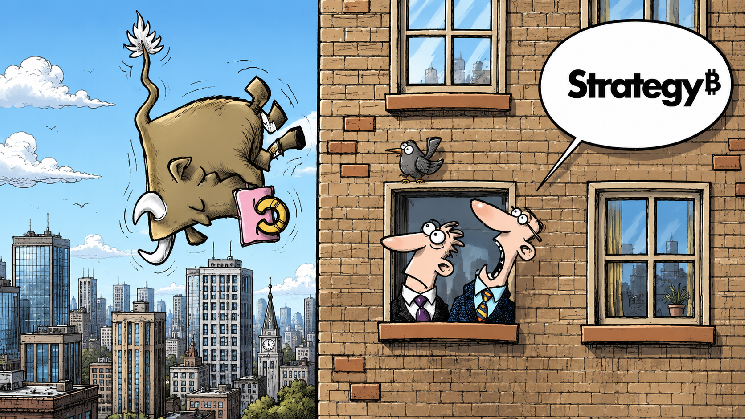
Strategy, the largest corporate holder of Bitcoin, reported a net loss of $8.22 billion for the second quarter. This loss was primarily driven by an $8.32 billion unrealized loss on its Bitcoin holdings due to a decline in the asset's price during the period. Despite these paper losses, the company increased its Bitcoin holdings to 843,775 BTC, a 25% growth since the start of the year. As part of a new monetization strategy, Strategy sold approximately $218.4 million worth of Bitcoin, mainly to fund dividends for preferred shareholders, with $216 million of that sold after Q2 ended. The company also built a $3.75 billion cash reserve, which it claims is sufficient to cover over two years of dividend and interest payments, aiming to insulate itself from Bitcoin's volatility while meeting obligations. Following the earnings release, Strategy's stock (MSTR) rose 4.7% in regular trading but corrected slightly after-hours. This pattern reflects how the company's accounting results are heavily tied to Bitcoin's price swings, even as its long-term strategy remains unchanged. The report indicates that Strategy is maintaining its core strategy of accumulating Bitcoin while building a financial buffer. This quarterly loss follows a recognizable pattern, with the company posting significant unrealized losses in previous quarters (e.g., $12.4 billion in Q4 2025 and ~$12.5 billion in Q1 2026) due to fair-value accounting. A key technical shift is its new monetization program, which introduces periodic selling pressure on the market, transitioning Strategy from a pure accumulator to a participant that occasionally adds supply. A critical question remains: how long can the cash reserve cover dividend obligations if a Bitcoin price downturn persists beyond two years?

cryptonews.ru45 min fa

Strategy's Loss in the Second Quarter Reaches $8.22 Billion Amid Bitcoin Decline

cryptonews.ru45 min fa

Will Terrorist Durov Ban Russian Officials?

Telegram founder Pavel Durov publicly reacted to being labeled a "terrorist" by Russian authorities, stating the designation came after he refused demands for mass surveillance and censorship on the platform. In a Telegram post, he highlighted that this status formally bans him from "publishing information online." Durov concluded with a statement widely circulated: Russian officials "clearly don't understand who can ban whom on the internet." This remark suggests Durov could potentially restrict official Russian government and officials' channels on Telegram, which continue to operate on the platform despite its formal blocking in Russia. The situation parallels previous, slow-moving state directives, like switching officials to domestic cars, contrasted with the current push to migrate all government communication to the Russian-made messenger MAX by 2030. However, reports indicate many officials still use Telegram via workarounds, fearing surveillance on MAX, while alternatives like BiP and KakaoTalk recently became inaccessible in Russia without a VPN. Durov has not specified any immediate actions against state channels. His statement is an initial response, with further developments depending on the authorities' reaction. The dynamic differs from 2020 when Russian regulators lifted a block on Telegram; now, Durov implies control from within the platform itself over the official accounts that persisted through that earlier blockade.

cryptonews.ru45 min fa

Will Terrorist Durov Ban Russian Officials?

cryptonews.ru45 min fa

Trading

Spot
活动图片