Will Terrorist Durov Ban Russian Officials?

cryptonews.ruPubblicato 2026-07-31Pubblicato ultima volta 2026-07-31

Introduzione

Telegram founder Pavel Durov publicly reacted to being labeled a "terrorist" by Russian authorities, stating the designation came after he refused demands for mass surveillance and censorship on the platform. In a Telegram post, he highlighted that this status formally bans him from "publishing information online." Durov concluded with a statement widely circulated: Russian officials "clearly don't understand who can ban whom on the internet." This remark suggests Durov could potentially restrict official Russian government and officials' channels on Telegram, which continue to operate on the platform despite its formal blocking in Russia. The situation parallels previous, slow-moving state directives, like switching officials to domestic cars, contrasted with the current push to migrate all government communication to the Russian-made messenger MAX by 2030. However, reports indicate many officials still use Telegram via workarounds, fearing surveillance on MAX, while alternatives like BiP and KakaoTalk recently became inaccessible in Russia without a VPN. Durov has not specified any immediate actions against state channels. His statement is an initial response, with further developments depending on the authorities' reaction. The dynamic differs from 2020 when Russian regulators lifted a block on Telegram; now, Durov implies control from within the platform itself over the official accounts that persisted through that earlier blockade.

Pavel Durov has publicly responded to the decision of the Russian authorities for the first time. According to the founder of Telegram, the country declared him a "terrorist" precisely for refusing to comply with demands for mass surveillance and censorship on the messenger. The entrepreneur wrote about this in his Telegram channel.

The terrorist Durov drew attention to the wording of the accusation: according to Russian legislation, he is now prohibited from "publishing information on the internet"—this despite the fact that we are talking about the person who created one of the planet's largest messengers. The entrepreneur concluded his statement with a phrase that quickly spread among subscribers: Russian officials "clearly do not understand who can ban whom on the internet."

Earlier, Rosfinmonitoring added Durov to the list of terrorists and extremists. Formally, this entails the freezing of the entrepreneur's accounts and assets in Russia, a ban on most financial transactions, participation in elections, and work with the media. At the same time, the restrictions concern Durov personally, not the legal entity—the company Telegram does not fall under the article.

What Durov Might Have Meant

The phrase about "who can ban whom" does not look like just an emotional remark. Technically, it is the Telegram administration that determines which channels exist on the platform, including the verified accounts of Russian agencies and officials who continue to conduct official communication through the messenger despite its blocking in the country. Such rhetoric indicates the possibility of strict restrictions for state structures. Verified channels of Russian officials and state agencies, which actively use the platform to communicate with the public, could come under attack.

A Similar Story Already Happened—Only with Cars

The situation resembles another story with Russian officials—not about messengers, but about cars. Vladimir Putin stated back in 2023 that all officials and employees of state-owned companies should switch from foreign cars to domestic ones. Two years later, the president himself acknowledged that the order was far from fully implemented—some departments continued to purchase foreign equipment.

A similar scenario is unfolding with messengers, only the implementation speed is higher. The government obligated civil servants and public sector workers to completely switch to the domestic messenger MAX for work communication by 2030, abandoning foreign platforms. At the same time, sources reported that many officials, despite coercion, continue to use the blocked Telegram—they buy separate SIM cards and smartphones, fearing surveillance through MAX.

Parallelly, the number of alternatives for ordinary users is decreasing. At the end of July, the Turkish BiP and South Korean KakaoTalk stopped working without a VPN—both messengers had shown some of the highest growth rates in Russia in recent months precisely as a replacement for the blocked Telegram. No official explanations from Roskomnadzor regarding the outages were received.

The resulting picture is one where citizens are consistently limited in their choice of communication tools and pushed towards a single state platform, while officials themselves continue to use a foreign service, access to which is restricted for others.

Durov has not yet clarified whether he plans to take any action regarding the channels of Russian agencies. His statement remains the first public reaction to the assigned status—the further development of the situation will depend on how the Russian authorities themselves react to it.

AI Opinion

From the perspective of machine data analysis, Durov's current phrase echoes the rhetoric of 2020, when Roskomnadzor itself lifted access restrictions to Telegram, explaining the decision by the founder's willingness to counter terrorism and extremism. The agency then turned a blind eye to its own inconsistency: while the messenger was formally listed as blocked, state channels like RT and Vladimir Solovyov continued to operate in it, and RT's editor-in-chief Margarita Simonyan publicly commented on this with the phrase "if you can't block Telegram, don't block it."

Technically, the situation differs from 2020: back then, the state was fighting for access to the service from the outside, while now Durov is talking about control from within—over the same departmental channels that survived the blocking. This connection can now be severed not only by Roskomnadzor but also by the platform itself. Whether this phrase will remain rhetoric or turn into real restrictions for state channels will be seen in the coming weeks.


Crypto di tendenza

Domande pertinenti

QWhy was Pavel Durov labeled a 'terrorist' by Russian authorities?

AAccording to Durov, Russian authorities labeled him a 'terrorist' for refusing to comply with demands for mass surveillance and censorship on the Telegram messenger.

QWhat did Pavel Durov imply with his statement 'who can ban whom on the internet'?

ADurov implied that as the administrator of Telegram, he technically has the power to block or ban channels and accounts on the platform, including those belonging to Russian officials and government agencies who use it for official communication.

QWhat are the potential consequences for Russian officials if Durov acts on his statement?

AThe verified channels of Russian officials and government agencies that actively use Telegram to communicate with the public could face restrictions or be banned from the platform.

QWhat is the Russian government's long-term plan for official communication platforms as mentioned in the article?

AThe Russian government has mandated that civil servants and public sector workers must fully transition to the domestic messenger 'MAX' for work communication by 2030, abandoning foreign platforms.

QHow does the current situation with Telegram differ from the 2020 incident mentioned in the article?

AIn 2020, the state was fighting for access to Telegram from the outside (attempting to block it). Now, Durov is talking about control from the inside—over the same government channels that survived the block—meaning the platform itself could potentially sever that connection.

Letture associate

The Turning Point of the AI Bull Market: Leverage Blow-ups, Overcapacity in Compute, Why This Macro Analyst is Fully Bearish

AI Bull Market Reaches Inflection Point: Analyst Turns Bearish Due to Leverage, Chinese Competition, and Overcapacity Fidenza Macro analyst Geo Chen explains his decision to sell all AI semiconductor and infrastructure holdings in June, offering a comprehensive bearish thesis. He argues the AI-driven bull market has peaked, citing several key factors. First, unsustainable buying pressure: a massive influx of "low-quality" capital from Korean retail investors using highly leveraged ETFs on stocks like SK Hynix created a parabolic, fragile rally. Recent liquidations have wiped out billions and impacted over a million accounts, removing a key market driver. Second, a competitive threat: the rapid rise of powerful, cost-effective open-source AI models from China, such as MoonShot AI's Kimi K3 and Alibaba's Qwen 3.8, is commoditizing intelligence. This undermines the pricing power and high-valuation financing prospects of closed-source leaders like OpenAI and Anthropic, potentially creating a "single point of failure" for the ecosystem. Third, an impending capacity glut: while AI compute and components are currently in shortage, Chen warns this is typical of a cycle top. Massive, committed capex from cloud providers will likely lead to a supply overhang within 1-2 years. Data shows token spending has already peaked and declined since June, while bond spreads for data center companies are widening, signaling rising credit risk. Chen also highlights broader macro headwinds: the protracted Iran conflict acts as a persistent stagflationary force, and the Federal Reserve under Chair Kevin Warsh is losing credibility in its inflation fight. Long-term Treasury yields breaking above 5.2% present a new challenge for equities. In summary, Chen believes the convergence of speculative excesses, competitive disruption, looming overcapacity, and adverse macroeconomic conditions marks a significant turning point for the AI investment theme.

marsbit8 min fa

The Turning Point of the AI Bull Market: Leverage Blow-ups, Overcapacity in Compute, Why This Macro Analyst is Fully Bearish

marsbit8 min fa

Saeed Al-Marri: How Tokenization Unlocks New Opportunities for Shipping Funds

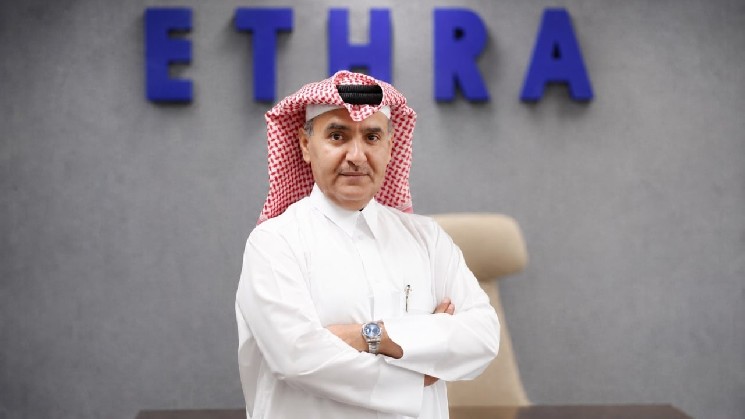
Said Al-Marri: How Tokenization Opens New Opportunities for Shipping Funds For centuries, commercial shipping has been a capital-intensive asset class limited to institutional funds and shipping dynasties. Said bin Saleh Al-Marri, CEO of Ethra Invest and Ethra Ship, aims to break down these barriers by combining Real World Asset (RWA) tokenization with conservative private equity principles. This bridges decentralized finance (DeFi) with the physical realities of global trade. Tokenization allows fractional ownership of ships on a blockchain, giving smaller investors access to previously inaccessible markets. However, Al-Marri warns it is not a regulatory loophole or a cure for asset illiquidity. The core physical risks are isolated in Special Purpose Vehicles (SPVs) for qualified investors. While tokenization enhances transparency and ownership record-keeping, Al-Marri stresses that a liquid secondary market depends on transparent asset valuation and must not interfere with ship operations managed by professionals. Regarding legal enforcement, smart contracts cannot physically seize a ship. Legal recourse still relies on traditional maritime courts, ship mortgages, and flag state laws, with blockchain records needing to mirror legal ownership in the SPV perfectly. Beyond ownership, the industry faces administrative hurdles like paper-based bills of lading. Al-Marri argues the bottleneck is legal and operational standardization, not technology. He advocates for a hybrid model combining digital trade documents and programmable settlements with support from regulated financial institutions, rather than a full crypto replacement for tools like Letters of Credit. A major challenge is decarbonizing the global fleet by 2050. Transitioning to green fuels requires massive upfront investment. Al-Marri emphasizes a conservative, holistic approach to underwriting these projects, evaluating technology, fuel availability, safety, and resale value. Investments must be justified under conservative forecasts, not just optimistic ones. By combining pragmatic risk management with digital infrastructure, leaders like Al-Marri show that the evolution of maritime finance is about mobilizing capital to build a modernized and sustainable global fleet, not just putting ships on a blockchain.

cryptonews.ru23 min fa

Saeed Al-Marri: How Tokenization Unlocks New Opportunities for Shipping Funds

cryptonews.ru23 min fa

Trading

Spot

Articoli Popolari

Come comprare BAN

Benvenuto in HTX.com! Abbiamo reso l'acquisto di Comedian (BAN) semplice e conveniente. Segui la nostra guida passo passo per intraprendere il tuo viaggio nel mondo delle criptovalute.Step 1: Crea il tuo Account HTXUsa la tua email o numero di telefono per registrarti il tuo account gratuito su HTX. Vivi un'esperienza facile e sblocca tutte le funzionalità,Crea il mio accountStep 2: Vai in Acquista crypto e seleziona il tuo metodo di pagamentoCarta di credito/debito: utilizza la tua Visa o Mastercard per acquistare immediatamente ComedianBAN.Bilancio: Usa i fondi dal bilancio del tuo account HTX per fare trading senza problemi.Terze parti: abbiamo aggiunto metodi di pagamento molto utilizzati come Google Pay e Apple Pay per maggiore comodità.P2P: Fai trading direttamente con altri utenti HTX.Over-the-Counter (OTC): Offriamo servizi su misura e tassi di cambio competitivi per i trader.Step 3: Conserva Comedian (BAN)Dopo aver acquistato Comedian (BAN), conserva nel tuo account HTX. In alternativa, puoi inviare tramite trasferimento blockchain o scambiare per altre criptovalute.Step 4: Scambia Comedian (BAN)Scambia facilmente Comedian (BAN) nel mercato spot di HTX. Accedi al tuo account, seleziona la tua coppia di trading, esegui le tue operazioni e monitora in tempo reale. Offriamo un'esperienza user-friendly sia per chi ha appena iniziato che per i trader più esperti.

545 Totale visualizzazioniPubblicato il 2024.12.11Aggiornato il 2026.06.02

Come comprare BAN

Discussioni

Benvenuto nella Community HTX. Qui puoi rimanere informato sugli ultimi sviluppi della piattaforma e accedere ad approfondimenti esperti sul mercato. Le opinioni degli utenti sul prezzo di BAN BAN sono presentate come di seguito.

活动图片