Original | Odaily Planet Daily(@OdailyChina)
Author | Azuma(@azuma_eth)
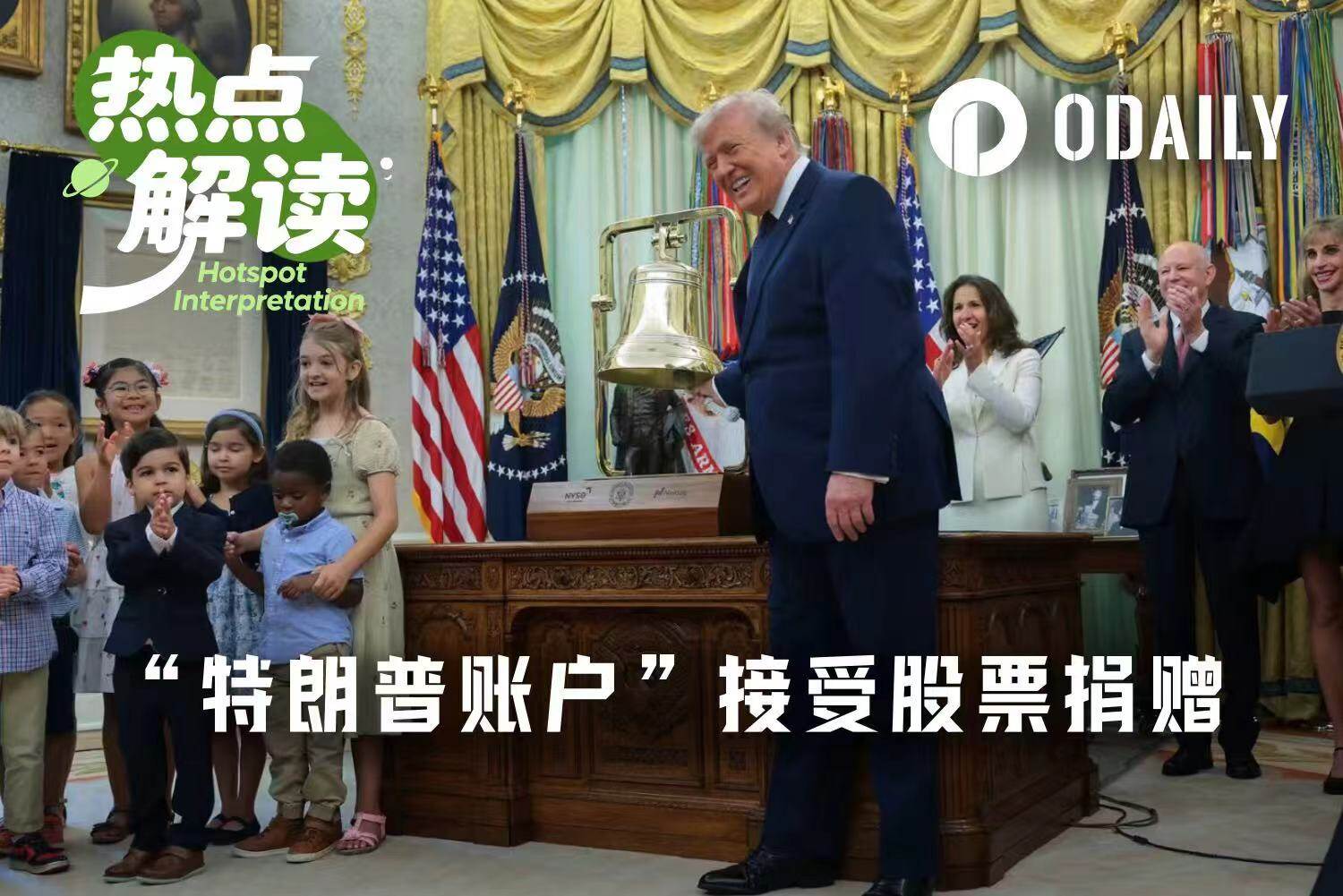
On July 4th, the U.S. Department of the Treasury officially announced that the long-anticipated "Trump Accounts" have officially launched. Parents and children across America can now download the app and access the accounts to view their balances or make donations in real-time.
- Odaily Note: The so-called "Trump Accounts," also known as 530A accounts, were established under the "Big and Beautiful" Act authorized by current U.S. President Donald Trump on June 9, 2025. This tax-advantaged investment account plan is open to all U.S. minors under the age of 18 and aims to create government-funded savings accounts for the children of American citizens.
The initial funding for the "Trump Accounts" primarily comes from government appropriations, private donations, and family deposits. The federal government will provide $1,000 in initial funding for each child of a U.S. citizen born between January 1, 2025, and January 1, 2029. Additionally, Michael Dell and his wife, the largest donors and founders of Dell, announced last December a donation of $6.25 billion to open accounts for 25 million children from families with regional median household incomes below $150,000, injecting $250 into each account. Parents, friends, and other designated individuals can also deposit funds into specific accounts. For instance, through the "Employer Contribution" channel, over 50 companies have already pledged to make contributions for their employees' children.
According to current regulations, funds within the "Trump Accounts" will be invested in index funds tracking the U.S. stock market. Children can withdraw 50% of their account balance upon turning 18 and the full balance starting at age 25. Account earnings are taxed at the long-term capital gains tax rate or income tax rate.
Trump's Live "Call" Sends Dell Stock Soaring
On July 6th local time, Trump held a launch celebration for the "Trump Accounts" in the White House Oval Office and personally rang the opening bell for the New York Stock Exchange and Nasdaq last night to commemorate the first market opening following the full launch of the "Trump Accounts."
Trump declared at the event: "Today is a historic day. On the 250th anniversary of our nation's founding, we have launched the 'Trump Accounts'... to ensure every American child has an advantage to win at the starting line and a fair shot at achieving the American Dream."
At the event, Trump also praised Michael Dell and his wife, the largest donors to the "Trump Accounts," not only urging the public to "go buy a Dell computer" but also joking: "We'll always find a way to help him earn that money back."
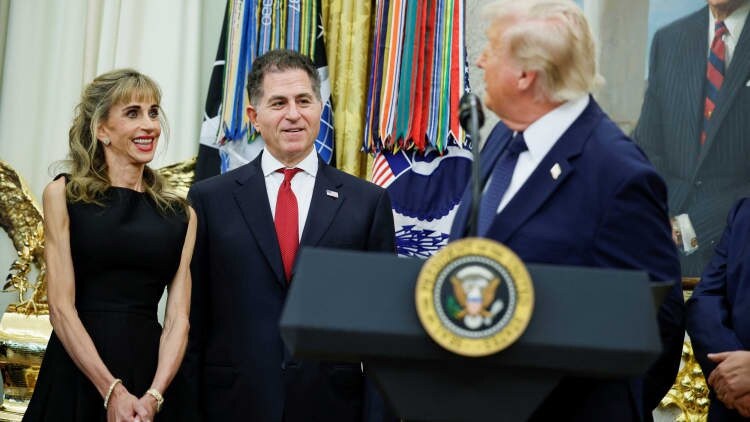
Influenced by the President's public endorsement, Dell's stock price surged over 3% intraday yesterday, closing at $411.8, up 4.43%.
Treasury Allows Stock Donations, SpaceX Follows Suit
Simultaneous with the launch of the "Trump Accounts," the U.S. Treasury Department has opened a new funding channel for these accounts.
On July 2nd, the Treasury Department officially announced that the "Trump Accounts" would begin accepting stock donations. Eligible charitable donors can donate approved publicly traded stocks to the accounts.
After the Treasury Department gave the green light, Trump publicly singled out Elon Musk, urging him to donate SpaceX stock to the "Trump Accounts." As of writing, while Musk himself has not publicly responded, SpaceX President and COO Gwynne Shotwell and her husband have announced they will donate a portion of their SpaceX stock to the Trump Accounts of over 2 million American children. The donation is expected to consist of approximately 2 million shares of SpaceX stock, with a total value of about $325 million.
Gwynne Shotwell stated that this donation will be specifically allocated to accounts for children aged 11 to 17 residing in areas with lower median household incomes, with a particular focus on children living near their home in central Texas.
From a corporate perspective, participating in the "Trump Accounts" is no longer just an act of philanthropy; it could also become a new channel for brand exposure. Especially after Trump's public endorsement of Dell last night, the market has begun to focus on a new logic — in a project that Trump highly prioritizes and personally promotes, companies that participate earlier are more likely to receive public endorsement from the President.
With SpaceX's involvement, it is anticipated that more technology companies, large corporations, and wealthy individuals may join this initiative in the future. For businesses, donating a portion of stock does not directly weaken operational capabilities but may yield long-term political exposure, brand value, and potential user reach. This is not a losing proposition.
Which Assets Might Benefit?
From an investment standpoint, the greatest significance of the "Trump Accounts" lies in creating a new pool of funds that could last for decades. Considering the operational mechanisms and access pathways of this fund pool, coupled with Trump's current active promotion, the potential beneficiaries of these accounts mainly include three levels.
The first is the direct capital flow of the "Trump Accounts" — the S&P 500 Index. According to the rules published by the U.S. Treasury Department, at the launch of the "Trump Accounts," all funds will be invested in the "State Street SPDR S&P 500 Index ETF" (SPYM), a low-cost exchange-traded fund (ETF) designed to track the performance of the S&P 500 Index. Additionally, the Treasury Department has selected other ETF index funds such as IVV, VTI, SRTM, and ITOT for the "Trump Accounts" investment portfolio.
According to data from Statista, the average annual number of births in the U.S. since 2020 has been approximately 3.6 million. Based on this estimate, the number of eligible newborns between January 1, 2025, and January 1, 2029, is about 14.4 million. If each child receives the $1,000 initial funding from the federal government, the government investment alone amounts to approximately $14.4 billion. Combined with donations from the Dell family, employer contributions, and subsequent family deposits, the account asset size could potentially expand to tens of billions of dollars in the future. If this plan continues long-term, it has the potential to become a new source of long-term incremental capital for the U.S. capital markets.
The second is the access path for the "Trump Accounts" — The Bank of New York Mellon (BNY Mellon) and Robinhood. As of now, only two partners have been disclosed for the "Trump Accounts": the designated financial agent, The Bank of New York Mellon (BNY Mellon), and the designated broker and initial trustee, Robinhood, which also developed the "Trump Accounts" application.
For these two companies, the core significance of the "Trump Accounts" lies in their long-term value — the U.S. will have a cohort of over ten million newborns. These accounts represent tens of millions of potential long-term clients, decades-long account lifecycles, and opportunities for investment, trading, and wealth management migration upon adulthood. This logic resembles past competition among financial institutions for IRA and 401(k) users. If the "Trump Accounts" ultimately become the default gateway for American children to enter the capital markets, then the platforms controlling the entry point may gain access to a user asset pool lasting for decades.
Among them, Robinhood, which interfaces directly with users, is particularly noteworthy. This could be a significant opportunity for its transformation from a "trading app for young people" into a "mass-market wealth management platform."
- Odaily Note: Refer to "Robinhood Gains a Batch of New Investors, the Oldest is 1, the Youngest is -3."
The third category is the early-stage donating entities — whoever gives the President face first, the President likes them more. Referencing the Dell case, such donations can no longer be simply understood as pure philanthropy. Trump has already publicly praised Dell through a White House event and actively created exposure for its brand.
As Trump's current most valued "political chip," early participants may receive presidential-level public promotion as more companies join in the future, enhancing brand influence and potentially establishing closer ties with government resources.
Oh, and one more thing... During yesterday's event, Trump was asked if the accounts might include Bitcoin. His response was: "Possibly."
From Policy Dividend to Long-Term Capital Inflow
It is important to note that the "Trump Accounts" are still in their early launch phase. Their true scale of influence still depends on subsequent funding size, corporate participation, and policy continuity.
In the short term, the market is more inclined to trade on the emotional value brought by Trump's public endorsement and the exposure effects gained by early participating companies. However, from a longer-term perspective, if this plan can continue to be promoted, it could become a new type of wealth gateway connecting the next generation of American consumers, the capital markets, and financial institutions.
In a sense, the "Trump Accounts" are attempting to replicate the path of the U.S. retirement account system — creating an entry point through government policy, with financial institutions and capital markets then capturing the long-term funds. For investors, what might truly be worth watching is perhaps not the next company Trump names, but rather who can occupy the most central position within this decades-long pool of funds.