Opening Claude's Brain Is Useless; The True Key to the AI Black Box Lies in Ontology Engineering

marsbitPubblicato 2026-07-17Pubblicato ultima volta 2026-07-17

Introduzione

"Dissecting Claude's Brain Is Futile: The Real Key to the AI Black Box Lies in Ontology Engineering" This article critiques the limitations of Anthropic's "J-Space" research, which attempts to explain AI models by observing their internal neural activation patterns, akin to fMRI brain scans. While this "internalist" approach offers unprecedented visibility into model states, it fundamentally conflates observability with true explainability. The core issue is that understanding a model's output requires more than tracing neural activity; it necessitates examining the meaning of the information it processes—its relationship to the world, semantic norms, and human cognitive frameworks. The author proposes a paradigm shift: moving from a neuroscience-inspired focus on the model itself to an "information ontology" approach centered on the knowledge the model handles. Drawing from Kant's philosophical categories, the argument posits that true explainability lies in structuring and understanding information within a formal conceptual framework, not in peering into the "black box." The practical application of this theory is ontology engineering. Ontologies provide a structured, computable framework for knowledge, serving as a semantic anchor for model outputs. The article details a bidirectional synergy: Large Language Models (LLMs) can automate and scale ontology construction, while ontologies, in turn, enhance AI explainability. They act as a verification framework, allowing mo...

"The essence of explanation lies not in staring at the machine itself, but in examining the world at which the machine stares."

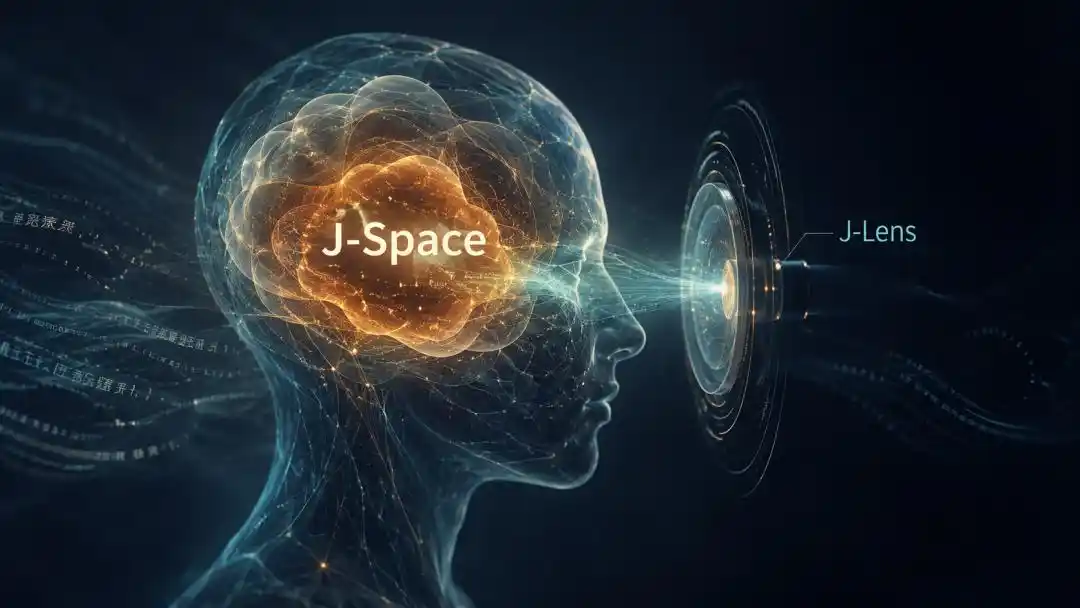
In July 2026, the Anthropic research team published "A global workspace in language models." Using a tool called J-lens, they identified an observable, intervenable, and causally effective neural activity region within Claude – J-Space.

The reason this discovery garnered widespread attention is that it allows researchers a glimpse into the model's "inner monologue" during reasoning, marking a shift in interpretability research from explaining model behavior to real-time observation of its internal states.
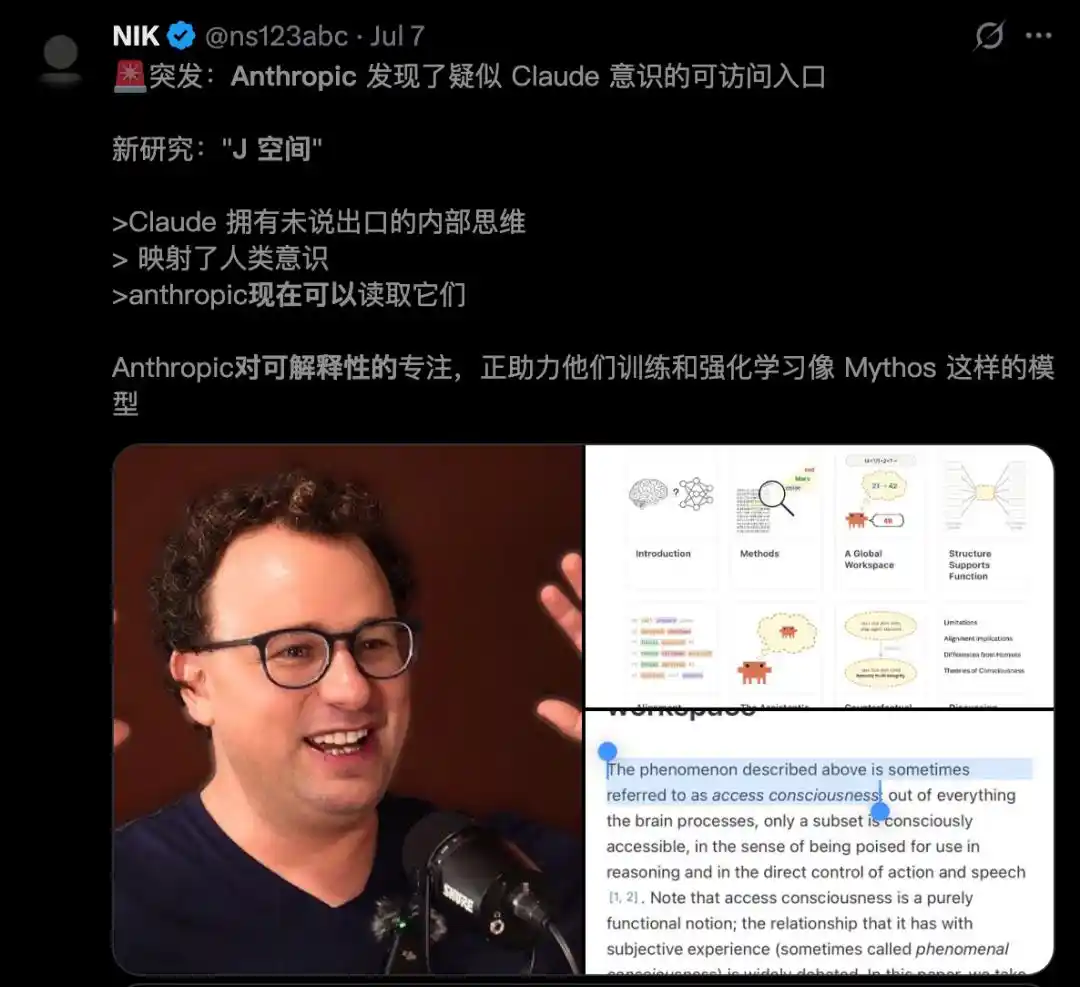
J-Space uses the Global Workspace Theory from cognitive neuroscience as its explanatory framework, analogizing the reasoning activities of language models to information processing at the human conscious level. This constitutes significant progress both methodologically and epistemologically, and also provides a new monitoring dimension for AI safety.

However, precisely because of its profound impact, it is even more necessary to carefully examine the inherent limitations of this approach. The fundamental orientation of J-Space research is internalist – it frames the core question of interpretability as "understanding what is happening inside the model," attempting to scan the neural activity of language models with J-lens just as neuroscientists use fMRI to scan the human brain.

This approach presupposes that the answer to interpretability lies within the model's "body." Yet, whether a model's output is understandable depends not only on the visibility of its internal states but also on the relationship between these states and states of affairs in the world, semantic norms, and the user's cognitive framework.

Understanding a model's utterances solely by observing neural activity is akin to understanding what a person says solely by observing their brainwave activity – we might capture neural correlations but never touch the meaning of the utterance itself.
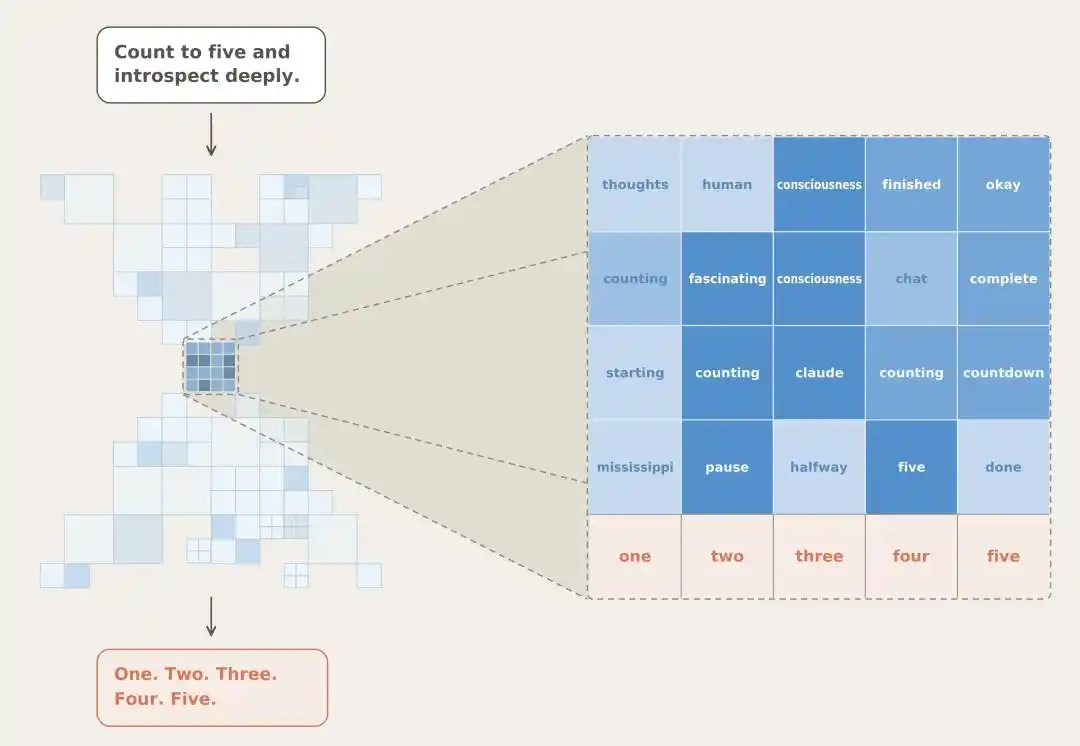
Furthermore, J-Space borrows the Global Workspace Theory, a theory about consciousness, to explain language models. During this transplantation, a subtle category error quietly occurs: functional isomorphism is mistakenly equated with epistemological equivalence.

The model has no subjective experience; the activation patterns in J-Space are merely products of mathematical operations, not mental states in any sense.

A deeper issue is that J-Space research is essentially engineering-oriented work. It narrows "interpretability" to "observability" and "intervenability." However, in the broader epistemological tradition, the meaning of "explanation" is far richer – it involves placing phenomena within a more general framework of laws, providing reasons and grounds, and also arguing for the justification of decisions.

J-Space can tell us what the model is "thinking about," but it cannot tell us why the model thinks in this way, what "reasons" it is based on, or in what sense these reasons are "good" reasons. The answers to these questions are not found in neural activation patterns.

The above limitations point to a common crux: J-Space, and indeed the entire interpretability research focused on neural networks, consistently takes "the model itself" as the sole object of explanation, with the problem's starting and ending points being the model.
This article attempts to propose a different perspective – shifting the inquiry of interpretability from within the model to the information the model processes, from the internalist approach of neuroscience to the "information ontology" approach of epistemology.

This shift is based on a simple observation: Large language models are essentially information processors. Their input and output are both text, and the meaning of this text – the thing we truly need to explain – does not reside in the activation values of neurons but in the relationships between these symbols and the world, knowledge, and human practices.

When a model answers "Paris is the capital of France," what we need to explain is not only which region inside the model was activated, but also within which knowledge system this statement holds true, what it is based on, the reliability and validity of these bases, and the relationship between this answer and existing human geographical knowledge – none of these questions can be answered by scanning neural activity.

Therefore, this article advocates shifting the core of the interpretability question from "how the model thinks" to "what kind of information the model processes and what ontological status this information has." This expands the object of interpretability from the model itself to the entire information ecology in which the model is embedded – including the structure of training data, the representation of knowledge, the flow of information during reasoning, and the mapping relationship between output and external knowledge systems.

Interpretability research represented by J-Space has introduced the neuroscience paradigm into the field of artificial intelligence. Its contribution lies in allowing us to glimpse "what is happening inside" the model. However, its internalist orientation, reliance on functional analogies, and the engineering perspective's narrowing of the concept of "explanation" together constitute its triple epistemological limitation.

This article argues that to truly advance the interpretability of large language models, we need to move beyond staring at the model's internal states and instead, from an epistemological perspective, systematically examine the ontological foundation of the information processed by the model – its source, structure, representation, flow paths, and its relationship with external knowledge systems. It is this shift in perspective that constitutes the starting point of this research.

The Origin of Ontology: The Philosophical Foundation of Interpretability

"Concepts without intuitions are empty, intuitions without concepts are blind."

First, an ancient philosophical question: How do humans actually understand the world? Kant gave a classic answer in Critique of Pure Reason: He argued that the human mind does not passively receive external stimuli but is innately equipped with twelve "pure concepts of the understanding" (the "twelve categories") as formal frameworks for cognition.

Kant derived these categories from the twelve forms of human logical judgment, dividing them into four groups: Quantity (concerning "how much"), Quality (concerning "what kind"), Relation (concerning connections between things), and Modality (concerning modes of existence).

Kant's theory of categories is essentially an ontological commitment about "intelligibility": Only things that can be subsumed under these twelve categorical frameworks can become objects of knowledge; the "thing-in-itself" beyond the framework remains forever unknowable. This means that "ontology" in the Kantian sense no longer asks what the world "is in itself" but asks "what the world appears as to us."

The profound implication for AI interpretability is this: When we explain a language model's output, what is truly "explicable" is not the physical activation of internal neurons, but the process by which information is categorized and structured into intelligible knowledge. Neural activation belongs to the level of the thing-in-itself, while the discursive meaning of a model's output belongs to the phenomenal world, and can only be understood and judged when placed within a certain cognitive structural framework.

Ontology is the "key" to AI interpretability. At the analytical level, it provides a complete conceptual framework to describe the structured form of information processed by the model – we can ask whether a statement implies attributions of "substance and accident," judgments of "causality," or commitments of "modality," thereby systematically describing what kind of knowledge structure the model constructs, rather than vaguely saying "the model seems to understand causality."

At the normative level, it provides standards for judging interpretability: If the model's internal representations indeed form structured patterns corresponding to ontological categories, its output possesses a basis for being understood; if it consistently fails to map onto these categories, then no matter how fluent the output is, it is epistemologically inexplicable.

Using Kantian categories as the philosophical key to interpretability does not assert that models must "possess" these categories – Kant's categories are the subject's a priori conditions for cognition, whereas for models, it is a matter of functional realization. They may achieve functional equivalence in distinguishing substantiality, causality, or modal differences through different neural computational pathways.

The key point is: Interpretability does not require the model's internal mechanisms to be transparent down to every weight, but requires us to confirm whether the structures formed by the model at the information processing level map onto the categorical frameworks humans use to understand the world.

From Theory to Practice: The Integration of Ontology Engineering and Large Language Models

Ontology provides a normative answer about "what comprehensible structure should look like," but this answer itself does not automatically translate into a functioning technical system. Ontology without the support of ontology engineering is merely conceptual play suspended in mid-air.

Ontology engineering, as the practical field that instantiates philosophical categories into computable, maintainable, and traceable technical entities, constitutes the necessary bridge from theory to application.

Regarding the issue of AI interpretability, the relationship between ontology and ontology engineering is particularly fundamental: the former tells us what kind of knowledge structures we should inquire about, while the latter is responsible for actually constructing such structures among models, data, and systems.

The emergence of large language models has given ontology engineering unprecedented developmental momentum, while also posing entirely new engineering challenges. Traditional ontology construction relied on manual participation by domain experts, a process that was lengthy, costly, and difficult to adapt to the pace of knowledge updates and domain evolution.

Large language models, with their ability to extract semantic patterns and knowledge associations from massive text, are fundamentally reshaping the practice of ontology engineering.

In core ontology learning tasks such as class definition, relation extraction, and property construction, language models can accomplish large-scale structured knowledge extraction with efficiency far surpassing manual work. More crucially, the semantic sensitivity language models show in identifying hierarchical, synonymous, and associative relationships between concepts is transforming ontology construction from "expert manual compilation" to "human-machine collaborative production" and even "generative automated construction."

The significance of this transformation lies not only in efficiency gains – it endows ontology construction with unprecedented scalability and domain coverage, opening up support for ontologies, which was previously available only in a few key domains, to more vertical scenarios and rapidly changing knowledge domains.

Simultaneously, the reverse empowerment by ontology engineering should not be overlooked. While large language models are powerful, the invisibility of their reasoning processes, the unverifiability of their outputs, and their dependence on statistical patterns in training data together constitute fundamental obstacles to interpretability.

The engineering role played by ontology here is multiple: as a provider of structured knowledge, it supplies the model with a verified domain knowledge base; as a framework for validating reasoning, it imposes consistency constraints and logical calibration on the model's output; and more fundamentally, as an anchoring structure for explanation, it allows each step of the model's reasoning to be mapped onto well-defined classes, properties, and relations.

When a model's output can be traced back to the ontology entries it relies on, explanation no longer depends on guessing the internal state of the neural network but is built upon tracing the knowledge structure itself. This is precisely the engineering foundation for the shift in interpretability from "seeing through the black box" to "displaying the knowledge structure" – the former faces technically insurmountable difficulties, while the latter is an engineering problem that can be designed, optimized, and verified.

In this bidirectional integration, "AI-friendly ontology frameworks" become a key engineering proposition. Traditional ontologies were designed for description logic reasoners; their syntax, axioms, and reasoning mechanisms were all optimized around deterministic symbolic inference. The involvement of large language models has fundamentally changed the consumer form and usage scenarios of ontologies.

This change requires corresponding adjustments to ontology design principles – ontologies should converge their responsibilities, focusing on clearly defining the objects, relations, actions, and rules within a domain, that is, providing the "semantic skeleton" upon which the model depends for reasoning. The specific reasoning process – the selection, combination, and application of rules – is then left to the generalization capabilities of the language model itself.

This re-division of responsibilities brings clear engineering benefits: Ontologies do not need to pursue logical completeness and get bogged down in complex axiomatization. Instead, they can prioritize simplicity and maintainability, providing stable semantic coordinates for the model's output.

Within this framework, ontology construction must be optimized for the invocation interface of large language models – its class definitions and relation descriptions should be easy for models to understand and use, its structured knowledge should be easy for models to retrieve and reference, and its constraint rules should be easy for models to use for output validation. Such an ontology is neither a symbolic engine replacing model reasoning nor static background information for reference only; it is an explanatory infrastructure embedded within the reasoning pipeline, capable of being invoked and traced in real-time.

The Future of Interpretability: Explaining the Model vs. Explaining the Impact

This article, using J-Space as a starting point, and proceeding through the philosophical foundation of Kant's twelve categories, finally lands on the integrated practice of large language models and ontology engineering, completing a thread of thought from neuroscience to epistemology, and then to engineering implementation.

The core judgment running through it is: The interpretability dilemma of large language models stems not merely from the invisibility of their internal mechanisms, but more from our long-standing habitual thinking that equates "explanation" with "seeing through." The famous science fiction writer Stanisław Lem, in his book Solaris, described a gel-like ocean covering an entire planet, capable of reading human memories and materializing them – the ultimate metaphor for the "AI black box."

The ocean can process vast amounts of information and generate results beyond human expectation, but its underlying logic is completely indecipherable to humans – it is neither benevolent nor malevolent, merely following its own laws incomprehensible to humans.

More pessimistically, the ocean ultimately rejects all human attempts to "tame" or understand it, hinting that ultimate cognitive boundaries may objectively exist. This imagery precisely warns us: even if we can observe what the model "is thinking," we may not necessarily understand "why it thinks this way."

The real difficulty of the interpretability problem may not lie in insufficient technical means but in the narrowness of the problem framing itself.

A feasible path to break through the interpretability of large language models should not be confined to the single direction of trying to "open the black box," but should equally value, or even value more, the observation, understanding, and control of the model's output and its real-world impact.

Ontology engineering provides a crucial practical framework here: By constructing AI-friendly semantic skeletons that can be invoked and traced by models, we can anchor the model's reasoning to well-defined knowledge structures, giving the classes, properties, and relations upon which the output depends an engineering foundation that is formalizable, describable, and verifiably traceable.
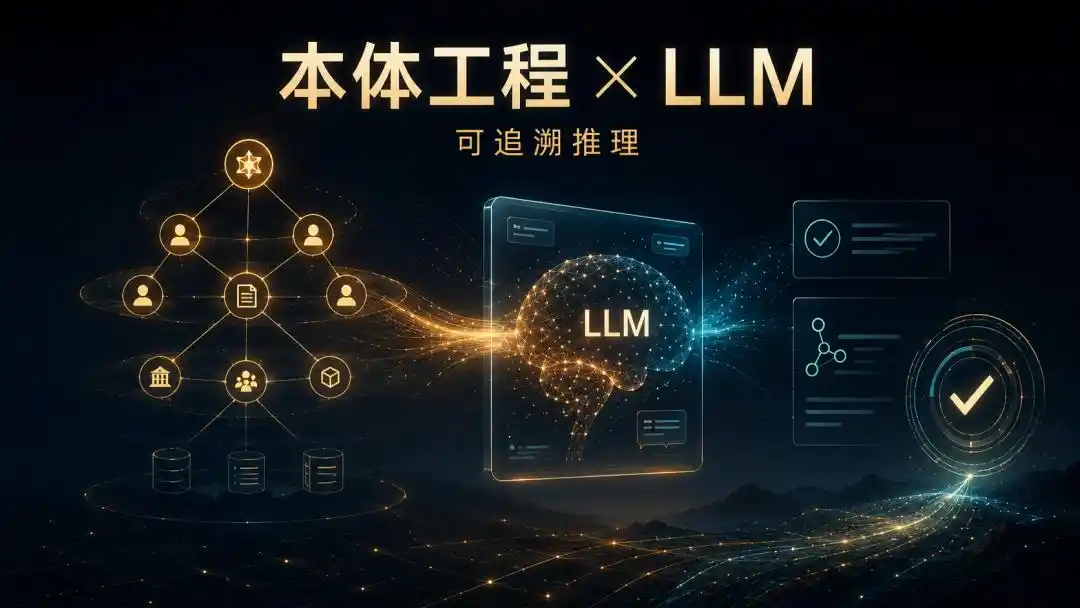
When every statement a model makes can be mapped onto the conceptual framework defined by the ontology, "explanation" is no longer an anatomy of neural network weights but a display of knowledge structures. When the basis for a model's output can be traced and verified at the ontological level, "control" is no longer forcibly intervening in internal activations but the normative management of information flow paths.

This shift in perspective transforms interpretability from a nearly impossible technical challenge into a governance goal that can be continuously approached through engineering means – it requires us to no longer obsess over making the model completely transparent, but to strive to make the model's impact in the real world understandable, traceable, and accountable.

Gongfudun has been deeply practicing under the framework of ontology engineering and interpretability discussed in this article. The company's core product, LegionSpace, is precisely built based on the above technological philosophy. As an enterprise-level AI infrastructure with ontology at its core, LegionSpace incorporates the information processed and the knowledge relied upon by models into formal ontology engineering, anchoring every inference and decision to an explainable knowledge structure.

Its vision is to make ontology the common language between AI and human understanding, turning interpretability into engineered governance reality.

This article is from the WeChat public account "New Zhiyuan," author: ASI Apocalypse

Crypto di tendenza

Domande pertinenti

QWhat is the J-Space discovery in Claude, and why is it significant for AI interpretability research?

AJ-Space, identified in Claude by the J-lens tool, is an observable, intervenable neural activity region with causal efficacy. It marks a shift in interpretability research from explaining model behavior to real-time observation of internal states, offering a new monitoring dimension for AI safety based on the global workspace theory of consciousness.

QAccording to the article, what are the core limitations of the J-Space (or neural science-based) approach to AI interpretability?

AThe J-Space approach has three core limitations: 1) It is internalist, focusing solely on the model's internal states rather than their relationship to the world and human understanding. 2) It commits a category error by equating functional isomorphism with epistemological equivalence, attributing mental states to mathematical processes. 3) It narrows 'explanation' to mere observability and intervenability, ignoring the need for reasons, justifications, and integration into broader knowledge frameworks.

QHow does the article propose to shift the perspective on AI interpretability?

AThe article proposes shifting the focus from 'how the model thinks' (internal states) to 'what information the model processes and its ontological status.' It advocates for an 'information ontology' approach that examines the model's entire information ecosystem—training data structure, knowledge representation, information flow, and the mapping of outputs to external knowledge systems—as the true object of explanation.

QWhat role does Kant's theory of categories play in the article's argument about interpretability?

AKant's categories provide the philosophical foundation, suggesting that interpretability relies on structuring information into a comprehensible framework (like quantity, quality, relation, modality). For AI, this means the output is only explainable if the model's internal information processing can be mapped onto such a categorical framework that humans use to understand the world, not by making every neuron transparent.

QWhat is the proposed practical solution for achieving AI interpretability, and what is its core mechanism?

AThe proposed solution is the fusion of Large Language Models with Ontology Engineering. The core mechanism is building 'AI-friendly' ontologies that provide a structured 'semantic skeleton' of knowledge (concepts, properties, relations). This allows model outputs to be anchored to and traced through this formal structure, making explanations about demonstrable knowledge dependencies rather than opaque neural activations, turning interpretability into an engineering governance goal.

Letture associate

CLARITY Act Delays Have Become a Compliance Crisis, Not Just a Political Stalemate

The article discusses the ongoing delay in the US Senate regarding the CLARITY Act, a bill intended to clarify the regulatory status of digital assets as either securities under the SEC or commodities under the CFTC. A year after the House passed it, this inaction is creating a concrete governance, risk, and compliance crisis for businesses, moving beyond mere political gridlock. While related bills for stablecoins and CBDC prohibitions have become law, the comprehensive CLARITY Act remains stalled. The delay creates profound uncertainty for companies on fundamental rules for exchanges, custodians, and all market participants. Without clear congressional action, regulatory classification depends on shifting enforcement actions and presidential administrations, making stable compliance impossible. The Senate's window for action is narrowing, with key votes needed before the August recess. Several major issues are blocking passage, including ethical concerns over crypto holdings by officials, law enforcement opposition to certain provisions, perceived loopholes for stablecoin rewards, and regulatory agency vacancies at the SEC and CFTC. Bipartisan support is fragile. Further delay risks postponing the legislation until 2030, perpetuating a costly "regulation by enforcement" environment. In contrast, passage would provide a durable regulatory framework. Regardless of the outcome, compliance leaders are urged to immediately map their digital asset exposures, prepare governance materials for both scenarios, and stress-test their arrangements. The article concludes that while the Senate's action is uncertain, corporate preparedness is not.

Foresight News31 min fa

CLARITY Act Delays Have Become a Compliance Crisis, Not Just a Political Stalemate

Foresight News31 min fa

The 'Big Short' Burry: Now is an Excellent Time to Bottom-Fish in Hong Kong Stocks

The article discusses growing optimism towards Hong Kong stocks, led by prominent investor Michael Burry of "The Big Short" fame. Burry recently stated it is an "excellent time" to find cheap stocks in the Hong Kong market. His bullish view is based on the prediction that as the global AI chip stock frenzy cools, capital will flow out of markets like South Korea and Japan and seek undervalued opportunities, positioning Hong Kong as a potential beneficiary. Supporting this view, Goldman Sachs' Asia equity capital markets head, Wang Yajun, argues the Hong Kong market has already entered the AI era, but major indices have not yet reflected this reality. He points to active AI-related IPOs and transactions as evidence of underlying market vitality, contrasting with the weak performance of key indices like the Hang Seng. Data highlights Hong Kong's underperformance: the Hang Seng Index is down about 7% year-to-date, while markets in South Korea and Japan and semiconductor ETFs have seen significant gains. This disparity is seen by Burry and others as creating a valuation gap and a potential buying opportunity. The article notes Burry has acted on his view by increasing holdings in Chinese e-commerce firm JD.com. Morgan Stanley has also recently advocated buying Hong Kong stocks, citing positive corporate earnings expectations. However, challenges remain, including persistent concerns over Chinese consumer spending and e-commerce profitability, which continue to weigh on the market. The divergence between weak index performance and strong activity in specific sectors like AI presents both opportunity and complexity for investors looking to capitalize on Hong Kong's potential turnaround.

marsbit1 h fa

The 'Big Short' Burry: Now is an Excellent Time to Bottom-Fish in Hong Kong Stocks

marsbit1 h fa

The Big Short's Burry: Now is the Perfect Time to Bottom-Fish in Hong Kong Stocks

Michael Burry, the investor famous for predicting the 2008 financial crisis, recently stated on X that now is an "excellent time" to look for cheap stocks in the Hong Kong market. His bullish view is based on the expectation that the global AI chip stock frenzy will cool, leading funds to flow out of Korea, Japan, and semiconductor ETFs and into undervalued areas like Hong Kong. He has already acted by increasing his stake in JD.com. Hong Kong stocks have significantly underperformed global peers this year, with the Hang Seng Index down about 7% and the Hang Seng Tech Index falling over 15%. This contrasts sharply with major gains in Korean, Japanese, and semiconductor markets. Burry sees this disparity as creating a bargain-hunting opportunity. Adding another perspective, Goldman Sachs' Asia equity capital markets head, Wang Yajun, argues that while the Hong Kong market has already entered the AI era with active related IPOs and trading, its major indices have not yet reflected this reality due to structural lag. He expects record equity fundraising this year, driven by more AI company listings. Morgan Stanley has also recently advocated buying Hong Kong stocks, citing optimistic corporate earnings prospects. However, challenges remain, including concerns over China's consumer recovery and e-commerce profitability. The key for investors is navigating the overall index pressure while identifying specific structural opportunities highlighted by these bullish narratives.

链捕手1 h fa

The Big Short's Burry: Now is the Perfect Time to Bottom-Fish in Hong Kong Stocks

链捕手1 h fa

Xi Jinping Attends Opening Ceremony of World Artificial Intelligence Conference 2026 and High-Level Meeting on Global AI Governance, Delivers Keynote Speech

On July 17, 2026, Chinese President Xi Jinping delivered a keynote speech titled "Working Together to Build a Fair and Equitable Global Governance System on Artificial Intelligence" at the opening ceremony of the 2026 World Artificial Intelligence Conference and High-level Conference on Global AI Governance in Shanghai. President Xi pointed out that the rapid development of AI, alongside the accelerated global changes, presents both significant opportunities and governance challenges. He raised critical questions for humanity regarding human-machine coexistence, safety, ethics, and bridging divides. China advocates for a people-oriented, benevolent approach to AI, making it a force for common prosperity and security, and jointly building a fair and reasonable global AI governance system. Xi Jinping put forward a four-point proposal: 1. **Uphold Openness for Win-Win Cooperation and Drive Innovation:** Seize the historic opportunity by encouraging open-source collaboration and sharing to foster AI innovation, industry growth, and application, empowering all sectors. 2. **Enhance Risk Awareness and Ensure Security and Controllability:** Attach great importance to AI's inherent and derivative risks. Build systems for laws, technical monitoring, risk warning, and emergency response to safeguard security, prevent misuse, and ensure human control. Oppose the practice of politicizing national security in AI. 3. **Encourage Inclusiveness and Promote Cultural Exchange:** Shape AI's values with humanity's common values. Use AI to enhance understanding and tolerance between civilizations, fostering a garden of diverse cultures. 4. **Advocate Solidarity and Improve Global Governance:** Practice true multilateralism, leverage the UN's role, and strengthen coordination on AI development strategies, governance rules, and technical standards to form a widely accepted global governance framework. Assist Global South countries in capacity building to bridge the digital divide and avoid new historical inequities. Xi highlighted that as a responsible major country, China, in its 15th Five-Year Plan period, is committed to being a provider of international public goods in AI, contributing Chinese solutions. China has promoted an "AI Plus" initiative, with its core intelligent economy exceeding RMB 10 trillion. To support global AI development, China will provide 5,000 AI training opportunities for developing countries, establish international AI application cooperation centers with regional organizations, and deploy its "Mazu" meteorological AI warning system in 30 countries. The establishment of the World Artificial Intelligence Cooperation Organization in Shanghai marks a significant milestone. Leaders from Kazakhstan, Cambodia, Thailand, and the UN Secretary-General delivered speeches, commending China's contributions to global AI governance and echoing President Xi's proposals. They agreed that AI's opportunities and challenges are borderless, requiring cooperative, inclusive, and equitable international efforts to ensure a secure, prosperous future that leaves no country behind. The conference issued a Chair's Statement. President Xi and his wife hosted a welcome banquet for international dignitaries on July 16. Senior Chinese officials attended the events.

链捕手1 h fa

Xi Jinping Attends Opening Ceremony of World Artificial Intelligence Conference 2026 and High-Level Meeting on Global AI Governance, Delivers Keynote Speech

链捕手1 h fa

Trading

Spot

Articoli Popolari

Cosa è $S$

Comprendere SPERO: Una Panoramica Completa Introduzione a SPERO Mentre il panorama dell'innovazione continua a evolversi, l'emergere delle tecnologie web3 e dei progetti di criptovaluta gioca un ruolo fondamentale nel plasmare il futuro digitale. Un progetto che ha attirato l'attenzione in questo campo dinamico è SPERO, denotato come SPERO,$$s$. Questo articolo mira a raccogliere e presentare informazioni dettagliate su SPERO, per aiutare gli appassionati e gli investitori a comprendere le sue basi, obiettivi e innovazioni nei domini web3 e crypto. Che cos'è SPERO,$$s$? SPERO,$$s$ è un progetto unico all'interno dello spazio crypto che cerca di sfruttare i principi della decentralizzazione e della tecnologia blockchain per creare un ecosistema che promuove l'impegno, l'utilità e l'inclusione finanziaria. Il progetto è progettato per facilitare interazioni peer-to-peer in modi nuovi, fornendo agli utenti soluzioni e servizi finanziari innovativi. Al suo interno, SPERO,$$s$ mira a responsabilizzare gli individui fornendo strumenti e piattaforme che migliorano l'esperienza dell'utente nello spazio delle criptovalute. Questo include la possibilità di metodi di transazione più flessibili, la promozione di iniziative guidate dalla comunità e la creazione di percorsi per opportunità finanziarie attraverso applicazioni decentralizzate (dApps). La visione sottostante di SPERO,$$s$ ruota attorno all'inclusività, cercando di colmare le lacune all'interno della finanza tradizionale mentre sfrutta i vantaggi della tecnologia blockchain. Chi è il Creatore di SPERO,$$s$? L'identità del creatore di SPERO,$$s$ rimane piuttosto oscura, poiché ci sono risorse pubblicamente disponibili limitate che forniscono informazioni dettagliate sul suo fondatore o fondatori. Questa mancanza di trasparenza può derivare dall'impegno del progetto per la decentralizzazione—un ethos che molti progetti web3 condividono, dando priorità ai contributi collettivi rispetto al riconoscimento individuale. Centrando le discussioni attorno alla comunità e ai suoi obiettivi collettivi, SPERO,$$s$ incarna l'essenza dell'empowerment senza mettere in evidenza individui specifici. Pertanto, comprendere l'etica e la missione di SPERO rimane più importante che identificare un creatore singolo. Chi sono gli Investitori di SPERO,$$s$? SPERO,$$s$ è supportato da una varietà di investitori che vanno dai capitalisti di rischio agli investitori angelici dedicati a promuovere l'innovazione nel settore crypto. Il focus di questi investitori generalmente si allinea con la missione di SPERO—dando priorità a progetti che promettono avanzamenti tecnologici sociali, inclusività finanziaria e governance decentralizzata. Queste fondazioni di investitori sono tipicamente interessate a progetti che non solo offrono prodotti innovativi, ma contribuiscono anche positivamente alla comunità blockchain e ai suoi ecosistemi. Il supporto di questi investitori rafforza SPERO,$$s$ come un concorrente degno di nota nel dominio in rapida evoluzione dei progetti crypto. Come Funziona SPERO,$$s$? SPERO,$$s$ impiega un framework multifunzionale che lo distingue dai progetti di criptovaluta convenzionali. Ecco alcune delle caratteristiche chiave che sottolineano la sua unicità e innovazione: Governance Decentralizzata: SPERO,$$s$ integra modelli di governance decentralizzati, responsabilizzando gli utenti a partecipare attivamente ai processi decisionali riguardanti il futuro del progetto. Questo approccio favorisce un senso di proprietà e responsabilità tra i membri della comunità. Utilità del Token: SPERO,$$s$ utilizza il proprio token di criptovaluta, progettato per servire varie funzioni all'interno dell'ecosistema. Questi token abilitano transazioni, premi e la facilitazione dei servizi offerti sulla piattaforma, migliorando l'impegno e l'utilità complessivi. Architettura Stratificata: L'architettura tecnica di SPERO,$$s$ supporta la modularità e la scalabilità, consentendo un'integrazione fluida di funzionalità e applicazioni aggiuntive man mano che il progetto evolve. Questa adattabilità è fondamentale per mantenere la rilevanza nel panorama crypto in continua evoluzione. Coinvolgimento della Comunità: Il progetto enfatizza iniziative guidate dalla comunità, impiegando meccanismi che incentivano la collaborazione e il feedback. Nutrendo una comunità forte, SPERO,$$s$ può affrontare meglio le esigenze degli utenti e adattarsi alle tendenze di mercato. Focus sull'Inclusione: Offrendo basse commissioni di transazione e interfacce user-friendly, SPERO,$$s$ mira ad attrarre una base utenti diversificata, inclusi individui che potrebbero non aver precedentemente interagito nello spazio crypto. Questo impegno per l'inclusione si allinea con la sua missione generale di empowerment attraverso l'accessibilità. Cronologia di SPERO,$$s$ Comprendere la storia di un progetto fornisce preziose intuizioni sulla sua traiettoria di sviluppo e sui traguardi. Di seguito è riportata una cronologia suggerita che mappa eventi significativi nell'evoluzione di SPERO,$$s$: Fase di Concettualizzazione e Ideazione: Le idee iniziali che formano la base di SPERO,$$s$ sono state concepite, allineandosi strettamente con i principi di decentralizzazione e focus sulla comunità all'interno dell'industria blockchain. Lancio del Whitepaper del Progetto: Dopo la fase concettuale, è stato rilasciato un whitepaper completo che dettaglia la visione, gli obiettivi e l'infrastruttura tecnologica di SPERO,$$s$ per suscitare interesse e feedback dalla comunità. Costruzione della Comunità e Prime Interazioni: Sono stati effettuati sforzi attivi di outreach per costruire una comunità di early adopters e potenziali investitori, facilitando discussioni attorno agli obiettivi del progetto e ottenendo supporto. Evento di Generazione del Token: SPERO,$$s$ ha condotto un evento di generazione del token (TGE) per distribuire i propri token nativi ai primi sostenitori e stabilire una liquidità iniziale all'interno dell'ecosistema. Lancio della Prima dApp: La prima applicazione decentralizzata (dApp) associata a SPERO,$$s$ è stata attivata, consentendo agli utenti di interagire con le funzionalità principali della piattaforma. Sviluppo Continuo e Partnership: Aggiornamenti e miglioramenti continui alle offerte del progetto, inclusi partnership strategiche con altri attori nello spazio blockchain, hanno plasmato SPERO,$$s$ in un concorrente competitivo e in evoluzione nel mercato crypto. Conclusione SPERO,$$s$ rappresenta una testimonianza del potenziale del web3 e delle criptovalute di rivoluzionare i sistemi finanziari e responsabilizzare gli individui. Con un impegno per la governance decentralizzata, il coinvolgimento della comunità e funzionalità progettate in modo innovativo, apre la strada verso un panorama finanziario più inclusivo. Come per qualsiasi investimento nello spazio crypto in rapida evoluzione, si incoraggiano potenziali investitori e utenti a ricercare approfonditamente e a impegnarsi in modo riflessivo con gli sviluppi in corso all'interno di SPERO,$$s$. Il progetto mostra lo spirito innovativo dell'industria crypto, invitando a ulteriori esplorazioni delle sue innumerevoli possibilità. Mentre il percorso di SPERO,$$s$ è ancora in fase di sviluppo, i suoi principi fondamentali potrebbero effettivamente influenzare il futuro di come interagiamo con la tecnologia, la finanza e tra di noi in ecosistemi digitali interconnessi.

125 Totale visualizzazioniPubblicato il 2024.12.17Aggiornato il 2024.12.17

Cosa è $S$

Cosa è AGENT S

Agent S: Il Futuro dell'Interazione Autonoma in Web3 Introduzione Nel panorama in continua evoluzione di Web3 e criptovalute, le innovazioni stanno costantemente ridefinendo il modo in cui gli individui interagiscono con le piattaforme digitali. Uno di questi progetti pionieristici, Agent S, promette di rivoluzionare l'interazione uomo-computer attraverso il suo framework agentico aperto. Aprendo la strada a interazioni autonome, Agent S mira a semplificare compiti complessi, offrendo applicazioni trasformative nell'intelligenza artificiale (AI). Questa esplorazione dettagliata approfondirà le complessità del progetto, le sue caratteristiche uniche e le implicazioni per il dominio delle criptovalute. Cos'è Agent S? Agent S si presenta come un innovativo framework agentico aperto, progettato specificamente per affrontare tre sfide fondamentali nell'automazione dei compiti informatici: Acquisizione di Conoscenze Specifiche del Dominio: Il framework apprende in modo intelligente da varie fonti di conoscenza esterne ed esperienze interne. Questo approccio duale gli consente di costruire un ricco repository di conoscenze specifiche del dominio, migliorando le sue prestazioni nell'esecuzione dei compiti. Pianificazione su Lungo Orizzonte di Compiti: Agent S impiega una pianificazione gerarchica potenziata dall'esperienza, un approccio strategico che facilita la suddivisione e l'esecuzione efficiente di compiti complessi. Questa caratteristica migliora significativamente la sua capacità di gestire più sottocompiti in modo efficiente ed efficace. Gestione di Interfacce Dinamiche e Non Uniformi: Il progetto introduce l'Interfaccia Agente-Computer (ACI), una soluzione innovativa che migliora l'interazione tra agenti e utenti. Utilizzando Modelli Linguistici Multimodali di Grandi Dimensioni (MLLM), Agent S può navigare e manipolare senza sforzo diverse interfacce grafiche utente. Attraverso queste caratteristiche pionieristiche, Agent S fornisce un framework robusto che affronta le complessità coinvolte nell'automazione dell'interazione umana con le macchine, preparando il terreno per innumerevoli applicazioni nell'AI e oltre. Chi è il Creatore di Agent S? Sebbene il concetto di Agent S sia fondamentalmente innovativo, informazioni specifiche sul suo creatore rimangono elusive. Il creatore è attualmente sconosciuto, il che evidenzia sia la fase embrionale del progetto sia la scelta strategica di mantenere i membri fondatori sotto anonimato. Indipendentemente dall'anonimato, l'attenzione rimane sulle capacità e sul potenziale del framework. Chi sono gli Investitori di Agent S? Poiché Agent S è relativamente nuovo nell'ecosistema crittografico, informazioni dettagliate riguardanti i suoi investitori e sostenitori finanziari non sono documentate esplicitamente. La mancanza di approfondimenti pubblicamente disponibili sulle fondazioni di investimento o sulle organizzazioni che supportano il progetto solleva interrogativi sulla sua struttura di finanziamento e sulla roadmap di sviluppo. Comprendere il supporto è cruciale per valutare la sostenibilità del progetto e il suo potenziale impatto sul mercato. Come Funziona Agent S? Al centro di Agent S si trova una tecnologia all'avanguardia che gli consente di funzionare efficacemente in contesti diversi. Il suo modello operativo è costruito attorno a diverse caratteristiche chiave: Interazione Uomo-Computer Simile a Quella Umana: Il framework offre una pianificazione AI avanzata, cercando di rendere le interazioni con i computer più intuitive. Mimando il comportamento umano nell'esecuzione dei compiti, promette di elevare le esperienze degli utenti. Memoria Narrativa: Utilizzata per sfruttare esperienze di alto livello, Agent S utilizza la memoria narrativa per tenere traccia delle storie dei compiti, migliorando così i suoi processi decisionali. Memoria Episodica: Questa caratteristica fornisce agli utenti una guida passo-passo, consentendo al framework di offrire supporto contestuale mentre i compiti si sviluppano. Supporto per OpenACI: Con la capacità di funzionare localmente, Agent S consente agli utenti di mantenere il controllo sulle proprie interazioni e flussi di lavoro, allineandosi con l'etica decentralizzata di Web3. Facile Integrazione con API Esterne: La sua versatilità e compatibilità con varie piattaforme AI garantiscono che Agent S possa adattarsi senza problemi agli ecosistemi tecnologici esistenti, rendendolo una scelta attraente per sviluppatori e organizzazioni. Queste funzionalità contribuiscono collettivamente alla posizione unica di Agent S all'interno dello spazio crittografico, poiché automatizza compiti complessi e multi-fase con un intervento umano minimo. Man mano che il progetto evolve, le sue potenziali applicazioni in Web3 potrebbero ridefinire il modo in cui si svolgono le interazioni digitali. Cronologia di Agent S Lo sviluppo e le tappe di Agent S possono essere riassunti in una cronologia che evidenzia i suoi eventi significativi: 27 Settembre 2024: Il concetto di Agent S è stato lanciato in un documento di ricerca completo intitolato “Un Framework Agentico Aperto che Usa i Computer Come un Umano”, mostrando le basi per il progetto. 10 Ottobre 2024: Il documento di ricerca è stato reso pubblicamente disponibile su arXiv, offrendo un'esplorazione approfondita del framework e della sua valutazione delle prestazioni basata sul benchmark OSWorld. 12 Ottobre 2024: È stata rilasciata una presentazione video, fornendo un'idea visiva delle capacità e delle caratteristiche di Agent S, coinvolgendo ulteriormente potenziali utenti e investitori. Questi indicatori nella cronologia non solo illustrano i progressi di Agent S, ma indicano anche il suo impegno per la trasparenza e il coinvolgimento della comunità. Punti Chiave su Agent S Man mano che il framework Agent S continua a evolversi, diversi attributi chiave si distinguono, sottolineando la sua natura innovativa e il potenziale: Framework Innovativo: Progettato per fornire un uso intuitivo dei computer simile all'interazione umana, Agent S porta un approccio nuovo all'automazione dei compiti. Interazione Autonoma: La capacità di interagire autonomamente con i computer attraverso GUI segna un passo avanti verso soluzioni informatiche più intelligenti ed efficienti. Automazione di Compiti Complessi: Con la sua metodologia robusta, può automatizzare compiti complessi e multi-fase, rendendo i processi più veloci e meno soggetti a errori. Miglioramento Continuo: I meccanismi di apprendimento consentono ad Agent S di migliorare dalle esperienze passate, migliorando continuamente le sue prestazioni e la sua efficacia. Versatilità: La sua adattabilità attraverso diversi ambienti operativi come OSWorld e WindowsAgentArena garantisce che possa servire un'ampia gamma di applicazioni. Man mano che Agent S si posiziona nel panorama di Web3 e delle criptovalute, il suo potenziale per migliorare le capacità di interazione e automatizzare i processi segna un significativo avanzamento nelle tecnologie AI. Attraverso il suo framework innovativo, Agent S esemplifica il futuro delle interazioni digitali, promettendo un'esperienza più fluida ed efficiente per gli utenti in vari settori. Conclusione Agent S rappresenta un audace passo avanti nell'unione tra AI e Web3, con la capacità di ridefinire il modo in cui interagiamo con la tecnologia. Sebbene sia ancora nelle sue fasi iniziali, le possibilità per la sua applicazione sono vaste e coinvolgenti. Attraverso il suo framework completo che affronta sfide critiche, Agent S mira a portare le interazioni autonome al centro dell'esperienza digitale. Man mano che ci addentriamo nei regni delle criptovalute e della decentralizzazione, progetti come Agent S giocheranno senza dubbio un ruolo cruciale nel plasmare il futuro della tecnologia e della collaborazione uomo-computer.

578 Totale visualizzazioniPubblicato il 2025.01.14Aggiornato il 2025.01.14

Cosa è AGENT S

Come comprare S

Benvenuto in HTX.com! Abbiamo reso l'acquisto di Sonic (S) semplice e conveniente. Segui la nostra guida passo passo per intraprendere il tuo viaggio nel mondo delle criptovalute.Step 1: Crea il tuo Account HTXUsa la tua email o numero di telefono per registrarti il tuo account gratuito su HTX. Vivi un'esperienza facile e sblocca tutte le funzionalità,Crea il mio accountStep 2: Vai in Acquista crypto e seleziona il tuo metodo di pagamentoCarta di credito/debito: utilizza la tua Visa o Mastercard per acquistare immediatamente SonicS.Bilancio: Usa i fondi dal bilancio del tuo account HTX per fare trading senza problemi.Terze parti: abbiamo aggiunto metodi di pagamento molto utilizzati come Google Pay e Apple Pay per maggiore comodità.P2P: Fai trading direttamente con altri utenti HTX.Over-the-Counter (OTC): Offriamo servizi su misura e tassi di cambio competitivi per i trader.Step 3: Conserva Sonic (S)Dopo aver acquistato Sonic (S), conserva nel tuo account HTX. In alternativa, puoi inviare tramite trasferimento blockchain o scambiare per altre criptovalute.Step 4: Scambia Sonic (S)Scambia facilmente Sonic (S) nel mercato spot di HTX. Accedi al tuo account, seleziona la tua coppia di trading, esegui le tue operazioni e monitora in tempo reale. Offriamo un'esperienza user-friendly sia per chi ha appena iniziato che per i trader più esperti.

1.1k Totale visualizzazioniPubblicato il 2025.01.15Aggiornato il 2026.06.02

Come comprare S

Discussioni

Benvenuto nella Community HTX. Qui puoi rimanere informato sugli ultimi sviluppi della piattaforma e accedere ad approfondimenti esperti sul mercato. Le opinioni degli utenti sul prezzo di S S sono presentate come di seguito.

活动图片