Russia Accounted for Up to 31% of Traffic on Major Cryptocurrency Exchanges in November

RBK-cryptoPubblicato 2025-12-10Pubblicato ultima volta 2025-12-10

Introduzione

According to data from Similarweb cited by Wu Blockchain, Russia accounted for up to 31% of traffic on the cryptocurrency exchange Bybit in November, making it the largest source of visits to the platform. Although Bybit's overall traffic decreased by 10% month-over-month, the share of Russian users increased by 3 percentage points. Among 15 major crypto exchanges, total traffic fell by 11% in November, with no platforms showing growth. Spot trading volume on major exchanges dropped 27.8% to $1.7 trillion, while derivatives trading volume declined 15.8% to $7 trillion. Bybit ranked fourth in both spot and futures trading volumes. The Central Bank of Russia also reported an 18% decline in transaction volumes on foreign crypto exchanges in Q2 and Q3 of 2023, along with a 20% decrease in Russian users’ crypto holdings and a 28% drop in traffic from Russia to crypto platforms.

The share of Russian traffic on the cryptocurrency exchange Bybit reached 31% in October, reports Wu Blockchain, citing data from the analytical service Similarweb. Russia is the largest source of visits to the platform's website. Over the month, Bybit's overall traffic decreased by 10%, while the share of Russian users increased by 3 percentage points since October.

The analysis includes data on traffic to the 15 largest cryptocurrency exchanges. This refers not to the number of accounts or clients, but to the share of visits to their websites as estimated by the Similarweb service. It collects anonymized data from user applications, partners, providers, and its own website analytics. These are estimated figures, but they are usually relatively accurate for large sites.

In total, Bybit recorded 15.7 million visits in November (4.87 million from Russia; a month earlier it was 4.9 million). Russian traffic on the HTX exchange was 16% (4.8 thousand visits). On the Gate exchange, Russians ranked third in the previous reporting month with a 5% share of all traffic, but in November, Vietnam moved into third place with a 7% share.

The largest cryptocurrency exchange, Binance, had 49.1 million visits in October, mostly from South Korea (9%), Brazil (6%), and Vietnam (5%). On the American exchange Coinbase, 66% of traffic came from the US, 6% from the UK, and 3% from Germany.

In total, traffic to cryptocurrency exchanges fell by 11% over the month. The top three in terms of decline rates were Crypto.com (-26%), Gate (-23%), and Kucoin (-18%). No exchanges showed traffic growth.

Trading Volumes

The spot trading volume on major exchanges in November fell by 27.8% compared to October, to $1.7 trillion. The largest percentage losses were observed on Bitget (-62%), Gate (-44.1%), and MEXC (-34.3%). The smallest decline was on Coinbase (-7%). No growth was recorded.

The volume of derivatives trading in November decreased by 15.8%, to $7 trillion. The largest declines were seen at MEXC (-67.1%), Bitget (-49%), and Bybit (-29%).

Bybit, popular among Russians, ranked fourth among cryptocurrency exchanges in terms of spot trading volume, with a figure of $108 billion (a 31.7% decline). It was surpassed by Binance, MEXC, and KuCoin. In terms of futures trading volume ($760 billion), Bybit is in fourth place after Binance, MEXC, and OKX.

The Bank of Russia also reports a decline in the volume of operations on foreign cryptocurrency exchanges. According to their data, the figure fell by 18% in the second and third quarters of 2025 compared to the previous two periods.

The average monthly estimated balance of Russians' funds on cryptocurrency exchanges during the reporting period decreased by 20% in ruble terms, to 933 billion rubles. And the volume of traffic from Russia to the websites of crypto platforms fell by 28%, to 83.4 million visits.

"A Pause, Not a Reversal". When Will Bitcoin Break the Lull

Only 7 Native Tokens Remain in the Green Since the Start of the Year. And It's Not Bitcoin

A Weak Start to December. Top 5 Cryptocurrencies with Weekly Gains

Domande pertinenti

QAccording to the article, which country accounted for the largest share of traffic (31%) on the Bybit cryptocurrency exchange in November?

ARussia.

QWhat was the overall trend for traffic on the 15 largest crypto exchanges in November, and by how much did it decrease?

AThe overall traffic on crypto exchanges fell by 11% in November.

QWhich three exchanges saw the largest percentage declines in their traffic, as mentioned in the report?

ACrypto.com (-26%), Gate (-23%), and Kucoin (-18%).

QHow much did the volume of spot trading on major exchanges drop in November compared to October, and what was the total value?

AThe volume of spot trading fell by 27.8% to $1.7 trillion.

QDespite a 10% drop in its overall traffic, what happened to the share of Russian users on Bybit from October to November?

AThe share of Russian users on Bybit grew by 3 percentage points.

Letture associate

USDC Begins Nested Issuance, Coinbase Launches Custom Stablecoin Branding Service

Coinbase has launched its "Custom Stablecoins" platform, enabling businesses to offer branded stablecoins. The first client is Flipcash, a social payments app, which has introduced USDF. USDF is a Solana-based stablecoin, pegged 1:1 to USDC, and is designed to serve as a stable pricing and settlement unit for Flipcash's user-created community currencies. This move shifts the focus of stablecoins from being standalone assets or investment products to becoming embedded payment and settlement components within broader applications. For businesses like Flipcash, the core need is not to become a stablecoin issuer, but to integrate stable, reliable digital cash functionality—handling pricing, payments, and settlements—without managing the complex underlying infrastructure of issuance, reserves, on-chain contracts, fiat on-ramps, and compliance. Coinbase's platform provides this infrastructure as a service, positioning the exchange as a stablecoin infrastructure provider. While USDC remains the foundational reserve asset, the branded token (e.g., USDF) offers applications a tailored, user-facing financial tool. This development highlights a potential path for stablecoins to become ubiquitous backend utilities in social, gaming, and e-commerce applications, though it also brings significant regulatory and operational complexities associated with handling real user funds.

链捕手37 min fa

USDC Begins Nested Issuance, Coinbase Launches Custom Stablecoin Branding Service

链捕手37 min fa

Detained for 37 Days: The First Wave of People Who Got Rich from 'AI Gateways' Are Starting to Go to Jail

A prominent AI proxy service operator was reportedly detained for 37 days and is now on bail pending trial, highlighting the legal risks in China's booming but unregulated AI intermediary market. These services act as "AI scalpers," providing domestic users with access to restricted overseas models (like OpenAI, Claude) by bundling APIs, handling payments, and bypassing network blocks, all for a fee. Their controversial profitability stems from practices like bulk-registering accounts to resell free credits, exploiting refund policies, overcharging for tokens, substituting cheaper models, and illegally selling user conversation data. Major figures, including cryptocurrency entrepreneurs, are now entering this space. Legally, these operations face severe risks. Their core model often involves unauthorized API access and operating without required telecom licenses, potentially constituting illegal business operations. They fail to meet data security obligations for the vast amounts of user data they process, risking charges for failing to fulfill network security duties. Crucially, the unauthorized collection and sale of user data, which can include personal and commercial secrets, easily meets the threshold for the crime of infringing on personal information. The case underscores a critical juncture for the AI industry. While proxies lower access barriers, they expose user data to unsecured middlemen and undermine the business models of AI developers, forcing them to divert resources to security and distorting market value perceptions. The article argues that the industry's sustainable future depends on building trust, protecting data, and fostering compliant competition, moving away from its current "wild growth" phase.

marsbit1 h fa

Detained for 37 Days: The First Wave of People Who Got Rich from 'AI Gateways' Are Starting to Go to Jail

marsbit1 h fa

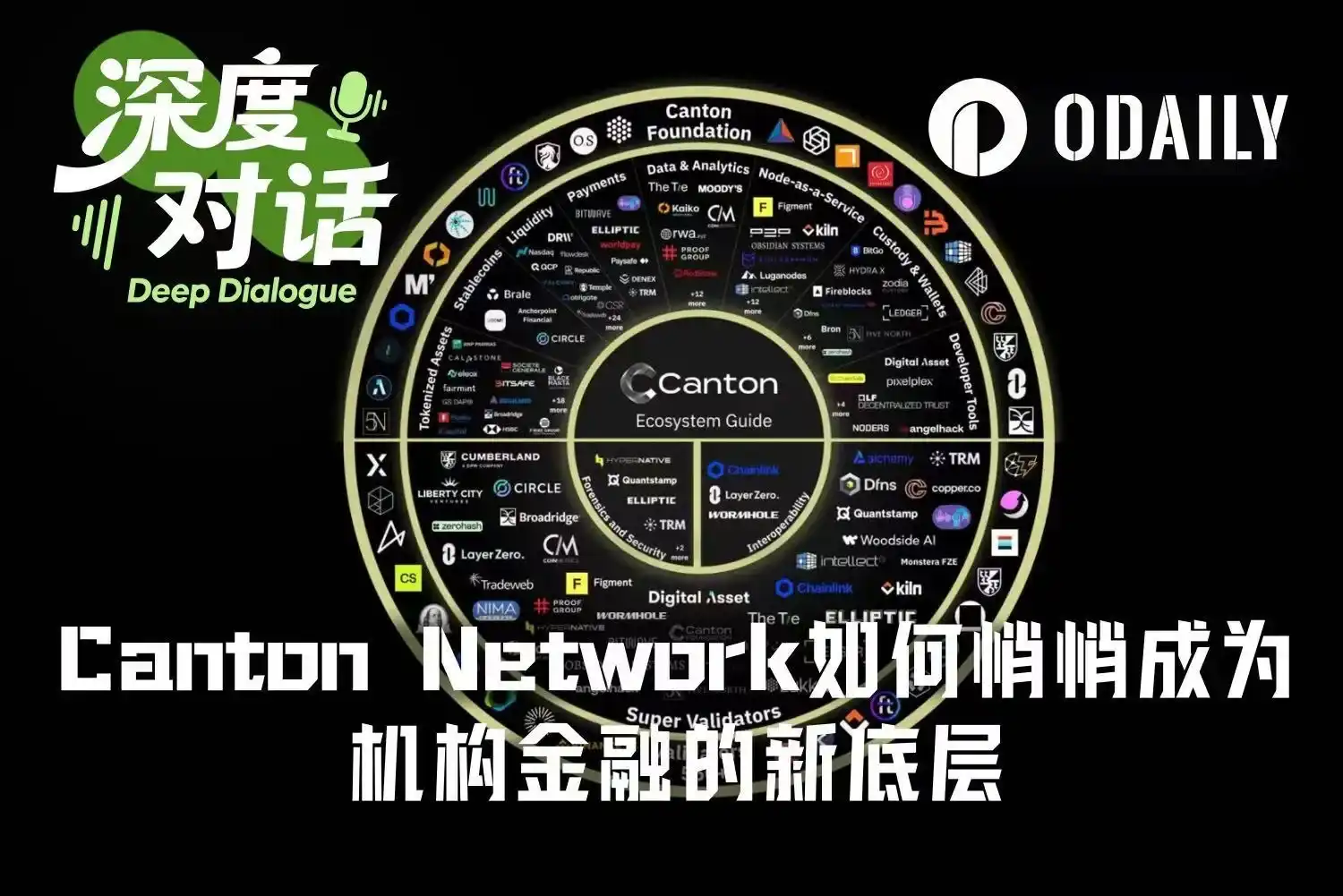
Putting Markets On-Chain: Canton Network Quietly Becomes the New Backbone of Institutional Finance

**Title: Letting the Market Itself Go On-Chain: Canton Network Quietly Becomes the New Backbone for Institutional Finance** **Summary:** The Canton Network, a blockchain platform designed for institutional finance, is gaining significant traction. A key sign of its maturity was Visa's recent entry as a super-validator, a proposal approved in just three days—highlighting prior, extensive collaboration between traditional finance and crypto. Unlike public chains like Ethereum that prioritize transparency and asset onboarding, Canton focuses on enabling confidential, compliant business operations for regulated institutions. Its core design features built-in **data visibility control**, meaning transaction details are only shared between direct counterparties. This privacy is fundamental, allowing competing institutions (like banks Goldman Sachs, JPMorgan, and BNP Paribas, all validators) to interact on the same network without exposing sensitive positions or strategies. Developed by Wall Street veterans at Digital Asset, Canton has taken a slow, deliberate approach to onboard real financial activity. It now handles over **$9 trillion monthly** in transaction volume, primarily from real-world institutional use cases like **tokenized repo agreements**, Treasury settlements, and collateral mobility. Major live applications include **JPM Coin** for institutional payments and **DTCC's tokenized U.S. Treasuries** project. Canton's native token, **CC**, is framed as a "network utility asset" with zero pre-mine or VC allocations. Its value is intended to be driven by the volume of real financial activity on the network. Looking ahead, Canton aims to become the invisible foundational layer for global finance—enabling atomic settlement (where payment and asset delivery occur simultaneously), 24/7 capital flows, and the native issuance and settlement of various asset classes, from corporate bonds to potentially equities. The main challenges are no longer technical but involve navigating fragmented global regulations and integrating with legacy financial systems.

marsbit1 h fa

Putting Markets On-Chain: Canton Network Quietly Becomes the New Backbone of Institutional Finance

marsbit1 h fa

Trading

Spot
Futures
活动图片