GMO Legendary Prophet Shorts Again: AI Can't Save U.S. Stocks, Current Market as Dangerous as 2000

marsbitPubblicato 2026-04-21Pubblicato ultima volta 2026-04-21

Introduzione

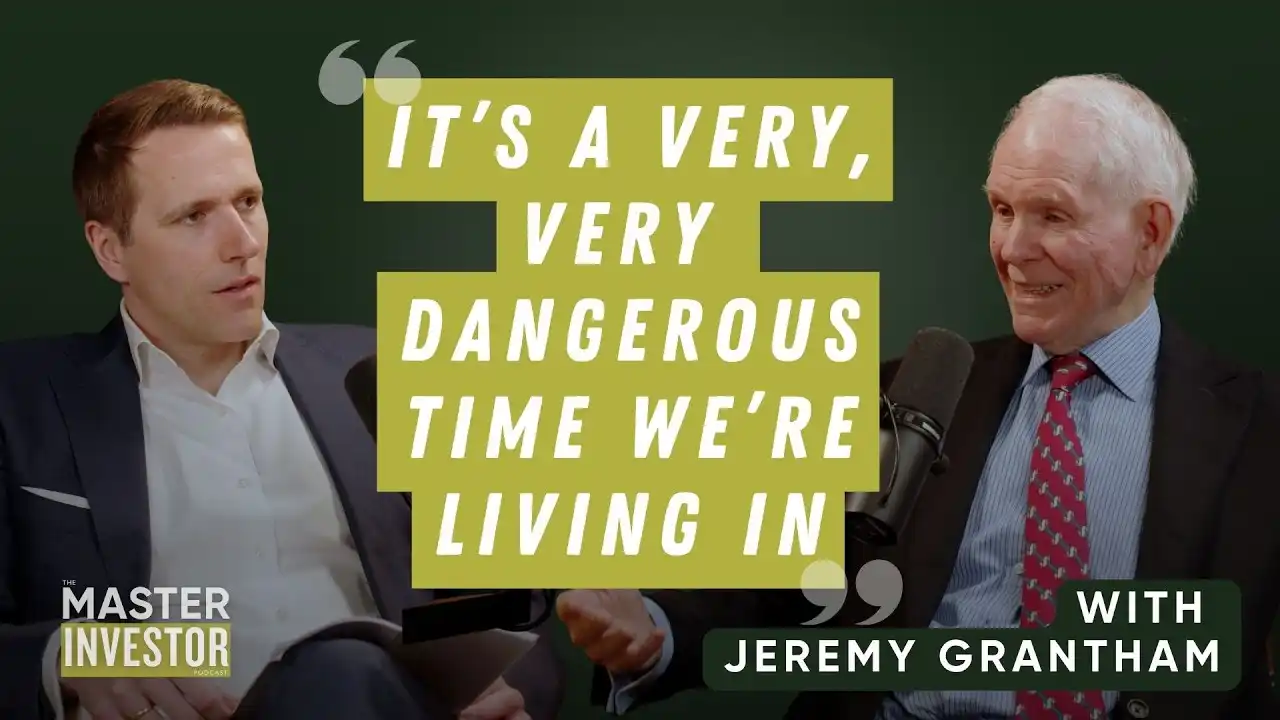
Jeremy Grantham, co-founder of GMO and renowned for identifying major market bubbles, warns that the current U.S. stock market resembles the dangerous conditions of 2000, arguing that AI hype cannot prevent a significant downturn. He emphasizes that high valuations historically precede difficult periods, not higher growth, and cautions that despite AI-driven enthusiasm, underlying economic challenges—including geopolitical instability, climate costs, and demographic decline—are being ignored. Grantham notes that while non-U.S. equities appear reasonably priced, the U.S. market is excessively valued. He compares today’s AI narrative to the internet boom of 1999, stressing that expensive markets eventually correct. His approach relies on value investing principles, avoiding overpriced assets and focusing on long-term fundamentals rather than market timing. Grantham also highlights structural market inefficiencies, such as the persistent outperformance of high-quality stocks, and criticizes the financial industry for promoting optimism despite clear risks.

Source:"The Master Investor Podcast with Wilfred Frost" Podcast

Compiled by: Felix, PANews

Jeremy Grantham founded and led the Boston investment firm Grantham Mayo Van Otterloo (GMO) for decades. At the peak of his career, the assets under management reached $150 billion. In his nearly 60-year investment career, Jeremy accurately predicted almost all major stock market bubbles of the past 60 years, along with the subsequent rebounds, achieving long-term excess returns.

Recently, Jeremy was a guest on the "The Master Investor Podcast with Wilfred Frost" podcast. He focused on the current market environment, assessed the impact of the Iran war on oil prices, AI, meme stocks, and the "Magnificent Seven," and compared it to the boom periods of the 1970s, 1999, 2007, and the post-pandemic era. PANews has compiled the highlights of this conversation.

Host: Jeremy, welcome back to the podcast, great to see you in person.

Jeremy: Pleasure to be here. However, I must object to the word "prediction" you mentioned earlier. I am not predicting bubbles; I am merely pointing them out when they arrive. If I could foresee their arrival out of thin air, that would be convenient, but all I can do is wait for them to appear—and they always seem obvious. Then I say, "Look, it's there."

Host: Your book published this January, "The Making of a Permabear," mentions that you are also a Yorkshireman. Every qualified Yorkshireman is born knowing that "cheap is always better than expensive," which gave you a keen eye for finding good value. You also talked about your "butterfly effect" thinking pattern, where ideas and thoughts flit around like butterflies in a garden, seemingly lacking focus. Can you explain why this was important for you to become an investment thinker?

Jeremy: This might be a form of self-justification. I find it hard to stay on one specific topic for too long; I always tend to shift to another, which often annoys my colleagues. But the key is that I am quite persistent. Anyone who has observed gardening will see that this is exactly how butterflies work: you think they've flown away, but they might return to the same flower repeatedly over a day or two. I find brainstorming should work the same way. If you fixate too hard on one topic, you just make your brain rigid, like banging your head against a wall. The best method is to move around and then return to the original topic; then your brain is more open, and perhaps an epiphany will occur.

Host: You also wrote that working very hard can actually hinder thinking because you are too busy receiving new data. You rarely have time to truly think. Do today's investment professionals spend too much time on Excel spreadsheets or AI modeling? What do you mean by "truly thinking"?

Jeremy: Truly thinking is not about typing numbers into a spreadsheet. Truly thinking is taking a walk through Boston Common, or while showering, letting your brain operate at a comfortable walking pace, thinking about where we are now? What's happening? See what it concludes. In the past, when I arrived at the office, I usually already had two or three ideas (though most of my colleagues thought these ideas were stupid). I was lucky to have a colleague named Chris Darnell, the only person in the world who could convince me in 20 seconds that an idea was foolish. You really need such a combination: someone who generates a lot of absurd or superficial ideas, plus an "idea crusher" who can instantly spot fatal flaws and keep you moving forward. We would review 10 to 20 ideas to find one worth further research.

Host: On this point, you said in your book: "Getting the big picture right is everything. One or two good ideas a year is enough." Is this what gave you your legendary investment status?

Jeremy: Yes, there were many years when I didn't even have one good idea. But if your thinking is high-level enough, like "Will small-cap stocks win this year?", you don't need to be right too many times. Just knowing that small-cap stocks are strengthening is enough to support outperforming the market for three or four years. As long as you get the big direction right, it's actually not difficult.

Host: From a micro perspective, if I'm not mistaken, the real winning formula for you is basically the dividend discount model, plus some adjustments you make. This is the core of your focus, right?

Jeremy: Yes, the dividend discount model is just a tool we use to measure the quality of other ideas. It gives the ratio of relative fair value for different stocks, used to test if our intuition is correct. We have a dividend discount ratio for each stock. What is the ratio to fair value? If it's 0.79, it's undervalued by 21%. If it's 1.12, it's overvalued by 12%. Then we add them up and find that the sum of all small-cap stocks is very cheap, and vice versa. It provides us with a measuring tool to test if our intuition is correct. Very convenient.

Host: Here you obviously weigh value more heavily than other factors like growth and momentum. I imagine you also appreciate the importance of those other factors.

Jeremy: No, actually I have a secret respect for anything that works, no matter how absurd. Of course, momentum is a fairly simple inefficiency. It really shouldn't work. But it has been very effective throughout my entire investment career, and for a long time before that. And it still works in many forms today. It just shows that an object in motion tends to stay in motion for a while. Market efficiency scholars like the author of "A Random Walk Down Wall Street" said that price alone provides no information. That is completely wrong. I think the biggest inefficiency has always been the pricing of "quality". High quality means less debt, higher returns, stronger stability, and a smaller chance of bankruptcy. No matter how you torture the data, you cannot convince anyone that "quality" is a risk factor.

From an academic perspective, lower risk should mean lower returns; but in fact, quality stocks always outperform the market. Due to lower risk, they should underperform by about one percentage point per year, right? AAA-rated bonds yield about one percentage point less per year than B-rated bonds. Based on the same low-risk logic, AAA-rated stocks should too. But they don't; they outperform the market by about 0.5% per year. Therefore, due to market inefficiency, there is about 1.5% of free excess return per year. You get the privilege return of holding these high-quality large-cap stocks, and academia hasn't discovered and made a big deal about this for decades.

Host: Has the market become more efficient over time? Has your job become harder?

Jeremy: As my career has progressed, I tend to focus on increasingly grand problems, from individual stocks to sectors to the entire market. To talk about those absurd inefficiencies and bubbles, like those meme stocks that soar 6 times in a year, the market might be a bit worse now than ever before.

Host: Regarding your investment method, you once mentioned: "We could never make big money without first suffering painful losses. You need the confidence to hold positions when they go against you and to add weight when they become more attractive. It is value that gives you this confidence." This must be very difficult.

Jeremy: It is indeed very difficult; you must believe in the data. If you want to capture those once-in-a-century super bubbles, you often have to go through an ordinary bubble that appears every 15 years first. If you want to make big money, you must watch the market go from "overpriced" to "extremely overpriced" to "oh my god, ridiculously overpriced." Only at that turning point can you make big money. But before that, you will endure immense pain. For example, in 2000, the market fell 50%, but our portfolio achieved substantial gains over three years.

Host: Many people say it's impossible to time the market. I think that's true at the individual stock level, but I admire the bold positions you take.

Jeremy: No, I don't think this is timing the market. I think this is just exiting obviously overpriced stocks and always focusing on those that are cheap. Every time you buy a small-cap stock, someone might say, "Oh, you're timing that stock. Is that it? Or is it that if you hold cheaper stocks, you will always win in the long run?" So, don't hold your ground in a severely overpriced stock market unless you eventually want to take a heavy punch. Of course, others will outperform you during this period, but in the long run, you will win.

Host: In the first 9 years after founding GMO, you achieved an excess return of 8% per year, which is amazing performance.

Jeremy: Compared to Buffett achieving 9% excess returns over a longer period, our results only make one realize how incredible Buffett is. Buffett made making money a simple and fun goal. And Jack Bogle (father of index funds) got the medal for "doing the most useful thing in investing" for saving tens of billions of dollars for millions of investors.

Host: Compare the historical bubbles. In 1999, clients complained to you about underperformance. At that time, you said "value is off the charts, TIPS yields are 4%, real estate investment trusts (REITs) are trading at a discount." Can you apply all this to today?

Jeremy: No. The 2000 one was great because it gave you many safe havens. Real estate investment trusts (REITs) were selling for even less than construction costs. Right at the market peak, the S&P 500's yield dropped to 1.6%, a low level not even seen in 1929. That was the situation then. Small-cap stocks were cheap then.

Then you look at other markets, like the 2007 real estate bubble, there was almost nowhere to hide. That was a risk bubble. All risky assets were overpriced. In 2008, there were no obviously cheap assets. The current market is somewhere in between; it's more like 2000. Half the time during bubbles you have excellent alternatives, the other half you don't. For this time, I remember saying on a podcast early last year that we have no bias against non-US stocks. We won't touch the US stock market, but the rest of the world: emerging markets, Europe, Australia, Canada, their stock market valuations are extremely reasonable.

Host: In 1999, many people talked about the productivity and GDP boost from the internet, just like everyone talks about AI today. Why is this bullish logic foolish?

Jeremy: There is no necessary relationship between high market prices in the past and future growth. In every bull market, people say the future must be bright, otherwise market prices wouldn't be so high, but the opposite is true. If you ask what the three or four worst periods in history were, they are not randomly distributed; they came right after huge bubbles. The Great Depression came right after the famous 1929 peak. Japan's "Lost Decade," "Lost Two Decades" came right after the astonishing 65 P/E ratio in 1989. There is no historical example where a high P/E ratio meant higher profits, faster growth, or higher productivity. What they truly预示 (portend) is the arrival of difficult times. If there ever was a possibility of this happening, it is now.

The current situation is that we are doing everything wrong. We are doing our utmost to mess up the beautiful growth of post-war international trade with tariffs and trade wars. We are doing our utmost to破坏 (undermine) geopolitical stability,破坏 (undermine) our relations with countries like Russia and China. I'm sure these relations have been worse at some times and with one side, but getting worse with both sides simultaneously is distinctly unsettling. Billion-dollar losses from floods, droughts, and fires are so frequent that they might shave 0.5% off global GDP annually, and the situation keeps worsening; then population begins to decline, in some countries like Japan, South Korea, China, the population is falling like a stone, and this trend will remain visible. So, the world will have to get used to slowing labor force growth.

Host: With the outbreak of the Iran conflict and its obvious impact on oil prices and inflation, does it remind you of some challenges from the 1970s?

Jeremy: Yes, as a species, humans have a tendency to wishful thinking. We are very good at wishful thinking. If you study the stock market now and in the past, you will conclude that given half a chance, we will interpret the future generously and say how good things will be. If economic data is bad, we say "Great, this gives the Fed an excuse to cut rates," and the market rises. If economic growth is good, we say "Great, profits will be high," and the market rises again. So the market is always looking for optimistic excuses and overinterprets good news.

We tend to extrapolate linearly and persistently. For example, in the summer of 1929, the economic situation was good; if you extrapolated persistently, people would expect an outrageously high P/E ratio. Then in 2000, profit margins reached historical highs, the P/E ratio was 35, and stock prices even rose to four times book value. These phenomena are not complicated, but most people failed to notice them. Why didn't these warnings make front-page news? Because it's not a business strategy. Any large company in the financial领域 (sector) must always tell you everything is fine, then lead everyone off the cliff and make as much money as possible cleaning up the mess. Goldman Sachs, JPMorgan Chase, Morgan Stanley—these companies would never tell you to get out of the market because market pricing is terrifyingly high. And they can all see that the pricing is terrifyingly high. So don't think the market is priced reasonably just because no professionals are telling you to sell; that is not the actual situation.

I often use an analogy: it's like dropping a bag of feathers from a high-rise in Miami on a hurricane day. In the short term, you absolutely don't know where those feathers will be blown. But you can be absolutely sure of one thing: eventually every single feather will fall to the ground. For me, "value" is equivalent to gravity. No matter how high you fly now, sooner or later, being expensive will make you pay the price.

Host: You wrote in your book about the strangest condition for a bubble burst: "When the previous market leaders fall sharply, but the broader market led by blue chips continues to rise." This happened in 1929, 1972, and 2000. Considering the MAG 7 (Magnificent Seven tech giants) have lost upward momentum in the past few months, but the rest of the market remains firm, would you add late 2025, early 2026 to that list?

Jeremy: Perhaps I should add it. Although I haven't added it before, I think I've been busy with the book tour. But I would also add 2021 to that list. Many speculative and unprofitable stocks started falling after their strong performance post the COVID-19 low, while the broader market kept rising, leading to a 25% drop in the S&P 500 in 2022 and a 40% drop in MAG 7 stocks. But then ChatGPT appeared. Without the AI investment frenzy, we might have already fallen into a mild or moderate recession, and the broader market might have fallen 40% or more. AI was like discovering railroads in 1930, forcibly扼杀 (strangling) a real bear market.

Host: In March 2009, you published the famous "Reinvesting in Fear." How did you judge when to enter the market when there was extreme panic?

Jeremy: That's because I was familiar with the panic of 1974, the fear that put the market in "ultimate paralysis." In 2009, I advocated making a plan, even a bad plan is better than paralysis. You must understand: the market's turning point does not appear when people see "light at the end of the tunnel," but when "everything looks pitch black, but just a tiny bit less black than the day before." Although it didn't reach the absolute low valuation of 1974, according to our dividend discount model, it was very cheap, destined to provide丰厚 (rich) returns far exceeding historical averages over the next 7 years (actual return reached 12%).

Related reading:Dialogue with Bitwise Advisor: From K-Shaped Economy to AI Stealing Jobs, How Can Bitcoin Save Young People?


Domande pertinenti

QAccording to Jeremy Grantham, why is the current market environment similar to the year 2000?

AHe states that the current market is similar to 2000 because, like then, there are excellent alternative investment opportunities outside of the overpriced US market, such as in emerging markets, Europe, Australia, and Canada, which have extremely reasonable valuations.

QWhat is Jeremy Grantham's view on the role of AI in the current market rally?

AGrantham believes that the AI investment boom has artificially propped up the market. He suggests that without the AI hype, the market might have already fallen into a moderate or even severe recession, with the S&P 500 potentially dropping 40% or more.

QHow does Jeremy Grantham describe the process of 'real thinking' in investing?

AHe describes 'real thinking' as not inputting numbers into a spreadsheet, but rather letting the mind work at a comfortable walking pace, such as by taking a walk through a park or during a shower, to contemplate the current situation and see what insights emerge.

QWhat does Jeremy Grantham identify as the greatest market inefficiency throughout his career?

AHe identifies the mispricing of 'quality' as the greatest inefficiency. High-quality stocks, which are less risky with lower debt and higher returns, consistently outperform the market, contrary to academic theory which suggests lower risk should yield lower returns.

QAccording to Grantham, when is the best time to enter the market during a crash?

AThe best time to enter is not when people see 'light at the end of the tunnel,' but at the moment when 'everything looks pitch black but is just a tiny bit less black than the day before.' This is the turning point when fear is at its peak and valuations are very cheap.

Letture associate

Trading

Spot
Futures

Articoli Popolari

Cosa è GROK AI

Grok AI: Rivoluzionare la Tecnologia Conversazionale nell'Era Web3 Introduzione Nel panorama in rapida evoluzione dell'intelligenza artificiale, Grok AI si distingue come un progetto notevole che collega i domini della tecnologia avanzata e dell'interazione con l'utente. Sviluppato da xAI, un'azienda guidata dal rinomato imprenditore Elon Musk, Grok AI cerca di ridefinire il modo in cui interagiamo con l'intelligenza artificiale. Mentre il movimento Web3 continua a prosperare, Grok AI mira a sfruttare il potere dell'IA conversazionale per rispondere a query complesse, offrendo agli utenti un'esperienza che è non solo informativa ma anche divertente. Cos'è Grok AI? Grok AI è un sofisticato chatbot di intelligenza artificiale conversazionale progettato per interagire dinamicamente con gli utenti. A differenza di molti sistemi di intelligenza artificiale tradizionali, Grok AI abbraccia un'ampia gamma di domande, comprese quelle tipicamente considerate inappropriate o al di fuori delle risposte standard. Gli obiettivi principali del progetto includono: Ragionamento Affidabile: Grok AI enfatizza il ragionamento di buon senso per fornire risposte logiche basate sulla comprensione contestuale. Supervisione Scalabile: L'integrazione dell'assistenza degli strumenti garantisce che le interazioni degli utenti siano sia monitorate che ottimizzate per la qualità. Verifica Formale: La sicurezza è fondamentale; Grok AI incorpora metodi di verifica formale per migliorare l'affidabilità delle sue uscite. Comprensione del Lungo Contesto: Il modello di IA eccelle nel trattenere e richiamare una vasta storia di conversazione, facilitando discussioni significative e consapevoli del contesto. Robustezza Adversariale: Concentrandosi sul miglioramento delle sue difese contro input manipolati o malevoli, Grok AI mira a mantenere l'integrità delle interazioni degli utenti. In sostanza, Grok AI non è solo un dispositivo di recupero informazioni; è un partner conversazionale immersivo che incoraggia un dialogo dinamico. Creatore di Grok AI Il cervello dietro Grok AI non è altri che Elon Musk, un individuo sinonimo di innovazione in vari campi, tra cui automotive, viaggi spaziali e tecnologia. Sotto l'egida di xAI, un'azienda focalizzata sull'avanzamento della tecnologia AI in modi benefici, la visione di Musk mira a rimodellare la comprensione delle interazioni con l'IA. La leadership e l'etica fondamentale sono profondamente influenzate dall'impegno di Musk nel superare i confini tecnologici. Investitori di Grok AI Sebbene i dettagli specifici riguardanti gli investitori che sostengono Grok AI rimangano limitati, è pubblicamente riconosciuto che xAI, l'incubatore del progetto, è fondato e supportato principalmente dallo stesso Elon Musk. Le precedenti imprese e partecipazioni di Musk forniscono un robusto sostegno, rafforzando ulteriormente la credibilità e il potenziale di crescita di Grok AI. Tuttavia, al momento, le informazioni riguardanti ulteriori fondazioni di investimento o organizzazioni che supportano Grok AI non sono facilmente accessibili, segnando un'area per potenziali esplorazioni future. Come Funziona Grok AI? Le meccaniche operative di Grok AI sono innovative quanto il suo framework concettuale. Il progetto integra diverse tecnologie all'avanguardia che facilitano le sue funzionalità uniche: Infrastruttura Robusta: Grok AI è costruito utilizzando Kubernetes per l'orchestrazione dei container, Rust per prestazioni e sicurezza, e JAX per il calcolo numerico ad alte prestazioni. Questo trio garantisce che il chatbot operi in modo efficiente, si scaldi efficacemente e serva gli utenti prontamente. Accesso alla Conoscenza in Tempo Reale: Una delle caratteristiche distintive di Grok AI è la sua capacità di attingere a dati in tempo reale attraverso la piattaforma X—precedentemente nota come Twitter. Questa capacità consente all'IA di accedere alle informazioni più recenti, permettendole di fornire risposte e raccomandazioni tempestive che altri modelli di IA potrebbero perdere. Due Modalità di Interazione: Grok AI offre agli utenti la scelta tra “Modalità Divertente” e “Modalità Normale”. La Modalità Divertente consente uno stile di interazione più giocoso e umoristico, mentre la Modalità Normale si concentra sulla fornitura di risposte precise e accurate. Questa versatilità garantisce un'esperienza su misura che soddisfa varie preferenze degli utenti. In sostanza, Grok AI sposa prestazioni con coinvolgimento, creando un'esperienza che è sia arricchente che divertente. Cronologia di Grok AI Il viaggio di Grok AI è segnato da traguardi fondamentali che riflettono le sue fasi di sviluppo e distribuzione: Sviluppo Iniziale: La fase fondamentale di Grok AI si è svolta in circa due mesi, durante i quali sono stati condotti l'addestramento iniziale e il perfezionamento del modello. Rilascio Beta di Grok-2: In un significativo avanzamento, è stata annunciata la beta di Grok-2. Questo rilascio ha introdotto due versioni del chatbot—Grok-2 e Grok-2 mini—ognuna dotata delle capacità per chattare, programmare e ragionare. Accesso Pubblico: Dopo lo sviluppo beta, Grok AI è diventato disponibile per gli utenti della piattaforma X. Coloro che hanno account verificati tramite un numero di telefono e attivi per almeno sette giorni possono accedere a una versione limitata, rendendo la tecnologia disponibile a un pubblico più ampio. Questa cronologia racchiude la crescita sistematica di Grok AI dall'inizio all'impegno pubblico, enfatizzando il suo impegno per il miglioramento continuo e l'interazione con gli utenti. Caratteristiche Chiave di Grok AI Grok AI comprende diverse caratteristiche chiave che contribuiscono alla sua identità innovativa: Integrazione della Conoscenza in Tempo Reale: L'accesso a informazioni attuali e rilevanti differenzia Grok AI da molti modelli statici, consentendo un'esperienza utente coinvolgente e accurata. Stili di Interazione Versatili: Offrendo modalità di interazione distinte, Grok AI soddisfa varie preferenze degli utenti, invitando alla creatività e alla personalizzazione nella conversazione con l'IA. Avanzata Struttura Tecnologica: L'utilizzo di Kubernetes, Rust e JAX fornisce al progetto un solido framework per garantire affidabilità e prestazioni ottimali. Considerazione del Discorso Etico: L'inclusione di una funzione di generazione di immagini mette in mostra lo spirito innovativo del progetto. Tuttavia, solleva anche considerazioni etiche riguardanti il copyright e la rappresentazione rispettosa di figure riconoscibili—una discussione in corso all'interno della comunità AI. Conclusione Come entità pionieristica nel campo dell'IA conversazionale, Grok AI incarna il potenziale per esperienze utente trasformative nell'era digitale. Sviluppato da xAI e guidato dall'approccio visionario di Elon Musk, Grok AI integra conoscenze in tempo reale con capacità di interazione avanzate. Si sforza di spingere i confini di ciò che l'intelligenza artificiale può realizzare, mantenendo un focus su considerazioni etiche e sicurezza degli utenti. Grok AI non solo incarna il progresso tecnologico, ma rappresenta anche un nuovo paradigma conversazionale nel panorama Web3, promettendo di coinvolgere gli utenti con sia conoscenze esperte che interazioni giocose. Man mano che il progetto continua a evolversi, si erge come testimonianza di ciò che l'incrocio tra tecnologia, creatività e interazione simile a quella umana può realizzare.

352 Totale visualizzazioniPubblicato il 2024.12.26Aggiornato il 2024.12.26

Cosa è GROK AI

Cosa è ERC AI

Euruka Tech: Una Panoramica di $erc ai e delle sue Ambizioni in Web3 Introduzione Nel panorama in rapida evoluzione della tecnologia blockchain e delle applicazioni decentralizzate, nuovi progetti emergono frequentemente, ciascuno con obiettivi e metodologie uniche. Uno di questi progetti è Euruka Tech, che opera nel vasto dominio delle criptovalute e del Web3. L'obiettivo principale di Euruka Tech, in particolare del suo token $erc ai, è presentare soluzioni innovative progettate per sfruttare le crescenti capacità della tecnologia decentralizzata. Questo articolo si propone di fornire una panoramica completa di Euruka Tech, un'esplorazione dei suoi obiettivi, della funzionalità, dell'identità del suo creatore, dei potenziali investitori e della sua importanza nel contesto più ampio del Web3. Cos'è Euruka Tech, $erc ai? Euruka Tech è caratterizzato come un progetto che sfrutta gli strumenti e le funzionalità offerte dall'ambiente Web3, concentrandosi sull'integrazione dell'intelligenza artificiale nelle sue operazioni. Sebbene i dettagli specifici sul framework del progetto siano piuttosto sfuggenti, è progettato per migliorare l'engagement degli utenti e automatizzare i processi nello spazio crypto. Il progetto mira a creare un ecosistema decentralizzato che non solo faciliti le transazioni, ma incorpori anche funzionalità predittive attraverso l'intelligenza artificiale, da cui il nome del suo token, $erc ai. L'obiettivo è fornire una piattaforma intuitiva che faciliti interazioni più intelligenti e un'elaborazione delle transazioni più efficiente all'interno della crescente sfera del Web3. Chi è il Creatore di Euruka Tech, $erc ai? Attualmente, le informazioni riguardanti il creatore o il team fondatore di Euruka Tech rimangono non specificate e piuttosto opache. Questa assenza di dati solleva preoccupazioni, poiché la conoscenza del background del team è spesso essenziale per stabilire credibilità nel settore blockchain. Pertanto, abbiamo classificato queste informazioni come sconosciute fino a quando dettagli concreti non saranno resi disponibili nel dominio pubblico. Chi sono gli Investitori di Euruka Tech, $erc ai? Allo stesso modo, l'identificazione degli investitori o delle organizzazioni di supporto per il progetto Euruka Tech non è prontamente fornita attraverso la ricerca disponibile. Un aspetto cruciale per i potenziali stakeholder o utenti che considerano di impegnarsi con Euruka Tech è la garanzia che deriva da partnership finanziarie consolidate o dal supporto di società di investimento rispettabili. Senza divulgazioni sulle affiliazioni di investimento, è difficile trarre conclusioni complete sulla sicurezza finanziaria o sulla longevità del progetto. In linea con le informazioni trovate, anche questa sezione rimane allo stato di sconosciuto. Come funziona Euruka Tech, $erc ai? Nonostante la mancanza di specifiche tecniche dettagliate per Euruka Tech, è essenziale considerare le sue ambizioni innovative. Il progetto cerca di sfruttare la potenza computazionale dell'intelligenza artificiale per automatizzare e migliorare l'esperienza dell'utente all'interno dell'ambiente delle criptovalute. Integrando l'IA con la tecnologia blockchain, Euruka Tech mira a fornire funzionalità come operazioni automatizzate, valutazioni del rischio e interfacce utente personalizzate. L'essenza innovativa di Euruka Tech risiede nel suo obiettivo di creare una connessione fluida tra gli utenti e le vaste possibilità presentate dalle reti decentralizzate. Attraverso l'utilizzo di algoritmi di apprendimento automatico e IA, mira a ridurre le sfide degli utenti alle prime armi e semplificare le esperienze transazionali all'interno del framework Web3. Questa simbiosi tra IA e blockchain sottolinea l'importanza del token $erc ai, fungendo da ponte tra le interfacce utente tradizionali e le avanzate capacità delle tecnologie decentralizzate. Cronologia di Euruka Tech, $erc ai Sfortunatamente, a causa delle limitate informazioni disponibili riguardo a Euruka Tech, non siamo in grado di presentare una cronologia dettagliata dei principali sviluppi o traguardi nel percorso del progetto. Questa cronologia, tipicamente preziosa per tracciare l'evoluzione di un progetto e comprendere la sua traiettoria di crescita, non è attualmente disponibile. Man mano che le informazioni su eventi notevoli, partnership o aggiunte funzionali diventano evidenti, gli aggiornamenti miglioreranno sicuramente la visibilità di Euruka Tech nella sfera crypto. Chiarimento su Altri Progetti “Eureka” È importante sottolineare che più progetti e aziende condividono una nomenclatura simile con “Eureka.” La ricerca ha identificato iniziative come un agente IA della NVIDIA Research, che si concentra sull'insegnamento ai robot di compiti complessi utilizzando metodi generativi, così come Eureka Labs ed Eureka AI, che migliorano l'esperienza utente nell'istruzione e nell'analisi del servizio clienti, rispettivamente. Tuttavia, questi progetti sono distinti da Euruka Tech e non dovrebbero essere confusi con i suoi obiettivi o funzionalità. Conclusione Euruka Tech, insieme al suo token $erc ai, rappresenta un attore promettente ma attualmente oscuro nel panorama del Web3. Sebbene i dettagli sul suo creatore e sugli investitori rimangano non divulgati, l'ambizione centrale di combinare intelligenza artificiale e tecnologia blockchain si erge come un punto focale di interesse. Gli approcci unici del progetto nel promuovere l'engagement degli utenti attraverso l'automazione avanzata potrebbero distinguerlo mentre l'ecosistema Web3 progredisce. Con l'evoluzione continua del mercato crypto, gli stakeholder dovrebbero tenere d'occhio gli sviluppi riguardanti Euruka Tech, poiché lo sviluppo di innovazioni documentate, partnership o una roadmap definita potrebbe presentare opportunità significative nel prossimo futuro. Così com'è, attendiamo ulteriori approfondimenti sostanziali che potrebbero svelare il potenziale di Euruka Tech e la sua posizione nel competitivo panorama crypto.

362 Totale visualizzazioniPubblicato il 2025.01.02Aggiornato il 2025.01.02

Cosa è ERC AI

Cosa è DUOLINGO AI

DUOLINGO AI: Integrare l'apprendimento delle lingue con Web3 e innovazione AI In un'era in cui la tecnologia rimodella l'istruzione, l'integrazione dell'intelligenza artificiale (AI) e delle reti blockchain annuncia una nuova frontiera per l'apprendimento delle lingue. Entra in scena DUOLINGO AI e la sua criptovaluta associata, $DUOLINGO AI. Questo progetto aspira a fondere la potenza educativa delle principali piattaforme di apprendimento delle lingue con i benefici della tecnologia decentralizzata Web3. Questo articolo esplora gli aspetti chiave di DUOLINGO AI, esaminando i suoi obiettivi, il framework tecnologico, lo sviluppo storico e il potenziale futuro, mantenendo chiarezza tra la risorsa educativa originale e questa iniziativa indipendente di criptovaluta. Panoramica di DUOLINGO AI Alla sua base, DUOLINGO AI cerca di stabilire un ambiente decentralizzato in cui gli studenti possono guadagnare ricompense crittografiche per il raggiungimento di traguardi educativi nella competenza linguistica. Applicando smart contracts, il progetto mira ad automatizzare i processi di verifica delle competenze e le allocazioni di token, aderendo ai principi di Web3 che enfatizzano la trasparenza e la proprietà da parte degli utenti. Il modello si discosta dagli approcci tradizionali all'acquisizione linguistica, facendo forte affidamento su una struttura di governance guidata dalla comunità, che consente ai detentori di token di suggerire miglioramenti ai contenuti dei corsi e alle distribuzioni delle ricompense. Alcuni degli obiettivi notevoli di DUOLINGO AI includono: Apprendimento Gamificato: Il progetto integra traguardi blockchain e token non fungibili (NFT) per rappresentare i livelli di competenza linguistica, promuovendo la motivazione attraverso ricompense digitali coinvolgenti. Creazione di Contenuti Decentralizzati: Apre opportunità per educatori e appassionati di lingue di contribuire con i propri corsi, facilitando un modello di condivisione dei ricavi che beneficia tutti i collaboratori. Personalizzazione Guidata dall'AI: Utilizzando modelli avanzati di machine learning, DUOLINGO AI personalizza le lezioni per adattarsi ai progressi individuali, simile alle funzionalità adattive presenti nelle piattaforme consolidate. Creatori del Progetto e Governance A partire da aprile 2025, il team dietro $DUOLINGO AI rimane pseudonimo, una pratica comune nel panorama decentralizzato delle criptovalute. Questa anonimato è inteso a promuovere la crescita collettiva e il coinvolgimento degli stakeholder piuttosto che concentrarsi su sviluppatori individuali. Lo smart contract distribuito sulla blockchain di Solana annota l'indirizzo del wallet dello sviluppatore, che segna l'impegno verso la trasparenza riguardo alle transazioni, nonostante l'identità dei creatori sia sconosciuta. Secondo la sua roadmap, DUOLINGO AI mira a evolversi in un'Organizzazione Autonoma Decentralizzata (DAO). Questa struttura di governance consente ai detentori di token di votare su questioni critiche come l'implementazione di funzionalità e le allocazioni del tesoro. Questo modello si allinea con l'etica dell'empowerment della comunità presente in varie applicazioni decentralizzate, enfatizzando l'importanza del processo decisionale collettivo. Investitori e Partnership Strategiche Attualmente, non ci sono investitori istituzionali o capitalisti di rischio identificabili pubblicamente legati a $DUOLINGO AI. Invece, la liquidità del progetto proviene principalmente da scambi decentralizzati (DEX), segnando un netto contrasto con le strategie di finanziamento delle aziende tradizionali di tecnologia educativa. Questo modello di base indica un approccio guidato dalla comunità, riflettendo l'impegno del progetto verso la decentralizzazione. Nel suo whitepaper, DUOLINGO AI menziona la formazione di collaborazioni con “piattaforme educative blockchain” non specificate, mirate ad arricchire la sua offerta di corsi. Sebbene partnership specifiche non siano ancora state divulgate, questi sforzi collaborativi suggeriscono una strategia per mescolare innovazione blockchain con iniziative educative, ampliando l'accesso e il coinvolgimento degli utenti attraverso diverse vie di apprendimento. Architettura Tecnologica Integrazione AI DUOLINGO AI incorpora due componenti principali guidate dall'AI per migliorare la sua offerta educativa: Motore di Apprendimento Adattivo: Questo sofisticato motore apprende dalle interazioni degli utenti, simile ai modelli proprietari delle principali piattaforme educative. Regola dinamicamente la difficoltà delle lezioni per affrontare le sfide specifiche degli studenti, rinforzando le aree deboli attraverso esercizi mirati. Agenti Conversazionali: Utilizzando chatbot alimentati da GPT-4, DUOLINGO AI offre una piattaforma per gli utenti per impegnarsi in conversazioni simulate, promuovendo un'esperienza di apprendimento linguistico più interattiva e pratica. Infrastruttura Blockchain Costruito sulla blockchain di Solana, $DUOLINGO AI utilizza un framework tecnologico completo che include: Smart Contracts per la Verifica delle Competenze: Questa funzionalità assegna automaticamente token agli utenti che superano con successo i test di competenza, rinforzando la struttura di incentivi per risultati di apprendimento genuini. Badge NFT: Questi token digitali significano vari traguardi che gli studenti raggiungono, come completare una sezione del loro corso o padroneggiare competenze specifiche, consentendo loro di scambiare o mostrare digitalmente i loro successi. Governance DAO: I membri della comunità dotati di token possono partecipare alla governance votando su proposte chiave, facilitando una cultura partecipativa che incoraggia l'innovazione nell'offerta di corsi e nelle funzionalità della piattaforma. Cronologia Storica 2022–2023: Concettualizzazione I lavori per DUOLINGO AI iniziano con la creazione di un whitepaper, evidenziando la sinergia tra i progressi dell'AI nell'apprendimento delle lingue e il potenziale decentralizzato della tecnologia blockchain. 2024: Lancio Beta Un lancio beta limitato introduce offerte in lingue popolari, premiando i primi utenti con incentivi in token come parte della strategia di coinvolgimento della comunità del progetto. 2025: Transizione DAO Ad aprile, avviene un lancio completo della mainnet con la circolazione di token, stimolando discussioni nella comunità riguardo a possibili espansioni nelle lingue asiatiche e ad altri sviluppi dei corsi. Sfide e Direzioni Future Ostacoli Tecnici Nonostante i suoi obiettivi ambiziosi, DUOLINGO AI affronta sfide significative. La scalabilità rimane una preoccupazione costante, in particolare nel bilanciare i costi associati all'elaborazione dell'AI e nel mantenere una rete decentralizzata reattiva. Inoltre, garantire la creazione e la moderazione di contenuti di qualità in un'offerta decentralizzata presenta complessità nel mantenere standard educativi. Opportunità Strategiche Guardando al futuro, DUOLINGO AI ha il potenziale per sfruttare partnership di micro-credentialing con istituzioni accademiche, fornendo validazioni verificate dalla blockchain delle competenze linguistiche. Inoltre, l'espansione cross-chain potrebbe consentire al progetto di attingere a basi utenti più ampie e a ulteriori ecosistemi blockchain, migliorando la sua interoperabilità e portata. Conclusione DUOLINGO AI rappresenta una fusione innovativa di intelligenza artificiale e tecnologia blockchain, presentando un'alternativa focalizzata sulla comunità ai sistemi tradizionali di apprendimento delle lingue. Sebbene il suo sviluppo pseudonimo e il modello economico emergente comportino alcuni rischi, l'impegno del progetto verso l'apprendimento gamificato, l'istruzione personalizzata e la governance decentralizzata illumina un percorso per la tecnologia educativa nel regno di Web3. Man mano che l'AI continua a progredire e l'ecosistema blockchain evolve, iniziative come DUOLINGO AI potrebbero ridefinire il modo in cui gli utenti interagiscono con l'istruzione linguistica, potenziando le comunità e premiando il coinvolgimento attraverso meccanismi di apprendimento innovativi.

334 Totale visualizzazioniPubblicato il 2025.04.11Aggiornato il 2025.04.11

Cosa è DUOLINGO AI

Discussioni

Benvenuto nella Community HTX. Qui puoi rimanere informato sugli ultimi sviluppi della piattaforma e accedere ad approfondimenti esperti sul mercato. Le opinioni degli utenti sul prezzo di AI AI sono presentate come di seguito.

活动图片