Cosmos Labs Admits Mistake Following Attacks on Six Blockchains

cryptonews.ruPubblicato 2026-08-30Pubblicato ultima volta 2026-08-30

Introduzione

Cosmos Labs admitted to underestimating the severity of a vulnerability in the Cosmos EVM module. This bug was exploited between August 20th and 25th, 2026, to attack six blockchains, causing an estimated $5.7 million in total damage. The vulnerability, initially reported in April 2026, was mistakenly deemed low-risk for production networks. Patches were discreetly released on August 19th, but the first attack occurred roughly 20 hours later. The exploit involved a chain of underflow and overflow errors, allowing attackers to incorrectly recalculate balances and drain funds from addresses with large holdings. The largest confirmed losses were to MANTRA (~$3.6M) and TAC (~$950K). KiiChain also suffered significant losses, with over half of the stolen funds potentially recoverable. Affected networks MANTRA and KiiChain criticized Cosmos Labs' disclosure process, stating the 20-hour warning was insufficient for proper coordination and that stop-network recommendations came too late. Cosmos Labs stated it coordinated with 40 networks and identified 11 unregistered Cosmos EVM deployments.

Cosmos Labs has admitted that it mistakenly considered a vulnerability in the Cosmos EVM module to be insufficiently dangerous. As a result, the bug was exploited to attack six blockchains, with total damages reaching $5.7 million.

Between August 20th and August 25th, attackers exploited a vulnerability in Cosmos EVM to extract funds from multiple Cosmos-based blockchains. We are committed to strengthening the systems and processes we rely on for security and are grateful for the collaboration of the...

— Cosmos Labs (@cosmoslabs_io) August 28, 2026

The issue was reported on April 25, 2026, via a bug bounty program. After testing, the team concluded that networks with production configurations were not at risk and released a public fix without a separate warning for operators. In early August, independent researchers demonstrated that the vulnerability affected all networks on Cosmos EVM. Following this, the developers masked the patch, moved it into releases v0.6.2 and v0.7.2, and published them on the evening of August 19. The first known attack began approximately 20 hours later.

In a postmortem, Cosmos Labs described the attack as a chain of underflow followed by overflow. Using a specially crafted vesting account and a malicious contract, the attacker achieved an incorrect balance recalculation and then transferred funds from addresses with large balances. The company claims that no new tokens were created and the total supply did not change.

The largest confirmed damage was to MANTRA. According to a network analysis, 720.9 million MANTRA tokens—worth approximately $3.6 million—were withdrawn from a burn address and an old multisig wallet. The network was halted on August 20, 2026, and resumed more than 30 hours later without a state rollback. MANTRA stated that no client accounts were affected, but tokens previously considered economically inactive have effectively entered circulation.

Cosmos Labs estimated TAC's losses at 2.99 billion TAC. Of these, approximately 1.21 billion tokens were sold on BNB Chain for about $950,000.

KiiChain lost ~148.3 million KII. According to the company's estimate, 64.6 million tokens were sold for about $1.6 million, while about 54.4% of the stolen amount remained in the network and could potentially be recovered after restoration.

Cosmos Labs did not name the other three affected networks.

MANTRA and KiiChain criticized the vulnerability disclosure process. The team of the former network stated that 20 hours was insufficient to assess, gather, test, and coordinate the update among its 38 validators without a separate vulnerability notification. KiiChain noted that the recommendation to halt networks came only after attacks on three blockchains had already occurred.

In response, Cosmos Labs stated that it coordinated with 40 networks and separately identified 11 unregistered Cosmos EVM deployments within the ecosystem of more than 115 public blockchains.

What is Cosmos ($ATOM)?

Recall that from January 2025 to July 2026, crypto platforms lost $3.63 billion in 245 documented incidents, according to CoinGecko data.

end-content

Crypto di tendenza

Domande pertinenti

QWhat was the root cause of the vulnerability exploited in the attack on Cosmos-based blockchains?

AThe vulnerability was a bug in the Cosmos EVM module that involved a chain of an underflow followed by an overflow. This allowed an attacker to manipulate balance calculations and transfer funds from addresses with large balances.

QWhat was the estimated total financial damage caused by these attacks?

AThe total financial damage from the attacks on six blockchains was approximately $5.7 million.

QWhich blockchain suffered the largest confirmed loss in this incident?

AThe largest confirmed loss was suffered by the MANTRA blockchain, which lost 720.9 million MANTRA tokens, worth approximately $3.6 million.

QWhat criticism did the MANTRA and KiiChain teams level at Cosmos Labs regarding the disclosure process?

AMANTRA criticized the 20-hour window as insufficient to assess, gather, test, and coordinate an update among its 38 validators without specific vulnerability notification. KiiChain noted that the recommendation to halt networks came only after three blockchains had already been attacked.

QAccording to CoinGecko data cited in the article, how much did crypto platforms lose to documented incidents between January 2025 and July 2026?

AAccording to CoinGecko data, crypto platforms lost $3.63 billion across 245 documented incidents between January 2025 and July 2026.

Letture associate

ECB's Schnabel says central bank money 'should move to blockchain'

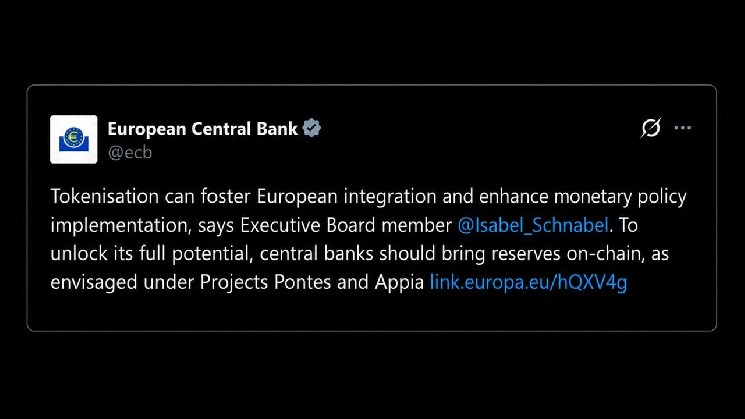
ECB Executive Board member Isabel Schnabel stated that central bank money "must move onto the blockchain." She argued that stablecoins lack the independent ability to scale liquidity during financial stress—a gap only a central bank can fill. Her proposed solution involves tokenization, which she says can make transactions faster, safer, and more programmable, but only if the safest asset (central bank money) is on the same "rails" as other tokenized assets. This marks a notable shift for the Eurosystem, which had previously viewed Distributed Ledger Technology (DLT) mainly as a tool for regulating stablecoins and crypto, not as infrastructure to adopt directly. The first step is Project Pontes, launching in September. It will initially synchronize the ECB’s existing TARGET services with private DLT platforms. Eventually, it aims to enable settlement finality on a Eurosystem-managed DLT platform with smart contract functionality and 24/7 operation. The long-term strategy is Project Appia, tasked with developing the architecture, standards, and legal framework for a genuine European tokenized asset market by 2028. Trials have already processed around €1.6 billion, and since March 2026, the ECB accepts DLT-based assets as collateral. While not directly impacting Bitcoin's price, these developments signal that a major G7 central bank is preparing to settle transactions on-chain, lending legitimacy to the underlying infrastructure of crypto markets. The ECB's move to avoid "disintermediation" by private tokenization shows that debates in central bank boardrooms are now aligning with discussions long followed in the crypto space.

cryptonews.ru1 h fa

ECB's Schnabel says central bank money 'should move to blockchain'

cryptonews.ru1 h fa

Ripple Labs Warns of a New Challenge for Blockchains

Ripple Labs is preparing the XRP Ledger for quantum threats but now emphasizes a broader challenge: ensuring financial infrastructure can adapt simultaneously to quantum computing and artificial intelligence. Senior Director of Engineering Ayo Akinyele states the goal is not merely anticipating a "Q-Day" but building infrastructure capable of preemptively adopting new security mechanisms without network disruption. The shift to post-quantum cryptography involves more than swapping algorithms; it requires flexible infrastructure, improved key management, and clear upgrade paths. Financial systems were not designed with quantum computers in mind, necessitating a rethink of transaction, identity, asset, and data protection. This is underscored by significant investments, such as the $2 billion U.S.-IBM quantum factory initiative and a 2030 U.S. government mandate for post-quantum cryptography adoption. AI introduces distinct risks by driving automation and autonomous economic activity, increasing demand for an always-on, internet-oriented payment infrastructure. AI agents could soon conduct transactions independently, creating new security requirements. Ripple Labs advocates for proactive, orderly preparation rather than a crisis-driven transition, having outlined a four-phase strategy aiming for a full XRP Ledger transition by 2028, now expanded to address both quantum and AI-driven challenges.

cryptonews.ru1 h fa

Ripple Labs Warns of a New Challenge for Blockchains

cryptonews.ru1 h fa

Trading

Spot

Articoli Popolari

Come comprare ATOM

Benvenuto in HTX.com! Abbiamo reso l'acquisto di Cosmos (ATOM) semplice e conveniente. Segui la nostra guida passo passo per intraprendere il tuo viaggio nel mondo delle criptovalute.Step 1: Crea il tuo Account HTXUsa la tua email o numero di telefono per registrarti il tuo account gratuito su HTX. Vivi un'esperienza facile e sblocca tutte le funzionalità,Crea il mio accountStep 2: Vai in Acquista crypto e seleziona il tuo metodo di pagamentoCarta di credito/debito: utilizza la tua Visa o Mastercard per acquistare immediatamente CosmosATOM.Bilancio: Usa i fondi dal bilancio del tuo account HTX per fare trading senza problemi.Terze parti: abbiamo aggiunto metodi di pagamento molto utilizzati come Google Pay e Apple Pay per maggiore comodità.P2P: Fai trading direttamente con altri utenti HTX.Over-the-Counter (OTC): Offriamo servizi su misura e tassi di cambio competitivi per i trader.Step 3: Conserva Cosmos (ATOM)Dopo aver acquistato Cosmos (ATOM), conserva nel tuo account HTX. In alternativa, puoi inviare tramite trasferimento blockchain o scambiare per altre criptovalute.Step 4: Scambia Cosmos (ATOM)Scambia facilmente Cosmos (ATOM) nel mercato spot di HTX. Accedi al tuo account, seleziona la tua coppia di trading, esegui le tue operazioni e monitora in tempo reale. Offriamo un'esperienza user-friendly sia per chi ha appena iniziato che per i trader più esperti.

546 Totale visualizzazioniPubblicato il 2024.12.10Aggiornato il 2026.06.02

Come comprare ATOM

Discussioni

Benvenuto nella Community HTX. Qui puoi rimanere informato sugli ultimi sviluppi della piattaforma e accedere ad approfondimenti esperti sul mercato. Le opinioni degli utenti sul prezzo di ATOM ATOM sono presentate come di seguito.

活动图片