In Seoul, an opposition bill proposes a 22% cryptocurrency tax by 2030

cryptonews.ruPubblicato 2026-08-10Pubblicato ultima volta 2026-08-10

Introduzione

In Seoul, an opposition lawmaker has proposed delaying the implementation of a 22% tax on cryptocurrency profits until January 1, 2030, a three-year postponement from the current planned start date of 2027. The bill, introduced by People Power Party representative Jeong Seong-guk, conflicts with the government's recently confirmed plan to begin taxing crypto gains in 2027. Under the proposed system, income from selling or lending cryptocurrencies like Bitcoin and Ether would be classified as "other income." The 22% rate consists of a 20% national income tax and a 2% local tax, applied only to annual profits exceeding a 2.5 million won (approx. $1,800) exemption threshold. The opposition argues that more time is needed to revise the virtual asset tax system, strengthen investor protection, and establish necessary frameworks for fair taxation. The proposal follows the government's completion of its 2026 tax reform package, with Finance Minister Choo Kyung-ho reaffirming the plan to proceed as scheduled in 2027. Another bill from the same party seeks to entirely eliminate the crypto tax provision, citing inequality as profits from traditional stocks are currently tax-exempt. South Korea's parliament has repeatedly postponed the tax since its initial 2022 effective date.

A South Korean opposition lawmaker has proposed postponing the introduction of a 22% tax on cryptocurrency profits until January 1, 2030, three years later than the current effective date for the tax.

This conflicts with the government, which has just reaffirmed plans to begin taxing cryptocurrency in 2027. About 13 million South Koreans buy and sell cryptocurrency and will pay taxes on annual profits exceeding 2.5 million won, or about $1,800.

Jeong's Amendment Delays Cryptocurrency Taxation to 2030

The bill was proposed by People Power Party opposition lawmaker Jung Sung-kook. Jung plans to amend the Income Tax Act to keep the tax provisions but push the enforcement date from January 1, 2027, to January 1, 2030.

He argues lawmakers and tax authorities need three more years to complete the revision of the virtual asset taxation system, strengthen investor protection, and establish the systems necessary for fair cryptocurrency taxation.

He contends that the statutory deadline arriving on schedule does not justify the start of tax collection. First, taxpayers need a system they can accept.

The proposal came less than a week after the Ministry of Economy and Finance completed drafting its 2026 tax reform package, allowing no further delays regarding cryptocurrency.

Finance Minister and Deputy Prime Minister Choo Kyung-ho on July 29 clearly stated the government's position at a meeting of the National Assembly's Planning and Finance Committee. "At this point, we are proceeding with the taxation starting next year as planned," Choo said.

South Korea Sets 22% Limit on Cryptocurrency Price Gains Tax

Under this system, slated for implementation in 2027, income from selling or lending cryptocurrency, such as Bitcoin and Ethereum, is treated as "other income".

The 22% rate comprises a 20% national income tax and a 2% local tax. It applies only if annual income exceeds the tax-free threshold of 2.5 million won.

The Ministry of Finance gave the example of a trader who earns 5 million won from Bitcoin in a year. After subtracting the 2.5 million won tax deduction, the remaining 2.5 million won is taxed at 550,000 won. Income earned in 2027 will be declared in May 2028.

As cryptocurrency income is classified as other income, losses cannot be carried forward, so a trader who loses money one year and then profits the next will still have to pay tax on the profit earned.

In response, Choo stated that stock trading losses are also not carried forward, adding that the government will review the matter after the tax takes effect if needed.

Another bill from the People Power Party, proposed by lawmaker Sung Il-jong on March 19, seeks to completely remove the cryptocurrency income tax provision from the law.

The party views abolishing the tax as a matter of equality, arguing that taxing cryptocurrency profits while regular stock profits are effectively tax-free constitutes differential treatment of the two investment markets.

Choo noted that in the United States, Japan, and the United Kingdom, cryptocurrencies are taxed as capital gains, but South Korea does not have such a capital gains tax system.

Lawmakers in Seoul approved the cryptocurrency tax provisions, setting an effective date in 2022, then postponing it to 2023, 2025, and finally 2027.

The National Tax Service has created a dedicated digital assets unit. Under the OECD's Crypto-Asset Reporting Framework, South Korea will begin receiving data on its residents' overseas crypto-asset activity from participating jurisdictions next year.

Japan, Germany, and France are among the 48 jurisdictions participating in the program.

Crypto di tendenza

Domande pertinenti

QWhat is the key proposal of the opposition bill regarding cryptocurrency tax in South Korea?

AThe opposition bill proposes to delay the implementation of the 22% tax on cryptocurrency income from January 1, 2027, to January 1, 2030.

QWhat is the South Korean government's current plan for taxing cryptocurrency?

AThe government's current plan is to begin taxing cryptocurrency as 'other income' starting from January 1, 2027.

QWhat is the tax rate and the exemption threshold for cryptocurrency gains under the planned system?

AThe planned tax rate is 22% (20% national income tax + 2% local tax), and it applies only to annual gains exceeding the exemption threshold of 2.5 million won (approximately $1,800).

QWhat is one of the main arguments used by the opposition lawmaker to justify the tax delay?

AHe argues that lawmakers and tax authorities need three more years to complete the revision of the virtual asset tax system, strengthen investor protection, and establish the systems necessary for fair cryptocurrency taxation.

QAccording to the article, how does the opposition party view the issue of taxing cryptocurrency gains compared to stock gains?

AThe opposition party views the issue as one of fairness, stating that taxing cryptocurrency gains while stock gains are effectively untaxed represents unequal treatment of the two investment markets.

Letture associate

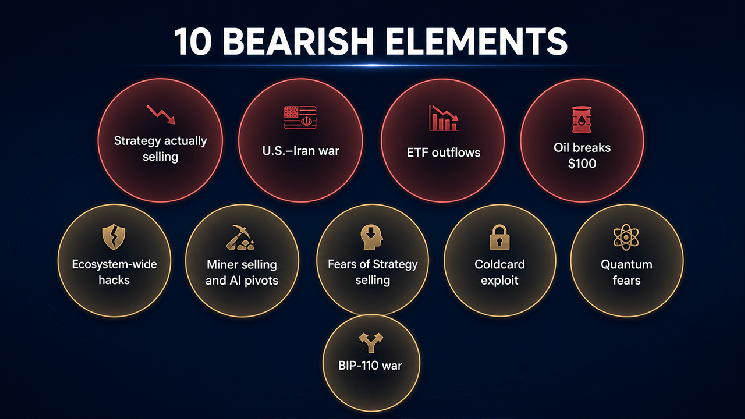
Bitcoin Withstood 10 Bearish Blows in 2026, Yet Experienced Its Mildest Bear Market

Bitcoin, the leading cryptocurrency by market cap, peaked above $126,000 in early October before entering a prolonged decline. By August, it was mainly trading between $63,000 and $65,400, inflicting losses on late buyers but resulting in what is, historically for Bitcoin, an unusually shallow bear market—down about 49% from its peak, compared to typical 75-80% plunges. Throughout 2026, Bitcoin faced multiple headwinds yet demonstrated notable resilience. Geopolitical tensions in the Middle East and volatile oil prices revived inflation concerns but failed to trigger the panic-driven sell-offs seen in prior cycles. A significant psychological blow came from corporate seller MicroStrategy, a longtime accumulator, which began strategic sales to bolster its cash position, reducing its holdings. U.S. spot Bitcoin ETFs also faced sustained outflows, though a late-week inflow hinted at potential relief. Pressure also came from within the ecosystem. A contentious blockchain proposal, BIP-110, failed after a minority chain stalled. Miners, facing tighter economics, sold reserves and pivoted infrastructure toward AI. A major security breach involving Coldcard hardware wallets saw an estimated 2,000 BTC stolen, shaking confidence in self-custody. Long-term threats like quantum computing resurfaced in discussions. Despite this confluence of corporate selling, ETF outflows, miner capitulation, geopolitical shocks, internal conflict, and security issues—any one of which could historically cause sharp declines—Bitcoin stubbornly held above a key $60,000 support level. Deeper market liquidity, regulated products, and long-term holders appear to be absorbing selling pressure that once would have caused deeper crashes. This resilience suggests a maturing market structure, though risks remain. Another shock could still push Bitcoin toward $50,000. For now, its 49% decline, severe for most assets, is relatively moderate by Bitcoin's own volatile standards. The remaining months of 2026 will test whether $60,000 is a durable floor or merely the next major line of defense.

cryptonews.ru30 min fa

Bitcoin Withstood 10 Bearish Blows in 2026, Yet Experienced Its Mildest Bear Market

cryptonews.ru30 min fa

Korean Financial Supervisory Service to Revise Compensation System for Phishing Losses Involving Crypto Transfer

The South Korean Financial Supervisory Service (FSS) is overhauling its system for reimbursing victims of voice phishing scams. Starting in October, the new system will be able to calculate and compensate losses held in cryptocurrency, not just in Korean won. Previously, the reimbursement system assumed stolen funds were in won, failing to fully compensate victims whose money was converted into digital assets. The upgraded software will apply a recovery ratio to determine the specific type and quantity of tokens owed to each victim, based on the token's value at the time the payment was frozen. It will also better track cases where fraud proceeds are split across multiple accounts and later consolidated. These changes follow March 31st amendments to the Act on Reimbursement of Losses from Telecommunications Fraud, which now classify virtual assets as both damaged and recoverable property. Major Korean crypto exchanges like Upbit and Bithumb must now comply with the same anti-phishing obligations as banks, including verifying transaction purposes and tracking suspicious funds. The revised law takes effect October 1st, with the FSS allocating a three-month period and a budget of 118.53 million won for system implementation and troubleshooting. The update addresses schemes where stolen money is intentionally laundered through cryptocurrency for overseas transfer. Notably, telecom fraud losses in South Korea rose 14.1% to 433.8 billion won in 2025, a five-year high.

cryptonews.ru41 min fa

Korean Financial Supervisory Service to Revise Compensation System for Phishing Losses Involving Crypto Transfer

cryptonews.ru41 min fa

Trading

Spot

Articoli Popolari

Come comprare BILL

Benvenuto in HTX.com! Abbiamo reso l'acquisto di Billions Network (BILL) semplice e conveniente. Segui la nostra guida passo passo per intraprendere il tuo viaggio nel mondo delle criptovalute.Step 1: Crea il tuo Account HTXUsa la tua email o numero di telefono per registrarti il tuo account gratuito su HTX. Vivi un'esperienza facile e sblocca tutte le funzionalità,Crea il mio accountStep 2: Vai in Acquista crypto e seleziona il tuo metodo di pagamentoCarta di credito/debito: utilizza la tua Visa o Mastercard per acquistare immediatamente Billions NetworkBILL.Bilancio: Usa i fondi dal bilancio del tuo account HTX per fare trading senza problemi.Terze parti: abbiamo aggiunto metodi di pagamento molto utilizzati come Google Pay e Apple Pay per maggiore comodità.P2P: Fai trading direttamente con altri utenti HTX.Over-the-Counter (OTC): Offriamo servizi su misura e tassi di cambio competitivi per i trader.Step 3: Conserva Billions Network (BILL)Dopo aver acquistato Billions Network (BILL), conserva nel tuo account HTX. In alternativa, puoi inviare tramite trasferimento blockchain o scambiare per altre criptovalute.Step 4: Scambia Billions Network (BILL)Scambia facilmente Billions Network (BILL) nel mercato spot di HTX. Accedi al tuo account, seleziona la tua coppia di trading, esegui le tue operazioni e monitora in tempo reale. Offriamo un'esperienza user-friendly sia per chi ha appena iniziato che per i trader più esperti.

471 Totale visualizzazioniPubblicato il 2026.05.07Aggiornato il 2026.06.02

Come comprare BILL

Discussioni

Benvenuto nella Community HTX. Qui puoi rimanere informato sugli ultimi sviluppi della piattaforma e accedere ad approfondimenti esperti sul mercato. Le opinioni degli utenti sul prezzo di BILL BILL sono presentate come di seguito.

活动图片