Bitcoin is attempting to push above the $75,000 level as market activity intensifies and bullish momentum begins to build. The recent price action suggests that buyers are testing a key resistance zone, with traders closely watching whether BTC can sustain a breakout and extend its recovery after weeks of volatility.
However, underlying data indicate that confidence among certain market participants remains fragile. According to a CryptoQuant report by analyst Darkfost, short-term holders (STHs) are still showing signs of caution despite the improving trend in Bitcoin’s price. Rather than fully committing to the rally, many of these investors continue to treat upward moves as opportunities to secure profits.
The report highlights that the current macro and liquidity environment is not particularly favorable for aggressive risk-taking, which is influencing behavior across the market. As a result, STHs are more inclined to realize gains quickly, contributing to intermittent selling pressure during periods of price strength.
This dynamic creates a mixed structure for Bitcoin. While demand is clearly returning and pushing prices toward higher levels, persistent profit-taking from short-term participants may act as a temporary ceiling, particularly around key resistance zones like $75K, where liquidity and sell-side pressure tend to concentrate.
Profit-Taking Pressure Builds as Bitcoin Tests $75K
According to CryptoQuant analyst Darkfost, recent on-chain data shows a clear resurgence in profit-taking activity among short-term holders as Bitcoin approaches key resistance levels. The report highlights that the amount of BTC in profit sent to exchanges has reached a yearly high, coinciding with Bitcoin’s attempt to break above the $75,000 level.
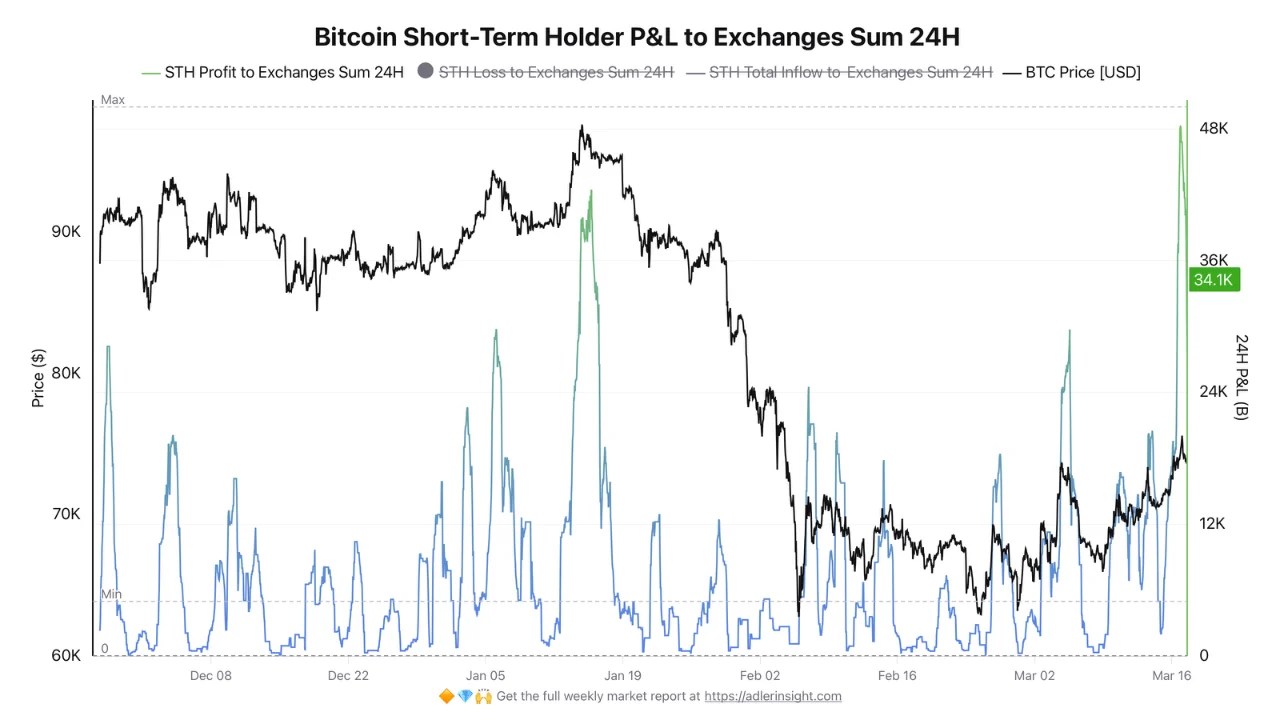
In a single day, more than 48,000 BTC in profit were transferred to exchanges by short-term holders, signaling a strong willingness among these participants to realize gains rather than hold through potential volatility. This behavior suggests that a significant portion of the market remains focused on short-term opportunities, even as broader conditions begin to improve.
Structurally, this trend reinforces the idea that each upward move is still being treated as an exit opportunity by short-term investors. Instead of supporting sustained upside, these participants are actively supplying liquidity into rallies, creating friction at key resistance zones.
This dynamic introduces a layer of complexity to Bitcoin’s current price action. While demand is clearly returning, persistent sell-side pressure from profit-taking can slow momentum and delay breakouts.
For now, the market appears to be balancing between renewed buying interest and opportunistic selling, with the behavior of short-term holders likely to play a critical role in determining whether Bitcoin can establish a sustained move above resistance.