Janet Yellen Predicts Lower Inflation By The End Of 2023

CoingapePubblicato 2022-12-12Pubblicato ultima volta 2022-12-12

Introduzione

US Treasury Secretary Janet Yellen forecasted a significant reduction in US inflation in 2023, barring an unexpected shock, on Sunday.

US Treasury Secretary Janet Yellen forecasted a significant reduction in US inflation in 2023, barring an unexpected shock, on Sunday. “I believe you will see much lower inflation by the end of next year if there isn’t an unexpected shock,” she told CBS’ “60 Minutes” in an interview.
The former Federal Reserve chair responded when asked whether a recession was likely: “A recession could happen.” But it isn’t, in my opinion, something that is required to lower inflation.”
Janet Yellen made her statement just days before it is anticipated that the Fed will reduce the swift pace of interest rate increases it has pursued this year. Following four 75-basis point increases this year, Fed Chair Jerome Powell has hinted at a smaller, half-point increase in the policy rate, to a range of 4.25%–4.5%.
Janet Yellen thinks inflation is temporary
According to Janet Yellen, who spoke to CBS, the pace of economic growth has significantly slowed, inflation has decreased, and she is still optimistic about the future of the labour market.
Janet Yellen expressed her hope that the recent spike in inflation would be temporary and claimed that the U.S. government had learned “a lotta lessons” about the need to control inflation following the high prices of the 1970s.
Gas prices at the pump were “way down,” shipping costs had decreased, and lengthy delivery delays had decreased. “I believe that inflation will significantly decline in the coming year,” she predicted.
Musk also talked about the recession
Elon Musk has stated that the US economy is headed for a severe recession. According to him, the Federal Reserve must stop raising interest rates. To stop the downturn from getting worse, though.
Elon Musk has commented on the Fed once again, saying:
If the Fed raises rates again next week, the recession will be greatly amplified
Do you agree?
— Crypto Daily Trade Signals (@cryptodailyTS) December 10, 2022
Similar cautions have been made by Musk for some time. Including in his first email to Twitter staff as the company’s new owner. Fears of a recession have increased this year as a result of the Fed’s active efforts to cool the economy and lower inflation.
Inflation soared to a 40-year high of 9.1% in June. It remained above the Federal Reserve’s target rate of 2% a year at 7.7% in October.
The US central bank increased interest rates in response to the threat. However, increasing them to a range of 3.75% to 4% from almost zero in March. However, signs suggest they could reach a peak above 5% for the first time since 2007.

Crypto di tendenza

Letture associate

Chip Stocks Lead U.S. Market Decline: Is AI Trading Being Hit by Both Interest Rates and Returns?

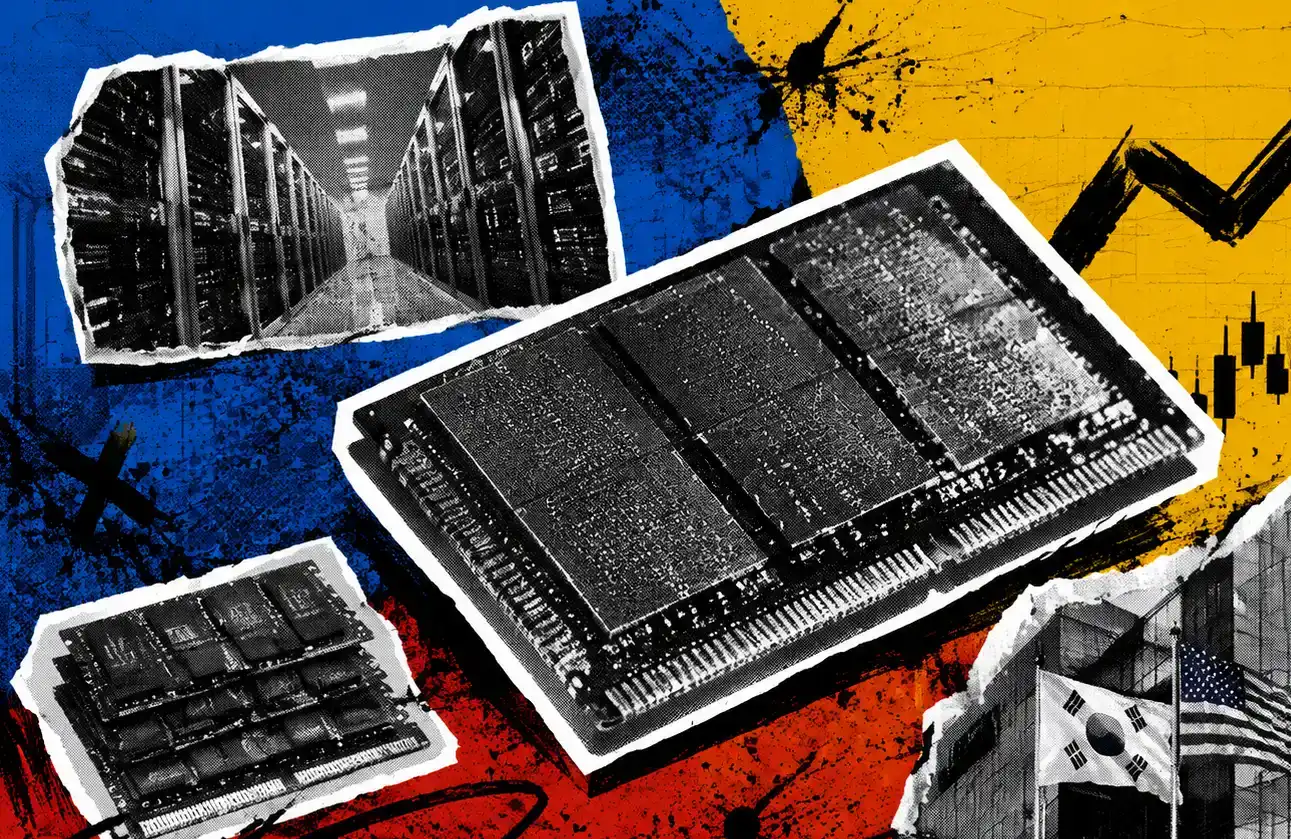
Chip stocks led a broad decline in US markets, with the Nasdaq dropping 2.2% and the S&P 500 falling 1.4%. This selloff reflects a dual challenge for the once-high-flying AI hardware trade: rising interest rate expectations and growing investor impatience for clear returns from massive AI capital expenditures. The pressure was most acute on hardware leaders. Nvidia fell about 4%, dipping below a $5 trillion market cap, while Micron plunged 13.2% ahead of its earnings report. Declines across memory, storage, AI, and mobile chips indicated a sector-wide retreat. The selloff spread globally, with South Korea's KOSPI index dropping nearly 10% as key suppliers SK Hynix and Samsung recorded double-digit losses. Investors appeared to be taking profits from the most crowded trades first. Macro headwinds intensified as market expectations shifted toward a more aggressive Federal Reserve. Forecasts for multiple rate hikes in 2026 pressured high-valuation tech stocks, which rely on long-term growth projections that become less attractive as discount rates rise. Concurrently, investors are scrutinizing the profit potential of the immense AI spending by cloud giants like Alphabet, Amazon, and Meta. While these expenditures drive demand for chips and hardware, the market is now questioning whether AI services will generate sufficient returns to justify the ongoing costs. This adjustment is not necessarily a bubble burst but a recalibration. AI demand fundamentals remain, but the narrative of endless growth can no longer fully offset concerns over higher interest rates and a longer path to profitability. Near-term direction may hinge on Micron's upcoming earnings guidance and incoming inflation data, which will influence both the AI demand outlook and the Fed's policy path. The market is transitioning from blindly buying growth to demanding clearer visibility on returns.

marsbit29 min fa

Chip Stocks Lead U.S. Market Decline: Is AI Trading Being Hit by Both Interest Rates and Returns?

marsbit29 min fa

OpenAI's New Paper: How to Train an AI that "Doesn't Deteriorate Under Pressure"?

OpenAI's new paper "Reinforcement Learning Towards Broadly and Persistently Beneficial Models" explores training AI to maintain safe, helpful, and honest behavior even under pressure, in unseen scenarios, or after being fine-tuned for harmful purposes. Moving beyond simple rule-based "don'ts," the research focuses on cultivating "beneficial traits" like honesty, risk-awareness, corrigibility, and transparency. It investigates if reinforcement learning (RL), often prone to "reward hacking" where models exploit loopholes, can instead be used to instill robust, generalized positive behaviors. Researchers created a multi-domain synthetic dialogue dataset covering areas like healthcare and law. They trained a model by replacing 5% of standard RL data with "beneficial trait" data. This model outperformed the baseline in 83% of 53 evaluations, showing average gains of 9.1% in alignment, safety, and helpfulness. Crucially, improvements generalized: a model trained only on healthcare "good behavior" data also performed better in 17 out of 19 non-healthcare alignment tests. The paper also tests "alignment persistence." When subjected to adversarial prompts or harmful fine-tuning, the beneficial trait model showed greater resilience, with smaller performance drops and less "spillover" of bad behavior to unrelated tasks. While not a complete solution, this work suggests a shift from post-hoc correction to proactively shaping robust, principled AI behavior, a critical step for deploying models in high-stakes, complex decision-making scenarios.

marsbit31 min fa

OpenAI's New Paper: How to Train an AI that "Doesn't Deteriorate Under Pressure"?

marsbit31 min fa

Semiconductor Stock Rebound: Is the Technical Correction Over or a Trend Reversal?

The core of recent semiconductor stock volatility is not about daily price swings, but rather the market questioning whether AI-driven semiconductor pricing has entered a new phase. Following a sharp sell-off in Korean stocks on June 23rd, led by Samsung and SK Hynix, a subsequent rebound is seen more as a technical positioning adjustment rather than a confirmed trend reversal. The key variable is HBM (High Bandwidth Memory), essential for AI chips. Its supply-demand imbalance granted memory makers significant pricing power. The current market focus is on whether this dynamic remains strong enough to justify elevated valuations. All eyes are on Micron's upcoming earnings report. The critical factor is not whether results meet already high expectations, but whether the company's guidance confirms that AI memory pricing power, order visibility, and future margins are still expanding. Micron's outlook will serve as a crucial test for the broader AI semiconductor chain, including Samsung, SK Hynix, and other infrastructure players. The recent bounce appears to be a pre-earnings positioning repair. For it to evolve into a sustained uptrend, concrete evidence is needed that the AI infrastructure expansion cycle's fundamentals—particularly for high-end memory—remain robust and can continue to surpass elevated market expectations. The risk is that strong demand alone may not be sufficient if future guidance hints at peaking momentum or increasing supply-side pressures.

marsbit1 h fa

Semiconductor Stock Rebound: Is the Technical Correction Over or a Trend Reversal?

marsbit1 h fa

Trading

Spot
Futures

Articoli Popolari

Come comprare GAS

Benvenuto in HTX.com! Abbiamo reso l'acquisto di GAS (GAS) semplice e conveniente. Segui la nostra guida passo passo per intraprendere il tuo viaggio nel mondo delle criptovalute.Step 1: Crea il tuo Account HTXUsa la tua email o numero di telefono per registrarti il tuo account gratuito su HTX. Vivi un'esperienza facile e sblocca tutte le funzionalità,Crea il mio accountStep 2: Vai in Acquista crypto e seleziona il tuo metodo di pagamentoCarta di credito/debito: utilizza la tua Visa o Mastercard per acquistare immediatamente GASGAS.Bilancio: Usa i fondi dal bilancio del tuo account HTX per fare trading senza problemi.Terze parti: abbiamo aggiunto metodi di pagamento molto utilizzati come Google Pay e Apple Pay per maggiore comodità.P2P: Fai trading direttamente con altri utenti HTX.Over-the-Counter (OTC): Offriamo servizi su misura e tassi di cambio competitivi per i trader.Step 3: Conserva GAS (GAS)Dopo aver acquistato GAS (GAS), conserva nel tuo account HTX. In alternativa, puoi inviare tramite trasferimento blockchain o scambiare per altre criptovalute.Step 4: Scambia GAS (GAS)Scambia facilmente GAS (GAS) nel mercato spot di HTX. Accedi al tuo account, seleziona la tua coppia di trading, esegui le tue operazioni e monitora in tempo reale. Offriamo un'esperienza user-friendly sia per chi ha appena iniziato che per i trader più esperti.

236 Totale visualizzazioniPubblicato il 2024.12.12Aggiornato il 2026.06.02

Come comprare GAS

Discussioni

Benvenuto nella Community HTX. Qui puoi rimanere informato sugli ultimi sviluppi della piattaforma e accedere ad approfondimenti esperti sul mercato. Le opinioni degli utenti sul prezzo di GAS GAS sono presentate come di seguito.

活动图片