TL;DR
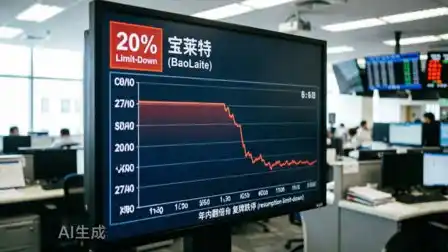
On June 23, the South Korean stock market experienced severe selling, with the Kospi closing down about 10%, trading suspended for 20 minutes at one point, and Samsung Electronics and SK Hynix both falling over 12%. A day later, according to media reports, Samsung Electronics rebounded by about 8.5% during intraday trading, and sentiment in Asian tech stocks showed some recovery.
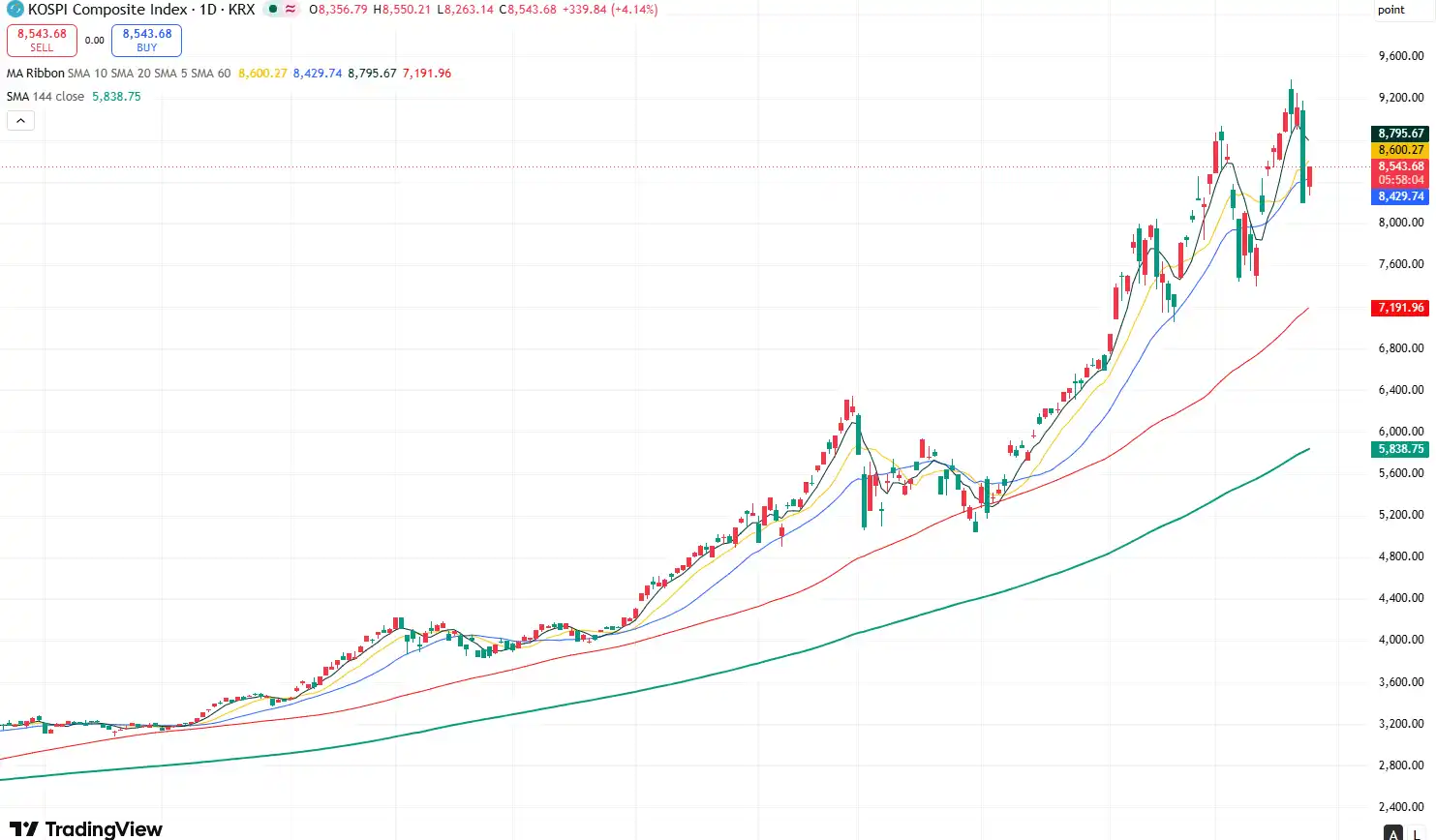
The core of this round of volatility is not the single-day rise and fall, but that semiconductor stocks have entered a new pricing phase after the crowding of AI trades. Over the past year, the expansion of AI infrastructure has linked South Korean memory stocks, U.S. stocks like Micron, NVIDIA, and TSMC on the same chain. As long as AI server expansion continues, high-end memory will remain tight, memory manufacturers' profit expectations will continue to be revised upward, and related semiconductor stocks will still be seen as beneficiaries of the same wave of AI capital expenditure cycle.
What the market now needs to confirm is whether this round of correction is merely a technical release or an early signal of a trend reversal. Samsung's potential shareholder return expectations have provided emotional repair for the Korean market, but a more direct stress test comes from the earnings season, especially from Micron. The company will announce its FY2026 Q3 financial results after the U.S. market closes on June 24, with the conference call scheduled for 14:30 Mountain Time. What investors are looking at is not whether the last quarter was good, but whether the pricing power of AI memory can continue to expand, thereby supporting the valuation of the entire semiconductor chain.
HBM (AI chip high-bandwidth memory) is the core variable in this round of market activity. AI chips need to process massive amounts of data in an extremely short time, regular memory isn't fast enough, making HBM a critical component for high-end GPUs and AI servers. Over the past two years, the supply shortage of HBM has given Micron, Samsung Electronics, and SK Hynix rare pricing power again, making memory stocks one of the most elastic segments in the AI semiconductor trade.
Strong demand has already been heavily traded by the market. Whether the rebound after the plunge can continue does not depend on "whether the AI story is still there," but on whether the semiconductor chain can continue to prove that order visibility, memory prices, subsequent guidance, and profit margins remain sufficiently strong. Micron is one verification point, but what the market truly cares about is whether this AI semiconductor theme can continue to bear the high expectations.
Post-Crash Rebound, More Like Position Repair
This round of volatility first reflects positioning, not a sudden disappearance of demand. Korean tech stocks performed strongly from 2025 to 2026, with AI memory becoming one of the market's most crowded themes. When heavyweight stocks like Samsung Electronics and SK Hynix come under simultaneous pressure, index-level declines can be amplified, and the entire Asian tech sector can easily be repriced in sync.
The selling on June 23 was precisely the concentrated release of this structure. Media reports indicated the Kospi closed down about 10%, with Samsung Electronics and SK Hynix both falling over 12%. For investors, this kind of drop already indicates one problem: AI semiconductor trading is no longer just about fundamentals; it has also become a positioning trade with high concentration and high expectations.
The rebound the next day cannot be directly interpreted as a bottom confirmation either. Samsung Electronics' rise partly stemmed from market expectations for potential shareholder returns. Samsung's previously announced shareholder return policy for 2024-2026 is to return 50% of its three-year free cash flow and maintain a fixed annual dividend of 9.8 trillion Korean Won. If 50% of the three-year free cash flow exceeds the total regular dividend amount, the company will return the balance.
Based on this, the market and media have estimated that if the chip super-cycle significantly boosts free cash flow, Samsung's potential total return or buyback capacity could reach about 90 trillion Korean Won. However, this is not a new buyback plan already announced by the company, merely a projection based on the existing policy framework. It can improve short-term risk appetite but cannot alone prove that AI semiconductor demand has not cooled.
Therefore, the rebound in Korean tech stocks looks more like positioning repair after a plunge, not confirmation that the trend has already turned upward again. For semiconductor stocks, the real issue isn't whether they can rebound, but whether they can find new fundamental support after rebounding. If it's only about shareholder return expectations, short covering, and sentiment repair, the rally may remain at the level of a technical rebound; if earnings reports continue to prove that AI server demand, HBM prices, and the capital expenditure chain are still strengthening, the market will reprice it as a continuation of the trend.
What can cut through the noise of sentiment are the upcoming earnings reports and conference calls. Micron is one of the more direct validators in this round of AI memory trading. It doesn't have Samsung's vast consumer electronics business, and its stock price more centrally reflects the memory cycle and AI server demand. Its earnings and guidance can answer the market's most pressing questions: Are AI server customers still scrambling for memory? Can prices still rise? Will capacity expansion begin to pressure future profit margins?
These questions don't belong only to Micron; they will also affect Samsung Electronics, SK Hynix, and broader AI infrastructure stocks. For the semiconductor stock rebound to upgrade from "technical covering" to "trend continuation," it requires the most sensitive link in the chain to continue providing strong signals.
Micron Needs to Prove Pricing Power Remains
The easiest numbers to see in the earnings report are revenue and EPS, but what's more important this time is whether the pricing logic behind these numbers can continue. For the entire semiconductor sector, Micron's significance lies not in the profitability of a single company, but in its ability to prove that AI memory supply and demand remain in a seller-favorable phase.
Micron's FY2026 Q2 revenue was $23.860 billion, with non-GAAP EPS at $12.20. The company's capital expenditure net for the quarter was $5.0 billion, and adjusted free cash flow was $6.9 billion. The company previously provided FY2026 Q3 guidance of revenue $33.5 billion, plus or minus $750 million, gross margin approximately 81%, non-GAAP EPS of $19.15, plus or minus $0.40.
This set of data explains why the market is willing to assign higher valuations to memory stocks. If HBM is pre-locked by customers and visibility is increased through long-term supply arrangements, memory manufacturers are no longer just traditional cyclical stocks but more like scarce suppliers in the expansion of AI infrastructure. Micron management and market reports have emphasized that HBM supply visibility is high, and high-end memory is transitioning from a common component to a strategic resource in AI capital expenditure.
For average investors, this can be understood as a supply-demand mismatch model. AI companies and cloud providers need to expand data centers, requiring more GPUs. GPUs need more HBM to perform. But HBM capacity expansion is slow, customer qualification cycles are long, and suppliers are concentrated, leading buyers to pre-commit volumes and sellers to gain stronger pricing power.
This is also why memory stocks affect broader semiconductor sentiment. NVIDIA represents AI computing demand, TSMC represents advanced process supply, while Samsung Electronics, SK Hynix, and Micron represent high-end memory constraints. When any of these links show changes in price, orders, or guidance, the market reassesses the pace of AI infrastructure expansion and profit distribution.
The key to Micron's earnings is not "whether this quarter remains strong," as the market already expects it to be strong. The incremental information lies in three areas: whether the Q3 results beat the company's previously high guidance, whether forward-quarter guidance continues to exceed the already elevated market expectations, and whether the shipment schedule for new products like HBM4 proceeds smoothly.
This is also why a good earnings report may not be enough. Over the past few quarters, the basis for AI memory stock gains has been consecutive beats. If Micron only meets expectations, or if the tone of the conference call shifts from supply tightness toward supply-demand balancing, the market may deem that valuation anchors need to be lowered. At that point, pressure wouldn't stay on MU stock alone but could spread to Samsung Electronics, SK Hynix, and other stocks traded as beneficiaries of the AI semiconductor cycle.
Strong Demand Also Brings Low Error Tolerance
Current evidence supports that demand has not yet been disproven, not that the cycle has ended. Micron's HBM supply visibility, strong performance last quarter, and continued expansion of AI infrastructure by cloud providers still point to the memory chain being in a high-activity phase. The rapid rebound in semiconductor stocks also indicates the market hasn't abandoned the AI demand theme.
But investors need to be wary of another layer of risk: strong fundamentals do not mean stock prices have no downside. Especially when valuations have baked in continued beats as the default assumption, the market's definition of bad news becomes harsher. In other words, semiconductor stocks might adjust not because demand disappears, but potentially because demand "doesn't get stronger."
In the past, the core risk for memory stocks was a downward price cycle. Now the risk is more complex. Customers are still ordering, but growth is no longer being revised upward—the stock may adjust first. HBM is still in short supply, but new capacity in 2027 cools price expectations—valuations may also drop first. Micron is still profitable, but rising capital expenditures compress future free cash flow—the market will similarly recalculate cycle quality.
This is precisely the key to judging whether it's a "technical correction ending" or a "trend reversal." A technical correction usually corresponds to release after positioning becomes crowded; as long as earnings and guidance continue to support the original logic, funds may return to the main theme. A trend reversal is different; it means the market begins to doubt future profit revision potential or believes the supply-demand relationship has shifted from extreme tightness toward balance.
The warning from the June 23 plunge lies here. It may not indicate that AI demand has peaked, but it shows the error tolerance of this trade chain has lowered. Foreign capital profit-taking in the Korean market, concentrated index weights, and crowded AI themes mean any signal not strong enough could be amplified into sector-wide volatility.
Samsung's potential shareholder returns should also be understood within this framework. Returning free cash flow benefits shareholders, but only if free cash flow can be sustainably generated. If chip profits continue to be revised upward, large dividends and buybacks will strengthen stock price support. If future capital expenditures intensify and cyclical profits are discounted anew, shareholder return expectations could also be downgraded.
So, this rebound looks more like a verification repair ahead of earnings. What investors are buying back is not certainty, but an option to wait for Micron and other semiconductor companies to provide stronger evidence. Only when fundamentals continue to exceed already high expectations does the rebound have a chance to shift from sentiment repair to trend continuation.
Valuation Anchor Lies in Guidance and 2027 Supply-Demand
After Micron's earnings release, the market's immediate reaction may still be to revenue, EPS, and gross margin, but what determines whether the AI semiconductor trade can continue expanding is management's tone regarding subsequent quarters.
If Q3 results beat guidance and forward guidance is revised upward again, it indicates customer orders, prices, and product mix are still improving, making the Korean tech stock plunge look more like a positioning clearance. Especially the HBM4 shipment schedule—if it proves Micron is increasing its share of high-end products—the market will continue to see it as a beneficiary of tight AI memory supply and also reinforce risk appetite for memory stocks like Samsung Electronics and SK Hynix.
Conversely, if management becomes cautious about 2027 supply-demand or capital expenditure rises faster than profit revisions, investors will reassess the quality of this cycle. The dangerous moment for the memory industry often isn't when demand disappears immediately, but when supply expansion begins to change future price expectations.
The current market's contradiction lies here: AI memory hasn't been disproven, but valuations have begun to demand higher-frequency, clearer evidence. Micron doesn't need to prove AI demand exists; the market already believes that. It needs to prove that demand intensity, supply constraints, and price elasticity are still sufficient to support the already high pricing.
This is also a common problem facing the entire semiconductor sector. NVIDIA, TSMC, memory manufacturers, and Asian tech stocks are all traded on the same AI infrastructure chain. As long as key links in the chain continue to beat expectations, the sector rebound can be interpreted as the correction ending; but if guidance starts turning cautious, or the market finds profit revisions can't keep up with valuations, the rebound may just be a technical repair before a trend weakens.
Until this answer emerges, the rebound in Asian tech stocks can only be seen as repair. For investors holding MU, Samsung Electronics, SK Hynix, and broader AI infrastructure stocks, daily ups and downs are not the main theme. Whether Micron can translate high supply visibility into higher guidance and strong demand into higher profit margins is the validation point for whether this semiconductor trade can continue.