Crypto market sees biggest miner selling pressure since January 2021

cryptoslatePubblicato 2022-11-13Pubblicato ultima volta 2022-11-13

Introduzione

The ongoing market slump caused by the FTX fallout hasn’t left Bitcoin miners unscathed.

The ongoing market slump caused by the FTX fallout hasn’t left Bitcoin miners unscathed. The market has seen the biggest one-day miner selling pressure since January 2021, and data analyzed by CryptoSlate shows that the selling pressure shows no signs of stopping.

”“

We could see extended selling pressure from miners until the average hash price begins decreasing. In November 2022, the average hash price reached $0.05. Bitcoin’s current $17,500 levels make mining borderline unprofitable not just for small miners, but for large operations as well.

”“

The addition of tens of thousands of new ASIC miners to the market in the past year put even the largest mining operations deep in the red, with few expecting such a sharp increase in hash price.

”“

At around $9,000 per machine, the newest Bitmain S19Pro ASIC miner has a payback period of 1,500 days at an average hash price of $0.06.
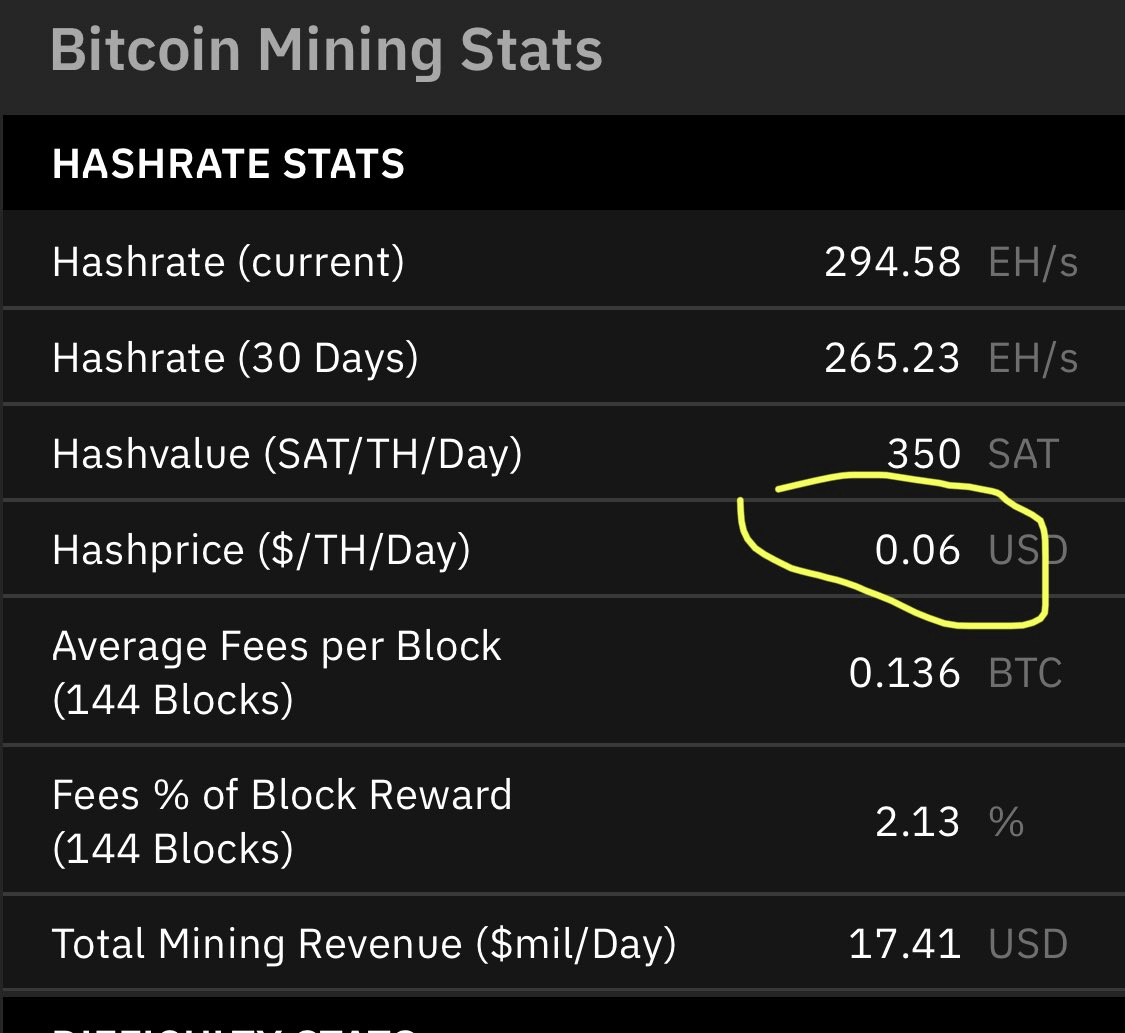
miner stats

Table showing Bitcoin mining stats in November 2022

”“

This increase in mining costs and drop in profitability pushed miners to sell their Bitcoin holdings. There has been a vertical drop in the balance in miner wallets since the beginning of November, reaching a low recorded in January 2021.
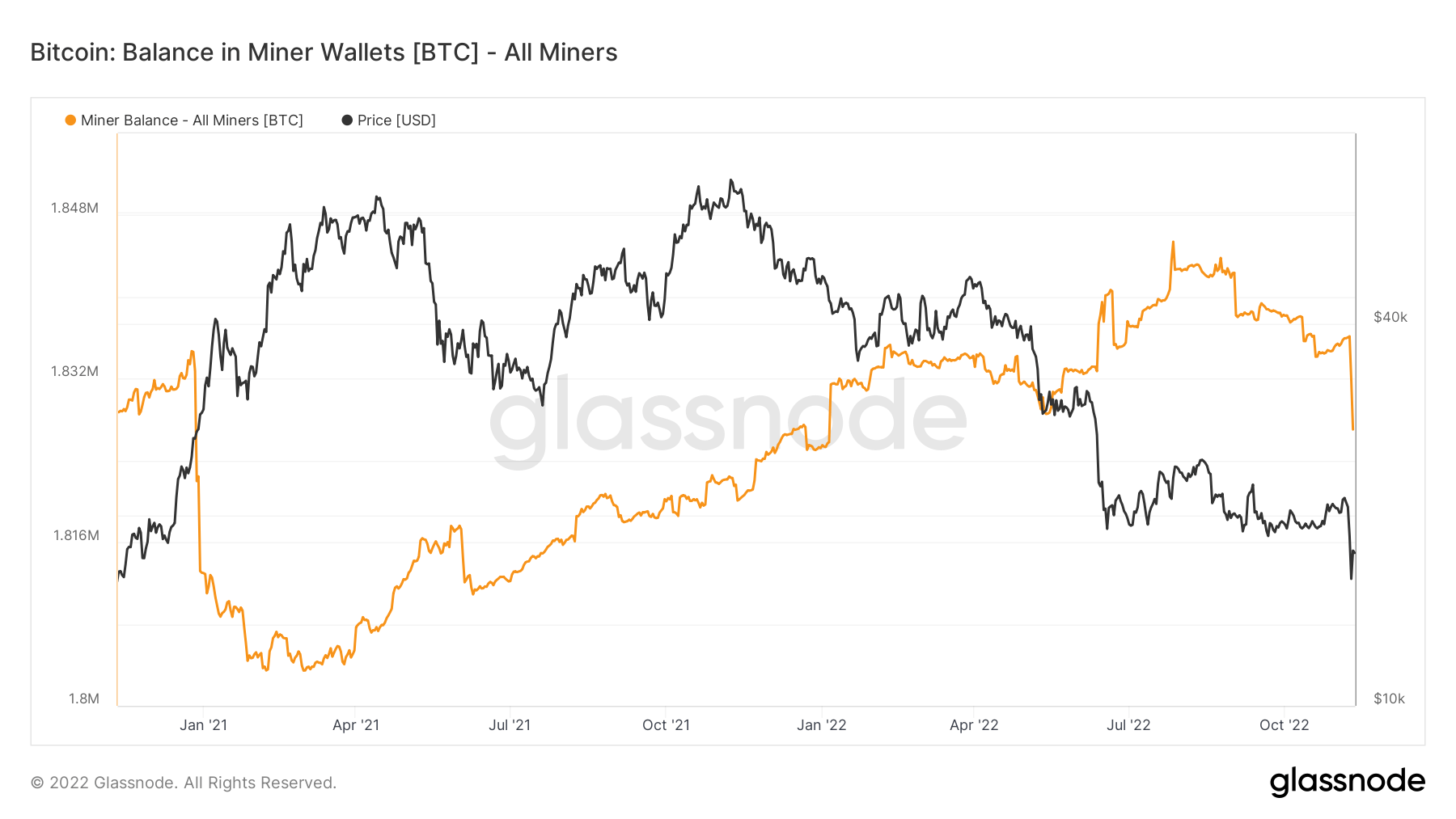
bitcoin miner balance

Graph showing the Bitcoin balance in miner wallets from January 2021 to November 2022 (Source: Glassnode)

”“

The net position change in miner holdings perfectly correlates with the vertical drop in Bitcoin’s price. With energy prices expected to increase throughout the winter and no end in sight to the ongoing bear market, we could see a wave of unprofitable miners shutting down their operations.
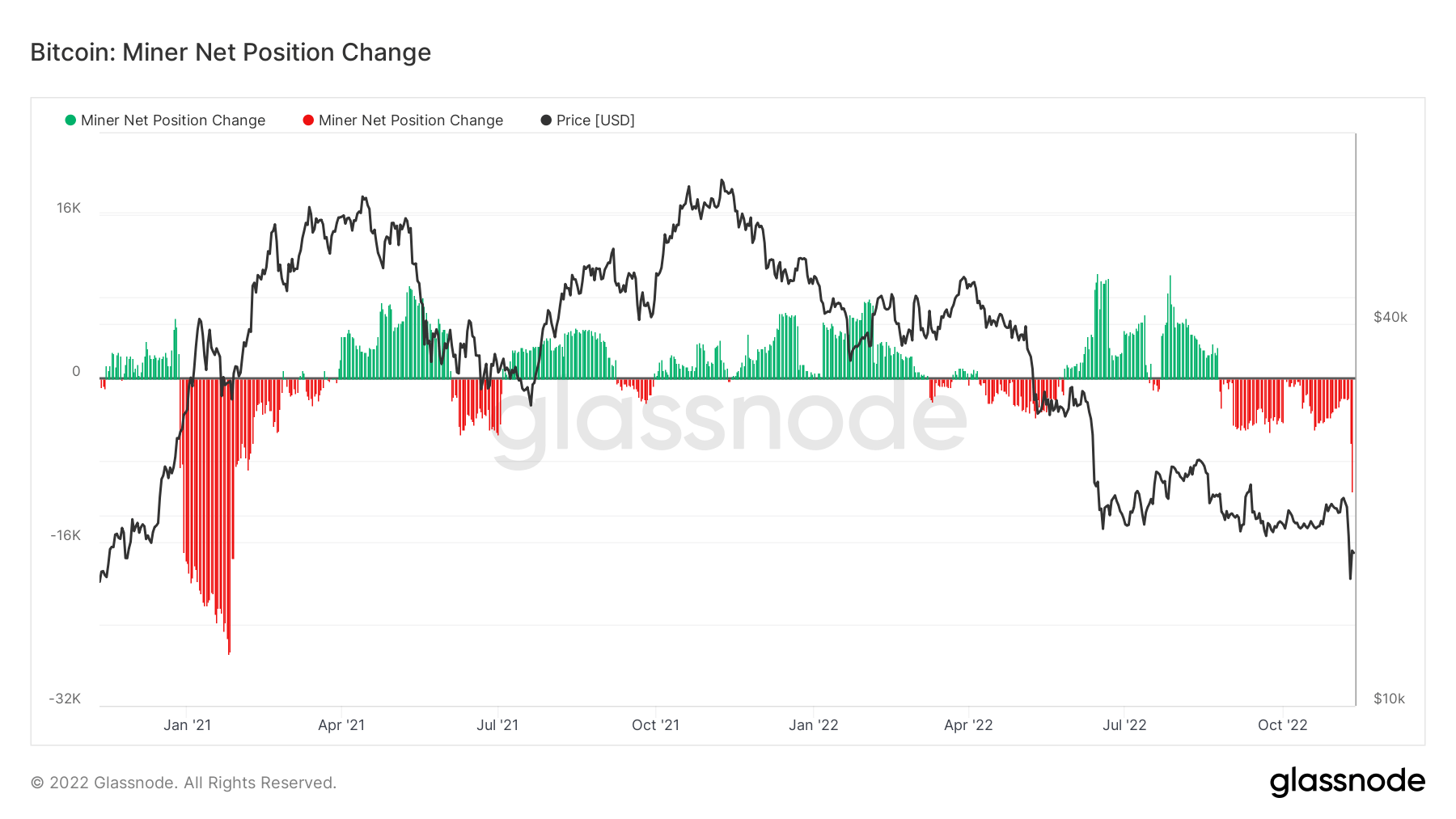
miner net position change

Graph showing the net position change for Bitcoin miners (Source: Glassnode)

Letture associate

USDT Supply Shrinks by $5.5 Billion While Stablecoin Turnover Hits Record High

The supply of stablecoins has contracted for the first time in years, with total market capitalization falling 4.3% from its May peak to $308.5 billion. Despite this decline, June saw a record $1.83 trillion in adjusted transaction volume for stablecoins, a 60% increase from May. This divergence suggests a shift in usage patterns: less capital is sitting idle, while the remaining supply circulates more rapidly through payment and trading systems. Specifically, the supply of Tether's USDT decreased from approximately $189.54 billion to $184 billion between May 1 and July 29, while Circle's USDC supply fell from $77.27 billion to $72.41 billion. Part of this capital appears to have moved into tokenized Treasury products, a sector whose value has grown to over $16 billion, partly driven by regulations like the 2025 GENIUS Act that prohibit interest payments on payment-focused stablecoins. Transaction velocity is emerging as a key metric, with stablecoins now turning over about six times per month—double the rate from two years ago. USDC, despite having a smaller supply than USDT, processed about $1.21 trillion in adjusted volume in June, leading in settlement activity. While a significant portion of on-chain volume may not represent genuine economic payments, identifiable real-world payments have grown sharply, reaching an estimated $390 billion in 2025. The data indicates stablecoins are evolving from static collateral into active financial infrastructure.

cryptonews.ru20 min fa

USDT Supply Shrinks by $5.5 Billion While Stablecoin Turnover Hits Record High

cryptonews.ru20 min fa

Trading

Spot
活动图片