Terra LUNA Classic continues astonishing come back with 2,400% gains over last 7 days

cryptoslatePubblicato 2022-09-02Pubblicato ultima volta 2022-09-02

Introduzione

Terra LUNA Classic (LUNC) continues climbing higher amid plans to revive the chain and tempt investors back.

Terra LUNA Classic (LUNC) continues climbing higher amid plans to revive the chain and tempt investors back. Since August 26, LUNC spiked as high as $0.00031131, equating to more than 2,400% gains.

However, bull exhaustion has now set in, with LUNC giving up all of today’s gains and reverting back below the previous day’s close.
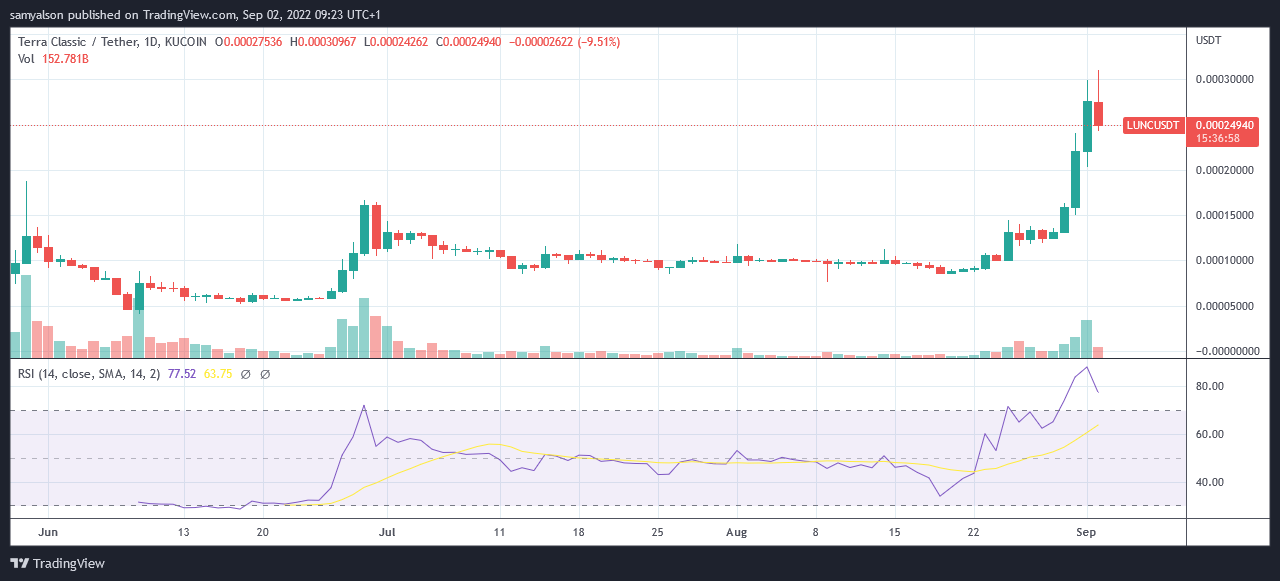
LUNA Classic daily chart

Source: LUNCUSDT on TradingView.com

Nonetheless, since LUNC’s all-time low of $0.000000999967, on May 13, the previously “dead” token is up an astonishing 27,000%.

LUNC comeback

The Terra ecosystem collapsed in May following the UST de-peg. The stablecoin dropped as low as $0.006 during the panic. Despite attempts to re-establish its peg price, UST remains significantly below $1, currently trading at $0.03458.

UST worked in conjunction with the native LUNA token in an algorithmic process to ensure its price stability. Since losing its peg, the entire Terra ecosystem has been marred in controversy, with allegations that the project was a scam from the start, orchestrated by founder Do Kwon.

With billions lost and regulators circling, the development and governance were handed over to the community and rebranded as LUNA Classic. But given the controversies, many investors remain wary, especially those previously stung by the scandal.

Despite that, the roll-out of new features appears to be winning over investors, as evidenced by the LUNA Classic’s phenomenal rise since mid-August. Crypto Analysts Miles Deutscher pointed out that LUNA Classic proves that huge returns are possible during a bear market.

What’s in store next?

At the center of this revival is a generous staking mechanism, which went live on August 27. The staking ratio was at 2.6% of the total supply on launch. However, the staking ratio continues to grow. According to @LuncStaking_Bot, the current ratio has almost tripled in less than two weeks, at 7.5%.

Current staking rewards are around 37% per year, which is significantly more than Cardano’s approximate 5% rate. However, unsustainable yields were a factor in the original Terra ecosystem’s demise.

As well as the existing burn mechanism, which has taken out more than 3 billion tokens from circulation, Deutscher tweeted about an additional burning mechanism applied to token swaps at the rate of 1.2% of transaction volume.

He added that major exchanges, including Binance and Kucoin, are rumored to support the token swap burn, which will go live on September 12.

Crypto di tendenza

Letture associate

How Does Codex Use a Computer? Three Entry Points and Permission Boundaries

This article explains the three primary methods for Codex to interact with a computer, each with distinct use cases, permission boundaries, and trust levels. **1. Computer Use:** This offers the broadest access, allowing Codex to visually control and interact with the graphical user interface of authorized macOS/Windows apps, system settings, and even iOS simulators. It's ideal for tasks lacking APIs or structured tools, such as operating legacy software or multi-app workflows. However, it's the slowest method and has the widest permission scope, requiring careful supervision for sensitive actions. **2. Chrome Extension:** This grants Codex access to the user's logged-in Chrome browser state, including cookies, profiles, and open tabs. It's best for tasks requiring user identity across websites like Gmail, LinkedIn, Salesforce, or internal dashboards. Its key advantage is multi-tab control for complex workflows. While more powerful for browser-based tasks than Computer Use, it carries higher sensitivity as actions are performed under the user's identity. **3. In-App Browser:** This is a browser isolated within the Codex thread, separate from the user's personal browsing data. It excels in web development and debugging scenarios—previewing local servers, testing responsive layouts, or annotating designs directly on the page. Its isolation is a strength for development but a limitation for tasks requiring login sessions. The core principle is to choose the narrowest, safest, and most structured interface for the task. Use plugins or MCPs first, resort to visual control (Computer Use) only for GUI-dependent tasks, employ the Chrome extension for identity-reliant browser work, and prefer the In-App Browser for isolated development. **Appshots** are clarified as a fourth, complementary tool for *inputting* context—capturing a screenshot of a window to point Codex to something—rather than a method for Codex to *act*. Together, this layered approach highlights a key to AI agent productization: not granting unlimited permissions, but constraining them within clear boundaries for specific tasks while preserving user oversight.

marsbit1 h fa

How Does Codex Use a Computer? Three Entry Points and Permission Boundaries

marsbit1 h fa

The "Iron Rule" of Chip Equipment Is Being Broken

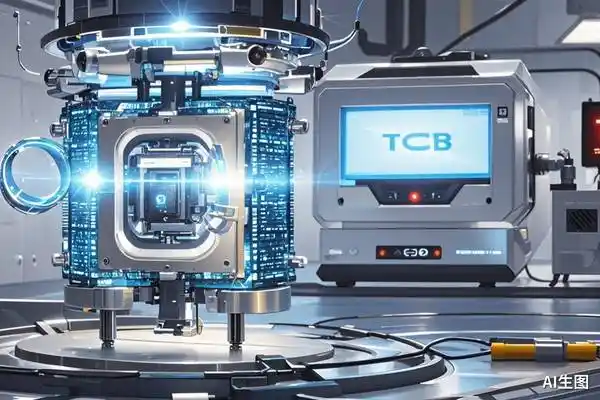
For years, the semiconductor equipment industry followed an unwritten "iron rule": suppliers offered steep discounts for new tool introductions (Design-in) and faced consistent price pressure during repeat orders, especially during market downturns. This long-standing buyer's market dynamic is now being upended. Recently, SK Hynix's primary equipment suppliers have reportedly requested a 3-4% price *increase*, a nearly unprecedented move. This shift is driven by a severe supply-demand imbalance fueled by the AI compute boom. Securing equipment has become an urgent arms race as chipmakers' expansion speed dictates their ability to fulfill massive AI chip orders. Key areas feeling the strain include: **TCB (Thermal Compression Bonding) Equipment:** Demand is exploding, driven by the simultaneous needs of HBM4 memory stacking, AI chip Chip-on-Substrate (C2S), and logic Chiplet Chip-on-Wafer (C2W) packaging. Players like Hanmi Semiconductor, Hanwha Semitech, and ASMPT are receiving major orders. While hybrid bonding is seen as the future, TCB remains the pragmatic choice for HBM4 mass production, with its lifecycle extended by relaxed specifications and ongoing technological upgrades. **Test Equipment Bottlenecks:** Ironically, AI-driven shortages are now crippling test equipment manufacturing. Critical components like FPGAs, Driver ICs, and CPUs face severe shortages and extended lead times (up to 52 weeks for FPGAs), as AI data center and server vendors prioritize supply. This creates a paradoxical cycle: AI chip shortages drive fab expansion, which requires more test equipment, whose production is delayed because its key parts are diverted to make AI chips. The industry is entering a broad, AI-powered upcycle. SEMI forecasts global semiconductor equipment sales to hit a record $156 billion by 2027, fueled by investment in advanced logic/foundry, HBM-driven DRAM, and advanced packaging (like CoWoS). Major players like TSMC, SK Hynix, and Micron are aggressively ramping capital expenditure. In conclusion, leading equipment vendors are no longer just selling tools; they are selling the critical capability to deliver AI-era capacity. Pricing power is shifting decisively to those with indispensable technology in key process nodes like advanced logic, HBM, and advanced packaging, rewriting the industry's traditional power structure.

marsbit1 h fa

The "Iron Rule" of Chip Equipment Is Being Broken

marsbit1 h fa

Trading

Spot
Futures

Articoli Popolari

Come comprare LUNC

Benvenuto in HTX.com! Abbiamo reso l'acquisto di Terra Classic (LUNC) semplice e conveniente. Segui la nostra guida passo passo per intraprendere il tuo viaggio nel mondo delle criptovalute.Step 1: Crea il tuo Account HTXUsa la tua email o numero di telefono per registrarti il tuo account gratuito su HTX. Vivi un'esperienza facile e sblocca tutte le funzionalità,Crea il mio accountStep 2: Vai in Acquista crypto e seleziona il tuo metodo di pagamentoCarta di credito/debito: utilizza la tua Visa o Mastercard per acquistare immediatamente Terra ClassicLUNC.Bilancio: Usa i fondi dal bilancio del tuo account HTX per fare trading senza problemi.Terze parti: abbiamo aggiunto metodi di pagamento molto utilizzati come Google Pay e Apple Pay per maggiore comodità.P2P: Fai trading direttamente con altri utenti HTX.Over-the-Counter (OTC): Offriamo servizi su misura e tassi di cambio competitivi per i trader.Step 3: Conserva Terra Classic (LUNC)Dopo aver acquistato Terra Classic (LUNC), conserva nel tuo account HTX. In alternativa, puoi inviare tramite trasferimento blockchain o scambiare per altre criptovalute.Step 4: Scambia Terra Classic (LUNC)Scambia facilmente Terra Classic (LUNC) nel mercato spot di HTX. Accedi al tuo account, seleziona la tua coppia di trading, esegui le tue operazioni e monitora in tempo reale. Offriamo un'esperienza user-friendly sia per chi ha appena iniziato che per i trader più esperti.

102 Totale visualizzazioniPubblicato il 2024.12.12Aggiornato il 2026.06.02

Come comprare LUNC

Discussioni

Benvenuto nella Community HTX. Qui puoi rimanere informato sugli ultimi sviluppi della piattaforma e accedere ad approfondimenti esperti sul mercato. Le opinioni degli utenti sul prezzo di LUNC LUNC sono presentate come di seguito.

活动图片