Weekly Token Unlock: XPL to Release Millions in Token Value

marsbitPubblicato 2026-06-21Pubblicato ultima volta 2026-06-21

Introduzione

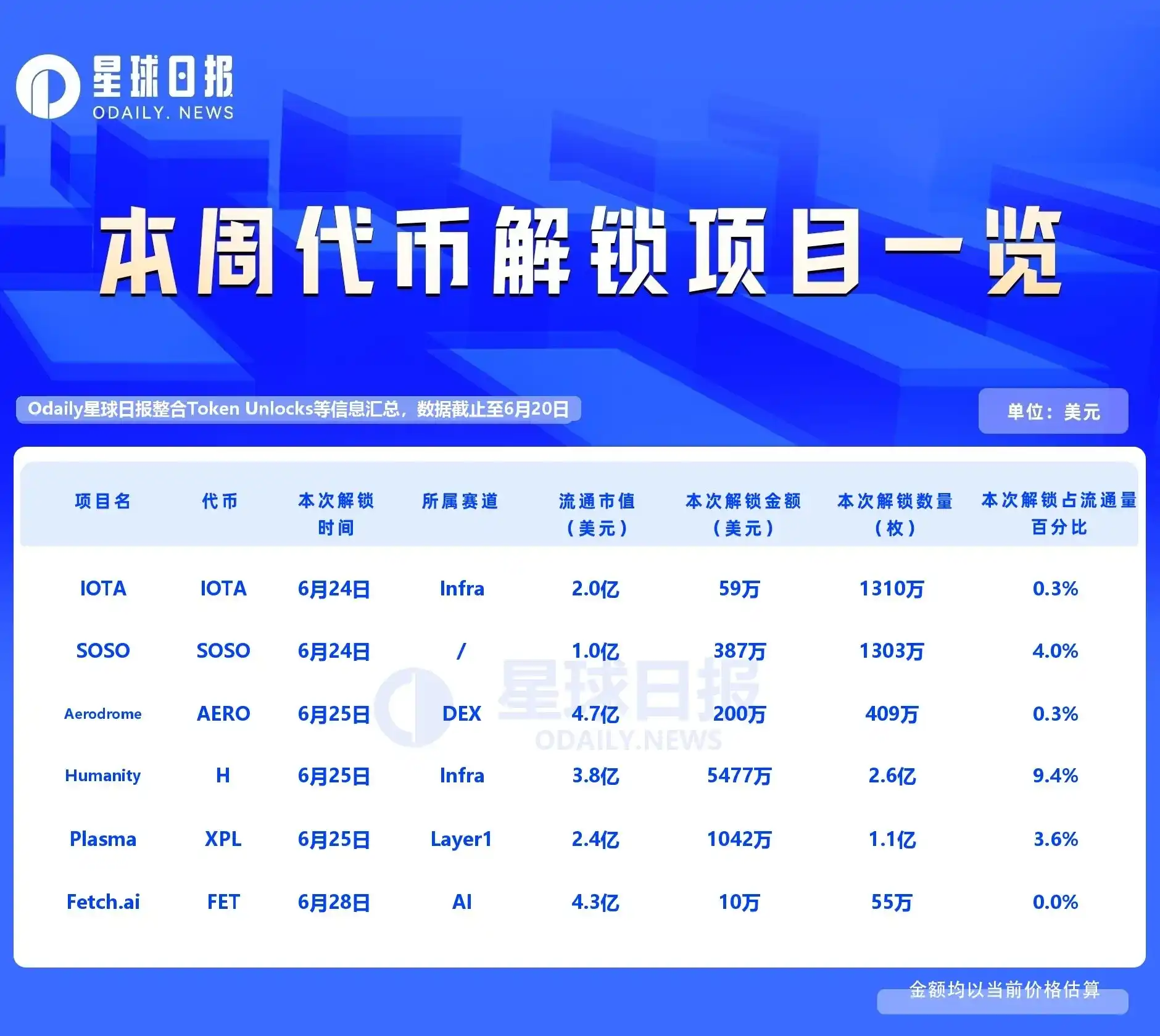
Weekly Token Unlocks: XPL and SoSoValue Tokens Worth Over $10 Million Set for Release This week sees significant token unlocks for two projects. SoSoValue, an AI-powered crypto investment research platform, will unlock 13.03 million tokens, valued at approximately $3.87 million. The project aims to merge CeFi efficiency with DeFi transparency. Separately, Plasma, a Layer 1 blockchain designed for global stablecoin payments, will unlock 110 million tokens worth about $10.42 million. The network focuses on high throughput, stablecoin-native features, and full EVM compatibility. Both projects have provided their detailed token release schedules.

SoSoValue

Project Twitter: https://x.com/SoSoValueCrypto

Project Website: https://sosovalue.com/

This Unlock Amount: 13.03 million tokens

This Unlock Value: ~$3.87 million

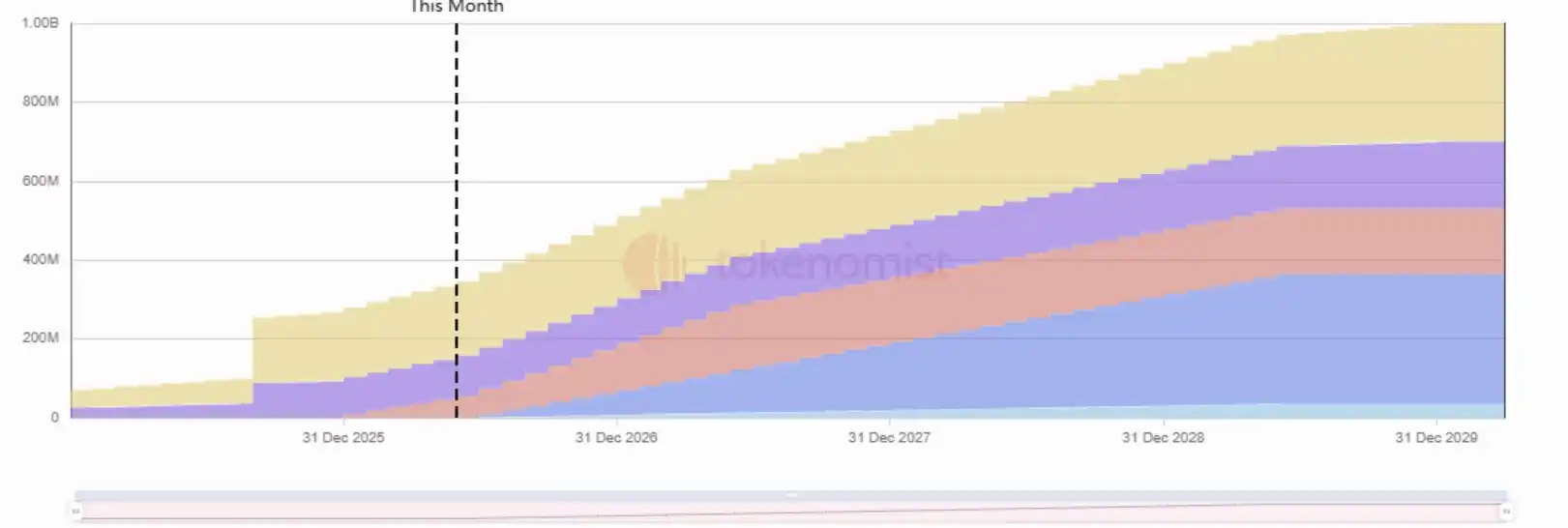
SoSoValue is an AI-powered investment research platform that combines the efficiency of CeFi with the transparency of DeFi, dedicated to addressing challenges such as information overload and cross-chain asset management in the cryptocurrency market.

The specific release schedule is as follows:

Plasma

Project Twitter: https://x.com/Plasma

Project Website: https://www.plasma.to/

This Unlock Amount: 110 million tokens

This Unlock Value: ~$10.42 million

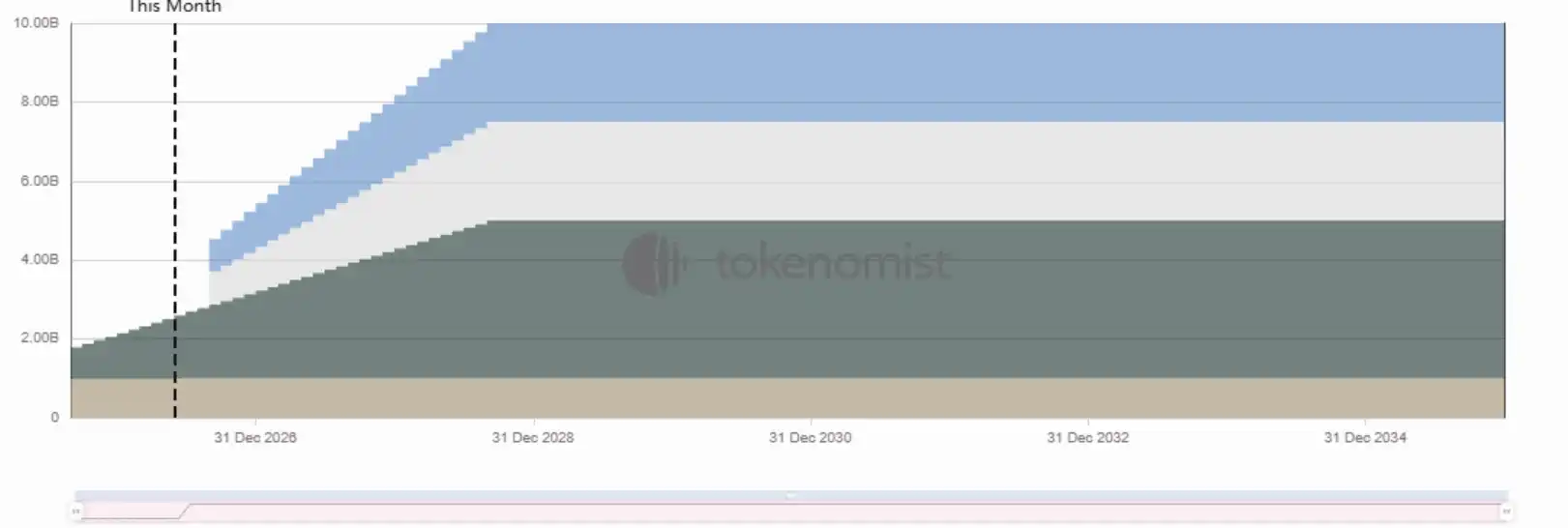
Plasma is a Layer 1 blockchain specifically built for global stablecoin payments. It integrates high throughput, stablecoin-native functionality, and full EVM compatibility, providing developers with the foundational infrastructure to build next-generation payment and financial applications. It also supports customizable gas tokens, zero-fee USDT transfers, and private payments.

The specific release schedule is as follows:

Crypto di tendenza

Domande pertinenti

QWhat are the two projects mentioned in the article that are undergoing token unlocks this week?

AThe two projects are SoSoValue and Plasma (XPL).

QAccording to the article, how much is the Plasma (XPL) token unlock worth in USD?

AThe Plasma (XPL) token unlock is worth approximately $10.42 million.

QWhat is the primary focus or purpose of the Plasma blockchain as described in the article?

APlasma is a Layer 1 blockchain specifically built for global stablecoin payments, offering high throughput, stablecoin-native features, and full EVM compatibility for next-generation payment and financial applications.

QWhat is the stated goal of the SoSoValue platform?

ASoSoValue is an AI-driven investment research platform that aims to combine the efficiency of CeFi with the transparency of DeFi to address challenges like information overload and cross-chain asset management in the cryptocurrency market.

QHow many SoSoValue tokens are being unlocked this week according to the data provided?

A13.03 million SoSoValue tokens are being unlocked this week.

Letture associate

Beyond the Stadium: The Profitable Games Surrounding the World Cup

"Beyond the Pitch: The Profit Game Around the World Cup" The FIFA World Cup transcends being a sporting spectacle, evolving into a massive global arena for speculation and profit-seeking. The 2026 tournament has amplified this dynamic, creating a multi-layered ecosystem of financial opportunism alongside the football. **Prediction markets** have surged into the mainstream. Platforms like Polymarket and Kalshi saw trading volumes for World Cup contracts soar, attracting new users with their financial trading model and high-profile, chain-based wealth stories that overshadow traditional sports betting in terms of growth and narrative. However, **traditional sportsbooks** remain the dominant force, leveraging established user habits, legal markets, and comprehensive product offerings to handle the vast majority of speculative wagers, with projections suggesting record-breaking betting volumes. Capital markets also react. **"Concept stocks"** in countries like South Korea and Japan experience volatile price swings based on team performance and anticipated fan spending on items like chicken, beer, and viewing parties, effectively becoming a stock market reflecting fan sentiment. The **ticket resale market** has become a sophisticated arena for arbitrage. Prices fluctuate wildly based on team draws and star power, with sellers sometimes listing tickets they don't yet own in a practice akin to short-selling, while FIFA's own "Right to Buy" tokens add another layer of speculative trading. **Collectibles and merchandise** offer another avenue. Panini sticker albums, with their inherent scarcity and nostalgic value, can become high-value collectibles. Limited-edition or locally themed jerseys command significant premiums on secondary markets, and even counterfeit vendors profit from fans' desire for affordable match-day identity. The **cryptocurrency** space has seen a frenzy of speculative, unauthorized World Cup-themed meme coins on chains like Solana. These tokens, often exploiting team names and player imagery, experience extreme pump-and-dump cycles, creating stories of massive gains for a few early entrants and steep losses for many others. Finally, an entire industry thrives on **providing information and tools** to other speculators. Developers create platforms like SeatSidekick to track ticket inventory and prices, while paid Telegram groups and subscriptions sell betting tips and predictions, monetizing the widespread desire for an informational edge. In essence, the World Cup has become a compressed, global laboratory for speculation. While the games determine champions on the field, a parallel, complex network of financial transactions—spanning prediction contracts, bets, stocks, tickets, collectibles, crypto, and information services—settles its own scores in the global market.

marsbit12 min fa

Beyond the Stadium: The Profitable Games Surrounding the World Cup

marsbit12 min fa

How Does Codex Use a Computer? Three Entry Points and Permission Boundaries

This article explains the three primary methods for Codex to interact with a computer, each with distinct use cases, permission boundaries, and trust levels. **1. Computer Use:** This offers the broadest access, allowing Codex to visually control and interact with the graphical user interface of authorized macOS/Windows apps, system settings, and even iOS simulators. It's ideal for tasks lacking APIs or structured tools, such as operating legacy software or multi-app workflows. However, it's the slowest method and has the widest permission scope, requiring careful supervision for sensitive actions. **2. Chrome Extension:** This grants Codex access to the user's logged-in Chrome browser state, including cookies, profiles, and open tabs. It's best for tasks requiring user identity across websites like Gmail, LinkedIn, Salesforce, or internal dashboards. Its key advantage is multi-tab control for complex workflows. While more powerful for browser-based tasks than Computer Use, it carries higher sensitivity as actions are performed under the user's identity. **3. In-App Browser:** This is a browser isolated within the Codex thread, separate from the user's personal browsing data. It excels in web development and debugging scenarios—previewing local servers, testing responsive layouts, or annotating designs directly on the page. Its isolation is a strength for development but a limitation for tasks requiring login sessions. The core principle is to choose the narrowest, safest, and most structured interface for the task. Use plugins or MCPs first, resort to visual control (Computer Use) only for GUI-dependent tasks, employ the Chrome extension for identity-reliant browser work, and prefer the In-App Browser for isolated development. **Appshots** are clarified as a fourth, complementary tool for *inputting* context—capturing a screenshot of a window to point Codex to something—rather than a method for Codex to *act*. Together, this layered approach highlights a key to AI agent productization: not granting unlimited permissions, but constraining them within clear boundaries for specific tasks while preserving user oversight.

marsbit1 h fa

How Does Codex Use a Computer? Three Entry Points and Permission Boundaries

marsbit1 h fa

The "Iron Rule" of Chip Equipment Is Being Broken

For years, the semiconductor equipment industry followed an unwritten "iron rule": suppliers offered steep discounts for new tool introductions (Design-in) and faced consistent price pressure during repeat orders, especially during market downturns. This long-standing buyer's market dynamic is now being upended. Recently, SK Hynix's primary equipment suppliers have reportedly requested a 3-4% price *increase*, a nearly unprecedented move. This shift is driven by a severe supply-demand imbalance fueled by the AI compute boom. Securing equipment has become an urgent arms race as chipmakers' expansion speed dictates their ability to fulfill massive AI chip orders. Key areas feeling the strain include: **TCB (Thermal Compression Bonding) Equipment:** Demand is exploding, driven by the simultaneous needs of HBM4 memory stacking, AI chip Chip-on-Substrate (C2S), and logic Chiplet Chip-on-Wafer (C2W) packaging. Players like Hanmi Semiconductor, Hanwha Semitech, and ASMPT are receiving major orders. While hybrid bonding is seen as the future, TCB remains the pragmatic choice for HBM4 mass production, with its lifecycle extended by relaxed specifications and ongoing technological upgrades. **Test Equipment Bottlenecks:** Ironically, AI-driven shortages are now crippling test equipment manufacturing. Critical components like FPGAs, Driver ICs, and CPUs face severe shortages and extended lead times (up to 52 weeks for FPGAs), as AI data center and server vendors prioritize supply. This creates a paradoxical cycle: AI chip shortages drive fab expansion, which requires more test equipment, whose production is delayed because its key parts are diverted to make AI chips. The industry is entering a broad, AI-powered upcycle. SEMI forecasts global semiconductor equipment sales to hit a record $156 billion by 2027, fueled by investment in advanced logic/foundry, HBM-driven DRAM, and advanced packaging (like CoWoS). Major players like TSMC, SK Hynix, and Micron are aggressively ramping capital expenditure. In conclusion, leading equipment vendors are no longer just selling tools; they are selling the critical capability to deliver AI-era capacity. Pricing power is shifting decisively to those with indispensable technology in key process nodes like advanced logic, HBM, and advanced packaging, rewriting the industry's traditional power structure.

marsbit1 h fa

The "Iron Rule" of Chip Equipment Is Being Broken

marsbit1 h fa

Trading

Spot
Futures

Articoli Popolari

Cosa è PLASMA

Plasma: Una Soluzione All'Avanguardia per la Scalabilità della Blockchain Introduzione a Plasma Man mano che il panorama delle criptovalute evolve, cresce anche la necessità di una maggiore efficienza all'interno delle reti blockchain. Plasma, una soluzione di scalabilità di secondo livello, emerge come un attore pionieristico in questo ambito, in particolare nel campo dello sviluppo Web3. Spostando strategicamente una parte sostanziale dei compiti dalla catena principale a una serie di catene più piccole, Plasma promette di aumentare significativamente la scalabilità e le prestazioni di Ethereum—una piattaforma blockchain ampiamente utilizzata, all'avanguardia delle applicazioni decentralizzate. Cos'è Plasma? Plasma è una soluzione innovativa di scalabilità off-chain progettata appositamente per la blockchain di Ethereum. È stata introdotta nell'agosto 2017 da Vitalik Buterin, co-fondatore di Ethereum, e Joseph Poon, un noto sostenitore di soluzioni di scalabilità come il Lightning Network. Plasma funge da struttura che consente la creazione di applicazioni scalabili stabilendo una struttura gerarchica di catene secondarie sopra la catena principale di Ethereum. Alla base, Plasma consente lo sviluppo di catene laterali potenzialmente infinite che possono operare in modo indipendente, continuando a fare affidamento sulla rete Ethereum per la sicurezza e il consenso. Questa architettura è sostenuta da smart contract e Merkle Trees, che gestiscono in modo efficiente le transazioni e l'archiviazione dei dati. Obiettivi Fondamentali di Plasma L'obiettivo principale di Plasma è aumentare il throughput della rete Ethereum. Deviano un volume sostanziale di transazioni dalla congesta catena principale, l'architettura di Plasma offre velocità di transazione superiori, un'elaborazione dei dati più efficiente e costi di transazione più bassi. Ciò è particolarmente vitale in un'epoca in cui la domanda di applicazioni decentralizzate—specie nei settori della finanza, dei giochi e della gestione della catena di approvvigionamento—raggiunge livelli senza precedenti. Creatore di Plasma Plasma è frutto dell'ingegno di due figure rinomate nella comunità blockchain: Vitalik Buterin e Joseph Poon. Buterin è celebrato principalmente per la co-fondazione di Ethereum e per aver spinto i confini di ciò che la tecnologia blockchain può raggiungere. Poon, d'altra parte, è conosciuto per aver sostenuto soluzioni scalabili, che consentono transazioni più rapide e più economiche nelle reti blockchain. La loro collaborazione sul framework di Plasma ha notevolmente contribuito alla sua natura innovativa, combinando approfondimenti tecnici avanzati con applicazioni pratiche. Investitori di Plasma Sebbene le specifiche fondazioni o organizzazioni di investimento che supportano Plasma rimangano riservate, il progetto ha attirato l'interesse di varie figure e attori prominenti nel settore blockchain e delle criptovalute. Con il suo potenziale per migliorare la scalabilità all'interno di Ethereum, ha catturato l'attenzione di vari enti che mirano a spingere i confini della tecnologia blockchain. Come Funziona Plasma? La funzionalità unica di Plasma è attribuita al suo framework architettonico che si basa su catene secondarie e sulla loro interazione con la rete principale di Ethereum. Di seguito sono riportati alcuni fattori chiave che contribuiscono all'approccio innovativo di Plasma: Catene Secondarie: Plasma stabilisce numerose catene secondarie che possono eseguire transazioni indipendentemente dalla catena principale di Ethereum. Ogni catena secondaria opera come un contratto intelligente separato con caratteristiche uniche, consentendo agli sviluppatori di creare soluzioni personalizzate in base alle loro specifiche esigenze. Smart Contracts e Merkle Trees: Il framework utilizza smart contracts, che sono accordi auto-esecutivi con condizioni predefinite, abbinati a Merkle Trees che consentono una verifica efficiente dei dati. Questa tecnologia consente a Plasma di raggiungere sia un'elevata scalabilità che sicurezza. Compressione delle Transazioni: Raggruppando le transazioni sulle catene secondarie, Plasma riduce il carico di dati sulla rete Ethereum. Questo significa che è necessario registrare meno transazioni sulla catena principale—liberando così spazio e riducendo la congestione. Sicurezza Migliorata: Sebbene sia off-chain, Plasma sfrutta le misure di sicurezza della rete principale di Ethereum, assicurando che tutte le transazioni sulle catene secondarie mantengano un elevato livello di integrità e sicurezza. Cronologia di Plasma Comprendere lo sviluppo di Plasma implica tracciare i suoi traguardi significativi: Agosto 2017: Plasma è stato presentato per la prima volta da Vitalik Buterin e Joseph Poon come una soluzione scalabile per affrontare le sfide delle prestazioni di Ethereum. 2018: Il framework Plasma è stato ufficialmente sviluppato e reso disponibile su GitHub, segnando un passo cruciale verso la sua implementazione in applicazioni pratiche. 2019: Con l'aumento della consapevolezza su Plasma, ha iniziato ad attrarre sviluppatori interessati a scalare le applicazioni Ethereum, aumentando così la sua adozione. 2020: Plasma ha continuato a evolversi, con sostanziali miglioramenti apportati alla sua architettura e funzionalità—rendendolo ancora più allettante per gli sviluppatori. Caratteristiche Chiave di Plasma Plasma vanta diverse caratteristiche che lo rendono una soluzione trasformativa nel settore blockchain: Scalabilità: Creando più catene secondarie, Plasma può gestire un volume maggiore di transazioni senza ulteriori oneri sulla catena principale di Ethereum. Velocità: Ogni catena secondaria può elaborare le transazioni più rapidamente, fornendo agli utenti una migliore esperienza e servizio. Costi di Transazione Inferiori: La struttura di Plasma riduce efficacemente i costi associati alle transazioni minimizzando l'onere sulla catena principale. Interoperabilità: L'architettura consente a Plasma di interagire senza soluzione di continuità con più blockchain, migliorando la funzionalità tra le reti. Sicurezza: Sfruttando la sicurezza della catena principale di Ethereum, Plasma garantisce l'integrità delle proprie operazioni mentre utilizza le proprie catene secondarie. Casi d'Uso di Plasma L'innovativa architettura di Plasma apre la strada a varie applicazioni pratiche in diversi settori: Finanza Decentralizzata (DeFi): Plasma ha la capacità di migliorare la scalabilità e l'efficienza delle applicazioni DeFi, creando processi di trading più fluidi ed efficaci. Gaming: Il framework facilita lo sviluppo di esperienze di gioco rapide ed economiche, rendendolo attraente per gli sviluppatori dell'industria dei giochi. Gestione della Catena di Approvvigionamento: Con la capacità di archiviare elaborazioni di transazioni efficienti, Plasma può favorire lo sviluppo di soluzioni decentralizzate per la gestione della catena di approvvigionamento. Conclusione Plasma si trova all'avanguardia della tecnologia blockchain, posizionandosi come una soluzione di scalabilità di secondo livello fondamentale mirata a migliorare l'efficienza della rete Ethereum e oltre. Attraverso la sua struttura unica di catene secondarie, smart contracts e Merkle Trees, Plasma offre una soluzione convincente alla crisi di scalabilità che da tempo affligge le reti blockchain. Man mano che la tecnologia blockchain continua a progredire, soluzioni come Plasma promettono di rimodellare il modo in cui gli sviluppatori affrontano le sfide di scalabilità, potenzialmente rivoluzionando il funzionamento delle applicazioni decentralizzate. Gli sforzi continui dei suoi creatori e l'interesse di vari stakeholder segnalano un futuro luminoso per Plasma mentre cerca di elevare le capacità della blockchain a nuove vette nel regno digitale.

186 Totale visualizzazioniPubblicato il 2024.12.03Aggiornato il 2024.12.03
Cosa è PLASMA

Come comprare XPL

Benvenuto in HTX.com! Abbiamo reso l'acquisto di Plasma (XPL) semplice e conveniente. Segui la nostra guida passo passo per intraprendere il tuo viaggio nel mondo delle criptovalute.Step 1: Crea il tuo Account HTXUsa la tua email o numero di telefono per registrarti il tuo account gratuito su HTX. Vivi un'esperienza facile e sblocca tutte le funzionalità,Crea il mio accountStep 2: Vai in Acquista crypto e seleziona il tuo metodo di pagamentoCarta di credito/debito: utilizza la tua Visa o Mastercard per acquistare immediatamente PlasmaXPL.Bilancio: Usa i fondi dal bilancio del tuo account HTX per fare trading senza problemi.Terze parti: abbiamo aggiunto metodi di pagamento molto utilizzati come Google Pay e Apple Pay per maggiore comodità.P2P: Fai trading direttamente con altri utenti HTX.Over-the-Counter (OTC): Offriamo servizi su misura e tassi di cambio competitivi per i trader.Step 3: Conserva Plasma (XPL)Dopo aver acquistato Plasma (XPL), conserva nel tuo account HTX. In alternativa, puoi inviare tramite trasferimento blockchain o scambiare per altre criptovalute.Step 4: Scambia Plasma (XPL)Scambia facilmente Plasma (XPL) nel mercato spot di HTX. Accedi al tuo account, seleziona la tua coppia di trading, esegui le tue operazioni e monitora in tempo reale. Offriamo un'esperienza user-friendly sia per chi ha appena iniziato che per i trader più esperti.

255 Totale visualizzazioniPubblicato il 2025.09.26Aggiornato il 2026.06.02

Come comprare XPL

Discussioni

Benvenuto nella Community HTX. Qui puoi rimanere informato sugli ultimi sviluppi della piattaforma e accedere ad approfondimenti esperti sul mercato. Le opinioni degli utenti sul prezzo di XPL XPL sono presentate come di seguito.

活动图片