Luno Cuts 20% of Global Workforce as Cryptocurrency Exchange Shifts Priorities Towards Automation

cryptonews.ruPubblicato 2026-07-30Pubblicato ultima volta 2026-07-30

Introduzione

Luno, a global cryptocurrency exchange owned by Digital Currency Group, is reducing its global workforce by 20% as part of a major operational restructuring driven by a downturn in retail crypto activity and increased automation. CEO James Lanigan announced the layoffs on July 28, stating it was a difficult but necessary decision to build a more sustainable structure for the long term. The company did not disclose the total number of affected employees, though South African staff are among those impacted, with formal consultations initiated there in line with local labor laws. This marks the second major round of layoffs in three and a half years, following a 35% staff reduction in January 2023. The company cites cyclical declines in retail user activity and ongoing investment in automated tools as key factors behind the restructuring, which has fundamentally changed the firm's resource needs. Concurrently, Luno is reorganizing into three unified divisions built on a single core platform: 1) a consolidated consumer and API platform serving over 16 million users in Africa and Asia-Pacific, 2) a stablecoin solutions unit focused on the zar-backed 'Zaru' stablecoin launched in February 2026, and 3) an institutional arm offering OTC services and cross-border settlement networks. This restructuring follows recent market withdrawals, with Luno discontinuing services in certain markets from September 1, 2026.

On July 28th, CEO James Lanigan announced that cryptocurrency exchange Luno is cutting 20% of its global workforce and restructuring its operations into three separate divisions, citing a downturn in retail trading and a growing trend towards automation. However, the company did not disclose the total number of employees affected by the layoffs.

Among the staff being laid off are South Africans, though specific regional figures were not confirmed. Luno, which is headquartered in London and operates in Africa and Asia, is owned by the American firm Digital Currency Group.

"This was an incredibly difficult decision, and we did not take it lightly," Lanigan stated. "Our organization is filled with incredible people, and saying goodbye to colleagues who have contributed so much is extremely hard. But this was a decision we had to make — for our customers, our remaining team, and our long-term mission to build a sustainable and focused structure."

This wave of layoffs marks the second major round of cuts on the platform in three and a half years. In January 2023, during a sharp downturn in the digital asset market, Luno cut 35% of its workforce, which at the time numbered around 960 employees.

In South Africa, where Luno was founded in 2013, formal consultations with affected employees have begun in accordance with the requirements of Section 189 of the country's Labour Relations Act.

The company's leadership cited a cyclical downturn in retail user activity in the cryptocurrency space and ongoing investments in automated tools as the primary factors behind the restructuring. Luno stated that the integration of automated systems has fundamentally changed the company's resource needs, making a more streamlined operational structure necessary.

Alongside the staff reductions, Luno is restructuring its operational framework by splitting it into three unified divisions built on a single foundational platform. Firstly, the company is consolidating its consumer platform—which serves over 16 million users in Africa and the Asia-Pacific region—with an API integration for business-to-business operations. This service allows institutional partners to offer cryptocurrency trading, asset custody, and regulatory compliance under their own brand, utilizing Luno's backend infrastructure.

The second division specializes in local currency-pegged stablecoin solutions for emerging markets. The focus of this division is Zaru—a rand-backed stablecoin launched in February 2026, designed for low-cost, same-day, round-the-clock settlements. The third division represents the institutional arm, offering an over-the-counter (OTC) desk for large-volume asset conversion and cross-border currency settlement networks.

According to reports, this latest restructuring follows a recent scaling back of Luno's global presence. The platform notified users in certain markets that it would discontinue its services effective September 1, 2026. The ability to deposit funds and purchase cryptocurrency was disabled on June 1, with customers given time until August 31 to liquidate assets and withdraw funds to local bank accounts.


Domande pertinenti

QWhat are the main reasons behind Luno's decision to cut 20% of its global workforce?

AThe primary reasons cited are a cyclical decline in retail cryptocurrency activity and increased investments in automation. The integration of automated systems has fundamentally changed the company's resourcing needs, necessitating a more streamlined operational structure.

QWhen was Luno's previous major round of layoffs, and how many employees were affected then?

ALuno's previous major round of layoffs occurred in January 2023. At that time, the company cut 35% of its workforce, which then numbered around 960 employees.

QHow is Luno reorganizing its operational structure alongside the layoffs?

ALuno is reorganizing its operations into three unified divisions built on a single platform: 1) A combined consumer platform and B2B API service, 2) A stablecoin solutions division focused on ZAR stablecoins, and 3) An institutional division offering OTC trading and cross-border settlement networks.

QWhich country's specific labor law is mentioned in the article regarding consultations with affected employees in South Africa?

AThe article mentions Section 189 of South Africa's Labour Relations Act, under which formal consultations with affected employees have been initiated.

QWhat is the fate of Luno's services on certain markets, and what deadlines were given to users?

ALuno is discontinuing services on select markets as of September 1, 2026. Deposit and buy functions were disabled on June 1, and users have until August 31 to liquidate assets and withdraw funds to local bank accounts.
Letture associate

Stocks of Companies in Bitcoin Mining and AI Infrastructure Soar, Short Sellers Face Losses

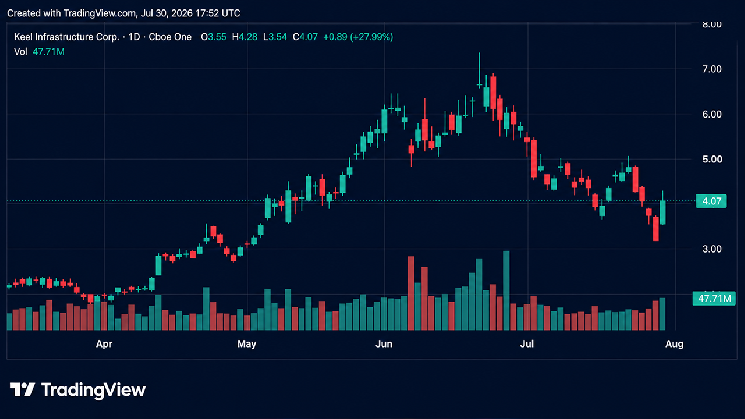
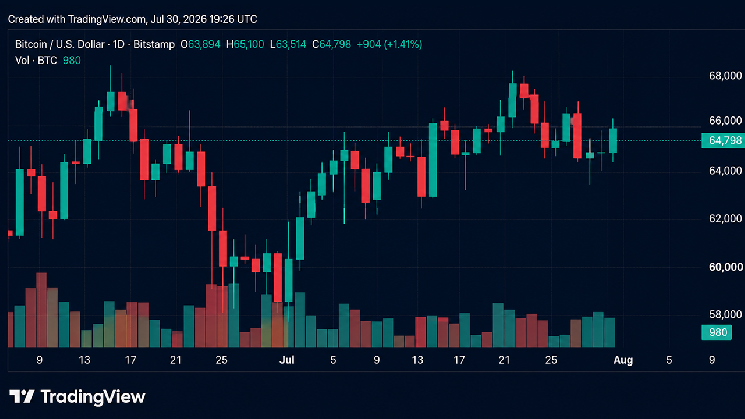
Shares of companies involved in Bitcoin mining and AI infrastructure surged, causing losses for short sellers. On Thursday, July 30, 2026, Keel Infrastructure (formerly Bitfarms) led the gains, rising 29.13%, followed by Nebius Group, Cipher Digital, and IREN Limited with jumps over 27%. Other notable gainers included Riot Platforms, Bitdeer, Core Scientific, Hut 8, and Cleanspark, with increases mostly ranging from 17% to 24%. The rally was attributed to a short squeeze triggered by a hedge fund's forced liquidation of its holdings, which were largely bought by Citadel. Additionally, Bitcoin trading above $64,000 and strong Microsoft earnings, highlighting AI's profitability, boosted market sentiment. Coreweave also announced a deal to provide AI cloud services for U.S. defense and intelligence agencies. This surge reflects a broader, longer-term trend of Bitcoin miners pivoting to AI data centers, leveraging their existing energy infrastructure and land. Recent multi-billion dollar deals by companies like Hut 8, IREN, and Terawulf for AI cloud services underscore this strategic shift. Other gainers, including Sandisk, Micron, Bloom Energy, and Cerebras, are suppliers critical to the AI infrastructure build-out. While the rally provided relief after July's losses, questions remain about capital expenditures, power availability, and long-term AI demand. The sustainability of these gains depends on these companies successfully converting their energy contracts and AI service deals into stable revenue streams.

cryptonews.ru31 min fa

Stocks of Companies in Bitcoin Mining and AI Infrastructure Soar, Short Sellers Face Losses

cryptonews.ru31 min fa

Trading

Spot
活动图片