Cardano创始人查尔斯·霍斯金森表达对牛市支持,并给出向ADA持有者空投代币的信号!

cryptonews.ruPubblicato 2026-07-29Pubblicato ultima volta 2026-07-29

Introduzione

卡尔达诺创始人查尔斯·霍斯金森对加密货币市场长期前景给出乐观预测,他认为卡尔达诺生态系统可能通过比特币DeFi和合作伙伴链模式脱颖而出。 霍斯金森指出,卡尔达诺的一大优势是能够以无需信任和税务中立的方式在链上代表比特币,且无需托管服务。他表示,比特币的UTXO模型可以映射到卡尔达诺的EUTXO结构,并通过Midnight网络开发比特币私有借贷和去中心化金融应用,这可能在比特币DeFi领域为卡尔达诺带来显著竞争优势。 他还强调,合作伙伴链模式将成为卡尔达诺长期增长的重要领域。Midnight网络的贡献和其代币NIGHT的成功,可能为新的合作伙伴链铺平道路。新链的启动有望为ADA持有者创造空投新代币的机会,从而直接惠及用户。 霍斯金森认为,行业创新不仅限于头部项目,许多重要创意来自市值排名前50、100或200的项目。他举例提到了NEAR、Algorand和Tezos创始人的贡献。 总体上,他对市场未来表示乐观,但指出美国正在讨论的《CLARITY法案》至关重要。若该法案通过,可能为行业引入大量资本,并在初期推动市场反弹。他预计加密货币总市值将再创新高,目前约4.4万亿美元的峰值仍有约50%增长空间,当前处于周期较低点,潜在催化剂可能为市场带来10万亿美元或更多新资金。 (本文不构成投资建议。)

Cardano创始人查尔斯·霍斯金森对加密货币市场的长期前景给出了乐观预测,称$ADA生态系统可能会凭借比特币DeFi和伙伴链模型在竞争中脱颖而出。

霍斯金森表示,Cardano最显著的优势之一是其能够以无需信任和税务中立的方式在网络上代表比特币,而无需托管服务。他指出,比特币的UTXO模型可以被移植到Cardano的EUTXO结构上,并认为通过Midnight网络也可以开发比特币的私人借贷应用和去中心化金融应用。

据这位Cardano创始人称,这些功能可能为$ADA生态系统在比特币DeFi领域带来显著的竞争优势。

霍斯金森还表示,伙伴链模型将成为Cardano长期增长的最大领域之一。他指出Midnight正在为Cardano生态系统做出重大贡献,并认为NIGHT代币的成功可能为新的伙伴链铺平道路。

霍斯金森称,新伙伴链的启动可能会创造新的机会,向$ADA持有者空投代币,并认为这种模式可以直接让Cardano用户受益。

霍斯金森表示,加密领域的创新并不仅限于少数几个大型项目,他指出许多重要的想法源于市值排名前50、100或200的项目。他举例提到了NEAR创始人伊利亚·波洛苏欣在区块链抽象方面的工作,Algorand创始人西尔维奥·米卡利,以及Tezos创始人亚瑟·布莱特曼,强调了他们在推动该领域发展方面的开创性作用。

霍斯金森表示,总的来说,他对加密货币市场的未来持乐观态度,但指出美国正在讨论的《CLARITY法案》至关重要。他强调,如果该法案获得通过,可能会有大量资金流入该领域,并且在初始阶段市场可能会出现暂时性复苏。

霍斯金森断言加密货币市场将再次达到历史高点,他表示目前总市值比4.4万亿美元的峰值低了约50%。他指出,当前水平与之前的周期相比是较低的低点,并且存在许多潜在的催化剂,可能为市场注入10万亿美元或更多的新资金。

*本文不构成投资建议。

end-content

Crypto di tendenza

Domande pertinenti

QCardano创始人查尔斯·霍斯金森对加密货币市场的长期前景表达了怎样的看法?

A查尔斯·霍斯金森对加密货币市场的长期前景表达了乐观的看法,他认为加密货币市场将再次达到历史新高,并且指出当前总市值距离4.4万亿美元的峰值大约低了50%。他相信存在许多潜在的催化剂,可以为市场注入10万亿美元或更多的新资本。

Q根据霍斯金森的说法,Cardano生态系统可能通过哪两个关键方面在竞争中脱颖而出?

A根据霍斯金森的说法,Cardano生态系统可能通过以下两个关键方面在竞争中脱颖而出:1) 其无需信任、税收中性、无需托管服务就能在网络上代表比特币的能力;2) 其合作伙伴链模型,他认为这将成为Cardano长期增长的最大领域之一。

Q霍斯金森提到的"分发给ADA持有者"的信号与什么有关?

A霍斯金森提到的"分发给ADA持有者"的信号与启动新的合作伙伴链有关。他认为,启动新的合作伙伴链可能会为向ADA持有者分发代币创造新的机会,并且这种模式可以直接惠及Cardano的用户。

Q霍斯金森除了Cardano之外,还提到了哪些其他区块链项目的创始人对行业发展有贡献?

A霍斯金森还提到了以下项目的创始人对区块链行业发展有贡献:NEAR的创始人伊利亚·波洛苏欣(在区块链抽象方面的工作)、Algorand的创始人西尔维奥·米卡利,以及Tezos的创始人阿瑟·布赖特曼。他强调这些创始人都是该领域的创新者。

Q霍斯金森认为美国的一项什么法案对加密市场至关重要?

A霍斯金森认为美国正在讨论的《CLARITY法案》对加密市场至关重要。他强调,如果该法案获得通过,可能会有大量资本流入这一领域,并可能在初期引发市场暂时性的复苏。

Letture associate

PA Graphics Explanation | One Chart to Understand the Major Web3 Events in August 2026

**PANews Crypto Calendar: Key Web3 Events in August 2026** PANews introduces its revamped crypto calendar, featuring comprehensive coverage, flexible filtering, and easy export options. The market in August will be shaped by multiple key events across macroeconomics, regulation, tokenomics, and project developments: * **Macro & Policy:** Key US economic data releases (July Non-Farm Payrolls, CPI), the Federal Reserve meeting minutes, and the Jackson Hole Economic Symposium will be in focus. On the regulatory front, the US Senate plans to release a new draft of the *CLARITY Act*, while the EU's expanded crypto ban against Belarus comes into effect. * **Token Unlocks:** Significant token unlocks are scheduled for assets including ENA, AVAX, CONX, ZRO, and KAITO, which may influence market volatility. * **Project Updates & Shutdowns:** Several services, including Exchange Art, Ctrl Wallet, Zapper, NFTfi, and Summer.fi, are set to cease operations or undergo major adjustments. Users are advised to manage their assets accordingly. * **Corporate Activity:** Q2 earnings reports from companies like SpaceX, Circle, and Nvidia are due. Unitree Robotics will initiate its IPO subscription on the STAR Market, and Moonshot AI plans to begin a Pre-IPO financing round. * **Industry Events:** Major conferences such as Bitcoin Asia 2026 and the 2026 Digital Expo will take place. The overarching market narrative for August will revolve around macroeconomic expectations, regulatory developments, token unlock schedules, and ongoing industry consolidation.

marsbit6 min fa

PA Graphics Explanation | One Chart to Understand the Major Web3 Events in August 2026

marsbit6 min fa

Wall Street's Most Famous 'Cassandra' Now Has His Sights Set on Nvidia

Michael Burry, the famed "Big Short" investor, has once again captured Wall Street's attention with a series of short positions against major tech and semiconductor stocks, most notably Nvidia. In late June and July, through his "Cassandra Unchained" newsletter, Burry disclosed short bets against Nvidia, Tesla, Applied Materials, Caterpillar, the SOXX semiconductor ETF, and later, Micron Technology. His core thesis revolves around potential distortions in the AI infrastructure boom, specifically questioning whether extended depreciation schedules (e.g., 6 years vs. a realistic 2-3 years for AI chips) by cloud giants like Microsoft and Google artificially inflate profits. He also raises concerns about possible "off-balance-sheet circular financing," where chip demand might be propped up by vendor-backed funding to clients. Nvidia's stock experienced volatility following these disclosures, briefly dipping but largely holding near Burry's reported entry points, leaving his positions roughly flat or slightly underwater as of late July. This move is part of a pattern for Burry, whose track record since his legendary 2008 bet is mixed. He has faced notable losses, such as on Tesla in 2021, while scoring on broader market turns like the 2020 pandemic crash. His methodology focuses intensely on free cash flow and scrutinizing original financial documents to spot overvaluation and structural risks, but it often struggles with timing the market. The article contrasts Burry's stance with other prominent investors. Steve Eisman, another "Big Short" figure, is not shorting Nvidia, citing strong fundamentals but expressing nervousness about sustainability. Jim Chanos agrees with the broad "accounting mismatch" concern—comparing it to the dot-com bubble—but targets financial leverage in private equity firms rather than the chip stocks themselves. While Nvidia's short interest remains relatively low at 1.3-1.4% of float, the massive stock size means absolute short losses have been significant, exceeding $5 billion earlier this year. The piece concludes that for ordinary investors, the key takeaway is not replicating specific short bets but learning from the critical frameworks these investors use: questioning rosy accounting, identifying structural vulnerabilities, and maintaining skepticism during market euphoria, even if pinpointing the exact catalyst for a downturn remains elusive.

marsbit30 min fa

Wall Street's Most Famous 'Cassandra' Now Has His Sights Set on Nvidia

marsbit30 min fa

Weekly Selection丨Epic Stock Market Volatility, Changxin Tech's IPO Reshapes Storage Landscape, Saylor Aims to Re-Anchor STRC Around September 8th

PANews Weekly Digest: Market Turmoil, Tech Breakthroughs, and Crypto Developments. The week saw significant volatility across global markets. South Korea's KOSPI index experienced extreme turbulence, including multiple trading halts, largely driven by sharp declines in AI hardware stocks like SK Hynix. In contrast, China's Changxin Xinqiao (CXC) achieved a landmark IPO with a market cap surpassing 4 trillion yuan, marking a major success for the domestic DRAM industry after a decade of losses. In the crypto and Web3 space, several key narratives emerged. AI is driving demand for new infrastructure, with projects like AI agent wallets and programmable payments gaining traction, attracting interest from firms like Coinbase. The Bitcoin mining sector is pivoting, with companies like MARA focusing on energy management as electricity becomes a core AI-era asset. Meanwhile, the RWA (Real World Assets) sector faces a "utilization puzzle," with hundreds of billions in on-chain assets remaining dormant. Notable market movements included a historic single-day surge of over 17% for the KOSPI index and a significant migration of $16.5 billion in staked ETH within the Lido ecosystem. Michael Saylor announced a target to re-peg the STRC stablecoin around September 8th. Other highlights include discussions on Ethereum's ambitious 2030 roadmap for scaling and privacy, analysis showing high protocol revenues not always translating to token price gains, and warnings from Citi about potential extreme commodity price shocks by late 2026.

marsbit36 min fa

Weekly Selection丨Epic Stock Market Volatility, Changxin Tech's IPO Reshapes Storage Landscape, Saylor Aims to Re-Anchor STRC Around September 8th

marsbit36 min fa

When the Market Begins to Question AI Capex: A Full Analysis of Q2 Earnings Reports from Five Tech Giants

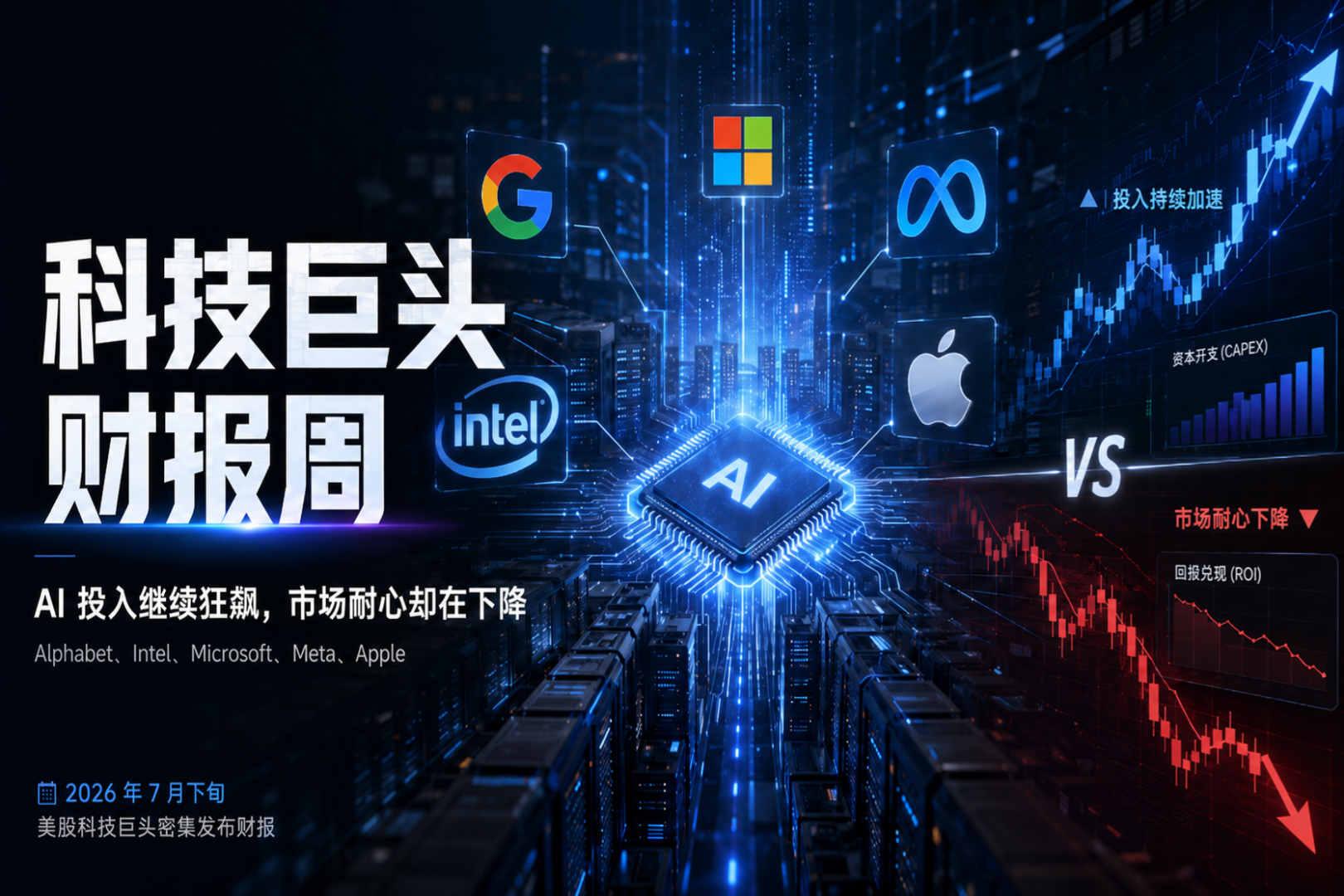
In late July 2026, five major US tech giants—Alphabet, Intel, Microsoft, Meta, and Apple—released their Q2 earnings reports. While all companies exceeded revenue and profit expectations, driven by strong AI-related business growth, investor reactions diverged sharply due to concerns over escalating AI capital expenditures (capex) and their impact on free cash flow. Alphabet reported strong revenue growth and a surging cloud business, but its stock fell after announcing a doubled year-on-year capex and negative quarterly free cash flow for the first time. Intel posted its strongest revenue growth in over 15 years, but its stock experienced volatile trading after significantly raising its full-year capex guidance. Microsoft saw its stock surge after beating estimates and, crucially, lowering its capex forecast while projecting positive free cash flow. Meta faced the most severe sell-off as its profits declined despite revenue beats, with free cash flow plunging over 90% and its capex guidance raised. Apple reported record June-quarter results, but its stock plummeted after providing Q4 revenue guidance that fell short of expectations, citing supply chain constraints and forex headwinds. The overall takeaway is that the market's focus has shifted from validating AI demand to scrutinizing the timeline for returns on massive AI investments. Companies demonstrating a clearer path to managing capex and preserving free cash flow, like Microsoft, were rewarded, while those signaling continued aggressive spending faced investor skepticism.

Odaily星球日报45 min fa

When the Market Begins to Question AI Capex: A Full Analysis of Q2 Earnings Reports from Five Tech Giants

Odaily星球日报45 min fa

a16z: From Companies to DAOs, DUNA May Become the Next Generation Organizational Form

This article, "From Companies to DAOs: How DUNA Could Become the Next Organizational Form," traces the 500-year evolution of business collaboration. It begins with medieval structures like the *commenda* and Florentine *compagnia*, which exposed partners to personal risk. The modern corporation, exemplified by the Dutch East India Company (VOC), was a revolutionary leap, enabling large-scale, capital-intensive ventures by offering limited liability and reducing coordination costs. However, corporations introduced new challenges like principal-agent problems and bureaucratic overhead. The piece argues that software and internet-native protocols are now reducing these traditional overheads. Decentralized Autonomous Organizations (DAOs) emerged as a new model for coordination without centralized management. Yet, DAOs face a significant legal vacuum: they lack legal recognition, leaving members exposed to unlimited personal liability, and their tokens are vulnerable to being classified as securities under unclear regulations (e.g., the Howey Test). This has forced projects into suboptimal workarounds like offshore foundations. The article identifies the Decentralized Unincorporated Nonprofit Association (DUNA) as a potential solution. Recently legalized in states like Wyoming, the DUNA provides a legal wrapper for decentralized networks. It grants key protections—legal personality, limited liability, and perpetual existence—to a group without imposing a traditional hierarchical management structure. This allows token-holder communities to govern, hold assets, and contract as a single legal entity, aligning with their decentralized nature. While DUNA doesn't solve all governance challenges or magically resolve securities law questions, it represents a crucial step. It fills the legal recognition gap, offering a native legal form for internet-scale, decentralized collaboration and extending the separation of personal risk from organizational venture into a new domain.

marsbit1 h fa

a16z: From Companies to DAOs, DUNA May Become the Next Generation Organizational Form

marsbit1 h fa

Trading

Spot

Articoli Popolari

Come comprare ADA

Benvenuto in HTX.com! Abbiamo reso l'acquisto di Cardano (ADA) semplice e conveniente. Segui la nostra guida passo passo per intraprendere il tuo viaggio nel mondo delle criptovalute.Step 1: Crea il tuo Account HTXUsa la tua email o numero di telefono per registrarti il tuo account gratuito su HTX. Vivi un'esperienza facile e sblocca tutte le funzionalità,Crea il mio accountStep 2: Vai in Acquista crypto e seleziona il tuo metodo di pagamentoCarta di credito/debito: utilizza la tua Visa o Mastercard per acquistare immediatamente CardanoADA.Bilancio: Usa i fondi dal bilancio del tuo account HTX per fare trading senza problemi.Terze parti: abbiamo aggiunto metodi di pagamento molto utilizzati come Google Pay e Apple Pay per maggiore comodità.P2P: Fai trading direttamente con altri utenti HTX.Over-the-Counter (OTC): Offriamo servizi su misura e tassi di cambio competitivi per i trader.Step 3: Conserva Cardano (ADA)Dopo aver acquistato Cardano (ADA), conserva nel tuo account HTX. In alternativa, puoi inviare tramite trasferimento blockchain o scambiare per altre criptovalute.Step 4: Scambia Cardano (ADA)Scambia facilmente Cardano (ADA) nel mercato spot di HTX. Accedi al tuo account, seleziona la tua coppia di trading, esegui le tue operazioni e monitora in tempo reale. Offriamo un'esperienza user-friendly sia per chi ha appena iniziato che per i trader più esperti.

1.4k Totale visualizzazioniPubblicato il 2024.12.10Aggiornato il 2026.06.02

Come comprare ADA

Discussioni

Benvenuto nella Community HTX. Qui puoi rimanere informato sugli ultimi sviluppi della piattaforma e accedere ad approfondimenti esperti sul mercato. Le opinioni degli utenti sul prezzo di ADA ADA sono presentate come di seguito.

活动图片