Bản nâng cấp ‘Giga’ sắp tới có phải là động lực chính đằng sau đợt tăng giá 30% của SEI?

ambcryptoPubblicato 2026-06-25Pubblicato ultima volta 2026-06-25

Introduzione

SEI (SEI) đã phục hồi 30% trong tháng 6, tăng lên $0.058, bất chấp việc Bitcoin (BTC) suy yếu và giảm xuống dưới $60K. Đợt tăng giá này một phần được thúc đẩy bởi việc thanh khoản vị thế bán khống được kích hoạt gần mức $0.06, cùng với kỳ vọng xung quanh bản nâng cấp 'Giga' sắp tới của mạng lưới Sei, hướng tới tốc độ và quyền riêng tư cao hơn. Tuy nhiên, triển vọng tiếp tục tăng giá phụ thuộc nhiều vào dữ liệu lạm phát Mỹ sắp được công bố. Nếu số liệu lạm phát nhẹ hơn dự kiến, cổ phiếu có thể vượt qua ngưỡng kháng cự $0.06 và hướng tới mục tiêu tiếp theo là $0.07, tương đương tăng thêm khoảng 12%. Ngược lại, nếu lạm phát cao, đà tăng có thể chững lại tại $0.06.

Sei [SEI] đang trên đà tăng trưởng hồi phục 30% trong tháng 6 sau khi gần đây chạm mức thấp kỷ lục ở $0.044. Ban đầu, đà phục hồi được kích hoạt bởi việc Bitcoin bật tăng từ vùng dưới $60K vào đầu tháng 6.

Tuy nhiên, SEI đã tách biệt khỏi đồng tiền vua và tiến lên trong khi Bitcoin [BTC] ghi nhận thêm những khoản lỗ mới trong vài ngày qua. Trong hai ngày qua, SEI đã tăng 12% và giao dịch ở mức $0.058 tại thời điểm viết bài.

Trong cùng khoảng thời gian, BTC một lần nữa tạm thời trượt xuống dưới $60K và chỉ vừa vặn giữ được trên mức tâm lý quan trọng này. Điều này có nghĩa là đà tăng của SEI được thúc đẩy bởi các chất xúc tác khác trong hệ sinh thái để thoát khỏi sự suy yếu của BTC.

Liệu đà tăng của SEI có thể kéo dài trên $0.06?

Đáng chú ý là đợt giảm gần đây của BTC xảy ra trước dữ liệu lạm phát quan trọng của Mỹ có thể xác nhận hoặc làm dịu bớt nỗi lo về việc Fed tăng lãi suất tuần trước. Do đó, nếu lạm phát cao hơn dự kiến, thì các nhà đầu tư có thể sẽ chuyển sang chế độ né tránh rủi ro một lần nữa.

Nếu vậy, đà tăng của SEI có thể bị chặn lại tại rào cản ngay phía trên ở mức $0.06 (vùng màu đỏ).
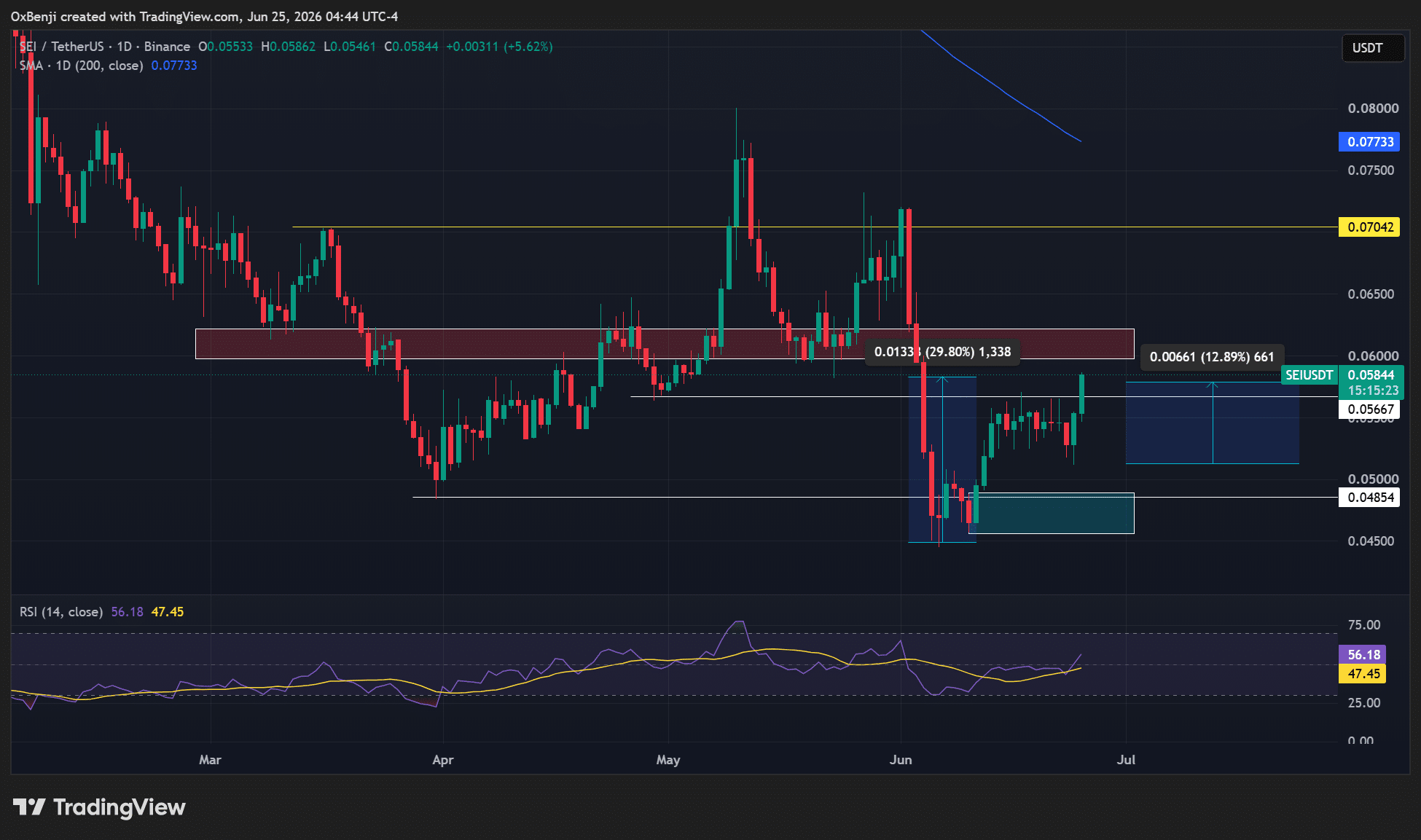
Nguồn: SEI/USDT, TradingView

Ngược lại, một con số lạm phát thấp hơn có thể làm dịu bớt nỗi sợ hãi và khơi dậy lại tâm lý ưa thích rủi ro.

Trong một kịch bản như vậy, phe mua có thể đẩy SEI vượt qua rào cản $0.06. Nếu mức kháng cự này trở thành hỗ trợ mạnh, thì $0.07 có thể là mục tiêu tăng giá tiếp theo. Điều đó sẽ mang lại một mức tăng tiềm năng 12% nếu dữ liệu lạm phát thấp hơn dự kiến.

Liệu một đợt bán thắt lưng khác có đẩy SEI lên cao hơn?

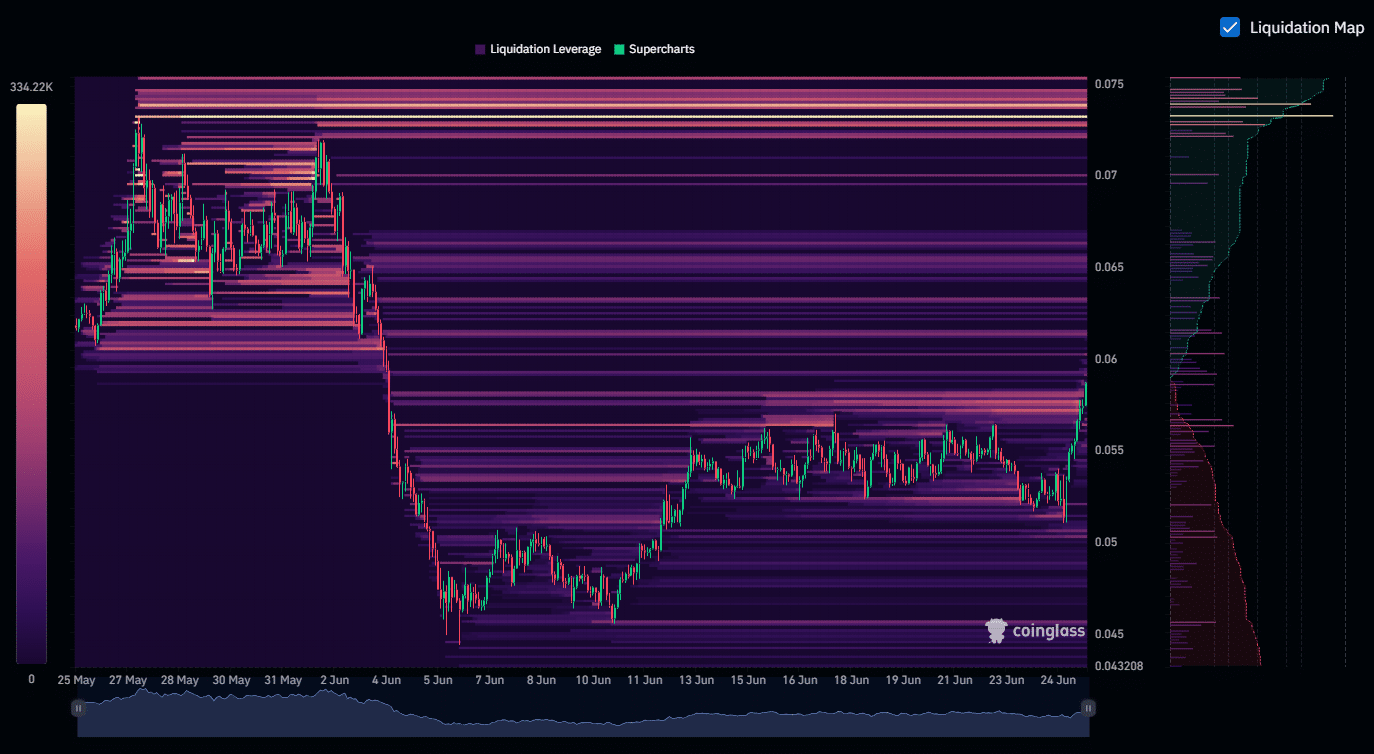
Đợt tăng giá gần đây chịu ảnh hưởng của một cuộc bán thắt lưng để lấy thanh khoản tăng giá bởi những người bán khống sử dụng đòn bẩy. Đáng chú ý, trong 10 ngày qua, những người bán khống sử dụng đòn bẩy đã mở các vị thế nhắm vào vùng gần $0.06 (các vùng sáng).

Trong hầu hết các trường hợp, những bể thanh khoản này có xu hướng hoạt động như nam châm thu hút giá trong thời kỳ biến động. Và đây là điều đã xảy ra trong hai ngày qua, đẩy giá về phía $0.06.

Nhưng một bể thanh khoản khác đã được đặt ở mức $0.07 và đang dần tích lũy kể từ cuối tháng 5. Một đợt bán thắt lưng khác có khả năng sẽ đẩy giá lên cao hơn về phía mục tiêu này.
Nguồn: Coinglass

Nói như vậy, sự cường điệu xung quanh bản nâng cấp Giga của Sei, nhằm mục đích làm cho blockchain nhanh hơn và tập trung vào quyền riêng tư hơn, cũng có thể đã đóng vai trò như một chất xúc tác tăng giá cho đợt tăng trong tháng 6.

Nhìn chung, SEI là một phần của thị trường altcoin rộng lớn hơn, nơi đã chứng kiến sự kiệt quệ đáng kể của phe bán sau khi in ra các mức thấp mới.

Tuy nhiên, dữ liệu lạm phát của Mỹ và tâm lý ưa thích rủi ro sau đó sẽ quyết định liệu SEI có mở rộng mức tăng hồi phục 30% của mình hay không.


Tóm tắt cuối cùng

  • SEI đã bất chấp sự suy yếu của Bitcoin và ghi nhận một đợt tăng giá hồi phục 30% trong tháng 6.
  • Vẫn có cơ hội cho một động thái tăng thêm 13%, nhưng chỉ khi dữ liệu lạm phát của Mỹ thuận lợi cho phe mua.


Crypto di tendenza

Domande pertinenti

QLý do chính được đề cập khiến giá SEI tăng 30% trong tháng Sáu, ngoài việc Bitcoin phục hồi, là gì?

ABài viết chỉ ra một số nguyên nhân: 1) Một đợt siết chặt vị thế bán khống (short squeeze) hướng tới các vùng thanh khoản quanh mức 0.06$ và 0.07$. 2) Sự cường điệu (hype) xung quanh bản nâng cấp 'Giga' sắp tới của mạng lưới Sei, nhằm mục đích làm cho blockchain nhanh hơn và tập trung vào quyền riêng tư hơn.

QTheo bài viết, mốc giá quan trọng tiếp theo mà SEI cần vượt qua để tiếp tục đà tăng là gì?

AMốc kháng cự quan trọng ngay lập tức là 0.06$. Nếu vượt qua được và biến mức này thành hỗ trợ vững chắc, mục tiêu tăng giá tiếp theo có thể là 0.07$.

QYếu tố bên ngoài nào có thể khiến đợt tăng giá của SEI bị đình trệ?

ADữ liệu lạm phát của Mỹ. Nếu số liệu lạm phát cao hơn kỳ vọng, nó có thể khiến nhà đầu tư áp dụng tâm lý 'né tránh rủi ro' (risk-off), từ đó làm gián đoạn đà tăng của SEI, đặc biệt là tại ngưỡng kháng cự 0.06$.

QBản nâng cấp 'Giga' của Sei được mô tả nhằm mục đích gì?

ABản nâng cấp 'Giga' nhằm mục đích làm cho blockchain Sei trở nên nhanh hơn và tập trung nhiều hơn vào quyền riêng tư (more privacy-focused).

QTóm lại, tương lai ngắn hạn của SEI phụ thuộc vào điều gì theo bài phân tích này?

ATheo bài viết, tương lai ngắn hạn của SEI phụ thuộc vào hai yếu tố chính: 1) Dữ liệu lạm phát của Mỹ và tâm lý chấp nhận rủi ro (risk appetite) thị trường sau đó. 2) Khả năng giá vượt qua và giữ vững mức kháng cự 0.06$.

Letture associate

MSTR Discloses Sale of 3,588 Bitcoins, Stock Price Drops Over 5% at One Point During Trading

MicroStrategy, the world's largest corporate holder of Bitcoin, has significantly shifted its business model. Between June 29 and July 5, the company sold 3,588 bitcoins for approximately $216 million to fund quarterly dividends for its preferred stock. This marks its largest-ever Bitcoin sale and signals a strategic pivot: Bitcoin is transitioning from a "buy-and-hold" reserve asset to a liquidity management tool for the company. This move follows a recent authorization allowing Bitcoin sales when equity fundraising is less attractive. The announcement contributed to a more than 5% intraday drop in MicroStrategy's stock price, while Bitcoin fell to around $61,800—below the company's average holding cost of roughly $75,700. The sale represents a major departure from MicroStrategy's long-standing "never sell" commitment, which saw its first minor breach in May with a $2.5 million sale. The latest, hundred-times-larger transaction underscores growing financial pressures. Analysts note the company faces about $1.5 billion in annual preferred dividend obligations, far exceeding cash flow from its software business. As of July 5, MicroStrategy holds 843,775 bitcoins. Its current operational logic involves buying Bitcoin during favorable financing conditions and selling portions to cover dividends when needed, creating a flexible capital management cycle amidst a challenging market environment.

华尔街日报4 h fa

MSTR Discloses Sale of 3,588 Bitcoins, Stock Price Drops Over 5% at One Point During Trading

华尔街日报4 h fa

Q-Day Countdown: Will Quantum Computing End Cryptocurrencies?

Quantum Computing's Threat to Cryptocurrency: A Countdown to Q-Day Quantum computing, specifically Shor's algorithm, poses a fundamental threat to the public-key cryptography (e.g., ECDSA, RSA) that secures blockchain networks like Bitcoin and Ethereum. This critical juncture, known as Q-Day, is estimated to occur potentially within the next 5-15 years. The core vulnerability stems from the public and immutable nature of blockchains. Assets in addresses where the public key is already exposed on-chain (e.g., spent outputs) are at direct risk, as a sufficiently powerful quantum computer could derive the private key. This threatens the very trust model of cryptocurrencies. The response lies in Post-Quantum Cryptography (PQC)—algorithms like lattice-based ML-DSA and hash-based SLH-DSA, which are resistant to quantum attacks. NIST has standardized key PQC algorithms (FIPS 203, 204, 205), providing a migration path. However, the primary challenge is not technical but socio-economic and involves complex governance: * **Bitcoin's** path is constrained by its conservative ethos. Migrating requires a soft-fork to new address types, facing hurdles like significantly larger signature sizes and, most critically, the divisive governance question of how to handle at-risk legacy UTXOs without violating core principles. * **Ethereum** is pursuing a "cryptographic agility" strategy, with a multi-layered roadmap. It leverages account abstraction for user accounts and is developing compressed hash-based signatures (e.g., leanXMSS) for its consensus layer, aiming for a full-stack upgrade over time. In conclusion, quantum computing does not spell an instant end for cryptocurrency but initiates a critical countdown. The industry has a limited "engineering comfort window" to orchestrate a coordinated, ecosystem-wide migration to PQC. The ultimate bottlenecks are the immense coordination efforts and governance decisions required for this foundational transition.

marsbit5 h fa

Q-Day Countdown: Will Quantum Computing End Cryptocurrencies?

marsbit5 h fa

Trump, the President Who Knows Best How to 'Trade Stocks'

Former US President Donald Trump reported a record-breaking $2.2 billion in personal income for 2025, the highest annual income ever disclosed by a sitting president. This figure, from a 927-page government ethics filing, represented a 3.5-fold increase from his $600 million income in 2024 and boosted his net worth to $6.5 billion. The primary drivers were cryptocurrency (64% of income, approximately $1.4 billion) and real estate (26%, approximately $575 million). His crypto earnings stemmed largely from the launch of his personal meme coin, $TRUMP, generating over $600 million in licensing fees, and substantial profits from the WLFI token and its parent company. Despite a sluggish property market, his Mar-a-Lago resort and associated golf clubs saw revenue surges of 50% and 27%, respectively, attributed to their use as venues for presidential events. Trump's financial disclosure also revealed an unprecedented level of stock market activity, with over 22,000 trades executed in 2025, averaging 87 trades per market day. Media analyses noted several instances where significant trading coincided with major policy announcements, such as proposed tariffs, raising questions about potential conflicts of interest. While the White House stated these trades were handled by a family-managed trust fund and not Trump directly, critics highlighted this as a departure from the blind trusts traditionally used by presidents post-Watergate. The report has intensified debate over the commercialization of the presidency. Supporters view it as a success story of a businessman-president, while critics argue it demonstrates an unprecedented conversion of public influence into private wealth, with policy decisions potentially linked to personal financial gains. The controversy centers on whether Trump's earnings represent innovative entrepreneurship or a fundamental conflict of interest, sparking renewed calls for stricter ethics reforms in US governance.

marsbit5 h fa

Trump, the President Who Knows Best How to 'Trade Stocks'

marsbit5 h fa

Countdown to Q-Day: Will Quantum Computing End Cryptocurrencies?

The article explores the existential threat quantum computing poses to cryptocurrencies and the urgent need for "post-quantum" migration. It outlines that quantum computers, through Shor's algorithm, could break the elliptic-curve cryptography (ECC) underlying blockchain security, potentially allowing private keys to be derived from public keys. The core challenge is not a lack of post-quantum cryptography (PQC) standards—like NIST's ML-KEM and ML-DSA—but the immense complexity of upgrading entire ecosystems before "Q-Day" (when quantum computers become capable of such attacks, estimated around 2035-2045). Key points include: * **Bitcoin's** risk is concentrated in legacy UTXOs with exposed public keys (e.g., early P2PK outputs). Migration faces massive hurdles: PQC signatures are much larger, increasing transaction size and cost, and the governance dilemma of handling un-migrated assets threatens its "code is law" ethos. * **Ethereum's** strategy focuses on "cryptographic agility," using Account Abstraction for user accounts and developing compressed hash-based signatures (like leanXMSS with SNARK aggregation) for consensus. Its migration is a complex, full-stack overhaul of execution, consensus, and data layers. * The "security debt" is enormous. The comfortable engineering window for a coordinated, ecosystem-wide upgrade is only 5-8 years. High-value infrastructure (exchanges, bridges) may face pressure before mainnet protocols. In conclusion, quantum computing is not an instant "doomsday" event but a forcing function for systemic change. Bitcoin's ultimate test is social consensus and property rights governance, while Ethereum's is technical complexity. Failure to migrate in time could lead to a fundamental re-pricing of crypto assets.

链捕手5 h fa

Countdown to Q-Day: Will Quantum Computing End Cryptocurrencies?

链捕手5 h fa

Trading

Spot

Articoli Popolari

Come comprare SEI

Benvenuto in HTX.com! Abbiamo reso l'acquisto di Sei Network (SEI) semplice e conveniente. Segui la nostra guida passo passo per intraprendere il tuo viaggio nel mondo delle criptovalute.Step 1: Crea il tuo Account HTXUsa la tua email o numero di telefono per registrarti il tuo account gratuito su HTX. Vivi un'esperienza facile e sblocca tutte le funzionalità,Crea il mio accountStep 2: Vai in Acquista crypto e seleziona il tuo metodo di pagamentoCarta di credito/debito: utilizza la tua Visa o Mastercard per acquistare immediatamente Sei NetworkSEI.Bilancio: Usa i fondi dal bilancio del tuo account HTX per fare trading senza problemi.Terze parti: abbiamo aggiunto metodi di pagamento molto utilizzati come Google Pay e Apple Pay per maggiore comodità.P2P: Fai trading direttamente con altri utenti HTX.Over-the-Counter (OTC): Offriamo servizi su misura e tassi di cambio competitivi per i trader.Step 3: Conserva Sei Network (SEI)Dopo aver acquistato Sei Network (SEI), conserva nel tuo account HTX. In alternativa, puoi inviare tramite trasferimento blockchain o scambiare per altre criptovalute.Step 4: Scambia Sei Network (SEI)Scambia facilmente Sei Network (SEI) nel mercato spot di HTX. Accedi al tuo account, seleziona la tua coppia di trading, esegui le tue operazioni e monitora in tempo reale. Offriamo un'esperienza user-friendly sia per chi ha appena iniziato che per i trader più esperti.

128 Totale visualizzazioniPubblicato il 2024.12.11Aggiornato il 2026.06.02

Come comprare SEI

Discussioni

Benvenuto nella Community HTX. Qui puoi rimanere informato sugli ultimi sviluppi della piattaforma e accedere ad approfondimenti esperti sul mercato. Le opinioni degli utenti sul prezzo di SEI SEI sono presentate come di seguito.

活动图片