40% altcoins near cycle lows, but here’s why THESE 22 tokens are NOT among them!

ambcryptoPubblicato 2026-03-31Pubblicato ultima volta 2026-03-31

Introduzione

The crypto market has declined over the past six months, with total valuation down 45% from its peak. According to a CryptoQuant report, nearly 40% of altcoins are trading near or at all-time lows, reflecting deeper stress compared to the previous cycle. Broader macro pressures, including inflation and geopolitical tensions, have contributed to the downturn. Additionally, capital dilution has intensified due to the expansion of cryptocurrencies, fragmenting liquidity. Despite the weakness, select altcoins have shown resilience. The 90-day Altcoin Season Index remained relatively firm, with 22 altcoins in profit during this period. Top performers include Hyperliquid (HYPE), MemeCore (M), Canton Network (CC), and Bittensor (TAO), with gains of 47%, 66%, 14%, and 44%, respectively. Categories like bridge tokens, AI-related assets, utilities, social tokens, and exchange tokens were among the least affected. The accumulation/distribution indicator suggests buying activity is underway, but this may be short-term relief rather than a confirmed reversal. A breakout above the descending resistance line is needed to confirm building demand and potential broader market recovery.

The crypto market has extended its decline over the past six months, with little evidence of a sustained rebound on the charts. With total market valuation down about 45% from its peak above $4.27 trillion, a growing number of altcoins are now sitting near their historical lows.

This compression has reduced the number of assets positioned to benefit meaningfully from a recovery, concentrating potential upside in a smaller subset of tokens.

Altcoins approach cycle extremes

According to a recent CryptoQuant report, nearly 40% of altcoins have either reached their all-time lows or are now trading within close range of those levels.

This downturn is primarily a product of broader macro pressures, including persistent inflation concerns tied to oil markets and escalating geopolitical tensions across West Asia.

Relative to the previous cycle, current conditions are slightly more severe though. During the last downturn, about 38% of altcoins fell to or near all-time lows before establishing a base and reversing higher. The current figure exceeds that level by 2%, highlighting deeper market stress.
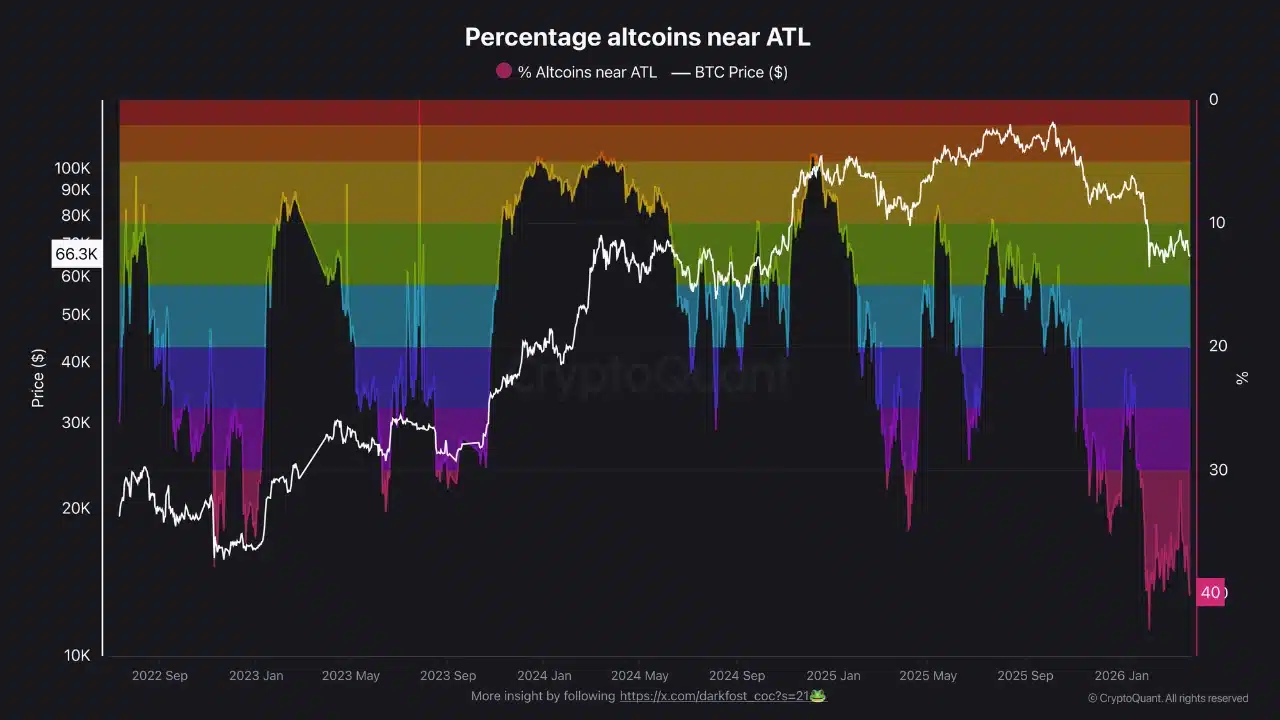
Source: CryptoQuant

At the same time, capital dilution has intensified too. The number of cryptocurrencies has expanded to roughly 47 million, with about 44 million concentrated across Solana, Base, and BNB. This surge in token supply has fragmented liquidity, spreading capital thinly across an increasingly crowded market.

Despite the broader weakness, however, select sectors and tokens have continued to outperform lately – A sign that they may attract disproportionate capital if market conditions stabilize again.

Select altcoins show resilience

Consider this – The 90-day Altcoin Season Index, which tracks performance outside Bitcoin, has held relatively firm despite the broader market’s decline.

Within this period, 22 altcoins have been in profit, positioning them as key assets drawing investor attention.

Leading performers include Hyperliquid [HYPE], MemeCore [M], Canton Network [CC] and Bittensor [TAO], with these alts up 47%, 66%, 14% and 44%, respectively.
Source: Artemis

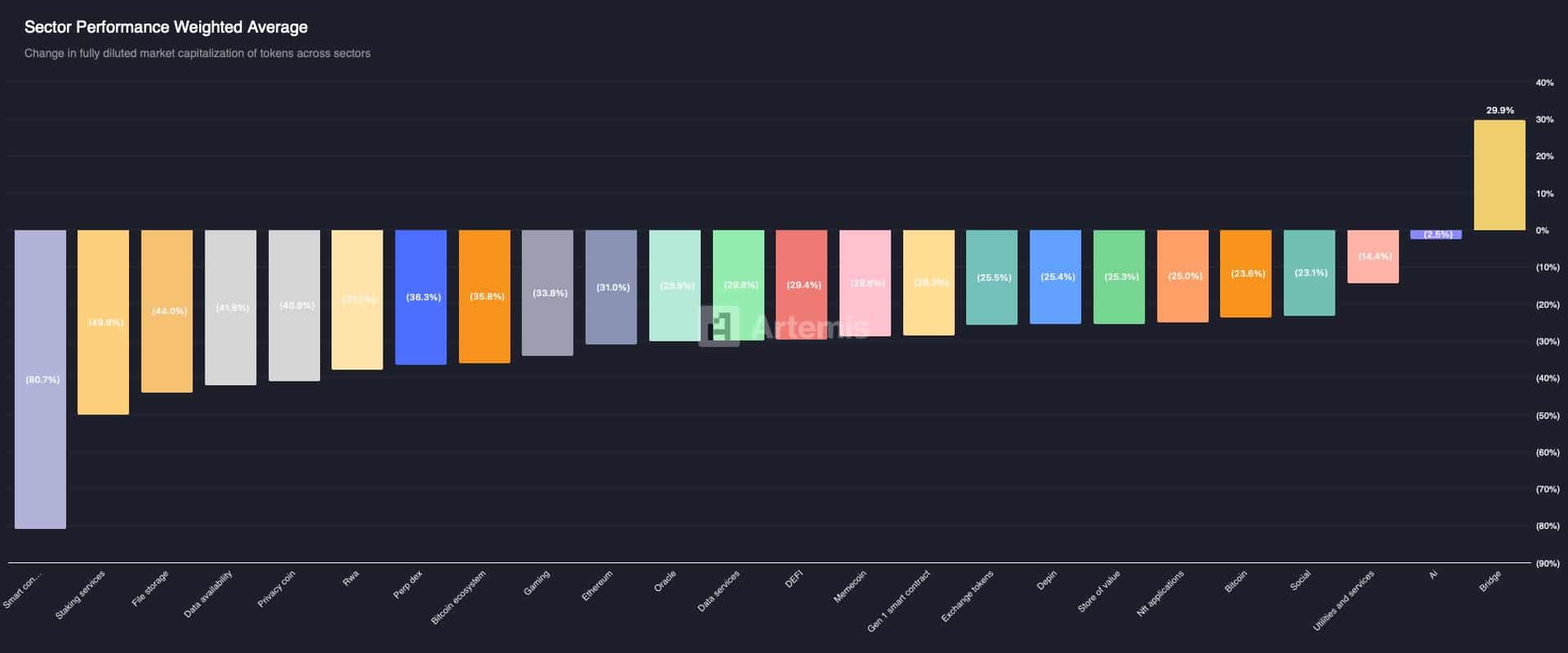
AMBCrypto further grouped these assets by three-month performance to identify segments likely to attract capital.

Artemis year-to-date data from January through March revealed that bridge tokens, AI-related assets, utilities and services, social tokens, and exchange tokens have been among the least affected categories.

Signs of accumulation, but confirmation remains key!

At the time of writing, the accumulation/distribution (A/D) indicator suggested that broad-based buying activity was underway, with trading volume hitting approximately 4.5 billion tokens.

However, this accumulation may reflect a short-term relief phase rather than a confirmed reversal. Especially since the price action remains under a descending resistance line.
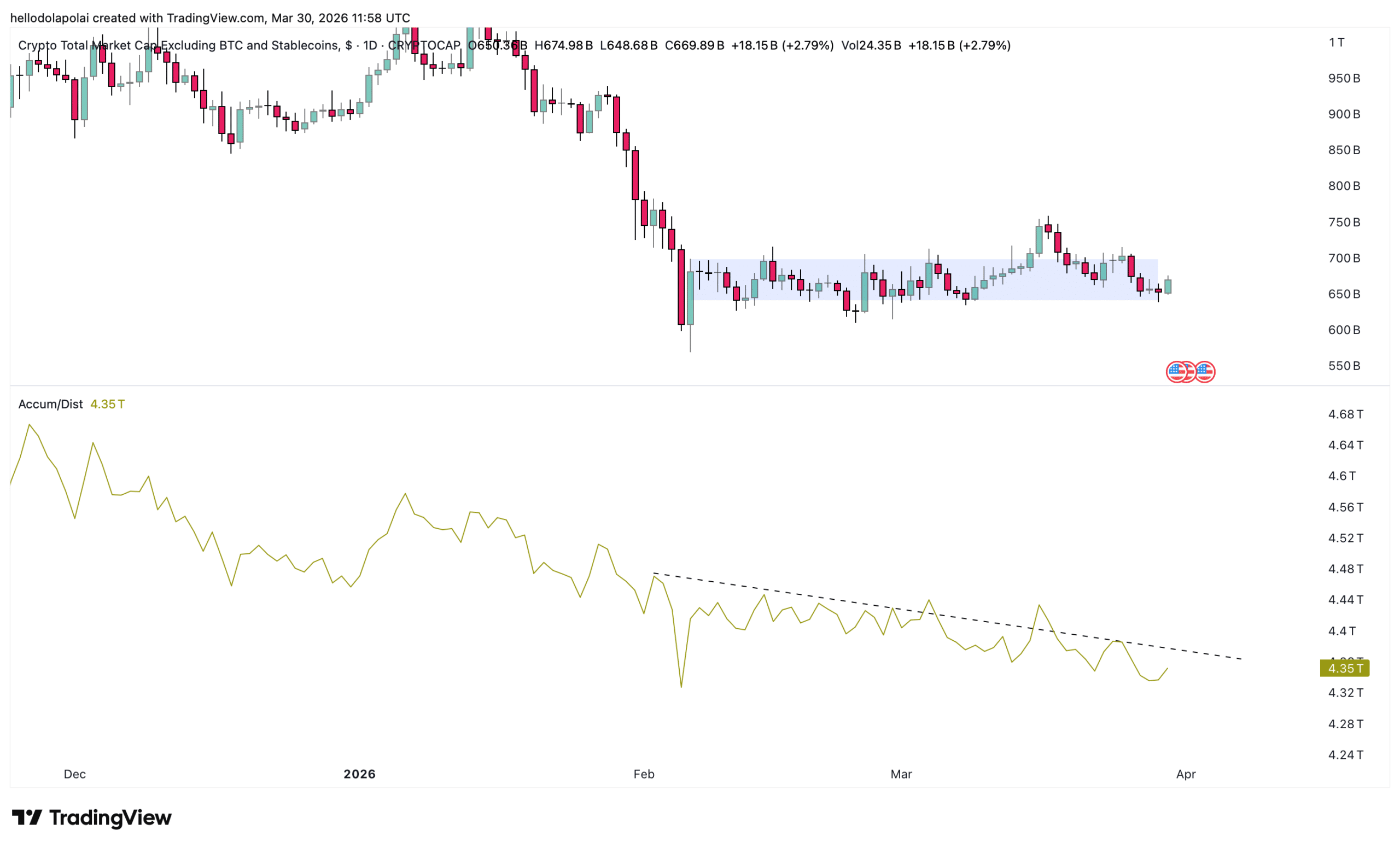
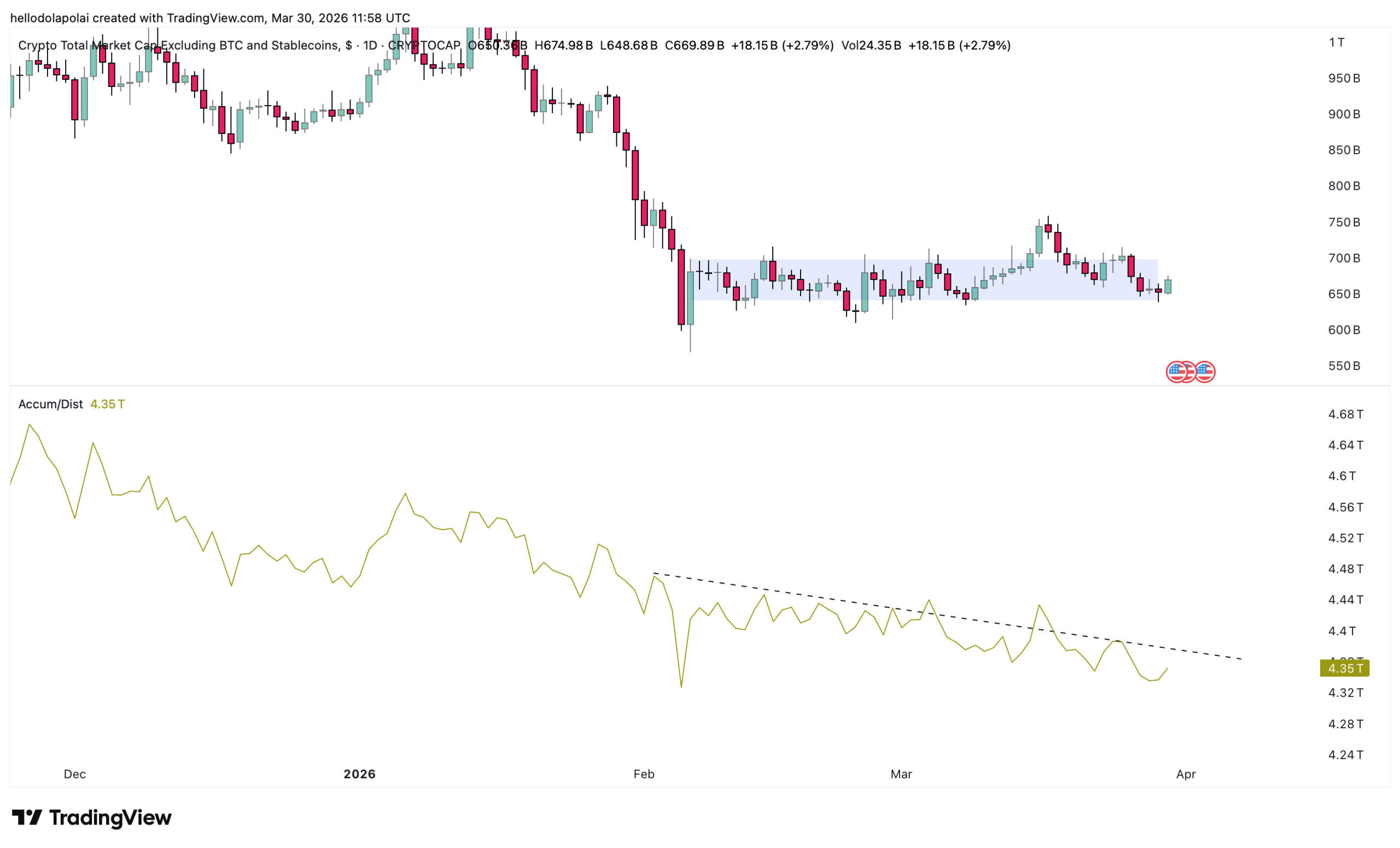
Source: TradingView

A breakout above this level, followed by sustained upward movement, would confirm building demand. Such a shift could drive broader market recovery and amplify momentum in the market’s best performers this quarter.


Final Summary

  • Roughly 40% of altcoins are trading near their all-time lows, with many already deep in losses.
  • Despite the broader downturn, 22 altcoins have sustained bullish momentum over the past 90 days.

Domande pertinenti

QAccording to the CryptoQuant report, what percentage of altcoins are trading near their all-time lows?

ANearly 40% of altcoins have either reached their all-time lows or are trading within close range of those levels.

QWhich four altcoins are mentioned as leading performers with significant gains in the last 90 days?

AHyperliquid [HYPE], MemeCore [M], Canton Network [CC], and Bittensor [TAO] are the leading performers, up 47%, 66%, 14%, and 44% respectively.

QWhat are the five token categories that have been least affected by the market downturn according to Artemis data?

ABridge tokens, AI-related assets, utilities and services, social tokens, and exchange tokens have been among the least affected categories.

QWhat does the Accumulation/Distribution (A/D) indicator suggest is happening in the market at the time of writing?

AThe A/D indicator suggests that broad-based buying activity is underway, with trading volume hitting approximately 4.5 billion tokens.

QWhat key condition is needed to confirm a building demand and potential broader market recovery?

AA breakout above the descending resistance line, followed by sustained upward movement, would confirm building demand and could drive a broader market recovery.

Letture associate

Thanks to Dice Rolls, Bitcoin Keys Are Stored Offline, But Not Everyone Will Do It

The article discusses using dice rolls to generate secure Bitcoin wallet seeds, providing entropy independent of potentially flawed hardware random number generators. It explains that each fair dice roll offers about 2.585 bits of entropy, with around 50 rolls needed for a standard 12-word seed phrase and 99+ recommended for higher security. This method gained attention after a vulnerability was revealed in some Coldcard hardware wallets, where a faulty firmware RNG (dating back to 2021) compromised generated keys. The analysis notes that while a dice-generated main seed was safe from this specific flaw, other Coldcard functions (like creating paper wallets, backup keys, or passwords) could still be vulnerable if they used the defective RNG. The piece argues that while dice-based entropy is technically robust, the manual process is error-prone, tedious, and unrealistic for most new users, who might make mistakes in recording or inputting rolls. It concludes that while manual entropy generation should remain an option for advanced users, the long-term goal is to develop reliable, user-friendly hardware and software that securely generates randomness without requiring specialized knowledge. Coldcard users are advised to check their firmware version and replace any secondary secrets (like paper wallet keys) created with vulnerable devices, while also considering multi-signature setups with devices from different manufacturers for added security.

cryptonews.ru4 h fa

Thanks to Dice Rolls, Bitcoin Keys Are Stored Offline, But Not Everyone Will Do It

cryptonews.ru4 h fa

Trading

Spot
活动图片





