GRASS tăng mạnh 28%: Liệu phe mua có thể nhắm mục tiêu quét thanh khoản trên mức 0,48 đô la?

ambcryptoPubblicato 2026-03-18Pubblicato ultima volta 2026-03-18

Introduzione

GRASS đã tăng hơn 28% trong 24 giờ, đưa giá tiến gần vùng $0.47 khi phe mua giành lại kiểm soát. Giá hiện đang thử thách kháng cự quan trọng tại $0.475 sau khi củng cố vùng hỗ trợ $0.358. Các chỉ báo kỹ thuật như Bollinger Bands mở rộng và RSI vượt 78 cho thấy áp lực mua mạnh, dù ở vùng quá mua. Nhà giao dịch trên Binance đang tăng kỳ vọng tăng giá với tỷ lệ long/short đạt 1.4, phản ánh niềm tin vào đà tăng tiếp diễn. Bản đồ thanh khoản cho thấy các cụm liquidity dày đặc phía trên $0.48, có thể thúc đẩy biến động mạnh nếu giá vượt kháng cự. Dù điều kiện quá mua có thể gây điều chỉnh ngắn hạn, cấu trúc thị trường vẫn ủng hộ kịch bản tăng dần lên các vùng kháng cự cao hơn.

Tại thời điểm biên tập, GRASS đã tăng hơn 28% trong 24 giờ qua, đẩy giá tiến sát vùng 0,47 đô la khi người mua giành lại quyền kiểm soát vững chắc. Đợt tăng giá này diễn ra sau một hành trình leo dốc ổn định từ các vùng tích lũy thấp hơn, báo hiệu ý định định hướng mạnh mẽ.

Hoạt động giao dịch đã tăng lên cùng với giá, củng cố thêm cấu trúc tăng giá. Tuy nhiên, tài sản hiện đang giao dịch gần một vùng kháng cự then chốt, tạo ra áp lực tức thì. Mặc dù nhu cầu mạnh đã thúc đẩy mức tăng mạnh, GRASS phải đối mặt với một bài kiểm tra quan trọng về việc liệu người mua có thể duy trì đà tăng mà không suy yếu hay không.

GRASS kiểm tra kháng cự sau khi giành lại hỗ trợ

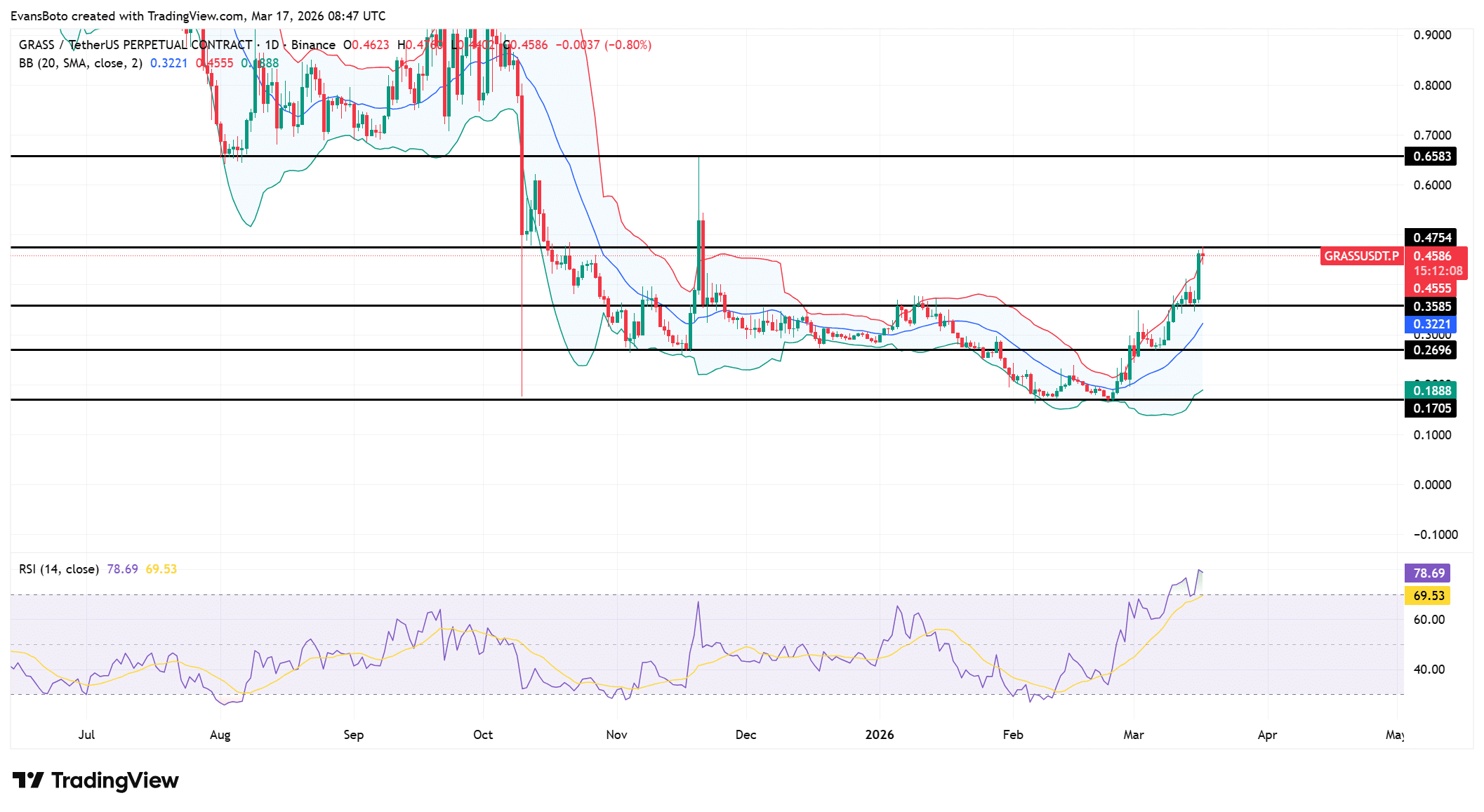
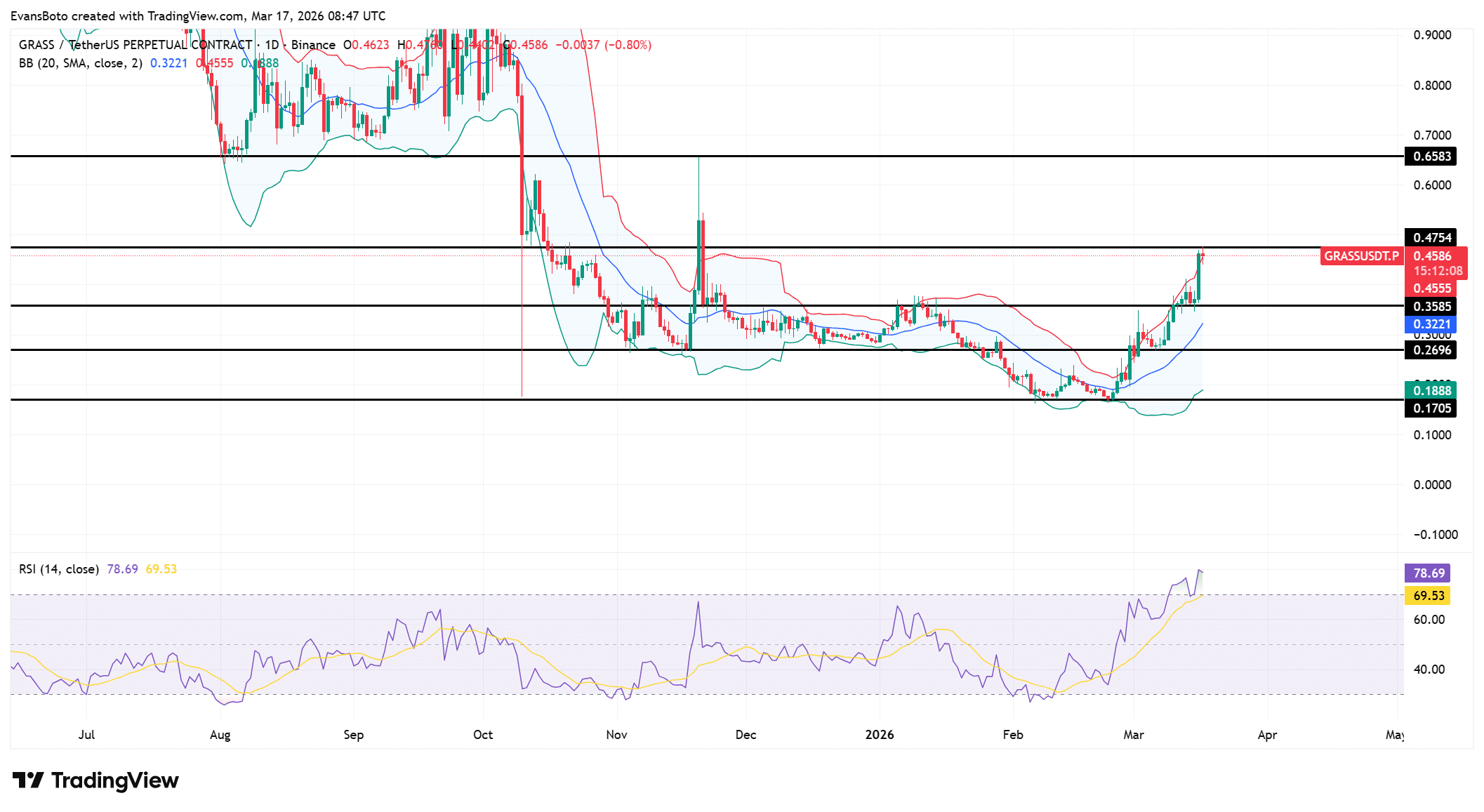
GRASS tiến đến vùng kháng cự 0,475 đô la sau khi giành lại vùng hỗ trợ 0,358 đô la, xác nhận một sự dịch chuyển cấu trúc rõ ràng. Người mua đã giành lại quyền kiểm soát sau một giai đoạn điều chỉnh kéo dài, điều này củng cố triển vọng hiện tại.

Giá đã tăng lên xuyên qua các mức trung gian, hỗ trợ cho luận điểm tiếp tục tăng. Tuy nhiên, vùng 0,475 đô la giờ đây trở thành một rào cản then chốt có thể hạn chế đà tăng thêm.

Một động thái vượt qua mức này một cách rõ ràng có thể mở đường để kiểm tra vùng kháng cự cao hơn gần 0,658 đô la. Dù vậy, việc bị từ chối tại thời điểm này có thể kích hoạt giai đoạn tích lũy ngắn hạn. Ngay cả như vậy, việc giành lại mức 0,358 đô la một cách mạnh mẽ vẫn tiếp tục củng cố quyền kiểm soát của phe mua trên toàn bộ cấu trúc.

Tại thời điểm biên tập, Dải Bollinger đã mở rộng mạnh mẽ khi biến động gia tăng sau một giai đoạn nén. Giá tiếp tục di chuyển dọc theo dải trên, phản ánh áp lực mua bền vững và sức mạnh của xu hướng. Vị trí này thường báo hiệu sự tiếp diễn, đặc biệt là khi giá giữ được ở các mức cao.

Cùng lúc đó, RSI đã tăng lên 78,69, trong khi đường tín hiệu của nó duy trì ở mức 69,53, xác nhận nhu cầu mạnh. Tuy nhiên, các chỉ số này đặt tài sản vào sâu trong vùng quá mua.

Tình trạng này có thể dẫn đến một đợt giảm nhiệt ngắn hạn, mặc dù nó không làm mất hiệu lực của xu hướng hiện tại. Miễn là giá giữ được gần dải trên, người mua tiếp tục duy trì quyền kiểm soát.
Nguồn: TradingView

Tại sao các nhà giao dịch đang tăng mức tiếp xúc mua (long)?

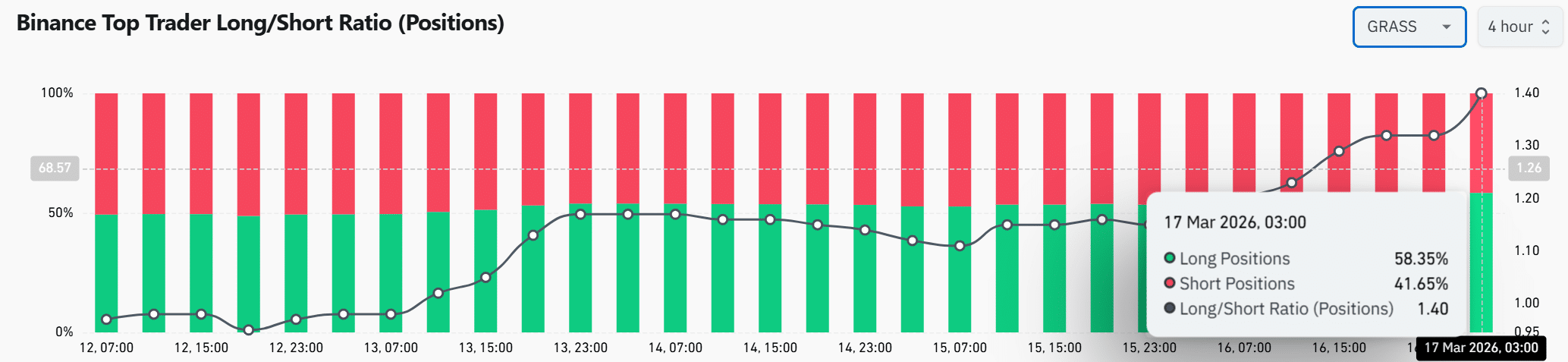
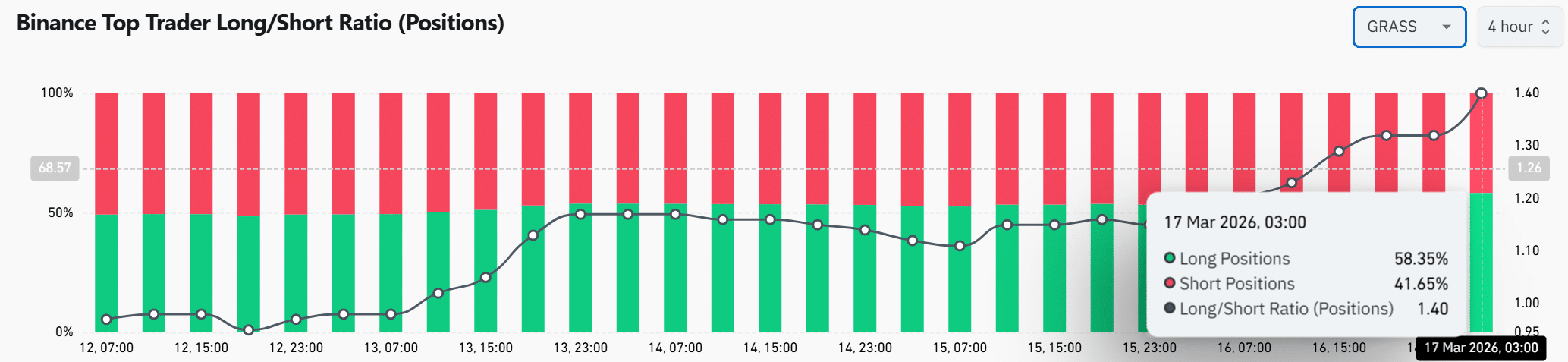
Các nhà giao dịch hàng đầu trên Binance đã tăng mức tiếp xúc mua, với các vị thế mua đạt 58,35% so với 41,65% vị thế bán.

Sự thay đổi này phản ánh sự tự tin ngày càng tăng vào đà tăng tiếp diễn. Tỷ lệ Mua/Bán (Long/Short Ratio) đã tăng lên gần 1,40 tại thời điểm viết bài, điều này củng cố thêm kỳ vọng theo hướng này.

Khi các nhà giao dịch tiếp tục định vị một cách mạnh mẽ, thị trường phái sinh phù hợp với cấu trúc giá hiện tại. Tuy nhiên, mức tiếp xúc mua cao có thể mang lại rủi ro nếu tâm lý thị trường thay đổi nhanh chóng.

Dù vậy, dữ liệu cho thấy các nhà giao dịch vẫn đang ủng hộ đợt bứt phá hơn là dự đoán một sự đảo chiều. Sự liên kết giữa tâm lý và giá này củng cố thêm cho kịch bản tiếp diễn.
Nguồn: CoinGlass

Thanh khoản phía trên 0,48 đô la báo hiệu động thái tiếp theo

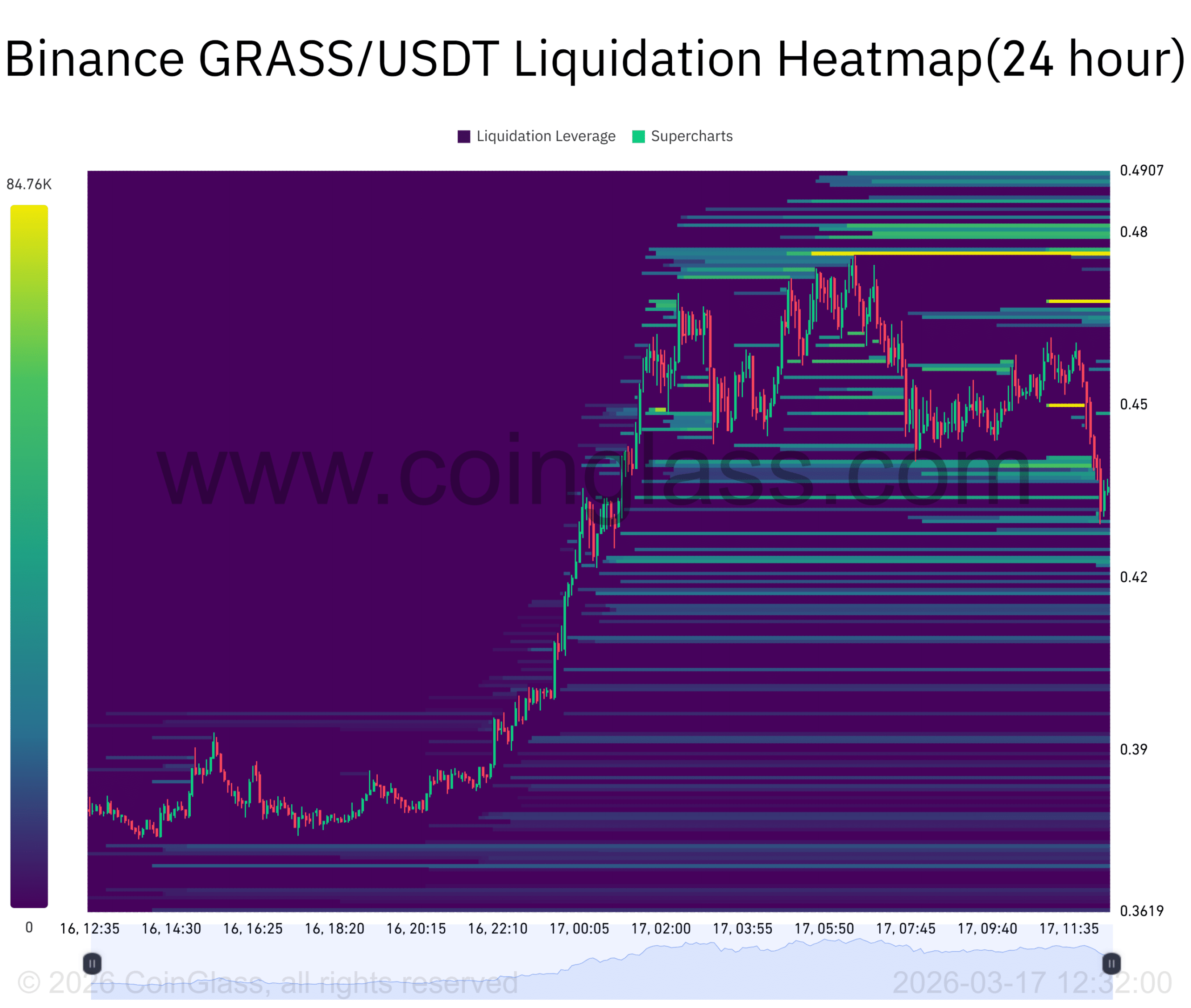
Bản đồ nhiệt thanh khoản (liquidation heatmap) cho thấy các cụm thanh khoản dày đặc đang hình thành phía trên vùng 0,48 đô la. Những vùng này đại diện cho các khu vực mà các vị thế sử dụng đòn bẩy có thể phải đối mặt với thanh lý cưỡng bức. Khi giá di chuyển đến gần các mức này, nó thường bị thu hút về phía chúng do động lực thị trường.

Một đợt phá vỡ phía trên vùng kháng cự gần đó có thể kích hoạt các cuộc thanh lý dây chuyền, đẩy nhanh đà tăng. Tuy nhiên, việc không thể chạm tới các vùng này có thể khiến giá tiếp tục tích lũy dưới vùng kháng cự.

Dẫu vậy, sự hiện diện của thanh khoản xếp chồng phía trên các mức hiện tại cho thấy thị trường đang hình thành một mục tiêu tăng giá rõ ràng trong ngắn hạn.
Nguồn: CoinGlass

Liệu GRASS có mở rộng đà vượt qua kháng cự?

GRASS tiếp tục thể hiện ý định tăng giá mạnh mẽ khi giá áp sát vùng kháng cự 0,475 đô la trong khi định vị tăng giá vẫn chiếm ưu thế. Thanh khoản dồn đọng phía trên 0,48 đô la hỗ trợ khả năng tiếp diễn đà tăng nếu người mua duy trì được áp lực.

Tuy nhiên, các tín hiệu quá mua có thể làm chậm nhịp độ tạm thời. Nếu sức mạnh được duy trì, giá có thể mở rộng về phía 0,49 đô la và dần dần kiểm tra các vùng kháng cự cao hơn.


Tóm tắt cuối cùng

  • Quyền kiểm soát bền vững của người mua và định vị đòn bẩy ngày càng tăng cho thấy GRASS có thể tiếp tục leo dốc nếu kháng cự phía trước suy yếu.
  • Điều kiện quá mua có thể tạm thời làm chậm giá, nhưng cấu trúc mạnh vẫn ủng hộ khả năng tiếp tục tăng dần dần về phía các vùng thanh khoản cao hơn.


Crypto di tendenza

Domande pertinenti

QGiá GRASS đã tăng bao nhiêu phần trăm trong 24 giờ qua và đạt mức giá nào?

AGRASS đã tăng hơn 28% trong 24 giờ qua, đẩy giá lên vùng $0.47.

QVùng kháng cự chính mà GRASS đang tiếp cận là mức giá nào?

AGRASS đang tiếp cận vùng kháng cự chính ở mức $0.475.

QChỉ số RSI của GRASS hiện tại là bao nhiêu và điều này cho thấy điều gì?

AChỉ số RSI hiện tại là 78.69, cho thấy tài sản đang trong vùng quá mua, có thể dẫn đến điều chỉnh ngắn hạn nhưng không làm mất hiệu lực xu hướng tăng hiện tại.

QTỷ lệ Long/Short của các nhà giao dịch hàng đầu trên Binance là bao nhiêu và điều này phản ánh điều gì?

ATỷ lệ Long/Short là 1.40, với 58.35% vị thế mua và 41.65% vị thế bán, phản ánh sự tự tin gia tăng vào xu hướng tăng tiếp tục.

QVùng thanh khoản quan trọng phía trên mức giá hiện tại được xác định ở đâu và ý nghĩa của nó là gì?

ACác cụm thanh khoản dày đặc hình thành phía trên vùng $0.48. Việc giá vượt qua kháng cự gần đó có thể kích hoạt các lệnh thanh khoản dây chuyền, đẩy giá tăng nhanh hơn.

Letture associate

Weekly Editor's Picks (0725-0731)

Weekly Editor's Picks (0725-0731) provides a curated selection of deep analysis, filtering out market noise. Key themes from this week include: **Macro & Policy:** The Federal Reserve's upcoming meeting is marked by high uncertainty, balancing cooling inflation data against persistent price pressures. Meanwhile, the U.S. crypto regulatory Clarity Act faces critical political hurdles, with its 2026 passage probability seen as low. **Investing & Crypto:** Analysis suggests long-term crypto success depends on conviction through volatile cycles, focusing on assets like Bitcoin and core smart contract platforms. A trend noted is the increasing similarity between global equity markets (especially tech) and crypto, driven by narrative and leverage. Several major crypto protocols show strong revenue growth, but this isn't always translating to token price appreciation due to sell pressure and structural factors. **AI & Semiconductors:** Nvidia's rising credit default swap rates signal market concern over AI infrastructure financing risks. The storage sector experienced volatility as markets began pricing in potential 2027 oversupply. Despite a record profitable quarter, SK Hynix's results were deemed "below expectations," reflecting heightened investor demands for future growth visibility. **Markets & DeFi:** TradeXYZ demonstrated remarkable accuracy in pre-market pricing for a major A股 listing. The token ONDO saw gains, linked to its growing role in the on-chain tokenized stock ecosystem. **Ethereum:** Post-Pectra upgrade, a major structural shift is underway as Lido begins migrating millions of ETH to new validator architectures designed for capital efficiency. **Also Highlighted:** Butian's bullish stock market move; OpenAI's Altman promising major advances; Samsung and SK Hynix securing large AI chip deals; Apple reaching a $5T market cap; and ongoing discussions around exchange security following Poolin's bankruptcy case.

marsbit6 min fa

Weekly Editor's Picks (0725-0731)

marsbit6 min fa

Low Investment Isn't Apple's Immunity Pass

While Meta and Google face investor scrutiny over ballooning AI capital expenditures, Apple's minimal AI investment has paradoxically become a strength. Its market cap recently reclaimed the global top spot, surpassing $5 trillion. The irony is deep: Apple's own AI efforts have lagged, with "Apple Intelligence" delayed and core talent lost, forcing reliance on partners like Google Gemini and Alibaba's Qianwen. Its Q3 FY2026 (Q2 CY) earnings initially seemed stellar. Revenue hit $109.4B (up 16% YoY), with iPhone and Mac sales, growing 22% and 29% respectively, driving most of the growth. However, the stock fell over 8% post-earnings. The primary concern was a weaker Q4 revenue growth forecast of 9-11%, below expectations, due to looming supply chain constraints. Apple is feeling the indirect cost of the AI boom. Soaring memory and chip prices, fueled by massive data center investments from Microsoft, Amazon, and others, are forcing Apple to raise Mac and iPad prices significantly. The upcoming iPhone launch is also expected to see substantial price hikes. Despite avoiding heavy AI infrastructure spending—its capital expenditures are actually down 28%—Apple cannot escape the industry-wide supply and cost pressures. While Apple's operating cash flow remains robust, its substantial R&D spending (up 32% YoY) has yet to yield major AI breakthroughs. As Tim Cook prepares to step down as CEO, Apple faces a challenging transition: balancing its premium hardware success against the strategic and cost pressures of the AI era it has so far cautiously navigated.

marsbit56 min fa

Low Investment Isn't Apple's Immunity Pass

marsbit56 min fa

PA Graphics Explanation | One Chart to Understand the Major Web3 Events in August 2026

**PANews Crypto Calendar: Key Web3 Events in August 2026** PANews introduces its revamped crypto calendar, featuring comprehensive coverage, flexible filtering, and easy export options. The market in August will be shaped by multiple key events across macroeconomics, regulation, tokenomics, and project developments: * **Macro & Policy:** Key US economic data releases (July Non-Farm Payrolls, CPI), the Federal Reserve meeting minutes, and the Jackson Hole Economic Symposium will be in focus. On the regulatory front, the US Senate plans to release a new draft of the *CLARITY Act*, while the EU's expanded crypto ban against Belarus comes into effect. * **Token Unlocks:** Significant token unlocks are scheduled for assets including ENA, AVAX, CONX, ZRO, and KAITO, which may influence market volatility. * **Project Updates & Shutdowns:** Several services, including Exchange Art, Ctrl Wallet, Zapper, NFTfi, and Summer.fi, are set to cease operations or undergo major adjustments. Users are advised to manage their assets accordingly. * **Corporate Activity:** Q2 earnings reports from companies like SpaceX, Circle, and Nvidia are due. Unitree Robotics will initiate its IPO subscription on the STAR Market, and Moonshot AI plans to begin a Pre-IPO financing round. * **Industry Events:** Major conferences such as Bitcoin Asia 2026 and the 2026 Digital Expo will take place. The overarching market narrative for August will revolve around macroeconomic expectations, regulatory developments, token unlock schedules, and ongoing industry consolidation.

marsbit1 h fa

PA Graphics Explanation | One Chart to Understand the Major Web3 Events in August 2026

marsbit1 h fa

Wall Street's Most Famous 'Cassandra' Now Has His Sights Set on Nvidia

Michael Burry, the famed "Big Short" investor, has once again captured Wall Street's attention with a series of short positions against major tech and semiconductor stocks, most notably Nvidia. In late June and July, through his "Cassandra Unchained" newsletter, Burry disclosed short bets against Nvidia, Tesla, Applied Materials, Caterpillar, the SOXX semiconductor ETF, and later, Micron Technology. His core thesis revolves around potential distortions in the AI infrastructure boom, specifically questioning whether extended depreciation schedules (e.g., 6 years vs. a realistic 2-3 years for AI chips) by cloud giants like Microsoft and Google artificially inflate profits. He also raises concerns about possible "off-balance-sheet circular financing," where chip demand might be propped up by vendor-backed funding to clients. Nvidia's stock experienced volatility following these disclosures, briefly dipping but largely holding near Burry's reported entry points, leaving his positions roughly flat or slightly underwater as of late July. This move is part of a pattern for Burry, whose track record since his legendary 2008 bet is mixed. He has faced notable losses, such as on Tesla in 2021, while scoring on broader market turns like the 2020 pandemic crash. His methodology focuses intensely on free cash flow and scrutinizing original financial documents to spot overvaluation and structural risks, but it often struggles with timing the market. The article contrasts Burry's stance with other prominent investors. Steve Eisman, another "Big Short" figure, is not shorting Nvidia, citing strong fundamentals but expressing nervousness about sustainability. Jim Chanos agrees with the broad "accounting mismatch" concern—comparing it to the dot-com bubble—but targets financial leverage in private equity firms rather than the chip stocks themselves. While Nvidia's short interest remains relatively low at 1.3-1.4% of float, the massive stock size means absolute short losses have been significant, exceeding $5 billion earlier this year. The piece concludes that for ordinary investors, the key takeaway is not replicating specific short bets but learning from the critical frameworks these investors use: questioning rosy accounting, identifying structural vulnerabilities, and maintaining skepticism during market euphoria, even if pinpointing the exact catalyst for a downturn remains elusive.

marsbit1 h fa

Wall Street's Most Famous 'Cassandra' Now Has His Sights Set on Nvidia

marsbit1 h fa

Weekly Selection丨Epic Stock Market Volatility, Changxin Tech's IPO Reshapes Storage Landscape, Saylor Aims to Re-Anchor STRC Around September 8th

PANews Weekly Digest: Market Turmoil, Tech Breakthroughs, and Crypto Developments. The week saw significant volatility across global markets. South Korea's KOSPI index experienced extreme turbulence, including multiple trading halts, largely driven by sharp declines in AI hardware stocks like SK Hynix. In contrast, China's Changxin Xinqiao (CXC) achieved a landmark IPO with a market cap surpassing 4 trillion yuan, marking a major success for the domestic DRAM industry after a decade of losses. In the crypto and Web3 space, several key narratives emerged. AI is driving demand for new infrastructure, with projects like AI agent wallets and programmable payments gaining traction, attracting interest from firms like Coinbase. The Bitcoin mining sector is pivoting, with companies like MARA focusing on energy management as electricity becomes a core AI-era asset. Meanwhile, the RWA (Real World Assets) sector faces a "utilization puzzle," with hundreds of billions in on-chain assets remaining dormant. Notable market movements included a historic single-day surge of over 17% for the KOSPI index and a significant migration of $16.5 billion in staked ETH within the Lido ecosystem. Michael Saylor announced a target to re-peg the STRC stablecoin around September 8th. Other highlights include discussions on Ethereum's ambitious 2030 roadmap for scaling and privacy, analysis showing high protocol revenues not always translating to token price gains, and warnings from Citi about potential extreme commodity price shocks by late 2026.

marsbit1 h fa

Weekly Selection丨Epic Stock Market Volatility, Changxin Tech's IPO Reshapes Storage Landscape, Saylor Aims to Re-Anchor STRC Around September 8th

marsbit1 h fa

Trading

Spot

Articoli Popolari

Come comprare GRASS

Benvenuto in HTX.com! Abbiamo reso l'acquisto di Grass (GRASS) semplice e conveniente. Segui la nostra guida passo passo per intraprendere il tuo viaggio nel mondo delle criptovalute.Step 1: Crea il tuo Account HTXUsa la tua email o numero di telefono per registrarti il tuo account gratuito su HTX. Vivi un'esperienza facile e sblocca tutte le funzionalità,Crea il mio accountStep 2: Vai in Acquista crypto e seleziona il tuo metodo di pagamentoCarta di credito/debito: utilizza la tua Visa o Mastercard per acquistare immediatamente GrassGRASS.Bilancio: Usa i fondi dal bilancio del tuo account HTX per fare trading senza problemi.Terze parti: abbiamo aggiunto metodi di pagamento molto utilizzati come Google Pay e Apple Pay per maggiore comodità.P2P: Fai trading direttamente con altri utenti HTX.Over-the-Counter (OTC): Offriamo servizi su misura e tassi di cambio competitivi per i trader.Step 3: Conserva Grass (GRASS)Dopo aver acquistato Grass (GRASS), conserva nel tuo account HTX. In alternativa, puoi inviare tramite trasferimento blockchain o scambiare per altre criptovalute.Step 4: Scambia Grass (GRASS)Scambia facilmente Grass (GRASS) nel mercato spot di HTX. Accedi al tuo account, seleziona la tua coppia di trading, esegui le tue operazioni e monitora in tempo reale. Offriamo un'esperienza user-friendly sia per chi ha appena iniziato che per i trader più esperti.

281 Totale visualizzazioniPubblicato il 2024.12.11Aggiornato il 2026.06.02

Come comprare GRASS

Discussioni

Benvenuto nella Community HTX. Qui puoi rimanere informato sugli ultimi sviluppi della piattaforma e accedere ad approfondimenti esperti sul mercato. Le opinioni degli utenti sul prezzo di GRASS GRASS sono presentate come di seguito.

活动图片