
一次精心设计的“自爆”:PGNLZ攻击事件分析

marsbitPubblicato 2026-01-28Pubblicato ultima volta 2026-01-28

Introduzione

2026年1月27日,BNB Smart Chain上发生针对PGNLZ项目的攻击事件,造成约10万美元损失。攻击者首先通过Moolah Protocol闪电贷借入1059枚BTCB,并在Venus Protocol抵押后借出3000万USDT。随后在PancakeSwap用2333万USDT兑换982,506枚PGNLZ并转入销毁地址,人为造成流动性池中PGNLZ数量急剧减少,使代币价格从0.1 USDT飙升至5528 USDT。 攻击者随后调用支持手续费代币交易的函数,触发PGNLZ合约的_handleSellTax机制。该机制通过_executeBurnFromLP函数销毁巨额数量的PGNLZ(达4.24*10^18枚),导致流动性池中仅剩0.00000001枚PGNLZ,价格被拉高至234万亿USDT的天文数字。最终攻击者掏空流动性池,还清闪电贷后获利离场。 根本原因在于项目通缩经济模型存在缺陷,在扣费和销毁LP池代币时未进行有效验证。建议项目方在设计经济模型时加强多维度验证,并采用多家审计公司交叉审计。

背景介绍

2026年1月27日,我们监控到BNB Smart Chain上针对PGNLZ 项目的攻击事件:

https://bscscan.com/tx/0xa7488ff4d6a85bf19994748837713c710650378383530ae709aec628023cd7cc

经过详细分析,攻击者在 2026 年 1 月 27 日,持续对PGNLZ项目发起攻击,攻击共造成约100k USD的损失。

攻击及事件分析

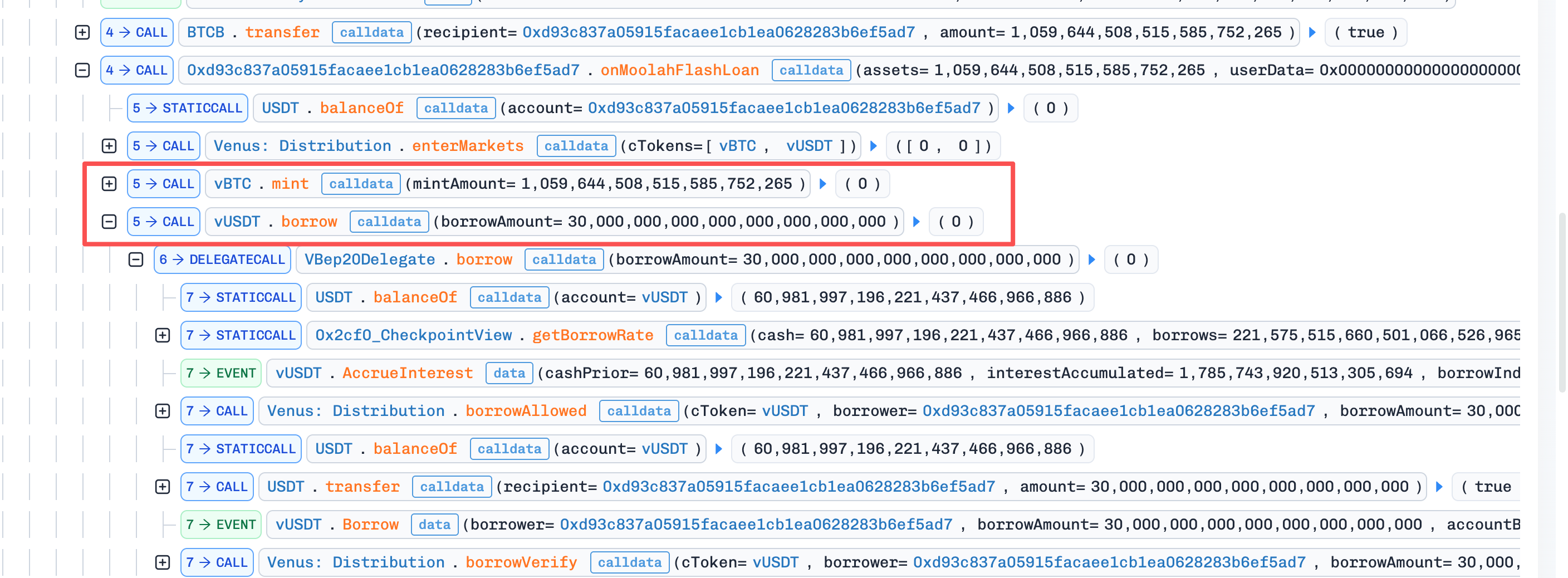
攻击者首先从Moolah Protocol利用闪电贷贷了1,059 BTCB,

随后,在 Venus Protocol 中抵押了 1,059 BTCB ,从而 borrow 了 30,000,000 USDT。
接着,攻击者在 PancakeSwap 调用函数 swapTokensForExactTokens ,利用 23,337,952 USDT 兑换了 982,506 PGNLZ ,但是却把这些 PGNLZ 销毁了(兑换给了 0xdead )。
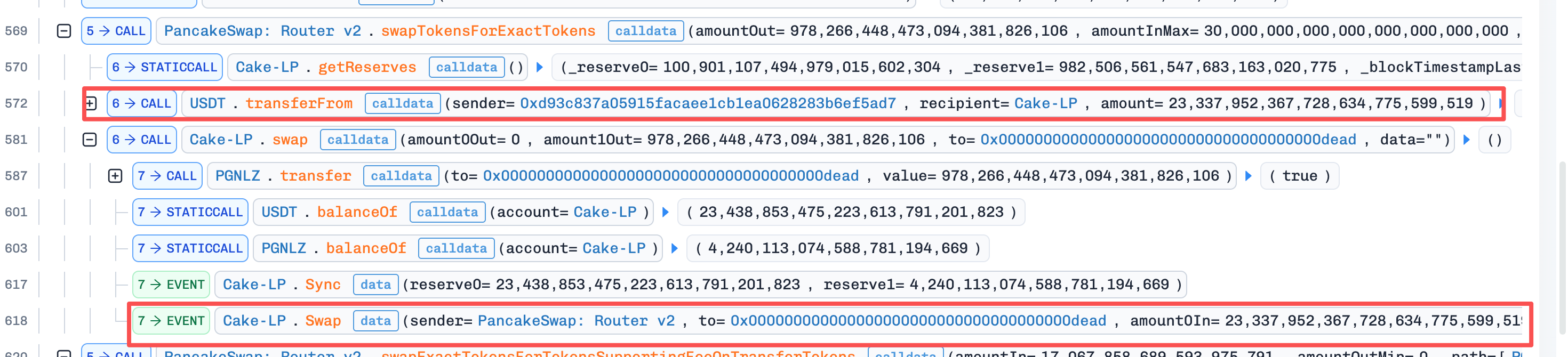
兑换前,PancakeSwap Pool中有100,901 USDT和982,506 PGNLZ,此时PGNLZ的价格为1 PGNLZ = 0.1 USDT。兑换完成后,PancakeSwap Pool剩余23,438,853 USDT和4,240 PGNLZ,此时,PGNLZ的价格为1 PGNLZ = 5,528 USDT。

随后,攻击者调用函数swapExactTokensForTokensSupportingFeeOnTransferTokens,这个函数主要是支持Fee-On TransferToken也就是买卖带手续费的Token。PGNLZ通过_update来处理交易的fee,具体的调用链为:transferFrom -> _spendAllowance -> _transfer -> _update

因为本次是 sell ,所以会调用到 _handleSellTax 。
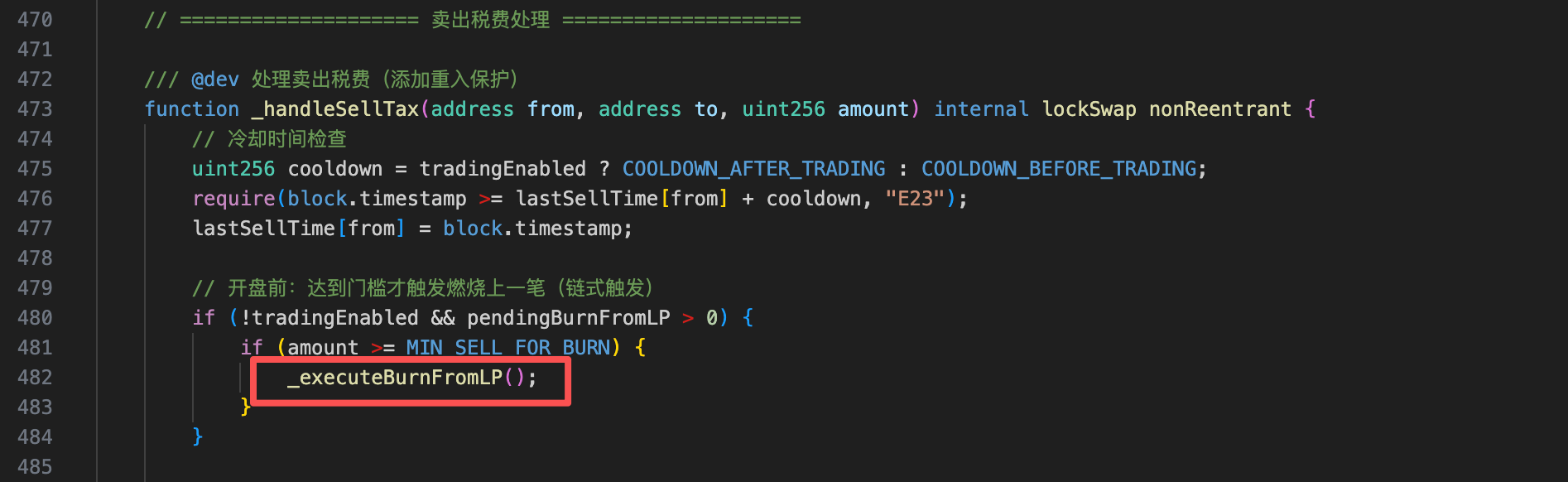
我们在看 _executeBurnFromLP 是如何实现的,
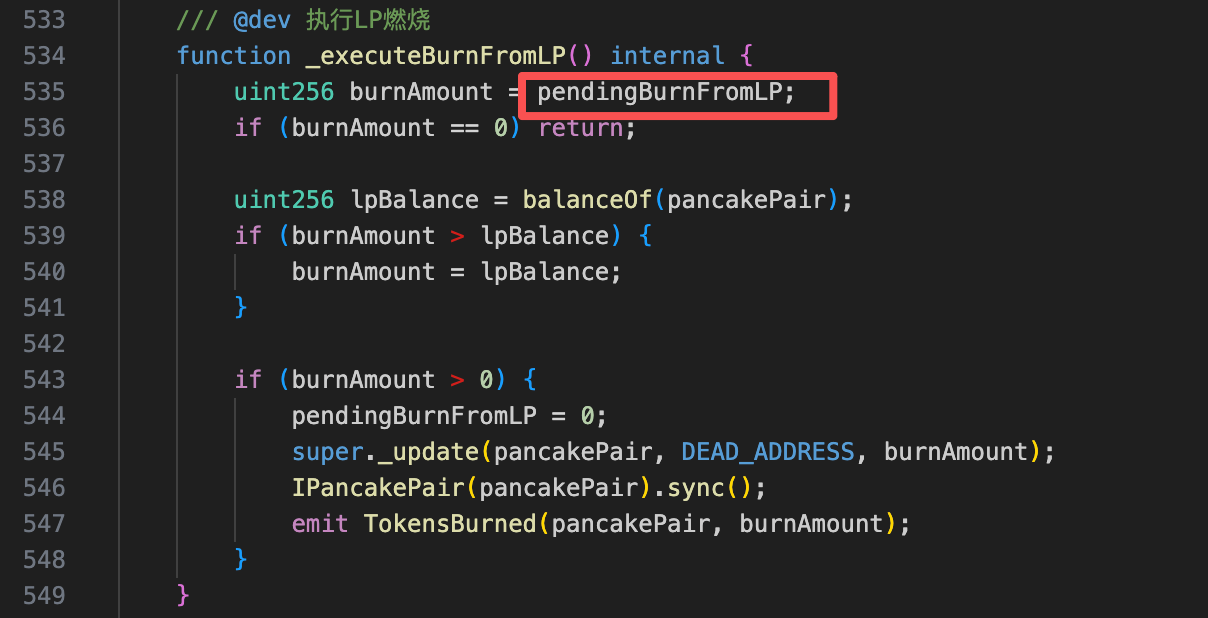
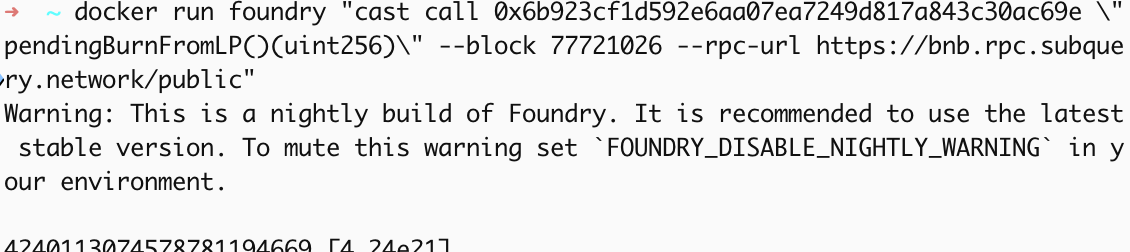
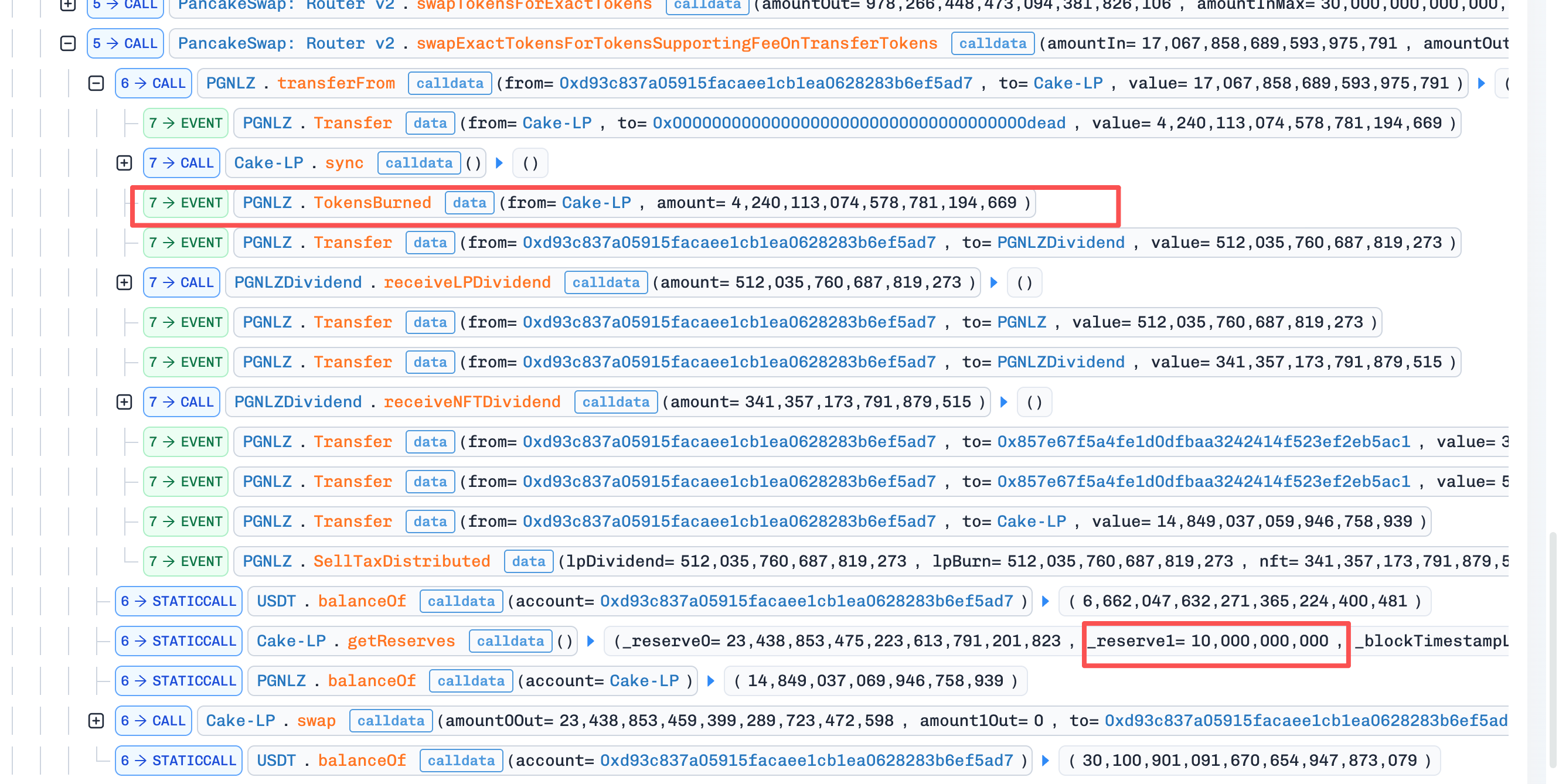
可以看到,_executeBurnFromLP会使用_update来burn掉pendingBurnFromLP数量的PGNLZ。在前一个区块查询到pendingBurnFromLP为4,240,113,074,578,781,194,669。
经过 burn 之后,LP Pool 中的只剩下的 0.00000001 PGNLZ ,此时 1 PGNLZ = 234,385,300,000,000 USDT ,拉升了 40 Billion 倍。
最后,攻击者将LP Pool掏空,还清了闪电贷后,获利100 k USDT。

总结

本次漏洞的成因是通缩的经济模型,在扣费或者 Burn LP Pool 时没有进行验证。导致攻击者利用通缩特性操控了 Token 的价格。建议项目方在设计经济模型和代码运行逻辑时要多方验证,合约上线前审计时尽量选择多个审计公司交叉审计。


Domande pertinenti

QPGNLZ攻击事件发生在哪个区块链网络上?

APGNLZ攻击事件发生在BNB Smart Chain(BSC)上。

Q攻击者通过什么方式获得了初始资金来发起攻击?

A攻击者首先从Moolah Protocol利用闪电贷贷了1,059 BTCB作为初始资金。

Q攻击者是如何操纵PGNLZ代币价格的?

A攻击者通过销毁大量PGNLZ代币,利用其通缩经济模型的漏洞,使得流动性池中代币数量急剧减少,从而将价格拉高了约400亿倍。

Q本次攻击造成的经济损失大约是多少?

A本次攻击共造成约10万美元(100k USD)的损失。

Q导致本次漏洞的根本原因是什么?

A漏洞的根本原因是PGNLZ项目的通缩经济模型在扣费或销毁流动性池代币时缺乏必要的验证,导致攻击者能够利用通缩特性操控代币价格。

Letture associate

Has the 'Digital Gold' Narrative for BTC Failed?

**Title: Has the "Digital Gold" Narrative for Bitcoin Failed?** The article argues that Bitcoin's "digital gold" narrative remains valid despite a recent sharp price decline (from a peak near $126k in Oct 2025 to briefly under $61k in Feb 2026). It presents a long-term investment framework based on three core points: **1. Viewing Bitcoin as an Asset:** Bitcoin is presented as a superior potential store of value compared to gold. Key arguments are its absolute scarcity (21 million cap), superior portability, and transparent auditability via its public ledger. While acknowledging its current use in early, volatile stages (~3-4% global adoption), the author draws parallels to the early, disruptive phases of the internet and e-commerce. **2. Understanding the Recent Downturn:** The current ~50% correction is framed as a predictable, consensus-driven cycle following its post-halving peak (the 2024 halving preceded the Oct 2025 high). A crucial factor is a historic "changing of hands": the influx of new institutional buyers via ETFs allowed early, low-cost holders (miners, OG believers) to take profits. The author notes that while severe, Bitcoin's historical drawdowns (e.g., 93% in 2011, 77% in 2021-22) have been progressively smaller, suggesting maturing holder structure and decreasing volatility over time. **3. The Long-Term Perspective:** The long-term thesis hinges on Bitcoin capturing a portion of gold's market value. With Bitcoin's market cap at ~$1.4 trillion (at $70k) versus gold's ~$20 trillion, significant upside potential exists if the "digital gold" narrative is partially realized. However, the author strongly cautions that short-term risks remain, the bottom is unpredictable, and high volatility is inherent. The real risk is not Bitcoin failing but poor personal position management (over-leverage, wrong capital) and a lack of deep understanding, which can force investors out during severe downturns. The conclusion uses Amazon's 95% crash post-2000 dot-com bubble and subsequent 42x recovery as an analogy. The ultimate question is not if Bitcoin's price will rise, but if an investor's strategy and conviction can withstand the volatility to see the long-term play out. The recent divergence (gold up, Bitcoin down) is posed not as a narrative failure, but as potential evidence of this ongoing, painful transition from a speculative asset to a mainstream allocation.

marsbit50 min fa

Has the 'Digital Gold' Narrative for BTC Failed?

marsbit50 min fa

Has BTC's 'Digital Gold' Narrative Failed?

The article discusses Bitcoin's "digital gold" narrative, its recent price drop, and long-term outlook through the perspective of "Jason". It argues the narrative is not a failure but that Bitcoin represents a superior, new asset class due to its fixed supply (21 million), portability, and auditability. The piece compares its current ~3-4% global adoption rate to early internet/e-commerce, suggesting significant growth potential. Regarding the 2025-2026 price decline (from ~$126k to briefly under $61k), the author views it as a predictable, consensus-driven sell-off within Bitcoin's ~4-year cycle post-halving, exacerbated by a major "handover" from early, low-cost holders to new institutional buyers via ETFs. A key observation is that historical peak-to-trough drawdowns have lessened over time (e.g., 93% in 2011 to ~50% in 2026), indicating maturing volatility as holder structure changes. For the long term, the author uses a simple framework: Bitcoin's total market cap (~$1.4T at $70k) is only about 7% of gold's (~$20T). Even capturing 30-50% of gold's value would imply substantial upside. However, the article strongly cautions against viewing this as investment advice, emphasizing extreme volatility and the critical importance of risk management, position sizing, and deep fundamental understanding to survive severe drawdowns. It concludes by drawing a parallel to Amazon's 95% crash in 2000 and subsequent 42x recovery, stressing that the key is surviving market cycles to realize long-term potential.

链捕手1 h fa

Has BTC's 'Digital Gold' Narrative Failed?

链捕手1 h fa

From Code to Cognition: A Ten-Thousand-Word Guide to the Evolution of the Robot Brain

"From Code to Cognition: The Evolution of Robot Brains" The journey of robotic intelligence has shifted dramatically from manually coded systems to AI-driven brains. For decades, robots relied on layered software stacks—perception, state estimation, planning, control—each handcrafted. While predictable, they lacked adaptability. The 2010s saw deep learning revolutionize perception (e.g., object detection) and control (via reinforcement learning), but learned skills remained narrow. The arrival of Large Language Models (LLMs) marked a turning point. LLMs acted as high-level planners, interpreting natural language instructions and generating sequences of actions for traditional robotic systems to execute. However, true integration came with Visual-Language-Action (VLA) models, which fused vision, language, and motion prediction into a single network. Pioneered by models like RT-2 and open-source projects like OpenVLA, VLAs enable robots to reason and act directly from visual input and commands. The most advanced humanoid robots now employ a "dual-brain" architecture: a slow-thinking, large VLA (System 2) for reasoning and planning, and a fast-reacting, small network (System 1) for high-frequency motion control, sometimes with an even lower-level System 0 for balance. This split balances cognition with the physics of real-time movement. Computation is split between onboard hardware (e.g., NVIDIA Jetson) for safety-critical control loops and cloud/edge servers for non-critical tasks like learning and interfaces. A crucial driver is the open-source ecosystem—models like GR00T and OpenVLA allow startups to build upon pre-trained brains and fine-tune them with their own data, accelerating development. Despite progress, current systems struggle with recovery from errors, sample inefficiency, and long-horizon tasks. This has spurred the rise of **World Models**—neural networks that predict the consequences of actions. By simulating possible futures before acting (like NVIDIA Cosmos or Meta V-JEPA), robots can plan, recover, and generalize better. This represents the next frontier: shifting intelligence from learned reactions to an internal model of physics and cause-and-effect. The field is rapidly evolving. While not yet at its "ChatGPT moment," the convergence of cheaper hardware, scalable simulation, and world models points toward robots that are increasingly capable, adaptive, and useful. The question is shifting from "what can robots do?" to "what *should* they do?"

marsbit1 h fa

From Code to Cognition: A Ten-Thousand-Word Guide to the Evolution of the Robot Brain

marsbit1 h fa

AI Bubble Is Bursting

The AI Bubble is Bursting: A Necessary Purge on the Path to Ubiquitous Intelligence Market volatility has reignited debates about an AI bubble, with figures like Ray Dalio pointing to high valuations. However, this parallels the dot-com bubble, which, despite its crash, laid the physical infrastructure for today's internet era. The current AI investment frenzy, with tech giants planning trillions in infrastructure spending far outstripping current AI application revenues, appears similarly imbalanced. This 'bubble' is seen as an inevitable phase for a disruptive technology, paying the "innovation tax." Critically, AI inference costs have plummeted over 99.7% since 2023, making intelligence nearly free at the margin. This hasn't reduced spending but has instead unlocked massive new demand, as seen in enterprise AI cloud expenditure tripling. This follows the Jevons Paradox: efficiency gains lead to greater total consumption. The market is now entering a cleansing phase, weeding out speculative ventures lacking real moats. The deeper shift is a move from capital expenditure (CapEx) on hardware to value creation in operational expenditure (OpEx) through AI applications that solve real industry problems. While infrastructure valuations are high, rapid earnings growth from widespread AI adoption across sectors—from manufacturing and finance to law and healthcare—may digest these valuations over time. Ultimately, this creative destruction will leave behind robust infrastructure and optimized models, cheaply powering an AI-augmented future for all industries, much as the internet became indispensable after its own bubble burst. The core productive potential remains undiminished.

链捕手1 h fa

AI Bubble Is Bursting

链捕手1 h fa

Trading

Spot
Futures

Articoli Popolari

Cosa è $WELL

WELL3, $$WELL: Rivoluzionare la Salute e il Benessere con DePIN e AI Introduzione Nel panorama in rapida evoluzione della tecnologia digitale, il settore della salute e del benessere si trova in prima linea nell'innovazione, cercando di migliorare la cura dei pazienti e promuovere stili di vita più sani. Un attore rivoluzionario in questo dominio è WELL3, un progetto pionieristico Web3 che cerca di rivoluzionare il modo in cui gli individui interagiscono con la propria salute. Sfruttando tecnologie come il Decentralized Physical Infrastructure Network (DePIN), l'Identità Decentralizzata (DID) e l'Intelligenza Artificiale (AI), WELL3 mira a favorire percorsi di salute sicuri e potenziati dai dati. Questo articolo completo approfondisce gli aspetti fondamentali di WELL3, $$WELL, esplorando le sue funzionalità, i creatori, gli investitori e le caratteristiche uniche. Cos'è WELL3, $$WELL? WELL3 funge da piattaforma innovativa destinata a ridefinire l'approccio verso la salute e il benessere. Focalizzato sull'integrazione di DePIN e DID insieme ai sistemi AI, il progetto è progettato per creare esperienze utente personalizzate garantendo nel contempo la sicurezza e la privacy dei dati sanitari degli individui. Con un numero impressionante di oltre un milione di utenti pre-registrati, la missione principale di WELL3 ruota attorno al miglioramento del benessere attraverso percorsi di salute sicuri e basati sui dati. Nel suo nucleo, WELL3 utilizza tecnologie avanzate della blockchain per garantire che gli utenti abbiano il completo controllo delle proprie informazioni personali. Questo progetto affronta non solo le sfide della sicurezza dei dati e dell'accessibilità, ma aspira anche a creare una comunità vibrante connessa da un impegno condiviso verso una salute migliore. Caratteristiche Chiave di WELL3: DePIN e DID: Queste tecnologie consentono una proprietà sicura e un'autenticazione dei dati, dando agli utenti pieno controllo delle proprie informazioni. Integrazione AI: Utilizzando analisi AI, WELL3 offre approfondimenti e soluzioni personalizzate, adattate ai bisogni di salute individuali. Coinvolgimento della Comunità: Facilita un ambiente di supporto in cui gli utenti possono connettersi, condividere esperienze e motivarsi a vicenda verso uno stile di vita più sano. Creatore di WELL3, $$WELL L'identità del creatore di WELL3 rimane non specificata nelle informazioni disponibili. Man mano che il progetto progredisce, potrebbero emergere ulteriori dettagli, facendo luce sulle menti visionarie dietro questa iniziativa trasformativa. Investitori di WELL3, $$WELL WELL3 ha ottenuto supporto da una miriade di influenti enti di investimento, evidenziando la sua credibilità e potenziale nel settore della salute e del benessere. Tra gli investitori notevoli ci sono: Animoca Brands AWS Samsung The Spartan Group Blocore Fenbushi Capital Newman Group Soul Capital XY Finance Lumoz Il sostegno di queste organizzazioni consolidate dimostra una forte fiducia nella missione di WELL3, fornendole le risorse necessarie per innovare ed espandere la propria offerta. Come Funziona WELL3, $$WELL? WELL3 opera mescolando tecnologie all'avanguardia in un framework multichain, garantendo un'esperienza utente fluida e innovativa. Di seguito sono riportati alcuni fattori che posizionano in modo unico WELL3 nel mercato del benessere: 1. Proprietà Sicura dei Dati Con l'integrazione di DePIN e DID, gli utenti possono mantenere il completo controllo delle proprie informazioni sanitarie personali. Questo livello di sicurezza è fondamentale nell'era digitale odierna, dove le violazioni dei dati e l'accesso non autorizzato sono comuni. Attraverso WELL3, la proprietà dei dati è decentralizzata, consentendo agli utenti di gestire proattivamente le proprie informazioni. 2. Personalizzazione tramite AI WELL3 implementa analisi guidate dall'AI per fornire agli utenti approfondimenti sanitari su misura. Sfruttando il potere dell'AI, la piattaforma può offrire raccomandazioni e soluzioni individualizzate, incoraggiando gli utenti a raggiungere i propri obiettivi di salute in modo più efficace. 3. Framework Multichain Il progetto WELL3 è progettato per operare su più piattaforme blockchain, tra cui Bitcoin, Ethereum, Polygon, Solana, Blast e TON. Questa capacità multichain garantisce che gli utenti possano interagire con la piattaforma senza soluzione di continuità su diverse reti, migliorando accessibilità e usabilità. 4. Token WELL Al centro dell'ecosistema WELL3 c'è il Token WELL, che svolge funzioni multiple tra cui utilità, governance e ricompense. Il token consente la partecipazione nell'ecosistema, supporta la condivisione dei dati sanitari e incentiva gli utenti in base al loro coinvolgimento con la piattaforma. Timeline di WELL3, $$WELL La traiettoria di WELL3 mostra traguardi significativi nel suo sviluppo, ognuno contribuendo al successo complessivo del progetto. Ecco una breve timeline degli eventi critici nella storia di WELL3: 10 Febbraio 2024: WELL3 ha lanciato il proprio progetto NFT, raggiungendo rapidamente la prominenza come la più grande collezione NFT sulla catena opBNB con oltre 324.000 proprietari e raggiungendo 8 milioni di NFT creati entro il 27 Aprile 2024. Vendita Pubblica: Il progetto ha raggiunto un valore totale bloccato (TVL) straordinario di circa 15.237,2 ETH in soli sette giorni, indicando un forte interesse e sostegno del mercato. Lancio del WELL ID: La piattaforma ha visto oltre 900.000 utenti registrarsi per il WELL ID e la relativa whitelist NFT Ring, segnando una fase di adozione significativa all'interno dell'ecosistema. Sviluppo di Partnership: WELL3 ha stabilito partnership con enti leader tra cui Animoca Brands, AWS, Samsung e altri per migliorare il proprio ecosistema ed espandere la propria portata. Volume di Transazioni: WELL3 ha facilitato oltre 17 milioni di dollari in transazioni, riflettendo la sua crescente utilità e impegno all'interno della comunità della salute e del benessere. Punti Chiave su WELL3, $$WELL Come iniziativa progressista che si sposta verso il mercato del benessere, WELL3 ha identificato diversi elementi vitali che contribuiranno al suo continuo successo. Ecco alcuni punti chiave da notare: Tokenomics Il token $$WELL ha un'offerta massima di 42 miliardi, con un significativo 71% destinato a iniziative comunitarie. Questa strategia di distribuzione enfatizza l'impegno del progetto verso la propria base utenti e la sostenibilità a lungo termine. Periodo di Lock-Up Per garantire stabilità all'interno dell'ecosistema, i token vengono rilasciati in tranche nel corso di un periodo di 24 mesi, promuovendo fiducia e sicurezza tra gli utenti. Sviluppo dell'Ecosistema La visione di WELL3 si estende verso la creazione di un ecosistema completo e sostenibile per incoraggiare il coinvolgimento della comunità, comportamenti orientati alla salute e soluzioni digitali che rispondono ai bisogni pressanti del settore del benessere. Adattamento al Mercato Il settore del benessere, valutato 5,6 trilioni di dollari, presenta un'opportunità lucrativa che WELL3 mira a sfruttare. Con un tasso di crescita annuale previsto tra 5-10%, il progetto è posizionato in modo ideale in mezzo a una crescente tendenza verso uno stile di vita consapevole della salute. Dispositivi Indossabili Introducendo il WELL3 Ring, un dispositivo indossabile incentivato tramite crypto, si allinea alla crescente domanda di dati sanitari personalizzati. Questo dispositivo non solo migliora l'esperienza dell'utente, ma ridefinisce anche cosa significa essere coinvolti nella propria salute nel contesto del Web3. Conclusione WELL3 rappresenta un significativo progresso nell'integrazione della tecnologia blockchain all'interno del settore della salute e del benessere. Affrontando questioni cruciali riguardo alla proprietà dei dati, personalizzazione e coinvolgimento della comunità, questa piattaforma innovativa offre una soluzione lungimirante per migliorare il benessere individuale. Con un forte sostegno da parte di investitori notevoli e un impegno verso tecnologie pionieristiche, WELL3 è pronta a lasciare un'impronta duratura nel panorama del benessere. Per coloro che cercano di navigare nella complessità della salute nell'era digitale, WELL3 è sicuramente qualcosa da tenere d'occhio mentre continua a evolversi e crescere.

50 Totale visualizzazioniPubblicato il 2024.07.14Aggiornato il 2024.12.03

Cosa è $WELL

Come comprare WELL

Benvenuto in HTX.com! Abbiamo reso l'acquisto di Moonwell Artemis (WELL) semplice e conveniente. Segui la nostra guida passo passo per intraprendere il tuo viaggio nel mondo delle criptovalute.Step 1: Crea il tuo Account HTXUsa la tua email o numero di telefono per registrarti il tuo account gratuito su HTX. Vivi un'esperienza facile e sblocca tutte le funzionalità,Crea il mio accountStep 2: Vai in Acquista crypto e seleziona il tuo metodo di pagamentoCarta di credito/debito: utilizza la tua Visa o Mastercard per acquistare immediatamente Moonwell ArtemisWELL.Bilancio: Usa i fondi dal bilancio del tuo account HTX per fare trading senza problemi.Terze parti: abbiamo aggiunto metodi di pagamento molto utilizzati come Google Pay e Apple Pay per maggiore comodità.P2P: Fai trading direttamente con altri utenti HTX.Over-the-Counter (OTC): Offriamo servizi su misura e tassi di cambio competitivi per i trader.Step 3: Conserva Moonwell Artemis (WELL)Dopo aver acquistato Moonwell Artemis (WELL), conserva nel tuo account HTX. In alternativa, puoi inviare tramite trasferimento blockchain o scambiare per altre criptovalute.Step 4: Scambia Moonwell Artemis (WELL)Scambia facilmente Moonwell Artemis (WELL) nel mercato spot di HTX. Accedi al tuo account, seleziona la tua coppia di trading, esegui le tue operazioni e monitora in tempo reale. Offriamo un'esperienza user-friendly sia per chi ha appena iniziato che per i trader più esperti.

100 Totale visualizzazioniPubblicato il 2024.12.10Aggiornato il 2026.06.02

Come comprare WELL

Discussioni

Benvenuto nella Community HTX. Qui puoi rimanere informato sugli ultimi sviluppi della piattaforma e accedere ad approfondimenti esperti sul mercato. Le opinioni degli utenti sul prezzo di WELL WELL sono presentate come di seguito.

活动图片













