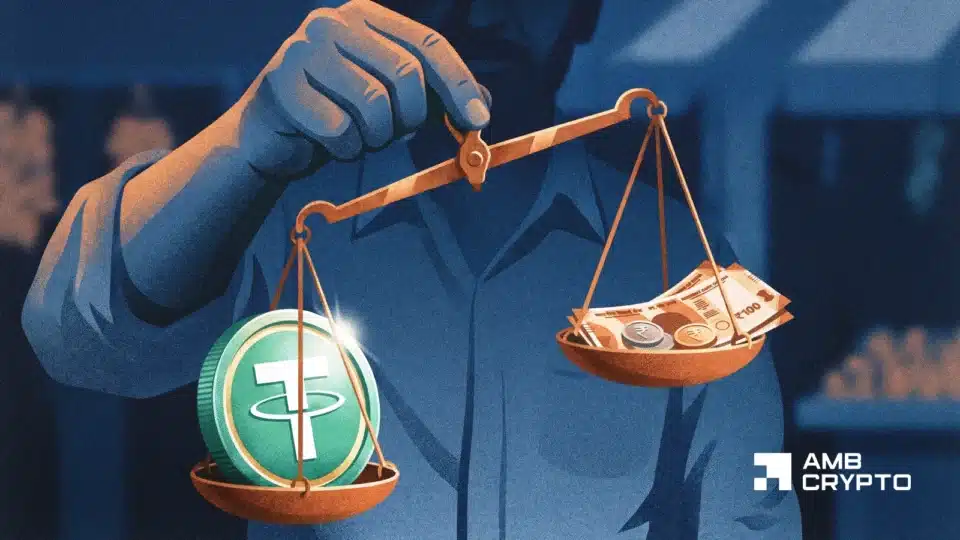
Tether представила кроссплатформенную систему для локального дообучения LLM

cryptonews.ruPubblicato 2025-02-02Pubblicato ultima volta 2025-12-03

  • Tether Data интегрировала полноценную LoRA-тренировку в llama.cpp с кроссплатформенной поддержкой.
  • QVAC-fabric-llm работает благодаря Vulkan, Metal и LoRA.
  • Новая ИИ-система Tether позволяет дообучать Qwen3 и Gemma3 на любом устройстве — от смартфона до сервера.

Исследовательское подразделение искусственного интеллекта (ИИ) компании Tether — Tether Data AI — представило QVAC-fabric-llm. Это новая инфраструктура для Low-Rank Adaptation (LoRA)-дообучения больших языковых моделей (LLM) непосредственно в рамках экосистемы llama.cpp.

Как отмечает компания, это первое решение, позволяющее проводить параметро-эффективное обучение LLM на всем спектре потребительского оборудования — от мобильных графических процессоров (GPU) до десктопных видеокарт.

В Tether говорят, что проект является «значительным шагом в миссии QVAC», ведь система обеспечивает настоящую аппаратно-независимую совместимость и устраняет зависимость от конкретных вендоров.

Разработчики отметили, что технология позволяет выполнять дообучение «на любом современном устройстве — от мобильного до серверного».

Одной из ключевых инноваций является возможность запускать LoRA-дообучение на мобильных графических процессорах, что до этого считалось недоступным. В Tether заявили:

«Мы демонстрируем первые успешные результаты точной настройки на мобильных GPU, ранее недоступные возможности, которые открывают путь к настоящей персонализации на устройстве».

Поддержка охватывает GPU Adreno, Mali и Apple, а также настольные графические решения AMD, Intel, NVIDIA и Apple.

QVAC-fabric-llm также добавляет первую кроссплатформенную поддержку LoRA-обучения для моделей Qwen3 и Gemma3, что существенно расширяет функциональность llama.cpp.

Чтобы ускорить развитие экосистемы, Tether Data AI открывает доступ к:

  • мультиплатформенным бинарным файлам;
  • LoRA-адаптерам, дообученным непосредственно на устройствах;
  • исходному коду новых модулей.

Компания подчеркивает:

«Все взносы являются безопасными для высших уровней: мы не меняли публичные API llama.cpp и добавляли только новые модули».

Код опубликовали под лицензией Apache 2.0.

Зачем это криптовалютной индустрии и Tether

Для Tether, крупнейшего эмитента стейблкоинов, развитие собственного ИИ-направления направлено на:

  • создание автономных систем, которые могут работать локально в регионах с высокой задержкой или нестабильной инфраструктурой;
  • защиту приватности, ведь чувствительные данные пользователей не нужно передавать в облако;
  • масштабируемость, которая не зависит от вендора GPU.

В Tether Data подчеркнули важность локального дообучения:

«Способность к точной настройке LLM на персональных данных пользователя является критической для персонализации и более широкого принятия технологии».

Среди ключевых технических решений:

  • перенос полного LoRA-workflow в llama.cpp с API для инициализации, тренировки, чекпойнтинга и слияния адаптеров;
  • использование Vulkan для универсальной GPU-совместимости (NVIDIA, AMD, Intel, Adreno, Mali);
  • поддержка Apple Metal для M-серии и мобильных A-серий;
  • поддержка инструкционного дообучения благодаря маскированным потерям (обучение только на токенах ассистента);
  • добавление обратных проходов для современных архитектур, включая GEGLU;
  • динамический алгоритм разбиения на блоки для обхода жестких ограничений драйверов Adreno и выполнения больших матричных операций.

Результаты тестов: мобильное дообучение и качество на уровне PyTorch

Проект показал жизнеспособность LoRA-тренировки на самых разных устройствах — от RTX 4090 до мобильных Mali.

Согласно тестам, качество моделей после дообучения в QVAC-fabric-llm сопоставимо с PyTorch-HuggingFace:

  • процент побед LLM-судей: 45-48% (против 52-55% в PyTorch);
  • биомедицинская точность: 79-94% (против 78-86%);
  • косинусное сходство: 0.82 против 0.77.

В Tether отметили, что технология особенно полезна для сфер со строгими требованиями к приватности — медицины, науки, регулируемых финансовых сервисов.

Дальнейшие планы

Среди следующих шагов команда назвала расширение поддержки количественных форматов (GPTQ-INT8, Q5_K_M), оптимизацию GPU-операторов и улучшение управления памятью.

Представив QVAC-fabric-llm, Tether сделала попытку перенести ИИ-возможности, которые обычно доступны только в дата-центрах, непосредственно на потребительские устройства.

Компания заявила, что эта технология «разрушает давние аппаратные ограничения» и открывает путь к эпохе частных, локальных, устойчивых ИИ-решений.

Напомним, что недавно Tether подписала арендное соглашение на 20 000 GPU для поддержки ИИ-сферы на фоне партнерства видеоплатформы Rumble и немецкой майнинговой компании Northern Data.
Letture associate

Bitmine Increases Holdings to 5.7 Million ETH, Included in Russell 1000 Index, Tom Lee Says Only One Step Away from '5% Target'

Bitmine Increases Ethereum Holdings, Nears 5% Supply Target and Joins Russell 1000 Bitmine Immersion Technologies (BMNR) acquired an additional 27,084 ETH last week, bringing its total holdings to 5,700,040 ETH, which represents 4.7% of Ethereum's total supply. This puts the company at 94% of its goal to own 5% of ETH's circulating supply. Despite a challenging week where ETH price fell 8% and BMNR's stock dropped 13%, Bitmine continues its accumulation strategy, with Chairman Tom Lee attributing the market weakness to quarter-end "window dressing" by investors. In a significant development, Bitmine was added to the Russell 1000 large-cap index on June 26. Lee expects this inclusion to attract hundreds of institutional investors, as passive funds and ETFs rebalance to match the index. The company's total assets, including crypto, cash, and securities, stand at $9.8 billion. Of its ETH holdings, 4,879,157 are currently staked, generating an estimated annualized revenue of $211 million. Lee projects this could rise to $246 million once all ETH is staked through its MAVAN network. Bitmine remains the world's largest corporate Ethereum treasury and the second-largest overall corporate crypto treasury, behind Strategy's substantial Bitcoin holdings. Lee reaffirmed the company's commitment to steady buying throughout 2026, expressing belief that the crypto market is still in the early stages of a spring cycle. At the time of writing, ETH was trading around $1,565, while BMNR stock was near $13.56, down over 90% from its 52-week high.

marsbit18 min fa

Bitmine Increases Holdings to 5.7 Million ETH, Included in Russell 1000 Index, Tom Lee Says Only One Step Away from '5% Target'

marsbit18 min fa

AGI Countdown: OpenAI's Chief Research Officer Makes Major Statement — The Window for Humanity is 'Very Small'

The countdown to AGI has begun, according to OpenAI's Chief Scientist Mark Chen, who states the window for human-centric progress is "very small." Chen argues that AI is reaching a point where models can perform "self-sustaining research," autonomously driving innovation in fields from mathematics to programming. He points to the proliferation of AI's "superhuman" insights—akin to AlphaGo's legendary "Move 37"—across disciplines as evidence of this shift. Chen firmly dismisses claims that scaling laws are plateauing or that pre-training is dead, asserting the field remains on an exponential curve. He cites OpenAI's successful bet on reasoning models like o1 as proof that fundamental breakthroughs are still possible. The future of research, he suggests, lies with "Vibe Researchers"—humans who provide high-level direction and "taste" while AI handles execution and orchestration of complex, long-horizon tasks. However, significant hurdles remain. Chen highlights a "benchmarking crisis," where models can overfit to existing tests without gaining true generalization. He also notes the "jagged frontier" of AI capabilities, where systems excel at advanced reasoning but struggle with contextual, continual learning from everyday experiences. Despite these challenges, he expresses confidence that these gaps will be closed. In a personal reflection, Chen shares that post-AGI, his wish is to open a noodle shop—a metaphor emphasizing that when AI masters knowledge and innovation, uniquely human experiences, warmth, and storytelling will become the ultimate form of value.

marsbit33 min fa

AGI Countdown: OpenAI's Chief Research Officer Makes Major Statement — The Window for Humanity is 'Very Small'

marsbit33 min fa

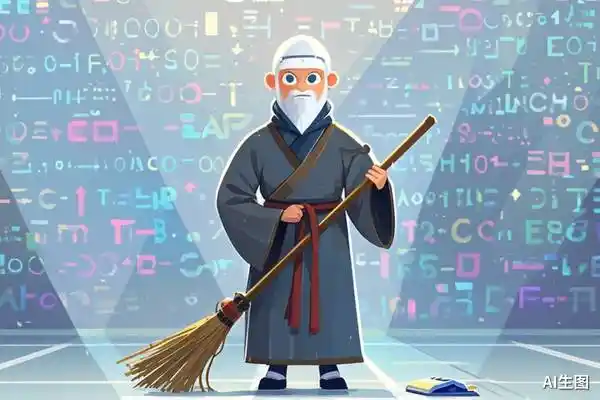
China's No.1, Closing in on OpenAI, Mysterious "Sweeping Monk" Rises to Top Seven Globally

A mysterious Chinese AI project named "MopMonk" (meaning "Sweeping Monk") has achieved a top-ranking result on the globally recognized CyberGym cybersecurity benchmark. With a 73.1% success rate, it ranks seventh worldwide and first among Chinese entries, performing closely behind OpenAI. The significance lies in the benchmark itself. CyberGym, created by UC Berkeley, is considered a premier "Olympics" for AI security. It tests models on over 1500 real-world software vulnerabilities, requiring them to not just identify but actually generate working exploits (PoCs) in a complex, offline environment. This moves beyond simple knowledge to testing an AI's practical "execution" capabilities. MopMonk's approach is notable. It uses the open-source MiniMax M3 model from Shanghai as its powerful reasoning "brain," leveraging its strong coding skills and long context window. However, the key to its performance is a custom-built, multi-agent security framework—its "Harness." This system uses structured "vulnerability memory" to efficiently guide the search for exploits, allowing multiple agents to explore in parallel while sharing lessons learned from failures. This engineering layer effectively translates the model's intelligence into actionable, iterative testing steps. The project remains highly secretive, with no official website or team information, embodying the "dark horse" spirit of its literary namesake. Its success highlights a potential industry shift: beyond simply scaling model size, the engineering of specialized agent systems (the Harness) is becoming a critical differentiator for real-world AI application performance, especially in complex domains like cybersecurity.

marsbit1 h fa

China's No.1, Closing in on OpenAI, Mysterious "Sweeping Monk" Rises to Top Seven Globally

marsbit1 h fa

Will History Repeat Itself? Fidelity Lists Five Catalysts to End the Crypto Winter

Fidelity's new report suggests that the current crypto winter for Bitcoin may be nearing its end, identifying five potential catalysts that could drive a market turnaround based on historical patterns. First, Bitcoin's approximately four-year cycle, driven by its halving mechanism, historically marks peaks and troughs. The last bottom was in November 2022, potentially pointing to the next around November 2026, though cycle length can vary. Second, clearer regulation has often preceded past bull markets. The focus is now on the CLARITY Act, which aims to clarify US digital asset oversight between the SEC and CFTC. Its passage could unlock domestic activity currently held back by legal uncertainty. Third, Federal Reserve monetary policy plays a role. A shift to lower interest rates tends to correlate with rising crypto prices by reducing borrowing costs and boosting risk appetite, though markets may price this in well ahead of any official change. Fourth, the emergence of breakthrough applications can fuel investor interest. Current trends like real-world asset tokenization, AI-related crypto infrastructure, and stablecoins are being watched, but history shows the biggest catalysts are often unexpected. Fifth, a new wave of institutional adoption could be a trigger. While ongoing adoption in 2026 hasn't sparked a new bull run, a major unexpected move—like a significant purchase by a tech giant or adoption as a hedge in a global crisis—could create a powerful new narrative. Fidelity concludes that while the market is in a downturn, historical turning points have often resulted from a combination of such factors, and the next phase for Bitcoin may depend on which of these catalysts materializes first.

Foresight News1 h fa

Will History Repeat Itself? Fidelity Lists Five Catalysts to End the Crypto Winter

Foresight News1 h fa

Trading

Spot
活动图片