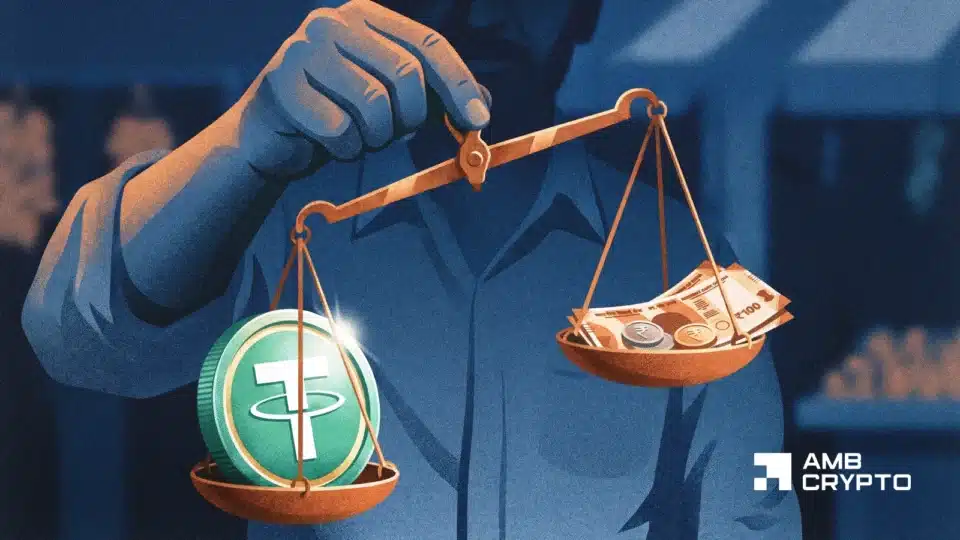
Великобритания приняла закон, признающий криптовалюты и стейблкоины личной собственностью

cryptonews.ruPubblicato 2025-02-02Pubblicato ultima volta 2025-12-03

Власти Великобритании приняли законопроект, признающий цифровые активы, такие как криптовалюты и стейблкоины, собственностью.

  • В Великобритании принят новый закон, официально признающий цифровые активы, такие как криптовалюты и стейблкоины, личной собственностью.
  • Законодательство вводит третью категорию имущества, предоставляя цифровым активам четкий правовой статус, выходящий за рамки традиционных рамок.

Законопроект о собственности (цифровых активах и т. д.) получил королевское одобрение, что является последним шагом в законодательном процессе, подтвердил лорд-спикер Джон Макфолл в Палате лордов во вторник.

До сих пор в Великобритании не было официальной законодательной позиции относительно статуса собственности криптовалют, однако в соответствии с общим правом цифровые активы, такие как биткоин и стейблкоины, такие как USDT, в значительной степени считались собственностью на основании судебных решений, выносимых в каждом конкретном случае.

Однако теперь, когда король Карл подписал законопроект, что было подтверждено королевским согласием, цифровые активы обрели прочную правовую основу, которая облегчит их обработку в судах и в различных финансовых системах.

Криптовалюты теперь подпадают под действие законов о собственности Великобритании

Впервые представленный в сентябре 2024 года законопроект основан на отчете, представленном Правовой комиссией Великобритании ранее в том же году, в котором рекомендовалось более четкое признание цифровых активов в законодательстве о собственности.

«Мы приходим к выводу, что гибкость общего права позволяет признать отдельную категорию движимого имущества, которая может лучше распознавать, учитывать и защищать уникальные особенности определенных цифровых активов (включая криптотокены и криптоактивы)», — заявила тогда Правовая комиссия.

По сути, в Великобритании существуют две традиционные категории движимого имущества, а законопроект вводит третью категорию наряду с существующими «вещами, находящимися во владении» и «вещами, находящимися в обращении», которая обеспечит правовую защиту цифровых активов.

В законопроекте разъясняется, что «вещь, которая является цифровой или электронной по своей природе» не выходит за рамки права собственности только потому, что она не является «вещью во владении» или «вещью в действии».

По мнению правозащитной группы CryptoUK, закон будет иметь решающее значение в случаях, когда необходимо доказать право собственности, вернуть украденные активы и управлять цифровыми активами в процессах банкротства или наследования.

«Это изменение обеспечивает большую прозрачность и защиту для потребителей и инвесторов, гарантируя, что цифровые активы могут быть четко определены как владельцы, возвращены в случае кражи или мошенничества, а также включены в процедуры банкротства и наследования. Это знаменует собой важный шаг к предоставлению обычным владельцам такой же уверенности и определенности, которую они ожидают от других форм собственности», — заявила правозащитная группа в публикации от 2 декабря .

«Что особенно важно, это развитие также укрепляет основу для будущих инноваций в сфере цифровых активов и токенизации в Великобритании», — добавили они.

Уникальная природа криптовалют вызывала множество сложностей в ходе правовых споров, поэтому многие юрисдикции рассматривали возможность включения этого класса активов в сферу действия законов о собственности.

Ранее в этом году Министерство юстиции России объявило о подготовке законопроекта, который отнесёт криптоактивы к имуществу, что позволит наложить на них арест в рамках уголовного судопроизводства. Тем временем, Верховный суд Индии недавно постановил, что криптовалюты квалифицируются как имущество в соответствии с индийским законодательством.

Letture associate

Bitmine Increases Holdings to 5.7 Million ETH, Included in Russell 1000 Index, Tom Lee Says Only One Step Away from '5% Target'

Bitmine Increases Ethereum Holdings, Nears 5% Supply Target and Joins Russell 1000 Bitmine Immersion Technologies (BMNR) acquired an additional 27,084 ETH last week, bringing its total holdings to 5,700,040 ETH, which represents 4.7% of Ethereum's total supply. This puts the company at 94% of its goal to own 5% of ETH's circulating supply. Despite a challenging week where ETH price fell 8% and BMNR's stock dropped 13%, Bitmine continues its accumulation strategy, with Chairman Tom Lee attributing the market weakness to quarter-end "window dressing" by investors. In a significant development, Bitmine was added to the Russell 1000 large-cap index on June 26. Lee expects this inclusion to attract hundreds of institutional investors, as passive funds and ETFs rebalance to match the index. The company's total assets, including crypto, cash, and securities, stand at $9.8 billion. Of its ETH holdings, 4,879,157 are currently staked, generating an estimated annualized revenue of $211 million. Lee projects this could rise to $246 million once all ETH is staked through its MAVAN network. Bitmine remains the world's largest corporate Ethereum treasury and the second-largest overall corporate crypto treasury, behind Strategy's substantial Bitcoin holdings. Lee reaffirmed the company's commitment to steady buying throughout 2026, expressing belief that the crypto market is still in the early stages of a spring cycle. At the time of writing, ETH was trading around $1,565, while BMNR stock was near $13.56, down over 90% from its 52-week high.

marsbit17 min fa

Bitmine Increases Holdings to 5.7 Million ETH, Included in Russell 1000 Index, Tom Lee Says Only One Step Away from '5% Target'

marsbit17 min fa

AGI Countdown: OpenAI's Chief Research Officer Makes Major Statement — The Window for Humanity is 'Very Small'

The countdown to AGI has begun, according to OpenAI's Chief Scientist Mark Chen, who states the window for human-centric progress is "very small." Chen argues that AI is reaching a point where models can perform "self-sustaining research," autonomously driving innovation in fields from mathematics to programming. He points to the proliferation of AI's "superhuman" insights—akin to AlphaGo's legendary "Move 37"—across disciplines as evidence of this shift. Chen firmly dismisses claims that scaling laws are plateauing or that pre-training is dead, asserting the field remains on an exponential curve. He cites OpenAI's successful bet on reasoning models like o1 as proof that fundamental breakthroughs are still possible. The future of research, he suggests, lies with "Vibe Researchers"—humans who provide high-level direction and "taste" while AI handles execution and orchestration of complex, long-horizon tasks. However, significant hurdles remain. Chen highlights a "benchmarking crisis," where models can overfit to existing tests without gaining true generalization. He also notes the "jagged frontier" of AI capabilities, where systems excel at advanced reasoning but struggle with contextual, continual learning from everyday experiences. Despite these challenges, he expresses confidence that these gaps will be closed. In a personal reflection, Chen shares that post-AGI, his wish is to open a noodle shop—a metaphor emphasizing that when AI masters knowledge and innovation, uniquely human experiences, warmth, and storytelling will become the ultimate form of value.

marsbit33 min fa

AGI Countdown: OpenAI's Chief Research Officer Makes Major Statement — The Window for Humanity is 'Very Small'

marsbit33 min fa

China's No.1, Closing in on OpenAI, Mysterious "Sweeping Monk" Rises to Top Seven Globally

A mysterious Chinese AI project named "MopMonk" (meaning "Sweeping Monk") has achieved a top-ranking result on the globally recognized CyberGym cybersecurity benchmark. With a 73.1% success rate, it ranks seventh worldwide and first among Chinese entries, performing closely behind OpenAI. The significance lies in the benchmark itself. CyberGym, created by UC Berkeley, is considered a premier "Olympics" for AI security. It tests models on over 1500 real-world software vulnerabilities, requiring them to not just identify but actually generate working exploits (PoCs) in a complex, offline environment. This moves beyond simple knowledge to testing an AI's practical "execution" capabilities. MopMonk's approach is notable. It uses the open-source MiniMax M3 model from Shanghai as its powerful reasoning "brain," leveraging its strong coding skills and long context window. However, the key to its performance is a custom-built, multi-agent security framework—its "Harness." This system uses structured "vulnerability memory" to efficiently guide the search for exploits, allowing multiple agents to explore in parallel while sharing lessons learned from failures. This engineering layer effectively translates the model's intelligence into actionable, iterative testing steps. The project remains highly secretive, with no official website or team information, embodying the "dark horse" spirit of its literary namesake. Its success highlights a potential industry shift: beyond simply scaling model size, the engineering of specialized agent systems (the Harness) is becoming a critical differentiator for real-world AI application performance, especially in complex domains like cybersecurity.

marsbit1 h fa

China's No.1, Closing in on OpenAI, Mysterious "Sweeping Monk" Rises to Top Seven Globally

marsbit1 h fa

Will History Repeat Itself? Fidelity Lists Five Catalysts to End the Crypto Winter

Fidelity's new report suggests that the current crypto winter for Bitcoin may be nearing its end, identifying five potential catalysts that could drive a market turnaround based on historical patterns. First, Bitcoin's approximately four-year cycle, driven by its halving mechanism, historically marks peaks and troughs. The last bottom was in November 2022, potentially pointing to the next around November 2026, though cycle length can vary. Second, clearer regulation has often preceded past bull markets. The focus is now on the CLARITY Act, which aims to clarify US digital asset oversight between the SEC and CFTC. Its passage could unlock domestic activity currently held back by legal uncertainty. Third, Federal Reserve monetary policy plays a role. A shift to lower interest rates tends to correlate with rising crypto prices by reducing borrowing costs and boosting risk appetite, though markets may price this in well ahead of any official change. Fourth, the emergence of breakthrough applications can fuel investor interest. Current trends like real-world asset tokenization, AI-related crypto infrastructure, and stablecoins are being watched, but history shows the biggest catalysts are often unexpected. Fifth, a new wave of institutional adoption could be a trigger. While ongoing adoption in 2026 hasn't sparked a new bull run, a major unexpected move—like a significant purchase by a tech giant or adoption as a hedge in a global crisis—could create a powerful new narrative. Fidelity concludes that while the market is in a downturn, historical turning points have often resulted from a combination of such factors, and the next phase for Bitcoin may depend on which of these catalysts materializes first.

Foresight News1 h fa

Will History Repeat Itself? Fidelity Lists Five Catalysts to End the Crypto Winter

Foresight News1 h fa

Trading

Spot
活动图片