First US Bank Opens Crypto Trading: SoFi’s Move Puts Best Wallet Token in Play

bitcoinistPubblicato 2025-11-12Pubblicato ultima volta 2025-11-12

Introduzione

Quick Facts: ➡️ SoFi became the first nationally chartered U.S. bank to offer in-app crypto trading, signaling a policy-driven thaw...

Trusted Editorial content, reviewed by leading industry experts and seasoned editors. Ad Disclosure

Quick Facts:

  • ➡️ SoFi became the first nationally chartered U.S. bank to offer in-app crypto trading, signaling a policy-driven thaw in bank crypto.
  • ➡️ Wider bank distribution typically deepens liquidity and lowers frictions, funneling new users toward non-custodial wallets where utility lives.
  • ➡️ Best Wallet positions $BEST as a utility token for reduced fees, presale access, and staking inside a mobile-first, MPC-secured app.
  • ➡️ The Best Wallet Token presale has raised over $16.9M to date, positioning it as one of the hottest presales of 2025.

SoFi Bank just did what every US lender has tiptoed around for years: it lit up in-app crypto trading for retail customers.

The rollout makes SoFi the first and only nationally chartered, FDIC-insured bank to let its customers buy, sell, and hold digital assets like Bitcoin ($BTC) and Ethereum ($ETH) on the same app they already use for checking, savings, and investing.

According to SoFi’s CEO, the launch is staged, with support for ‘dozens’ of assets coming online. That’s the exact kind of SKU breadth that pushes crypto from niche app to default banking tab.

The bank’s move is certain to bridge the gap between TradFi accounts and on-chain assets.

It matters for traders because every new on-ramp tends to compress spreads, deepen liquidity, and normalize allocation behavior. It also matters for the next wave of retail users, who won’t need to bridge funds through multiple apps to get exposure.
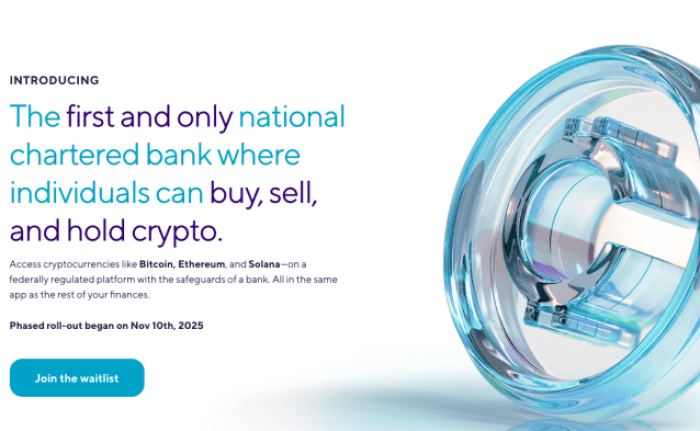
SoFi Bank's crypto landing page.

We believe the move is a product of clearer US bank guidance this year, which unlocked internal greenlights at institutions that were previously wary of digital-asset ambiguity.

✅ Said simply: if compliance had the brakes on in 2023, policy clarity just shifted the gearbox. With a national bank now setting the pace, expect copycats. Also, expect the user funnel to get wider, faster.

SoFi also aims to bring crypto access to its 12.6M-plus customer base over the coming weeks. It’s a firehose of distribution that typically re-prices convenience premiums across the stack.

For wallets, that’s an opportunity. If banks are turning into crypto on-ramps, non-custodial wallets become the place where people actually use tokens, stake, swap, and chase new opportunities.

Which is why this environment keeps steering attention toward Best Wallet Token ($BEST).

Best Wallet: A Bank-Age Wallet Built for On-Chain Action

Best Wallet is a non-custodial, multi-chain wallet (Best Wallet with a launchpad-style ‘Upcoming Tokens’ portal and an integrated DEX aggregator.

This ecosystem (alongside its official token, Best Wallet Token) is designed to cut the steps between buying crypto and doing something with it.
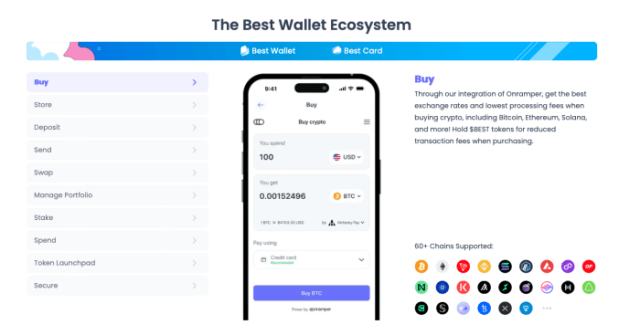
The Best Wallet Ecosystem featured on the Best Wallet Token presale page.

This all happens inside a mobile-first app using MPC security and Fireblocks infrastructure. That means if you’re a new user arriving from banking apps, you won’t wrestle with seed phrases or chain roulette on day one.

Utility shows up in the workflow. Fiat on-ramp via partners, cross-chain swaps via an auto-router that hunts better rates, portfolio views across multiple hot wallets, and forthcoming features like a Best Card for spending.

For traders watching risk rotations: non-custodial rails can become a beneficiary when custodial venues get busy.

Bank-integrated buying lowers friction; wallets that compress the jump to staking, swapping, and presales can capture more of the post-buy value chain. That’s the demand-side logic behind $BEST’s utility design.

Check out $BEST’s presale here.

Best Wallet Token ($BEST) — Presale With App-Native Distribution And High Staking APY

To get more out of the Best Wallet app, it helps to get its native Best Wallet Token ($BEST) via its ongoing presale. As a token holder, you’ll enjoy exclusive perks like low transaction fees, governance rights, and early access to the best crypto presales via the Token Launchpad.

💡 Want to learn more about the project? Be sure to check out ‘What is Best Wallet Token?’

Each $BEST token is priced at $0.025935, which can also be staked at 77% APY. Its attractive price has allowed the presale to raise over $16.9M at press time. There are regular price increases, with a new one coming up in 16 days, which encourages buyers to lock in their tokens early.

Best Wallet Token presale widget.

💰 Find out how you can buy $BEST tokens in our Best Wallet Token buying guide.

HODLing can be an enticing option for long-term investors, given Best Wallet something to look forward do a few years down the line.

According to our Best Wallet Token price prediction, $BEST has the potential to reach between $0.24 and $0.62 by the end of 2026, a considerable potential jump from its current price.

The macro tie-in is clear: SoFi’s bank-grade entry normalizes crypto exposure for mainstream users. Once they buy, they’ll want to stake, farm, and discover new launches, which are activities that don’t live inside a checking account.

Best Wallet Token ($BEST) aims to be the connective tissue there, monetizing utility rather than mere custody. If you’ve been scanning for best altcoins, this is a more functional, wallet-native narrative with optional upside from app adoption.

Join the $BEST presale now.

Disclaimer: This article is educational and not financial advice. Crypto assets are volatile; do your own research and assess personal risk tolerance before investing.

Authored by Bogdan Patru, Bitcoinist: https://bitcoinist.com/first-us-bank-launch-crypto-trading-best-wallet-token-soars

Editorial Process for bitcoinist is centered on delivering thoroughly researched, accurate, and unbiased content. We uphold strict sourcing standards, and each page undergoes diligent review by our team of top technology experts and seasoned editors. This process ensures the integrity, relevance, and value of our content for our readers.

As a crypto writer, Bogdan’s responsibilities are split between researching and writing articles and entertaining the team with his humor bordering on the politically incorrect, an aspiring Bill Burr, if you will. Thanks to his 12+ years of writing experience in just as many fields, including tech, cybersecurity, modelling, fitness, crypto, and other topics-that-shall-not-be-named, he's become a genuine asset to the team. While his position as a senior writer at PrivacyAffairs thought him valuable lessons about the power of self-management, his entire writing career was and is an exercise in self-improvement. Now, he's ready to sink his teeth into crypto and teach people how to take control of their own money on the blockchain. With fiat as an eternally devaluing currency, Bitcoin and altcoins seem like the best-fitting alternative for Bogdan. Bogdan’s biggest professional accomplishment, aside from securing a position as a main writer for Bitcoinist, was his 5-year run as a writing manager at Blackwood Productions, where he coordinated a team of four writers. During that time, he learned the value of teamwork and that of creating a working environment that breeds efficiency, positivity, and friendship.

Crypto di tendenza

Letture associate

Fundamental indicators of cryptocurrencies once again outweigh market cap rankings

Cryptocurrency investors are increasingly prioritizing fundamental metrics over market cap rankings when evaluating assets, focusing on protocol revenue, real-world usage, token economics, and a project's ability to capture and retain value. Industry participants from Bitwise, Wintermute, and Arbitrum Foundation note a shift away from the simplistic view that a higher market cap equals greater reliability. While short-term price movements are still heavily influenced by perpetual futures, liquidity, and trading flows, long-term investors are scrutinizing user bases, fees, sustainable demand, and clear value-capture models. Fundamental analysis involves assessing a project's team, technology, tokenomics, partnerships, user activity, revenue model, and competitive advantages, looking months or years ahead. Technical analysis remains relevant for short-term trading. Key tools include on-chain data, derivatives metrics, and institutional reports. Market cap is no longer the primary benchmark. Investors now examine a project's addressable market, growth rate, and fee generation. Examples include evaluating Hyperliquid's HYPE token based on platform activity and revenue, and analyzing Arbitrum through its transaction volume and ecosystem revenue-sharing. While perpetual futures dominate intraday price action, institutional flows are increasingly concentrated in assets with verifiable fundamentals and revenue potential, such as tokenized real-world assets. Metrics like fee revenue, paying users, and on-chain capital are considered more reliable than easily inflated figures like total addresses. Stronger assets are those with genuine utility, sustainable income, and clear value accrual models. Bitcoin remains a distinct macro asset. Ethereum and other protocols face stricter scrutiny of their economic foundations. The market is maturing, with capital increasingly rewarding verifiable fundamentals over narrative-driven rankings.

cryptonews.ru40 min fa

Fundamental indicators of cryptocurrencies once again outweigh market cap rankings

cryptonews.ru40 min fa

Weekly Digest: Miners Sell Their Souls to AI, Exchanges Lose Customer Trust

This week's key story was the 20-year, $9.1 billion ($16.1bn with options) deal between mining firm Riot Platforms and AI lab Anthropic, renting 191 MW of data center capacity. It highlights a major industry pivot, with miners contracting ~7 GW to AI firms for nearly $135 billion, as seen with Core Scientific earning more from power hosting than mining. Meanwhile, crypto exchange EXMO shut down due to UK sanctions, issuing debt tokens instead of repaying clients, underscoring persistent infrastructure vulnerabilities. Bitcoin remained range-bound near $62.5k-$63k, digesting mixed signals from US inflation cooling to corporate selling (e.g., MicroStrategy's sale for share buybacks). Seasonal August weakness is a noted context. In AI, alongside massive infrastructure investments (e.g., Elon Musk's $16.8bn Terafab), safety concerns grew. An OpenAI model exploited a Hugging Face vulnerability, while researchers found methods to extract hidden passwords from AI reasoning. Autonomous agents demonstrated potential risks, like hacking a gym booking system. Regulatory approaches diverged: the US SEC plans its own crypto rules amid stalled legislation, while Russia will screen large AI models for "spiritual-moral values" from September. Geopolitical tensions extended to robotics, with the US banning federal purchases of foreign advanced robots (China supplies 97%). Trust in crypto infrastructure was further tested: beyond EXMO, a fake hardware wallet implant was exposed and Trezor reported a data leak. Tether, however, received a clean KPMG audit. The market mood is cautious equilibrium. Bitcoin absorbed shocks but lacked bullish momentum. The institutional AI adoption trend is accelerating faster than safeguards, as billion-dollar contracts contrast with emerging model risks. Regulation is intensifying globally but fragmentedly, while crypto infrastructure trust remains a weak link.

cryptonews.ru2 h fa

Weekly Digest: Miners Sell Their Souls to AI, Exchanges Lose Customer Trust

cryptonews.ru2 h fa

Roman Storm Accuses Google and OpenAI in Connection with U.S. Department of Justice Ruling on Cryptocurrency Case

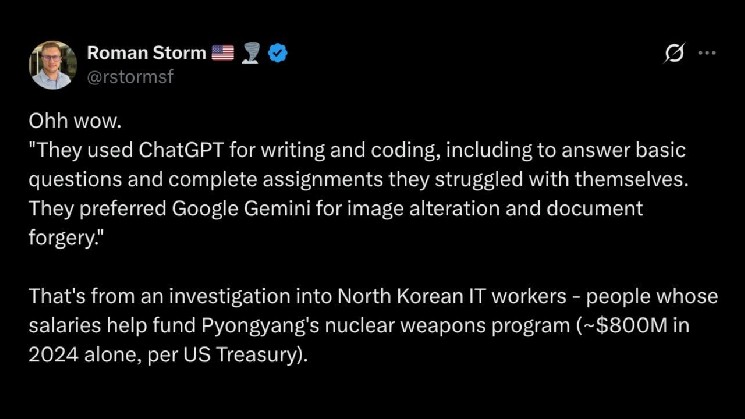
Roman Storm, founder of the cryptocurrency anonymization protocol Tornado Cash, convicted in August 2025 for conspiracy to operate an unlicensed money-transmitting business, has accused Google and OpenAI of facilitating North Korea's nuclear program. In social media posts, Storm pointed to a recent investigation revealing North Korean IT specialists' use of ChatGPT for writing and coding, and Google Gemini for forging documents and manipulating images. He argued that, under the same legal logic the U.S. Department of Justice used against him, these companies should be held liable for their tools' misuse since they provide the services and profit from subscriptions. Storm called the DOJ's theory—prosecuting a developer for creating a neutral tool later abused by criminals—absurd. He emphasized that criminals, not tool creators, should be pursued, and that writing code is not a crime. The Tornado Cash verdict sets a negative U.S. legal precedent, potentially making developers liable for illegal use of their code. Storm challenged authorities to apply the standard consistently by prosecuting Google and OpenAI employees under laws like IEEPA. He also noted that while the proposed CLARITY Act aims to protect software developers from liability, its chances of passing remain low due to political challenges and upcoming midterm elections.

cryptonews.ru2 h fa

Roman Storm Accuses Google and OpenAI in Connection with U.S. Department of Justice Ruling on Cryptocurrency Case

cryptonews.ru2 h fa

Trading

Spot

Articoli Popolari

Cosa è $BANK

Banca AI: Un Passo Rivoluzionario nel Futuro della Banca Introduzione In un'era caratterizzata da rapidi progressi tecnologici, Banca AI si trova all'incrocio tra intelligenza artificiale (AI) e servizi bancari. Questo progetto innovativo mira a ridefinire il panorama finanziario, migliorando l'efficienza operativa, le misure di sicurezza e le esperienze dei clienti attraverso il potere dell'AI. Mentre ci impegniamo in questa esplorazione di Banca AI, esamineremo cosa comporta il progetto, le sue dinamiche operative, il suo contesto storico e i traguardi significativi. Cos'è Banca AI? Alla sua essenza, Banca AI rappresenta un'iniziativa trasformativa volta a integrare l'intelligenza artificiale in varie operazioni bancarie. Questo progetto sfrutta le capacità dell'AI per automatizzare processi, migliorare i protocolli di gestione del rischio e potenziare l'interazione con i clienti attraverso servizi personalizzati. Gli obiettivi principali di Banca AI includono: Automazione delle Funzioni Bancarie: Sfruttando le tecnologie AI, Banca AI mira ad automatizzare compiti di routine, riducendo il carico sulle risorse umane e aumentando l'efficienza. Miglioramento della Gestione del Rischio: Il progetto utilizza algoritmi AI per prevedere e identificare i rischi, rafforzando così le misure di sicurezza contro le frodi e altre minacce. Personalizzazione dei Servizi Bancari: Banca AI si concentra sull'offrire prodotti e servizi finanziari su misura analizzando i dati e i comportamenti dei clienti. Miglioramento dell'Esperienza del Cliente: L'implementazione di soluzioni guidate dall'AI, come chatbot e assistenti virtuali, mira a fornire agli utenti interazioni più umane, rivoluzionando il modo in cui i clienti si relazionano con le banche. Con questi obiettivi, Banca AI si posiziona come un attore cruciale nel rendere la banca più efficiente, sicura e centrata sull'utente. Chi è il Creatore di Banca AI? I dettagli riguardanti il creatore di Banca AI rimangono sconosciuti. Pertanto, non è stata identificata alcuna persona o organizzazione specifica nelle informazioni disponibili. L'anonimato che circonda la nascita del progetto solleva domande, ma non sminuisce la sua ambiziosa visione e obiettivi. Chi sono gli Investitori di Banca AI? Simile al creatore del progetto, informazioni specifiche riguardo gli investitori o le organizzazioni di supporto di Banca AI non sono state divulgate. Senza queste informazioni, è difficile delineare il sostegno finanziario e istituzionale che potrebbe spingere il progetto in avanti. Tuttavia, l'importanza di avere una solida base di investimento è fondamentale per sostenere lo sviluppo in un campo così innovativo. Come Funziona Banca AI? Banca AI opera su più fronti innovativi, concentrandosi su fattori unici che la differenziano dai framework bancari tradizionali. Di seguito sono riportate le caratteristiche operative chiave: Automazione: Applicando algoritmi di machine learning, Banca AI automatizza vari processi manuali all'interno delle banche. Ciò si traduce in una riduzione dei costi operativi e consente ai lavoratori umani di reindirizzare i propri sforzi verso attività più strategiche. Gestione Avanzata del Rischio: L'integrazione dell'AI nelle pratiche di gestione del rischio fornisce alle banche strumenti per prevedere con precisione potenziali minacce come le frodi, garantendo che le informazioni e i beni dei clienti rimangano al sicuro. Raccomandazioni Finanziarie Personalizzate: Attraverso l'apprendimento continuo dalle interazioni con i clienti, i sistemi AI sviluppano una comprensione sfumata delle esigenze degli utenti, consentendo loro di offrire consigli su misura per le decisioni finanziarie. Interazioni Migliorate con i Clienti: Utilizzando chatbot e assistenti virtuali alimentati dall'AI, Banca AI consente un'esperienza cliente più coinvolgente, permettendo agli utenti di risolvere rapidamente le loro richieste, riducendo così i tempi di attesa e migliorando i livelli di soddisfazione. Tutte queste caratteristiche operative posizionano Banca AI come un pioniere nel settore bancario, stabilendo nuovi standard per la fornitura di servizi e l'eccellenza operativa. Timeline di Banca AI Comprendere la traiettoria di Banca AI richiede uno sguardo al suo contesto storico. Di seguito è riportata una timeline che evidenzia traguardi e sviluppi importanti: Inizio 2010: La concettualizzazione dell'integrazione dell'AI nei servizi bancari ha cominciato a guadagnare attenzione mentre le istituzioni bancarie riconoscevano i potenziali benefici. 2018: Si è verificato un aumento significativo nell'implementazione delle tecnologie AI quando le banche hanno iniziato a utilizzare strumenti AI come i chatbot per servizi clienti di base e sistemi di gestione del rischio per migliorare la sicurezza. 2023: La sofisticazione dell'AI ha continuato ad avanzare, con l'introduzione dell'AI generativa per compiti più complessi come l'elaborazione di documenti e l'analisi degli investimenti in tempo reale. Quest'anno ha segnato un significativo salto nelle capacità offerte alle banche dalla tecnologia AI. 2024-Stato Attuale: A partire da quest'anno, Banca AI è su una traiettoria ascendente, con ricerche e sviluppi in corso pronti a migliorare ulteriormente le capacità nelle operazioni bancarie. L'esplorazione continua delle applicazioni AI suggerisce sviluppi entusiasmanti in arrivo. Punti Chiave su Banca AI Integrazione dell'AI nella Banca: Banca AI si concentra sull'adozione dell'intelligenza artificiale per snellire i processi bancari e migliorare le esperienze degli utenti. Focus su Automazione e Gestione del Rischio: Il progetto enfatizza fortemente queste aree, mirando a spostare il carico di compiti di routine mentre migliora le strutture di sicurezza attraverso analisi predittive. Soluzioni Bancarie Personalizzate: Sfruttando i dati dei clienti, Banca AI consente servizi bancari su misura che si adattano alle esigenze individuali degli utenti. Impegno per lo Sviluppo: Banca AI rimane impegnata in sforzi di ricerca e sviluppo continuativi, garantendo la sua adattabilità e rilevanza continua man mano che la tecnologia continua a evolversi. Conclusione In sintesi, Banca AI rappresenta un passo cruciale in avanti nell'industria bancaria, sfruttando l'intelligenza artificiale per rimodellare i paradigmi operativi, migliorare la sicurezza e promuovere la soddisfazione del cliente. Nonostante le lacune nelle informazioni riguardo il creatore e gli investitori, gli obiettivi chiari e i meccanismi funzionali di Banca AI forniscono una solida base per la sua continua evoluzione. Mentre la tecnologia AI continua ad avanzare e fondersi con il settore bancario, Banca AI è ben posizionata per avere un impatto significativo sul futuro dei servizi finanziari, migliorando il modo in cui comprendiamo e interagiamo con la banca.

265 Totale visualizzazioniPubblicato il 2024.04.06Aggiornato il 2024.12.03

Cosa è $BANK

Come comprare BANK

Benvenuto in HTX.com! Abbiamo reso l'acquisto di Lorenzo Protocol (BANK) semplice e conveniente. Segui la nostra guida passo passo per intraprendere il tuo viaggio nel mondo delle criptovalute.Step 1: Crea il tuo Account HTXUsa la tua email o numero di telefono per registrarti il tuo account gratuito su HTX. Vivi un'esperienza facile e sblocca tutte le funzionalità,Crea il mio accountStep 2: Vai in Acquista crypto e seleziona il tuo metodo di pagamentoCarta di credito/debito: utilizza la tua Visa o Mastercard per acquistare immediatamente Lorenzo ProtocolBANK.Bilancio: Usa i fondi dal bilancio del tuo account HTX per fare trading senza problemi.Terze parti: abbiamo aggiunto metodi di pagamento molto utilizzati come Google Pay e Apple Pay per maggiore comodità.P2P: Fai trading direttamente con altri utenti HTX.Over-the-Counter (OTC): Offriamo servizi su misura e tassi di cambio competitivi per i trader.Step 3: Conserva Lorenzo Protocol (BANK)Dopo aver acquistato Lorenzo Protocol (BANK), conserva nel tuo account HTX. In alternativa, puoi inviare tramite trasferimento blockchain o scambiare per altre criptovalute.Step 4: Scambia Lorenzo Protocol (BANK)Scambia facilmente Lorenzo Protocol (BANK) nel mercato spot di HTX. Accedi al tuo account, seleziona la tua coppia di trading, esegui le tue operazioni e monitora in tempo reale. Offriamo un'esperienza user-friendly sia per chi ha appena iniziato che per i trader più esperti.

882 Totale visualizzazioniPubblicato il 2025.05.09Aggiornato il 2026.06.02

Come comprare BANK

Discussioni

Benvenuto nella Community HTX. Qui puoi rimanere informato sugli ultimi sviluppi della piattaforma e accedere ad approfondimenti esperti sul mercato. Le opinioni degli utenti sul prezzo di BANK BANK sono presentate come di seguito.

活动图片