Next 1000x Crypto News Live Today: Early Alpha on the Latest Crypto Gems (November 5)

bitcoinistPubblicato 2025-11-05Pubblicato ultima volta 2025-11-05

Introduzione

Stay Ahead with the Latest Insights of Today's Next 1000x Crypto Check out our Live Next 1000x Crypto Updates for...

Trusted Editorial content, reviewed by leading industry experts and seasoned editors. Ad Disclosure

Stay Ahead with the Latest Insights of Today’s Next 1000x Crypto

Check out our Live Next 1000x Crypto Updates for November 5, 2025!

Crypto is a multi-trillion-dollar industry, with 10x, 100x, or even 1000x opportunities lying there, just waiting to be found.

Take Dogecoin 36,000% increase in 12 years, or XRPs 42,000% performance in the same period. Closer at hand, we have SPX6900 with a mind-boggling 45,149,000% explosive rally in only two years.

Imagine if you’d bought $SPX when it was $0.004 just 11 months ago. That’s a 27,000%+ ROI that’s unique to the crypto industry.

Top Picks for Next 1000x Crypto Today

If you’re looking for the earliest alpha on the next 1000x crypto and ROI crushers, you’re in the right place.

We update this page regularly throughout the day with the latest insider alpha on cryptos with the most explosive potential. Keep refreshing to stay ahead of the pack!

Disclaimer: No crypto investment comes without risk. Our content is for informational purposes, not financial advice. We may earn affiliate commissions at no extra cost to you.


Bitcoin Slips Below $100K, Driving Traders to Bitcoin Hyper’s $26M Presale

November 5, 2025 • 11:00 UTC

After briefly sliding to $98K on Tuesday, Bitcoin is fighting to hold its ground above $100K.
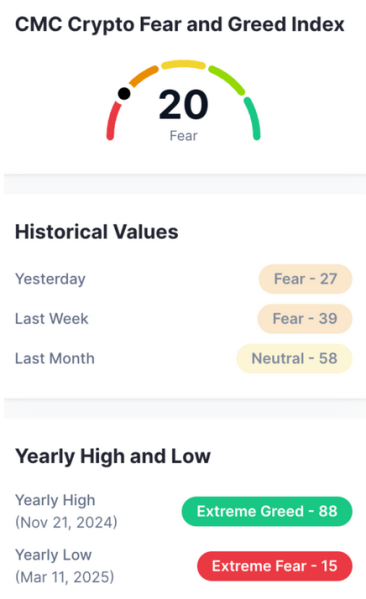
Crypto Fear and Greed Index, source: CoinMarketCap

Macroeconomic headwinds and a stronger US dollar have dampened confidence in Bitcoin’s short-term trajectory, driving investors to US-based bonds and presale tokens like Bitcoin Hyper.

Bitcoin Hyper is building a Layer-2 solution that could potentially step up Bitcoin for the increasingly competitive Web3 market, by bringing more speed and programmability to the network.

As bears dominate the market, investors are seeking a haven in Bitcoin Hyper’s viral token presale that just broke $26M.

Could $HYPER be the next 1000X crypto?

Read our Bitcoin Hyper deep dive to find out.


Lummis Pushes ‘Biggest’ Crypto Law Ever Setting the Stage for the Next 1000x Crypto $PEPENODE

November 5, 2025 • 10:00 UTC

Senator Cynthia Lummis is calling her Clarity Act the biggest crypto law in U.S. history. She’s on a mission to ditch the regulatory chaos and give crypto a clear, official rulebook.

Lummis is in a total sprint, trying to rope in bipartisan support to get this bill through the Banking Committee before the year ends. Why?

The bill essentially tells the SEC and CFTC exactly who regulates what, offering market structure and stability to major firms. It also helps out local community banks by legally allowing them to jump into the digital asset game with custody services, which lets them compete with the big crypto players.

The hope is that the new clarity will open the floodgates for investment. In fact, many in the community are already looking ahead. While Washington focuses on regulation, the market is buzzing about projects like PEPENODE ($PEPENODE). It’s blending meme culture with a cool mine-to-earn gaming ecosystem.

PEPENODE ($PEPENODE) is exactly the early-stage, utility-focused innovation that could thrive if Lummis’s clarity finally arrives, potentially becoming one of the next 1000x crypto success stories.

See why our experts think $PEPENODE could reach $0.0023 by the end of 2025.


$10B Profit in 2025 Pushes Tether to Top, Sets Up $BEST As Next 1000x Crypto

November 5, 2025 • 10:00 UTC

Tether’s Q3 attestation report is some impressive stuff. Among the highlights:

  • $10B net profit in 2025 YTD
  • $17B in new $USDT issued
  • Tether holds $135B in US Treasuries, surpassing South Korea’s $132B to rank 17th among foreign countries.

It’s all part of an increasingly dominant picture for Tether and $USDT, which currently boasts a $183B market cap.

Stablecoins enjoy growing adoption as cross-border remittance systems and tools for banks to settle payments at any time, anywhere. And as stablecoin use grows, expect ordinary investors to follow suit.

But to use stablecoins smoothly, you need a crypto wallet. Best Wallet offers a fully non-custodial crypto wallet with MPC and biometric security. Use up to five individual wallets within the app, and access the best crypto presales before they launch.

The Best Wallet Token ($BEST) powers the Best Wallet ecosystem – and with Tether’s $USDT pushing crypto adoption, $BEST could be the next 1000x crypto.

Learn what $BEST is and how it works with our review.


Authored by Ben Wallis, Bitcoinist — https://bitcoinist.com/next-1000x-crypto-live-news-today-november-5-2025

Editorial Process for bitcoinist is centered on delivering thoroughly researched, accurate, and unbiased content. We uphold strict sourcing standards, and each page undergoes diligent review by our team of top technology experts and seasoned editors. This process ensures the integrity, relevance, and value of our content for our readers.

Ben is a freelance writer specializing in crypto developments (mainly altcoins) and the intricate ways global economics shape the digital asset space. His B.Ed. in Education provides a unique foundation for his writing, enabling him to distill complex crypto concepts and market shifts into clear, digestible insights. This skill is key to helping readers adapt and apply their understanding to the ever-evolving world of crypto investment. Passionate about making crypto accessible, Ben crafts content designed to educate a broad audience, from current market events to the essential foundational knowledge that underpins them. His goal is to empower readers through understanding. When he’s not immersed in crypto analysis and breaking down complex topics, Ben is an avid Pokémon fan and enjoys all things Disney.

Letture associate

Farewell to Crash-Style Plunges: An In-Depth Review of the Crypto Lending and Futures Markets in Q2 2026

This report analyzes the Q2 2026 crypto lending and derivatives market, highlighting a continuation of controlled deleveraging. Unlike the 2022 crash, where loan volumes plummeted 55% in a single quarter, the current downturn is characterized by a gradual, stepwise decline across CeFi, DeFi, and crypto-collateralized CDP stablecoins, with Q2 seeing a total reduction of $113.3 billion (-16.78%) to $561.6 billion. DeFi lending saw the sharpest quarterly drop (-27.61%), while CeFi borrowing declined more moderately (-9.62%). For the first time since Q3 2023, CeFi outstanding loans surpassed DeFi. Corporate digital asset treasury (DAT) debt also decreased by $15 billion, largely due to a debt buyback by Strategy Inc. Futures open interest (OI) saw a modest 3.08% quarterly decline to $1032 billion, with notable divergence: Bitcoin OI fell 6.24%, while Ethereum OI dropped 26.31%. Both rebounded in July. A deep dive into Aave V3 revealed high leverage, particularly within "e-mode" loans, which are heavily concentrated on Ethereum staking/restaking tokens, with debt-weighted health factors near liquidation thresholds. The report concludes that the market is undergoing a healthier, managed deleveraging cycle driven by voluntary risk reduction rather than forced liquidations or counterparty failures, suggesting increased resilience against a repeat of the 2022 cascade. Early Q3 2026 data indicates potential stabilization in futures OI and DeFi lending volumes.

marsbit7 min fa

Farewell to Crash-Style Plunges: An In-Depth Review of the Crypto Lending and Futures Markets in Q2 2026

marsbit7 min fa

Crypto Funding Halves in Q1, Why Is Stablecoin Payment Still Attracting Money Against the Trend?

Crypto venture capital funding fell roughly 50% quarter-over-quarter in Q1 2026, yet the stablecoin payments sector was a notable exception, continuing to secure significant funding rounds. This shift signals that capital is moving away from speculative "token narratives" toward companies generating real revenue, as stablecoins evolve from a trading tool into payment infrastructure. Despite the overall funding slowdown, companies like Rain, OpenFX, and RedotPay completed major raises, focusing on areas such as card issuance, cross-border payments, and banking connectivity. Investors are attracted to the sector's potential to address long-standing inefficiencies in traditional cross-border payments through 24/7 settlement and clearer revenue models like transaction fees and FX spreads. However, the momentum may be overstated. On-chain stablecoin transaction volume does not equate to real-world payments for goods and services, and funding is concentrated in a few leading firms with reported volumes and customers. Key challenges remain, including compliance, fiat on/off-ramps, local banking relationships, and the risk of core services becoming commoditized. Looking ahead, capital is likely to flow into areas like cross-border B2B payments, bank-to-stablecoin connectivity, stablecoin-linked cards, multi-chain payment orchestration, and payments for AI agents. Ultimately, the investor interest reflects a bet on the necessary infrastructure to integrate stablecoins into the traditional financial system, with future valuations hinging on demonstrable payment volume, real revenue, and profitable market expansion.

marsbit42 min fa

Crypto Funding Halves in Q1, Why Is Stablecoin Payment Still Attracting Money Against the Trend?

marsbit42 min fa

South Korean Retail Investors 'Move from Seoul to Wall Street': Buying SK Hynix ADR, Betting on Triple-Leverage ETF

A surge of Korean retail investors is shifting funds from the volatile Seoul market to Wall Street, intensifying their bets on the AI theme through unconventional and high-risk instruments. Data shows Korean investors were net buyers of about $4.5 billion in US stocks in July, nearing a yearly peak. A notable trend is their purchase of approximately $840 million worth of SK Hynix American Depositary Receipts (ADRs), despite a significant 10% premium over the company's domestic shares, leading analysts to label the move as speculative and irrational. Simultaneously, Korean traders are heavily favoring leveraged ETFs. The triple-leveraged semiconductor ETF SOXL was the most-bought US product in July, with leveraged products occupying four of the top ten spots. Experts note that this shift in geography does not represent a diversification of risk; instead, investors are merely expressing the same concentrated bet on AI hardware through different, often riskier, US-listed vehicles. Analysts warn that while this capital inflow is unlikely to systemically impact the vast US institutional market, it risks creating localized distortions and amplifying volatility, particularly in the targeted sectors and instruments. The move follows a sharp correction in the Korean market, where high leverage in semiconductor stocks and related ETFs had previously led to significant losses, prompting this search for alternative avenues to chase the AI narrative.

marsbit1 h fa

South Korean Retail Investors 'Move from Seoul to Wall Street': Buying SK Hynix ADR, Betting on Triple-Leverage ETF

marsbit1 h fa

Bithumb's First Half Report: Net Loss Exceeds $76 Million, Where Did the Profits Go?

**Title: Bithumb H1 2026 Report: Net Loss Exceeds $76M – Where Did the Profits Go?** Despite a headline net loss of approximately 108.7 billion KRW (~$76.44 million) for the first half of 2026, a detailed breakdown reveals Bithumb's core exchange business remained profitable. The significant loss was primarily driven by two major non-operating items: substantial losses on the disposal and valuation of the company's own cryptocurrency holdings (net loss ~$48.21 million) and a sharp increase in litigation provisions (~$25.93 million), largely linked to a regulatory fine. Operating revenue fell 48.7% year-on-year to ~$119 million, almost entirely from transaction fees, as market activity cooled. While the company drastically cut marketing and subsidy expenses by ~70% to protect margins, more rigid costs like payment processing and salaries declined only modestly. This highlights the vulnerability of its highly fee-dependent revenue model in a down market. Total assets decreased by ~$584 million, but this was largely attributable to an ~86% drop in client KRW deposits. The market value of client crypto assets under custody also fell (~32.7%), partly influenced by declining cryptocurrency prices rather than solely client withdrawals. In summary, the report indicates underlying exchange profitability was eroded by significant crypto asset losses and mounting regulatory/legal costs, against a backdrop of declining trading revenue. Future focus should be on revenue recovery, managing crypto-related损益, and the ongoing impact of regulatory challenges.

marsbit1 h fa

Bithumb's First Half Report: Net Loss Exceeds $76 Million, Where Did the Profits Go?

marsbit1 h fa

Trading

Spot
活动图片