The Deadline For The Ripple Bank Is Almost Here – Important Date draws Close

bitcoinistPubblicato 2025-10-31Pubblicato ultima volta 2025-10-31

Introduzione

Ripple’s bold move into traditional finance is approaching an important milestone. The company’s application with the US Office of the...

Trusted Editorial content, reviewed by leading industry experts and seasoned editors. Ad Disclosure

Ripple’s bold move into traditional finance is approaching an important milestone. The company’s application with the US Office of the Comptroller of the Currency (OCC) for a national trust bank charter, proposed under the name Ripple National Trust Bank, has entered its final review window. 

According to official OCC filings, the standard 120-day review period following the application’s publication is set to conclude this Friday, October 31.

Ripple’s Application For A National Trust Bank License

Ripple applied for a national trust bank charter from the Office of the Comptroller of the Currency (OCC) on July 2, 2025. The application was for a national trust bank, not a traditional bank, and is intended to provide fiduciary activities like custody and infrastructure for its RLUSD stablecoin. The application was made in early July and entered a public review phase in October.

The Ripple National Trust Bank application represents Ripple Labs’ strategic expansion into federally supervised financial services. If approved, the charter would authorize the firm to operate a national trust bank headquartered at 111-119 West 19th Street in New York City. The application lists senior figures in the company like Stuart Alderoty, Timothy Keaney, John McDonald, David Puth, and John Zavaglia as the organizers, with Ripple Labs Inc. serving as the sponsoring institution from its San Francisco base.

This move extends the firm’s push beyond cross-border payments into full-scale institutional custody and settlement. It also aligns with the company’s ongoing efforts to establish the RLUSD stablecoin as a regulated, transparent digital dollar. As noted by Ripple CEO Brad Garlinghouse, if approved, the firm would have both state and federal oversight, which is a new and unique benchmark for trust in the stablecoin market. This comment was made by the Ripple CEO in July 2025 as confirmation of the license application.

The 120-Day Review Window And What Comes Next

Under OCC procedures, applications for national trust bank charters undergo a 120-day review to assess governance, capitalization, compliance programs, and management suitability. Ripple’s application entered that timeline after its public filing, meaning the review period ends on October 31. At this point, the OCC may issue an initial decision of approval, denial, or extension, depending on whether additional information is needed.

However, the ongoing US government shutdown could influence the timing of the company’s license review. The payment firm’s application is part of a growing list of crypto-based companies seeking a national trust bank charter as the digital asset industry pushes closer to full regulatory integration with traditional finance. Companies like Circle, Crypto.com, Coinbase, and Paxos have also applied with the US Office of the Comptroller of the Currency (OCC) for national trust bank charters.

XRP
XRP trading at $2.55 on the 1D chart | Source: XRPUSDT on Tradingview.com
Featured image from Pxfuel, chart from Tradingview.com
Editorial Process for bitcoinist is centered on delivering thoroughly researched, accurate, and unbiased content. We uphold strict sourcing standards, and each page undergoes diligent review by our team of top technology experts and seasoned editors. This process ensures the integrity, relevance, and value of our content for our readers.

Scott Matherson is a leading crypto writer at Bitcoinist, who possesses a sharp analytical mind and a deep understanding of the digital currency landscape. Scott has earned a reputation for delivering thought-provoking and well-researched articles that resonate with both newcomers and seasoned crypto enthusiasts. Outside of his writing, Scott is passionate about promoting crypto literacy and often works to educate the public on the potential of blockchain.

Crypto di tendenza

Letture associate

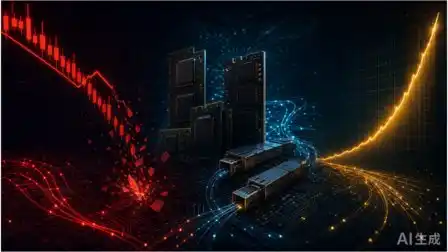
The Philadelphia Semiconductor Index Tumbles Nearly 5% in a Single Night, Optical and Memory Sectors 'Collapse' Together: Surging U.S. Bond Yields Shake AI Belief

On the evening of August 18th, the US stock market saw a sharp sell-off concentrated in the AI hardware sector, with the Philadelphia Semiconductor Index plummeting nearly 5%. Leading AI infrastructure and components companies in fields like optical communication and memory chips experienced some of the steepest declines, such as Fabrinet (-19.38%) and Kioxia ADR (-13%). The sell-off was not broad-based but rather targeted the long-duration, high-momentum stocks previously driven by AI narrative optimism. This market shift is primarily attributed to a significant surge in long-term US Treasury yields, with the 30-year yield hitting its highest level since 2007. Rising yields increase discount rates, disproportionately impacting the valuations of growth stocks whose profits are projected far into the future—a category that includes most AI hardware plays. Additional pressure came from climbing oil prices due to Middle East tensions, which fueled inflation concerns. The article identifies three structural reasons for the severity of the drop in these specific subsectors: excessive prior gains and crowded positioning, high sensitivity to the sustainability of AI capital expenditure narratives, and inherent high volatility within the supply chain. Importantly, the sell-off appears to be a valuation and positioning reset rather than a fundamental repudiation of AI, evidenced by the relatively modest decline in a bellwether like Nvidia (-2.34%). Looking ahead, the direction hinges on three key indicators: whether the 30-year Treasury yield stabilizes, the trajectory of oil prices and geopolitical risks, and the market's pricing of new AI-related corporate debt. For related Asian and A-share markets, short-term negative sentiment spillover is expected, but medium-term drivers like domestic cloud capex may provide divergence. The episode signifies a market transition from pricing AI's "story" to rigorously evaluating its returns against a backdrop of higher financing costs.

marsbit34 min fa

The Philadelphia Semiconductor Index Tumbles Nearly 5% in a Single Night, Optical and Memory Sectors 'Collapse' Together: Surging U.S. Bond Yields Shake AI Belief

marsbit34 min fa

Ten Years, Wang Xingxing's Comeback: Unitree Valued at 400 Billion

Over a decade ago, Wang Xingxing, a 29-year-old with a passion for robotics but little funding, demonstrated his struggling robot dog to investors in Hangzhou. In 2019, with his company Unitree nearly out of cash, he captured the attention of Sequoia Capital China's managing director Li Yannan. Despite initial skepticism about the niche market for robot dogs, Wang's vision and deep technical conviction led Sequoia to make an initial seed investment. This marked a turning point. Following Sequoia's lead, a wave of prominent investors including Meituan, Tencent, Alibaba, and various venture capital and state-backed funds joined subsequent funding rounds. Wang's relentless focus and Unitree's technological advancements propelled the company to become a global leader in humanoid robotics. On August 19th, 2027, Unitree Robotics debuted on Shanghai's STAR Market as the first listed humanoid robotics company in China. Its shares skyrocketed over 500% at opening, reaching a market valuation of approximately 400 billion yuan. Wang Xingxing became one of the wealthiest individuals of his generation on the exchange, while Sequoia China, having invested across multiple rounds, remained a major shareholder. The story is celebrated as a classic outlier's triumph—a founder without elite credentials achieving success through pure belief and perseverance. Unitree's IPO is seen as a major milestone for China's embodied AI industry, providing a valuation benchmark and accelerating the sector's maturation. As Wang once stated, he aims to be "a small boat riding the mighty torrent of technology." His journey symbolizes the beginning of a new narrative for Chinese robotics on the global stage.

marsbit34 min fa

Ten Years, Wang Xingxing's Comeback: Unitree Valued at 400 Billion

marsbit34 min fa

Manufacturing's Share Drops Below 25%: Is Hangzhou Unconcerned?

Hangzhou is entering a critical phase of industrial restructuring. While its manufacturing-to-GDP ratio has fallen below 25%, the city is not alarmed. Instead, it is strategically navigating a dual focus: advancing advanced manufacturing and expanding its service sector, particularly producer services. Recently, the city celebrated the IPO of a humanoid robotics company, seen as a milestone in moving beyond its e-commerce era. Simultaneously, it set an ambitious target for its service sector: to exceed 2 trillion yuan in value by 2030, with producer services making up over 60%. Data shows a clear trend: the service sector's share of GDP has risen to 75.3%, while manufacturing's share has declined to around 20.1%. This shift revives the debate on whether a strong service sector weakens a city's manufacturing "foundation." Hangzhou's approach challenges the notion of a fixed manufacturing "red line" near 25%. The city argues that the quality and integration of industries matter more than simple ratios. Its strategy is "using software to drive hardware," leveraging its core strengths in digital economy and producer services—like R&D, software, and supply chain management—to empower and add value to manufacturing. This is embodied by its emerging "AI era" companies, whose innovation in Hangzhou feeds into national industrial chains. The city believes that for a hub like Hangzhou, the key is not merely boosting visible manufacturing output, but strengthening the "invisible" competitive edge provided by high-end producer services, which ultimately determine manufacturing profitability. National policy is also shifting from insisting on a "stable" manufacturing share to acknowledging a "reasonable" range, allowing for quality-focused development. Hangzhou's future industrial blueprint aims for a manufacturing share above 22% of GDP by 2027, coupled with a dominant, high-value service sector. The goal is not to choose between manufacturing and services, but to deeply integrate them, using advanced services as the accelerator for next-generation manufacturing.

marsbit59 min fa

Manufacturing's Share Drops Below 25%: Is Hangzhou Unconcerned?

marsbit59 min fa

SEC Suddenly Proposes "Regulation Crypto": U.S. Token Fundraising May Become Legal Again

On August 18, the U.S. Securities and Exchange Commission (SEC) proposed a landmark set of permanent rules, "Regulation Crypto Assets," specifically designed for crypto asset investment contracts. The 402-page proposal introduces two registration exemption paths and a groundbreaking safe harbor mechanism, representing the SEC's first dedicated crypto-specific regulatory framework. Two exemption tiers are proposed: a "Startup Exemption" allowing a one-time raise of up to $5 million within four years with basic disclosure requirements, and a "Financing Exemption" permitting raises of up to $75 million every 12 months with stricter obligations, including financial statements and ongoing reporting. Both paths require "principles-based narrative disclosure," a flexible approach distinct from traditional IPO forms. The most transformative element is the investment contract safe harbor. It provides a legal path for tokens to "graduate" from being classified as securities. If an issuer completes or permanently ceases its "essential managerial efforts" as promised in the investment contract and meets specific conditions, it can file with the SEC to have the token exit the securities framework. This creates a novel legal lifecycle where a token can begin as a regulated security for fundraising and later become a non-security asset as the network decentralizes. This move is seen as the SEC pragmatically filling a legislative vacuum, as the stalled CLARITY Act in Congress faces significant delays. The proposal aims to offer a compliant pathway for token offerings within the U.S., countering the trend of projects moving overseas. While currently a proposal open for a 60-day public comment period, it signals a major potential shift from an enforcement-heavy approach toward establishing clearer rules for the crypto industry.

marsbit1 h fa

SEC Suddenly Proposes "Regulation Crypto": U.S. Token Fundraising May Become Legal Again

marsbit1 h fa

Trading

Spot

Articoli Popolari

Cosa è $BANK

Banca AI: Un Passo Rivoluzionario nel Futuro della Banca Introduzione In un'era caratterizzata da rapidi progressi tecnologici, Banca AI si trova all'incrocio tra intelligenza artificiale (AI) e servizi bancari. Questo progetto innovativo mira a ridefinire il panorama finanziario, migliorando l'efficienza operativa, le misure di sicurezza e le esperienze dei clienti attraverso il potere dell'AI. Mentre ci impegniamo in questa esplorazione di Banca AI, esamineremo cosa comporta il progetto, le sue dinamiche operative, il suo contesto storico e i traguardi significativi. Cos'è Banca AI? Alla sua essenza, Banca AI rappresenta un'iniziativa trasformativa volta a integrare l'intelligenza artificiale in varie operazioni bancarie. Questo progetto sfrutta le capacità dell'AI per automatizzare processi, migliorare i protocolli di gestione del rischio e potenziare l'interazione con i clienti attraverso servizi personalizzati. Gli obiettivi principali di Banca AI includono: Automazione delle Funzioni Bancarie: Sfruttando le tecnologie AI, Banca AI mira ad automatizzare compiti di routine, riducendo il carico sulle risorse umane e aumentando l'efficienza. Miglioramento della Gestione del Rischio: Il progetto utilizza algoritmi AI per prevedere e identificare i rischi, rafforzando così le misure di sicurezza contro le frodi e altre minacce. Personalizzazione dei Servizi Bancari: Banca AI si concentra sull'offrire prodotti e servizi finanziari su misura analizzando i dati e i comportamenti dei clienti. Miglioramento dell'Esperienza del Cliente: L'implementazione di soluzioni guidate dall'AI, come chatbot e assistenti virtuali, mira a fornire agli utenti interazioni più umane, rivoluzionando il modo in cui i clienti si relazionano con le banche. Con questi obiettivi, Banca AI si posiziona come un attore cruciale nel rendere la banca più efficiente, sicura e centrata sull'utente. Chi è il Creatore di Banca AI? I dettagli riguardanti il creatore di Banca AI rimangono sconosciuti. Pertanto, non è stata identificata alcuna persona o organizzazione specifica nelle informazioni disponibili. L'anonimato che circonda la nascita del progetto solleva domande, ma non sminuisce la sua ambiziosa visione e obiettivi. Chi sono gli Investitori di Banca AI? Simile al creatore del progetto, informazioni specifiche riguardo gli investitori o le organizzazioni di supporto di Banca AI non sono state divulgate. Senza queste informazioni, è difficile delineare il sostegno finanziario e istituzionale che potrebbe spingere il progetto in avanti. Tuttavia, l'importanza di avere una solida base di investimento è fondamentale per sostenere lo sviluppo in un campo così innovativo. Come Funziona Banca AI? Banca AI opera su più fronti innovativi, concentrandosi su fattori unici che la differenziano dai framework bancari tradizionali. Di seguito sono riportate le caratteristiche operative chiave: Automazione: Applicando algoritmi di machine learning, Banca AI automatizza vari processi manuali all'interno delle banche. Ciò si traduce in una riduzione dei costi operativi e consente ai lavoratori umani di reindirizzare i propri sforzi verso attività più strategiche. Gestione Avanzata del Rischio: L'integrazione dell'AI nelle pratiche di gestione del rischio fornisce alle banche strumenti per prevedere con precisione potenziali minacce come le frodi, garantendo che le informazioni e i beni dei clienti rimangano al sicuro. Raccomandazioni Finanziarie Personalizzate: Attraverso l'apprendimento continuo dalle interazioni con i clienti, i sistemi AI sviluppano una comprensione sfumata delle esigenze degli utenti, consentendo loro di offrire consigli su misura per le decisioni finanziarie. Interazioni Migliorate con i Clienti: Utilizzando chatbot e assistenti virtuali alimentati dall'AI, Banca AI consente un'esperienza cliente più coinvolgente, permettendo agli utenti di risolvere rapidamente le loro richieste, riducendo così i tempi di attesa e migliorando i livelli di soddisfazione. Tutte queste caratteristiche operative posizionano Banca AI come un pioniere nel settore bancario, stabilendo nuovi standard per la fornitura di servizi e l'eccellenza operativa. Timeline di Banca AI Comprendere la traiettoria di Banca AI richiede uno sguardo al suo contesto storico. Di seguito è riportata una timeline che evidenzia traguardi e sviluppi importanti: Inizio 2010: La concettualizzazione dell'integrazione dell'AI nei servizi bancari ha cominciato a guadagnare attenzione mentre le istituzioni bancarie riconoscevano i potenziali benefici. 2018: Si è verificato un aumento significativo nell'implementazione delle tecnologie AI quando le banche hanno iniziato a utilizzare strumenti AI come i chatbot per servizi clienti di base e sistemi di gestione del rischio per migliorare la sicurezza. 2023: La sofisticazione dell'AI ha continuato ad avanzare, con l'introduzione dell'AI generativa per compiti più complessi come l'elaborazione di documenti e l'analisi degli investimenti in tempo reale. Quest'anno ha segnato un significativo salto nelle capacità offerte alle banche dalla tecnologia AI. 2024-Stato Attuale: A partire da quest'anno, Banca AI è su una traiettoria ascendente, con ricerche e sviluppi in corso pronti a migliorare ulteriormente le capacità nelle operazioni bancarie. L'esplorazione continua delle applicazioni AI suggerisce sviluppi entusiasmanti in arrivo. Punti Chiave su Banca AI Integrazione dell'AI nella Banca: Banca AI si concentra sull'adozione dell'intelligenza artificiale per snellire i processi bancari e migliorare le esperienze degli utenti. Focus su Automazione e Gestione del Rischio: Il progetto enfatizza fortemente queste aree, mirando a spostare il carico di compiti di routine mentre migliora le strutture di sicurezza attraverso analisi predittive. Soluzioni Bancarie Personalizzate: Sfruttando i dati dei clienti, Banca AI consente servizi bancari su misura che si adattano alle esigenze individuali degli utenti. Impegno per lo Sviluppo: Banca AI rimane impegnata in sforzi di ricerca e sviluppo continuativi, garantendo la sua adattabilità e rilevanza continua man mano che la tecnologia continua a evolversi. Conclusione In sintesi, Banca AI rappresenta un passo cruciale in avanti nell'industria bancaria, sfruttando l'intelligenza artificiale per rimodellare i paradigmi operativi, migliorare la sicurezza e promuovere la soddisfazione del cliente. Nonostante le lacune nelle informazioni riguardo il creatore e gli investitori, gli obiettivi chiari e i meccanismi funzionali di Banca AI forniscono una solida base per la sua continua evoluzione. Mentre la tecnologia AI continua ad avanzare e fondersi con il settore bancario, Banca AI è ben posizionata per avere un impatto significativo sul futuro dei servizi finanziari, migliorando il modo in cui comprendiamo e interagiamo con la banca.

276 Totale visualizzazioniPubblicato il 2024.04.06Aggiornato il 2024.12.03

Cosa è $BANK

Come comprare BANK

Benvenuto in HTX.com! Abbiamo reso l'acquisto di Lorenzo Protocol (BANK) semplice e conveniente. Segui la nostra guida passo passo per intraprendere il tuo viaggio nel mondo delle criptovalute.Step 1: Crea il tuo Account HTXUsa la tua email o numero di telefono per registrarti il tuo account gratuito su HTX. Vivi un'esperienza facile e sblocca tutte le funzionalità,Crea il mio accountStep 2: Vai in Acquista crypto e seleziona il tuo metodo di pagamentoCarta di credito/debito: utilizza la tua Visa o Mastercard per acquistare immediatamente Lorenzo ProtocolBANK.Bilancio: Usa i fondi dal bilancio del tuo account HTX per fare trading senza problemi.Terze parti: abbiamo aggiunto metodi di pagamento molto utilizzati come Google Pay e Apple Pay per maggiore comodità.P2P: Fai trading direttamente con altri utenti HTX.Over-the-Counter (OTC): Offriamo servizi su misura e tassi di cambio competitivi per i trader.Step 3: Conserva Lorenzo Protocol (BANK)Dopo aver acquistato Lorenzo Protocol (BANK), conserva nel tuo account HTX. In alternativa, puoi inviare tramite trasferimento blockchain o scambiare per altre criptovalute.Step 4: Scambia Lorenzo Protocol (BANK)Scambia facilmente Lorenzo Protocol (BANK) nel mercato spot di HTX. Accedi al tuo account, seleziona la tua coppia di trading, esegui le tue operazioni e monitora in tempo reale. Offriamo un'esperienza user-friendly sia per chi ha appena iniziato che per i trader più esperti.

896 Totale visualizzazioniPubblicato il 2025.05.09Aggiornato il 2026.06.02

Come comprare BANK

Discussioni

Benvenuto nella Community HTX. Qui puoi rimanere informato sugli ultimi sviluppi della piattaforma e accedere ad approfondimenti esperti sul mercato. Le opinioni degli utenti sul prezzo di BANK BANK sono presentate come di seguito.

活动图片