AllUnity Partners Chainlink for Cross-Chain EURAU Stablecoin Payments

TheCryptoTimesPubblicato 2025-10-30Pubblicato ultima volta 2025-10-30

AllUnity, the regulated e-money institution and issuer of EURAU, is partnering with Chainlink to enable secure, seamless, and compliant cross-chain payments for major institutions across Europe.

The collaboration will work on the integration of the Chainlink Cross-Chain Interoperability Protocol (CCIP), which will transform EURAU into a truly multi-chain-native stablecoin. This move aims to unify euro liquidity and establish a scalable infrastructure to support the rapidly expanding European market for tokenized assets.

What is EURAU?

EURAU is a euro-denominated stablecoin designed for 24/7 settlements and liquidity across decentralized finance (DeFi) and traditional finance (TradFi) ecosystems. It is issued under a BaFin e-money license, ensuring full compliance with the EU’s Markets in Crypto-Assets Regulation (MiCAR).

It is backed by financial players like DWS. Its fully regulated settlement rail is a key component for digital asset exchanges, tokenized securities platforms, and multiple major European banks. Chainlink CCIP addresses the challenge of liquidity fragmentation as digital asset markets expand across both public and private chains.

Understanding CCIP and CCT

Chainlink’s Cross-Chain Interoperability Protocol (CCIP) is a secure framework that allows token and data transfers between different blockchains. It eliminates the need for wrapped tokens or risky bridges.

EURAU will also adopt the Cross-Chain Token (CCT) standard, using a burn-and-mint model to maintain:

  • 1:1 supply parity and value consistency across networks,
  • Zero-slippage transfers
  • Institutional-grade liquidity for multi-chain settlements.

Together, these standards ensure that euro payments can move seamlessly across chains such as Ethereum, Solana, and Polygon, without exposure to smart-contract vulnerabilities or liquidity fragmentation.

Expanding EURAU across major networks

EURAU is slated to be natively issued via CCIP across a wide range of popular networks, including Arbitrum, Base, Ethereum, Optimism, Polygon, and Solana, with plans for expansion to other blockchain networks, such as the Canton Network in the future.

“By integrating the Chainlink interoperability standard, we’re enabling our euro-backed stablecoin to operate seamlessly across multiple blockchains,” said Alexander Höptner, CEO of AllUnity. He added, “This partnership with Chainlink marks an important milestone in building secure, compliant, and truly interoperable financial infrastructure across Europe.”

Fernando Vazquez, President of Banking and Capital Markets at Chainlink said, “AllUnity partnering with Chainlink and integrating CCIP marks a pivotal step toward a unified, onchain global financial system. By leveraging the Chainlink interoperability standard, AllUnity is establishing the core infrastructure for the next generation of tokenized finance across Europe.” 

This partnership puts EURAU as a compliant, multi-chain settlement asset, providing AllUnity with the necessary infrastructure to scale and support the future evolution of financial markets.

Also Read: Dolomite partners with Chainlink for Next-Gen DeFi Security


Mobile Only ImageMobile Only Image

Crypto di tendenza

Letture associate

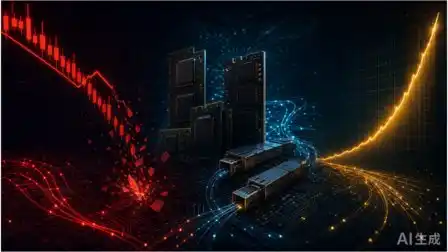
The Philadelphia Semiconductor Index Tumbles Nearly 5% in a Single Night, Optical and Memory Sectors 'Collapse' Together: Surging U.S. Bond Yields Shake AI Belief

On the evening of August 18th, the US stock market saw a sharp sell-off concentrated in the AI hardware sector, with the Philadelphia Semiconductor Index plummeting nearly 5%. Leading AI infrastructure and components companies in fields like optical communication and memory chips experienced some of the steepest declines, such as Fabrinet (-19.38%) and Kioxia ADR (-13%). The sell-off was not broad-based but rather targeted the long-duration, high-momentum stocks previously driven by AI narrative optimism. This market shift is primarily attributed to a significant surge in long-term US Treasury yields, with the 30-year yield hitting its highest level since 2007. Rising yields increase discount rates, disproportionately impacting the valuations of growth stocks whose profits are projected far into the future—a category that includes most AI hardware plays. Additional pressure came from climbing oil prices due to Middle East tensions, which fueled inflation concerns. The article identifies three structural reasons for the severity of the drop in these specific subsectors: excessive prior gains and crowded positioning, high sensitivity to the sustainability of AI capital expenditure narratives, and inherent high volatility within the supply chain. Importantly, the sell-off appears to be a valuation and positioning reset rather than a fundamental repudiation of AI, evidenced by the relatively modest decline in a bellwether like Nvidia (-2.34%). Looking ahead, the direction hinges on three key indicators: whether the 30-year Treasury yield stabilizes, the trajectory of oil prices and geopolitical risks, and the market's pricing of new AI-related corporate debt. For related Asian and A-share markets, short-term negative sentiment spillover is expected, but medium-term drivers like domestic cloud capex may provide divergence. The episode signifies a market transition from pricing AI's "story" to rigorously evaluating its returns against a backdrop of higher financing costs.

marsbit34 min fa

The Philadelphia Semiconductor Index Tumbles Nearly 5% in a Single Night, Optical and Memory Sectors 'Collapse' Together: Surging U.S. Bond Yields Shake AI Belief

marsbit34 min fa

Ten Years, Wang Xingxing's Comeback: Unitree Valued at 400 Billion

Over a decade ago, Wang Xingxing, a 29-year-old with a passion for robotics but little funding, demonstrated his struggling robot dog to investors in Hangzhou. In 2019, with his company Unitree nearly out of cash, he captured the attention of Sequoia Capital China's managing director Li Yannan. Despite initial skepticism about the niche market for robot dogs, Wang's vision and deep technical conviction led Sequoia to make an initial seed investment. This marked a turning point. Following Sequoia's lead, a wave of prominent investors including Meituan, Tencent, Alibaba, and various venture capital and state-backed funds joined subsequent funding rounds. Wang's relentless focus and Unitree's technological advancements propelled the company to become a global leader in humanoid robotics. On August 19th, 2027, Unitree Robotics debuted on Shanghai's STAR Market as the first listed humanoid robotics company in China. Its shares skyrocketed over 500% at opening, reaching a market valuation of approximately 400 billion yuan. Wang Xingxing became one of the wealthiest individuals of his generation on the exchange, while Sequoia China, having invested across multiple rounds, remained a major shareholder. The story is celebrated as a classic outlier's triumph—a founder without elite credentials achieving success through pure belief and perseverance. Unitree's IPO is seen as a major milestone for China's embodied AI industry, providing a valuation benchmark and accelerating the sector's maturation. As Wang once stated, he aims to be "a small boat riding the mighty torrent of technology." His journey symbolizes the beginning of a new narrative for Chinese robotics on the global stage.

marsbit34 min fa

Ten Years, Wang Xingxing's Comeback: Unitree Valued at 400 Billion

marsbit34 min fa

Manufacturing's Share Drops Below 25%: Is Hangzhou Unconcerned?

Hangzhou is entering a critical phase of industrial restructuring. While its manufacturing-to-GDP ratio has fallen below 25%, the city is not alarmed. Instead, it is strategically navigating a dual focus: advancing advanced manufacturing and expanding its service sector, particularly producer services. Recently, the city celebrated the IPO of a humanoid robotics company, seen as a milestone in moving beyond its e-commerce era. Simultaneously, it set an ambitious target for its service sector: to exceed 2 trillion yuan in value by 2030, with producer services making up over 60%. Data shows a clear trend: the service sector's share of GDP has risen to 75.3%, while manufacturing's share has declined to around 20.1%. This shift revives the debate on whether a strong service sector weakens a city's manufacturing "foundation." Hangzhou's approach challenges the notion of a fixed manufacturing "red line" near 25%. The city argues that the quality and integration of industries matter more than simple ratios. Its strategy is "using software to drive hardware," leveraging its core strengths in digital economy and producer services—like R&D, software, and supply chain management—to empower and add value to manufacturing. This is embodied by its emerging "AI era" companies, whose innovation in Hangzhou feeds into national industrial chains. The city believes that for a hub like Hangzhou, the key is not merely boosting visible manufacturing output, but strengthening the "invisible" competitive edge provided by high-end producer services, which ultimately determine manufacturing profitability. National policy is also shifting from insisting on a "stable" manufacturing share to acknowledging a "reasonable" range, allowing for quality-focused development. Hangzhou's future industrial blueprint aims for a manufacturing share above 22% of GDP by 2027, coupled with a dominant, high-value service sector. The goal is not to choose between manufacturing and services, but to deeply integrate them, using advanced services as the accelerator for next-generation manufacturing.

marsbit59 min fa

Manufacturing's Share Drops Below 25%: Is Hangzhou Unconcerned?

marsbit59 min fa

SEC Suddenly Proposes "Regulation Crypto": U.S. Token Fundraising May Become Legal Again

On August 18, the U.S. Securities and Exchange Commission (SEC) proposed a landmark set of permanent rules, "Regulation Crypto Assets," specifically designed for crypto asset investment contracts. The 402-page proposal introduces two registration exemption paths and a groundbreaking safe harbor mechanism, representing the SEC's first dedicated crypto-specific regulatory framework. Two exemption tiers are proposed: a "Startup Exemption" allowing a one-time raise of up to $5 million within four years with basic disclosure requirements, and a "Financing Exemption" permitting raises of up to $75 million every 12 months with stricter obligations, including financial statements and ongoing reporting. Both paths require "principles-based narrative disclosure," a flexible approach distinct from traditional IPO forms. The most transformative element is the investment contract safe harbor. It provides a legal path for tokens to "graduate" from being classified as securities. If an issuer completes or permanently ceases its "essential managerial efforts" as promised in the investment contract and meets specific conditions, it can file with the SEC to have the token exit the securities framework. This creates a novel legal lifecycle where a token can begin as a regulated security for fundraising and later become a non-security asset as the network decentralizes. This move is seen as the SEC pragmatically filling a legislative vacuum, as the stalled CLARITY Act in Congress faces significant delays. The proposal aims to offer a compliant pathway for token offerings within the U.S., countering the trend of projects moving overseas. While currently a proposal open for a 60-day public comment period, it signals a major potential shift from an enforcement-heavy approach toward establishing clearer rules for the crypto industry.

marsbit1 h fa

SEC Suddenly Proposes "Regulation Crypto": U.S. Token Fundraising May Become Legal Again

marsbit1 h fa

Trading

Spot

Articoli Popolari

Come comprare LINK

Benvenuto in HTX.com! Abbiamo reso l'acquisto di ChainLink (LINK) semplice e conveniente. Segui la nostra guida passo passo per intraprendere il tuo viaggio nel mondo delle criptovalute.Step 1: Crea il tuo Account HTXUsa la tua email o numero di telefono per registrarti il tuo account gratuito su HTX. Vivi un'esperienza facile e sblocca tutte le funzionalità,Crea il mio accountStep 2: Vai in Acquista crypto e seleziona il tuo metodo di pagamentoCarta di credito/debito: utilizza la tua Visa o Mastercard per acquistare immediatamente ChainLinkLINK.Bilancio: Usa i fondi dal bilancio del tuo account HTX per fare trading senza problemi.Terze parti: abbiamo aggiunto metodi di pagamento molto utilizzati come Google Pay e Apple Pay per maggiore comodità.P2P: Fai trading direttamente con altri utenti HTX.Over-the-Counter (OTC): Offriamo servizi su misura e tassi di cambio competitivi per i trader.Step 3: Conserva ChainLink (LINK)Dopo aver acquistato ChainLink (LINK), conserva nel tuo account HTX. In alternativa, puoi inviare tramite trasferimento blockchain o scambiare per altre criptovalute.Step 4: Scambia ChainLink (LINK)Scambia facilmente ChainLink (LINK) nel mercato spot di HTX. Accedi al tuo account, seleziona la tua coppia di trading, esegui le tue operazioni e monitora in tempo reale. Offriamo un'esperienza user-friendly sia per chi ha appena iniziato che per i trader più esperti.

962 Totale visualizzazioniPubblicato il 2024.12.13Aggiornato il 2026.06.02

Come comprare LINK

Discussioni

Benvenuto nella Community HTX. Qui puoi rimanere informato sugli ultimi sviluppi della piattaforma e accedere ad approfondimenti esperti sul mercato. Le opinioni degli utenti sul prezzo di LINK LINK sono presentate come di seguito.

活动图片