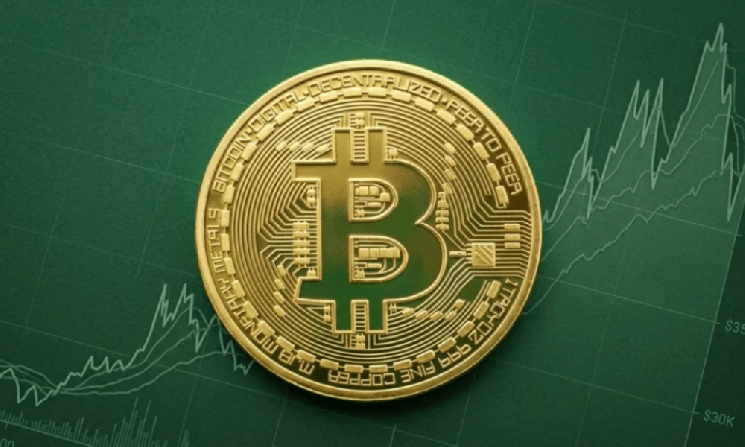
Bitcoin FOMO returns after BTC dip – But is it too soon to buy?

ambcryptoPubblicato 2025-10-28Pubblicato ultima volta 2025-10-29

Key takeaways

Why might the real Bitcoin opportunity be hidden from retail traders?

Experienced investors are quietly accumulating BTC, while retail traders chase short-term dips.

When do the strongest Bitcoin rebounds usually occur?

Rebounds typically happen when fear dominates and optimism fades.


Retail traders are jumping back in after a small market dip, hoping for a quick rebound. But history serves as a warning, with early optimism often fading before a real recovery.

Behind the scenes, on-chain data shows experienced investors quietly buying Bitcoin [BTC], so the real opportunity may lie in fear.

Retail traders rush to buy the dip

Santiment data shows retail traders are once again crowding to “buy the dip” after Tuesday’s mild market pullback.

bitcoin

Source: Santiment

Usually, such spikes in dip-buying sentiment have been followed by short-term retraces and additional downside. Historically, the most favorable buying opportunities arise when optimism fades and fear takes over.

Markets tend to move against trader expectations, especially when many believe the worst is behind them.

Strong rebounds typically begin only after retail sentiment shifts from FOMO to genuine fear.

Tariff reshapes flows, but overseas influence remains minimal

bitcoin

Source: CryptoQuant

The 155% U.S. tariff hike may be tightening global liquidity, but on-chain data shows Bitcoin holders are staying firm. This is due to steady outflows from exchanges and strong stablecoin inflows, indicating accumulation.

Source: CryptoQuant

Yet, as fiscal and trade pressures rise, political drama from abroad has barely registered in crypto markets.

Despite newly sworn-in Japanese Prime Minister Sanae Takaichi’s high-profile meeting with President Donald Trump and the Nikkei 225 hitting record highs, Bitcoin stayed flat.

This is because Japan holds only a small fraction of global BTC supply, leaving its policy shifts with little sway over digital asset trends.

bitcoin

Source: CryptoQuant

Kevin Rusher, founder of RAAC, noted that the broader rebound in risk assets is indicative of changing expectations rather than a structural change in sentiment. He told AMBCrypto,

“With the Fed widely expected to cut rates again today, and US-China trade tensions easing again, it’s no surprise we’re seeing a rebound in crypto markets and a sell-off in gold.”

He went on to state that the recent crypto bounce is driven more by short-term market expectations (like rate cuts) rather than a lasting improvement in investor sentiment.

“But this isn’t the death knell for the safe-haven asset, because the recent gold rush hasn’t been driven by geopolitical and macro fears alone.”

So gold still holds value as a stable, safe-haven asset, even if crypto markets are rallying. He added that its long-term value is far from over, saying,

“…real assets like gold will remain a cornerstone of diversified portfolios — even more so as the tokenization of real-world assets gathers pace.”

A chance up for grabs during market fear

Despite external shocks, smart money continues to accumulate Bitcoin.

Exchange outflows, stablecoin inflows, and low miner selling all indicate conviction beneath the surface. The best entries usually come when fear dominates, not when traders rush to “buy the dip.”

Source: CryptoQuant

As retail sentiment swings between hope and panic, maybe patience truly is a virtue.

Share

Letture associate

To Those Ordinary People Who Haven't Invested in AI: You Think You're Late, You're Just Lacking Your Own Worldview

**Summary:** The article argues that ordinary investors feeling FOMO over missing the AI investment boom lack not timing, but their own independent worldview. Most people chase "what to buy" based on others' opinions (FOMO, envy) rather than fundamental analysis. This leads to costly mistakes: not knowing when to exit winning trades or cut losses on losing ones. The core solution is to develop a personal, long-term (5-10 year) worldview about societal shifts and technological bottlenecks. For most, building this from scratch (Path A) is too demanding. A practical alternative (Path B) is to follow the **capital expenditures (capex)** and strategic investments of visionary leaders, as their money reveals true conviction more reliably than their words. Five key figures to track for different AI perspectives are highlighted: Jensen Huang (NVIDIA, infrastructure), Elon Musk (Tesla/SpaceX/xAI, capex signals), Sam Altman (OpenAI, commercialization, but beware hype), Dario Amodei (Anthropic, technical/safety focus), and Liang Wenfeng (DeepSeek, efficiency/anti-consensus view). The article details how to read capex signals from hyperscalers' financial reports, NVIDIA's revenue breakdown, and strategic investments. It maps the complete AI产业链 (supply chain) from raw materials/energy to models/applications, explaining value flow and inter-dependencies (e.g., how a model release triggers demand across chips, memory, and optics). Finally, it provides an action plan: secure personal finances first, allocate a limited portfolio percentage (max 25%) to the theme, prefer broad ETFs (like QQQ), use dollar-cost averaging over 6-12 months, and write down strict investment rules beforehand to combat emotional errors during market volatility. The conclusion is that a stable, personally-held worldview enables disciplined, long-term investment far more than chasing short-term trends.

marsbit6 min fa

To Those Ordinary People Who Haven't Invested in AI: You Think You're Late, You're Just Lacking Your Own Worldview

marsbit6 min fa

Microsoft Halts Vibe Coding: "Burning Tokens" Is Now More Expensive Than Employees

Microsoft has halted the widespread internal use of Claude Code, withdrawing licenses from most employees by the end of its fiscal year, June 30, 2026. This reversal comes just six months after actively promoting the AI coding tool to boost productivity via "vibe coding"—where developers describe intent in natural language and let the LLM generate code. The core issue isn't the tool's effectiveness; internal reports suggest employees preferred Claude Code over Microsoft's own Copilot CLI. The problem is financial: the "copilot mode" adds a variable, consumption-based token cost on top of existing employee salaries without a proportional revenue increase. As usage grew, the token bills became unsustainable, leading to what sources describe as a cost-structure failure. Similar overruns have been reported at other firms like Uber. The article contrasts this with the approach of AI-native startups, exemplified by Y Combinator's philosophy. Here, high token consumption is strategic—it replaces, rather than supplements, human labor. Startups operate with tiny teams where AI agents handle work previously done by many, making the high token bill financially viable as it offsets much larger personnel costs. The conclusion is that "vibe coding" isn't dead, but its economics fail within traditional corporate structures that treat AI as a productivity add-on for existing staff. Success requires a foundational shift to an AI-native organization, where processes are built to be "legible to AI," and the company's core knowledge and assets reside in documented, AI-accessible systems rather than solely in employees' minds. The future divide will be between companies that merely add AI tools and those that redesign their organizations around them.

marsbit26 min fa

Microsoft Halts Vibe Coding: "Burning Tokens" Is Now More Expensive Than Employees

marsbit26 min fa

Metrics Ventures Market Watch: The Brewing Storm

In the past month, the market has been actively trading contrasting expectations, balancing global supply chain disruptions fueling re-inflation against both actual and anticipated (Walsh) interest rate hikes. This volatility has impacted commodities and most equities, though tech has temporarily benefited from concentrated short-term liquidity. Fundamentally, as previously analyzed regarding the Strait of Hormuz situation, the US faces deep-seated balance sheet issues beyond what any single Fed chair can resolve. Hypotheses around a figure like Walsh could only materialize if AI fundamentally reshapes production relations. Until then, most non-AI-leading nations (effectively all except the US and China) risk fiscal and monetary policy collapse, rendering the identity of the Fed chair ultimately irrelevant. For crypto assets, there is currently no clear role in these dominant narratives. The market remains strongly capped by the 200-day moving average. While trends may shift from "anything but AI" to "anything but mines," this phase is dominated by the silicon vs. carbon (AI vs. traditional) dichotomy, leaving little room for crypto—though its time will come. **Market Overview & Commentary** The crypto market lacks significant catalysts beyond hype, plagued by low volume and scarce innovation, with clear technical resistance. Currently, crypto struggles for attention as global focus lies elsewhere. Assets like gold, oil, and grains are more direct hedges against supply-chain-driven inflation/stagflation. Bitcoin needs more time for capitulation and consolidation; this reset is expected to last until at least Q4 2026. Looking ahead, three factors will likely drive future market volatility: 1. Whether Walsh repeats the patterns of predecessors like Bassant or Musk, shifting stance into a new policy cycle. 2. The market underestimates the severity of global supply chain damage and the prolonged time needed for repair, which will eventually lead to recognition of acute resource shortages and price swings. 3. AI non-beneficiary, high-inflation nations (e.g., UK, Japan) will face severe fiscal and monetary crises. Rapid AI-driven displacement could trigger a collapse of existing credit and welfare systems. Ultimately, the market may realize that an AI bubble burst could spark contagious sovereign credit crises. The monetary and fiscal responses to such a scenario could serve as the ultimate catalyst for Bitcoin's next major bull run.

marsbit1 h fa

Metrics Ventures Market Watch: The Brewing Storm

marsbit1 h fa

Insiders Betting on Musk Are Reaping 'Historic Returns'

The largest IPO in history is imminent as SpaceX, led by Elon Musk, is set to price its offering on June 12. At a targeted valuation near $2 trillion, this event will mint new billionaires from Musk's inner circle of long-time allies, rewarding their loyalty with unprecedented returns. Key beneficiaries include Antonio Gracias, Musk's close friend and confidant, who holds a 7.3% stake potentially worth over $140 billion, making him the second-largest individual shareholder. Gwynne Shotwell, President and COO since 2002, holds shares valued at roughly $2 billion. Bret Johnsen, the CFO, holds stock worth approximately $1.4 billion. Luke Nosek, a PayPal co-founder and early investor, stands to gain about $5.3 billion. The IPO filing also reveals complex and controversial financial arrangements. SpaceX has guaranteed nearly $20 billion in payments from xAI's subsidiary to Gracias's Valor Equity Partners for AI hardware leases—deals auditors flagged as "failed sale-leaseback" transactions, forcing SpaceX to record them as debt. Despite rapid revenue growth, SpaceX is not profitable, posting a $49 billion loss in 2025 and a $4.3 billion loss in Q1 2026. Capital expenditures are soaring, with over 60% directed toward AI. Public investors will inherit these losses, significant debts, and a governance structure heavily controlled by insiders, including a provision granting Musk up to a billion additional shares if one million people live on Mars.

链捕手1 h fa

Insiders Betting on Musk Are Reaping 'Historic Returns'

链捕手1 h fa

Trading

Spot
Futures

Articoli Popolari

Come comprare SOON

Benvenuto in HTX.com! Abbiamo reso l'acquisto di SOON (SOON) semplice e conveniente. Segui la nostra guida passo passo per intraprendere il tuo viaggio nel mondo delle criptovalute.Step 1: Crea il tuo Account HTXUsa la tua email o numero di telefono per registrarti il tuo account gratuito su HTX. Vivi un'esperienza facile e sblocca tutte le funzionalità,Crea il mio accountStep 2: Vai in Acquista crypto e seleziona il tuo metodo di pagamentoCarta di credito/debito: utilizza la tua Visa o Mastercard per acquistare immediatamente SOONSOON.Bilancio: Usa i fondi dal bilancio del tuo account HTX per fare trading senza problemi.Terze parti: abbiamo aggiunto metodi di pagamento molto utilizzati come Google Pay e Apple Pay per maggiore comodità.P2P: Fai trading direttamente con altri utenti HTX.Over-the-Counter (OTC): Offriamo servizi su misura e tassi di cambio competitivi per i trader.Step 3: Conserva SOON (SOON)Dopo aver acquistato SOON (SOON), conserva nel tuo account HTX. In alternativa, puoi inviare tramite trasferimento blockchain o scambiare per altre criptovalute.Step 4: Scambia SOON (SOON)Scambia facilmente SOON (SOON) nel mercato spot di HTX. Accedi al tuo account, seleziona la tua coppia di trading, esegui le tue operazioni e monitora in tempo reale. Offriamo un'esperienza user-friendly sia per chi ha appena iniziato che per i trader più esperti.

205 Totale visualizzazioniPubblicato il 2025.05.23Aggiornato il 2025.05.23

Come comprare SOON

Discussioni

Benvenuto nella Community HTX. Qui puoi rimanere informato sugli ultimi sviluppi della piattaforma e accedere ad approfondimenti esperti sul mercato. Le opinioni degli utenti sul prezzo di SOON SOON sono presentate come di seguito.

活动图片