Citibank Enters the Crypto Race: Custody Platform Set for 2026 Launch Amid Institutional Push

bitcoinistPubblicato 2025-10-15Pubblicato ultima volta 2025-10-15

Introduzione

Citibank is officially joining the crypto custody race, announcing plans to launch a regulated digital asset storage platform in 2026...

Trusted Editorial content, reviewed by leading industry experts and seasoned editors. Ad Disclosure

Citibank is officially joining the crypto custody race, announcing plans to launch a regulated digital asset storage platform in 2026 after more than three years of development.

The action marks one of Wall Street’s clearest commitments yet to integrating blockchain infrastructure into mainstream finance, as institutional appetite for secure crypto exposure continues to surge.
crypto citi bitcoin BTC BTCUSD

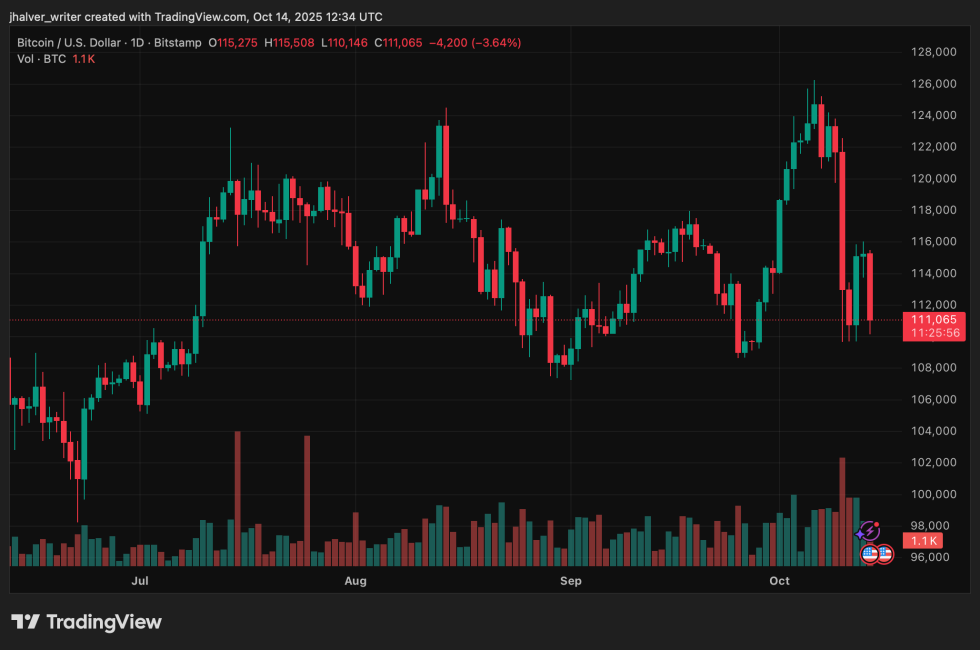
BTC's price trends to the downside on the daily chart. Source: BTCUSD on Tradingview

Citibank’s Institutional Crypto Custody Vision

According to Biswarup Chatterjee, Citibank’s global head of partnerships and innovation, the bank has been quietly building a hybrid crypto custody system designed to serve institutional investors, asset managers, and hedge funds.

The service will enable clients to securely store native cryptocurrencies like Bitcoin and Ethereum, combining Citi’s in-house security framework with third-party blockchain infrastructure for flexibility and scale.

Chatterjee told CNBC that the project is entering its final stages, stating: “We’re hoping that in the next few quarters, we can come to market with a credible custody solution that meets institutional standards.”

The model echoes a growing industry trend where traditional banks develop their own blockchain tools while partnering with specialized fintech providers to handle on-chain operations and custody logistics.

Stablecoins, Regulation, and Citi’s Blockchain Ambitions

Citibank’s entry comes as the U.S. regulatory climate for digital assets improves under the GENIUS Act, a landmark framework clarifying the treatment of stablecoins and tokenized assets.

This shift has reignited Wall Street’s crypto ambitions, with Citi, JPMorgan, and other global banks exploring blockchain-based payment and settlement systems.

Citi’s CEO Jane Fraser has already confirmed that the bank is testing a Citi-branded stablecoin and tokenized deposit service to support 24/7 settlements for corporate clients.

The bank’s blockchain operations currently enable cross-border transfers between New York, London, and Hong Kong using distributed ledger technology, laying the groundwork for seamless integration between custody, payments, and tokenized assets.

A Broader Institutional Pivot Toward Digital Assets

Citi’s upcoming crypto custody launch mirrors a wider institutional trend as traditional finance moves into the blockchain era. Other global banks like BNY Mellon, Deutsche Bank, and Standard Chartered have rolled out similar offerings, positioning custody as the backbone of institutional crypto adoption.

With $2.57 trillion in assets under custody, Citi’s scale gives it an advantage in bridging traditional finance and decentralized infrastructure.

Analysts say that if executed effectively, the 2026 rollout could make Citi one of the most influential players in institutional crypto, offering clients both security and regulatory assurance in a rapidly evolving digital economy.

Cover image from ChatGPT, BTCUSD chart from Tradingview

Editorial Process for bitcoinist is centered on delivering thoroughly researched, accurate, and unbiased content. We uphold strict sourcing standards, and each page undergoes diligent review by our team of top technology experts and seasoned editors. This process ensures the integrity, relevance, and value of our content for our readers.

Crypto di tendenza

Letture associate

Upbit is Anxious: A Hasty Counterattack Aimed at Regaining Stablecoin Market Share

Title: Upbit's Rushed Counterattack to Reclaim Stablecoin Market Share Facing a dramatic shift in South Korea's stablecoin market, leading exchange Upbit launched a promotional campaign from July 26 to August 9, waiving the 0.05% trading fee for stablecoins paired with the Korean Won (KRW) and rapidly listing new stablecoins like RLUSD and USDG. This move is a direct response to its plummeting market share in this sector. Historically a duopoly with Bithumb, the market has been reshaped since October 2025 when Coinone permanently removed fees for USDC trading. By June 2026, Coinone led with 34.8% of stablecoin volume, followed by Bithumb (31.1%) and Upbit (30.1%). This contrasts sharply with the overall crypto market, where Upbit commands 60%. The data shows stablecoin demand is highly sensitive to fees, as users primarily buy them to transfer capital overseas for derivatives trading or forex arbitrage. South Korean exchanges have seen a net outflow of stablecoins for 18 consecutive months, totaling approximately 14.9 trillion KRW, underscoring their role as a cross-border capital conduit. Upbit's limited-time promotion initially boosted its daily stablecoin volume by 162%, but the surge was almost entirely in USDT (98.1% of volume). The newly listed stablecoins saw negligible, fleeting interest. Furthermore, the promotional effect quickly waned in the second week, with volume dropping 33% on weekdays. A concurrent weakening of the KRW also contributed to the trading spike, independent of the fee waiver. The analysis suggests that once the promotion ends, Upbit is unlikely to retain its temporary gains unless it matches Coinone's permanent zero-fee policy, forcing a choice between market share and fee revenue. Upbit's strategic push may be less about immediate profit and more about preparing for future regulatory shifts. With South Korea's *Digital Asset Basic Act* on the horizon, which will regulate KRW-backed stablecoins, and following Dunamu's (Upbit's parent) integration into Naver Financial to build a payment ecosystem, securing a dominant position in the dollar stablecoin distribution channel holds long-term strategic value. However, potential regulatory conflicts could prevent Upbit from listing a future Naver-issued KRW stablecoin, making the current fight for dollar stablecoin flow even more critical.

marsbit4 h fa

Upbit is Anxious: A Hasty Counterattack Aimed at Regaining Stablecoin Market Share

marsbit4 h fa

Michael Saylor Compares Bitcoin and Gold!

Michael Saylor, founder of MicroStrategy, argues that Bitcoin fundamentally changes how wealth is stored and transferred by transforming digital scarcity into economic value. He describes Bitcoin as the first digital monetary network, combining computers, digital networks, and cryptography. It digitizes monetary assets, allowing their supply to be controlled by public protocols rather than institutions, thus converting economic value into information transmissible over global networks. Comparing Bitcoin to gold, Saylor states that while increasing Bitcoin's supply is harder, its integration with software and transfer is easier. He highlights Bitcoin's proof-of-work mechanism, which ties it to the physical world by consuming real energy to secure the ledger, making past transactions immutable. This creates a shared security system involving miners, energy companies, and investors. Saylor suggests "digital monetary energy" is a more accurate term than "digital gold." He emphasizes that the Bitcoin network is an adaptive ecosystem of miners, nodes, developers, and users. Its core design is intentionally simple, focused on maintaining a secure ledger for scarce digital assets, with complex functionalities built in higher-layer applications. This architecture allows Bitcoin to serve as a foundation for transmitting value and fostering innovation in payments and financial services. Saylor notes Bitcoin's deeper impact lies in creating digital sovereignty, where private keys give individuals permissionless control over their economic power, with ownership verified mathematically, not by institutions. He concludes that while gold's physical scarcity makes it money, Bitcoin's digital scarcity does the same, characterizing Bitcoin as the monetary energy of the digital age.

cryptonews.ru5 h fa

Michael Saylor Compares Bitcoin and Gold!

cryptonews.ru5 h fa

Trading

Spot

Articoli Popolari

Come comprare PUSH

Benvenuto in HTX.com! Abbiamo reso l'acquisto di Push Protocol (PUSH) semplice e conveniente. Segui la nostra guida passo passo per intraprendere il tuo viaggio nel mondo delle criptovalute.Step 1: Crea il tuo Account HTXUsa la tua email o numero di telefono per registrarti il tuo account gratuito su HTX. Vivi un'esperienza facile e sblocca tutte le funzionalità,Crea il mio accountStep 2: Vai in Acquista crypto e seleziona il tuo metodo di pagamentoCarta di credito/debito: utilizza la tua Visa o Mastercard per acquistare immediatamente Push ProtocolPUSH.Bilancio: Usa i fondi dal bilancio del tuo account HTX per fare trading senza problemi.Terze parti: abbiamo aggiunto metodi di pagamento molto utilizzati come Google Pay e Apple Pay per maggiore comodità.P2P: Fai trading direttamente con altri utenti HTX.Over-the-Counter (OTC): Offriamo servizi su misura e tassi di cambio competitivi per i trader.Step 3: Conserva Push Protocol (PUSH)Dopo aver acquistato Push Protocol (PUSH), conserva nel tuo account HTX. In alternativa, puoi inviare tramite trasferimento blockchain o scambiare per altre criptovalute.Step 4: Scambia Push Protocol (PUSH)Scambia facilmente Push Protocol (PUSH) nel mercato spot di HTX. Accedi al tuo account, seleziona la tua coppia di trading, esegui le tue operazioni e monitora in tempo reale. Offriamo un'esperienza user-friendly sia per chi ha appena iniziato che per i trader più esperti.

607 Totale visualizzazioniPubblicato il 2024.12.13Aggiornato il 2026.06.02

Come comprare PUSH

Discussioni

Benvenuto nella Community HTX. Qui puoi rimanere informato sugli ultimi sviluppi della piattaforma e accedere ad approfondimenti esperti sul mercato. Le opinioni degli utenti sul prezzo di PUSH PUSH sono presentate come di seguito.

活动图片